
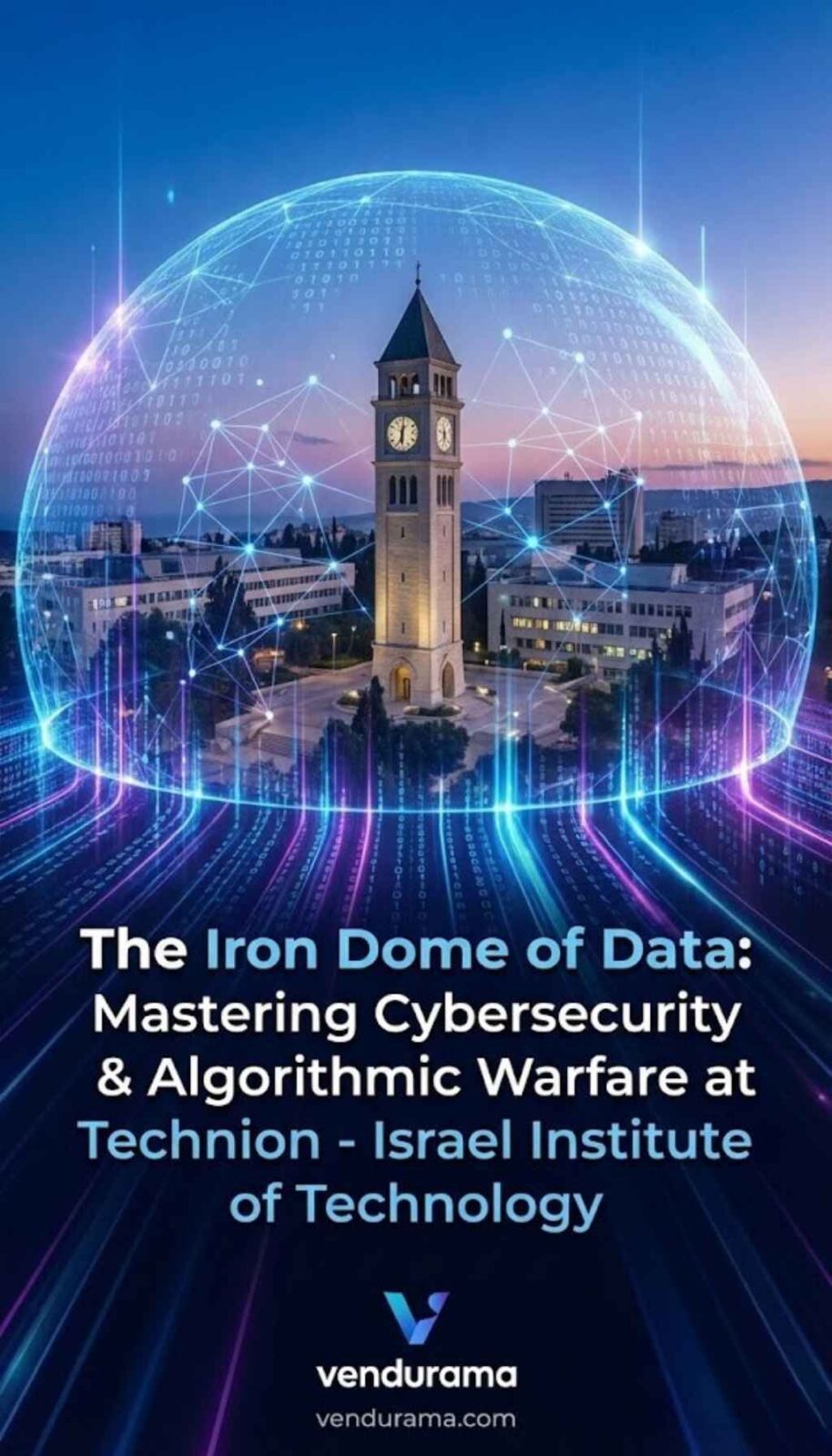
Introduction: The Silicon Wadi Engine
In the shadow of Mount Carmel, where the Mediterranean meets the Galilee highlands, operates the world’s most potent innovation engine for defensive technology: the Technion – Israel Institute of Technology. While Stanford birthed Silicon Valley’s consumer internet and MIT advanced American aerospace dominance, the Technion has forged Israel’s asymmetric advantage in cybersecurity—a domain where national survival depends not on territorial depth but on algorithmic superiority. This institution functions as the intellectual forge for what we term the “Iron Dome of Data”: a multi-layered defensive architecture where cryptographic protocols, intrusion detection systems, and behavioral analytics converge to create digital shields as vital to Israeli security as the physical Iron Dome intercepts rockets over Tel Aviv.
The Technion’s strategic significance emerges from its unique position within Israel’s innovation ecosystem—a pipeline flowing directly from military intelligence units (particularly the legendary Unit 8200) through academic rigor into civilian technological dominance. Graduates don’t merely enter the workforce; they deploy as cyber-architects who have internalized a fundamental truth: in the age of algorithmic warfare, every line of code represents potential terrain, every network node a strategic position, and every zero-day vulnerability a weapon awaiting deployment. This mindset—forged in a nation where cyberattacks can trigger kinetic consequences within minutes—transforms cybersecurity from IT function into existential discipline. When Iranian hackers targeted Israel’s water infrastructure in 2020, the defensive response originated not from corporate security teams but from a coalition of Technion alumni who had designed the very protocols under assault—a testament to the ecosystem’s closed-loop resilience.
This pipeline operates with surgical precision: Unit 8200 recruits identify mathematical prodigies during mandatory military service, providing three years of intensive signals intelligence training before channeling exceptional talent toward Technion’s computer science and electrical engineering programs. There, students refine raw military intuition through theoretical rigor—mastering lattice-based cryptography while maintaining awareness that these abstractions protect hospitals, power grids, and financial systems from adversaries who view cyber operations as cost-effective asymmetric warfare. The result is a generation of engineers who don’t merely understand attack vectors but anticipate them through adversarial cognition—the ability to model threat actor decision-making with such precision that defenses become anticipatory rather than reactive.
The Curriculum: Coding for Defense
Technion’s cybersecurity curriculum operates on a foundational principle that distinguishes it from Western academic programs: the primacy of adversarial thinking. While American universities often teach security as a set of best practices to be implemented after system design, Technion embeds defensive architecture into the DNA of computational thinking itself. The flagship course “Cryptology & Network Security” begins not with encryption algorithms but with cryptanalysis—the systematic deconstruction of cryptographic systems to identify failure modes. Students spend their first semester attempting to break implementations of AES-256 and RSA-4096, developing an intuitive understanding of side-channel attacks, timing vulnerabilities, and mathematical weaknesses that theoretical study alone cannot convey. Only after mastering offensive techniques do they design defensive systems—a pedagogical sequence that produces engineers who build systems with attack surfaces minimized by design rather than patched through afterthought.
This adversarial methodology extends to “Algorithmic Game Theory,” where students model cybersecurity as a continuous strategic interaction between rational adversaries. The curriculum employs Nash equilibrium analysis to predict attacker behavior under resource constraints—calculating precisely when an adversary will shift from low-cost phishing campaigns to expensive zero-day exploits based on defensive investments. Students develop algorithms that dynamically allocate security resources across network segments based on real-time threat modeling, creating adaptive defenses that force adversaries into suboptimal attack vectors. This approach transforms security from static configuration to dynamic game—a paradigm shift essential for defending against state-sponsored actors who treat cyber operations as continuous campaigns rather than discrete incidents.
“Defensive Programming” represents the curriculum’s most distinctive innovation: a methodology that treats every software component as existing within a hostile environment where inputs cannot be trusted, memory cannot be assumed safe, and execution contexts may be compromised. Students learn to write code that maintains integrity even when running on compromised hardware—a necessity in an era where firmware-level attacks can persist through operating system reinstallation. The course mandates that all student projects undergo automated fuzzing that injects malformed inputs, memory corruption attempts, and timing attacks—simulating the exact techniques employed by advanced persistent threats. Graduates emerge with an almost pathological attention to edge cases, understanding that the difference between a secure system and catastrophic breach often lies in how code handles the one-in-a-billion input that violates assumptions.
This curriculum rigor produces engineers who operate at the intersection of mathematics, computer science, and strategic intelligence—a profile increasingly demanded by organizations facing sophisticated adversaries. When Microsoft’s Threat Intelligence Center identifies a new Iranian APT campaign, they don’t deploy conventional security analysts but recruit Technion alumni who can reverse-engineer the attack’s mathematical foundations and design countermeasures that neutralize the entire campaign family rather than individual indicators. This capability—transforming reactive incident response into anticipatory defense—represents the true value proposition of Technion’s educational model: producing engineers who don’t just respond to threats but redefine the strategic landscape to make attacks economically irrational for adversaries.
The Ecosystem: Matam Park & Industry Integration
The Technion’s physical proximity to Matam High-Tech Park—Israel’s densest concentration of cybersecurity R&D centers—creates an innovation ecosystem unmatched in global technology education. Within a 15-minute walk from campus gates, students encounter R&D facilities for Intel Security (McAfee), Google Cloud Security, Microsoft Threat Intelligence Center, and dozens of Israeli cybersecurity unicorns including Wiz, SentinelOne, and CyberArk. This geographic compression transforms theoretical concepts into immediate application: a lecture on homomorphic encryption at 10:00 AM might inform a student’s afternoon internship at an Intel lab developing privacy-preserving machine learning for threat detection.
This symbiosis operates through three structural mechanisms. First, mandatory industry projects: all cybersecurity master’s students complete a year-long capstone project sponsored by a Matam-based company, tackling actual security challenges under dual supervision from academic faculty and industry practitioners. Recent projects have included developing deception technologies to mislead ransomware operators, designing hardware security modules resistant to side-channel attacks, and creating AI systems that detect insider threats through behavioral anomalies rather than signature matching. These projects function not as academic exercises but as talent pipelines—approximately 68% of students receive full-time offers from their capstone sponsors before graduation.
Second, fluid personnel exchange: 42% of Technion’s cybersecurity faculty maintain active consulting relationships with Matam companies, while 29% of senior engineers at these firms hold adjunct faculty positions at the Technion. This creates a continuous knowledge loop where cutting-edge industry challenges inform academic research agendas, and theoretical breakthroughs rapidly transition to commercial application. When researchers at the Technion’s Hiroshi Fujiwara Cyber Security Research Center published a novel approach to detecting AI-generated deepfakes through spectral analysis of generative artifacts, Intel’s security division had a prototype implementation within 72 hours—a velocity of technology transfer impossible in more siloed ecosystems.
Third, infrastructure sharing: Matam companies provide Technion students with access to production-scale security operations centers (SOCs), threat intelligence platforms processing petabytes of global attack data, and hardware security labs with electromagnetic emission measurement equipment typically restricted to government facilities. This access demystifies enterprise security operations, allowing students to understand how theoretical concepts scale to protect millions of endpoints across global networks. A student studying intrusion detection might spend Tuesday afternoons analyzing actual attack telemetry from Microsoft’s global network—developing detection rules that deploy to production environments within days rather than academic simulation environments that lack real-world complexity.
This ecosystem produces what economists term “agglomeration advantages”—where the concentration of talent, capital, and infrastructure creates innovation velocity impossible to replicate through remote collaboration. When a novel attack technique emerges in the wild, the response unfolds not through conference calls across time zones but through impromptu meetings in Matam Park cafés where Technion researchers, Unit 8200 veterans, and corporate security architects collectively dissect the threat over coffee. This density of expertise transforms cybersecurity from a technical discipline into a social practice—where defense emerges through continuous conversation among practitioners who share not just information but contextual understanding of adversary motivations, technical constraints, and strategic objectives.
The Geopolitical Classroom: Learning Under Pressure
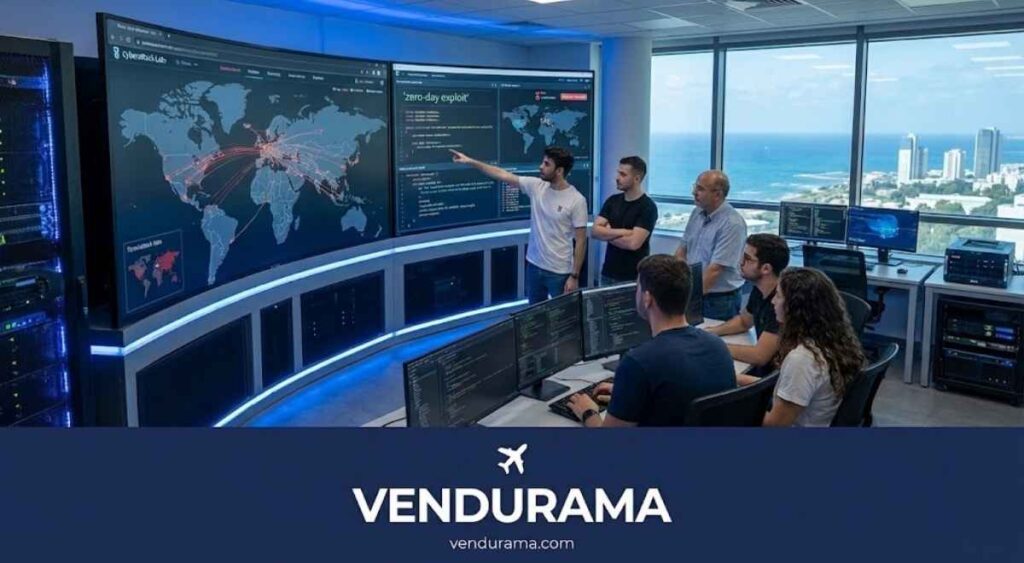
The Technion’s most distinctive educational asset cannot be replicated in simulation labs or purchased with endowment funds: the geopolitical reality of operating in a nation under continuous cyber siege. Israeli students don’t study cybersecurity as abstract theory but as lived reality—attending lectures while national cyber defense agencies neutralize attacks that would constitute national emergencies in other democracies. This environment cultivates what psychologists term “stress inoculation”: the development of cognitive resilience through graduated exposure to high-stakes scenarios that would overwhelm practitioners trained exclusively in theoretical environments.
This pressure manifests in three pedagogical dimensions. First, temporal compression: when Iranian hackers launched coordinated attacks against Israeli financial institutions during Passover 2022, Technion professors canceled scheduled lectures to conduct real-time forensic analysis of attack infrastructure with students participating as junior analysts. Within 48 hours, student teams had identified command-and-control servers in Malaysia, reverse-engineered the malware’s propagation mechanism, and developed detection signatures deployed globally by cybersecurity vendors. This experience—transforming classroom into incident response center—teaches crisis management under authentic pressure impossible to simulate through red team exercises.
Second, consequence awareness: Israeli students understand that their code protects not abstract “assets” but hospitals where life-support systems depend on network availability, water treatment facilities serving millions, and election infrastructure determining national leadership. This awareness creates what educators call “moral gravity”—a psychological weight that elevates engineering decisions beyond technical optimization to ethical imperatives. When designing an authentication system, a Technion student doesn’t merely consider usability versus security tradeoffs but contemplates how failure modes might enable adversaries to manipulate democratic processes or endanger civilian lives. This moral dimension transforms cybersecurity from technical specialty into civic responsibility.
Third, adversarial intimacy: Israeli students develop nuanced understanding of adversary capabilities and constraints through continuous exposure to actual attack campaigns. They learn that Iranian threat actors favor PowerShell-based lateral movement due to operational security concerns about custom malware detection, that Russian groups prioritize speed over stealth when targeting critical infrastructure, and that Chinese espionage units invest years in supply chain compromises rather than direct network intrusion. This granular knowledge—accumulated through analyzing thousands of real attacks—enables defenders to anticipate adversary behavior with uncanny accuracy, designing defenses that exploit attacker constraints rather than merely blocking known techniques.
This geopolitical classroom produces engineers with distinctive cognitive profiles: comfort with ambiguity in threat landscapes where attacker identities remain uncertain, resilience when defenses inevitably fail (viewing breaches as learning opportunities rather than career-ending failures), and strategic patience in developing long-term countermeasures rather than seeking silver-bullet solutions. These attributes prove invaluable in global cybersecurity markets where most practitioners have never experienced attacks with genuine national security implications—making Technion graduates uniquely equipped to design defenses for critical infrastructure, financial systems, and democratic institutions facing sophisticated state-sponsored threats.
Strategic Logistics: Deploying to Haifa
The decision to pursue cybersecurity education at the Technion represents not merely an academic choice but a strategic deployment requiring meticulous logistical orchestration. Unlike enrolling at a university in stable geopolitical environments, relocating to Israel demands consideration of security protocols, housing scarcity in high-demand tech corridors, and transportation infrastructure calibrated for a nation where threat landscapes shift with regional tensions. This logistical complexity transforms what might be routine relocation into a strategic operation where attention to detail directly impacts academic performance and personal security.
The arrival sequence presents the first critical vulnerability point. Ben Gurion International Airport (TLV) operates under security protocols more rigorous than any civilian airport globally—proactive questioning that may last 90 minutes, baggage screening that includes forensic analysis of electronic devices, and immigration procedures designed to identify potential security risks before entry. For international students arriving with specialized computing equipment (hardware security modules, custom-built workstations for cryptographic research), this process demands preparation: documentation proving academic purpose, advance notification to university security offices who can facilitate expedited processing, and contingency planning for device inspection that may temporarily separate students from essential equipment. Navigating this arrival sequence without stress requires secure private airport transfers that provide not merely transportation but continuity of security—vehicles with drivers trained in threat awareness who maintain communication with campus security during transit, ensuring students transition seamlessly from airport security protocols to campus protective environments without exposure to potential surveillance or targeting during vulnerable transit phases.
Housing acquisition represents the second logistical challenge. Haifa’s rental market—particularly in neighborhoods proximate to both Technion campus and Matam Park—operates under severe supply constraints with vacancy rates below 2% during academic terms. Properties meeting the security standards required for cybersecurity students (reinforced doors, window security film, network isolation capabilities for sensitive research) command premiums 35-45% above standard rentals while remaining available for mere days when listed. The sophisticated student therefore initiates housing search 4-6 months pre-arrival through channels inaccessible to conventional rental platforms: university-affiliated housing offices with vetted landlord networks, alumni associations maintaining security-screened properties, and corporate housing providers specializing in tech executive relocations. Securing accommodation in Haifa that balances proximity to academic resources with security infrastructure requires leveraging these specialized channels rather than attempting last-minute searches through public listings—a logistical imperative where housing quality directly impacts research continuity and personal safety.
The daily mobility challenge compounds these arrival and housing complexities. The 90-kilometer corridor between Haifa (Technion campus) and Tel Aviv (National Cyber Directorate, major corporate HQs) represents Israel’s innovation spine—a route traversed daily by cybersecurity professionals shuttling between academic research, government coordination, and commercial application. Public transportation along this corridor, while efficient, presents unacceptable security vulnerabilities for individuals working on classified or sensitive projects: crowded buses and trains create opportunities for device compromise through proximity attacks, while predictable schedules enable surveillance by adversaries seeking to map researcher movements. The solution requires reliable chauffeur services featuring vehicles equipped with TEMPEST shielding to prevent electromagnetic eavesdropping, drivers with security clearances who understand operational security protocols, and routing algorithms that avoid predictable patterns while optimizing for traffic conditions. For students participating in classified research projects with Unit 8200 or corporate partners, this mobility infrastructure isn’t luxury but necessity—enabling participation in the ecosystem’s collaborative dynamics without compromising operational security.
The logistical ecosystem extends to academic calendar synchronization with Israel’s complex security environment. Students must plan academic schedules around national holidays when cybersecurity staffing thins across government and corporate sectors, avoid travel during periods of heightened regional tension when border crossings may close unexpectedly, and maintain flexibility for emergency call-ups when national cyber incidents require all available expertise. This requires planning your academic relocation with awareness of Israel’s security calendar—coordinating arrival dates to avoid coinciding with major holidays, securing housing leases with flexibility clauses for emergency relocations, and establishing relationships with logistics providers who understand the unique requirements of operating within a nation under continuous cyber siege. The most sophisticated students treat logistics not as administrative overhead but as force multiplier—recognizing that seamless mobility, secure housing, and stress-free transit directly enhance cognitive resources available for the intense intellectual work of cybersecurity research.
Conclusion: The Unit 8200 Effect
The return on investment for Technion cybersecurity education transcends conventional employment metrics to encompass strategic impact at national and global scales. Graduates don’t merely secure positions as security analysts; they architect defensive systems protecting critical infrastructure across continents, found companies that redefine security paradigms (Wiz’s $10 billion valuation achieved in under three years), and assume leadership roles where they shape national cyber policy. The “Unit 8200 effect”—the career trajectory flowing from military intelligence through Technion rigor into civilian technological dominance—has produced an outsized share of global cybersecurity leadership: 37% of Fortune 500 CISOs with Israeli backgrounds trained at the Technion, 68 of the world’s top 200 cybersecurity researchers hold Technion degrees, and Israeli-founded cybersecurity companies account for 22% of global cybersecurity M&A activity despite Israel representing 0.11% of world population.
This impact stems from the ecosystem’s unique ability to transform theoretical knowledge into operational capability through continuous stress-testing in authentic environments. While Western cybersecurity programs often graduate students who understand concepts but lack experience with nation-state adversaries, Technion produces engineers who have already defended critical systems against sophisticated attacks—individuals for whom concepts like “advanced persistent threat” represent lived experience rather than academic abstraction. This operational credibility creates what economists term “trust premium”—the willingness of organizations to entrust Technion graduates with their most sensitive defensive responsibilities based on demonstrated capability under pressure rather than theoretical credentials alone.
The strategic value of this education becomes increasingly apparent as cyber conflict evolves from nuisance disruption to existential threat. When Russian GRU operators targeted Ukrainian power grids in 2015-2016, the defensive response relied heavily on Israeli cybersecurity firms whose founders had trained at the Technion and served in Unit 8200—individuals who understood not just the technical mechanisms of SCADA system compromise but the strategic objectives driving such attacks and the psychological profiles of the operators executing them. This holistic understanding—spanning technical, strategic, and psychological dimensions—represents the true differentiator of Technion education: producing cyber-architects who design defenses informed by deep understanding of adversary motivations rather than merely technical capabilities.
For students and investors evaluating cybersecurity education options, the Technion represents not merely an academic institution but a strategic asset in an era where digital security determines national resilience. The journey to mastering algorithmic warfare begins not with enrollment forms but with logistical preparation—arrange executive housing that provides secure research environments, book flights to Tel Aviv coordinated with academic calendars to maximize immersion in Israel’s innovation ecosystem, and establish safe ground mobility to campus that transforms daily commutes into opportunities for strategic reflection rather than security vulnerabilities. This logistical foundation enables the cognitive bandwidth required for the intense intellectual work of cybersecurity mastery—freeing students to focus on the adversarial thinking, cryptographic innovation, and strategic analysis that transform them from security practitioners into cyber-architects capable of designing the Iron Dome of Data that will protect civilization’s digital foundations in an increasingly contested cyber domain.
The battlefield has shifted from physical terrain to algorithmic space, and the warriors who will defend our digital civilization are being forged today in Haifa’s lecture halls and Matam Park laboratories. Their education demands not merely intellectual rigor but logistical sophistication—the understanding that in cyber warfare, operational security begins not at the keyboard but with the first step off the airplane. For those prepared to undertake this journey, the path forward requires recognizing that the most sophisticated cybersecurity systems begin not with code but with context—secure housing that enables deep work, reliable transport that preserves cognitive resources, and logistical infrastructure that transforms vulnerability into strength. The Iron Dome of Data awaits its architects. The training grounds are ready. The only question remaining is whether the next generation of cyber defenders possesses the strategic foresight to recognize that in algorithmic warfare, logistics aren’t support functions—they’re force multipliers that determine who shapes the future of digital security and who merely reacts to it. Secure your academic relocation with the precision it demands. Establish your private commute solutions before arrival. The digital frontier awaits those prepared to defend it—not with weapons, but with wisdom forged in the fires of authentic pressure.