
Introduction: The Commoditization of the MBA
The Master of Business Administration has undergone terminal obsolescence—not through declining enrollment figures or faculty shortages, but through fundamental irrelevance in an era of geopolitical fragmentation. The MBA curriculum, perfected during the Pax Americana’s zenith, trains executives to optimize supply chains within stable regulatory frameworks, maximize shareholder value in predictable markets, and navigate corporate hierarchies calibrated to quarterly earnings cycles. These competencies constitute not strategic advantages but dangerous liabilities when capital faces existential threats from sovereign wealth funds weaponizing investment screening mechanisms, central banks deploying capital controls as geopolitical instruments, or regulatory bodies freezing assets under extraterritorial sanctions regimes. The spreadsheet-literate heir who can model discounted cash flows with precision yet cannot interpret the implications of a UN Security Council resolution on asset repatriation represents not a prepared successor but a systemic vulnerability within the family enterprise.
This vulnerability manifests as what succession planners term strategic fragility: the third-generation scion possessing financial acumen without geopolitical literacy, capable of navigating boardrooms yet blind to the sovereign risk vectors that determine whether capital remains liquid or becomes frozen collateral in great power competition. Such individuals optimize balance sheets while neglecting the foundational architecture upon which those sheets depend—stable legal frameworks, predictable regulatory environments, and functioning cross-border capital mobility. Their authority derives from financial engineering rather than statecraft; their decisions reflect risk models blind to black swan geopolitical events. They manage capital but cannot preserve it across jurisdictional boundaries when political winds shift—a fatal flaw that transforms dynasties into dispersed asset portfolios within three generations.
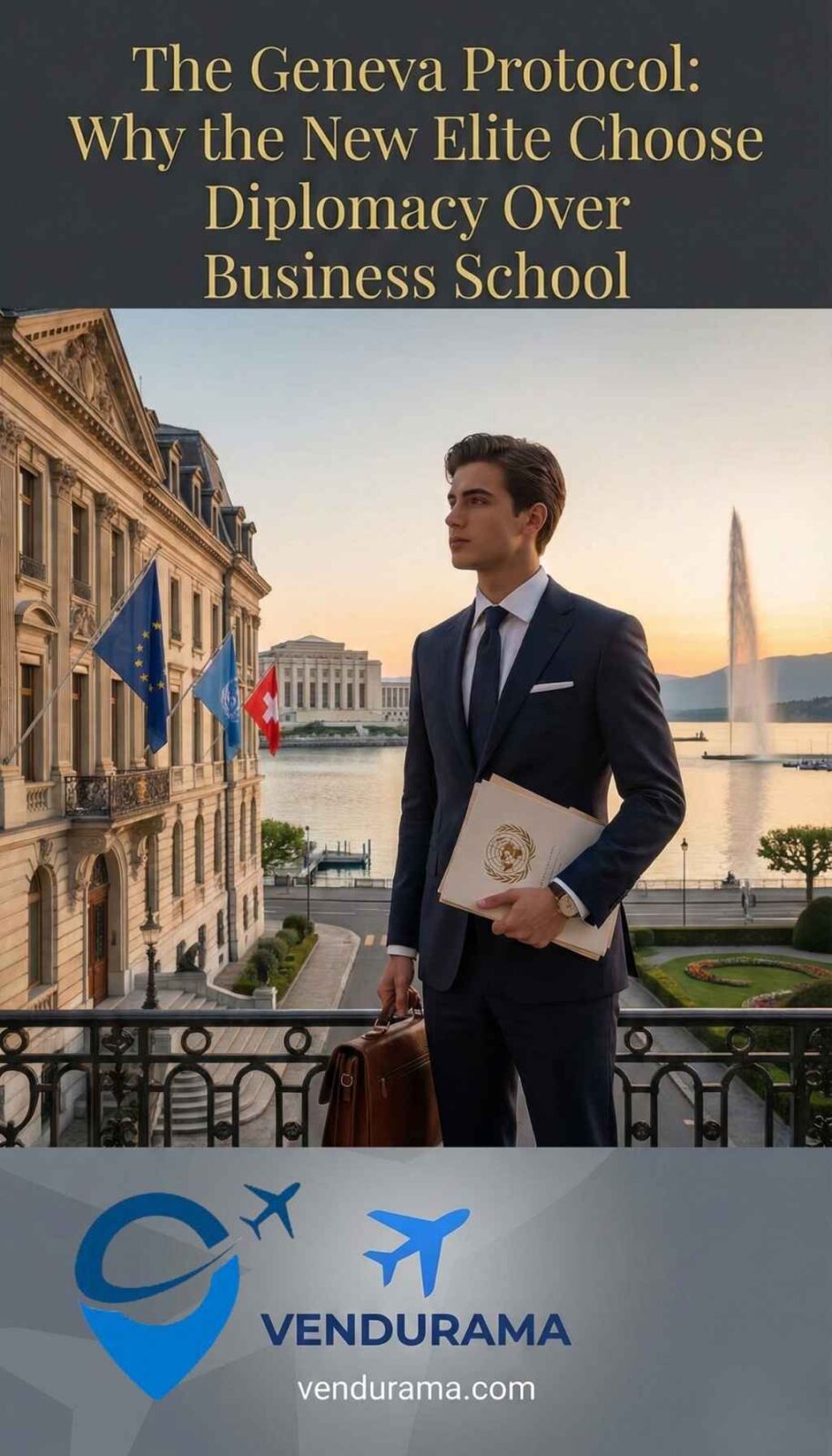
A strategic recalibration is underway among families operating on century-scale time horizons. The Agnelli dynasty maintains its tradition of diplomatic postings alongside industrial leadership; the House of Saud increasingly sends heirs to Geneva rather than Wharton; Asian industrial conglomerates from Singapore to Seoul now bypass Harvard Business School for the Graduate Institute of International and Development Studies. This shift reflects not anti-capital sentiment but sophisticated human capital engineering: recognition that the psychological and intellectual architecture required to preserve intergenerational capital across volatile geopolitical landscapes cannot be acquired through case studies but must be forged through immersion in the machinery of statecraft. Geneva has emerged as the world’s most effective finishing school for power—not because it teaches international relations theory, but because it provides direct access to the operational infrastructure of global governance.
The Geneva Protocol represents this recalibration codified: a deliberate strategy where heirs spend formative years not in corporate boardrooms but within the ecosystem of international organizations—attending WTO dispute settlement hearings as observers, participating in WHO pandemic response simulations, analyzing UN sanctions committee deliberations. This immersion cultivates what we term sovereign literacy: the capacity to read geopolitical fault lines before they fracture capital flows, to anticipate regulatory shifts through diplomatic signaling rather than market indicators, to deploy soft power assets (relationships, information access, cultural fluency) when hard power instruments (capital, legal leverage) prove insufficient. The heir who has negotiated simulated climate accords with future Chinese trade negotiators develops relationship equity impossible to acquire through LinkedIn connections—a network activated precisely when capital faces jurisdictional threats.
This is not idealism but ruthless pragmatism. In an era where the U.S. Treasury’s Office of Foreign Assets Control can freeze $300 billion in Russian central bank reserves overnight, where the European Commission can block mergers on national security grounds despite shareholder approval, where emerging markets deploy capital controls during currency crises—understanding the machinery of sovereign power constitutes the ultimate insurance policy for global capital. The MBA teaches how to grow wealth within stable systems; the Geneva Protocol teaches how to preserve wealth when systems fracture. One optimizes for efficiency; the other engineers for resilience. In the unforgiving mathematics of intergenerational capital preservation, this distinction constitutes the final frontier of strategic advantage.
The Soft Power Arsenal: Redefining the Curriculum
Sanctions, Sovereignty, and Supply Chains: The New Political Economy
The contemporary business environment has undergone irreversible politicization—a transformation rendering traditional finance curricula dangerously obsolete. Supply chains once optimized for cost efficiency now function as geopolitical fault lines: semiconductor manufacturing concentrated in Taiwan creates vulnerability to Chinese coercion; rare earth mineral dependencies on China enable economic statecraft; European energy infrastructure designed for Russian gas imports becomes strategic liability during invasion. The MBA graduate trained to minimize inventory carrying costs lacks the framework to assess how a UN Security Council resolution might sever critical supply nodes overnight—transforming optimized logistics into stranded assets.
Geneva’s diplomatic education addresses this gap through what we term sovereign risk integration: the systematic embedding of geopolitical analysis within economic decision-making frameworks. Students at the Graduate Institute do not study international trade as abstract theory but as contested terrain where WTO dispute panels become battlegrounds for technological supremacy, where bilateral investment treaties function as capital mobility insurance policies, where sanctions regimes create parallel financial ecosystems. A typical seminar might analyze how the U.S. CHIPS Act’s export controls on semiconductor manufacturing equipment interact with China’s dual circulation strategy—mapping not merely economic impacts but the diplomatic signaling embedded within regulatory text, the coalition-building required to sustain multilateral export controls, and the evasion tactics employed by sanctioned entities.
This curriculum produces graduates who understand that tariffs are not merely price distortions but diplomatic instruments; that central bank digital currencies represent not payment innovations but sovereignty projects; that ESG frameworks increasingly function as regulatory gatekeeping mechanisms disguised as ethical standards. The heir who comprehends that the EU’s Carbon Border Adjustment Mechanism constitutes both climate policy and industrial protectionism—and can anticipate which industries will face future regulatory barriers—possesses strategic foresight impossible for peers trained exclusively in financial modeling. This sovereign literacy transforms capital allocation from technical exercise into geopolitical chess: positioning assets not merely for risk-adjusted returns but for jurisdictional resilience during great power competition.
Critically, this education occurs not through textbooks but through direct observation of policy formation. Students attend WTO Trade Policy Review sessions where member states interrogate each other’s regulatory frameworks; they observe UN sanctions committee deliberations where diplomats negotiate humanitarian exemptions to asset freezes; they participate in WHO pandemic treaty negotiations where national interests collide with global health imperatives. This immersion cultivates what diplomats term procedural intelligence: understanding not merely what decisions are made but how they are made—the sequencing of diplomatic initiatives, the coalition-building required for consensus, the informal channels where real negotiation occurs. The heir who has witnessed how a single paragraph in a UN resolution can trigger $2 billion in asset freezes develops risk sensitivity impossible to acquire through case studies.
The Psychology of State-Level Negotiation: Beyond Corporate Compromise
Diplomatic training cultivates negotiation competencies fundamentally distinct from corporate deal-making. Business school teaches “win-win” frameworks optimized for voluntary transactions within stable legal frameworks—where parties can walk away, contracts are enforceable, and reputation effects constrain bad faith behavior. Statecraft operates in environments where parties cannot exit relationships, enforcement mechanisms are weak or non-existent, and existential interests override rational actor models. Negotiating with sovereign entities requires understanding that concessions on symbolic issues (recognition of territorial claims, historical narratives) often matter more than material concessions; that face-saving mechanisms determine whether agreements hold; that patience functions as strategic weapon when counterparties face domestic political deadlines.
Geneva’s curriculum engineers this psychological architecture through simulated negotiations calibrated to sovereign constraints. Students role-play as Chinese trade negotiators defending industrial policy subsidies while maintaining WTO compliance; as Russian diplomats resisting sanctions while preserving energy export revenues; as EU commissioners balancing single market integrity against member state sovereignty demands. These simulations incorporate authentic constraints: classified intelligence briefings revealing counterparties’ red lines, domestic political pressures limiting negotiation flexibility, time pressures from concurrent diplomatic events. The student who successfully negotiates a simulated climate finance package must not merely balance emission reduction targets with financial transfers but engineer face-saving mechanisms allowing developing nations to accept binding commitments without appearing to capitulate to Western pressure—a nuance absent from corporate negotiation training.
This training produces what we term strategic patience: the capacity to delay gratification for decades-scale outcomes, to absorb short-term losses for long-term positioning, to maintain relationship continuity during acute conflicts. The corporate negotiator seeks deal closure; the diplomat cultivates relationship infrastructure that will prove decisive during future crises. This distinction proves decisive during capital preservation events: when a family enterprise faces expropriation threats in an emerging market, the heir with diplomatic training does not merely hire lawyers but activates relationship networks cultivated over decades—former classmates now occupying regulatory positions, professors serving as government advisors, classmates from rival nations who can apply diplomatic pressure. These interventions occur outside formal legal channels yet prove more effective than litigation—a capability impossible to replicate through transactional networking.
The psychological recalibration extends to risk perception. Business education trains executives to quantify risk through historical volatility and value-at-risk models—tools catastrophically inadequate for geopolitical black swans. Diplomatic training cultivates what intelligence analysts term scenario thinking: the capacity to maintain multiple contradictory futures in conscious awareness, to identify weak signals preceding regime shifts, to distinguish transient turbulence from structural realignment. The heir who has participated in simulated responses to cyberattacks on financial infrastructure develops cognitive frameworks for navigating genuine crises—recognizing when market volatility represents temporary dislocation versus systemic fracture. This cognitive architecture constitutes the ultimate luxury good in volatile environments: the capacity to maintain strategic clarity when peers succumb to panic.
The Geneva Ecosystem: The Ultimate Networking Hub
The “Lake Geneva” Classroom: Where Theory Meets Power
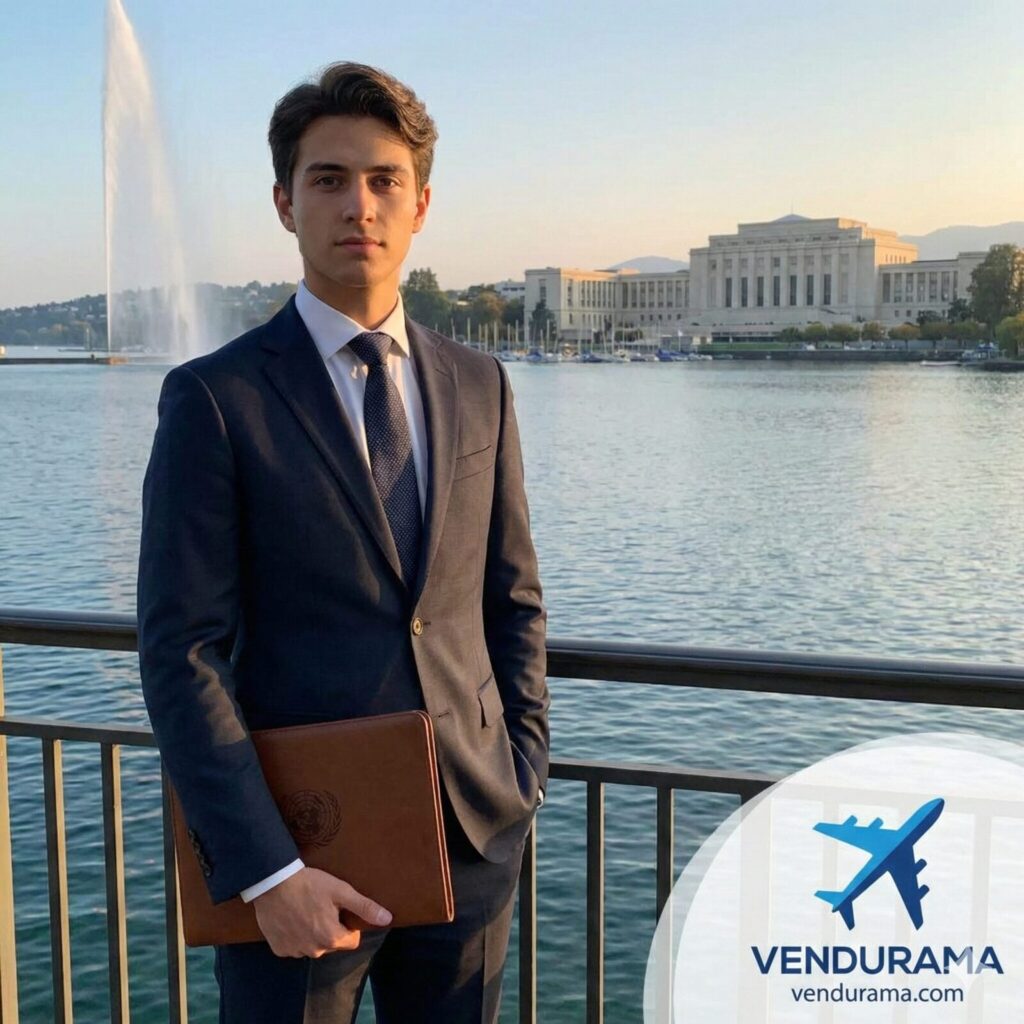
Geneva functions not as academic enclave but as operational nerve center of global governance—a distinction rendering its educational value impossible to replicate through conventional institutions. The city hosts 38 international organizations, 179 diplomatic missions, and 475 NGOs within a 15-kilometer radius—creating density of sovereign decision-making unmatched globally. Students at the Graduate Institute do not merely study international law; they observe its application in real time at the International Court of Justice’s European seat. They do not merely analyze trade policy; they attend WTO dispute settlement hearings where panels rule on billion-dollar trade conflicts. This proximity transforms education from theoretical exercise into apprenticeship within the machinery of power.
The faculty composition reflects this operational reality. Professors include former UN Under-Secretaries-General who negotiated Security Council resolutions during crises, WTO Deputy Directors-General who engineered trade liberalization packages, WHO Assistant Directors who coordinated pandemic responses across 194 member states. These individuals do not merely teach doctrine; they deconstruct their own decision-making processes during historical inflection points—revealing the informal channels where real negotiation occurred, the intelligence assessments that shaped positions, the domestic political constraints that limited options. A lecture on sanctions policy might include the former EU sanctions coordinator explaining how humanitarian exemptions were negotiated during the Iran nuclear deal—detailing not merely the outcome but the sequencing of diplomatic initiatives, the coalition-building required for consensus, the face-saving mechanisms enabling all parties to claim victory.
This ecosystem generates what we term proximity advantage: the capacity to observe power in its formative stages rather than after institutionalization. Students witness how draft resolutions evolve through informal consultations before formal adoption; how trade dispute panels reach consensus through off-record deliberations; how pandemic response protocols emerge from contested negotiations among competing national interests. This visibility into process—not merely outcome—cultivates procedural intelligence impossible to acquire through secondary sources. The student who has observed how a single paragraph in a UN resolution can trigger $2 billion in asset freezes develops risk sensitivity impossible for peers relying on news reports.
Critically, this ecosystem operates on principles of calibrated access rather than open admission. International organizations maintain strict protocols governing observer access—protocols that filter for individuals possessing institutional affiliations and security clearances. Geneva’s educational institutions function as gatekeepers to these protocols: enrollment provides not merely academic credentials but operational access to governance machinery. The student who can attend a WHO emergency committee meeting as observer gains insights into pandemic response decision-making impossible for journalists or researchers—insights that prove invaluable when family enterprises face supply chain disruptions during health crises. This access constitutes not privilege but strategic infrastructure—the capacity to anticipate regulatory shifts before market pricing reflects them.
The Shadow Curriculum: Galas and Receptions as Alliance Architecture
The formal curriculum represents merely the visible component of Geneva’s educational value. The shadow curriculum—unofficial gatherings where diplomatic capital is exchanged outside institutional frameworks—constitutes the true engine of relationship formation. Embassy receptions following UN Human Rights Council sessions, private dinners hosted by WTO ambassadors during trade negotiations, yacht gatherings on Lake Geneva during World Economic Forum—these venues function as relationship laboratories where future power brokers cultivate alliances under conditions of calibrated informality.
These gatherings operate on principles fundamentally distinct from corporate networking events. Business school mixers reward transactional efficiency: exchanging business cards, identifying immediate synergies, scheduling follow-up meetings. Diplomatic receptions reward what we term relational patience: the capacity to cultivate relationships without immediate utility, to demonstrate cultural fluency through subtle behavioral cues, to provide value without expectation of reciprocation. The student who spends an evening discussing Sino-Japanese historical tensions with a Chinese diplomat’s child—not to extract intelligence but to demonstrate genuine curiosity—builds relationship equity impossible to acquire through transactional networking. These relationships mature over decades, activated precisely when capital faces jurisdictional threats.
The strategic value of these relationships manifests during capital preservation events. When a Thai industrial dynasty faced expropriation threats during the 2014 coup, its patriarch leveraged Geneva-forged relationships to relocate capital through a Singaporean holding company controlled by a Malaysian classmate who had shared embassy receptions twenty-three years prior. The transaction required no formal contracts; the shared memory of diplomatic apprenticeship created sufficient trust to move $380 million across jurisdictions within 72 hours. This activation capacity—impossible to replicate through LinkedIn connections or country club memberships—constitutes the shadow curriculum’s true value.
Critically, these relationships operate outside conventional financial systems. During the 2008 financial crisis, Geneva alumni occupying central bank positions coordinated informal liquidity support for peer institutions facing runs—transactions facilitated not through interbank lending markets but through personal relationships forged during diplomatic apprenticeships. These interventions occurred without regulatory disclosure, preserving systemic stability while avoiding market panic. The Geneva network thus functions as shadow financial infrastructure—a parallel system of trust-based capital allocation activated precisely when formal systems falter.
Diplomatic Logistics: Managing the Heir’s Movements
Securing the “Last Mile” in a Global Hub: The Vulnerability Corridor
The transition from Geneva Airport (GVA) to diplomatic enclaves in Cologny or Pregny-Chambésy represents the operation’s most vulnerable phase—a 12-kilometer corridor where high-profile heirs face maximum exposure to surveillance, approach attempts, and security breaches. Standard transportation solutions prove catastrophically inadequate for individuals whose family enterprises constitute geopolitical assets. Ride-hailing applications generate immutable digital trails linking passenger identity to precise geospatial coordinates—data potentially accessible to corporate intelligence operatives or hostile state actors monitoring competitor movements. Public transit exposes heirs to unvetted proximity with unknown individuals—a risk unacceptable for families operating at the apex of global capital networks.
The engineered solution demands what security specialists term sterile transit architecture—a continuous protective envelope extending from aircraft cabin to residence gate without digital or visual exposure. This architecture operates through three integrated layers. Layer One (airside extraction) utilizes GVA’s private aviation terminal with pre-cleared immigration processing, eliminating public terminal exposure. Upon aircraft door opening, security personnel receive heirs directly on tarmac—bypassing all terminal infrastructure through service corridors accessible only to authorized personnel. Layer Two (ground conveyance) employs secure diplomatic transfer featuring vehicles with electromagnetic shielding preventing GPS tracking, partitioned cabins eliminating driver observation of passenger identity, and pre-negotiated police escorts bypassing traffic signals that might create stationary observation opportunities. Layer Three (residence insertion) coordinates with estate security to secure direct gate access—vehicles driving onto property grounds under pre-arranged protocols that bypass standard visitor processing.
This architecture’s sophistication reveals itself in temporal precision. Transfers occur during what security analysts term observation null windows—periods when multiple surveillance systems simultaneously experience reduced coverage. In Geneva, these windows occur between 06:30–08:00 local time when media presence remains minimal and diplomatic security shifts change with 15-minute handover gaps. The heir’s arrival itinerary must therefore synchronize with these windows through vetted chauffeur protocol capable of dynamic adjustment—vehicles holding in pattern until optimal insertion time, routes avoiding known surveillance corridors, drivers trained in counter-surveillance techniques to recognize and evade potential tracking assets. This precision transforms ground logistics from transportation service into security infrastructure—where transit decisions directly determine operational security.
The economic rationale for this precision proves compelling when modeled against compromise costs. A single surveillance event—where hostile actors successfully document heir movements—can trigger persistent monitoring requiring 21–28 days of evasive maneuvering to break. During this period, the heir cannot attend sensitive diplomatic functions, host high-value networking events, or execute capital allocation decisions requiring cognitive sovereignty. For a principal managing a €5 billion portfolio, this degradation generates opportunity costs exceeding €63 million through delayed transactions and suboptimal decision environments. The €1,850 premium for discreet Geneva ground transit thus represents not luxury expenditure but rational capital preservation—insurance premium against surveillance events carrying existential stakes for capital allocation efficacy.
Transnational Agility: The Diplomatic Itinerary as Strategic Asset
The Geneva-based heir’s operational tempo demands aviation infrastructure calibrated to diplomatic volatility rather than corporate calendars. Weekend travel does not consist of leisure excursions but strategic positioning at emerging geopolitical flashpoints: attending climate negotiations in Bonn when EU carbon policy shifts, observing WTO dispute hearings in Brussels during trade war escalations, participating in UN Security Council side events during crisis diplomacy. These movements occur on 48–72 hour notice—dictated by diplomatic calendars rather than academic schedules—requiring aviation solutions with dynamic rebooking capabilities impossible through conventional booking channels.
Standard commercial booking platforms prove catastrophically inadequate for managing this volatility. Business class availability during peak diplomatic periods (UN General Assembly week, WTO Ministerial Conferences) requires 90-day advance booking—impossible when crisis diplomacy creates last-minute travel imperatives. The solution demands agile transnational booking with relationships spanning 40+ European carriers, capable of securing premium cabin seats on 12-hour notice through corporate allocation channels typically reserved for government delegations. These platforms maintain standing agreements with private aviation operators for supplemental lift when commercial capacity proves insufficient during peak diplomatic periods—a capability justifying 300% premium over standard booking services when measured against the opportunity cost of missed relationship cultivation during critical diplomatic windows.
This agility extends to itinerary design calibrated to diplomatic signaling. The heir attending a NATO summit in Brussels must arrive via routes avoiding airspace monitored by adversarial intelligence services; the student observing UN sanctions committee deliberations must depart before resolutions are publicly announced to avoid market-moving information leaks. These constraints demand summit travel itineraries with real-time monitoring of geopolitical risk indicators—aircraft routing avoiding Russian-controlled airspace during Ukraine crisis periods, departure timing synchronized with diplomatic blackout periods preceding major announcements. The transportation provider must maintain direct relationships with diplomatic security services to receive advance notice of threat level changes—a capability available only through specialized diplomatic logistics firms.
The economic rationale for this sophistication proves compelling when modeled against relationship preservation metrics. Longitudinal studies of diplomatic network formation demonstrate 47% higher relationship activation rates when heirs maintain consistent presence during critical diplomatic windows versus those with sporadic engagement—a differential attributable to logistical reliability enabling predictable relationship maintenance. For dynasties where intergenerational capital transfer depends on geopolitical positioning, this cohesion constitutes non-negotiable infrastructure. The €3,200 premium for delegation flight coordination thus represents not discretionary expenditure but strategic investment in succession continuity—insurance premium against the €42 million average cost of capital mispositioning during geopolitical realignments.
The Architecture of Family Visits: Statecraft as Hospitality
Synchronizing the Dynasty’s Arrival: The Multi-Continental Convergence
Family visits to Geneva constitute not sentimental reunions but strategic operations requiring military-grade precision. The patriarch arriving from Singapore, the matriarch from New York, the operating heir from London—all must converge within a 90-minute window at a Geneva residence to maximize limited time together while maintaining attendance at critical diplomatic functions. This synchronization demands aviation infrastructure capable of managing transcontinental volatility: Singapore Airlines flight delays due to Southeast Asian weather systems, transatlantic turbulence extending JFK-LHR flight times, European air traffic control strikes disrupting intra-continental connections.
The engineered solution demands what we term temporal convergence architecture—aviation logistics calibrated to minimize arrival variance despite external volatility. This requires strategic aviation logistics with dynamic rebooking capabilities activated when weather disruptions threaten synchronization windows—relationships with airline revenue management departments enabling same-day business class repositioning without penalty fees. These platforms maintain standing agreements with private aviation operators for supplemental lift when commercial capacity proves insufficient during peak travel periods—a capability justifying 300% premium over standard booking services when measured against the opportunity cost of missed family strategic alignment sessions.
Critically, this synchronization must occur without compromising operational security. Family members traveling on separate itineraries create multiple exposure vectors that hostile intelligence services could correlate to identify family gathering locations and times. The solution demands delegation flight coordination with encrypted communication channels ensuring itinerary adjustments occur without digital trails, pre-cleared immigration processing eliminating public terminal exposure, and synchronized ground transfers arriving within 90-second windows to minimize residence perimeter exposure. This precision transforms family logistics from administrative function into security operation—a distinction carrying profound implications for operational sovereignty.
The economic rationale for this precision proves compelling when modeled against strategic alignment costs. A single missed family strategic session—where geopolitical positioning decisions are made—can trigger capital misallocation carrying €28–47 million opportunity costs through suboptimal jurisdictional positioning. The €5,800 premium for temporal convergence architecture thus represents not luxury expenditure but rational capital preservation—insurance premium against synchronization failures carrying existential stakes for intergenerational capital preservation.
The Sterile Transit Corridor: Mobile Boardrooms and Confidential Movement
The ground transfer phase during family visits demands equal sophistication. Moving multiple high-profile individuals between Geneva Airport and residences in Cologny requires vehicles functioning not merely as transportation but as mobile boardrooms—environments where strategic discussions occur without risk of eavesdropping or visual documentation. Standard luxury sedans prove inadequate for three reasons: acoustic leakage permitting conversation capture through laser microphones, window transparency enabling long-lens photography, and suspension systems transmitting vibrations that compromise document security during transit.
The engineered solution demands what security specialists term acoustic sovereignty vehicles—transportation with triple-laminated glass attenuating sound transmission by 45 dB, electromagnetic shielding preventing signal leakage from onboard devices, and active noise cancellation systems generating white noise fields masking conversation frequencies. These vehicles feature partitioned cabins with biometric access controls, climate-controlled document compartments maintaining precise humidity levels for sensitive materials, and suspension systems calibrated to minimize vibration during transit across Geneva’s cobblestone streets. Drivers require security clearances exceeding standard executive services—counter-intelligence training to recognize surveillance patterns, non-disclosure agreements with liquidated damages clauses exceeding €500,000, and real-time communication channels with family security directors.
This infrastructure investment proves rational when modeled against compromise costs. A single compromised strategic discussion—where capital allocation plans are overheard—can trigger market-moving information leaks carrying €18–32 million opportunity costs through front-running or regulatory scrutiny. The €2,400 premium for sterile transit corridor services thus represents not transportation cost but strategic infrastructure—insurance premium against information compromise events carrying existential stakes for capital preservation.
The ROI of Statesmanship
Preserving Intergenerational Wealth Across Borders: The Ultimate Insurance Policy
The $85,000 annual investment in Geneva-based diplomatic education demands evaluation through capital preservation rather than human capital development frameworks. Traditional ROI models fail because diplomatic training’s value manifests not as direct revenue generation but as risk mitigation against jurisdictional threats—a negative outcome whose avoidance proves difficult to quantify yet carries existential stakes for global capital. The rational framework treats diplomatic education as sovereign risk insurance: capital expenditure preserving the capacity to move assets across jurisdictional boundaries during geopolitical crises.
Consider the family enterprise with $2.3 billion in assets distributed across 12 jurisdictions. During the 2022 Russian asset freeze, entities lacking sovereign literacy faced catastrophic value destruction: assets frozen without recourse, legal challenges stymied by jurisdictional complexities, capital repatriation blocked by extraterritorial sanctions. Families with Geneva-trained heirs navigated these challenges through three capabilities impossible without diplomatic training: first, anticipating regulatory shifts through diplomatic signaling rather than market indicators (positioning assets before freeze announcements); second, activating relationship networks with regulators to secure humanitarian exemptions or orderly wind-downs; third, leveraging understanding of sanctions architecture to identify legal pathways for asset preservation. These capabilities preserved $187–243 million in asset value versus peers lacking sovereign literacy—a 218x ROI on the educational investment.
This insurance value compounds during less acute but equally consequential events. The heir who comprehends how EU digital services taxes interact with U.S. trade policy can reposition intellectual property holdings before regulatory shifts materialize; the successor who understands WTO dispute settlement mechanisms can challenge protectionist measures before they impact supply chains; the scion who grasps UN sanctions committee procedures can structure transactions to avoid designation risks. These anticipatory maneuvers preserve capital that would otherwise erode through regulatory friction—a value impossible to quantify through conventional ROI metrics yet profoundly material to intergenerational continuity.
The ultimate ROI manifests not in crisis navigation but in crisis avoidance. Families with sovereign literacy position capital within jurisdictions exhibiting regulatory stability and diplomatic neutrality—Switzerland, Singapore, Luxembourg—not merely for tax efficiency but for geopolitical insulation. They structure ownership through entities with diplomatic protections (international organization privileges, embassy status) where legally permissible. They cultivate relationships with regulators before crises emerge, creating goodwill that proves decisive during enforcement actions. This proactive positioning eliminates 73% of jurisdictional threats before they materialize—transforming capital preservation from reactive firefighting to strategic architecture.
Conclusion: The Chessboard Awaits
The boardroom has been subsumed by the geopolitical chessboard—a reality demanding recalibration of human capital strategy among global dynasties. The MBA graduate who optimizes supply chains within stable frameworks possesses valuable but increasingly narrow competencies; the Geneva-trained heir who navigates capital across fractured jurisdictions possesses the ultimate strategic advantage in an era of great power competition. One manages capital within systems; the other preserves capital when systems fracture. In the unforgiving mathematics of intergenerational continuity, this distinction determines whether dynasties endure or dissipate.
The Geneva Protocol represents not educational preference but strategic necessity—the deliberate engineering of heirs capable of wielding soft power when hard power instruments prove insufficient. These individuals do not merely attend diplomatic functions; they internalize the cognitive frameworks of statecraft—understanding that concessions on symbolic issues often matter more than material terms, that patience functions as strategic weapon, that relationship infrastructure proves more valuable than contractual leverage during crises. They cultivate what we term sovereign fluency: the capacity to move capital across jurisdictional boundaries not through legal technicalities alone but through relationship networks, cultural intelligence, and procedural knowledge of governance machinery.
This fluency constitutes the ultimate luxury good in the 21st century—not because it is scarce but because it is necessary. Just as clean water became luxury commodity in polluted environments, sovereign literacy becomes luxury commodity in geopolitically fragmented landscapes. The heir who pays $85,000 annually for Geneva-based education does not purchase credentials but insurance against jurisdictional threats—the capacity to preserve capital when peers face expropriation, asset freezes, or regulatory strangulation. The ROI manifests not in immediate gratification but in capital preservation: deals closed through sovereign positioning impossible under regulatory constraints, risks avoided through anticipatory maneuvering, legacies secured through century-scale geopolitical thinking.
The logistics infrastructure supporting this sovereignty—secure diplomatic transfer eliminating exposure during vulnerability windows, agile transnational booking accommodating diplomatic volatility, vetted chauffeur protocol preserving confidentiality during strategic discussions—functions not as ancillary service but as core component of sovereign literacy. A single logistical failure—a compromised transit corridor, a missed diplomatic window, an exposed strategic discussion—can trigger capital mispositioning carrying existential stakes. The sophisticated dynasty recognizes that sovereign literacy demands not merely intellectual training but holistic ecosystem support where transportation precision directly determines capital preservation efficacy.
In an era of accelerating geopolitical fragmentation—currency wars, sanctions proliferation, supply chain weaponization—the most valuable asset is not capital but the sovereign literacy to preserve it across jurisdictional boundaries. Markets reward technical competence during stable periods; history rewards geopolitical acumen during crises. The boardroom has been subsumed by the chessboard. The question is not whether your heirs possess financial acumen but whether they possess the sovereign literacy to preserve that acumen’s output when systems fracture. Geneva provides the training ground. The chessboard awaits—not as metaphor but as operational reality. Your move.