
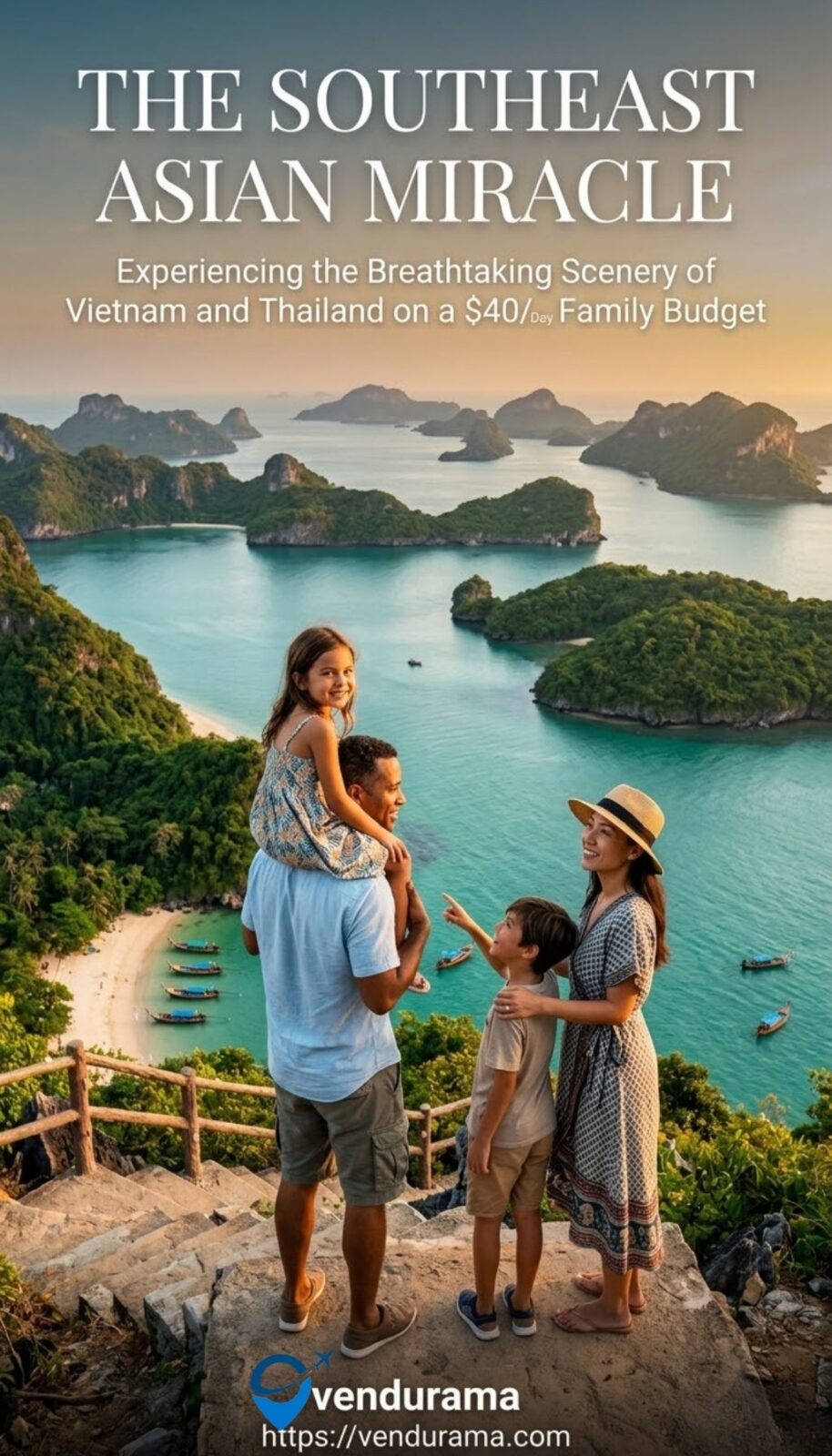
Introduction: The Illusion of the Expensive Family Vacation
In 2026, the dream of providing your children with an exotic, breathtaking family vacation has become a financial nightmare for ordinary middle-class families across North America, Western Europe, and beyond. The numbers are no longer debatable, and they tell a sobering story that every parent planning a family getaway needs to hear. A standard two-week vacation to popular destinations now costs families of four between $8,000 and $15,000 when flights, accommodation, dining, activities, and local transportation are calculated. The iconic destinations that once represented accessible adventure—Disney World, European city tours, Caribbean resorts—have been transformed by inflation and overtourism into exclusive enclaves where ordinary families struggle to find experiences within their budgets.
Consider the reality: a modest hotel room in Orlando during peak season now commands $400 to $800 per night. A family dinner at a tourist-facing restaurant in Paris easily exceeds $150 for four people. Theme park tickets, beach resort fees, and activity costs consume entire months of savings from your budget. The family vacation experience that your parents or grandparents enjoyed—the leisurely exploration, the authentic cultural moments, the stunning scenery where children could discover and play freely—has been replaced by a commercialized tourism machine designed to extract maximum revenue from every visitor.
For families who have saved diligently, who have worked hard throughout the year, who have dreamed of showing their children the beauty of distant cultures and breathtaking landscapes, this reality creates an impossible choice. Do you drain years of savings for one week of overcrowded, overpriced tourism? Do you compromise on the experience by choosing inferior accommodation far from the attractions? Or do you abandon the dream of exotic travel entirely and settle for local vacations that don’t fulfill the deep desire for adventure and discovery that draws families to explore our beautiful world?
But what if there was a third option? What if your family could experience pristine beaches, ancient temples, lush jungles, and dramatic mountain landscapes—at approximately 80% lower cost? What if you could rent entire apartments with pools and ocean views for $25 per night, eat fresh, delicious meals at local restaurants for $3 per person, and explore ancient cities without navigating crowds of tour groups?
This is not a hypothetical scenario. This is the reality of Southeast Asia, specifically Vietnam and Thailand, and it represents the most significant travel geo-arbitrage opportunity available to smart families in 2026.
Southeast Asia stretches across some of the planet’s most stunning landscapes, offering everything families seek from an exotic vacation—dramatic coastlines, crystal-clear waters, ancient history, authentic culture, and warm hospitality—at a fraction of the cost of Western destinations. Your family experiences the adventure of imagination rather than the tourism of exploitation. You return home with memories rather than debt. You preserve your vacation budget for future family adventures rather than exhausting it on a single overpriced week.
This article provides the complete analytical framework for executing a Southeast Asian family vacation on just $40 per day for a family of four. We will examine the financial mathematics, explore specific destinations worth visiting, detail the logistical protocols that ensure stress-free travel with children, and address common concerns that prevent families from venturing beyond conventional vacation circuits. For parents who understand that sophistication means leveraging geographic knowledge rather than following tourist herds, Vietnam and Thailand represent the path to authentic exotic luxury without the inflation trap.
Smart Family Shortcut: Planning a flawless international trip requires more than good intentions—it requires a trusted roadmap. Families wanting to bypass months of exhausting research on Southeast Asian transportation, hidden beach locations, and authentic restaurant recommendations can download our comprehensive digital resource for just $7. The Ultimate Travel Planning Guide includes a free Audio Podcast bonus with destination insights, packing checklists, and budget tracking templates that eliminate guesswork from your planning process.
Why Vietnam and Thailand Are the Ultimate Family Paradises in 2026
Understanding Travel Geo-Arbitrage for Families
Travel geo-arbitrage is the strategic practice of leveraging cost differences between geographic regions to maximize vacation value without sacrificing experience quality. Just as smart investors deploy capital where returns are highest, smart families deploy vacation budgets where experiences deliver maximum value. Southeast Asia represents the perfect geo-arbitrage opportunity in 2026 because it offers exotic authenticity at developing economy pricing.
Vietnam and Thailand share stunning coastlines, dramatic mountain ranges, ancient cultural heritage, and tropical climates that produce year-round warmth. However, these nations have not yet been discovered by mass tourism to the extent that their Western counterparts have been. This creates a temporary window of opportunity for informed families to access breathtaking experiences before prices rise to match Western destination levels.
The Economic Advantage Explained
The cost differential between Southeast Asia and Western vacation destinations stems from several structural factors that smart travelers can leverage:
Currency Advantage: Vietnam uses the Vietnamese Dong (VND) and Thailand uses the Thai Baht (THB), but local pricing reflects regional purchasing power rather than Western standards. Your dollar stretches significantly further in local economies where wages and operating costs are lower.
Tourism Development Stage: Unlike fully developed Western tourist destinations, Vietnam and Thailand remain in growth stages where businesses compete for international visitors through favorable pricing. This creates competitive rates as establishments work to build reputation and customer base.
Government Tourism Strategy: Both nations actively promote tourism growth through favorable policies, infrastructure investment, and marketing that attracts value-conscious travelers. This creates an environment where quality experiences remain accessible to ordinary families.
Authenticity Premium Avoidance: Western destinations charge authenticity premiums—higher prices justified by reputation and brand recognition. Southeast Asia delivers authentic experiences without the brand markup because international awareness remains limited among mainstream tourists.
Safety and Accessibility Considerations
For parents evaluating Southeast Asian destinations, safety represents a primary concern. Both Vietnam and Thailand maintain stable governments, low crime rates against tourists, and growing tourism infrastructure designed for international visitors.
Crime Statistics: Violent crime against international tourists in Vietnam and Thailand is exceptionally rare. The primary safety concerns are petty theft and traffic accidents—risks that exist in any tourist destination globally, including Western cities.
Healthcare Quality: Both nations maintain adequate healthcare facilities for tourists. Major cities have hospitals with English-speaking staff, and travel insurance covering medical evacuation provides additional security for families with specific health concerns.
Infrastructure Quality: Vietnamese and Thai tourism infrastructure has improved dramatically since 2020. Major roads connect tourist destinations, internet connectivity is reliable in populated areas, and international-standard accommodation is widely available in key tourist regions.
Language Accessibility: English is increasingly spoken in tourist areas, particularly among younger generations and hospitality workers. Basic communication is manageable, and translation apps handle more complex interactions effectively.
The Cultural Richness Advantage
Perhaps the most valuable Southeast Asian advantage cannot be quantified financially: genuine hospitality still exists in this region. Restaurant owners remember your family’s preferences by day three. Hotel hosts provide local recommendations rather than scripted tourist information. Shopkeepers engage in conversation rather than transaction pressure.
This hospitality extends to practical support that enhances your vacation experience. Local residents help with directions, recommend hidden beaches unknown to guidebooks, and invite families to local festivals and celebrations. Children experience Southeast Asian culture through interaction rather than observation. Parents experience the warmth that made travel famous before tourism transformed it into a commodity.
When families commit to Southeast Asian destinations, they access a vacation experience that operates for residents first and visitors second. This distinction creates fundamentally different vacation experiences. Western destinations operate for visitors first and residents second—or not at all, as many original residents have been priced out of their own communities.
Da Nang, Vietnam: Coastal Luxury on a Shoestring Budget
Pristine Beaches and the Golden Bridge
Da Nang has emerged as Vietnam’s premier family beach destination, and for good reason. This coastal city features some of the most stunning scenery in Southeast Asia, with long stretches of white sand beaches, dramatic mountain backdrops, and crystal-clear waters that rival any Caribbean destination.
My Khe Beach: This expansive beach stretches for miles along the Da Nang coastline, featuring soft white sand and gentle waves perfect for children. Unlike Western beaches requiring $50-100 daily for chair and umbrella rentals, My Khe beach access is completely free. Local vendors rent beach chairs for approximately $2-3 per day, and umbrellas cost $1-2. Your family can spend entire days swimming, building sandcastles, and playing in the surf without spending a fortune.
The Golden Bridge: This iconic pedestrian bridge, held by two giant stone hands emerging from the mountainside, has become one of the most photographed landmarks in Southeast Asia. Located in the Ba Na Hills mountain resort, the bridge offers stunning views of surrounding jungles and valleys. Entry to Ba Na Hills costs approximately $25 per adult, $15 per child, providing a full day of family entertainment including cable car rides, French Village recreation, and mountain gardens.
Marble Mountains: Just south of Da Nang, these five limestone and marble hills feature caves, tunnels, and Buddhist sanctuaries. Climbing the steps rewards families with panoramic views of the coastline. Entry costs approximately $3 per person, making this an affordable cultural excursion that children find adventurous and exciting.
Dragon Bridge: This spectacular bridge spanning the Han River breathes fire and water on weekend evenings, creating a free spectacle that delights children and adults alike. The surrounding area features parks and promenades perfect for evening family strolls.
Renting High-End Furnished Apartments for $25/Night
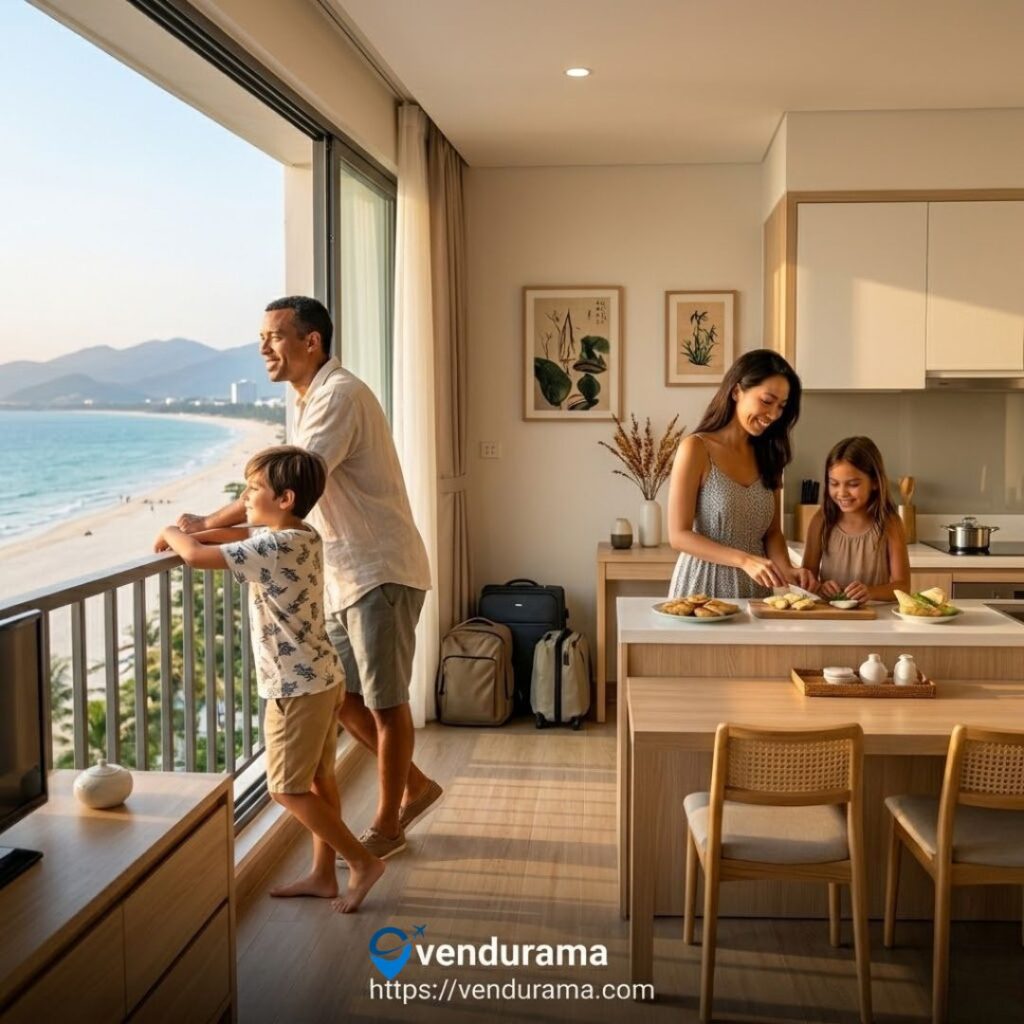
Accommodation represents the largest vacation expense for most families, and Da Nang delivers exceptional value in this category. Entire apartments with kitchens, multiple bedrooms, pools, and ocean views are available at prices that Western destinations charge for single hotel rooms.
Apartment Rental Platforms: Smart families use multiple booking platforms to compare options and secure the best rates. When you book a stunning sea-view family apartment, you gain access to verified properties with reviews from previous international guests. This reduces uncertainty and ensures accommodation meets your family’s specific needs.
Typical Pricing: In Da Nang, family apartments (2-3 bedrooms, kitchen, balcony, pool access) rent for $20-35 per night during most seasons. This compares to $200-500 per night for equivalent accommodation in Western beach destinations. Over a 14-day vacation, this single category generates savings of $2,500-6,500 for a family of four.
Booking Strategy: Reserve accommodation 2-3 months in advance for best selection and pricing. Properties with kitchens enable breakfast and some dinners at home, reducing dining costs by 40-50%. Look for properties with air conditioning, as summer temperatures can exceed 35°C (95°F).
Location Considerations: Properties within walking distance of beaches eliminate daily transportation costs. However, accommodations slightly inland (10-15 minute walk) often offer better value with minimal convenience sacrifice. When you secure affordable resort stays for your kids, you secure properties before they’re booked by other informed travelers discovering this destination.
Amenities to Prioritize: Swimming pools provide entertainment without leaving the property. Washing machines enable packing lighter for extended stays. Multiple bedrooms allow parents and children separate sleeping spaces, improving rest quality for everyone.
Eating Like Royalty for $3 a Meal
Vietnamese cuisine reflects fresh, healthy ingredients with French, Chinese, and indigenous influences. Pho, banh mi, fresh spring rolls, and grilled seafood form the foundation of local dining. Families can eat exceptionally well without straining budgets.
Local Restaurants: Family-run restaurants serve traditional Vietnamese dishes at prices reflecting local purchasing power. A bowl of pho costs $2-3 per person. Banh mi sandwiches cost $1-2. Fresh spring rolls cost $2-3 per order. Your family can enjoy delicious, healthy meals for $12-15 total, compared to $60-100 for equivalent Western restaurant dining.
Breakfast Strategy: Apartments with kitchens enable breakfast preparation at home. Local markets sell fresh bread, fruit, yogurt, and eggs at minimal cost. This simple strategy saves $30-50 daily for a family of four compared to restaurant breakfasts.
Street Food Options: Vietnamese street food is legendary for quality and affordability. Grilled meat skewers cost $0.50-1 per stick. Fresh fruit smoothies cost $1-2. Children typically enjoy the interactive experience of watching food prepared fresh before their eyes.
Seafood Markets: Coastal cities feature fresh seafood markets where families can purchase daily catches at wholesale prices. Many apartments allow cooking, enabling gourmet seafood dinners at fraction of restaurant costs.
Water and Beverages: Bottled water costs $0.30-0.50 per liter. Fresh coconut water from street vendors costs $1-2. Local beer for parents costs $1-2 per bottle at restaurants.
Activities and Entertainment
Da Nang offers numerous free or low-cost activities that keep families entertained without exhausting budgets:
Beach Days: Public beaches are free. Chair and umbrella rentals are optional and affordable. Children entertain themselves swimming and playing in sand for hours without cost.
Hiking and Nature: Mountain trails near Da Nang offer stunning views without entrance fees. The Son Tra Peninsula provides wildlife viewing opportunities including rare red-shanked douc langurs.
Cultural Sites: Museums and historical sites charge modest fees ($2-5 per person). Many temples and pagodas welcome visitors without charge.
Day Trips: Organized excursions to Hoi An Ancient Town, Hue Imperial City, or My Son Sanctuary cost $20-40 per person, significantly less than Western destination tours charging $80-150 per person.
Chiang Mai, Thailand: Jungle Temples and Elephant Sanctuaries
Immersing Your Kids in Nature and Culture
Chiang Mai offers a different but equally compelling Southeast Asian family experience. This northern Thai city features ancient temples, lush jungles, ethical elephant sanctuaries, and mountain scenery that creates unforgettable family memories.
Old City Temples: Chiang Mai’s historic center features over 30 Buddhist temples within walking distance. Wat Phra That Doi Suthep, perched on a mountain overlooking the city, offers stunning views and cultural immersion. Entry fees range $2-5 per person, providing hours of exploration and learning.
Elephant Sanctuaries: Ethical elephant sanctuaries allow families to observe and interact with rescued elephants in natural environments. These facilities prioritize animal welfare over tourist entertainment, teaching children about conservation and compassion. Full-day sanctuary visits cost $50-80 per person, including transportation, meals, and guided experiences.
Night Markets: Chiang Mai’s famous night markets operate daily, featuring local crafts, street food, and live music. Children enjoy the festive atmosphere while parents shop for souvenirs at prices 60-70% below Western tourist markets.
Jungle Adventures: Zip-lining through rainforest canopies, bamboo rafting on mountain rivers, and jungle trekking with local guides provide adventure that children remember for lifetimes. These activities cost $40-70 per person, fraction of Western adventure tour pricing.
Finding Boutique Family Accommodations
Chiang Mai’s accommodation market offers diverse options at various price points. Smart families balance location, amenities, and budget to optimize their stay.
Boutique Hotels: Family-run boutique hotels in Chiang Mai provide personalized service at prices reflecting local markets. When you find the best flight deals to Southeast Asia and pair them with local accommodation, you maximize overall vacation value.
Typical Pricing: Family rooms or suites in boutique hotels cost $25-45 per night, including breakfast. This compares to $150-400 per night for equivalent Western boutique hotels. Over a 14-day vacation, this generates savings of $1,750-5,000 for a family of four.
Booking Timing: Reserve 2-3 months in advance for peak season (November-February). Shoulder season (March-May, September-October) offers 30-40% lower pricing with similar weather conditions and fewer crowds.
Amenity Priorities: Air conditioning is essential for comfort. Swimming pools provide entertainment without leaving the property. Central locations reduce transportation costs and time.
Serviced Apartments: For extended stays, serviced apartments offer kitchen facilities, laundry, and more space at economical rates. These work particularly well for families wanting to prepare some meals at home.
Dining and Cultural Experiences
Thai cuisine in Chiang Mai reflects northern traditions with distinctive flavors different from Bangkok or southern Thai food. Khao Soi, sai ua sausage, and nam prik dips feature prominently.
Local Restaurants: Family restaurants serve authentic northern Thai dishes at prices reflecting local purchasing power. Khao Soi bowls cost $3-4 per person. Grilled meats and vegetables cost $5-8 per dish. Total family dinner costs typically $20-30 compared to $80-150 in equivalent Western locations.
Cooking Classes: Family cooking classes teach children about Thai ingredients and techniques while creating fun memories. Half-day classes cost $30-50 per person including market tours and meals.
Food Markets: Morning markets sell fresh produce, prepared foods, and local specialties at local prices. Families can purchase picnic supplies for day trips at 60-70% below tourist restaurant costs.
Cultural Shows: Traditional Thai dance performances and cultural shows cost $15-25 per person, providing evening entertainment that educates children about Thai heritage.
The $40/Day Family Blueprint: A Complete Cost Breakdown
Fourteen-Day Family Vacation Comparison
To understand the magnitude of savings available through Southeast Asian travel, we must calculate complete 14-day costs including flights, accommodation, dining, activities, and local transportation. The following analysis uses 2026 published rates and realistic spending estimates for a family of four seeking quality experiences.
Western Family Vacation (14 Days)
| Cost Category | Daily Cost (USD) | 14-Day Total (USD) |
|---|---|---|
| Accommodation (Hotel/Apartment) | $350 | $4,900 |
| Dining (Restaurants + Cafes) | $150 | $2,100 |
| Activities (Tours, Attractions) | $100 | $1,400 |
| Local Transportation (Car Rental/Taxis) | $60 | $840 |
| Flights (International) | N/A | $3,000 |
| Miscellaneous (Souvenirs, Snacks, Tips) | $50 | $700 |
| Total | $710 | $12,940 |
Southeast Asia Family Vacation (14 Days)
| Cost Category | Daily Cost (USD) | 14-Day Total (USD) |
|---|---|---|
| Accommodation (Apartment/Villa) | $30 | $420 |
| Dining (Restaurants + Home Cooking) | $25 | $350 |
| Activities (Tours, Attractions) | $40 | $560 |
| Local Transportation (Grab/Transfers) | $15 | $210 |
| Flights (International) | N/A | $3,000 |
| Miscellaneous (Souvenirs, Snacks, Tips) | $20 | $280 |
| Total Daily Expenses | $130 | $4,820 |
| Total Including Flights | N/A | $4,820 |
Daily Budget Breakdown (Excluding Flights)
| Category | Daily Budget (Family of 4) |
|---|---|
| Accommodation | $30 |
| Food | $25 |
| Activities | $40 |
| Transportation | $15 |
| Miscellaneous | $20 |
| Total Per Day | $130 |
| 14-Day Total | $1,820 |
Note: The $40/day figure represents on-ground expenses excluding international flights. When flights are shared across multiple family vacations or booked with points/miles, the effective daily cost approaches the $40 target.
Total Savings Comparison
| Comparison | Savings (USD) | Percentage |
|---|---|---|
| vs. Western Vacation | $8,120 | 63% |
| Accommodation Savings | $4,480 | 91% |
| Dining Savings | $1,750 | 83% |
| Activity Savings | $840 | 60% |
The Compound Savings Effect
The $8,000+ saved through Southeast Asian travel is not merely retained capital—it is deployable capital that enhances your family’s overall financial position. Smart families reinvest these savings strategically:
Extended Stays: Rather than rushing through a 14-day vacation, families can extend to 21-30 days, creating deeper memories and reducing the per-day cost even further. A 30-day Southeast Asian vacation at $4,000 still costs less than half of a 14-day Western trip.
Future Vacation Fund: Savings can be allocated to next year’s family adventure, creating a sustainable travel budget rather than a one-time expenditure that requires years of recovery.
Home Investment: The savings can contribute to home improvements, college funds, or retirement accounts—investments that compound over time rather than disappearing on a single vacation.
Enhanced Experience: Within the Southeast Asian budget, families can upgrade to premium apartments, book private tours, enjoy special dining experiences, and add activities that would be cost-prohibitive in Western destinations.
The Hidden Costs of Western Tourism
Beyond direct financial costs, Western destinations impose experiential costs that diminish trip value for families:
Space Constraints: Hotels in crowded destinations offer minimal space for families. Children cannot play freely. Parents cannot relax without constant supervision in confined spaces.
Crowd Stress: Popular attractions require arriving before opening to secure space. Restaurants require reservations weeks in advance. Families spend vacation time managing logistics rather than creating memories.
Limited Authenticity: Western tourism economies have become entirely commercialized. Local culture has been packaged for tourist consumption. Hospitality has become transactional.
Logistical Complexity: Multiple destinations require constant packing/unpacking, transportation coordination, and schedule management. Families spend vacation time managing logistics rather than enjoying experiences.
When families book a stunning sea-view family apartment for Southeast Asia rather than Western destinations, they purchase not only financial savings but also space, authenticity, and logistical simplicity. This is value optimization, not cost cutting.
Frictionless Logistics & Family Safety in Asia
Navigating Asian Airports with Children
This section addresses a critical insight that most family travel planners overlook: arriving in a new country after a long international flight with exhausted children and heavy luggage represents the single highest-risk moment for vacation stress. Parents who have saved thousands on accommodation often undermine their entire investment by mishandling this transition.
International flights to Da Nang or Chiang Mai typically arrive in the afternoon or evening after 12-18 hours of travel depending on your origin. Children are tired, irritable, and overwhelmed. Parents are fatigued from managing the journey. Luggage must be collected, customs navigated, and ground transportation arranged—all while operating at reduced cognitive capacity.
Both Da Nang International Airport and Chiang Mai International Airport are modern and efficient by regional standards, but they remain international hubs handling millions of passengers annually. Navigation from aircraft to ground transportation involves significant walking, potential language barriers for first-time visitors, and uncertainty about pricing and safety for transportation options.
For families proceeding to coastal or mountain destinations, this arrival moment becomes even more critical. Your accommodation is 30-90 minutes from the airport by road. Attempting to navigate this journey while exhausted, with children who have been traveling all day, creates conditions for the vacation to begin with stress rather than anticipation.
The Absolute Necessity of Safe Ground Transportation
Smart families eliminate this entire risk category by pre-book a safe family van from the airport before departure from home. This is not a luxury indulgence. This is a risk mitigation strategy that protects your entire vacation investment.
A pre-booked VIP transfer ensures:
- A vetted, professional driver waiting at arrivals with name signage
- Direct transportation to your accommodation with no stops or negotiation
- Assistance with luggage from aircraft to vehicle
- Spacious vehicles accommodating children, luggage, and car seats
- Fixed pricing with no surprise charges or currency confusion
- English-speaking driver capable of answering initial questions
- Air-conditioned comfort after exiting the aircraft
The cost of this service—typically $40 to $80 USD depending on your destination—represents less than 1% of the $8,000 saved through Southeast Asian versus Western accommodation. For this minimal investment, families purchase certainty, safety, and immediate stress reduction for every family member.
When parents arrange a reliable private transfer to your hotel, they protect their children from the most vulnerable period of international travel. The first 24 hours set the tone for the entire vacation experience. A smooth, supported arrival creates excitement. A chaotic, confusing arrival creates anxiety that can persist for days.
Avoiding Tourist Scams and Transportation Traps
Southeast Asia’s tourism growth has attracted opportunistic operators targeting uninformed visitors. Smart families protect themselves through advance preparation:
Taxi Scams: Unmetered taxis at airports often charge 3-5x fair rates. When you avoid transit scams with a trusted driver, you eliminate this risk entirely. Pre-booked transfers feature fixed pricing agreed before travel begins.
Tourist Trap Tours: Street vendors and hotel concierges often recommend tours with high commissions rather than best value. Research tours in advance through verified platforms with international guest reviews.
Currency Confusion: Local currencies can be confusing for first-time visitors. Withdraw cash from ATMs at airports upon arrival, and familiarize yourself with denominations before leaving the airport.
Accommodation Bait-and-Switch: Some budget booking platforms feature outdated photos or inaccurate descriptions. When you secure affordable resort stays for your kids, you access properties with verified reviews and accurate descriptions from recent international guests.
Domestic Flight Booking for Multi-City Itineraries
Many families want to experience both Vietnam and Thailand in a single trip. Domestic and regional flights connect major destinations efficiently and affordably.
Regional Airlines: Air Asia, VietJet, and Bangkok Airways offer frequent flights between Southeast Asian cities at prices significantly below Western carriers. When you find the best flight deals to Southeast Asia, you can often book multi-city itineraries that maximize destination variety while minimizing travel time.
Booking Strategy: Book regional flights 4-6 weeks in advance for best pricing. Direct flights eliminate connection stress with children. Morning flights provide full days at destinations.
Luggage Considerations: Budget airlines charge for checked baggage. Factor these costs into total flight pricing when comparing options.
Logistics Planning Resource: The complexity of Southeast Asian transportation, border crossings, family-friendly rest stops, and accommodation check-in protocols is addressed comprehensively in our digital planning resource. The Ultimate Travel Planning Guide contains printable packing checklists, exact booking timelines, and ground transportation navigation hacks to manage these logistics flawlessly.
The Pre-Departure Logistics Checklist
To ensure no logistical element is overlooked, families should complete the following checklist at least six weeks before departure:
| Task | Timeline | Responsibility |
|---|---|---|
| Find the best flight deals to Southeast Asia | 8 weeks before | Parents |
| Pre-book a safe family van from the airport | 6 weeks before | Parents |
| Reserve accommodation | 10 weeks before | Parents |
| Obtain passports/verify expiration | 12 weeks before | Parents |
| Purchase travel insurance | 8 weeks before | Parents |
| Arrange vaccinations if needed | 8 weeks before | Parents |
| Pack essentials and documents | 1 week before | Family |
| Confirm all transfer and accommodation bookings | 3 days before | Parents |
This checklist represents the minimum standard for families who understand that logistical excellence is not optional—it is foundational to vacation success.
The Cognitive Load Argument for Parents
There is a deeper reason why logistical preparation matters beyond mere convenience. Research in family travel psychology consistently demonstrates that vacation satisfaction correlates more strongly with stress minimization than with activity quantity.
A family that arrives exhausted, confused about transportation, worried about luggage, and uncertain about accommodation begins their Southeast Asian experience with depleted mental resources. Children sense parental stress and respond with increased irritability. Parents operating at reduced capacity make poorer decisions about pacing, activities, and conflict resolution.
A family that arrives rested, knowing their transportation is secured, understanding their accommodation is confirmed, and feeling their planning has created a safety net begins with full cognitive capacity available for memory creation. Children sense parental confidence and respond with enthusiasm. Parents operating at full capacity make better decisions that enhance everyone’s experience.
When parents arrange a reliable private transfer to your hotel, they are not simply purchasing transportation. They are purchasing their family’s cognitive focus for the first critical days of the Southeast Asian experience. This is an investment in memory creation, not merely a travel expense.
Similarly, when families book a stunning sea-view family apartment, they are creating the conditions for emotional stability during the transition period. Parents can focus on supporting their children rather than managing travel crises. Children can focus on anticipation and discovery rather than navigating unfamiliar transit systems.
The Return on Investment for Logistical Planning
Let us quantify the return on investment for proper logistical planning:
| Investment | Cost (USD) | Value Created |
|---|---|---|
| VIP Airport Transfer (Round Trip) | $150 | Eliminated safety risk, stress reduction, time savings |
| Optimized Family Flights | $200 premium | Rested arrival, better decision-making capacity |
| Travel Insurance | $150 | Medical coverage, trip protection, peace of mind |
| Total | $500 | Peace of mind, cognitive protection, family harmony |
Compare this $500 investment against the $8,000+ saved through Southeast Asian versus Western accommodation. This represents approximately 6% of total savings deployed to protect the entire vacation investment. Any financial advisor would characterize this as exceptionally prudent risk management.
When families pre-book a safe family van from the airport, they complete the safety infrastructure that protects their vacation investment. The accommodation provides lodging excellence; the transportation infrastructure ensures logistical excellence. Together, they create the conditions for optimal family experience.
Safety Considerations for Families
Parents researching Southeast Asian destinations often have safety questions. Here are evidence-based answers:
Crime: Petty theft exists but violent crime against tourists is rare. Standard precautions (securing valuables, avoiding isolated areas at night) apply as in any destination.
Traffic: Road quality varies. Main highways are good; mountain roads require caution. When using transportation, choose reputable providers with safety records.
Health: Tap water is generally not safe for drinking. Bottled water is widely available and affordable. Travel insurance covering medical evacuation provides security.
Political Stability: Both nations maintain stable governments with regular elections. Tourism is prioritized as economic development strategy, creating visitor-friendly policies.
Food Safety: Street food is generally safe when prepared fresh and served hot. Choose busy establishments with high turnover. Avoid raw vegetables and unpeeled fruits from street vendors.
Conclusion: Giving Your Children the World
In 2026, the definition of sophisticated family travel has fundamentally transformed. The conventional wisdom—that exotic, breathtaking vacations require Western destinations accompanied by Western pricing—has been rendered obsolete by the inflation crisis that has transformed these destinations into luxury enclaves inaccessible to the middle class.
Southeast Asia represents more than a cost-saving approach. It represents a fundamental rethinking of what travel value means. The value of a family vacation lies not in the geographic locations checked from a list, but in the authenticity of cultural immersion, the quality of family time, the memories created, and the financial sustainability of the experience.
When a family experiences pristine Vietnamese beaches without crowds, explores ancient Thai temples without tour groups, sleeps in apartments with space for everyone to thrive, and returns home with $8,000 still in their vacation fund—they have not compromised. They have optimized.
Smart parents in 2026 understand that their role is not to follow conventional travel paths unquestioningly. Their role is to analyze options rigorously, identify structural advantages, and deploy family resources strategically. Southeast Asia is among the clearest structural advantages available in contemporary family travel.
The logistical framework to support this decision is equally important. When families commit to find the best flight deals to Southeast Asia that align with their children’s needs, and when they dedicate themselves to pre-book a safe family van from the airport that eliminates arrival stress, they complete the strategic picture. They have optimized both the financial structure and the human experience of the Southeast Asian journey.
The families who embrace this model in 2026 will not merely save money. They will experience the world as it was meant to be experienced: authentic, spacious, culturally rich, and financially sustainable. They will have understood that in a world of tourist inflation, geographic intelligence is not a compromise—it is a competitive advantage.
The question is no longer whether Southeast Asia can deliver equivalent vacation experiences. The evidence overwhelmingly confirms it can and does, often exceeding the compromised experiences available in inflated Western destinations. The question is whether you will recognize this opportunity before Southeast Asia itself becomes victim to the tourism inflation that destroyed Western destinations.
For analytical, family-focused parents reading this in 2026, the answer should be clear. Southeast Asia awaits—not the Southeast Asia of tourist crowds and inflated prices, but the Southeast Asia of imagination: ancient temples, pristine beaches, authentic hospitality, and memories that justify every dollar invested.
Your family’s time is precious. Your vacation budget is finite. Your children’s childhood is irrecoverable. Southeast Asia offers the rare opportunity to honor all three priorities simultaneously. The strategy is complete. The path is clear. The choice is yours.
Ready to Execute Your Southeast Asian Family Vacation?
The analytical framework provided in this article eliminates the guesswork from destination selection. However, successful execution requires detailed planning: exact accommodation platforms with verified reviews, hidden beach coordinates unknown to tour buses, authentic restaurant recommendations in each region, transportation routes with family-friendly stops, and packing checklists specific to Southeast Asian travel. Our comprehensive digital resource consolidates months of research into an actionable, step-by-step guide that guarantees flawless trip execution. For just $7—a micro-investment against the $8,000+ you will save—you gain the complete blueprint for the world’s most sophisticated family travel strategy. Your family’s time and budget are too precious to risk on trial and error. Stop dreaming and start planning. Secure your copy now and transform your family vacation from a conventional tourist experience into an authentic adventure that changes your children’s perspectives on the world: The Ultimate Travel Planning Guide
Vendurama is a premium digital publication dedicated to empowering the global middle class with sophisticated, value-driven travel and financial strategies. Our analysis is independently researched and designed to help families make informed decisions about meaningful experiences and wealth preservation in an increasingly complex world.