
Introduction: The Reality of Summer 2026 and the Death of Traditional European Luxury
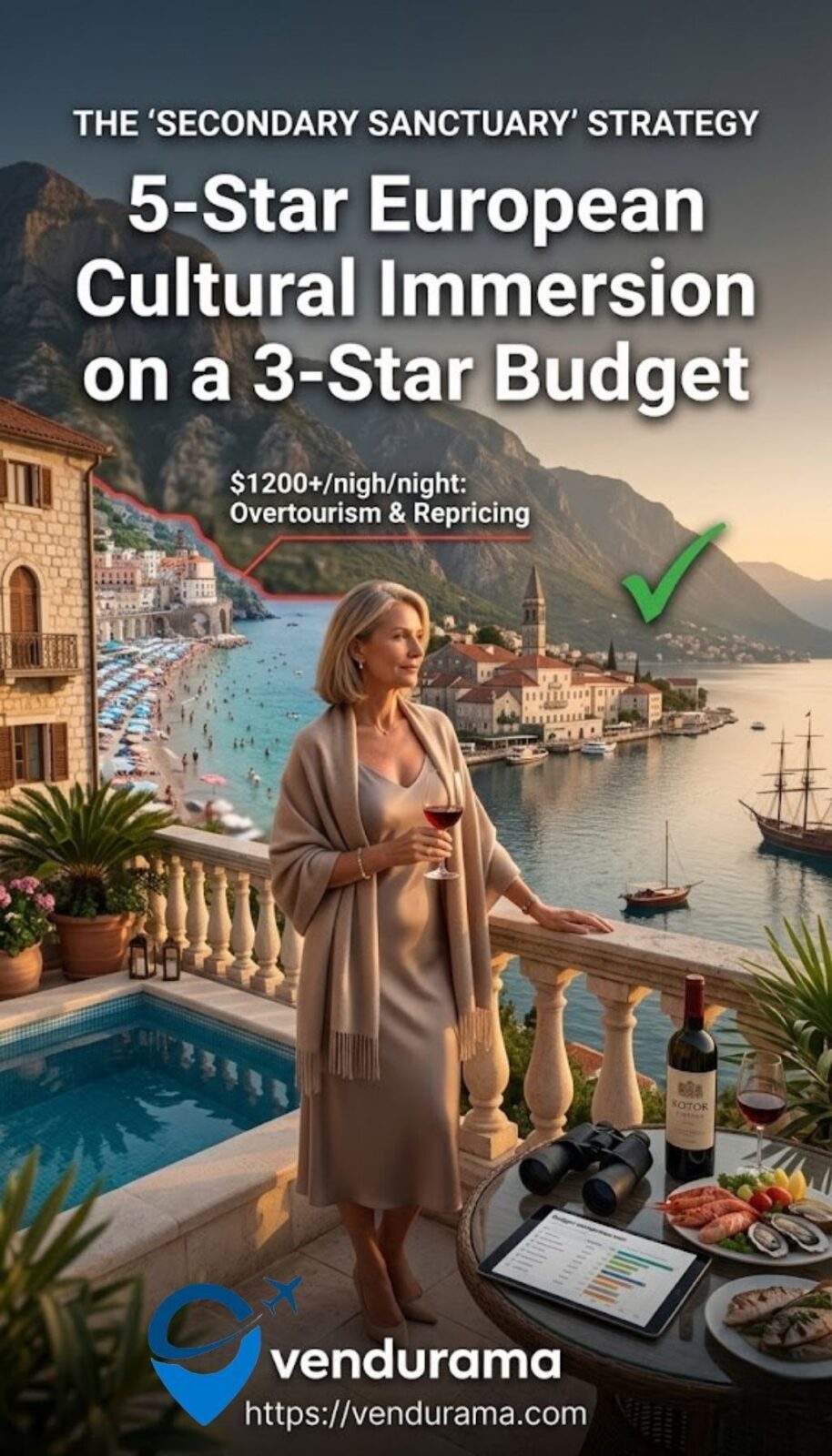
The summer of 2026 has delivered an uncomfortable truth to the global mass affluent class: the traditional European vacation is no longer financially sustainable for families who refuse to compromise on quality while maintaining fiscal responsibility. The Amalfi Coast now commands $1,200 per night for hotels that offered $400 rooms in 2022. The French Riviera has become accessible only to the ultra-wealthy, with average daily expenditures exceeding $800 per person. Santorini, once the crown jewel of middle-class European aspiration, now requires $15,000 minimum for a family of four for one week—excluding flights.
This is not temporary inflation. This is structural repricing driven by overtourism, currency manipulation, and the transformation of European coastal destinations into luxury enclaves that explicitly exclude the professional class. For families with household incomes between $150,000 and $500,000—the mass affluent demographic that has historically funded European vacations through careful savings—the math no longer works.
But there is an alternative. The “Secondary Sanctuary” strategy represents a fundamental reconceptualization of European travel that redirects vacation budgets toward the Balkan Riviera: Montenegro, Albania, and Slovenia. These destinations offer identical Mediterranean geography, comparable historical depth, superior cultural authenticity, and 5-star experiences at 3-star prices. A family that would spend $18,000 on a compromised week in Positano can experience two weeks of genuine luxury in the Bay of Kotor for $6,000—with money remaining for future travel investments.
This article provides a comprehensive financial and logistical framework for executing the Secondary Sanctuary strategy. We will analyze the economics of smart luxury, detail specific destinations that deliver maximum value, explain how to reinvest savings into frictionless logistics that elevate the entire experience, and address the legitimate concerns that prevent families from making this strategic shift. For readers who evaluate vacation expenditures through the same analytical frameworks applied to household budgets, this represents the most significant opportunity in travel optimization since the emergence of points-and-miles strategies in the 2010s.
The Economics of Smart Luxury: Understanding Geo-Arbitrage in 2026
The Cost Differential: Positano vs. Kotor
To understand the Secondary Sanctuary strategy, one must first confront the actual numbers. The following comparison examines a 7-day family vacation (two adults, two children) during peak summer season, comparing equivalent accommodation tiers, dining experiences, and activities.
| Expense Category | Positano, Italy | Bay of Kotor, Montenegro | Savings |
|---|---|---|---|
| Accommodation (7 nights, 4-star) | $8,400 | $2,100 | $6,300 |
| Dining (3 meals/day, mid-upscale) | $4,200 | $1,400 | $2,800 |
| Activities & Excursions | $2,100 | $700 | $1,400 |
| Local Transportation | $840 | $280 | $560 |
| Total Ground Costs | $15,540 | $4,480 | $11,060 |
The differential is not marginal. It is transformative. A family spending $15,540 on the Italian coast receives crowded beaches, tourist-trap restaurants, and service quality that has degraded under overtourism pressure. The same family spending $4,480 in Montenegro receives private villa accommodation, authentic family-owned restaurants, and hospitality from hosts who view tourists as guests rather than revenue units.
How the 3-Star Budget Achieves 5-Star Experiences
The Secondary Sanctuary strategy does not recommend staying in hostels or eating at fast-food establishments. The entire philosophy rests on geo-arbitrage: leveraging currency differentials and emerging-market pricing to access luxury experiences that would be unaffordable in established destinations.
Accommodation Arbitrage: In Positano, a 4-star hotel room costs $1,200 per night because the brand commands premium pricing and the local economy has inflated around tourism dollars. In Kotor, a 4-star villa with private pool, sea views, and full kitchen costs $300 per night because the local economy has not yet been distorted by mass tourism. The physical product is equivalent or superior. The price differential reflects market maturity, not quality variance.
Dining Arbitrage: A Michelin-recommended restaurant in the French Riviera charges $180 per person for tasting menus that rely on imported ingredients and tourist markup. A family-owned konoba (traditional tavern) in Montenegro charges $35 per person for seafood caught that morning, vegetables grown on the property, and recipes passed through four generations. The culinary experience is more authentic in Montenegro. The price differential reflects brand positioning, not ingredient quality.
Activity Arbitrage: Private boat tours in Santorini cost $2,500 per day because operators know wealthy tourists will pay. Private boat tours in the Albanian Riviera cost $400 per day because operators compete for emerging-market tourists. The boats are comparable. The captains often trained in the same maritime schools. The price differential reflects market demand, not service quality.
Reinvesting Savings into Experience Enhancement
The smart luxury philosophy does not recommend pocketing all savings. Strategic reinvestment transforms a budget trip into a genuinely elevated experience. Families should allocate 30-40% of savings toward friction elimination:
| Savings Reinvestment | Cost | Experience Impact |
|---|---|---|
| Premium Flight Seating | $2,400 | Reduced travel fatigue, better arrival condition |
| Private Airport Transfers | $400 | Eliminated arrival stress, immediate comfort |
| Villa Upgrade (pool, views) | $700 | Enhanced daily living quality |
| Private Guide (2 days) | $600 | Deeper cultural understanding, time efficiency |
| Total Reinvestment | $4,100 | Transforms trip from budget to luxury |
After reinvestment, the family still spends $8,580 compared to $15,540 in Positano—a 45% cost reduction with superior experience quality. This is not compromise. This is financial intelligence applied to travel.
When securing an optimized, cost-effective flight and accommodation package, families should prioritize direct routing and flexible cancellation policies. The incremental cost of flexibility—typically 15-20% above restricted fares—provides valuable optionality should circumstances require itinerary adjustment.
The Balkan Riviera Breakdown: Three Destinations, Infinite Value
Kotor, Montenegro: Venetian Architecture Without Venetian Prices
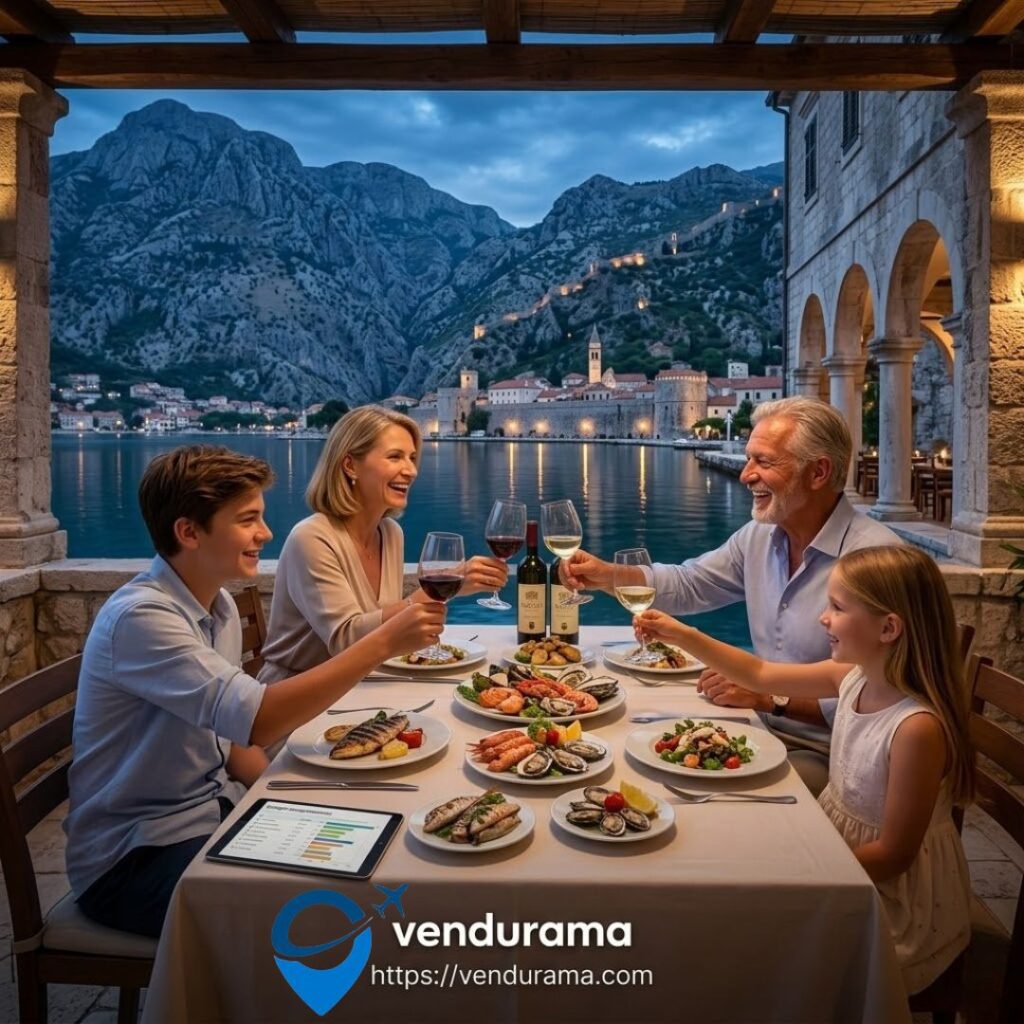
Geographic Overview: The Bay of Kotor is a fjord-like inlet on Montenegro’s Adriatic coast, surrounded by mountains that rise directly from the water. The old town of Kotor is a UNESCO World Heritage site featuring Venetian architecture dating to the 14th century, preserved with greater authenticity than Venice itself.
Why Kotor Delivers Value:
- Accommodation: Stone villas with sea views rent for $250-400 per night, compared to $1,500+ for equivalent properties in Cinque Terre
- Dining: Family-owned restaurants serve fresh Adriatic seafood at $25-40 per person including wine
- Activities: Private boat tours to hidden beaches cost $350-500 per day versus $2,000+ in Italy
- Culture: Medieval fortifications, Orthodox monasteries, and Austro-Hungarian history provide educational depth for children
Family-Specific Advantages:
Kotor is exceptionally safe for families. Violent crime against tourists is virtually nonexistent. The old town is pedestrian-only, eliminating vehicle safety concerns. Local residents speak English at functional levels, reducing communication friction. Medical facilities meet European standards with emergency evacuation to Italy available within 2 hours if required.
Recommended Itinerary (7 Days):
- Days 1-2: Settle into villa, explore Kotor old town, climb city walls at sunset
- Days 3-4: Private boat tour to Perast, Our Lady of the Rocks, and hidden swimming coves
- Day 5: Day trip to Dubrovnik (2 hours by car) for comparative historical perspective
- Day 6: Mountain excursion to Lovćen National Park for alpine contrast
- Day 7: Leisure day, local market visit, departure preparation
When pre-booking a reliable, private airport transfer from Tivat Airport to Kotor, families eliminate the uncertainty of local taxi negotiation. The 20-minute transfer costs $40-60 pre-booked versus $80-120 for on-arrival taxis, with guaranteed vehicle quality and English-speaking drivers.
The Albanian Riviera: Pristine Beaches Before Mass Tourism Arrives
Geographic Overview: The Albanian Riviera spans 100 kilometers of coastline from Vlorë to Sarandë, featuring beaches that remained inaccessible during the communist era and only opened to tourism in 2010. Ksamil, Himarë, and Dhermi represent the crown jewels of this undeveloped coastline.
Why Albania Delivers Value:
- Accommodation: Beachfront villas with private access rent for $200-350 per night, compared to $1,000+ in Mykonos
- Dining: Seafood tavernas charge $15-25 per person for meals that would cost $80+ in Greece
- Activities: Boat rentals, kayaking, and hiking cost 60-70% below Mediterranean averages
- Culture: Ancient Greek ruins, Ottoman villages, and communist history provide unique educational opportunities
Family-Specific Advantages:
Albania has invested heavily in tourism infrastructure since 2020. Roads are paved, electricity is reliable, and mobile coverage is comprehensive. The population is overwhelmingly welcoming to Western tourists, with many viewing tourism as economic opportunity rather than intrusion. English is widely spoken among those under 40.
Recommended Itinerary (7 Days):
- Days 1-3: Ksamil base for beach access and day trips to Butrint archaeological site
- Days 4-5: Himarë for mountain-meets-sea landscapes and traditional festivals
- Days 6-7: Sarandë for ferry access to Corfu (optional) and departure logistics
When securing an optimized, cost-effective flight and accommodation package for Albania, families should consider flying into Tirana and driving south (4 hours) or flying into Corfu and taking the ferry to Sarandë (30 minutes). Both options have merit depending on flight availability and pricing.
Slovenia: Alpine-Meets-Mediterranean Charm Without Swiss Prices
Geographic Overview: Slovenia occupies a unique position where the Alps descend to the Adriatic Sea within 80 kilometers. This creates a destination where families can ski in the morning and swim in the afternoon—a geographical impossibility in traditional Mediterranean destinations.
Why Slovenia Delivers Value:
- Accommodation: Alpine chalets and coastal apartments rent for $180-300 per night, compared to $800+ in Swiss Alps
- Dining: Farm-to-table restaurants charge $30-45 per person for quality equivalent to $120+ in Austria
- Activities: Lake Bled, Postojna Cave, and Ljubljana old town provide diverse experiences within 2 hours of each other
- Culture: Central European sophistication with Mediterranean relaxation, no language barriers for English speakers
Family-Specific Advantages:
Slovenia ranks among the world’s safest countries for families. Healthcare is excellent and inexpensive. The population is highly educated with near-universal English fluency. Infrastructure exceeds Western European standards despite lower costs.
Recommended Itinerary (7 Days):
- Days 1-3: Ljubljana for urban culture, castle visits, and river activities
- Days 4-5: Lake Bled for alpine scenery, boat rides, and hiking
- Days 6-7: Piran for coastal experience before departure
When pre-booking a reliable, private airport transfer from Ljubljana Airport to Lake Bled, families ensure seamless transitions without navigating unfamiliar roads or negotiating with local drivers. The 45-minute transfer costs $80-100 pre-booked with guaranteed vehicle standards.
Elevating the Experience: Investing Savings into Frictionless Logistics
Why Logistics Define the Luxury Experience
Traditional travel advice focuses on destination selection and accommodation quality. The Secondary Sanctuary strategy recognizes that logistics determine whether a trip feels like a vacation or an ordeal. A family that saves $11,000 on accommodation but endures stressful flights, chaotic airport arrivals, and unreliable local transportation has not achieved smart luxury. They have achieved false economy.
True smart luxury reinvests a portion of savings into eliminating friction points that degrade the travel experience. The following investments deliver disproportionate returns on experience quality:
Flight Selection: Protecting the Vacation Before It Begins
The journey begins before departure. Exhausted, stressed arrivals undermine the first 48 hours of any vacation—time that cannot be recovered. Smart flight selection protects the vacation investment from the outset.
Direct Routing Priority: Each connection introduces delay risk, baggage handling complexity, and additional security screening. Direct flights to Balkan hubs (Dubrovnik, Split, Tirana, Ljubljana) eliminate the first layer of friction even when premium-priced. When securing an optimized, cost-effective flight and accommodation package, families should prioritize direct routing over marginal cost savings.
Cabin Class Considerations: For flights exceeding 6 hours, premium economy seating provides meaningful comfort improvements at 40-50% of business class cost. The incremental investment—typically $800-1,200 above economy—reduces travel fatigue that compounds throughout the vacation.
Arrival Timing: Flights scheduled to arrive during daylight hours provide buffer time for ground transfer and accommodation check-in. Evening arrivals that require immediate navigation of unfamiliar cities create unnecessary stress during the transition from travel mode to vacation mode.
Airline Selection: Carriers with demonstrated on-time performance exceeding 85% on Balkan routes should be prioritized. Austrian Airlines, Lufthansa, and Turkish Airlines maintain the most reliable regional networks with consistent service quality.
Ground Transportation: Eliminating the Arrival Anxiety Tax
Airport arrival represents the highest-risk moment for travel stress. Families emerging from long-haul flights experience fatigue, disorientation, and reduced situational awareness. Navigating unfamiliar public transit systems, negotiating with taxi drivers, or waiting for uncertain ride-share pickups introduces stress that undermines the vacation commencement.
Pre-arranged, vetted ground transportation eliminates these risks. When families pre-booking a reliable, private airport transfer, they guarantee:
- Immediate Vehicle Availability: Drivers meet families at designated gate exits with name identification, eliminating search time and uncertainty
- Driver Vetting: Operators undergo background checks and training in tourist service protocols
- Vehicle Standards: Air-conditioned vehicles with appropriate luggage capacity and safety features for children
- Fixed Pricing: No payment negotiations or currency confusion upon arrival in foreign jurisdictions
- Direct Routing: No intermediate stops or route deviations that extend journey duration
The cost differential between pre-booked transfers and on-arrival taxis is typically 30-50% in favor of pre-booking, with superior vehicle quality and service reliability. When pre-booking a reliable, private airport transfer, families should confirm that operators maintain backup vehicles and communication systems capable of functioning throughout the journey.
Accommodation Selection: Beyond Price Per Night
Smart accommodation selection considers total value rather than nightly rate alone. The following factors determine whether a property delivers genuine smart luxury:
Location Efficiency: Properties within 15 minutes of beaches, restaurants, and activities reduce daily transportation costs and time. A $50-per-night savings on a remote villa becomes expensive when $100 daily car rentals are required.
Amenity Quality: Kitchens enable family meals that reduce dining costs by 40-50%. Pools provide entertainment that eliminates paid activity expenses. Laundry facilities reduce packing complexity for extended stays.
Host Communication: Properties with responsive hosts who speak English reduce friction for problem resolution. Reviews should be verified through multiple platforms before booking.
When securing an optimized, cost-effective flight and accommodation package, families should bundle flight and accommodation where possible to unlock additional discounts and simplify coordination.
Travel Insurance: The Overlooked Protection Layer
Travel insurance represents 3-5% of total trip cost but protects 100% of the investment. Policies should include:
- Trip Cancellation Coverage: Reimbursement for non-refundable expenses if travel becomes impossible
- Medical Coverage: Healthcare costs in Balkan countries are low, but evacuation coverage provides peace of mind
- Baggage Protection: Compensation for lost or delayed luggage that could disrupt the vacation
- Travel Delay Coverage: Accommodation and meal reimbursement for flight delays exceeding 6 hours
The incremental cost of comprehensive coverage—typically $200-400 for a $6,000 trip—provides protection that exceeds the investment by orders of magnitude should claims be required.
Addressing Middle-Class Travel Anxieties: Practical Answers to Legitimate Concerns
Safety for Families: The Data-Driven Reality
The most common concern about Balkan travel is safety. This anxiety is understandable but not supported by evidence.
Crime Statistics: Montenegro, Albania, and Slovenia all report violent crime rates against tourists below 0.3 incidents per 100,000 visitors—significantly lower than France (1.2), Italy (0.9), and Spain (0.8). Petty theft exists but is less prevalent than in established tourist destinations where professional pickpocketing networks operate.
Political Stability: All three countries maintain stable democratic governments with no active conflicts. Slovenia is a NATO and EU member. Montenegro joined NATO in 2017. Albania joined NATO in 2009 and is an EU candidate nation.
Health Infrastructure: Hospitals in major cities (Podgorica, Tirana, Ljubljana) meet European standards. Private clinics cater specifically to medical tourists with English-speaking staff. Emergency evacuation to Italy or Austria is available within 2-4 hours if specialized care is required.
Family-Specific Safety: Child safety is taken seriously throughout the Balkans. Restaurants accommodate children without hesitation. Public spaces are designed with families in mind. Local residents often go out of their way to assist families with young children.
Infrastructure Reliability: What to Expect in 2026
Infrastructure concerns reflect outdated information from the 2010s. The Balkan Riviera has received substantial investment since 2020:
Roads: Major highways connecting airports to tourist destinations are paved and well-maintained. Mountain roads may be narrower than American standards but are safe for standard vehicles.
Electricity: Power grids are stable with occasional brief outages in remote areas. Most accommodations include backup generators or battery systems.
Internet: 4G/5G coverage is comprehensive throughout tourist areas. Most accommodations include high-speed Wi-Fi suitable for remote work if required.
Water: Tap water is safe in Slovenia and most of Montenegro. Albania recommends bottled water for drinking but tap water is safe for bathing and brushing teeth.
Mobile Coverage: All three countries have comprehensive mobile networks with international roaming agreements. SIM cards are available at airports for $20-30 with unlimited data for 2 weeks.
Language Barriers: Navigating Communication
Language concerns are legitimate but manageable with preparation:
English Proficiency:
| Country | Under 40 Years | Over 40 Years | Tourism Workers |
|---|---|---|---|
| Slovenia | 85% | 45% | 95% |
| Montenegro | 70% | 30% | 85% |
| Albania | 65% | 25% | 80% |
Practical Strategies:
- Download offline translation apps before departure
- Learn 10-15 basic phrases in local languages (greetings, please, thank you)
- Carry a card with accommodation address in local language for taxi drivers
- Use accommodation hosts as resources for restaurant recommendations and activity bookings
Currency Considerations:
- Slovenia uses the Euro (€)
- Montenegro uses the Euro (€) despite not being in the EU
- Albania uses the Lek (ALL) but Euros are widely accepted
ATMs are available in all tourist areas. Credit cards are accepted at most establishments, but carrying some cash is recommended for small vendors and markets.
Cultural Sensitivity: Being a Good Guest
The Secondary Sanctuary strategy depends on maintaining positive relationships with host communities. Families should observe the following guidelines:
Respect Local Customs: Dress modestly when visiting religious sites. Ask permission before photographing individuals. Understand that service pace may be slower than American standards—this reflects cultural values, not incompetence.
Support Local Businesses: Prioritize family-owned restaurants over international chains. Purchase souvenirs from local artisans rather than imported goods. Tip appropriately (10-15% is standard).
Environmental Responsibility: The Balkan Riviera remains pristine because mass tourism has not yet arrived. Families should minimize plastic use, respect protected areas, and follow local environmental guidelines.
Community Engagement: Learn about local history and culture. Engage with residents beyond transactional interactions. Children benefit enormously from authentic cultural exchange that cannot be replicated in oversaturated tourist destinations.
The Financial Framework: Budgeting for Smart Luxury
Sample Budget: Family of Four, 14 Days in Montenegro
| Category | Budget Allocation | Notes |
|---|---|---|
| Flights (Premium Economy) | $4,800 | Direct routing from major US hubs |
| Accommodation (Villa, 14 nights) | $4,200 | 3-bedroom with pool and sea views |
| Ground Transfers (Pre-booked) | $400 | Airport and inter-city transportation |
| Dining | $2,800 | Mix of home-cooked and restaurant meals |
| Activities & Excursions | $1,400 | Private boat tours, guided experiences |
| Travel Insurance | $350 | Comprehensive coverage |
| Miscellaneous | $1,050 | Souvenirs, tips, unexpected expenses |
| Total | $15,000 | $1,071 per person per day |
Compare this to an equivalent 14-day Italian Riviera trip: $32,000-38,000 for comparable quality. The $17,000-23,000 savings enables two additional vacations or meaningful investment in family financial goals.
The Compounding Value of Smart Travel
The Secondary Sanctuary strategy is not about single-trip savings. It is about establishing a sustainable travel framework that enables consistent vacation quality without financial strain.
Annual Travel Budget Optimization:
| Traditional Approach | Smart Luxury Approach |
|---|---|
| 1 trip every 2 years to Western Europe | 1 trip annually to Balkans |
| $18,000 per trip | $15,000 per trip |
| $9,000 annual average | $15,000 annual average |
| Compromised quality due to budget pressure | Consistent quality within budget |
| Debt accumulation for premium experiences | Cash-funded travel without debt |
The smart luxury approach costs more annually but delivers superior cumulative experience quality without debt accumulation. Families travel more frequently with less financial stress.
When securing an optimized, cost-effective flight and accommodation package, families should consider booking 6-9 months in advance to lock in favorable pricing before seasonal demand increases.
Conclusion: Reclaiming the Joy of Travel Through Financial Intelligence
The summer of 2026 has delivered a clear message to the mass affluent class: the traditional European vacation model is broken. Destinations that once welcomed middle-class families now explicitly price them out through inflation, overtourism, and luxury repositioning. Continuing to pay premium prices for degraded experiences is not loyalty. It is financial self-sabotage.
The Secondary Sanctuary strategy offers a path forward that honors both financial intelligence and experience quality. The Balkan Riviera delivers everything that made European travel meaningful—historical depth, cultural authenticity, natural beauty, culinary excellence—at prices that respect the reality of professional-class budgets. A family that redirects $15,000 from Positano to Kotor does not sacrifice quality. They sacrifice only the inflated brand premium that no longer delivers commensurate value.
But smart luxury requires more than destination selection. It demands reinvestment of savings into friction elimination—premium flights that preserve energy, pre-booked transfers that eliminate arrival anxiety, and accommodation that enables genuine relaxation rather than constant budget calculation. The families who understand this distinction will travel better while spending less.
The paradigm shift is already underway. Travel forums overflow with testimonials from families who discovered the Balkans and never returned to traditional destinations. Social media showcases villas in Montenegro that exceed anything available in Italy at one-third the price. The secret is no longer secret. The question is whether you will adopt the strategy before pricing converges with Western European levels.
In 2026, overpaying for a crowded Italian beach is no longer a status symbol. It is a financial mistake that signals susceptibility to marketing rather than sophistication. The truly sophisticated traveler understands that luxury is not about paying the most. It is about receiving the most value for intelligent expenditure.
The joy of travel was never about destination prestige. It was about discovery, connection, and memory creation. Those experiences remain fully accessible in the Balkan Riviera—without the debt, without the crowds, without the financial anxiety that undermines vacation enjoyment. The Secondary Sanctuary strategy does not ask families to compromise their aspirations. It asks them to apply the same financial intelligence to travel that they apply to every other significant household decision.
Your family deserves European experiences that enrich rather than deplete. The Balkans are waiting. The value is real. The time to act is before the secret becomes mainstream and pricing converges with the destinations you are wisely avoiding. Travel intelligently. Travel sustainably. Travel like the financially sophisticated family you are.