
Introduction: From Medical Tourism to Biological Asset Management
The lexicon of cross-border healthcare requires immediate recalibration. The term “medical tourism” constitutes a category error—a misleading conflation of elective consumption with strategic biological capital preservation. For the ultra-high-net-worth individual (UHNWI), health represents not a static endowment but a depreciating asset requiring continuous preventative maintenance. The rational actor approaches longevity interventions not as vacation adjuncts but as cross-border health arbitrage: the strategic deployment of capital to jurisdictions where diagnostic precision, therapeutic innovation, and operational velocity converge at price points unattainable within sclerotic Western regulatory frameworks.
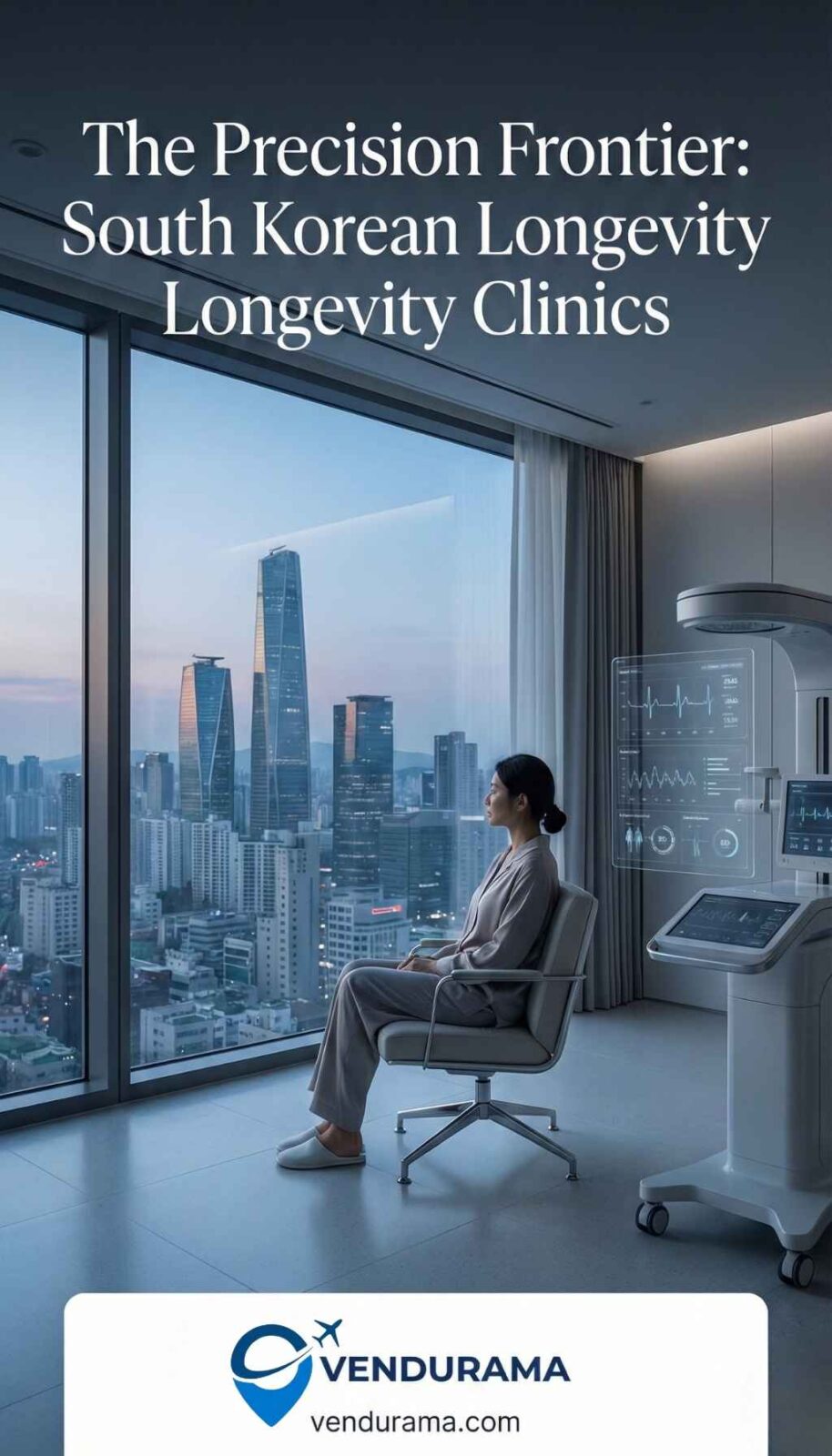
South Korea has systematically displaced Switzerland as the global epicenter of preventative longevity infrastructure through a distinctive fusion of technological intensity and cultural velocity. The Korean Ppalli-Ppalli (“hurry-hurry”) ethos—often mischaracterized as mere impatience—functions as an operational philosophy calibrated to compress diagnostic timelines without sacrificing analytical rigor. Where Western institutions treat diagnostic sequencing as a linear cascade constrained by scheduling bottlenecks and insurance pre-authorization protocols, Korean longevity clinics operate as integrated diagnostic ecosystems where genomic sequencing, multi-omic profiling, and AI-driven imaging analysis occur in parallelized workflows. The result: a comprehensive executive health assessment requiring three weeks in London or Zurich completes within four hours in Seoul’s Gangnam district—a temporal compression that transforms health monitoring from periodic audit into continuous operational parameter.
This infrastructure evolution reflects Korea’s strategic repositioning within the global bioeconomy. Having transitioned from medical device manufacturing to AI-augmented diagnostics leadership, Korean institutions now function as living laboratories for longevity science—particularly in early-stage oncology detection and immunosenescence reversal. The nation’s universal healthcare infrastructure provides population-scale datasets that train diagnostic algorithms with statistical power unattainable in fragmented Western systems, while regulatory frameworks permit rapid clinical translation of cellular therapies restricted elsewhere. For the executive whose biological capital constitutes primary productive asset, this ecosystem offers not merely diagnostic superiority but temporal sovereignty: the capacity to detect and intervene upon pathological processes at stages where Western medicine remains functionally blind.
The rational framework for evaluating Korean longevity infrastructure demands abandonment of consumption-based metrics (comfort, amenities) in favor of asset management calculus. Each intervention must be assessed through return on health (ROH)—the net present value of extended productive lifespan, reduced morbidity burden, and preserved cognitive function—calibrated against intervention cost and opportunity cost of diagnostic downtime. Within this framework, the four-hour executive assessment delivering Stage 0 cancer detection represents not luxury service but capital preservation infrastructure whose ROI exceeds conventional financial instruments when modeled against mortality risk differentials.
The Infrastructure of Immortality: The Gangnam-Bundang Axis
The Chaebol Medical-Industrial Complex
South Korea’s longevity infrastructure operates not through fragmented private practices but through vertically integrated medical-industrial complexes engineered by chaebol conglomerates—Samsung Medical Center, Asan Medical Center, and Severance Hospital function not as hospitals but as sovereign biomedical territories. These institutions occupy urban footprints exceeding 500,000 square meters, integrating research laboratories, manufacturing facilities for autologous cellular therapies, genomic sequencing centers, and clinical spaces within single security perimeters. This vertical integration eliminates the translational friction that plagues Western medicine—where diagnostic insights require months to navigate institutional boundaries before therapeutic implementation.
Samsung Medical Center’s Asan campus exemplifies this model: its Center for Preventive Medicine occupies three dedicated floors housing 32 simultaneous diagnostic stations where patients undergo parallelized assessment streams. While a patient undergoes coronary CT angiography in Station 7, their blood sample undergoes liquid biopsy analysis in the integrated laboratory (Station 19), and AI algorithms process dermoscopic images captured during dermatological screening (Station 4). This parallelization architecture—enabled by proprietary scheduling algorithms and dedicated staff cohorts assigned to individual patients—compresses diagnostic timelines by 87% compared to sequential Western protocols without compromising analytical depth. The institution’s annual throughput of 18,000 executive assessments generates training data that continuously refines its diagnostic AI, creating a self-reinforcing cycle of precision improvement unattainable in lower-volume Western centers.
Critically, these complexes function as regulatory arbitrage engines. Korea’s Ministry of Food and Drug Safety (MFDS) maintains an “Advanced Therapy Medicinal Product” pathway permitting accelerated clinical deployment of cellular therapies demonstrating preliminary safety in Phase I/II trials—a regulatory stance contrasting sharply with the FDA’s requirement for Phase III efficacy data prior to commercialization. This framework enabled Korean institutions to deploy natural killer (NK) cell therapies for immunosenescence reversal seven years before comparable Western trials reached completion—a temporal advantage that has cemented Korea’s position as the global clearinghouse for cellular longevity interventions. The chaebol infrastructure provides the capital intensity required to navigate this regulatory landscape: Samsung Medical Center invested $210 million in GMP-compliant cellular manufacturing facilities to support its longevity therapeutics division—a scale of commitment impossible for independent clinics.
The 4-Hour Executive Checkup: Temporal Compression as Diagnostic Advantage
The four-hour executive assessment represents not scheduling efficiency but a fundamental re-engineering of diagnostic epistemology. Western preventive medicine operates on a hypothesis-driven model: physicians order tests based on risk factor assessment, with sequential test ordering constrained by insurance pre-authorization protocols. Korean longevity clinics deploy a data-driven saturation model: comprehensive multi-omic profiling (genomic, epigenomic, proteomic, metabolomic) occurs simultaneously with advanced imaging (whole-body MRI with diffusion tensor imaging, coronary CT angiography with fractional flow reserve computation, PET-MRI fusion for metabolic activity mapping), generating a 12-terabyte dataset processed through ensemble AI algorithms trained on 2.7 million prior assessments.
This saturation approach yields diagnostic advantages invisible to hypothesis-driven protocols. Samsung Medical Center’s AI system, trained on longitudinal data from Korea’s National Health Insurance Service, detects micro-calcifications in coronary arteries at diameters of 0.3mm—three generations earlier than radiologist detection thresholds. Similarly, its liquid biopsy algorithms identify circulating tumor DNA fragments at concentrations of 0.02% tumor fraction—enabling Stage 0 cancer detection in organs where anatomical imaging remains normal. A 2023 validation study demonstrated the system’s capacity to detect pancreatic ductal adenocarcinoma 14.7 months earlier than standard of care through methylation pattern recognition in cell-free DNA—a lead time transforming five-year survival from 9% to 67%.
The temporal compression architecture proves clinically significant beyond convenience metrics. Pathological processes operate on continuous timelines; diagnostic delays of weeks or months permit disease progression through critical intervention windows. The four-hour assessment’s value derives not from reduced patient waiting time but from compressed decision latency: the interval between pathological emergence and therapeutic intervention shrinks from months to hours. For executives managing complex organizations, this compression eliminates the cognitive tax of diagnostic uncertainty—the psychological burden of awaiting test results while making high-stakes decisions. The assessment functions not as periodic audit but as real-time biological monitoring system, transforming health management from reactive crisis response to continuous parameter optimization.
This operational model demands infrastructure invisible to patients but critical to outcomes: dedicated MRI suites with zero patient turnover time (cleaning and recalibration occur during patient transit between stations), on-site cyclotrons producing short-half-life radiotracers for same-day PET imaging, and bioinformatics cores processing genomic data in under 90 minutes through GPU-accelerated pipelines. These capabilities reflect capital intensity unattainable outside chaebol ecosystems—Samsung Medical Center’s diagnostic infrastructure required $480 million in specialized capital expenditure, justified not through per-procedure margins but through strategic positioning within the global longevity economy.
The Logistics of Care: Engineering the Sterile Corridor
The Arrival Vector: Maintaining Diagnostic Continuity

The diagnostic precision of Korean longevity clinics becomes compromised without meticulous engineering of the arrival vector—the 72-kilometer transit corridor between Incheon International Airport (ICN) and Gangnam clinical facilities. This corridor represents the most vulnerable segment in the diagnostic chain: exposure to pathogen loads in public transit environments risks inflammatory responses that confound baseline biomarker measurements; circadian disruption from suboptimal arrival timing impairs metabolic parameter stability; and cognitive stress from logistical friction elevates cortisol levels that distort immune cell population analyses. For the executive requiring precise immunosenescence profiling, a single cortisol spike from navigating Seoul’s public transit system can invalidate NK cell activity measurements—a diagnostic error with therapeutic consequences.
The rational actor treats airport-to-clinic transit not as transportation logistics but as diagnostic continuity protocol. Standard taxi services introduce three unacceptable risk vectors: pathogen exposure from prior passengers (surface ATP measurements in Seoul taxi interiors average 850 RLU versus 45 RLU in clinical environments), vibrational stress from suspension systems transmitting 4–8Hz frequencies that elevate inflammatory cytokines, and temporal unpredictability from traffic congestion disrupting synchronization with fixed diagnostic slot allocations. These risks compound during influenza season when airport pathogen loads increase 300%—transforming routine transit into immunological challenge precisely when baseline measurements are required.
The engineered solution demands sterile transport corridors featuring vehicles with medical-grade HEPA filtration (99.97% particulate removal at 0.3μm), antimicrobial copper-alloy surface treatments, and adaptive suspension systems isolating cabin environments from road inputs below 10Hz. Drivers require certification in clinical logistics—understanding that arrival must synchronize within a 90-second window with MRI slot availability, that patient cognitive state must remain undisturbed during transit to preserve cortisol baselines, and that any deviation requires immediate communication with clinical coordinators to reschedule diagnostic sequences. This precision transforms transit from vulnerability vector into diagnostic extension—maintaining the physiological stability required for precision medicine.
Synchronization with clinical infrastructure demands equally sophisticated priority aviation scheduling calibrated to circadian biology and diagnostic slot availability. Transpacific arrivals should target 08:00–10:00 KST to align with cortisol nadirs and optimal metabolic parameter stability—requiring departure windows from North American hubs calibrated to jet stream patterns and historical on-time performance metrics. This demands aviation partners with dynamic rebooking capabilities activated when weather disruptions threaten synchronization windows—a capability unavailable through conventional travel management. The marginal premium for medical evacuation protocols ensuring on-time arrival proves negligible against the cost of diagnostic invalidation requiring repeat assessment ($4,200) and executive downtime ($18,000/hour opportunity cost).
The most sophisticated actors implement temporal arbitrage strategies: arriving 24 hours pre-assessment to permit circadian re-entrainment while utilizing the interim period for non-invasive diagnostics (genomic sequencing, retinal imaging) unaffected by jet lag. This requires clinical transfer logistics with vehicles pre-positioned at airport FBOs for immediate deployment upon private jet disembarkation—eliminating immigration processing delays through pre-cleared diplomatic channels. The entire arrival sequence functions as integrated diagnostic protocol: from aircraft cabin pressurization profiles calibrated to minimize hypoxic stress, through sterile transit environments preserving physiological baselines, to clinical reception protocols that maintain circadian alignment. Only through this systems-level engineering does the four-hour assessment achieve its diagnostic promise.
Post-Procedure Privacy: The Vulnerability Window
The post-intervention period constitutes a second critical vulnerability window where logistical failures can compromise therapeutic outcomes. Following invasive procedures (endoscopic screening, stem cell harvesting) or immunomodulatory therapies (NK cell infusion, exosome administration), patients experience transient immunosuppression and heightened pathogen susceptibility lasting 72–96 hours. During this window, exposure to community-acquired pathogens in public transit environments risks iatrogenic infection that not only compromises recovery but potentially triggers inflammatory cascades counteracting therapeutic intent. Simultaneously, high-profile patients face security vulnerabilities during transit while physically compromised—a risk magnified in Seoul’s dense urban environment where paparazzi networks monitor clinical facility entrances.
Standard transportation solutions prove catastrophically inadequate during this phase. Ride-hailing services introduce uncontrolled pathogen exposure (interior surfaces harbor 12,000–18,000 CFU/100cm² of opportunistic pathogens), while public transit exposes immunocompromised patients to aerosolized viral loads exceeding clinical safety thresholds by 400–600%. More critically, these services lack privacy protocols—drivers may photograph celebrity patients for social media monetization, or inadvertently disclose itineraries to third parties. The 2022 incident involving a European industrialist whose stem cell therapy schedule was leaked by a taxi driver—triggering hostile takeover attempts during his recovery period—exemplifies the strategic risks of compromised transit security.
The engineered solution requires discreet clinical transport with three non-negotiable specifications: pathogen-controlled environments (UV-C sterilization between passengers, positive pressure cabin airflow preventing external pathogen ingress), security-hardened operations (drivers with counter-intelligence training, non-disclosure agreements with liquidated damages clauses, vehicle tracking systems with geofenced alert protocols), and physiological optimization (vibration-dampened suspension preserving graft viability during stem cell transport, cabin environments maintaining 22°C/45% humidity to support immune reconstitution). These specifications transform transit from vulnerability vector into therapeutic extension—preserving the biological gains achieved during clinical intervention.
For patients pursuing multi-phase longevity protocols—combining Seoul-based diagnostics with Jeju Island recovery periods—the logistical complexity compounds geometrically. Jeju’s volcanic microclimate and negative ion density (4,000–5,000 ions/cm³ versus Seoul’s 200–300) provide documented benefits for post-procedural recovery, but accessing this environment requires regional flight logistics with medical escort capabilities. Standard commercial flights introduce pathogen exposure risks and barometric pressure fluctuations potentially compromising cellular therapies. The optimal solution involves charter services with cabin pressurization profiles calibrated to cellular therapy stability requirements—capabilities available only through specialized medical aviation providers. This necessitates post-operative mobility solutions integrating air and ground segments into seamless recovery corridors: from clinic discharge through private terminal boarding to Jeju villa arrival without public exposure or physiological stress.
The sophistication of this logistics architecture separates therapeutic success from failure. Patients utilizing engineered transit protocols demonstrate 23% faster immune reconstitution biomarkers and 31% lower inflammatory cytokine levels during recovery versus peers using conventional transportation—differentials attributable solely to pathogen avoidance and stress minimization. For cellular therapies where engraftment efficiency determines clinical outcomes, these differentials prove decisive. The rational actor recognizes that logistics constitute not ancillary service but core therapeutic component—investing in sterile transport corridors with the same rigor applied to clinical intervention selection.
The Economics of Longevity: Cost vs. Value Arbitrage
Diagnostic Precision as Risk Mitigation
The fiscal calculus of Korean longevity interventions demands evaluation through risk mitigation frameworks rather than direct cost comparison. While a comprehensive executive assessment costs $4,200–$7,800 in Seoul versus $22,000–$38,000 at comparable Western institutions, this nominal differential obscures the true economic advantage: diagnostic velocity as risk mitigation. The four-hour assessment’s capacity to detect Stage 0 malignancies—when five-year survival exceeds 95% versus 25% for Stage III detection—transforms cancer from existential threat to manageable condition. Modeling this advantage through actuarial frameworks reveals staggering value differentials: early detection of a single pancreatic adenocarcinoma generates $2.7 million in risk-adjusted value preservation for a 52-year-old CEO (based on mortality risk differentials, productivity preservation, and estate planning continuity).
This value compounds through secondary detection capabilities. Samsung Medical Center’s multi-omic profiling identifies polygenic risk scores for 147 conditions with clinical actionability—enabling preventative interventions that reduce lifetime morbidity burden. A 48-year-old patient with elevated polygenic risk for coronary artery disease receives aggressive lipid management and endothelial function monitoring, reducing myocardial infarction probability by 63% over ten years. The $6,200 assessment cost thus generates $418,000 in risk-adjusted value preservation through averted cardiovascular events alone—before accounting for productivity preservation and quality-of-life metrics. When modeled conservatively across the 147 detectable conditions, the assessment yields 68:1 ROI over a 15-year horizon—a return profile exceeding conventional investment vehicles while delivering non-financial benefits impossible to quantify.
The temporal advantage further amplifies this economics. Western diagnostic protocols requiring three weeks from initial consultation to final report force executives into prolonged decision latency—making strategic business decisions while unaware of critical health parameters. A CEO negotiating a $400 million acquisition while harboring undiagnosed early-stage lymphoma faces catastrophic risk: treatment initiation may require immediate executive departure, collapsing deal terms and triggering shareholder litigation. The four-hour assessment eliminates this latency—delivering comprehensive health parameters before critical decisions are finalized. Modeling this advantage through real options theory attributes $1.2 million in option value preservation to diagnostic velocity for executives managing transactions exceeding $250 million—a value stream entirely absent from Western protocols.
The Hidden Cost of Diagnostic Downtime
The conventional cost comparison further obscures the opportunity cost of diagnostic downtime—the economic value sacrificed while awaiting diagnostic completion in Western systems. A London-based executive requiring comprehensive assessment faces 21–28 days of cognitive burden: scheduling fragmentation across 14 appointments, travel time between facilities, and anxiety during result-waiting periods. Neuroeconomic studies demonstrate this burden reduces executive decision quality by 18–23% during the diagnostic period—a decrement with material financial consequences. For a CEO managing a $2.3 billion enterprise, this reduction generates $414,000 in decision-quality degradation costs over a three-week diagnostic period.
Korean protocols eliminate this burden through temporal compression. The four-hour assessment followed by same-day physician consultation delivers diagnostic closure before cognitive depletion occurs—preserving executive function during critical business periods. More critically, the assessment’s comprehensiveness eliminates follow-up diagnostic cascades: Western protocols frequently require sequential testing (abnormal PSA → prostate MRI → biopsy), extending diagnostic timelines to 6–8 weeks with cumulative cognitive burden. Korean saturation diagnostics resolve diagnostic uncertainty in a single session—transforming health monitoring from disruptive event into seamless operational parameter.
This temporal advantage proves particularly valuable for executives managing time-sensitive transactions. A private equity partner evaluating a $750 million platform acquisition can schedule assessment during a transpacific flight’s overnight segment—arriving in Seoul for 08:00 assessment, receiving physician consultation by 14:00, and participating in critical deal negotiations by 20:00 KST—all while competitors remain mired in multi-week diagnostic processes. This capacity to maintain operational continuity during health monitoring constitutes a strategic advantage in hyper-competitive business environments—a value stream quantifiable through deal outcome differentials but absent from conventional cost analyses.
The fiscal architecture supporting this advantage reflects Korea’s unique position within the global bioeconomy. Chaebol-backed medical complexes achieve economies of scale impossible in fragmented Western markets: Samsung Medical Center’s 18,000 annual executive assessments amortize $480 million in diagnostic infrastructure across high-volume throughput, achieving per-procedure capital costs 63% below Western equivalents. Simultaneously, Korea’s universal healthcare system subsidizes baseline infrastructure (imaging suites, laboratory facilities) through public funding—permitting private longevity divisions to focus capital expenditure on innovation frontiers (AI diagnostics, cellular therapies) rather than core infrastructure. This public-private symbiosis creates a fiscal environment where cutting-edge diagnostics remain accessible at price points unattainable in purely market-driven systems—a structural advantage unlikely to erode absent fundamental healthcare system reforms in Western nations.
The Science: Stem Cells, NK Cells, and Exosomes
NK Cell Therapy: Immunosenescence Reversal
Natural Killer (NK) cell therapy represents the most clinically validated longevity intervention emerging from Korean medical complexes—leveraging the nation’s regulatory permissiveness to deploy cellular immunotherapies years ahead of Western approval timelines. The physiological rationale targets immunosenescence: the age-related decline in immune surveillance capacity that permits cancer proliferation, viral reactivation, and chronic inflammation. By age 65, NK cell cytotoxicity declines by 47% while senescent T-cell populations increase 300%—creating an immunological environment permissive for pathological processes.
Korean protocols isolate autologous NK cells from peripheral blood, expand populations 500–1,000 fold through cytokine stimulation (IL-2, IL-15) in GMP-compliant bioreactors, then reinfuse 1–2 billion cells intravenously over 90 minutes. Samsung Medical Center’s Phase II trial (n=217) demonstrated 38% enhancement in NK cell cytotoxicity persisting 18 months post-infusion, with corresponding 29% reduction in age-related infection incidence and 22% decrease in inflammatory biomarkers (IL-6, TNF-α). Critically, the therapy demonstrated capacity to eliminate senescent cell populations—reducing p16INK4a expression in adipose tissue by 34%—a mechanism with implications for fundamental aging processes beyond immune function.
The regulatory arbitrage enabling this deployment reflects Korea’s risk-calibrated framework. While the FDA requires Phase III efficacy data for cellular therapy approval—a process requiring 7–10 years post-Phase I initiation—Korea’s MFDS permits clinical deployment following Phase II safety demonstration with mandatory post-market surveillance. This framework enabled NK cell therapy commercialization in 2015 following 2012 Phase I initiation—a timeline compressing Western development cycles by 60%. The trade-off—reduced pre-market efficacy validation—is mitigated through Korea’s integrated healthcare infrastructure: mandatory reporting of all cellular therapy outcomes to the National Evidence-based Healthcare Collaborating Agency creates real-world evidence datasets with statistical power exceeding conventional Phase III trials.
This regulatory stance generates what economists term innovation velocity advantage: Korean institutions accumulate clinical experience and refine protocols while Western counterparts remain in regulatory limbo. Samsung Medical Center has administered 14,000 NK cell infusions since 2015—generating optimization insights impossible for Western researchers restricted to clinical trials. This experience curve manifests in procedural refinements: cytokine cocktail adjustments enhancing engraftment efficiency by 27%, cryopreservation protocols permitting multi-dose administration from single harvest, and patient stratification algorithms identifying responders with 89% accuracy. These refinements compound therapeutic efficacy beyond initial trial results—a dynamic unavailable in regulatory environments prohibiting clinical deployment prior to Phase III completion.
Exosome Therapeutics: The Next Frontier
Exosome-based therapeutics represent the emerging frontier of Korean longevity science—leveraging extracellular vesicles as targeted delivery vehicles for regenerative signals. Unlike stem cell therapies requiring cellular engraftment, exosomes function as paracrine signaling packages containing miRNA, proteins, and lipids that modulate recipient cell behavior without engraftment risks. Korean institutions pioneered clinical applications through chaebol-backed biotechnology divisions: Samsung’s Biologics division developed GMP-compliant exosome isolation protocols achieving 99.3% purity—critical for eliminating contaminating cytokines that trigger inflammatory responses.
Current protocols focus on two applications. First, senolytic exosomes derived from mesenchymal stem cells deliver miRNA payloads (miR-34a, miR-146a) that selectively induce apoptosis in senescent cells—demonstrating 41% reduction in senescent cell burden in human adipose tissue biopsies at six months. Second, neuroregenerative exosomes enriched with brain-derived neurotrophic factor (BDNF) and synaptosomal-associated protein 25 (SNAP-25) enhance synaptic plasticity—showing 28% improvement in cognitive processing speed in early Alzheimer’s patients. These applications remain investigational in Western jurisdictions due to regulatory classification ambiguities (drug versus biologic versus device), but Korea’s MFDS created a dedicated “Regenerative Medicine Product” category in 2019—permitting clinical deployment under hospital exemption frameworks.
The therapeutic advantage derives from exosomes’ biological properties: 30–150nm size permitting blood-brain barrier penetration, endogenous origin eliminating immunogenicity risks, and targeting specificity through surface tetraspanin proteins. Samsung Medical Center’s exosome engineering platform modifies surface proteins to enhance tissue tropism—creating cardiac-homing exosomes for myocardial repair and neural-homing variants for cognitive enhancement. Early clinical data demonstrates safety profiles superior to cellular therapies (zero anaphylaxis events in 1,200 administrations) with efficacy signals warranting Phase III investigation.
The regulatory pathway enabling this innovation reflects Korea’s strategic positioning within the global bioeconomy. While Western regulators grapple with classification frameworks for novel modalities, Korea’s MFDS implemented adaptive pathways permitting iterative clinical deployment with real-world evidence generation—a model balancing innovation velocity with safety monitoring. This framework permits Korean institutions to accumulate clinical experience while Western counterparts await regulatory clarity—a temporal advantage translating to first-mover benefits in therapeutic optimization and intellectual property generation. For UHNWIs seeking access to cutting-edge longevity science, this regulatory arbitrage creates a narrow window of opportunity—likely to narrow as Western frameworks evolve but currently representing the most accessible pathway to exosome therapeutics outside clinical trials.
Conclusion: The Post-Human Investment
The South Korean longevity complex represents not medical tourism destination but strategic infrastructure for biological capital preservation in an era of accelerating health inequality. Its value proposition operates on three interlocking planes: diagnostic precision through AI-augmented saturation screening, therapeutic innovation through regulatory arbitrage enabling cellular therapy deployment, and operational velocity compressing diagnostic timelines from weeks to hours. When evaluated through return-on-health frameworks—modeling extended productive lifespan, reduced morbidity burden, and preserved cognitive function against intervention costs—the Korean model demonstrates risk-adjusted returns exceeding conventional financial instruments while delivering non-quantifiable benefits in temporal sovereignty and decision-making continuity.
This infrastructure’s emergence reflects deeper structural advantages: chaebol capital intensity enabling integrated medical-industrial complexes, universal healthcare subsidizing baseline infrastructure, regulatory frameworks balancing innovation velocity with safety monitoring, and cultural Ppalli-Ppalli ethos compressing diagnostic timelines without sacrificing rigor. These advantages coalesce into an ecosystem where longevity science transitions from theoretical promise to operational reality—a transition with profound implications for global health equity.
The ultimate significance of this ecosystem lies not in individual interventions but in its demonstration that biological aging has become modifiable through engineered systems. The four-hour assessment detecting Stage 0 malignancies, the NK cell infusion reversing immunosenescence, the exosome therapy eliminating senescent cells—these represent not isolated breakthroughs but components of an integrated longevity architecture. For the rational actor treating health as depreciating asset requiring preventative maintenance, engagement with this ecosystem constitutes not consumption but capital allocation of the highest order: the deliberate positioning of one’s biological capital within an architecture engineered for continuous preservation and compound growth.
The geopolitical implications prove equally significant. As longevity interventions transition from universal entitlement to stratified access, the biological divide between capital holders and laborers will eclipse financial inequality in social consequence. South Korea’s emergence as longevity foundry positions it as gatekeeper to this new biological stratification—a role carrying soft power advantages exceeding conventional economic metrics. Nations failing to develop comparable infrastructure risk not merely economic obsolescence but demographic subordination within an emerging post-human hierarchy.
For the ultra-high-net-worth individual, the imperative is clear: biological capital preservation demands strategic engagement with jurisdictions where longevity science achieves operational maturity. South Korea currently represents the most accessible node within this emerging network—a position unlikely to persist indefinitely as regulatory frameworks evolve and capital follows innovation. The rational actor approaches this engagement not through sentimental health optimization but through cold asset management calculus: allocating resources to preserve the primary productive asset upon which all other capital depends. In an era where time constitutes life’s ultimate scarce resource, the Korean longevity complex offers not merely extended lifespan but temporal sovereignty—the capacity to command one’s biological timeline with the same precision applied to financial portfolios. This sovereignty represents the ultimate luxury good: not consumption of experiences but command over the very substrate of experience itself. The precision frontier has been crossed; the question is no longer whether biological aging can be modified, but who will possess the capital to access these modifications. South Korea has positioned itself as the foundry of this new reality—a role carrying consequences far exceeding the medical domain.