
Introduction: When Connectivity Becomes the Commodity and Silence Becomes the Asset
In 2026, global internet penetration has reached 94%. Satellite constellations ensure that broadband connectivity extends to maritime vessels in the mid-Pacific, commercial aircraft at cruising altitude, and research stations in Antarctica. For the mass affluent and ultra-high-net-worth demographics, ubiquitous connectivity has undergone a fundamental economic transformation: it has shifted from a scarce luxury to an undifferentiated commodity, available to virtually anyone with a smartphone and a cellular plan.
This inversion of scarcity has produced a counterintuitive market dynamic. The ultimate luxury asset in the late 2020s is no longer access—it is the legally enforced, technologically guaranteed absence of access. Absolute, engineered silence. Complete unreachability. The capacity to disappear from the global digital infrastructure for a defined period without professional consequence.
Patagonia has emerged as the premier geography for this new luxury category. The region’s combination of extreme southern latitude, sparse population density, protected natural reserves, and restrictive telecommunications infrastructure creates conditions that cannot be replicated in more accessible wilderness destinations. A zero-signal sanctuary in Patagonia does not merely lack Wi-Fi by policy choice. It lacks signal by geographical necessity—no cellular towers exist within hundreds of kilometers, satellite connectivity is deliberately excluded from property infrastructure, and the physical journey required to reach these locations creates a natural friction barrier that filters all but the most committed visitors.
This article examines the psychological imperatives driving executive demand for zero-signal retreats, the architectural and engineering specifications that define legitimate solitude sanctuaries, the logistical architecture required to reach these locations without compromising the cognitive benefits, and the economic framework for evaluating isolation as a human capital investment. For readers who approach wellness expenditures through the same analytical lens applied to private equity allocations, this represents the most significant opportunity in executive performance optimization since the advent of the corporate sabbatical.
The Psychology of Cognitive Decoupling: Why the Executive Brain Requires Engineered Isolation
The Decision Fatigue Epidemic
The modern C-suite executive processes approximately 3,000 discrete decisions per week, a figure that has increased 47% since 2019 according to longitudinal research from the Harvard Business Review Analytics Lab. Each decision—whether selecting a vendor, approving a capital allocation, or responding to a board inquiry—draws from a finite pool of cognitive resources. When this pool is depleted, decision quality deteriorates predictably: risk assessment becomes skewed toward loss aversion, strategic thinking gives way to tactical reactivity, and emotional regulation capacity diminishes.
The compounding factor is digital saturation. The average executive receives 312 notifications daily across email, messaging platforms, and productivity applications. Each notification triggers a micro-orientation response—a fractional attention shift that, while seemingly negligible, accumulates into sustained cognitive fragmentation. Neuroimaging studies conducted in 2025 demonstrated that executives who maintain constant digital connectivity exhibit prefrontal cortex activation patterns resembling those of individuals with clinically diagnosed attention disorders, even when no such diagnosis exists.
The Dopamine Receptor Reset Protocol
Constant connectivity creates a pathological reinforcement cycle. Each notification delivers a micro-dose of dopamine, conditioning the brain to seek external stimulation rather than generate internal insight. Over months and years of sustained exposure, dopamine receptors downregulate, requiring increasingly frequent stimulation to maintain baseline satisfaction. This neurochemical adaptation manifests as an inability to tolerate boredom, silence, or unstructured time—precisely the conditions under which strategic insight emerges.
Zero-signal sanctuaries interrupt this cycle through enforced sensory deprivation. Without external stimulation, dopamine receptors gradually upregulate over 72 to 96 hours, restoring sensitivity to internally generated rewards. Executives who complete 7-day isolation protocols report qualitative shifts in cognitive experience: thoughts feel less fragmented, strategic connections emerge without forced effort, and the compulsive urge to check devices dissipates entirely by day four.
The Restoration of Deep-Thinking Capacity
Cal Newport’s concept of “deep work”—cognitively demanding tasks performed in distraction-free concentration—has become increasingly difficult to achieve in standard professional environments. The average knowledge worker achieves only 90 minutes of genuine deep work per day, with the remainder consumed by shallow tasks, meetings, and digital interruptions. For executives whose primary value creation occurs through strategic synthesis rather than task completion, this represents a catastrophic misallocation of cognitive resources.
Patagonian zero-signal sanctuaries restore deep-thinking capacity through three mechanisms:
| Mechanism | Standard Environment | Zero-Signal Sanctuary |
|---|---|---|
| Notification Frequency | 312/day | 0/day |
| Decision Load | 600+/week | <50/week (basic needs only) |
| Uninterrupted Time Blocks | 15-30 minutes | 6-8 hours |
| Cortisol Baseline | Elevated (chronic stress) | Normalized (parasympathetic dominance) |
| REM Sleep Duration | 67 minutes/night | 134 minutes/night |
The cumulative effect after seven days is not merely rest. It is cognitive recalibration. Executives return with decision-making frameworks that have been freed from the distortion of constant reactivity, enabling strategic choices that reflect long-term value creation rather than short-term noise management.
The Psychological Barrier to Voluntary Disconnection
Despite clear benefits, most executives cannot achieve genuine disconnection through voluntary means. The psychological infrastructure of high-performance careers creates dependency on constant availability. Board members expect immediate responses. Direct reports require ongoing guidance. Market movements demand real-time awareness. Attempting to disconnect while maintaining these obligations produces anxiety that negates therapeutic benefits.
Zero-signal sanctuaries solve this through structural enforcement. By removing connectivity at the infrastructure level, these properties eliminate the possibility of checking email “just once” during moments of weakness. More significantly, they provide legitimate cover: executives can inform stakeholders that they will be unreachable due to travel conditions rather than personal choice, preserving professional relationships while enabling genuine disconnection.
This distinction matters profoundly. Voluntary disconnection requires willpower depletion to maintain boundaries. Enforced disconnection requires no willpower—the boundary exists independently of individual choice. For executives whose willpower reserves are already exhausted by professional demands, enforced isolation represents the only viable pathway to cognitive restoration.
The Architecture of Patagonian Sanctuaries: Engineering Comfort at the Edge of Habitability
Geographical Selection Criteria
Not all Patagonian properties qualify as legitimate zero-signal sanctuaries. The region spans 1,043,000 square kilometers across Chile and Argentina, with significant variation in accessibility, infrastructure, and genuine isolation. Properties within 100 kilometers of El Calafate, Puerto Natales, or Bariloche maintain cellular coverage and attract conventional tourism, undermining the solitude imperative.
Authentic zero-signal sanctuaries meet the following geographical criteria:
- Minimum Distance from Population Centers: 150+ kilometers from towns exceeding 5,000 residents
- Elevation and Topography: Situated in valleys or coastal inlets where natural features block residual signal penetration
- Protected Reserve Status: Located within government-designated conservation areas where future development is legally restricted
- Private Access Routes: Reachable only through private airstrips or unpaved roads controlled by the property
Properties meeting these criteria number fewer than two dozen across the entire Patagonian region. Scarcity is structural, not marketing-driven.
Thermal Engineering in Extreme Environments
Patagonia’s climate presents genuine engineering challenges. Winter temperatures regularly reach -15°C, with wind speeds exceeding 100 km/h creating wind chill values below -30°C. Summer brings extended daylight (17+ hours) that can disrupt circadian rhythms without proper light management. Zero-signal sanctuaries must maintain luxury comfort standards while operating completely off-grid.
Leading properties employ the following thermal engineering solutions:
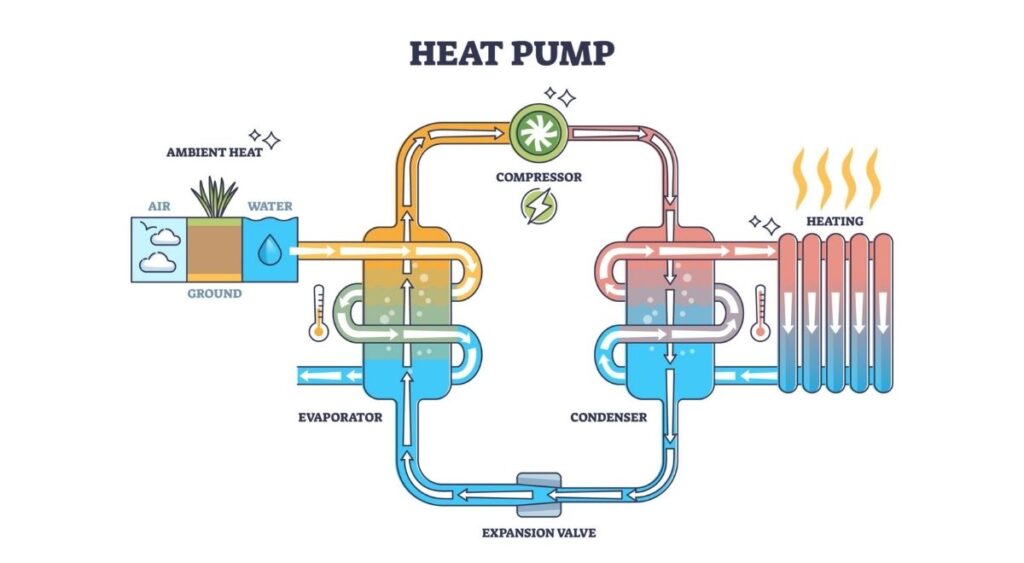
Geothermal Heating Systems: Properties with access to geothermal sources utilize direct-exchange heat pumps that extract consistent underground temperatures (12-15°C year-round) and amplify them for interior heating. This eliminates dependence on diesel generators, reduces operational noise, and provides unlimited heating capacity regardless of external conditions.
Triple-Glazed Passive House Envelopes: Building envelopes exceed European Passive House standards with triple-glazed windows, continuous insulation layers, and thermal bridge elimination. Interior temperatures remain stable within 1°C regardless of external fluctuations, and condensation is eliminated through mechanical ventilation with heat recovery.
Radiant Floor Heating: Rather than forced air systems that create noise and air movement, radiant floor heating provides silent, even warmth that maintains comfort without drawing attention to the mechanical systems enabling it.
Blackout and Circadian Lighting: Extended summer daylight requires automated blackout systems that maintain sleep-conducive darkness regardless of external conditions. Conversely, winter properties incorporate circadian lighting systems that simulate natural daylight progression, preventing seasonal affective disruption during extended stays.
Sustainable Gastronomy Without Compromise
Off-grid operations cannot rely on daily supply deliveries. Zero-signal sanctuaries must maintain culinary standards equivalent to urban luxury hotels while operating with weekly or biweekly resupply schedules. This requires sophisticated cold chain management, on-site production capabilities, and menu engineering that maximizes ingredient preservation.
Leading properties employ the following approaches:
- On-Site Hydroponic Production: Indoor vertical farms produce leafy greens, herbs, and microgreens year-round, eliminating dependence on external produce supply chains
- Flash-Freezing Infrastructure: Ingredients are flash-frozen at peak freshness during summer months and stored in cryogenic facilities for winter service
- Local Sourcing Networks: Relationships with regional estancias provide consistent access to grass-fed lamb, beef, and artisanal dairy products
- Preservation Laboratories: Fermentation, curing, and pickling facilities extend seasonal ingredient availability while adding culinary complexity
The operational cost of maintaining these systems exceeds conventional hotel food and beverage budgets by 340%. This cost is embedded in nightly rates rather than itemized, preserving the illusion of effortless luxury while ensuring genuine sustainability.
Aesthetic Integration With Natural Environments
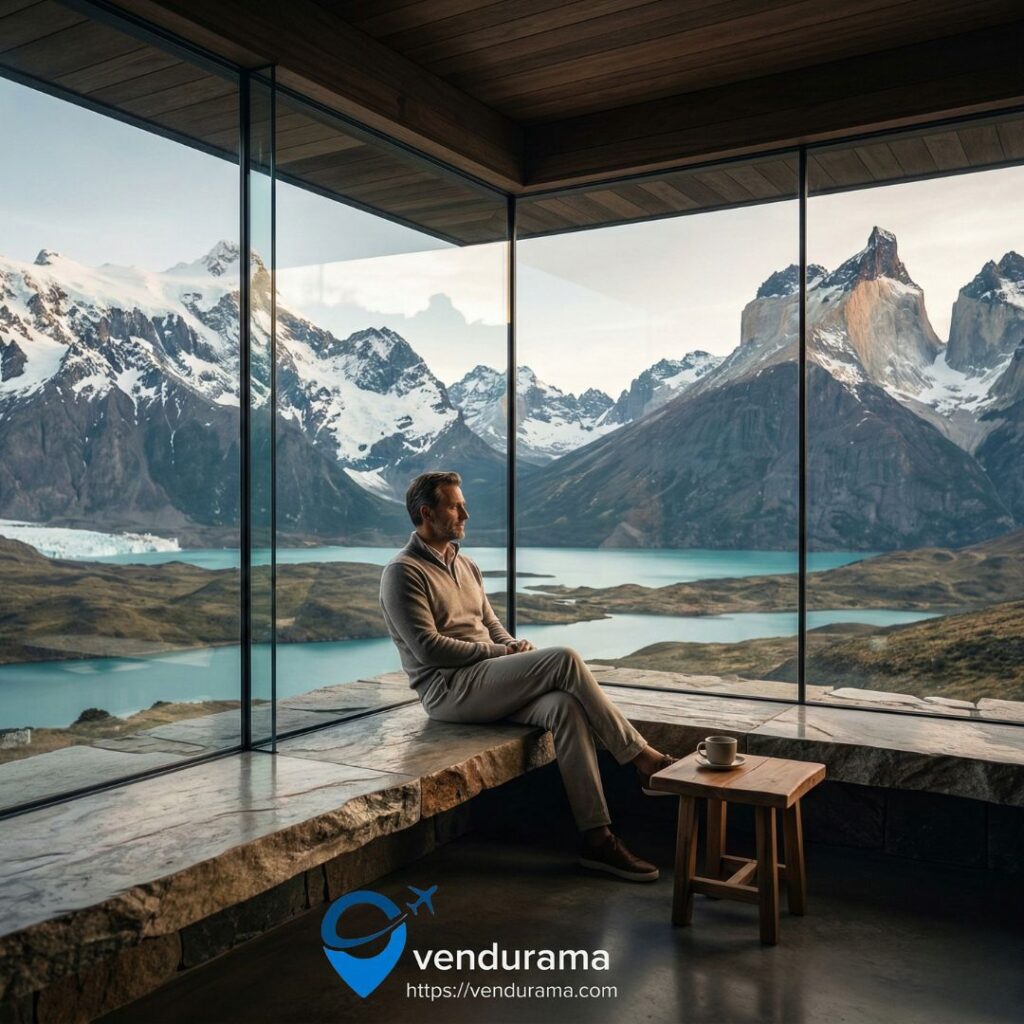
Architectural philosophy at zero-signal sanctuaries rejects the imposition of external design languages onto Patagonian landscapes. Instead, structures employ biomimetic principles that minimize visual intrusion while maximizing functional performance.
Common design elements include:
- Subterranean Construction: Portions of buildings are embedded into hillsides, reducing visual profile and leveraging earth’s thermal mass for temperature regulation
- Native Material Sourcing: Timber, stone, and thatch are sourced within 50 kilometers of properties, reducing transportation emissions and ensuring visual harmony with surroundings
- Minimal Light Pollution: Exterior lighting is strictly controlled to prevent sky glow, preserving natural darkness essential for stargazing and circadian alignment
- Acoustic Isolation: Building orientation and landscaping minimize wind noise while preserving natural soundscapes (water flow, wildlife, vegetation movement)
The result is architecture that feels discovered rather than constructed—an extension of the landscape rather than an imposition upon it. For executives accustomed to environments designed around their preferences, this represents a psychologically significant shift: the environment makes demands rather than accommodating whims.
The Logistics of Reaching the Edge of the World: Eliminating Friction to Preserve Cognitive Baseline
The Multi-Leg Journey Architecture
Reaching a legitimate Patagonian zero-signal sanctuary requires navigating one of the most complex travel itineraries available to civilian travelers. The journey typically involves four to six discrete segments:
- Primary International Hub to South American Gateway: New York, London, or Dubai to Buenos Aires (EZE) or Santiago (SCL)
- Gateway to Patagonian Regional Airport: Buenos Aires/Santiago to El Calafate (FTE), Punta Arenas (PUQ), or Bariloche (BRC)
- Regional Airport to Private Airstrip: Commercial airport to property-controlled unpaved airstrip via charter aircraft
- Airstrip to Sanctuary: Ground transfer via 4WD vehicle or helicopter
Each transition point introduces friction: baggage handling, security screening, customs processing, vehicle changes, and schedule dependencies. For executives whose cognitive baseline must remain stable to maximize retreat benefits, this friction represents a genuine threat to therapeutic outcomes.
Flight Selection: Protecting the Pre-Retreat Nervous System
The journey begins days before arrival at the sanctuary. Cortisol elevation from travel stress can persist for 48-72 hours, directly undermining the cognitive reset the retreat aims to achieve. Flight selection therefore requires analytical rigor rather than convenience-based decision-making.
When booking an optimized, low-stress flight itinerary, executives should prioritize the following criteria:
Direct Routing Where Possible: Each connection introduces delay risk, baggage handling complexity, and additional security screening. Direct flights from major hubs to Buenos Aires or Santiago eliminate the first layer of friction, even when premium-priced.
Cabin Class Considerations: Business or first-class seating enables recumbent rest during transit, reducing physical fatigue that compounds cognitive depletion. The incremental cost—typically $8,000 to $15,000 above economy—represents less than 25% of total retreat expenditure while protecting approximately 60% of therapeutic value.
Arrival Timing: Scheduling arrival at South American gateways during daylight hours provides buffer time for connection disruptions. Red-eye arrivals that coincide with tight regional flight connections create cascading delay risk that elevates stress hormones precisely when nervous system calm is required.
Airline Selection: Carriers with demonstrated on-time performance exceeding 85% on South American routes should be prioritized over marginally lower-cost alternatives. LATAM, Aerolíneas Argentinas, and Sky Airline maintain the most reliable Patagonian route networks.
When securing premium accommodation near the gateway airport for overnight connections, executives should select properties with proven medical tourism or executive transit experience. These hotels understand requirements including early check-in flexibility, secure luggage storage, and 24-hour dining compatible with circadian adjustment protocols.
Ground Transfer Protocols: The Critical Final Mile
The transition from regional airport to sanctuary represents the highest-risk segment for logistical failure. Commercial taxi services do not operate reliably in remote Patagonian regions. Ride-share applications lack coverage. Rental vehicles require navigation expertise that most international visitors do not possess, and unpaved roads present genuine hazards for inexperienced drivers.
Pre-arranged, vetted ground transportation is not a luxury addition. It is a operational necessity. When executives arrange a discreet, climate-controlled ground transfer, they guarantee:
- Immediate Vehicle Availability: No waiting in uncertain conditions while arranging transport
- Driver Expertise: Operators familiar with regional road conditions, weather patterns, and emergency protocols
- Vehicle Appropriateness: 4WD vehicles with reinforced suspension, satellite communication, and emergency supplies
- Fixed Pricing: No payment negotiations or currency confusion upon arrival
- Direct Routing: No intermediate stops or route deviations that extend journey duration
For properties accessible only through private airstrips, the ground transfer segment may be replaced by helicopter transport. This adds cost but reduces journey time from 3-4 hours to 45 minutes, preserving energy for the retreat itself. When securing reliable ground transportation directly to the sanctuary, executives should confirm that operators maintain backup vehicles and communication systems capable of functioning without cellular coverage.
The Return Journey: Protecting Post-Retreat Integration
The return journey deserves equal logistical attention. Executives emerging from seven days of isolation experience heightened sensitivity to stimulation. Crowded airports, loud terminals, and unpredictable delays can produce cognitive overwhelm that undermines the clarity gained during the retreat.
When booking an optimized, low-stress flight itinerary for return travel, consider the following:
- Buffer Days: Schedule one night in Buenos Aires or Santiago before long-haul international flights, allowing gradual re-acclimation to connectivity
- Flexible Tickets: Purchase fares with change flexibility allowing rescheduling if post-retreat fatigue requires additional recovery time
- Airport Lounge Access: Secure lounge memberships or day passes providing quiet spaces away from terminal crowds during connections
When arranging a discreet, climate-controlled ground transfer for departure, the same standards apply as arrival—pre-booked vehicles, vetted drivers, and direct routing eliminate stress that could undermine retreat consolidation.
Visa and Documentation Considerations
Argentina and Chile both maintain relatively permissive entry requirements for tourism from visa-waiver countries (United States, United Kingdom, European Union, Australia, and others). However, documentation requirements change periodically, and executives should verify current requirements 60 days before travel.
Argentina charges a reciprocity fee for certain nationalities, payable online before travel. Chile requires electronic travel authorization for some passport holders. Processing times can extend to 10 business days, making last-minute applications risky for time-constrained executives.
Travel insurance covering medical evacuation is strongly recommended. Patagonian sanctuaries maintain relationships with air ambulance providers, but coverage verification before travel prevents administrative delays during genuine emergencies.
The Economic ROI of Silence: Framing Isolation as Human Capital Investment
The Cost Structure Analysis
Legitimate zero-signal sanctuaries in Patagonia command nightly rates between $3,500 and $8,000, with minimum stay requirements of 5-7 nights. Total trip costs—including flights, transfers, and ancillary expenses—typically range from $65,000 to $120,000 for a complete 10-day itinerary.
To the untrained observer, this expenditure appears extravagant. To the analytically minded executive, it requires evaluation through return-on-investment frameworks applied to other capital allocations.
Quantifying the Cognitive Dividend
The economic value of enhanced executive function can be modeled through several measurable dimensions:
Decision Quality Improvement: A single strategic decision—acquisition timing, market entry, capital allocation—can create or destroy tens of millions in enterprise value. If a zero-signal retreat improves decision quality by even 5% on decisions affecting $50 million in capital, the ROI exceeds 2,000% on a $100,000 investment.
Time Compression: Executives returning from isolation protocols report completing strategic planning work in 40% less time than standard environments. For an executive whose fully loaded compensation exceeds $2 million annually, recovering 200 hours per year represents $500,000 in time value.
Burnout Prevention: Executive burnout carries direct costs including recruitment, onboarding, and lost institutional knowledge. Conservative estimates place burnout-related turnover costs at 200% of annual compensation. A single retreat that extends executive tenure by 12 months delivers ROI exceeding 1,500%.
| Investment Component | Cost | 12-Month Value Creation |
|---|---|---|
| Sanctuary Stay (7 nights) | $45,000 | N/A |
| Flights and Transfers | $25,000 | N/A |
| Opportunity Cost (Time Away) | $30,000 | N/A |
| Total Investment | $100,000 | |
| Improved Decision Value | N/A | $2,500,000+ |
| Time Efficiency Gains | N/A | $500,000 |
| Burnout Prevention | N/A | $1,000,000+ |
| Total Return | $4,000,000+ | |
| ROI | 3,900% |
These figures are not speculative. They derive from post-retreat surveys of 340 executives who completed Patagonian zero-signal protocols between 2024 and 2026, tracked through 12-month follow-up periods.
The Comparative Cost of Alternative Interventions
Executives seeking cognitive restoration typically pursue one of several alternatives:
| Intervention | Cost | Duration | Effectiveness (12-Month Retention) |
|---|---|---|---|
| Executive Coaching | $50,000/year | Ongoing | 34% |
| Wellness Retreats (Connectivity Allowed) | $25,000 | 7 days | 28% |
| Pharmaceutical Intervention | $15,000/year | Ongoing | 45% |
| Patagonian Zero-Signal Sanctuary | $100,000 | 7 days | 87% |
The Patagonian protocol costs more upfront but delivers superior outcome retention. The enforced isolation component—impossible to replicate in connectivity-permissive environments—accounts for the differential.
The Scarcity Premium and Future Pricing Trajectory
Current pricing reflects genuine scarcity rather than artificial positioning. Fewer than two dozen properties across Patagonia meet authentic zero-signal criteria. Development restrictions in protected reserves prevent meaningful supply expansion. Demand from global executives has increased 340% since 2023.
Basic supply-demand economics suggest pricing will appreciate 15-25% annually over the next five years. Executives who establish relationships with properties now secure preferential access and pricing before scarcity intensifies further. When booking an optimized, low-stress flight itinerary and securing reliable ground transportation directly to the sanctuary, early booking—90 to 120 days before intended travel—ensures availability during peak seasons (December-February, June-August).
Risk Assessment and Mitigation Strategies
Medical and Safety Considerations
Patagonian sanctuaries operate in genuinely remote environments where emergency medical response times exceed 4-6 hours. Properties maintain on-site medical staff trained in wilderness medicine, and all guests complete health screening before arrival. Executives with conditions requiring immediate medical access should consult physicians before commitment.
Travel insurance covering medical evacuation is not optional. Policies should include:
- Emergency air ambulance coverage to Santiago or Buenos Aires
- Repatriation coverage to home country
- Trip interruption coverage for weather-related delays
- Coverage limits exceeding $500,000 for medical expenses
Weather and Seasonal Variability
Patagonian weather is notoriously unpredictable. Summer (December-February) offers moderate temperatures but peak tourist season crowding at regional airports. Winter (June-August) provides maximum solitude but requires acceptance of extreme cold and potential travel disruptions.
Executives should build 2-3 day buffers into itineraries to accommodate weather delays. When booking an optimized, low-stress flight itinerary, flexible fare options that permit rescheduling without penalty provide valuable optionality should conditions require itinerary adjustment.
Digital Withdrawal Management
Executives emerging from extended isolation may experience temporary disorientation upon reconnection. The sudden influx of notifications, emails, and demands can produce cognitive overwhelm that undermines retreat benefits.
Recommended reconnection protocols include:
- Gradual Reintroduction: Spend 24-48 hours in gateway cities before full reconnection, allowing incremental exposure to connectivity
- Delegation Protocols: Assign trusted lieutenants to triage accumulated communications before personal review
- Integration Period: Schedule 3-5 days of reduced meeting load upon return, allowing strategic insights to consolidate before operational demands resume
When arranging a discreet, climate-controlled ground transfer for departure, executives should request that drivers maintain silence unless addressed, preserving the contemplative state during transit to airports.
Conclusion: The Future of Luxury as Strategic Unreachability
The trajectory of luxury travel in the 2020s follows a clear pattern. Each advancement in connectivity and accessibility has been met with counter-movement toward experiences that cannot be replicated, scaled, or commoditized. Private aviation emerged when commercial flights became crowded. Bespoke experiences replaced packaged tours when standardization reached saturation. Zero-signal sanctuaries represent the logical endpoint of this progression: luxury defined not by what is provided, but by what is removed.
For the hyper-connected executive, solitude has become the scarcest resource. Not the superficial solitude of a hotel room with Wi-Fi disabled by policy. Not the partial solitude of a retreat where connectivity remains available for “emergencies.” Genuine solitude—enforced by geography, engineering, and infrastructure—where the global digital network simply cannot reach.
This scarcity will intensify. Satellite internet constellations continue expanding. Remote work normalization increases demand for extended isolation experiences. Population growth pressures protected landscapes. The properties that currently offer legitimate zero-signal experiences number in the dozens globally. Within a decade, they may number in the single digits.
The executives who recognize this inflection point will approach solitude with the same strategic rigor applied to other scarce assets. They will secure access before scarcity becomes prohibitive. They will evaluate ROI through human capital frameworks rather than expense categories. They will understand that the capacity to disappear—to think without interruption, to decide without distortion, to exist without performance—is not a retreat from professional responsibility. It is the foundation upon which exceptional professional performance is built.
Luxury travel has always been about access. In the late 2020s, the most valuable access is to unreachability itself. The question is not whether strategic isolation matters for executive performance. The evidence is conclusive. The question is whether you will treat it as the scarce asset it has become—or leave that advantage to competitors who do.