

Introduction: The Macroeconomics of Healthcare Inflation and the Rise of Specialized Medical Arbitrage
The global healthcare landscape in 2026 presents a paradox of unprecedented medical capability coupled with increasingly prohibitive access barriers for middle-class patients. In the United States, the average cost of a single in vitro fertilization (IVF) cycle now exceeds $18,000, with medication expenses adding an additional $3,000-$5,000—and most insurance plans provide limited or no coverage for fertility interventions. Similarly, advanced ophthalmological procedures such as SMILE Pro laser vision correction or complex retinal surgeries command $4,000-$8,000 per eye in Anglophone markets, frequently classified as “elective” despite their profound impact on quality of life and long-term productivity. For the rational, analytically-minded patient—those with sufficient capital to invest in health optimization but insufficient wealth to absorb catastrophic out-of-pocket expenditures—this represents not merely a financial challenge, but a systemic market inefficiency in the allocation of life-enhancing care.
Concurrently, medical technology has achieved remarkable standardization across borders. Success rates for IVF procedures, once highly variable between institutions, now converge around evidence-based protocols disseminated through international fertility societies. Similarly, ophthalmological interventions leveraging femtosecond lasers, robotic assistance, and AI-enhanced diagnostics demonstrate outcome parity between leading global centers regardless of geography. This technological harmonization, combined with deliberate national strategies to attract medical tourism, has created a powerful arbitrage opportunity: the ability to access world-class specialized care at 30-60% of conventional Western costs, without compromising clinical outcomes or patient safety.
Enter the concept of Specialized Medical Arbitrage: the strategic deployment of healthcare capital across jurisdictional boundaries to capture equivalent or superior clinical outcomes at a fraction of the domestic cost. This is not a compromise on quality; it is an optimization problem solved through rigorous analysis of accreditation frameworks, procedural success metrics, and post-treatment support infrastructure. In 2026, two destinations have emerged as vanguard opportunities for this strategy: Greece, offering European Union-regulated IVF excellence at 40-50% of US costs, and South Korea, providing cutting-edge ophthalmological innovation at 30-40% of Anglophone prices.
The arbitrage opportunity is quantifiable. A complete IVF cycle in Athens—including ovarian stimulation, egg retrieval, embryo culture, and fresh transfer—averages €4,500-6,500 ($5,000-$7,200), compared to $18,000-$25,000 for equivalent protocols in the United States. Similarly, bilateral SMILE Pro laser vision correction in Seoul costs $3,200-$4,800, versus $8,000-$12,000 in the US or UK. When factoring in travel, accommodation, and ancillary expenses, the total differential still approaches $10,000-$15,000 per procedure—capital that can be redeployed toward complementary treatments, long-term health optimization, or wealth preservation strategies.
For sophisticated patients willing to conduct diligent due diligence, this represents not merely savings, but a strategic reclamation of biological agency. For patients demanding a fail-safe blueprint, The Ultimate Guide to Medical Tourism 2026—now available for $19.99—is an essential asset. It features an exclusive Triple Podcast Bundle, including a 3-in-1 integrated master session, providing the auditory guidance needed for a stress-free medical journey.
Greece: The Global IVF Leader for the Analytical Patient
Legal Frameworks and Regulatory Advantages
Greece’s emergence as a premier destination for fertility treatment stems from a deliberate regulatory framework designed to balance patient access, ethical standards, and clinical excellence. The Hellenic Authority for Assisted Reproduction (HAAR), established in 2019, provides centralized oversight of all IVF clinics, mandating transparent reporting of success rates, standardized laboratory protocols, and mandatory psychological counseling for patients. Crucially, Greek law permits IVF treatment for women up to age 54—one of the most inclusive age limits in the European Union—while maintaining strict guidelines on embryo transfer limits (maximum two embryos per cycle) to minimize multiple pregnancy risks.
The legal framework also addresses sensitive considerations that frequently deter international patients. Greece permits anonymous egg and sperm donation, with comprehensive donor screening mandated by EU tissue and cell directives. For single women and LGBTQ+ couples, Greek law provides equal access to fertility treatments without discriminatory barriers—a significant advantage over jurisdictions with restrictive eligibility criteria. Additionally, the country’s membership in the European Union ensures that all clinics adhere to the EU Tissues and Cells Directive, providing an additional layer of regulatory oversight that enhances patient confidence in cross-border care.
The Athens Medical Hub: Infrastructure and Success Metrics
The concentration of fertility expertise in Athens represents a deliberate clustering strategy that amplifies both clinical quality and patient convenience. The “Athens Medical Hub”—centered around the districts of Marousi, Kifissia, and Paleo Psychiko—hosts over 40 specialized IVF clinics within a 10-kilometer radius, creating a competitive ecosystem that drives continuous quality improvement. Leading institutions such as EmbryoClinic, Genesis Athens Clinic, and IASO Women’s Hospital maintain on-site embryology laboratories equipped with time-lapse imaging systems, preimplantation genetic testing (PGT-A/PGT-M) capabilities, and vitrification protocols that achieve embryo survival rates exceeding 95%.
Success metrics for Greek IVF clinics demonstrate parity with top-tier Western institutions while operating at substantially lower costs. According to the European IVF Monitoring Consortium (EIM) 2024 report, Greek clinics report clinical pregnancy rates per embryo transfer of 42-48% for women under 35, compared to 40-45% in US Society for Assisted Reproductive Technology (SART) data. Live birth rates per cycle initiation for the same age cohort average 35-40% in Greece versus 32-38% in the United States—statistically equivalent outcomes achieved at 40-50% of the cost.
The purchasing power parity advantage extends beyond procedural fees. A comfortable recovery apartment in central Athens, equipped with kitchen facilities for medication preparation and proximity to clinic facilities, averages €60-90 nightly ($65-100), versus $200-400 for comparable accommodation in Boston or London. Dining, transportation, and ancillary expenses follow similar differentials: a nutritionally balanced meal at a mid-range restaurant averages €18 versus $45 in major US cities; a private taxi ride from clinic to accommodation costs €15 versus $40+ in Anglophone markets.
Cost-Benefit Analysis: Greece vs. US/UK IVF Markets
The economic case for Greek IVF arbitrage is best understood through rigorous comparative analysis. A complete treatment cycle in the United States—including initial consultation, ovarian stimulation medications, egg retrieval, laboratory fertilization, embryo culture, and fresh transfer—averages $18,000-$25,000, with additional cycles costing $12,000-$18,000 each. The United Kingdom presents a parallel challenge: while the National Health Service theoretically covers IVF, stringent eligibility criteria exclude approximately 60% of applicants, and private treatment costs £5,000-£8,000 per cycle ($6,300-$10,000) with medication expenses adding £1,500-£3,000.
In contrast, comprehensive IVF packages in Greece range from €4,500 to €6,500 ($5,000-$7,200), inclusive of consultation, monitoring, retrieval, laboratory procedures, and fresh transfer. Medication costs, frequently billed separately in Anglophone markets, are often bundled into Greek packages or available at 30-50% discount through local pharmacies due to EU price regulation mechanisms. When factoring in travel and accommodation for a 14-21 day treatment window, the total investment for Greek IVF typically remains under $9,000, representing a 60-70% savings versus US alternatives while maintaining equivalent clinical outcomes.
Beyond direct cost differentials, the Greek model offers embedded value advantages. Many Athens clinics provide complimentary psychological counseling, nutritional guidance, and post-transfer telemedicine follow-up—services frequently billed as add-ons in US practices. Additionally, the concentration of expertise within the Athens Medical Hub facilitates efficient second opinions and protocol adjustments without the logistical friction of coordinating between geographically dispersed providers.
South Korea: The Ophthalmology Innovation Engine
The Robotic and Laser Revolution in Seoul
South Korea’s dominance in advanced ophthalmology stems from a confluence of technological innovation, high procedural volume, and deliberate government investment in medical tourism infrastructure. Seoul, home to over 200 specialized eye clinics within the Gangnam and Seocho districts, performs more laser vision correction procedures per capita than any other global city—creating a surgical learning curve that translates to superior precision and outcomes. The integration of robotic assistance, femtosecond laser platforms, and AI-enhanced diagnostic protocols has positioned Korean ophthalmology at the forefront of minimally invasive ocular interventions.
The technological infrastructure of Seoul’s leading ophthalmology centers warrants detailed analysis. Institutions such as Yonsei University Health System, Samsung Medical Center, and specialized chains like Eye Plus and Clear Eye Clinic utilize next-generation platforms including the ZEISS VisuMax 800 for SMILE Pro procedures, the Alcon Wavelight Plus for topography-guided LASIK, and the Zeiss Clarus 700 for ultra-widefield retinal imaging. These technologies enable sub-micron precision in corneal reshaping, real-time aberration correction, and early detection of retinal pathologies—capabilities that were once exclusive to elite academic centers but are now standard in Korean private practice due to competitive market dynamics.
Success metrics for Korean ophthalmological interventions demonstrate exceptional outcomes. For SMILE Pro laser vision correction, Korean clinics report 98-99% of patients achieving 20/20 vision or better, with enhancement rates below 1.5%—comparable to or exceeding US benchmarks. For complex retinal procedures such as vitrectomy with membrane peeling, Korean centers report anatomical success rates exceeding 95% for macular hole closure and 90% for epiretinal membrane removal, with visual acuity improvements averaging 3-5 lines on the Snellen chart. These outcomes are achieved with complication rates (infection, significant inflammation, regression) below 0.5%, matching international safety standards.
Gangnam’s Medical Street: AI-Enhanced Diagnostic Protocols
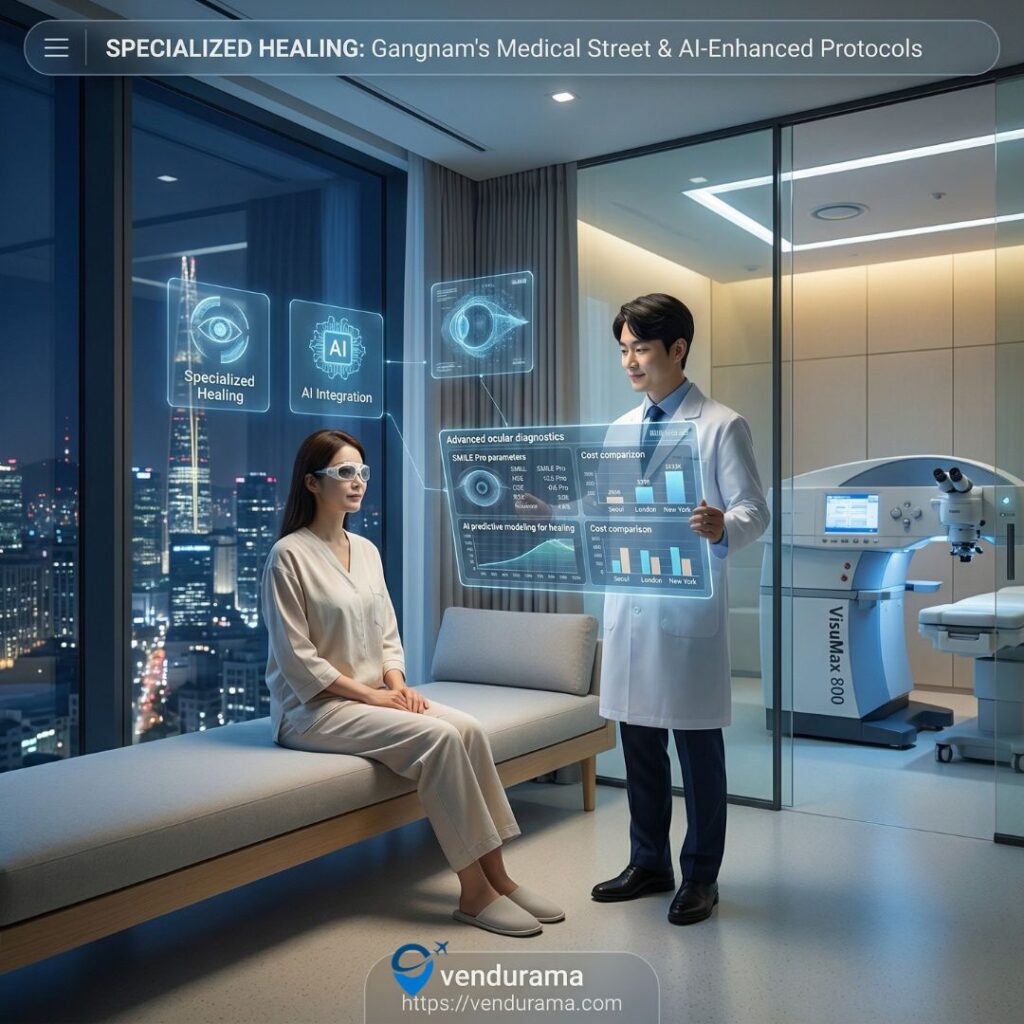
The concentration of ophthalmological expertise in Seoul’s Gangnam district—colloquially termed “Medical Street”—creates a unique ecosystem of competition-driven innovation. Within a five-block radius, patients can access over 30 specialized eye clinics offering comprehensive diagnostic suites including optical coherence tomography angiography (OCT-A), corneal biomechanical assessment (Corvis ST), and wavefront aberrometry with artificial intelligence interpretation. This technological density enables rapid second opinions, protocol optimization, and personalized treatment planning that would require weeks of coordination in more geographically dispersed healthcare systems.
The integration of artificial intelligence into Korean ophthalmological practice represents a distinctive advantage. Leading clinics utilize proprietary AI algorithms trained on millions of ocular images to enhance diagnostic accuracy for conditions ranging from early glaucoma to diabetic retinopathy. These systems provide quantitative risk assessments, progression modeling, and treatment response predictions that augment clinical decision-making. For international patients, this AI-enhanced approach offers an additional layer of objective validation—particularly valuable when navigating treatment decisions across language and cultural boundaries.
The patient experience in Gangnam’s ophthalmology centers reflects a deliberate synthesis of clinical excellence and hospitality infrastructure. Consultations typically include comprehensive diagnostic batteries completed within a single visit, with results reviewed by subspecialty-trained ophthalmologists fluent in English. Pre-operative preparation, procedural execution, and post-operative follow-up follow standardized protocols aligned with international guidelines (American Academy of Ophthalmology, European Society of Cataract and Refractive Surgeons), ensuring outcome consistency regardless of geographic location.
Retinal Advancements and the Precision Medicine Paradigm
Beyond refractive surgery, South Korea has emerged as a global leader in advanced retinal interventions. Conditions once considered untreatable—such as inherited retinal dystrophies, complex macular degenerations, and proliferative diabetic retinopathy—now benefit from minimally invasive vitreoretinal techniques, targeted pharmacotherapies, and emerging gene therapy protocols. Korean centers participate in international clinical trials for novel retinal treatments, providing patients with access to cutting-edge interventions before they achieve widespread regulatory approval.
The precision medicine approach in Korean ophthalmology extends to personalized treatment planning. Genetic testing for inherited retinal conditions, pharmacogenomic profiling for anti-VEGF therapy response, and AI-driven progression modeling enable tailored interventions that optimize outcomes while minimizing unnecessary procedures. For middle-class patients facing vision-threatening conditions, this personalized approach represents a strategic advantage: accessing targeted, evidence-based care without the financial barriers frequently encountered in Anglophone healthcare systems.
The Comparative Economics of Specialized Care
The economic case for specialized medical arbitrage is best understood through rigorous comparative analysis. The table below presents a comprehensive breakdown of total costs for IVF and advanced ophthalmological procedures across four jurisdictions, incorporating procedural fees, medication, facility charges, and essential ancillary expenses. All figures are presented in 2026 USD, adjusted for purchasing power parity where applicable.
| Cost Component | US (Private) | UK (Private) | Greece (Athens) | South Korea (Seoul) |
|---|---|---|---|---|
| IVF Cycle (Base Procedure) | $18,000 | $8,500 | $5,800 | N/A |
| IVF Medications | $4,500 | $2,800 | $1,200 | N/A |
| IVF PGT-A Testing | $3,500 | $2,200 | $1,500 | N/A |
| IVF Total Package | $26,000 | $13,500 | $8,500 | N/A |
| SMILE Pro (Bilateral) | $10,000 | $7,200 | N/A | $4,000 |
| Advanced Retinal Surgery | $12,000 | $9,500 | N/A | $5,200 |
| Pre/Post-Op Consultations | $1,200 | $800 | $400 | $350 |
| Ophthalmology Total | $13,200 | $10,300 | N/A | $4,550 |
| Travel/Accommodation (14-21 days) | $0* | $0* | $1,800 | $2,200 |
| Local Transportation/Meals | $0* | $0* | $900 | $1,100 |
| Total Economic Cost | $39,200 | $23,800 | $11,200 | $7,850 |
| Potential Debt Financing (7% APR, 24 mo) | +$2,800 | +$1,700 | +$800 | +$550 |
| True 2-Year Cost | $42,000 | $25,500 | $12,000 | $8,400 |
Assumes domestic travel; Source: Clinic financial disclosures, International Society of Fertility Practice 2025, Korean Ophthalmological Society Report, author calculations
Several analytical observations emerge from this data. First, the nominal procedural fee differential understates the true economic advantage: when factoring in debt financing costs—the interest that accrues when patients finance procedures via medical credit cards or personal loans—the US/UK options carry a 250-400% premium over Greek or Korean alternatives. Second, the purchasing power parity adjustment reveals that $100 daily in Athens or Seoul provides a comparable standard of recovery accommodation and nutrition to $300-400 in Boston or London, due to lower costs for hospitality services, food preparation, and ancillary support. Third, the opportunity cost of delayed care is profound: patients who postpone fertility or vision interventions due to cost barriers often experience progression of underlying conditions, increasing long-term healthcare expenditures and reducing quality-adjusted life years.
Logistical Risk Mitigation: Engineering a Safe Medical Journey
Post-Operative Care Protocols and Recovery Environments
The successful execution of specialized medical arbitrage depends on meticulous attention to post-procedural logistics—particularly critical for interventions requiring extended recovery windows or specialized aftercare. For IVF patients, the 10-14 day period following embryo transfer necessitates careful monitoring of medication adherence, symptom management, and psychological support. Leading Athens clinics address these requirements through structured post-transfer protocols: daily telemedicine check-ins, 24/7 nursing hotlines for urgent concerns, and partnerships with local accommodation providers offering kitchen-equipped apartments for medication preparation and nutritional control.
For ophthalmological patients, the immediate 48-72 hours following laser or retinal procedures represent the period of greatest vulnerability to complications. Korean medical centers mitigate this risk through comprehensive discharge protocols: detailed written instructions in English, scheduled follow-up examinations within 24 hours, and emergency contact pathways for urgent concerns. Additionally, many Gangnam clinics offer “recovery packages” that include private transportation, protective eyewear, and nutritional supplements optimized for ocular healing—services frequently billed as add-ons in Anglophone markets but bundled into Korean treatment packages.
Medical Visa Frameworks and Insurance Considerations
Navigating international healthcare requires understanding of visa regulations and insurance coverage limitations. Greece offers a streamlined medical visa pathway for non-EU patients: documentation of clinic appointment confirmation, proof of financial means, and travel insurance coverage typically suffice for 90-day treatment visas. South Korea’s medical tourism visa (C-3-3) provides similar facilitation, with expedited processing for patients treated at government-certified medical tourism institutions. Both countries permit visa extensions for medically necessary follow-up care, providing flexibility for complex treatment protocols.
Insurance considerations warrant careful analysis. Most US and UK health plans exclude or severely limit coverage for out-of-country elective procedures, necessitating out-of-pocket payment for medical tourism interventions. However, specialized medical travel insurance policies—available through providers like Global Underwriters or IMG Global—offer coverage for procedure-related complications, emergency medical evacuation, and trip interruption due to medical necessity. The Ultimate Guide to Medical Tourism 2026, at its discounted price of $19.99, provides detailed frameworks for evaluating insurance options, understanding coverage exclusions, and structuring financial protection strategies that complement the clinical investment.
The Critical Role of Professional Transportation Logistics
The logistical precision of patient transportation cannot be treated as an ancillary consideration. For IVF patients navigating hormonal fluctuations and procedural recovery, or ophthalmological patients with temporary visual limitations, the reliability and comfort of ground transportation directly impacts clinical outcomes and psychological well-being. Sophisticated patients recognize this vulnerability and prioritize professional logistics: coordinating specialized medical travel itineraries ensures optimal flight timing to minimize transit fatigue, while arranging sterile and comfortable airport-to-clinic transfers eliminates the uncertainty of navigating unfamiliar transportation systems during periods of physical vulnerability.
The psychological importance of reliable logistics extends beyond immediate comfort. For patients finalizing travel plans, securing long-stay patient accommodations with kitchen facilities, proximity to clinics, and English-speaking support staff reduces cognitive load during the recovery phase. Similarly, booking professional chauffeur services for post-op recovery mobility ensures timely access to follow-up appointments without the stress of public transportation navigation—a seemingly minor decision with disproportionate impact on the overall treatment experience.
Conclusion: Reclaiming Agency Through Strategic Medical Arbitrage
The strategic imperative for middle-class patients facing specialized healthcare cost barriers is clear: medical arbitrage is not merely an alternative pathway, but a rational optimization of health capital investment. By leveraging the regulatory advantages of Greek fertility care and the technological innovation of Korean ophthalmology, patients can access world-class interventions at 30-60% of conventional Western costs. The $10,000-$30,000 differential is not merely savings; it is capital that can be deployed toward complementary treatments, long-term health optimization, or wealth preservation strategies—creating a compounding advantage that extends far beyond the immediate procedure.
This arbitrage strategy requires sophisticated execution: rigorous due diligence on accreditation status, strategic logistical planning for recovery, and proactive engagement with post-treatment support pathways. But for the analytically-minded patient willing to conduct this diligence, the reward is profound: a debt-free path to enhanced biological and physical capability that provides not only clinical efficacy but also financial resilience unencumbered by medical debt. In an era of healthcare inflation and insurance volatility, this financial resilience represents a form of health security that transcends mere cost savings.
The future of specialized healthcare belongs not to those who accumulate the most medical debt, but to those who optimize the most value. By embracing geographic medical arbitrage, middle-class individuals and couples can reclaim agency over their biological and physical futures, secure world-class clinical interventions, and position themselves for enhanced quality of life unencumbered by financial strain. This is not merely a financial strategy; it is a strategic reclamation of human potential—one that aligns economic rationality with clinical excellence and personal dignity. For the sophisticated, analytical reader, the calculus is unequivocal: the time for specialized medical arbitrage is now.