
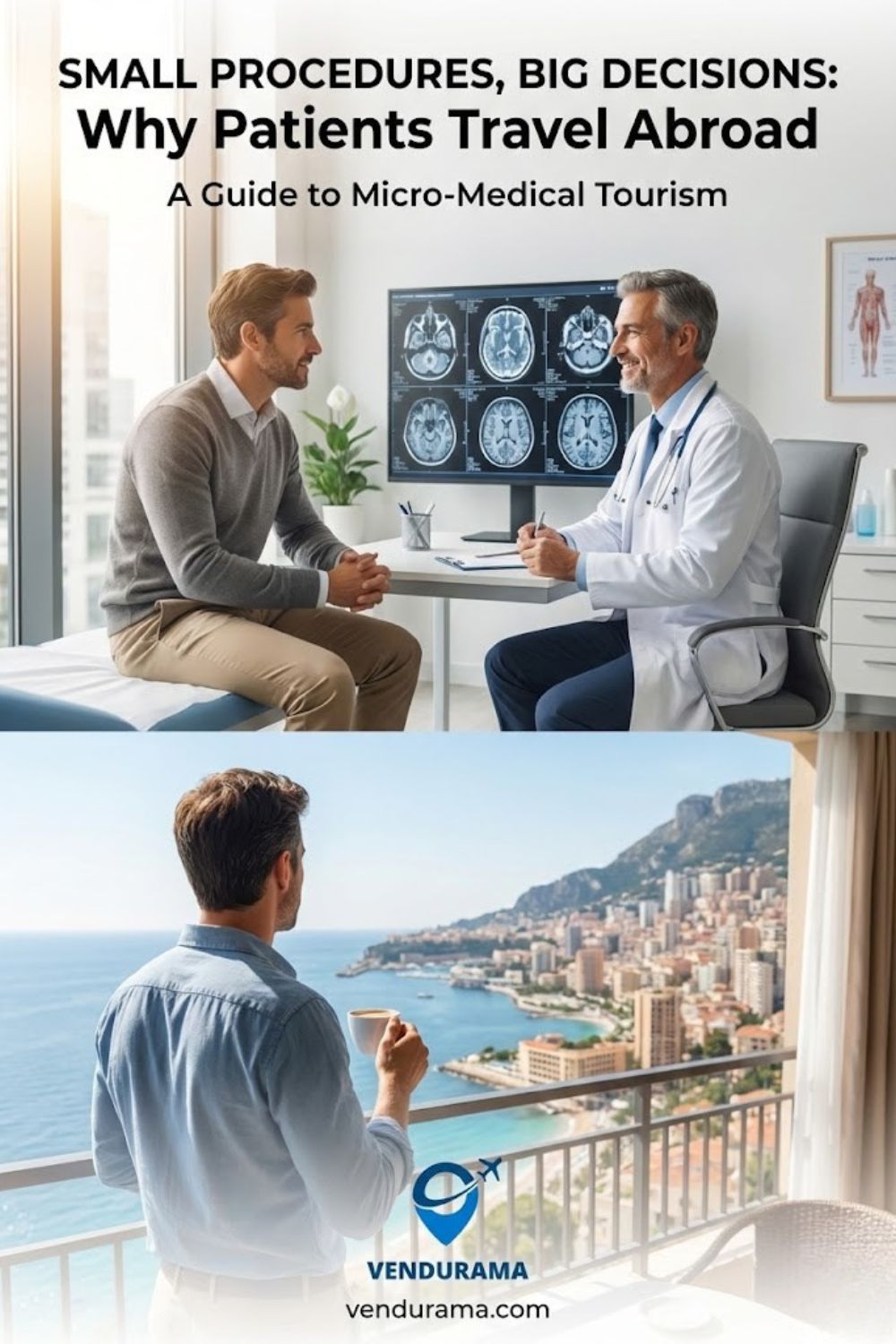
Introduction: The Rise of “Micro-Medical Tourism”
For decades, the narrative of medical tourism was dominated by the “Big Three”: colossal cost savings on major orthopedic surgeries, life-saving cardiac procedures unavailable domestically, or dramatic plastic surgery transformations. The image was one of high stakes, long recoveries, and significant financial risk. It was a last resort for the desperate or a massive undertaking for the vanity-driven.
In 2026, this narrative is obsolete.
A quiet revolution has occurred in global healthcare mobility. The fastest-growing segment of the market is no longer the multi-stage reconstruction; it is “Micro-Medical Tourism.” This phenomenon involves discerning patients traveling internationally for minor surgeries, advanced diagnostics, preventative check-ups, and specialized outpatient treatments.
Why fly across a continent for a procedure that takes less than an hour? The answer lies in a complex matrix of Accessibility, Technology, and Proactive Health Economics. In many Western healthcare systems, plagued by chronic waiting lists and bureaucratic inertia, “minor” conditions are deprioritized, leaving patients in pain or uncertainty for months. Simultaneously, the out-of-pocket costs for diagnostics in private systems can be staggering.
This analytical review dissects the strategic rationale behind traveling for smaller procedures. We will explore how globalization has democratized access to elite-level diagnostics, why a “health holiday” for a minor treatment is often the most rational economic choice, and the precise logistical architecture required to execute a seamless, short-term medical trip.
Part I: The Drivers – The Friction of Domestic Healthcare
To understand why someone would board a plane for a dermatologist appointment or an MRI, we must first analyze the friction points in domestic healthcare systems (NHS, Canadian Medicare, US private insurance).
1. The “Wait-List” Paralysis (The Time Cost)
In public health systems, non-life-threatening conditions are triaged to the bottom of the list. A torn meniscus that prevents you from playing sports but allows you to walk might have a surgical waiting list of 12 to 18 months. A suspicious mole might require a 4-month wait to see a specialist. For the proactive individual, this “Time Cost” is unacceptable. Living with reduced functionality or anxiety for a year is a massive hidden tax on quality of life. International clinics operate on an “On-Demand” model. What takes 12 months at home can often be scheduled for next Tuesday abroad.
2. The Diagnostic Deficit (The Access Cost)
Preventative medicine is often not covered by insurance. If you are an asymptomatic 40-year-old who wants a full-body MRI or a comprehensive cardiovascular screening “just to be safe,” your domestic doctor may refuse to order it, or your insurance will refuse to pay. In the US, an out-of-pocket MRI can cost $2,500. In hubs like Seoul, Bangkok, or Istanbul, elite diagnostic centers cater specifically to this demand, offering state-of-the-art imaging for a fraction of the cost, with immediate availability.
3. The Technology Adoption Lag
Bureaucratic approval processes (like the FDA in the US) are notoriously slow. Cutting-edge treatments—particularly in dermatology, ophthalmology, and minimally invasive orthopedics—are often approved and utilized in Europe and Asia years before they become widely available in North America. Patients travel not just for lower costs, but for better solutions that simply aren’t available at home.
Part II: The Spectrum of “Small” Procedures
What exactly are patients traveling for? This is not about budget root canals in a back alley. It is about accessing world-class centers of excellence for specialized outpatient care.
A. The Executive Check-Up (The “Health Audit”)
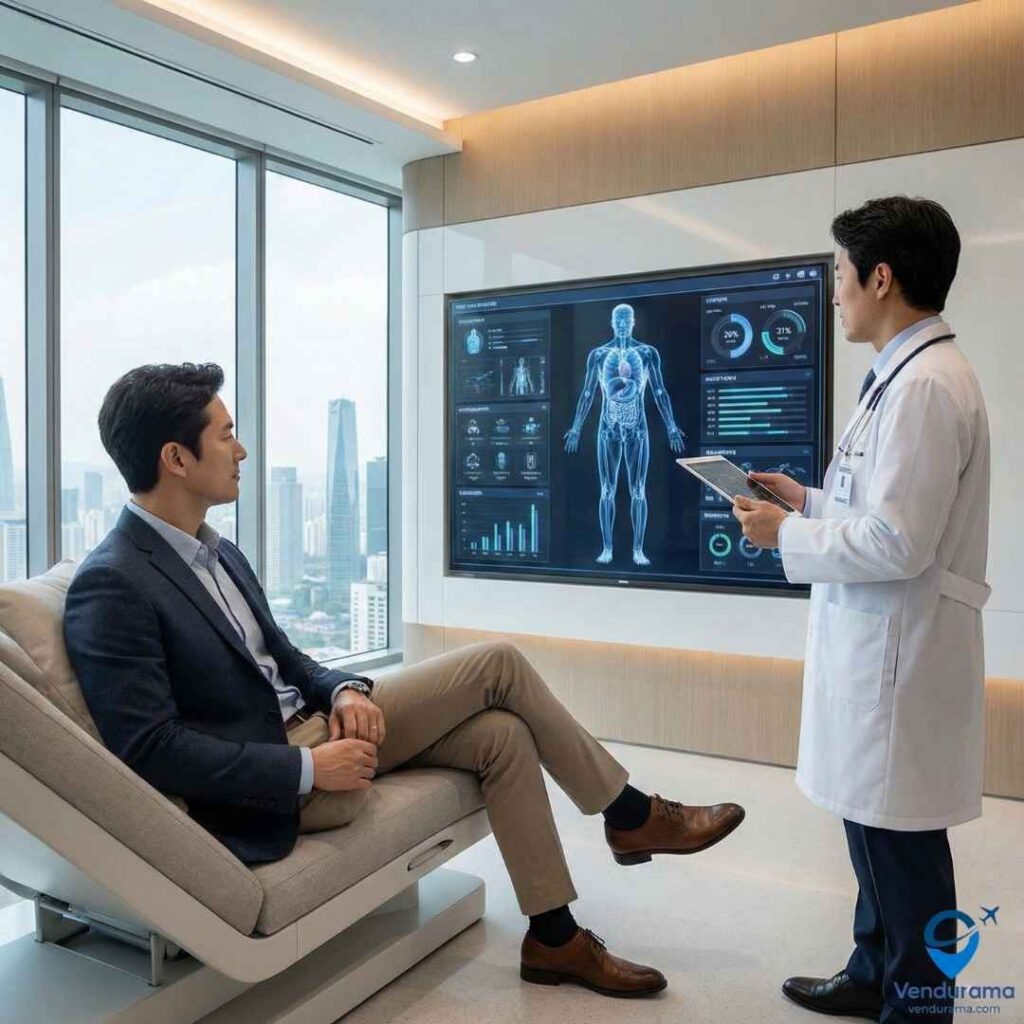
This is the crown jewel of micro-medical tourism. It is a comprehensive, preventative “deep dive” into your health, far exceeding the standard annual physical.
- The Domestic Experience: A 15-minute chat with a GP, basic blood work, and perhaps an EKG. Results take two weeks.
- The International Experience (e.g., South Korea, Thailand, Malaysia): A half-day VIP experience in a luxury hospital wing. It includes extensive blood panels (cancer markers, hormones), full-body imaging (CT/MRI), cardiovascular stress tests, ultrasound of all major organs, and consultations with multiple specialists.
- The Value: You receive a complete “Health Blueprint” in 24 hours. It is proactive healthcare at its finest, designed to catch issues years before they become symptomatic.
B. Advanced Diagnostics and Imaging
Sometimes, the entire trip is just for the diagnosis.
- PET/CT Scans: Crucial for cancer screening, often hard to access quickly domestically.
- 3T MRI: High-resolution imaging for neurological or orthopedic issues, available instantly abroad for $300-$600, compared to thousands at home.
- Endoscopy/Colonoscopy: Carried out in high-comfort, sedation-based environments with immediate gastroenterologist feedback, bypassing the months-long queues of public systems.
C. Dermatology and Aesthetics (Functional & Cosmetic)
This is not just about Botox. It covers advanced treatments that occupy the gray area between medicine and aesthetics.
- Advanced Laser Treatments: For severe acne scarring, rosacea, or pigmentation, using the latest picosecond or thulium lasers that may not be widely available locally.
- Mole Mapping and Removal: Using digital dermoscopy for early skin cancer detection, followed by immediate cosmetic removal of benign but bothersome lesions by top-tier plastic surgeons, not just general dermatologists.
- Hair Restoration (Minor): Small FUE sessions for early hairline recession or eyebrow restoration, done in a weekend.
D. Specialized Dentistry (The “Tune-Up”)
Beyond simple fillings, this includes procedures that are prohibitively expensive or time-consuming at home.
- Same-Day Crowns (CAD/CAM): Using in-house milling machines to create and place a permanent ceramic crown in a single appointment, rather than waiting weeks for a lab.
- Periodontal Laser Therapy: Advanced, less invasive treatments for gum disease.
- Aligners and Veneers: Initiating orthodontic treatment or receiving a few targeted veneers for functional and aesthetic improvement at 40% of the domestic cost.
E. Minimally Invasive Orthopedics and Pain Management
For chronic pain sufferers who are not candidates for major surgery but are tired of relying on painkillers.
- Stem Cell & PRP Injections: Used for joint arthritis or tendonitis. While available in the West, the regulatory environment abroad often allows for more potent concentrations and advanced application techniques.
- Radiofrequency Ablation: A quick procedure to burn off nerve endings causing chronic back or neck pain, offering immediate relief.
Part III: The Economics of the “Health Holiday”
A common critique is: “Doesn’t the cost of flights and hotels wipe out the savings on a small procedure?”
This demonstrates a fundamental misunderstanding of the economics. You must view the trip through the lens of “Marginal Cost” and “Bundled Value.”
1. The Marginal Cost Theory
If you were planning to take a vacation anyway, the cost of the flights and hotel is already a sunk cost. The “marginal cost” of adding a medical procedure to that existing trip is purely the cost of the procedure itself.
- Scenario: You live in London and need a complex dermatological laser treatment that costs £1,500 locally. You are also planning a holiday to Turkey.
- The Strategy: You book your holiday to Istanbul. You get the treatment there for £400 in a world-class clinic. You have saved £1,100, which effectively subsidizes your vacation. The medical treatment becomes a “value-add” to your leisure travel.
2. The “Bundling” Multiplier
The economics become undeniable when you bundle multiple minor procedures into one trip.
- Example in Bangkok:
- Executive Check-up: $500 (Home cost: $2,500+)
- Dental Cleaning & Whitening: $200 (Home cost: $600)
- Dermatology Consultation & Laser Session: $300 (Home cost: $1,000)
- Total International Cost: $1,000
- Total Domestic Equivalent Value: $4,100+ Even with a $1,000 flight and hotel budget, the ROI is massive, not just in dollars, but in the immense amount of healthcare bureaucracy you have bypassed in a single weekend.
Part IV: The Logistical Architecture of a “Micro-Trip”
Planning a trip for a minor procedure is different from major surgery. It is faster, more dynamic, and requires higher logistical agility. These are often 3-to-5-day trips, sometimes even weekends.
Phase 1: Strategic Scheduling and Agile Flights
Unlike major surgery which is planned months in advance, a diagnostic trip might be organized in two weeks. You need flight options that are direct and maximize your time on the ground.
Because clinic schedules can change, or you might decide to add an extra procedure once you arrive, rigid flight bookings are a strategic error. You need a search interface that allows you to visualize the fastest connections and identify fares that offer some degree of flexibility. Utilizing comprehensive international flight analysis platforms is essential. These tools allow you to filter for flights that arrive early on a Thursday and leave late on a Sunday, perfectly framing a long weekend of treatment and recovery, ensuring you spend your limited time in the clinic or exploring the city, not in transit.
Phase 2: The High-Efficiency Arrival Protocol
When you arrive for a short-term medical trip, every hour counts. You may have an appointment just hours after landing. You are likely entering a busy metropolis like Seoul, Istanbul, or Dubai.
This is not the time to navigate a complex foreign subway system or haggle with local taxi drivers, which elevates stress hormones—the last thing you want before a medical check-up. The “Clarity Protocol” demands a zero-friction arrival. Pre-booking a reliable private airport transfer service is a mandatory investment in your peace of mind. Having a professional chauffeur waiting at arrivals with your name on a sign ensures you are whisked directly to your hotel or clinic in climate-controlled comfort. It turns a chaotic arrival into a seamless, executive experience, allowing you to arrive at your appointment calm and focused.
Phase 3: Accommodation Strategy (The “Clinic Orbit”)
For minor procedures, you don’t need to stay in the hospital. You need a hotel that is in the “Orbit” of the clinic—ideally walking distance or a short taxi ride away.
- Strategic Tip: Many elite clinics have corporate rates with nearby 4-star and 5-star hotels. Always ask your international patient coordinator for their recommended list.
Phase 4: The Return Journey
Even after a minor procedure like a dermatological laser or a dental treatment, you may feel sensitive or fatigued. Your return journey should be as protected as your arrival.
Relying on professional ground transport again for the return leg to the airport is crucial. It ensures you are not standing on a curb waiting for a ride-share app with treated skin or a numb mouth. It guarantees a smooth, stress-free transit right to your departure terminal, protecting the investment you just made in your health.
Part V: Vetting for Minor Procedures – The Due Diligence Matrix
Just because a procedure is “minor” does not mean the risk is zero. The vetting process is different for outpatient clinics than for major hospitals, but it is just as critical.
1. Accreditation for Outpatient Centers
JCI (Joint Commission International) accreditation is the gold standard for hospitals, but many excellent outpatient clinics don’t have it because it’s designed for large institutions. Instead, look for:
- ISO Certification (e.g., ISO 9001): For quality management systems.
- National Accreditations: e.g., The Care Quality Commission (CQC) in the UK, or equivalents in the destination country.
2. The Specialist’s Credentials over the Clinic’s Brand
For minor procedures, the individual skill of the practitioner is paramount.
- Board Certification: Are they certified in their specialty (Dermatology, Radiology, Dentistry) in their home country?
- International Memberships: Look for affiliations with global bodies like the American Academy of Dermatology (AAD) or European Society of Radiology (ESR). This indicates they keep up with global standards.
3. Technology Transparency
Elite diagnostic and outpatient centers compete on technology. Their websites should explicitly state the equipment they use.
- Red Flag: A clinic that just says “Advanced Laser.”
- Green Flag: A clinic that specifies “Candela Vbeam Prima for rosacea” or “Siemens MAGNETOM Vida 3T MRI.” You want to know exactly what hardware will be used on your body.
Conclusion: The Empowered Patient and the Borderless Future
The rise of micro-medical tourism signifies a fundamental shift in the patient mindset. We are moving from a passive model—waiting for the domestic system to treat us when we are sick—to an active model of health optimization.
Traveling for small procedures is an assertion of control. It is a refusal to accept waiting lists, outdated technology, or opaque pricing as the status quo. It is the realization that in a globalized world, elite healthcare is a accessible commodity, not a geographically restricted privilege.
Whether it is a CEO flying to Seoul for a comprehensive health audit, an athlete going to Barcelona for PRP therapy, or someone traveling to Istanbul for advanced dental work, the motivation is the same: the pursuit of the best possible care, on their own terms, and on their own timeline. By leveraging global excellence and utilizing smart logistical planning tools for flights and secure transfers, the modern patient can transform a minor medical necessity into a high-value, health-affirming journey.