
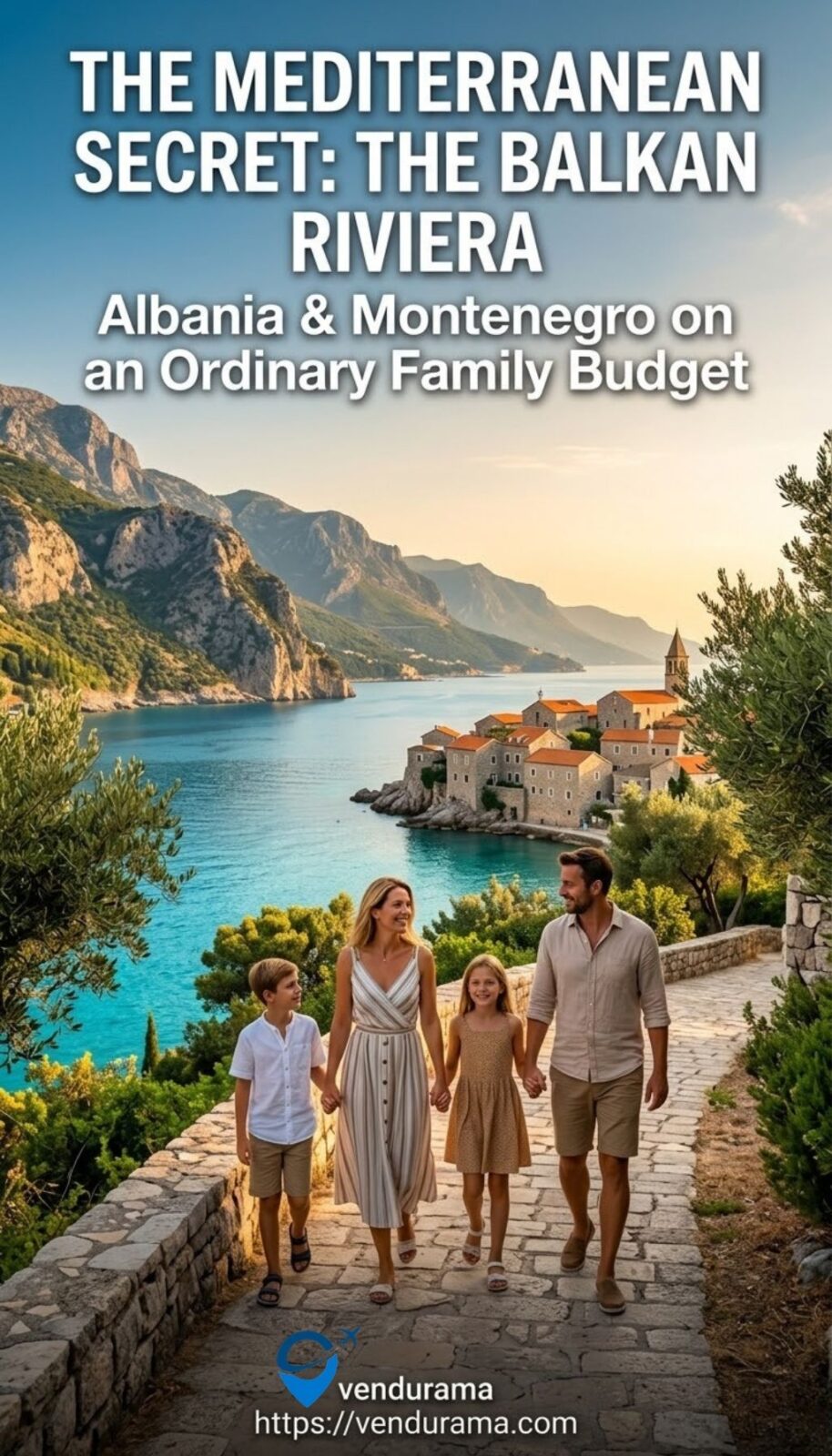
Introduction: The 2026 Mediterranean Pricing Crisis for the Middle Class
In 2026, the dream of a Mediterranean family vacation has become a financial nightmare for ordinary middle-class families across North America, Western Europe, and beyond. The numbers are no longer debatable, and they tell a sobering story that every parent planning a summer getaway needs to hear. A standard two-week vacation in Italy, Greece, or Spain now costs families of four between $12,000 and $20,000 when flights, accommodation, dining, activities, and local transportation are calculated. The iconic destinations that once represented accessible luxury—Santorini, Amalfi, Barcelona, Dubrovnik—have been transformed by overtourism and inflation into exclusive enclaves where ordinary families struggle to find space on crowded beaches and rooms within their budgets.
Consider the reality: a modest hotel room in Santorini during peak summer season now commands $600 to $1,200 per night. A family dinner at a tourist-facing restaurant in Positano easily exceeds $200 for four people. Ferry tickets between Greek islands consume entire days of your vacation and hundreds of dollars from your budget. The Mediterranean experience that your parents or grandparents enjoyed—the leisurely coastal drives, the authentic village meals, the uncrowded beaches where children could play freely—has been replaced by a commercialized tourism machine designed to extract maximum revenue from every visitor.
For families who have saved diligently, who have worked hard throughout the year, who have dreamed of showing their children the beauty of Mediterranean culture and coastline, this reality creates an impossible choice. Do you drain years of savings for one week of overcrowded, overpriced tourism? Do you compromise on the experience by choosing inferior accommodation far from the attractions? Or do you abandon the Mediterranean dream entirely and settle for a local vacation that doesn’t fulfill the deep desire for cultural immersion and coastal beauty that has drawn families to this region for generations?
But what if there was a third option? What if your family could experience the same turquoise waters, the same dramatic coastlines, the same rich history and authentic hospitality—at approximately 60% lower cost? What if you could rent entire apartments overlooking the Adriatic for $50 per night, eat fresh seafood at waterfront tavernas for $15 per person, and explore ancient cities without navigating crowds of tour groups?
This is not a hypothetical scenario. This is the reality of the Balkan Riviera, specifically Albania and Montenegro, and it represents the most significant travel geo-arbitrage opportunity available to smart families in 2026.
The Balkan Riviera stretches along the eastern Adriatic coast, offering everything families seek from a Mediterranean vacation—stunning coastline, crystal-clear waters, ancient history, authentic culture, and warm hospitality—at a fraction of the cost of Western Mediterranean destinations. Your family experiences the Mediterranean of imagination rather than the Mediterranean of tourist exploitation. You return home with memories rather than debt. You preserve your vacation budget for future family adventures rather than exhausting it on a single overpriced week.
This article provides the complete analytical framework for executing a Balkan Riviera family vacation. We will examine the financial mathematics, explore specific destinations worth visiting, detail the logistical protocols that ensure stress-free travel with children, and address common concerns that prevent families from venturing beyond the conventional Mediterranean circuit. For parents who understand that sophistication means leveraging geographic knowledge rather than following tourist herds, Albania and Montenegro represent the path to authentic Mediterranean luxury without the inflation trap.
Smart Family Shortcut: Planning a flawless international trip requires more than good intentions—it requires a solid roadmap. Families wanting to bypass months of exhausting research on Balkan transportation, hidden beach locations, and authentic restaurant recommendations can download our comprehensive digital resource for just $7. The Ultimate Travel Planning Guide now includes a free Audio Podcast bonus with destination insights, packing checklists, and budget tracking templates that eliminate guesswork from your planning process.
Why Albania and Montenegro Are the Ultimate Geo-Arbitrage Destinations
Understanding Travel Geo-Arbitrage
Travel geo-arbitrage is the strategic practice of leveraging cost differences between geographic regions to maximize vacation value without sacrificing experience quality. Just as smart investors deploy capital where returns are highest, smart families deploy vacation budgets where experiences deliver maximum value. The Balkan Riviera represents the perfect geo-arbitrage opportunity in 2026 because it offers Mediterranean authenticity at Eastern European pricing.
Albania and Montenegro share the same Adriatic coastline as Croatia and Italy, the same Mediterranean climate that produces long, sunny summers, and the same cultural heritage shaped by centuries of Greek, Roman, Venetian, and Ottoman influence. However, these nations have not yet been discovered by mass tourism to the extent that their Western neighbors have been. This creates a temporary window of opportunity for informed families to access authentic Mediterranean experiences before prices rise to match Western European destinations.
The Economic Advantage Explained
The cost differential between the Balkan Riviera and Western Mediterranean destinations stems from several structural factors that smart travelers can leverage:
Currency Advantage: Albania uses the Albanian Lek (ALL) and Montenegro uses the Euro (EUR), but local pricing reflects regional purchasing power rather than Western European standards. Your dollar or euro stretches significantly further in local economies where wages and operating costs are lower.
Tourism Development Stage: Unlike Croatia, which has fully developed its tourism infrastructure with corresponding price increases, Albania and Montenegro remain in earlier development stages. This means accommodation, dining, and activity costs reflect local market conditions rather than international tourism pricing.
Government Tourism Strategy: Both nations actively promote tourism growth through favorable policies, infrastructure investment, and marketing that attracts value-conscious travelers. This creates competitive pricing as businesses compete for international visitors.
Authenticity Premium Avoidance: Western Mediterranean destinations charge authenticity premiums—higher prices justified by reputation and brand recognition. The Balkan Riviera delivers authentic experiences without the brand markup because international awareness remains limited.
Safety and Accessibility Considerations
For parents evaluating Balkan destinations, safety represents a primary concern. Both Albania and Montenegro maintain stable governments, low crime rates against tourists, and growing tourism infrastructure designed for international visitors.
Crime Statistics: Violent crime against international tourists in Albania and Montenegro is exceptionally rare. The primary safety concerns are petty theft and traffic accidents—risks that exist in any tourist destination globally, including Italy and Greece.
Healthcare Quality: Both nations maintain adequate healthcare facilities for tourists. Major cities have hospitals with English-speaking staff, and travel insurance covering medical evacuation provides additional security for families with specific health concerns.
Infrastructure Quality: Albanian and Montenegrin tourism infrastructure has improved dramatically since 2020. Major roads connect tourist destinations, internet connectivity is reliable in populated areas, and international-standard accommodation is widely available in key tourist regions.
Language Accessibility: English is increasingly spoken in tourist areas, particularly among younger generations and hospitality workers. Basic communication is manageable, and translation apps handle more complex interactions effectively.
The Cultural Richness Advantage
Perhaps the most valuable Balkan Riviera advantage cannot be quantified financially: genuine hospitality still exists in this region. Restaurant owners remember your family’s preferences by day three. Hotel hosts provide local recommendations rather than scripted tourist information. Shopkeepers engage in conversation rather than transaction pressure.
This hospitality extends to practical support that enhances your vacation experience. Local residents help with directions, recommend hidden beaches unknown to guidebooks, and invite families to local festivals and celebrations. Children experience Balkan culture through interaction rather than observation. Parents experience the warmth that made Mediterranean travel famous before tourism transformed it into a commodity.
When families commit to Balkan destinations, they access a Mediterranean that operates for residents first and visitors second. This distinction creates fundamentally different vacation experiences. Western Mediterranean destinations operate for visitors first and residents second—or not at all, as many original residents have been priced out of their own communities.
Albania: The “Maldives of Europe” on a $50/Day Budget
Ksamil and Saranda: Turquoise Waters and White Sands
Southern Albania has earned the nickname “Maldives of Europe” for good reason. The coastline around Ksamil and Saranda features water clarity and beach quality that rivals any Mediterranean destination, yet costs remain at levels that ordinary families can afford without financial strain.
Ksamil Beaches: This small coastal village has emerged as Albania’s premier beach destination. Three small islands sit just offshore, accessible by swimming or small boat. The main beach features white pebble shores, turquoise water, and gradual depth entry perfect for children. Unlike Greek island beaches requiring €50 daily for two chairs and an umbrella, Ksamil beach chair rentals cost approximately €10-15 for the entire day.
Saranda Waterfront: The nearby town of Saranda offers a lively promenade with restaurants, cafes, and shops overlooking the Ionian Sea. Evening strolls along the waterfront provide family entertainment without cost. Local gelato shops charge €3-4 per serving compared to €8-12 in Italian coastal towns.
Ancient Butrint: Just south of Saranda lies Butrint National Park, a UNESCO World Heritage site featuring Greek and Roman ruins in a stunning natural setting. Entry fees are approximately €8 per adult, children under 12 enter free. This compares favorably to similar archaeological sites in Greece charging €20-25 per person.
Day Trips to Blue Eye Spring: The Blue Eye (Syri i Kalter) is a natural water spring and swimming hole located 30 minutes from Saranda. Crystal-clear water emerges from a deep underwater cave, creating a stunning natural phenomenon. Entry costs €5 per person, and the surrounding forest provides picnic areas for family meals.
Finding Affordable Family Apartments
Accommodation represents the largest vacation expense for most families, and Albania delivers exceptional value in this category. Entire apartments with kitchens, multiple bedrooms, and sea views are available at prices that Western Mediterranean destinations charge for single hotel rooms.
Apartment Rental Platforms: Smart families use multiple booking platforms to compare options and secure the best rates. When you book affordable family apartments in the Balkans, you gain access to verified properties with reviews from previous international guests. This reduces uncertainty and ensures accommodation meets your family’s specific needs.
Typical Pricing: In Ksamil and Saranda, family apartments (2-3 bedrooms, kitchen, balcony) rent for $40-80 per night during peak season. This compares to $300-600 per night for equivalent accommodation in Greek islands. Over a 14-day vacation, this single category generates savings of $3,600-7,000 for a family of four.
Booking Strategy: Reserve accommodation 2-3 months in advance for best selection and pricing. Properties with kitchens enable breakfast and some dinners at home, reducing dining costs by 40-50%. Look for properties with air conditioning, as summer temperatures can exceed 35°C (95°F).
Location Considerations: Properties within walking distance of beaches eliminate daily transportation costs. However, accommodations slightly inland (10-15 minute walk) often offer better value with minimal convenience sacrifice. When you book affordable hotels and family apartments in advance, you secure properties before they’re booked by other informed travelers discovering this destination.
Dining on an Albanian Budget
Albanian cuisine reflects Mediterranean influences with Greek, Italian, and Ottoman elements. Fresh seafood, grilled meats, vegetable dishes, and homemade bread form the foundation of local dining. Families can eat exceptionally well without straining budgets.
Local Tavernas: Family-run tavernas serve traditional Albanian dishes at prices reflecting local purchasing power. A whole grilled fish for four costs €25-35 compared to €120-180 in Italian coastal restaurants. Pasta dishes range €8-12 per person. Children’s portions are readily available and generously sized.
Breakfast Strategy: Apartments with kitchens enable breakfast preparation at home. Local bakeries sell fresh bread, pastries, and yogurt at minimal cost. This simple strategy saves €40-60 daily for a family of four compared to restaurant breakfasts.
Street Food Options: Byrek (savory pastry filled with cheese, meat, or spinach) costs €1-2 per piece and provides filling snacks for beach days. Fresh fruit from local markets offers healthy, affordable alternatives to tourist-area snacks.
Water and Beverages: Tap water is generally safe in major towns, but bottled water costs only €0.50-1 per liter. Local wine is excellent value at €8-15 per bottle in restaurants. Fresh juices from street vendors cost €2-3 per serving.
Activities and Entertainment
Albania offers numerous free or low-cost activities that keep families entertained without exhausting budgets:
Beach Days: Public beaches are free. Chair and umbrella rentals are optional and affordable. Children entertain themselves swimming and playing in sand for hours without cost.
Hiking and Nature: Coastal trails offer stunning views without entrance fees. The Llogara Pass between Saranda and Vlore provides panoramic viewpoints accessible by car or organized tour.
Cultural Sites: Museums and historical sites charge modest fees (€3-8 per person). Many churches and mosques welcome visitors without charge.
Boat Excursions: Day trips to nearby islands or coastal caves cost €20-40 per person, significantly less than Greek island boat tours charging €80-150 per person.
Montenegro: Venetian Charm and Majestic Fjords Without the Venice Price Tag
Kotor and Budva: History Meets the Adriatic Sea
Montenegro offers a different but equally compelling Balkan Riviera experience. The Bay of Kotor resembles Norwegian fjords with Mediterranean weather, while coastal towns feature Venetian architecture at Croatian prices without Croatian crowds.
Kotor Old Town: This UNESCO World Heritage site features medieval stone streets, historic churches, and fortress walls climbing the mountainside. Entry to the old town is free. Walking the city walls costs €8 per person and provides stunning bay views. Compare this to Dubrovnik’s city walls charging €35 per person with crowds that make walking unpleasant during peak hours.
Kotor Bay Boat Tours: Private boat tours of the bay cost €150-250 for families, visiting Perast, Our Lady of the Rocks island, and coastal caves. This provides a full day of family entertainment at prices similar to single-person tours in Western Mediterranean destinations.
Budva Riviera: Twenty minutes from Kotor, Budva offers beaches, nightlife, and a charming old town. Family beaches feature shallow water and organized facilities. Daily beach costs (chairs, umbrellas) run €15-25 for families compared to €50-80 in Italian beach clubs.
Sveti Stefan: This iconic island hotel is visible from public beaches nearby. While the island itself is exclusive to hotel guests, the surrounding coastline offers free public access with stunning photo opportunities.
Dining and Excursions on an Ordinary Budget
Montenegrin cuisine blends Mediterranean and Balkan influences. Seafood, lamb, local cheeses, and wines feature prominently. Families can experience excellent dining without Western European price tags.
Waterfront Restaurants: Kotor’s waterfront features numerous restaurants with bay views. Main courses range €12-20 per person. Children’s menus offer smaller portions at €6-10. Total family dinner costs typically €50-70 compared to €150-250 in equivalent Italian locations.
Local Markets: Morning markets in Kotor and Budva sell fresh produce, cheeses, and prepared foods at local prices. Families can purchase picnic supplies for beach days at 60-70% below tourist restaurant costs.
Wine Tasting: Montenegro produces excellent wines, particularly Vranac red and Krstac white. Winery tours cost €15-25 per person including tastings. This compares to €50-80 for similar experiences in Tuscany or Provence.
Day Trips: Organized excursions to Durmitor National Park, Ostrog Monastery, or Lovcen National Park cost €40-60 per person including transportation and guide. These provide cultural and natural experiences that enrich the vacation beyond beach time.
Accommodation Strategy in Montenegro
Montenegro’s accommodation market offers diverse options at various price points. Smart families balance location, amenities, and budget to optimize their stay.
Kotor Area: Apartments and small hotels in Kotor provide easy access to old town and bay attractions. Prices range $60-120 per night for family accommodation. When you compare the best hotel rates for your family, you access properties with verified reviews and accurate descriptions.
Budva Area: More developed tourism infrastructure offers more accommodation options. Beach-adjacent properties command premium pricing, but inland options (10-15 minute walk) provide significant savings with minimal convenience loss.
Booking Timing: Reserve 2-3 months in advance for peak season (July-August). Shoulder season (May-June, September) offers 30-40% lower pricing with similar weather conditions and fewer crowds.
Amenity Priorities: Air conditioning is essential for summer visits. Kitchen facilities enable cost-saving meal preparation. Parking is valuable if renting a car for exploration.
The Financial Arbitrage: Total Cost Breakdown
Fourteen-Day Family Vacation Comparison
To understand the magnitude of savings available through Balkan Riviera travel, we must calculate complete 14-day costs including flights, accommodation, dining, activities, and local transportation. The following analysis uses 2026 published rates and realistic spending estimates for a family of four seeking quality experiences.
Italian Riviera Family Vacation (14 Days)
| Cost Category | Daily Cost (USD) | 14-Day Total (USD) |
|---|---|---|
| Accommodation (Hotel/Apartment) | $450 | $6,300 |
| Dining (Restaurants + Cafes) | $250 | $3,500 |
| Activities (Tours, Attractions) | $150 | $2,100 |
| Local Transportation (Car Rental/Ferries) | $80 | $1,120 |
| Flights (International) | N/A | $2,400 |
| Miscellaneous (Souvenirs, Snacks, Tips) | $70 | $980 |
| Total | $1,000 | $16,400 |
Greek Islands Family Vacation (14 Days)
| Cost Category | Daily Cost (USD) | 14-Day Total (USD) |
|---|---|---|
| Accommodation (Hotel/Apartment) | $500 | $7,000 |
| Dining (Restaurants + Cafes) | $280 | $3,920 |
| Activities (Tours, Attractions) | $180 | $2,520 |
| Local Transportation (Ferries/Taxis) | $100 | $1,400 |
| Flights (International) | N/A | $2,600 |
| Miscellaneous (Souvenirs, Snacks, Tips) | $80 | $1,120 |
| Total | $1,140 | $18,560 |
Balkan Riviera Family Vacation (14 Days)
| Cost Category | Daily Cost (USD) | 14-Day Total (USD) |
|---|---|---|
| Accommodation (Apartment/Villa) | $100 | $1,400 |
| Dining (Restaurants + Home Cooking) | $100 | $1,400 |
| Activities (Tours, Attractions) | $60 | $840 |
| Local Transportation (Car Rental/Transfers) | $50 | $700 |
| Flights (International) | N/A | $2,000 |
| Miscellaneous (Souvenirs, Snacks, Tips) | $40 | $560 |
| Total | $350 | $6,900 |
Total Savings Comparison:
| Comparison | Savings (USD) | Percentage |
|---|---|---|
| vs. Italian Riviera | $9,500 | 58% |
| vs. Greek Islands | $11,660 | 63% |
The Compound Savings Effect
The $9,500 to $11,660 saved through Balkan Riviera travel is not merely retained capital—it is deployable capital that enhances your family’s overall financial position. Smart families reinvest these savings strategically:
Extended Stays: Rather than rushing through a 14-day vacation, families can extend to 21 days, creating deeper memories and reducing the per-day cost even further. A 21-day Balkan vacation at $6,900 still costs less than half of a 14-day Italian trip.
Future Vacation Fund: Savings can be allocated to next year’s family adventure, creating a sustainable travel budget rather than a one-time expenditure that requires years of recovery.
Home Investment: The savings can contribute to home improvements, college funds, or retirement accounts—investments that compound over time rather than disappearing on a single vacation.
Enhanced Experience: Within the Balkan budget, families can upgrade to premium apartments, book private boat tours, enjoy special dining experiences, and add activities that would be cost-prohibitive in Western Mediterranean destinations.
The Hidden Costs of Western Mediterranean Tourism
Beyond direct financial costs, Italy and Greece impose experiential costs that diminish trip value for families:
Space Constraints: Hotels in crowded destinations offer minimal space for families. Children cannot play freely. Parents cannot relax without constant supervision in confined spaces.
Crowd Stress: Popular beaches require arriving before 8 AM to secure space. Restaurants require reservations weeks in advance. Ancient sites involve navigating tour groups rather than contemplative exploration.
Limited Authenticity: Western Mediterranean economies have become entirely tourism-dependent. Local culture has been commodified. Hospitality has become transactional. The Mediterranean that existed generations ago has been replaced by a tourist theme park.
Logistical Complexity: Island hopping requires ferry schedules, luggage handling, check-in/check-out at multiple properties, and constant packing/unpacking. Families spend vacation time managing logistics rather than creating memories.
When families secure comfortable family flights in advance for the Balkan Riviera rather than Western Mediterranean destinations, they purchase not only financial savings but also space, authenticity, and logistical simplicity. This is value optimization, not cost cutting.
Frictionless Travel Logistics & Family Safety
Navigating Tirana or Podgorica Airports
This section addresses a critical insight that most family travel planners overlook: arriving in a new country after a long international flight with exhausted children and heavy luggage represents the single highest-risk moment for vacation stress. Parents who have saved thousands on accommodation often undermine their entire investment by mishandling this transition.
International flights to Tirana (Albania) or Podgorica (Montenegro) typically arrive in the afternoon or evening after 6-10 hours of travel depending on your origin. Children are tired, irritable, and overwhelmed. Parents are fatigued from managing the journey. Luggage must be collected, customs navigated, and ground transportation arranged—all while operating at reduced cognitive capacity.
Both airports are modern and efficient by regional standards, but they remain international hubs handling millions of passengers annually. Navigation from aircraft to ground transportation involves significant walking, potential language barriers for first-time visitors, and uncertainty about pricing and safety for transportation options.
For families proceeding to coastal destinations, this arrival moment becomes even more critical. Your accommodation is 1-3 hours from the airport by road. Attempting to navigate this journey while exhausted, with children who have been traveling all day, creates conditions for the vacation to begin with stress rather than anticipation.
Protecting Your Family’s Energy
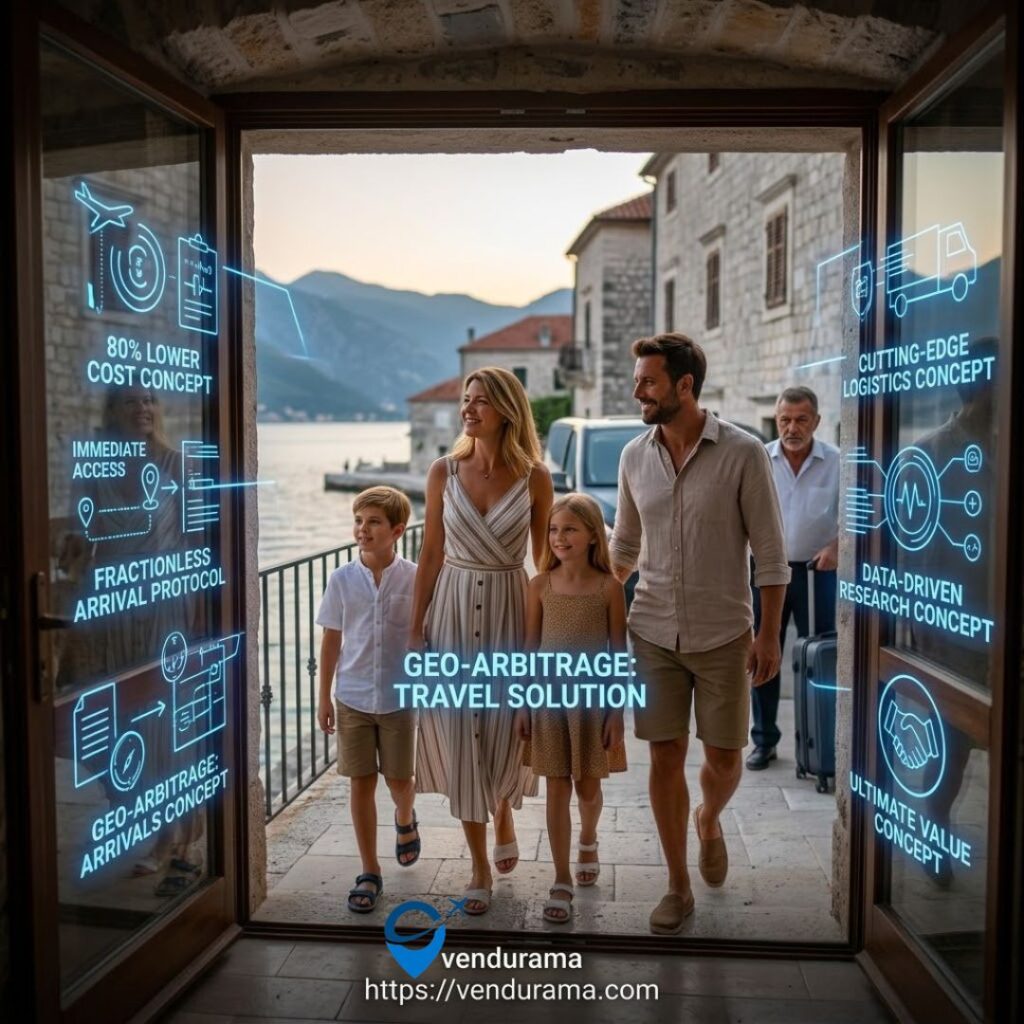
Smart families eliminate this entire risk category by pre-booking a safe VIP private transfer from the airport before departure from home. This is not a luxury indulgence. This is a risk mitigation strategy that protects your entire vacation investment.
A pre-booked VIP transfer ensures:
- A vetted, professional driver waiting at arrivals with name signage
- Direct transportation to your accommodation with no stops or negotiation
- Assistance with luggage from aircraft to vehicle
- Spacious vehicles accommodating children, luggage, and car seats
- Fixed pricing with no surprise charges or currency confusion
- English-speaking driver capable of answering initial questions
- Air-conditioned comfort after exiting the aircraft
The cost of this service—typically $80 to $150 USD depending on your destination—represents less than 2% of the $9,500 saved through Balkan versus Italian accommodation. For this minimal investment, families purchase certainty, safety, and immediate stress reduction for every family member.
When parents secure a vetted private driver from the airport to eliminate family transit stress, they protect their children from the most vulnerable period of international travel. The first 24 hours set the tone for the entire vacation experience. A smooth, supported arrival creates excitement. A chaotic, confusing arrival creates anxiety that can persist for days.
Flight Optimization and Initial Accommodation
The arrival phase benefits enormously from strategic flight selection and potential overnight accommodation. Smart families prioritize secure comfortable family flights through trusted booking platforms that align with their children’s needs rather than maximum cost savings on airfare.
Direct Flight Priority: When available, direct flights eliminate connection stress and reduce total travel time. The price premium for direct flights is often justified by reduced fatigue and lower risk of missed connections with children.
Arrival Timing: Afternoon or early evening arrivals allow same-day transfer to coastal accommodation. Late evening arrivals may warrant an overnight airport hotel stay before morning departure to your rental.
Initial Hotel Strategy: When families book affordable hotels for the family’s arrival near the airport or in the coastal destination, they should prioritize locations that simplify next-day activities. Many properties offer free airport shuttles and can coordinate with your pre-booked transfer service.
When parents arrange direct flight routes to minimize travel fatigue, they invest in reduced travel fatigue that pays dividends throughout the vacation. Children who arrive rested engage more positively with the experience. Parents who arrive calm make better decisions about activities, dining, and pacing.
Logistics Planning Resource: The complexity of Balkan transportation, border crossings between Albania and Montenegro, family-friendly rest stops, and accommodation check-in protocols is addressed comprehensively in our digital planning resource. The Ultimate Travel Planning Guide contains printable packing checklists, exact booking timelines, and ground transportation navigation hacks to manage these logistics flawlessly.
The Pre-Departure Logistics Checklist
To ensure no logistical element is overlooked, families should complete the following checklist at least six weeks before departure:
| Task | Timeline | Responsibility |
|---|---|---|
| Secure comfortable family flights through trusted booking platforms | 8 weeks before | Parents |
| Pre-book a safe VIP private transfer from the airport | 6 weeks before | Parents |
| Reserve accommodation | 10 weeks before | Parents |
| Obtain passports/verify expiration | 12 weeks before | Parents |
| Purchase travel insurance | 8 weeks before | Parents |
| Arrange car seats if needed | 4 weeks before | Parents |
| Pack essentials and documents | 1 week before | Family |
| Confirm all transfer and accommodation bookings | 3 days before | Parents |
This checklist represents the minimum standard for families who understand that logistical excellence is not optional—it is foundational to vacation success.
The Cognitive Load Argument for Parents
There is a deeper reason why logistical preparation matters beyond mere convenience. Research in family travel psychology consistently demonstrates that vacation satisfaction correlates more strongly with stress minimization than with activity quantity.
A family that arrives exhausted, confused about transportation, worried about luggage, and uncertain about accommodation begins their Balkan experience with depleted mental resources. Children sense parental stress and respond with increased irritability. Parents operating at reduced capacity make poorer decisions about pacing, activities, and conflict resolution.
A family that arrives rested, knowing their transportation is secured, understanding their accommodation is confirmed, and feeling their planning has created a safety net begins with full cognitive capacity available for memory creation. Children sense parental confidence and respond with enthusiasm. Parents operating at full capacity make better decisions that enhance everyone’s experience.
When parents arrange a seamless private transfer for your children and luggage, they are not simply purchasing transportation. They are purchasing their family’s cognitive focus for the first critical days of the Balkan experience. This is an investment in memory creation, not merely a travel expense.
Similarly, when families secure comfortable family flights through trusted booking platforms, they are creating the conditions for emotional stability during the transition period. Parents can focus on supporting their children rather than managing travel crises. Children can focus on anticipation and discovery rather than navigating unfamiliar transit systems.
The Return on Investment for Logistical Planning
Let us quantify the return on investment for proper logistical planning:
| Investment | Cost (USD) | Value Created |
|---|---|---|
| VIP Airport Transfer (Round Trip) | $250 | Eliminated safety risk, stress reduction, time savings |
| Optimized Family Flights | $300 premium | Rested arrival, better decision-making capacity |
| Initial Hotel (1 night if needed) | $100 | Secure base for settling-in activities |
| Total | $650 | Peace of mind, cognitive protection, family harmony |
Compare this $650 investment against the $9,500 to $11,660 saved through Balkan versus Western Mediterranean accommodation. This represents approximately 6% of total savings deployed to protect the entire vacation investment. Any financial advisor would characterize this as exceptionally prudent risk management.
When families pre-book a safe VIP private transfer from the airport, they complete the safety infrastructure that protects their vacation investment. The accommodation provides lodging excellence; the transportation infrastructure ensures logistical excellence. Together, they create the conditions for optimal family experience.
Safety Considerations for Families
Parents researching Balkan destinations often have safety questions. Here are evidence-based answers:
Crime: Petty theft exists but violent crime against tourists is rare. Standard precautions (securing valuables, avoiding isolated areas at night) apply as in any destination.
Traffic: Road quality varies. Main highways are good; mountain roads require caution. When renting cars, choose vehicles with good safety ratings and full insurance coverage.
Health: Tap water is generally safe in major towns. Travel insurance covering medical evacuation provides security. Pharmacies are widely available with trained staff.
Political Stability: Both nations maintain stable governments with regular elections. Tourism is prioritized as economic development strategy, creating visitor-friendly policies.
Conclusion: Reclaiming Your Family’s Summer Memories
In 2026, the definition of sophisticated family travel has fundamentally transformed. The conventional wisdom—that authentic Mediterranean experiences require Italy, Greece, or Spain—has been rendered obsolete by the inflation crisis that has transformed these destinations into luxury enclaves inaccessible to the middle class.
The Balkan Riviera represents more than a cost-saving approach. It represents a fundamental rethinking of what travel value means. The value of a family vacation lies not in the geographic locations checked from a list, but in the authenticity of cultural immersion, the quality of family time, the memories created, and the financial sustainability of the experience.
When a family experiences turquoise Albanian beaches without crowds, dines at tavernas where local families actually eat, sleeps in apartments with space for everyone to thrive, and returns home with $10,000 still in their vacation fund—they have not compromised. They have optimized.
Smart parents in 2026 understand that their role is not to follow conventional travel paths unquestioningly. Their role is to analyze options rigorously, identify structural advantages, and deploy family resources strategically. The Balkan Riviera is among the clearest structural advantages available in contemporary family travel.
The logistical framework to support this decision is equally important. When families commit to secure comfortable family flights through trusted booking platforms that align with their children’s needs, and when they dedicate themselves to pre-book a safe VIP private transfer from the airport that eliminates arrival stress, they complete the strategic picture. They have optimized both the financial structure and the human experience of the Balkan journey.
The families who embrace this model in 2026 will not merely save money. They will experience the Mediterranean as it was meant to be experienced: authentic, spacious, culturally rich, and financially sustainable. They will have understood that in a world of tourist inflation, geographic intelligence is not a compromise—it is a competitive advantage.
The question is no longer whether the Balkan Riviera can deliver equivalent Mediterranean experiences. The evidence overwhelmingly confirms it can and does, often exceeding the compromised experiences available in inflated Western destinations. The question is whether you will recognize this opportunity before the Balkans themselves become victims of the tourism inflation that destroyed the Western Mediterranean.
For analytical, family-focused parents reading this in 2026, the answer should be clear. The Adriatic awaits—not the Adriatic of tourist crowds and inflated prices, but the Adriatic of imagination: ancient history, pristine beaches, authentic hospitality, and memories that justify every euro invested.
Your family’s time is precious. Your vacation budget is finite. Your children’s childhood is irrecoverable. The Balkan Riviera offers the rare opportunity to honor all three priorities simultaneously. The strategy is complete. The path is clear. The choice is yours.
Ready to Execute Your Balkan Riviera Family Vacation?
The analytical framework provided in this article eliminates the guesswork from destination selection. However, successful execution requires detailed planning: exact accommodation platforms with verified reviews, hidden beach coordinates unknown to tour buses, authentic taverna recommendations in each region, driving routes with family-friendly rest stops, and packing checklists specific to Balkan travel. Our comprehensive digital resource consolidates months of research into an actionable, step-by-step guide that guarantees flawless trip execution. For just $7—a micro-investment against the $10,000+ you will save—you gain the complete blueprint for the Mediterranean’s most sophisticated family travel strategy. Your family’s time and budget are too precious to risk on trial and error. Stop dreaming and start planning. Secure your copy now and transform your Mediterranean vacation from a conventional tourist experience into an authentic family adventure: Ultimate Travel Planning Guide
Vendurama is a premium digital publication dedicated to empowering the global middle class with sophisticated, value-driven travel and financial strategies. Our analysis is independently researched and designed to help families make informed decisions about meaningful experiences and wealth preservation in an increasingly complex world.