
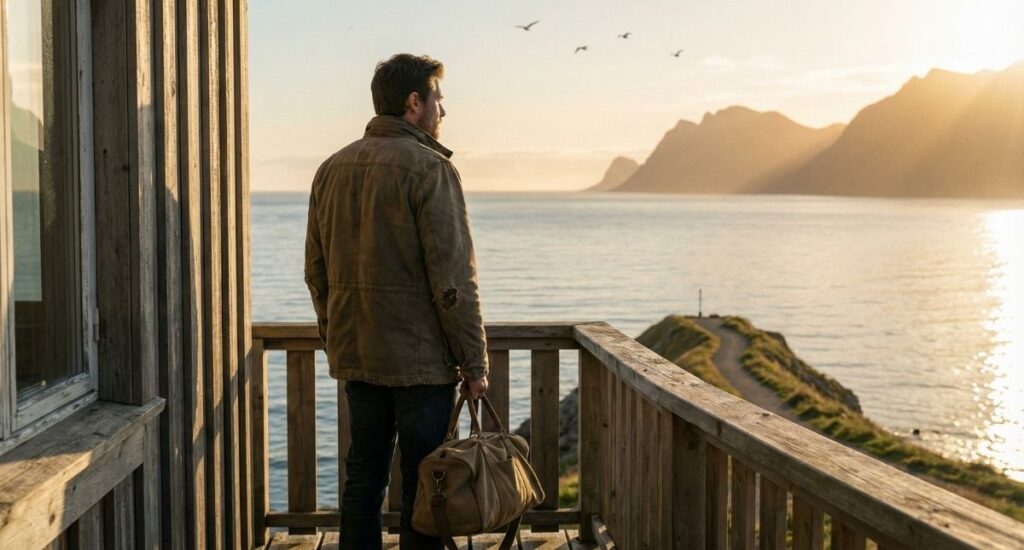
The alarm clock’s digital scream is the same, but the waking world is not. The light filtering through the blinds carries a different quality—softer, perhaps, or more golden. The air smells of salt, or pine, or unfamiliar flowers, or the profound silence of a desert dawn. This is the first, precious moment of a leisure travel day, a suspended second where the weight of routine has been voluntarily shed, and the only obligation is to experience. For a growing multitude, this feeling is no mere annual escape; it is a vital component of a examined life, a deliberate practice in the art of being human. Leisure travel, in its highest form, has transcended the realm of mere tourism to become a modern lifestyle philosophy—a curated pursuit of perspective, connection, and self-renewal.
More Than a Vacation: Defining the Modern Leisure Travel Ethos
At its core, leisure travel is travel undertaken for pleasure, relaxation, and personal enrichment, free from the demands of work or obligation. But to define it so simply is to miss its profound evolution. It stands in stark contrast to business travel, which is goal-oriented, schedule-bound, and tethered to productivity. It also diverges from the classic model of mass tourism, with its conveyor-belt itineraries, checklist landmarks, and insulated resort experiences. Modern leisure travel is intentional. It is about agency and curiosity.
The contemporary leisure traveler might seek immersion over observation. They are as likely to spend a week walking a single coastal path, talking to local artisans and farmers, as they are to whirl through five European capitals. The purpose is not accumulation—of miles, of stamps, of Instagram posts—but of depth. It is a shift from “seeing” to “understanding,” from “going” to “being.” This ethos embraces the slow, the authentic, the transformative. It views travel not as a separate compartment of life called “vacation,” but as an integrated thread in life’s fabric, essential to one’s worldview, creativity, and emotional resilience.
From Grand Tours to Global Villages: A Brief History of Wandering for Wonder
The human urge to travel for pleasure is ancient. The Romans built villas in coastal Baiae for seaside repose. Medieval pilgrims, while ostensibly on religious duty, often experienced the thrill of the foreign and the camaraderie of the road. But the true birth of leisure travel as a cultural concept is often traced to the 17th and 18th-century European Grand Tour. Undertaken by young aristocrats, it was a formative rite of passage into culture and sophistication, focusing on the classical ruins of Italy and the arts of France. It was travel as education.
The 19th century democratized travel with the advent of the railway and, later, the steamship. Thomas Cook organized the first packaged tours, making leisure travel accessible to the burgeoning middle class. The pursuit shifted from purely cultural edification to include health (spa towns) and scenic spectacle (Alpine tourism). The 20th century, powered by the jet engine and paid annual leave, created mass tourism. Iconic post-war images are of families flocking to beaches in Spain or Florida, a celebration of accessible sun and sand.
The digital era has triggered the latest, and perhaps most radical, transformation. With information at our fingertips, the traveler is empowered. We can book a homestay in a Mongolian ger, read reviews of a boutique hotel in Marrakech, and navigate Tokyo’s subway with a smartphone. This has led to fragmentation and personalization. The monolithic package holiday is giving way to a billion self-curated journeys. Furthermore, concepts like remote work have blurred the lines entirely, giving rise to the “digital nomad” for whom leisure and life, work and wander, are perpetually interwoven. Travel is no longer a punctuated event; for many, it is a lifestyle state.
The World’s Palette: Destinations That Define the Leisure Travel Spectrum
The canvas of leisure travel is planetary, with each region offering a distinct hue of experience.
Europe remains the masterclass in condensed cultural diversity. It caters to every leisure traveler: the art lover in Florence’s Uffizi, the foodie navigating Barcelona’s tapas bars, the hiker in the Norwegian fjords, or the history buff walking Berlin’s fraught and vibrant streets. Its efficient infrastructure makes slow travel—like walking the Camino de Santiago or canal-boating through France—a profound pleasure.
Asia is a symphony of intensity and tranquility. It offers the futuristic neon pulse of Tokyo and Seoul, the ancient spiritual rhythms of Bali and Luang Prabang, the breathtaking Himalayan vistas of Nepal and Bhutan, and the unparalleled street food cultures of Bangkok and Hanoi. It is a continent that challenges and comforts in equal measure.
The Americas present a drama of scale. In the North, the epic national parks of the United States and Canada (Yosemite, Banff) define nature-based leisure. The cities—New York, New Orleans, Mexico City, Toronto—pulse with cultural energy. Central and South America lure with ancient ruins (Machu Picchu), ecological wonders (the Amazon, the Galápagos), and vibrant, music-filled cultures from Colombia to Argentina.
The Middle East & Africa offer journeys of profound contrast. The Middle East blends ultra-modernity (Dubai) with timeless antiquity (Petra, the pyramids of Giza). Africa’s call is elemental: the wildlife spectacle of the Serengeti or the Okavango Delta, the human history of Ethiopia, the vineyard leisure of South Africa, and the idyllic island beaches of Zanzibar and the Seychelles.
Beyond continents, thematic destinations hold power. Island retreats (from the Maldives to the Hebrides) promise isolation and rejuvenation. Mountain hideaways (the Alps, the Rockies, the Andes) cater to adventure and awe. Wellness sanctuaries from Costa Rica’s jungle spas to India’s Ayurvedic centers are dedicated temples to leisure travel as self-care.
The Many Faces of Journey: Typologies of the Leisure Experience
The “why” of travel shapes the “where” and “how.” Today’s leisure travel manifests in myriad forms:
- Beach Holidays: The classic. But even here, evolution is seen—from crowded resorts to secluded coves in the Philippines or eco-lodges on Costa Rican shores.
- Adventure Travel: Active leisure seeking physical challenge and natural immersion: trekking in Patagonia, kayaking in Alaska, cycling through Vietnam.
- Wellness & Retreat Travel: Travel as healing. This includes yoga intensives in Bali, detox programs in Thailand, thermal baths in Iceland, and mindfulness retreats in remote locales.
- Cultural & Heritage Tourism: Deep dives into history, art, and living traditions. This could be a festival-focused trip (Diwali in India, Day of the Dead in Mexico), a museum pilgrimage, or learning a craft like pottery in Portugal.
- Slow Travel: The antithesis of rushing. Renting an apartment in a single neighborhood for a month, learning basic market language, and living with a place, not just in it.
- Luxury Travel: Defined not just by opulence but by exclusivity and exceptional service: private safari guides, chartered yacht journeys, stays in architectural wonders.
- Eco-Tourism & Sustainable Travel: Leisure with a light footprint and a conservation ethos. Choosing lodges that support local communities, participating in citizen science projects, and prioritizing low-impact transportation.
- The Digital Nomad Lifestyle: Perhaps the ultimate fusion, where leisure and life blend. “Workations” in Lisbon, coding from a café in Chiang Mai, or attending a conference in Berlin before extending the stay for personal exploration. For those crafting such a blended life, platforms that facilitate long-term stays and flexible planning are indispensable. Researching and booking accommodation that caters to productivity and immersion can streamline the complex logistics of this modern lifestyle.
The Invisible Luggage: The Psychological and Cultural Rewards
The benefits of leisure travel extend far beyond a suntan or a souvenir. Psychologically, it is a potent catalyst for growth. It forces cognitive flexibility—navigating the unfamiliar rewires our brains. It builds resilience by placing us in situations where problem-solving is essential. It fosters creativity by exposing us to new stimuli, breaking us from routine thought patterns. Studies show it can reduce stress, prevent burnout, and boost overall happiness.
Culturally, it is an antidote to parochialism. It cultivates empathy by allowing us to live, even briefly, in another’s context. It challenges stereotypes and builds a nuanced understanding of global interconnectedness. On a personal lifestyle level, travel provides story capital—the memories and experiences that become the bedrock of our identity, our relationships, and our sense of a life fully lived. It returns us home, as T.S. Eliot wrote, “to know the place for the first time,” with fresh eyes for our own daily world.
The Practical Canvas: Budgeting, Planning, and Navigating the World
While romantic in spirit, leisure travel requires pragmatic foundations.
Financial Considerations: The key is alignment—aligning your budget with your travel values. A luxury safari and a backpacking rail trip are both valid forms of leisure; the choice is personal. Smart strategies include: traveling in shoulder seasons, leveraging flight deal alerts, prioritizing one splurge amid otherwise modest spending, and using dedicated travel credit cards for points. A clear budget should account for pre-trip costs (gear, luggage), transportation, accommodation, daily expenses (food, activities), and a contingency fund.
Documents & Safety: The unsexy backbone of carefree travel. Passports must be valid for at least six months beyond your return. Visa requirements are paramount to research early. Vaccinations and health precautions (like malaria prophylaxis) should be addressed with a travel clinic. Comprehensive travel insurance is non-negotiable—it is the price of peace of mind. Safety research involves understanding local scams, cultural norms (especially regarding dress and photography), and registering with one’s embassy if traveling to volatile regions.
The Art of the Plan: A Step-by-Step Approach to Crafting Your Journey
- The Spark: It begins with a desire—a photo, a story, a cuisine, a landscape. Identify your core “why” for this trip: Is it to relax, to learn, to challenge yourself, to connect with family?
- Dream & Research: Immerse yourself in destinations that match your “why.” Read travel literature, watch documentaries, follow relevant travel journalists. Let the dream take shape.
- Practical Scaffolding: Lock in dates based on seasonality, events, and your schedule. Research flight patterns and set price alerts. For complex multi-destination trips, using a robust planning tool can help visualize and coordinate logistics. A platform that allows for comparing flights, stays, and routes can turn a chaotic puzzle into a manageable plan.
- The Deep Dive: Book major anchors—international flights and key accommodations, especially for peak times. Develop a loose, flexible itinerary that balances activity with spontaneity. Learn a few phrases of the local language.
- Preparation & Packing: Attend to health, money (notify banks, get local currency), and communications (SIM card, roaming). Pack intentionally, favoring versatility and comfort over “just in case” items.
- The Journey & The Return: While traveling, stay present. Keep a journal. Talk to people. Allow plans to change. Upon return, give yourself space to process. The integration of the experience into your life is the final, crucial step.
The Horizon Ahead: Future Trends in Leisure Travel
The future of leisure travel is being written now, shaped by technology and shifting values.
- Hyper-Personalization with AI: AI will move beyond simple recommendations to co-create entire journeys based on deep personality profiles, past travel behavior, and even real-time mood.
- The Remote Work Revolution: “Work-from-anywhere” policies will continue to fuel long-term leisure-living blends, creating new hubs and changing the economic landscape of destinations.
- Sustainable Travel as Default: Carbon offsetting, regenerative tourism (where travel actively improves a place), and a fierce preference for local economies will move from niche to norm. The leisure traveler will increasingly see themselves as a temporary custodian, not just a consumer.
- Experience over Possession: The demand for unique, transformative, and often socially-shareable experiences will continue to soar, from astronaut training to living with remote tribes.
- The Rise of the “Phigital”: Blending physical and digital, augmented reality (AR) will enhance historical sites, and virtual reality (VR) may serve as a “try-before-you-buy” or a way for those unable to travel physically to experience wonder.
Conclusion: The Compass Within
In the end, leisure travel in the modern age is less about the destination on a map and more about the destination of the self. It is a deliberate stepping out from the familiar scripts of our lives to write new, if temporary, ones. It is an act of curiosity that becomes an act of courage, an investment in memories that pay dividends in perspective for years to come.
The world, in all its staggering diversity and heartbreaking beauty, remains the greatest library, the most challenging teacher, and the most inspiring gallery we will ever know. To engage with it through leisure travel is to choose a life of active wonder over passive existence. It is to understand that the journey itself is the destination, and each return home is the beginning of planning the next outward exploration, enriched by all that we have absorbed. Whether your journey is a solo backpacking trip, a family beach holiday, a culinary tour, or a months-long remote work adventure, the tools to plan it are more accessible than ever. When you’re ready to translate that spark of inspiration into a tangible itinerary, taking the next step is part of the adventure. You can begin structuring your ideal escape by exploring global travel options that align with your unique vision. The path awaits. Pack your bag, but more importantly, prepare your mind. The world is whispering. It is time to listen, and to go.