
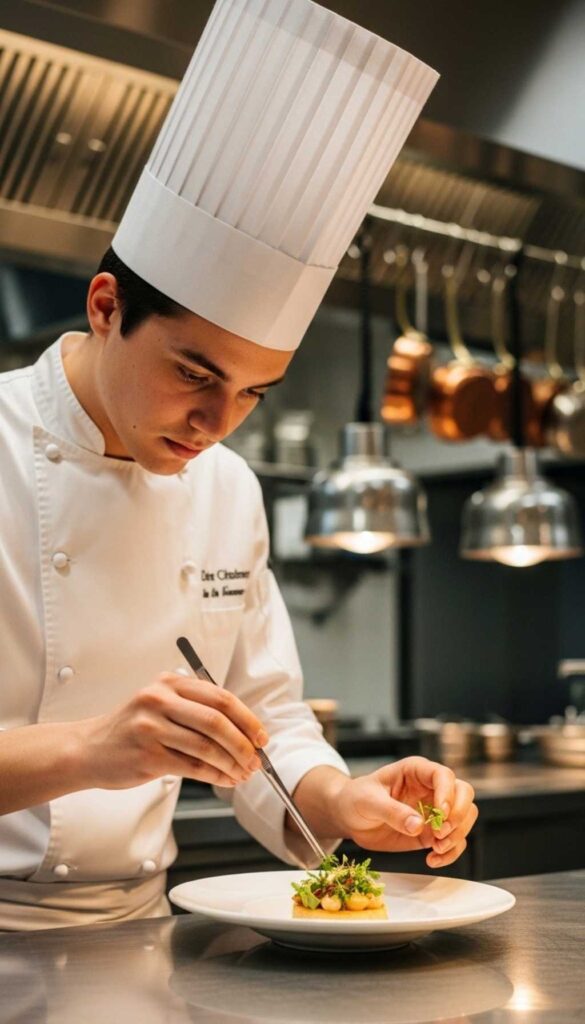
In the sprawling landscape of executive education, a quiet revolution is taking place. The traditional Master of Business Administration (MBA), once the undisputed golden ticket to the C-suite for ambitious professionals, is facing an existential crisis of saturation and relevance. In a post-pandemic world defined by a search for tangible skills, sensory experiences, and “passion projects” that pay dividends, the global elite are redirecting their gaze—and their substantial tuition investments—away from the lecture halls of Harvard and Wharton, and toward the stainless-steel kitchens of Paris and Parma.
This is not a sabbatical. It is a strategic pivot. The elite culinary schools of France and Italy have evolved far beyond mere trade schools for aspiring line cooks. They have become sophisticated finishing schools for the luxury hospitality sector, incubators for high-growth food-tech entrepreneurs, and the new training grounds for a different kind of global executive.
To enter institutions like Ferrandi in Paris or ALMA in Italy is to enter a world of rigid discipline, profound cultural immersion, and unparalleled networking. For the investment banker burnt out by spreadsheets, or the consultant seeking a tangible product in a digital world, the “Michelin Pathway” offers what the traditional MBA no longer can: a unique, high-barrier-to-entry skillset combined with deep cultural fluency in the world’s most recession-resistant industry—luxury gastronomy.
This analysis explores the architecture of this new educational paradigm, dissecting the investment thesis, the cultural distinctives between the French and Italian models, and the logistical blueprint for those brave enough to trade a suit for chef’s whites.
1. The Paradigm Shift: Beyond the Apron and Into the C-Suite
To understand why a thirty-year-old professional would spend upwards of €50,000 to learn how to perfectly dice an onion, one must understand the shifting nature of value in the 21st-century economy.
The Crisis of the Traditional MBA
For decades, the MBA was the default accelerator for mid-career professionals. However, the market has become flooded. The curriculum often feels detached from the visceral realities of running a tangible business. Today, employers and investors are seeking leaders who possess “hybrid vigor”—the ability to combine high-level strategic thinking with deep, technical, on-the-ground expertise in a specific niche.
Culinary Education as “Experiential Equity”
Elite culinary education is the ultimate form of “Experiential Equity.” It is knowledge that cannot be Googled, outsourced to AI, or faked. Mastering the complex chemistry of patisserie or the intricate supply chains of Italian charcuterie requires a level of sensory intelligence and operational discipline that translates directly into business acumen. When a graduate of these programs enters the boardroom of a luxury hotel group or pitches a VC firm for a new food start-up, they carry the undeniable authority of someone who understands the product at a molecular level.
The New Gastronomy Ecosystem
Graduates are rarely aiming for a lifetime behind a stove. They are entering a vast, lucrative ecosystem. They become Directors of Food & Beverage for global luxury brands like Four Seasons or Aman; they launch high-end CPG (Consumer Packaged Goods) companies capitalizing on the demand for artisanal products; they become specialized consultants for the booming restaurant-tech sector. The culinary diploma is the credential that unlocks this high-value network.
2. The French Connection: Codified Excellence and Military Discipline
France remains the undisputed bedrock of Western gastronomy. The French approach to culinary education is Cartesian in its logic and military in its execution. It is based on the premise that perfection is attainable through the rigorous repetition of codified techniques.
The Philosophy of Haute Cuisine
In the French system, the chef is an absolute monarch, and the brigade is an army. The education emphasizes hierarchy, precision, and the mastery of the “mother sauces” that form the foundation of the cuisine. For the career-changer, this environment is a crucible. It teaches grace under extreme pressure, operational efficiency, and an obsessive attention to detail—transferable skills highly valued in any executive role.
The Institutions: The Trinity of Parisian Excellence
- Ferrandi Paris: Often called the “Harvard of Gastronomy.” Ferrandi is renowned for its intense rigor and its deep connections to the Parisian Michelin-starred scene. Its programs are designed for serious professionals, with a heavy emphasis on business management alongside technique.
- Le Cordon Bleu: The most globally recognized brand. While it has campuses worldwide, its Paris flagship remains the gold standard for classical technique, attracting a highly international student body.
- Institut Paul Bocuse (Lyon): Located in the gastronomic capital of France, this institution blends the legacy of its legendary founder with a modern approach to hospitality management and innovation.
The Network Effect
Studying in Paris provides immediate access to an elite ecosystem. Internships (stages) are mandatory and often take place in legendary kitchens like Guy Savoy or Le Meurice. The proximity to the world’s most demanding clientele and most celebrated chefs creates a networking environment that is insular, powerful, and incredibly difficult to penetrate from the outside.
3. The Italian Renaissance: Ingredient, Region, and the Art of Living
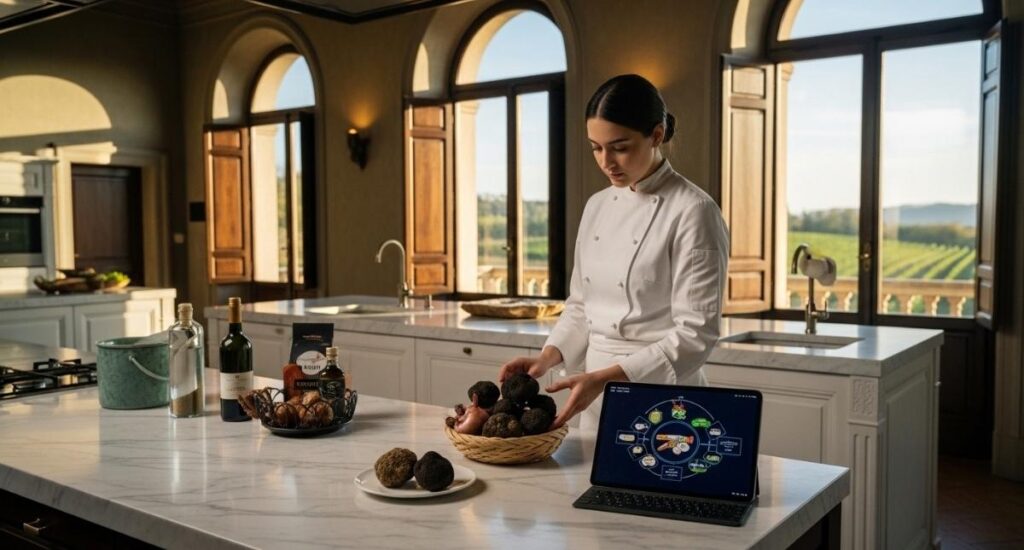
If France is about the imposition of technique onto ingredients, Italy is about the elevation of the ingredient itself. The Italian culinary education model is less about rigid hierarchy and more about deep cultural immersion, regional diversity, and the philosophy of food production.
The Philosophy of “Slow Food” and Provenance
The Italian approach is deeply rooted in the land. Students spend as much time in vineyards, cheese caves, and olive groves as they do in the kitchen. The focus is on understanding the entire supply chain—biodiversity, sustainable farming, and artisanal production methods. This appeals strongly to the modern entrepreneur interested in sustainability, ethics, and the “story” behind the product.
The Institutions: Where Culture Meets Commerce
- ALMA – The School of Italian Culinary Arts (Parma): Located in the heart of Italy’s “Food Valley,” ALMA is the premier institution for Italian gastronomy. Its Rector was long the legendary Gualtiero Marchesi. The school emphasizes a deep dive into regional Italian cuisine, pastry, and sommelier training, with rigorous internship placements in top Italian restaurants.
- University of Gastronomic Sciences (Pollenzo): Founded by the Slow Food movement, this is less a cooking school and more an academic university dedicated to food culture, anthropology, and ecology. It produces high-level thinkers and policy-makers in the food space.
The “Made in Italy” Brand Value
The Italian diploma carries a different kind of weight. It signifies a deep understanding of the world’s most globally beloved cuisine and an appreciation for the “Made in Italy” lifestyle brand—a powerful asset in luxury marketing and international hospitality sectors.
4. The Investment Thesis: Calculating the ROI of Gastronomic Education
This path is not for the faint of wallet. Tuition fees at top schools range from €30,000 to €60,000 for a comprehensive diploma, not including the high cost of living in Paris or Northern Italy.
Tuition vs. Earning Potential
Unlike an MBA, where the post-graduation salary bump is often immediate and quantifiable in corporate terms, the culinary ROI is more complex. An immediate role as a commis chef will pay poorly. However, for those leveraging the degree into management, consulting, or entrepreneurship, the ceiling is very high. The ROI must be calculated over a 5-to-10-year horizon, factoring in the speed of ascent in a highly specialized industry versus the slow climb of a generalist corporate ladder.
The Intangible Dividends
Beyond the finances, the intangible ROI is immense. Students gain fluent command of a second language (French or Italian is essential), profound cross-cultural competence, and a resilience forged in high-pressure environments. They acquire a “sensory literacy” that allows them to evaluate quality in a way few others can—a critical skill in the luxury market.
5. The Logistical Architecture: Navigating the Move to Europe
Executing this strategic pivot requires logistical planning akin to a military operation. Moving your life to Europe for a year or more involves navigating complex bureaucracies and securing stability in an unfamiliar environment.
The Visa Matrix
For non-EU citizens, this is the primary hurdle. France offers specific long-stay student visas (VLS-TS) which often allow for limited part-time work. Italy has similar student visa protocols. Crucially, both countries have introduced various “Talent Passports” or startup visas for highly skilled individuals looking to launch businesses post-graduation, providing a pathway to longer-term residency for entrepreneurs.
Finding Your Sanctuary
The academic rigor of these programs is intense; your living situation needs to be a sanctuary, not a source of stress. Finding quality, short-term furnished housing in hyper-competitive markets like the 6th arrondissement of Paris or the historic center of Parma is notoriously difficult from abroad. Success requires a macro-view of the market, utilizing comprehensive platforms to arrange your global flight and accommodation schedules well in advance, ensuring your logistical backbone supports your academic focus.
The First Mile
The transition is the point of maximum friction. Arriving at Charles de Gaulle or Milan Malpensa with months of luggage—and often expensive knife kits and uniforms—is physically and mentally taxing. Navigating foreign public transport immediately upon arrival is a strategic error. Elite students mitigate this risk by pre-arranging professional ground transportation, ensuring a seamless, secure, and dignified transition from the terminal to their new doorstep, allowing them to arrive focused and ready.
6. Conclusion: The Diploma and the Dinner Plate
Ultimately, the decision to pursue an elite culinary education in France or Italy is a declaration of intent. It is a rejection of the generic and an embrace of the specific. It is a recognition that in a world increasingly dominated by the virtual, there is immense power, profit, and profound satisfaction in mastering the tangible reality of what sustains us.
The Michelin Pathway is not an escape hatch from the real world; it is a highly strategic entrance into a more flavorful, challenging, and globally connected one. The diploma you earn is not just proof you can cook; it is proof you have the discipline to master an art form, the cultural intelligence to navigate a complex heritage, and the vision to see the business potential on the dinner plate. In 2026, that is a credential far rarer, and perhaps far more valuable, than any traditional MBA.