
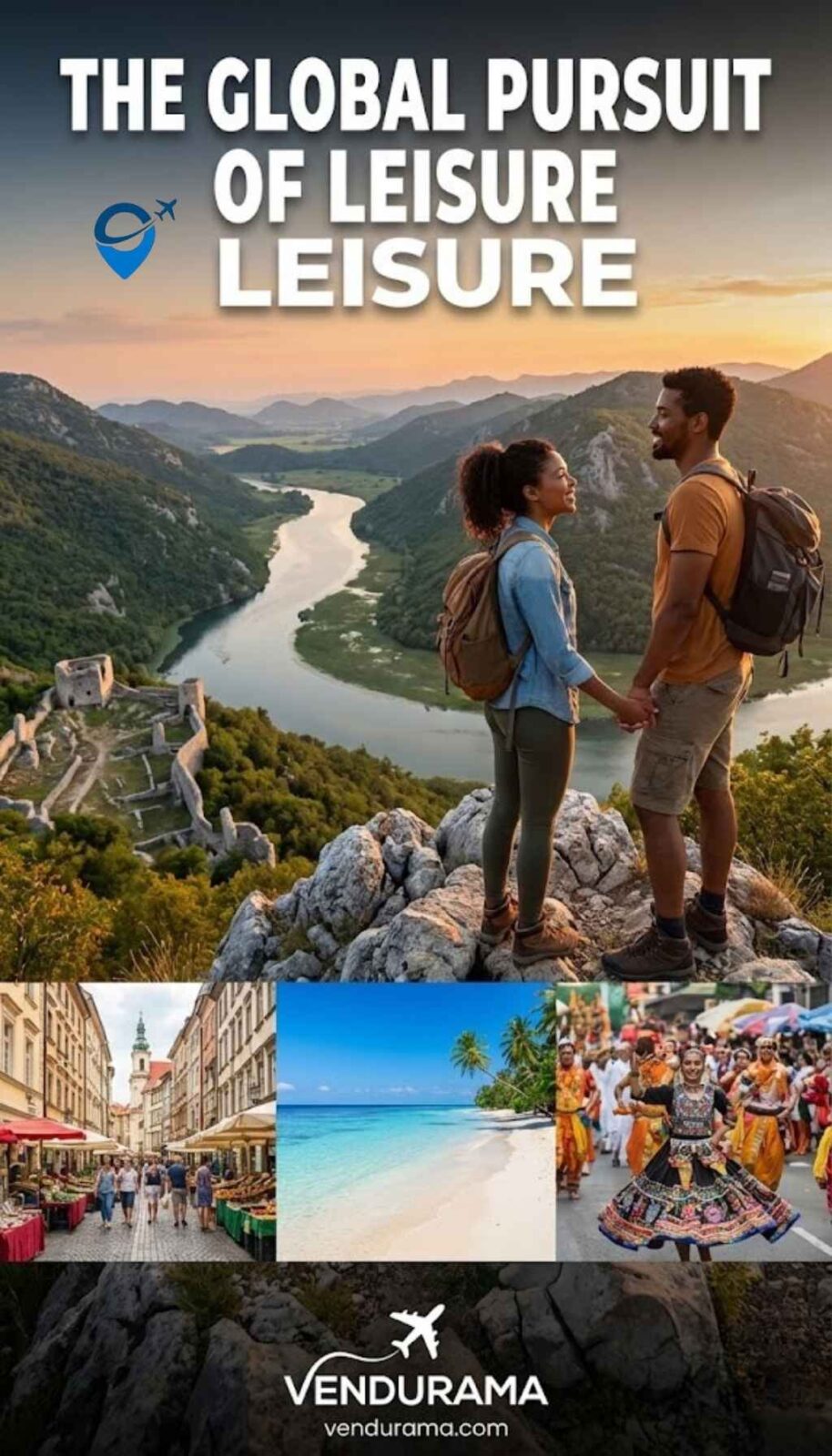
The Fundamental Human Need for Leisure Travel in Modern Society
In an era characterized by digital saturation, relentless pace, and a pervasive sense of disconnection, the act of leaving one’s daily environment for leisure has evolved from a luxury into a profound psychological and cultural necessity. Leisure travel, the intentional movement across geographies for pleasure and restoration, represents a modern secular pilgrimage—a deliberate pursuit of meaning, perspective, and rejuvenation. It is a conscious rebellion against the mundane, an active search for novelty that serves to recalibrate our internal compasses. Beyond mere escapism, this journeying fulfills a deep-seated human yearning for exploration and connection, acting as a critical mechanism for psychological recovery from the stressors of contemporary life. Studies increasingly validate what travelers intuit: that time spent in new environments can significantly reduce anxiety, enhance creativity, and rebuild emotional resources depleted by routine. In this context, leisure travel has become a fundamental tool for self-maintenance and identity formation in the 21st century, a non-negotiable element of a holistic life for millions worldwide.
Defining Leisure Travel: Distinction from Essential Journeys
Leisure travel is defined by its core purpose: pleasure, recreation, and personal enrichment undertaken during one’s free time. This intentionality separates it categorically from travel driven by necessity. Business travel, while it may share logistical similarities, is defined by its primary objective of work—meetings, conferences, or client engagements. The modern trend of “bleisure,” where business travelers extend a work trip for personal leisure, illustrates the occasional blurring of these boundaries but reinforces the distinction in purpose.
More fundamentally, leisure travel differs from migration (permanent or semi-permanent relocation for economic, safety, or familial reasons) and essential travel (such as commuting or journeys for urgent medical care). The latter are obligations, whereas leisure travel is an elective pursuit of positive experience. Its essence lies in autonomy and the anticipation of enjoyment, whether through relaxation on a beach, immersion in a foreign culture, or the physical challenge of a mountain trek. This voluntary, desire-based nature is what makes it a potent source of psychological reward and cultural exchange.
A Historical Voyage: The Evolution of Recreational Travel
The human impulse to travel for enrichment is ancient, though its forms and accessibility have transformed dramatically.
- Ancient and Medieval Foundations: Early travel was predominantly functional, tied to trade, pilgrimage, or imperial administration. The Romans, with their vast network of roads and waystations, facilitated journeys for leisure among the elite to visit thermal baths, festivals, and Greco-Roman cultural sites. In the medieval period, religious pilgrimages to sites like Santiago de Compostela or Mecca established structured routes and a form of early tourism infrastructure, blending spiritual duty with elements of adventure and cultural encounter.
- The Grand Tour and the Birth of Modern Tourism: The 17th and 18th centuries saw the rise of the Grand Tour, an educational rite of passage for young European aristocracy. Lasting months or years, it centered on Italy and France, with the goal of absorbing classical art, architecture, and manners. This tradition established the idea of travel as a means of cultural cultivation and personal refinement, a precursor to modern cultural tourism, but for a tiny, privileged minority.
- The Industrial Revolution and Democratization: The 19th century was a watershed. The Industrial Revolution created a new middle class with disposable income and, crucially, structured work schedules that created the concept of “leisure time.” Technological innovations were equally transformative: railways and steamships shrank distances and lowered costs. The pioneering moment came in 1841, when Thomas Cook organized the first publicly advertised railway excursion in England, a one-day trip for a temperance group. This event is widely considered the birth of the package tour and the organized tourism industry, making planned leisure travel accessible beyond the aristocracy.
- The Jet Age and Mass Tourism: The 20th century accelerated this democratization. Paid holiday acts, like the UK’s 1938 legislation, legally entitled workers to leisure time. The post-World War II economic boom, coupled with the advent of commercial jet aircraft in the 1950s, ushered in the era of mass tourism. Suddenly, destinations like the Mediterranean, the Caribbean, and alpine resorts were within reach for a broad swath of society in industrialized nations. The standardized package holiday—flight, hotel, and transfer—became a commodity, fueling unprecedented global mobility and the rise of global tourism hubs.
- The Contemporary Landscape: Today, the industry is defined by digital democratization, niche experiences, and a reckoning with its impacts. The internet has put planning and booking power directly in the traveler’s hands, while social media shapes desires and discoveries. In reaction to homogenized mass travel, there has been a powerful shift toward specialized forms like ecotourism, adventure travel, and cultural immersion. Concurrently, the negative consequences of overtourism and environmental strain have sparked a critical movement toward sustainable and regenerative travel, seeking to ensure tourism benefits both visitor and host community.
A Taxonomy of Experience: Major Types of Leisure Travel
The modern leisure travel landscape is richly segmented, catering to diverse human desires and motivations.
| Travel Type | Core Motivation & Purpose | Typical Activities & Destinations | Traveler Profile |
| Cultural & Heritage | To experience history, art, and living traditions; educational enrichment. | Visiting museums, archaeological sites, festivals; culinary tours; historic cities (e.g., Kyoto, Rome, Istanbul). | Curious learners, history enthusiasts, art lovers. |
| Adventure | To seek physical challenge, thrill, and immersion in nature. | Trekking, mountaineering, scuba diving, white-water rafting; destinations like Nepal, New Zealand, Costa Rica. | Thrill-seekers, fitness-oriented travelers, outdoor enthusiasts. |
| Wellness & Medical | To enhance physical/mental health and well-being through treatment or retreat. | Spa resorts, yoga/meditation retreats, thermal springs; medical procedures; destinations like Bali, India, Turkey. | Stress-affected individuals, health-conscious travelers, those seeking medical value. |
| Luxury | To indulge in exclusivity, premium service, and high comfort. | Staying at five-star resorts/villas, private guided tours, Michelin-star dining, yachting. | High-net-worth individuals, celebratory travelers seeking splurge experiences. |
| Ecotourism & Sustainable | To travel responsibly with a focus on nature conservation and supporting local communities. | Wildlife safaris, staying in eco-lodges, volunteer conservation projects; destinations like Costa Rica, Botswana, Scandinavia. | Environmentally conscious travelers, nature lovers, ethical consumers. |
| Slow & Experiential | To deeply connect with a single location, rejecting rushed itineraries for local immersion. | Renting an apartment for weeks, learning a local craft or language, building community connections. | Travelers seeking depth over breadth, digital nomads, those combating travel fatigue. |
The Inner Journey: Psychological Benefits of Leisure Travel
The value of travel extends far beyond passport stamps and social media posts; it yields measurable psychological benefits that are increasingly supported by empirical research.
- Stress Reduction and Emotional Recovery: Leisure travel provides a critical psychological detachment from work and routine stressors. A 2025 study focusing on high-stress professionals (pharmacists) found a significant positive association between the frequency of leisure travel and overall psychological well-being. The research identified that travel facilitates this by lowering perceived stress, creating a restorative buffer from occupational demands. The change of environment physically and mentally separates the individual from daily pressures, allowing the nervous system to down-regulate.
- Identity Construction and Self-Expansion: Travel acts as a workshop for the self. By navigating unfamiliar situations, tasting new foods, and adapting to different social norms, individuals test their limits and capabilities. These experiences can integrate into one’s personal narrative, fostering a more complex and confident sense of identity. The encounter with the “other” ultimately helps define the “self.”
- Enhanced Creativity and Cognitive Flexibility: Exposure to novel stimuli—foreign languages, alternative social structures, unexpected aesthetics—forces the brain out of its well-worn cognitive ruts. This state of “cognitive disequilibrium” is a known catalyst for creative thinking and problem-solving, as the mind works to synthesize new patterns and perspectives.
- Strengthened Social Bonds and Support: Whether traveling with loved ones or forging new connections on the road, travel profoundly impacts social well-being. The shared experience of discovery can deepen bonds with partners, friends, or family. Furthermore, the aforementioned study on pharmacists highlighted social support as a key mediator in the travel-wellbeing relationship. The positive emotions and shared experiences of travel enhance one’s sense of social connectedness and support, which in turn bolsters overall mental health.
The Double-Edged Sword: Social and Cultural Impacts on Host Communities
Tourism’s arrival is a transformative event for any destination, delivering a complex mix of benefits and challenges.
- Economic Engine and Cultural Revival: Tourism is a primary economic pillar for countless regions, generating jobs not only in hospitality but in related sectors like agriculture, retail, and construction. It can provide the impetus and funding for the preservation of cultural heritage, from restoring historic monuments to sustaining traditional crafts, festivals, and performing arts that might otherwise fade.
- The Perils of Overtourism and Cultural Commodification: When management fails, the weight of tourist numbers can overwhelm a destination. Overtourism leads to infrastructure strain, environmental degradation, and a diminished quality of life for residents, as seen in cities like Venice, Barcelona, and Reykjavik. Furthermore, the desire to cater to tourist expectations can lead to “staged authenticity,” where cultural practices are simplified, sensationalized, or performed out of context.
- The Path Forward: Community-Centered and Regenerative Models: The future of ethical tourism lies in models that prioritize the host community’s agency and well-being. Regenerative tourism aims not merely to minimize harm but to leave a place better than it was—by directly funding conservation, supporting social enterprises, and designing experiences that foster genuine, respectful cultural exchange.
Navigating the World: Practical Dimensions of Travel
The realization of a travel dream rests on effective planning and navigation of practical systems.
- Travel Planning and Itinerary Design: Successful planning balances ambition with realism. A structured approach begins with defining the trip’s primary goal. Tools like custom maps and spreadsheet itineraries provide visual clarity on logistics. To streamline this process, modern travelers often use aggregated travel planning platforms to compare global flight routes and accommodation options in one dashboard, ensuring their itinerary aligns perfectly with their budget and timeline. The critical rule is to build in buffer time; over-scheduling is the fastest route to exhaustion.
- Transportation Systems and International Mobility: The global transportation network is the skeleton of modern travel. Aviation remains the backbone of long-haul travel, while high-speed rail offers efficiency in Europe and Asia. For seamless arrivals, particularly in unfamiliar cities where navigating public transport can be daunting after a long flight, arranging private airport transfers in advance is a recommended strategy to ensure safety and comfort for the final mile of the journey.
- Accommodation Spectrum and Destination Selection: Lodging is no longer just a place to sleep; it is a central part of the experience. The spectrum ranges from homestays and hostels to boutique hotels and all-inclusive resorts. The rise of vacation rental platforms has unlocked the possibility of living like a local, often suitable for longer stays or family travel.
- Visa Requirements and Documentation: Entry rules are sovereign and non-negotiable. Travelers must research visa requirements for their specific nationality well in advance. Key documents include a passport valid for at least six months beyond the travel dates, necessary visas, and proof of onward travel.
- Health, Insurance, and Safety Considerations: Prudent health preparation involves consulting a travel clinic for region-specific vaccinations. Comprehensive travel insurance is not an optional extra; it is a fundamental component of responsible travel, covering medical emergencies, evacuation, trip interruption, and lost baggage.
Horizon Scanning: The Future of Leisure Travel
The travel industry stands on the cusp of further transformation, driven by technology, environmental necessity, and evolving human values.
- Technology as Experience Architect: Artificial Intelligence (AI) is moving beyond booking to become a personalized travel concierge, crafting dynamic itineraries based on real-time data. Virtual Reality (VR) and Augmented Reality (AR) will offer increasingly sophisticated previews of destinations and immersive, educational overlays at historical sites.
- The Imperative of Sustainable and Regenerative Practices: Sustainability will evolve from a niche preference to an industry-wide operating standard. This will manifest in decarbonization of transportation, the mainstreaming of circular economy principles in hospitality, and a stronger market for carbon-offset travel.
- The Blurring of Life and Travel: Neo-Nomadism: The normalization of remote work has untetored “travel” from “vacation.” The rise of neo-nomadism—individuals and families living a location-independent life—creates a new class of long-term, slow travelers who seek community and monthly rentals over short-term tourism highlights.
In conclusion, leisure travel is a multifaceted mirror held up to humanity. It reflects our deepest curiosities, our need for rest and meaning, our economic aspirations, and our evolving relationship with the planet and each other. From its ancient origins to its digital future, it remains one of the most powerful forces shaping individual consciousness and global culture. To travel with leisure is, ultimately, to engage in a profound act of exploration—not only of the world, but of the self.