
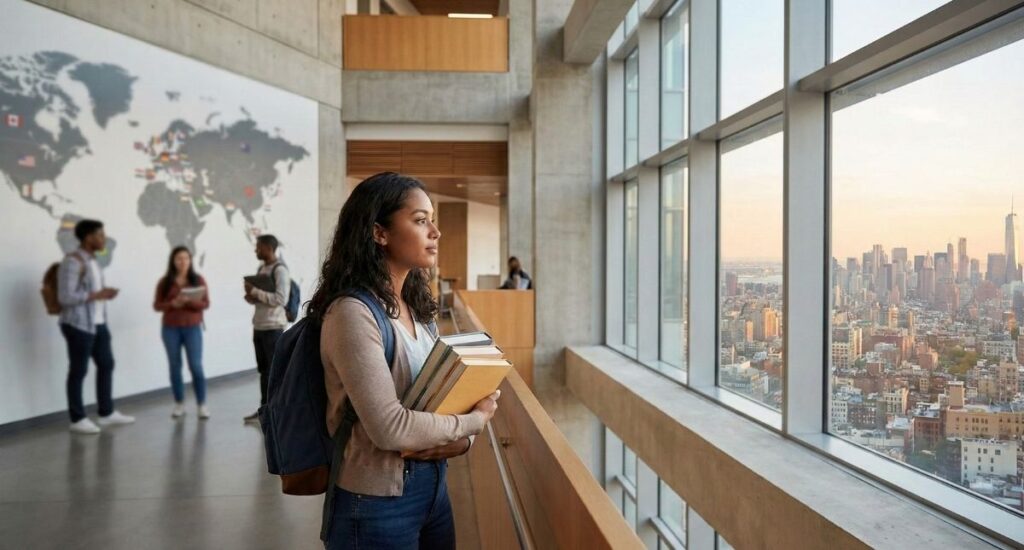
The pursuit of knowledge has never been confined by geographic borders, yet in the contemporary era, the phenomenon of international education has reached an unprecedented scale. Studying abroad is no longer merely an elective academic adventure for the elite; it has become a strategic component of professional development and a transformative catalyst for personal growth. In a world characterized by hyper-connectivity and globalized labor markets, the experience of living and learning in a foreign jurisdiction provides students with a competitive edge that extends far beyond the classroom. This movement of intellectual capital fosters cross-cultural dialogue, enhances diplomatic ties between nations, and prepares a new generation of leaders to navigate the complexities of a multi-polar world.
To study abroad is to undergo a fundamental shift in perspective. It challenges one’s internal biases, demands high levels of adaptability, and fosters a unique form of “cultural intelligence” that is increasingly prized by global employers. Whether a student is pursuing a semester-long exchange or a full degree program in a distant metropolis, the journey is defined by academic rigor, social integration, and the profound realization that the world is both vastly diverse and fundamentally interconnected. This article provides an authoritative overview of the international education landscape, offering deep insights into the destinations, logistics, and long-term implications of pursuing higher education on a global scale.
What Is Study Abroad?
Definition and Core Concept
At its most fundamental level, studying abroad refers to the act of a student pursuing educational opportunities in a country other than their own. However, this definition barely scratches the surface of the multidimensional experience. Academically, it involves enrolling in a foreign institution—either through an organized exchange program or as a direct “international student”—to earn credits or a full degree that carries global recognition.
Local vs. International Education
While local education provides the comfort of familiarity and a curriculum tailored to one’s own national context, international education introduces a “comparative” element. Students are exposed to different pedagogical styles, diverse research methodologies, and varied ideological frameworks. For instance, a student from a lecture-heavy academic culture may find themselves in a seminar-based environment in Northern Europe, requiring a complete recalibration of how they process and present information.
Dimensions of the Experience
- Academic Dimension: Accessing specialized laboratories, world-renowned faculty, or unique archives that are unavailable in one’s home country.
- Cultural Dimension: The “hidden curriculum” of learning to navigate a new society, from understanding subtle social cues to mastering a foreign language in its natural environment.
- Personal Dimension: The development of self-reliance, problem-solving skills, and a global network of peers that often lasts a lifetime.
Historical Evolution of Studying Abroad
The Roots of Academic Mobility
The concept of traveling for education is as old as the university itself. In the Middle Ages, the “Peregrinatio Academica” saw scholars traveling between the great centers of learning in Bologna, Paris, and Oxford. During the Islamic Golden Age, students traveled across the caliphates to study at Al-Karaouine in Morocco or Al-Azhar in Egypt. These early movements were driven by the scarcity of specialized texts and the reputation of individual masters.
The Modern Era and Institutionalization
The 20th century saw the institutionalization of study abroad programs, particularly after World War II. The United States’ Fulbright Program, established in 1946, was designed to foster international peace through the exchange of students and ideas. In Europe, the 1987 launch of the ERASMUS (European Region Action Scheme for the Mobility of University Students) program revolutionized the continent, creating a framework for credit transfers that allowed millions of students to study across European borders seamlessly.
Digital Access and the 21st Century
Today, globalization and digital technology have further lowered the barriers to entry. Students can research universities in real-time, attend virtual open days, and manage their applications through centralized digital portals. While online learning has introduced a “hybrid” element, the physical act of relocation remains the gold standard for achieving true cultural immersion.
Popular Study Abroad Destinations Worldwide
The choice of destination is often dictated by a combination of academic reputation, cost of living, and post-graduation work opportunities.
Europe: The Hub of Diversity and Heritage
Europe remains the most popular region for international students, largely due to its historical prestige and the “Bologna Process,” which standardized degree structures across the continent.
- United Kingdom: Home to some of the world’s oldest and most prestigious universities (Oxford, Cambridge, LSE), the UK is a leader in research and innovation, particularly in medicine, law, and finance.
- Germany: Known for its “no tuition fee” policy at public universities, Germany is a magnet for STEM (Science, Technology, Engineering, and Mathematics) students.
- France: Offers a rich intellectual heritage and specialized “Grandes Écoles” that are highly influential in politics and business.
North America: The Pursuit of Prestige
- United States: With over 4,000 higher education institutions, the US offers unparalleled variety. From the Ivy League to massive state research universities, it is the global leader in providing a “liberal arts” education and advanced PhD research.
- Canada: Highly attractive due to its welcoming immigration policies and high quality of life. Canadian universities like Toronto and McGill are consistently ranked among the world’s best.
Asia: The Rising Giants
- China: Investing heavily in its “Double First Class” university project, China is becoming a hub for international students interested in business, technology, and Chinese language.
- South Korea and Japan: These nations offer a unique blend of high-tech living and traditional culture, with strong programs in robotics, automotive engineering, and creative industries.
Australia & New Zealand: The Lifestyle Choice
Favored for their outdoor lifestyle and high safety standards, these nations are particularly popular for environmental sciences, marine biology, and business.
Types of Study Abroad Programs
International education is not a “one size fits all” model. Programs vary significantly in duration and intensity.
Undergraduate and Postgraduate Degrees
The most common path is pursuing a full Bachelor’s (3-4 years) or Master’s (1-2 years) degree. These programs offer the deepest immersion, allowing the student to fully integrate into the local society and potentially transition into the local workforce.
Exchange Programs
Often lasting one or two semesters, exchange programs allow students to remain enrolled in their home university while studying abroad. Credits are transferred back, ensuring that the student graduates on time while gaining international experience.
Language and Short-Term Programs
These are focused on intensive language acquisition or specific niche subjects (e.g., a 4-week summer program in Italian Renaissance art in Florence). They are excellent for students who cannot commit to long-term relocation.
Pathway Programs
Designed for students who do not yet meet the academic or linguistic requirements for direct entry, pathway programs provide a year of “bridge” education to prepare them for the rigors of a full degree.
Academic and Career Benefits of Studying Abroad
The “return on investment” (ROI) for international education is measured in more than just a diploma; it is measured in the expansion of professional horizons.
Global Recognition and Academic Quality
Graduating from an internationally accredited institution signals to the world that a student has met global standards of excellence. It demonstrates an ability to succeed in varied environments and provides access to advanced technologies and research methodologies that may be more developed in certain regions.
Career Opportunities and Employability
Studies consistently show that students with international experience find employment faster and earn higher starting salaries. Employers value “soft skills” such as:
- Adaptability: The ability to pivot and solve problems in unfamiliar settings.
- Cross-Cultural Communication: Navigating diverse teams in a globalized workplace.
- Risk Management: The courage required to relocate and thrive in a foreign country.
Personal and Cultural Benefits
While the academic gains are significant, the personal transformation is often what students cite as the most valuable aspect of their journey.
Cultural Intelligence (CQ)
Beyond simple “cultural awareness,” Cultural Intelligence is the capability to relate and work effectively across cultures. It involves understanding the “why” behind social behaviors and having the flexibility to adjust one’s own behavior accordingly.
Independence and Maturity
For many students, studying abroad is the first time they are truly responsible for their own logistics, from managing a foreign bank account to navigating complex visa regulations. This “trial by fire” leads to a rapid increase in maturity and self-confidence.
Global Networking
The friends made during a study abroad program are often the leaders of tomorrow in their respective countries. This creates a global network of contacts that can provide professional opportunities and personal support decades after graduation.
Travel and Relocation Requirements
The transition from a domestic student to an international one requires navigating a rigorous administrative landscape.
Student Visas and Entry Regulations
The visa process is often the most stressful part of the journey. Requirements typically include:
- Confirmation of Enrollment (CoE): Official proof that you have been accepted by a licensed institution.
- Financial Solvency: Evidence that you have sufficient funds to cover tuition and living expenses without working.
- Health Documentation: Many countries require chest X-rays (for TB) or proof of specific vaccinations before a visa is granted.
Passport Validity
It is a standard requirement that a student’s passport must be valid for at least six months beyond their intended period of stay. Students should check their expiration dates well in advance of their application.
Accommodation Options for International Students
Where a student lives significantly impacts their social integration and academic success.
University Housing (Dorms)
The classic student experience. Dormitories offer proximity to campus and an instant social circle. However, they can be noisy and offer less privacy than other options.
Private Apartments and Shared Housing
Many students choose to rent apartments in the local community. Sharing a house with local or other international students is a cost-effective way to live and provides a more “authentic” experience of the city. When investigating the logistics of your move, it is advisable to research accommodation and travel frameworks early to ensure that your living situation is secured before your arrival, as housing markets in student cities are often extremely competitive.
Homestays
Living with a local family is the fastest way to master a language and understand the local culture. This is common for younger students or those on short-term language programs.
Flights and Travel Planning for Students
Relocating to a new country is a logistical challenge that requires careful timing and budgeting.
Long-Haul Travel Considerations
International students often travel with significant luggage, including books, electronics, and personal items for a year or more. Researching airlines with “student baggage allowances” can save hundreds of dollars.
Smooth Relocation Logistics
The initial journey is more than just a flight; it is the beginning of a new life. Coordinating airport pickups, temporary initial housing, and the arrival of your belongings requires a centralized approach. Utilizing comprehensive travel and flight research tools during the planning phase allows students to identify the most cost-effective and flexible routes, which is essential given that academic start dates are often rigid.
Cost of Studying Abroad
Understanding the financial commitment is crucial for long-term sustainability.
Tuition Fees
These vary wildly. While Germany and Norway offer essentially free tuition at public universities, private institutions in the United States can cost upwards of $60,000 per year.
Living Expenses
Students must budget for:
- Rent and Utilities
- Food and Groceries
- Health Insurance (often mandatory)
- Local Transportation
Scholarships and Funding
Many governments and universities offer scholarships specifically for international students. These range from “full-ride” (covering everything) to “tuition-only” or “merit-based” grants.
Common Challenges and How to Overcome Them
Culture Shock
The initial “honeymoon phase” of being in a new country is often followed by a period of frustration or sadness. This is a normal psychological reaction to the loss of familiar social cues.
- Solution: Join student clubs, maintain regular contact with family back home, and be patient with yourself during the adjustment period.
Academic Pressure
The “grading culture” in a foreign country may be much stricter than what a student is used to.
- Solution: Utilize the university’s writing centers, tutoring services, and academic advisors early in the semester.
Practical Tips for a Successful Experience
- Start Early: Begin your research at least 12–18 months before your intended start date.
- Master the Language: Even if your course is in English, learning the local language will exponentially improve your social life and employability.
- Manage Your Time: Balancing travel, socializing, and a rigorous academic schedule requires a disciplined calendar.
- Organize Your Journey: As you finalize your departure details, ensure you have compared all travel and relocation options to secure the best student rates and flexible dates, as these are vital for maintaining a student budget during the transition.
Future Trends in International Education
The Rise of “Glocalized” Education
Many universities are opening “satellite campuses” in other countries, allowing students to earn a prestigious international degree while remaining closer to home.
AI and Digital Integration
Artificial Intelligence is already being used to personalize student recruitment and provide 24/7 student support. In the future, “Virtual Reality” may allow students to experience a campus environment before they even apply.
Focus on Sustainability
The international education sector is increasingly aware of its carbon footprint. We are seeing a move toward more “sustainable travel” initiatives and a focus on environmental sciences within global curricula.
Conclusion
Studying abroad is one of the most profound investments an individual can make in their future. It is a journey that transcends academic credits, offering a unique opportunity to build a global identity in an increasingly fragmented world. While the logistical and financial hurdles are significant, the returns—in the form of intellectual growth, career mobility, and personal resilience—are immeasurable.
In the global classroom, the boundaries between teacher and student, and between domestic and foreign, begin to dissolve. As you step onto that plane and head toward a new horizon, you are not just traveling to a new country; you are traveling toward a more enlightened, capable, and connected version of yourself. The world is vast, its knowledge is deep, and for the international student, the entire planet is a campus waiting to be explored.