
I. Thresholds of the Unknown
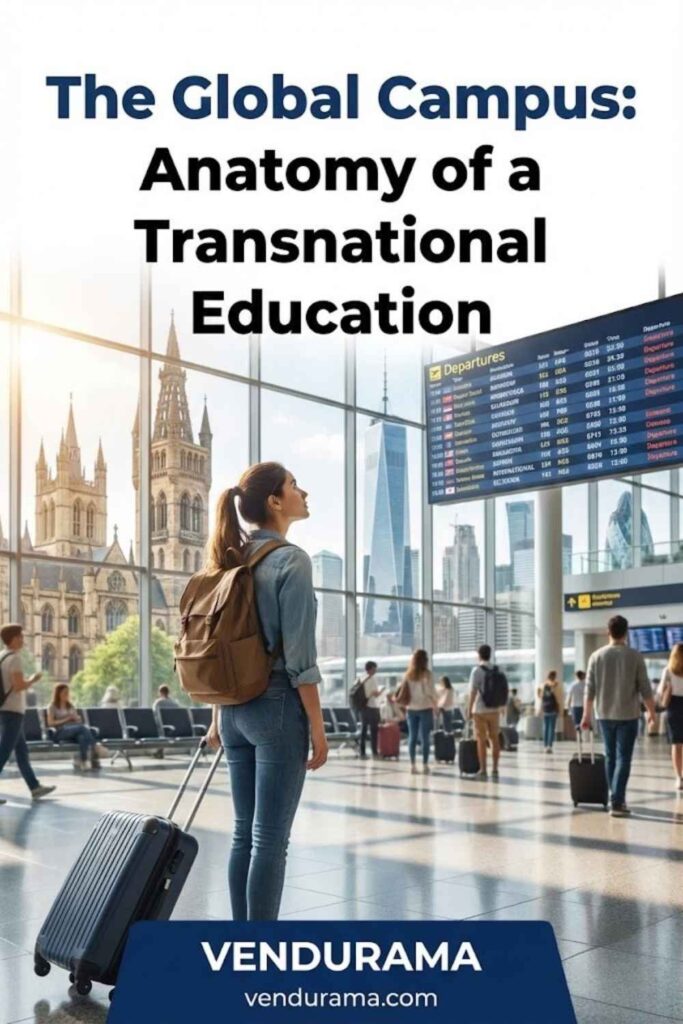
The automatic doors of the arrivals terminal slide open, and the humidity hits first—a heavy, tropical embrace distinct from the crisp autumn air left behind in Frankfurt or Boston. Or perhaps it is the smell of diesel and roasting chestnuts in a gray dawn in Seoul. For the international student, this sensory collision marks the precise moment a theoretical decision becomes a physical reality. Standing there, gripping the handle of a suitcase containing a life condensed into twenty-three kilograms, the student is no longer just a scholar; they are an immigrant of the mind, poised on the edge of a transformation that standard metrics of academic success cannot capture.
This moment of arrival is the “Day Zero” of studying abroad. It is a mixture of profound vulnerability and exhilarating agency. To choose to study abroad is to voluntarily displace oneself, to trade the competence of the native for the humility of the novice. It is an act of intellectual bravery that redefines the boundaries of the self, forcing a confrontation with the world that textbooks can describe but never replicate.
II. Defining the Transnational Scholar
“Study Abroad” is an umbrella term often reduced to a semester of sightseeing punctuated by occasional lectures. However, in its truest academic and cultural sense, it is a structured form of “experiential learning.” It is the pursuit of formal education in a geo-cultural context distinct from one’s own, designed to foster Global Competence—the capacity to examine local, global, and intercultural issues, to understand and appreciate the perspectives and worldviews of others, and to engage in open, appropriate, and effective interactions with people from different cultures.
It encompasses a spectrum of engagement: from the doctoral candidate conducting field research in the Amazon basin to the undergraduate learning Mandarin in Beijing, to the medical student undertaking a residency in Cape Town. In every iteration, the core mechanism is the same: Immersion. Unlike the tourist who observes the culture through a glass partition, the student must navigate the bureaucracy, the social codes, and the daily rhythms of the host society, turning the environment itself into a classroom.
III. The Arc of International Exchange: A Historical Perspective
The lineage of the international student is ancient. In the 12th century, the peregrinatio academica saw wandering scholars crisscrossing Europe to sit at the feet of masters in Bologna, Paris, and Oxford. Latin was the lingua franca, creating a borderless republic of letters.
By the 19th and 20th centuries, the dynamic shifted towards nation-building. Japan’s Meiji Restoration dispatched students to the West to modernize the state. The post-WWII era birthed the Fulbright Program and the Erasmus scheme, explicitly designing international education as a tool for soft power and conflict prevention.
Today, we are in the era of Mass Internationalization. Education is a global service sector. Yet, despite the commodification, the philosophical heart remains: the belief that physical proximity to “the other” is the antidote to prejudice and the catalyst for innovation.
IV. The Geopolitics of Learning: Global Destinations
Choosing a destination is not merely about university rankings; it is about choosing a cultural context that aligns with personal and professional goals.
North America: The Research Giants
The United States and Canada remain the titans of higher education, renowned for their liberal arts model which encourages interdisciplinary study. The campus culture here is distinct—cities within cities—offering a “total institution” experience where social life and academics are fused.
Europe: The Classical Tradition
From the tutorial systems of the UK to the polytechnics of Germany and the Grandes Écoles of France, Europe offers specialization. The Bologna Process has standardized degrees, allowing for high mobility. The continent’s density allows a history major to study the Renaissance in Florence on Monday and visit the Louvre in Paris on the weekend, provided they have managed the logistics of booking efficient rail or flight connections that make such cross-border exploration possible.
Asia: The Rising Century
China, Japan, South Korea, and Singapore have aggressively internationalized. These destinations offer a front-row seat to the world’s most dynamic economic engines. They challenge Western-centric pedagogies and offer high-tech research facilities often surpassing their Western counterparts.
Oceania: The Lifestyle & Research Hybrid
Australia and New Zealand excel in research fields related to the environment, marine biology, and engineering, balanced with a cultural emphasis on well-being and outdoor integration.
V. Morphologies of Mobility: Types of Programs
The structure of the experience dictates the depth of the immersion.
- Full Degree Mobility: The student completes an entire Bachelor’s, Master’s, or PhD abroad. This offers the deepest integration but requires the highest level of commitment and financial planning.
- Semester/Year Exchange: The classic model. Students pay tuition to their home institution but study at a partner university. Credits transfer, but the academic risk is lower.
- Island Programs: A group of students from the same home university travels together with their own faculty to a foreign country. While logistically easier, it often creates an “expat bubble” that limits local interaction.
- Language Immersion: Intensive courses focused on linguistic fluency, often involving homestays with local families.
- Field Schools: Short-term, research-intensive trips (e.g., archaeology in Greece, ecology in Costa Rica).
VI. The Cognitive and Professional Dividend
Why leave home? The data is compelling.
Academic Impact: Exposure to different pedagogical styles—such as the rote learning rigor of East Asia versus the Socratic debate style of the US—expands cognitive flexibility. Students learn that there is no single way to structure knowledge.
Career Velocity: In a globalized labor market, “International Experience” is a proxy for soft skills. Employers interpret it as evidence of adaptability, resilience, and cross-cultural communication skills. A student who has successfully navigated a lease in a foreign language has proven problem-solving abilities that a classroom cannot test.
Psychological Growth: The concept of “Self-Efficacy” is central here. Overcoming the daily micro-challenges of foreign life builds a robust confidence. The isolation forces a confrontation with oneself, often accelerating maturity and independence.
VII. The Architecture of Admission
The path to admission is a bureaucratic marathon that requires strategic foresight.
- Standardized Testing: The GRE, GMAT, SAT, or regional equivalents are often the first filter.
- Language Proficiency: The TOEFL or IELTS for English, JLPT for Japanese, DELF for French. These are not pass/fail but tiered metrics that determine eligibility.
- Statement of Purpose (SOP): Unlike a CV, the SOP is a narrative document. It must articulate the “Why”—connecting the student’s past, the specific program’s strengths, and future career goals into a coherent story.
- Letters of Recommendation: These must come from mentors who can attest to the student’s ability to handle rigor.
- Portfolio/Interview: For arts or competitive MBA programs, the human element becomes decisive.
VIII. The Logistics of Departure: Visas, Flights, and Bureaucracy
Once the acceptance letter arrives, the romantic phase ends and the logistical phase begins. This is often the most stressful period for students and families.
The Visa Labyrinth: The student visa (F-1 in USA, Tier 4 in UK) is a legal privilege, not a right. It requires proof of funding, health insurance, and biometric data. The timing is critical; missing a consulate appointment can derail an entire semester.
Strategic Travel Planning: Unlike a vacation, student travel involves one-way tickets, open returns, and excess baggage. It requires coordinating arrival dates with dormitory openings. Experienced counselors advise comparing flight routes across multiple airlines to find itineraries that offer flexible change policies, as academic calendars often shift at the last minute.
Health and Insurance: Navigating a foreign healthcare system is daunting. Comprehensive insurance is mandatory. Students must also manage prescriptions, as some common medications in one country may be controlled substances in another.
IX. The First Mile: Arrival and Settlement
The “First Mile”—the journey from the airport arrival hall to the student residence—is disproportionately stressful. The student is often jet-lagged, carrying months’ worth of supplies, and navigating a new transit system.
Airport Transfers: While public transport is cheaper, the complexity of hauling luggage through subway turnstiles in a new city can be overwhelming. For the initial arrival, safety and simplicity are paramount. Many universities recommend pre-booking a dedicated airport transfer service to ensure that a driver is waiting at the gate, eliminating the risk of unlicensed taxis or getting lost in a labyrinthine metropolis during the first critical hours.
Housing: The hunt for accommodation varies by region. In the UK and US, on-campus dormitories are standard for freshmen. In Europe and Australia, students often fend for themselves in the private market. Scams are a risk; transferring money for an unseen apartment is never advised.
X. The Economics of Education: Financial Planning
Study abroad is an investment, but the costs are often misunderstood.
Tuition vs. Cost of Living: In countries like Germany or Norway, tuition may be free even for international students, but the cost of living is high. Conversely, tuition in the US is exorbitant, but scholarships are plentiful.
Hidden Costs: Budgeting must go beyond rent and fees. It must include the “setup costs” (bedding, kitchenware), visa fees, and the critical “emergency fund.” It also includes the cost of family visits. When parents fly over for graduation or to help with settling in, they often need to secure accommodation near the university campus, which can be scarce during peak academic seasons.
Scholarships: Funding sources are diverse:
- Merit-based: University endowments.
- Government-based: Fulbright (USA), Chevening (UK), DAAD (Germany).
- Private foundations: Rotary, Open Society, etc.
XI. Cultural Adaptation: The U-Curve of Adjustment
Psychologists describe the adaptation process through the “W-Curve” or “U-Curve” hypothesis:
- Honeymoon Phase: Everything is new, exciting, and romantic. The food tastes better; the architecture is beautiful.
- Culture Shock (The Dip): The novelty wears off. The bureaucracy is frustrating, the language barrier is exhausting, and homesickness strikes. This is the danger zone where students may withdraw.
- Adjustment: The student develops routines. They find a favorite café, understand the humor, and make local friends.
- Mastery: The student functions effectively in both cultures.
- Reverse Culture Shock: Upon returning home, the student finds their home culture strange or stifling.
Navigating the physical environment is part of this adaptation. Learning to move through the city independently is a major milestone. However, for late-night study sessions or moving between campuses with heavy equipment, utilizing reliable private transportation apps can provide a safety net, particularly in cities where public transit shuts down early.
XII. The Long Shadow: Career and Life Outcomes
The impact of studying abroad is longitudinal. A landmark study by the Institute of International Education (IIE) found that study abroad alumni have higher employment rates and higher starting salaries than their non-mobile peers.
But the “Life Outcomes” go deeper. These individuals are more likely to:
- Work in international organizations.
- Have diverse social circles.
- Vote and engage in civic issues.
- Exhibit higher levels of tolerance for ambiguity.
They become “Cultural Mediators”—bridges between their home and host nations. In a polarized world, this capacity for mediation is perhaps the most valuable skill of all.
XIII. Future Trends: The Hybrid Horizon
The pandemic accelerated the digitization of learning, birthing new models:
- Virtual Exchange (COIL): Collaborative Online International Learning, connecting classrooms digitally.
- The Digital Nomad Student: Students enrolling in online degrees while physically traveling, decoupling the location of the body from the location of the institution.
- Micro-Campuses: Western universities opening physical branches in Asia and the Middle East, allowing students to get a “Western” degree without leaving their region.
XIV. Conclusion: The map is not the Territory
Ultimately, studying abroad is an exercise in humility. It teaches us that our “normal” is just one of many possibilities. It is the realization that the map we were given at birth does not cover the entire territory of human experience.
The student who returns is never the same as the one who left. They carry with them the sounds of a foreign market, the silence of a different library, and the invisible scars of adaptation. They have learned that the world is vast, complex, and indifferent to their comfort, yet endlessly generous to their curiosity.
As the plane touches down on home soil, the journey does not end. The luggage is unpacked, but the mental architecture has been permanently renovated. They have become citizens of a larger world, and the true study—the study of humanity itself—has only just begun.