
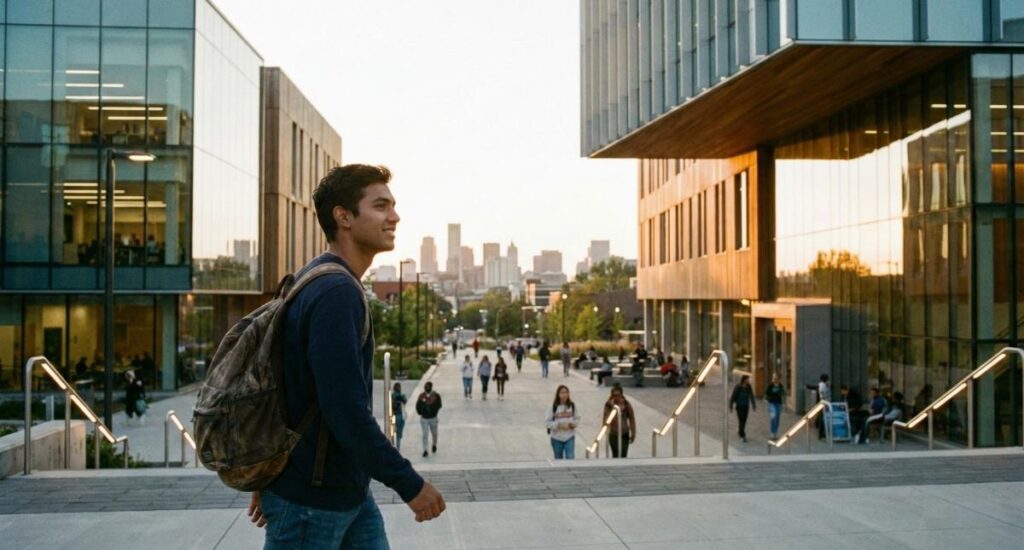
In an era characterized by the rapid acceleration of globalization, the dissolution of digital borders, and the increasingly interconnected nature of the global economy, the pursuit of higher education has transcended national boundaries. Studying abroad—once regarded as a finishing school luxury for the socioeconomic elite—has evolved into a fundamental component of modern academic and professional development. It represents a significant intellectual migration, a conscious decision to displace oneself from the familiar to engage with the unknown.
This comprehensive guide serves as an authoritative reference on the landscape of international education. It explores the pedagogical, cultural, and logistical dimensions of studying abroad, offering a rigorous analysis for students, educators, and parents navigating this complex ecosystem. From understanding the historical trajectory of academic mobility to mastering the intricate logistics of relocation, this article provides the foundational knowledge required to transform an overseas education into a lifelong asset.
I. Defining Study Abroad: The multidimensional Experience
The Conceptual Framework
At its core, “Study Abroad” refers to the act of pursuing educational opportunities in a country other than one’s own. However, this definition barely scratches the surface of the phenomenon. In the academic sphere, it is a mechanism for “comparative learning”—the ability to view one’s field of study through a different cultural and methodological lens. A political science student studying in Geneva, for example, engages with international relations differently than they would in a classroom in the Midwest United States.
Dimensions of Engagement
The experience is composed of three distinct but overlapping dimensions:
- The Academic Dimension: Exposure to new pedagogical styles. Some systems prioritize rote learning and exams (e.g., parts of East Asia), while others emphasize critical debate and continuous assessment (e.g., the UK and USA).
- The Cultural Dimension: The process of “acculturation,” where a student moves from being an observer of a foreign culture to an active participant. This involves navigating language barriers, social norms, and the subtle “unwritten rules” of a society.
- The Personal Dimension: The development of resilience. Removing the safety net of home forces a rapid maturation process, necessitating the development of problem-solving skills and emotional independence.
II. The Historical Evolution of International Education
From The Grand Tour to Erasmus
Academic mobility is not a modern invention. In the medieval period, the peregrinatio academica saw scholars wandering between the great universities of Bologna, Paris, and Oxford, driven by the scarcity of texts and the reputation of specific masters. By the 17th and 18th centuries, this morphed into the “Grand Tour,” where young European aristocrats traveled to Italy and France to study art, architecture, and diplomacy.
The Institutionalization of Mobility
The 20th century marked the democratization and institutionalization of study abroad. The aftermath of World War II saw the creation of the Fulbright Program (1946) in the US, designed to foster peace through educational exchange. In Europe, the launch of the Erasmus program in 1987 revolutionized the continent, creating a standardized framework for credit transfer that allowed millions of students to study across borders seamlessly.
The Modern Era: Globalization and Access
Today, the landscape is defined by mass mobility. The rise of English as the global lingua franca of academia has opened doors in non-English speaking countries, from the Netherlands to Japan, which now offer full degree programs in English. Digital connectivity has further lowered barriers, allowing students to research programs and manage applications instantly.
III. The Global Map of Education: Strategic Destinations
Choosing a destination is a strategic decision that influences a student’s academic focus, financial investment, and future career trajectory.
Western Europe: Tradition and Prestige
Europe remains the epicenter of international study, hosting some of the world’s oldest and most prestigious institutions.
- United Kingdom: Renowned for its research-intensive universities (Russell Group) and short, focused degree structures (three-year Bachelors, one-year Masters). It is the preferred destination for law, finance, and literature.
- Germany: A global leader in engineering and technology. Its unique selling proposition is the abolition of tuition fees at public universities for all students, including internationals, making it an economic powerhouse for education.
- France: Offers a dual system of public universities and elite Grandes Écoles, specializing in business, fashion, and culinary arts.
North America: Innovation and Campus Culture
- United States: Home to the Ivy League and massive state research institutions. The US model emphasizes a “Liberal Arts” approach, encouraging students to explore broad disciplines before specializing. It leads the world in research funding and campus infrastructure.
- Canada: An increasingly popular alternative to the US, offering high academic standards with a more accessible pathway to post-graduation residency and citizenship.
Asia: The Rising Giants
- China & Hong Kong: Massive government investment has propelled Chinese universities up global rankings. They are hubs for students interested in international business, Mandarin language, and Asian geopolitics.
- Japan & South Korea: These nations offer a unique blend of hyper-modern technology and deep traditional culture. They are leaders in robotics, design, and automotive engineering.
Oceania: Research and Lifestyle
- Australia & New Zealand: Favored for their high quality of life, safety, and English-speaking environment. They excel in environmental sciences, marine biology, and vocational training.
IV. Typologies of International Programs
Understanding the structure of the program is essential for aligning it with academic goals.
1. Full Degree Mobility (Bachelor’s, Master’s, PhD)
This involves a complete relocation for the duration of a degree (3-5 years). The student matriculates directly into the foreign university. This offers the deepest level of immersion and often leads to employment in the host country.
2. Exchange Programs (Credit Mobility)
The classic “semester abroad.” A student remains enrolled at their home university but spends 6-12 months at a partner institution abroad. Credits are transferred back. This is ideal for students who want the experience without disrupting their domestic degree timeline.
3. Pathway and Foundation Programs
Designed for international students who do not yet meet the linguistic or academic requirements for direct entry. These 1-year courses provide intensive English training and academic preparation, guaranteeing entry into a degree program upon successful completion.
4. Short-Term and Summer Programs
Intensive 2-8 week courses focusing on a specific skill or subject, such as “Renaissance Art in Florence” or “Tech Startups in Tel Aviv.” These are cost-effective and low-risk options for younger students.
V. The Return on Investment: Academic and Career Benefits
Studying abroad is a significant financial investment, but the Return on Investment (ROI) is measurable across several metrics.
Employability and Career Trajectory
In a globalized labor market, employers seek “transversal skills.” A degree from abroad signals that a candidate possesses:
- Adaptability: The proven ability to thrive in unfamiliar environments.
- Language Skills: Professional proficiency in a second language is a tangible asset.
- Global Networking: A diverse contact list that spans continents, offering entry points into international markets.
Cognitive and Academic Development
Research indicates that navigating a new culture enhances “cognitive flexibility”—the mind’s ability to jump between different concepts. Academically, students gain access to specialized archives, laboratories, and thought leaders that may not exist in their home country.
VI. Travel, Logistics, and Relocation Requirements
The transition from a domestic resident to an international student is a complex logistical operation. Success lies in the details of planning.
Passport and Visa Frameworks
The student visa is the legal license to study.
- Passport Validity: A universal rule is that the passport must be valid for at least six months beyond the intended stay.
- The Visa Process: This involves receiving a formal acceptance letter (e.g., CAS in the UK, I-20 in the US) and proving “intent to return” and financial solvency.
- Post-Study Work Visas: Many countries (UK, Canada, Australia) now offer “Graduate Route” visas, allowing students to stay and work for 2-3 years after graduation, a critical factor for many applicants.
Flight Planning and International Transit
Moving one’s life across an ocean requires strategic travel planning. Unlike a tourist trip, a student relocation involves one-way tickets, excess baggage for academic materials and seasonal clothing, and specific arrival windows aligned with dormitory check-ins. Students and their families often utilize comprehensive platforms to analyze flight routes and seasonal pricing trends to ensure the journey is both cost-effective and logistically feasible.
Health and Insurance
Most student visas require mandatory health insurance (e.g., OSHC in Australia, IHS in the UK). Students must also be aware of vaccination requirements, particularly for meningitis or tuberculosis, depending on the destination.
VII. Accommodation and Living Standards
Where a student lives dictates their social integration and ability to study effectively.
University Halls of Residence (Dorms)
The traditional choice for first-year students. Halls offer proximity to lecture theaters and an instant social circle. They are usually managed by the university, providing a secure, all-inclusive environment (utilities and internet included).
Private Renting and Shared Housing
Older students often prefer the independence of private apartments. This requires understanding local tenancy laws and managing utility bills. For the initial arrival phase, before a long-term lease is signed, many students recommend using digital tools to research temporary accommodation options in the city center, allowing them to inspect permanent properties in person rather than relying on online photos.
Homestays
Living with a local family is the most effective method for language acquisition. It provides a “soft landing” with built-in family support but requires a willingness to adhere to the family’s house rules.
VIII. The Economics of International Study
Tuition Fees
Costs vary wildly by region.
- High Cost: USA, Australia, UK (International fees can range from $20,000 to $60,000 USD per year).
- Moderate/Low Cost: France, Spain, Malaysia.
- Free/Nominal Cost: Germany, Norway (Public universities often charge only a semester administration fee).
Living Expenses
Beyond tuition, the “cost of living” includes rent, food, transport, and study materials. Capital cities (London, Paris, New York) command a premium. Budgeting must account for currency fluctuations.
Scholarships and Financial Aid
- Merit-Based: Awarded for academic excellence (e.g., Rhodes Scholarship).
- Need-Based: Based on family income.
- Government/Bilateral: Scholarships offered by the host country to attract international talent (e.g., Chevening in the UK, Fulbright in the US, DAAD in Germany).
IX. Navigating Challenges: The Reality of Relocation
While the brochure images are glamorous, the reality of studying abroad involves significant psychological adjustments.
Culture Shock and Homesickness
The “W-Curve” of adjustment describes the emotional journey:
- Honeymoon Phase: Excitement and novelty.
- Culture Shock: Frustration with the language, food, or bureaucracy.
- Adjustment: Establishing a routine and making friends.
- Mastery: Feeling at home.
- Strategy: Maintain a routine, exercise, and limit social media usage that triggers “FOMO” (Fear Of Missing Out) regarding life back home.
Academic Pressure
The “grading culture” differs abroad. A student used to getting ‘A’s in the US might be shocked to receive a ‘60%’ in the UK, where 70% is considered a First-Class distinct honor. Understanding the local assessment criteria early is vital.
X. Practical Planning Tips for Students
- Start Early: The application process should begin 12-18 months before the start date.
- Digitize Documents: Keep cloud copies of passports, birth certificates, and academic transcripts.
- Bank Smart: Open a local bank account immediately upon arrival to avoid international transaction fees.
- Logistical Coordination: From booking the initial flight to arranging airport transfers, the logistics can be overwhelming. Utilizing centralized travel resources allows students to coordinate efficient travel itineraries that align with university orientation schedules.
XI. Future Trends in International Education
The Rise of “Glocal” Campuses
Major Western universities are opening satellite campuses in Asia and the Middle East (e.g., NYU Abu Dhabi, Nottingham Malaysia). This allows students to receive a Western degree while remaining closer to their home region.
Hybrid and Blended Mobility
The post-pandemic era has normalized “virtual exchange,” where students collaborate with international peers online before traveling physically for a shorter period. This makes international education more accessible and sustainable.
Sustainability and Green Travel
There is a growing consciousness regarding the carbon footprint of student mobility. Future programs may emphasize “slow travel” (taking trains instead of planes within Europe) and curriculum focused on global sustainability goals.
Conclusion
Studying abroad is more than an academic pursuit; it is a foundational life experience that reshapes one’s identity and worldview. It demands courage to leave the familiar, discipline to adapt to the new, and openness to learn from the different. As the world continues to grapple with complex, borderless challenges—from climate change to economic integration—the need for globally minded, culturally fluent graduates has never been higher.
By stepping into the global classroom, students do not just acquire a degree; they acquire a new perspective. They return home not just as graduates, but as global citizens, equipped with the resilience and empathy necessary to lead in the 21st century. The journey begins with a single application, but the destination is a lifelong expansion of human potential.