
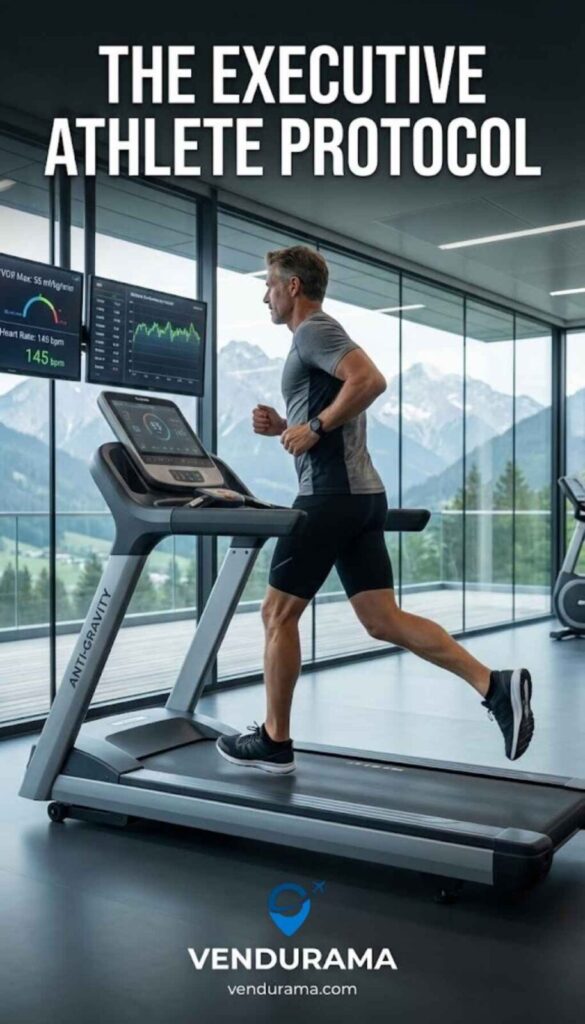
Introduction: The Corporatization of Human Physiology
In the rarefied atmosphere of the global boardroom, a silent revolution is reshaping the definition of leadership. For decades, the archetypal image of the CEO was one of sedentary authority—a mind sharpened by experience but housed in a body often neglected by the rigors of corporate warfare. However, in the third decade of the twenty-first century, this paradigm has collapsed. The distinction between the elite athlete and the elite executive has dissolved into a singularity of performance requirements. Both operate in high-stakes, high-pressure environments where decision-making velocity, emotional resilience, and physical stamina are the primary determinants of success. The modern Ultra-High-Net-Worth Individual (UHNWI) has come to realize a fundamental truth: their biological capital is the only asset that cannot be leveraged, hedged, or outsourced.
This realization has birthed “The Executive Athlete Protocol.” This is not a wellness trend; it is a clinical intervention. It represents the transfer of proprietary sports medicine methodologies—originally engineered for Olympic gold medalists and Premier League strikers—into the corporate sphere. The objective is ruthless in its simplicity: to treat the executive’s body as a high-performance machine that requires preventive maintenance, structural reinforcement, and rapid rehabilitation. The “Corporate Athlete” is no longer a metaphor; it is a physiological reality. Just as a Formula 1 team would never send a car onto the track with misaligned suspension or impure fuel, the modern board of directors cannot afford a CEO whose cognitive function is compromised by chronic pain, metabolic inefficiency, or sleep deprivation.
The epicenter of this medical evolution is bifurcated between two distinct, yet complementary, ecosystems: the German School of Structural Integrity, deeply rooted in the philosophy of biological repair and regeneration, and the American School of Performance Engineering, obsessed with biomechanics, data quantification, and metabolic power. This comprehensive analysis deconstructs these two world-leading medical hubs, offering a tactical blueprint for the modern leader to access the same medical armory as the world’s most celebrated athletes, ensuring that their tenure at the top is defined not by burnout, but by sustained, peak dominance.
Part I: The German School – Munich and the Philosophy of “Repair”
Germany, specifically the medical corridor extending through Munich and Bavaria, represents the Vatican of sports medicine. The prevailing philosophy here is “Biological Conservatism.” Unlike the aggressive surgical interventionism often found elsewhere, the German approach prioritizes the preservation of original anatomy. The mantra is: Repair the tissue, do not replace it.
The Müller-Wohlfahrt Legacy: The Art of Palpation
At the heart of this ecosystem lies the enduring legacy of Dr. Hans-Wilhelm Müller-Wohlfahrt, the legendary physician behind Usain Bolt and Bayern Munich. His methodology, now adopted by elite clinics across the region, emphasizes “Palpation Diagnostics.” In an era of MRI and CT scans, the German school argues that technology often misses the subtle micro-trauma in the fascia and soft tissue that precedes catastrophic injury. They treat the “tweak” before it becomes a “tear.” This tactile precision allows for the diagnosis of muscular hypertension and imbalances that are invisible to machines but debilitating to the executive who spends 12 hours a day in a seated posture.
The Biochemistry of Regeneration
The German protocol is famous for its sophisticated use of bioregulatory injections to accelerate healing at a cellular level.
- Actovegin Protocols: A controversial yet highly effective treatment involving deproteinized hemodialysate. It works by increasing cellular respiration and glucose uptake, essentially flooding the injured tissue with energy to repair itself at 3x the normal rate. For an executive recovering from a hamstring strain or a lower back spasm, this means the difference between weeks of immobility and a return to the gym in days.
- Traumeel and Zeel: These are advanced homeopathic anti-inflammatory formulations injected directly into the site of pain. Unlike corticosteroids, which can weaken tendons over time, these bioregulatory agents reduce inflammation without compromising structural integrity, allowing for long-term maintenance of joint health.
- Hyaluronic Acid Sculpting: In the German school, Hyaluronic Acid is not just for cosmetic fillers. High-viscosity formulations are injected into major load-bearing joints—knees, hips, and ankles. This “viscosupplementation” acts as a biological lubricant and shock absorber, effectively “re-greasing” the executive’s chassis to withstand the compressive forces of daily life and high-impact exercise.
The Spine: Endoscopic Decompression
For the corporate leader, the spine is often the primary failure point. Years of axial loading (sitting) and high-G force travel create disc pathologies. German clinics, such as the renowned Apex Spine Center in Munich, have perfected “Endoscopic Decompression.” Unlike the American tendency toward spinal fusion—which permanently limits mobility and requires long recovery—the German technique uses micro-instruments through a keyhole incision to simply remove the herniated material pressing on the nerve. The patient is often walking within hours and can return to light desk work the next day. This minimization of “downtime” is the critical ROI for the executive patient.
Part II: The American School – Vail, Mayo, and the Era of “Optimization”
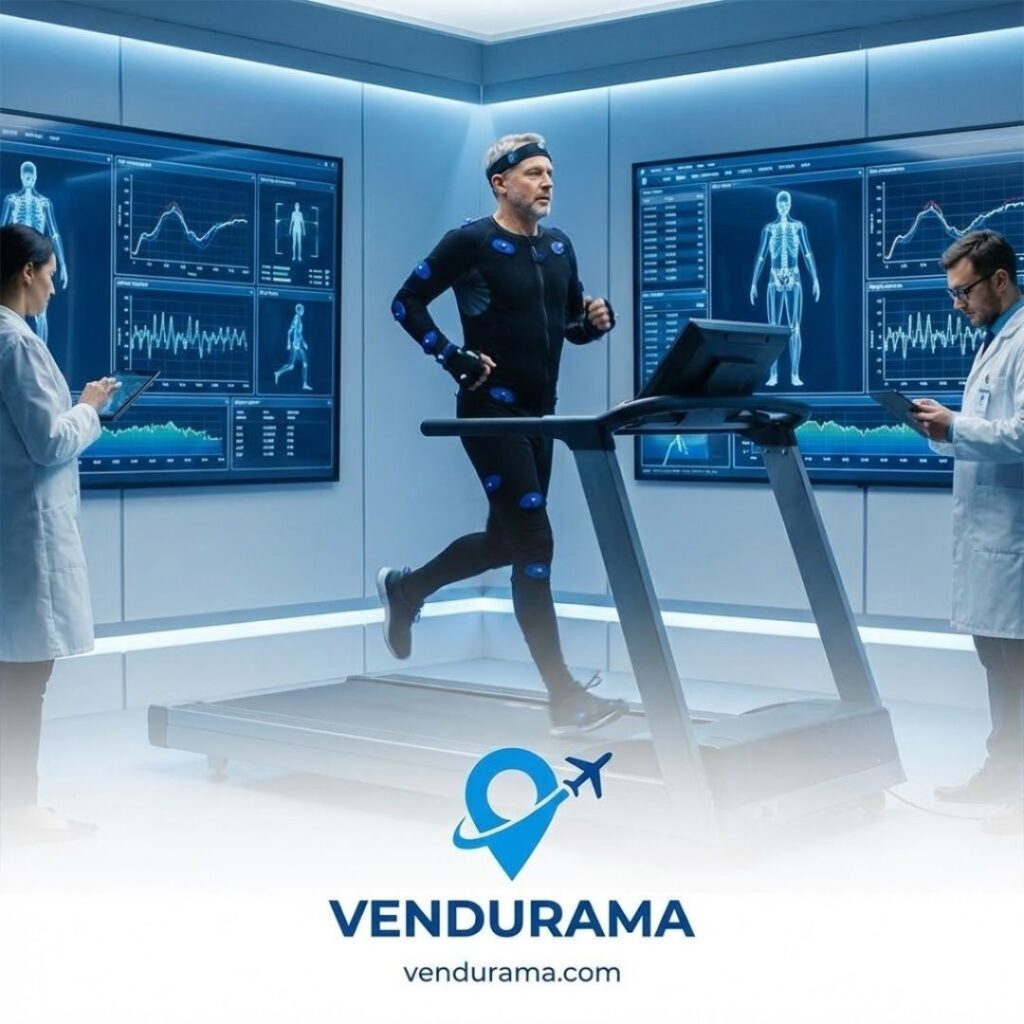
If Germany is the master of “Repair,” the United States is the undisputed king of “Optimization.” The American approach is driven by data, technology, and an engineering mindset. Hubs like The Steadman Clinic in Vail, Colorado, the Mayo Clinic Sports Medicine Center, and EXOS facilities focus on quantifying human potential and pushing it to its absolute theoretical limit.
The Biomechanical Lab: Digitizing Movement
Upon entering an elite US performance center, the executive is stripped of their title and treated as a biological specimen. They undergo 3D Motion Capture analysis, where markers are placed on key anatomical landmarks. High-speed cameras record their gait, their “boardroom stance,” and their gym technique.
- The Diagnosis: The analysis might reveal that a CEO’s chronic migraines are not a neurological issue, but a biomechanical one—caused by a 15-degree forward head posture (“Tech Neck”) that creates 60 pounds of effective leverage on the cervical spine.
- The Correction: The prescription is not painkillers, but “Neuromuscular Retraining.” Using biofeedback screens, the executive is retrained to hold their posture correctly, rewriting the software of their movement patterns to eliminate the root cause of pain.
Metabolic Efficiency and VO2 Max Engineering
The American protocol treats the executive’s metabolism like a high-performance hybrid engine. Through Cardiopulmonary Exercise Testing (CPET), clinicians measure the “VO2 Max” and “Lactate Threshold.”
- The “Zone 2” Revolution: Most executives train too hard, too often, in the “Grey Zone,” creating cortisol without building aerobic base. The US protocol prescribes precise “Zone 2” training (60-70% of max heart rate) to build mitochondrial density.
- The Strategic Outcome: A dense mitochondrial base allows the executive to become “Metabolically Flexible”—burning fat for fuel during long, 14-hour negotiation marathons, and preserving glycogen for high-stress, high-intensity decision moments. This prevents the infamous “3 PM Crash” or “Decision Fatigue” that can cost companies millions in poor judgment.
Orthobiologics: The Regenerative Frontier
The US is leading the charge in “Orthobiologics”—the use of the body’s own potent biological material to heal itself.
- Platelet-Rich Plasma (PRP): Blood is drawn, spun in a centrifuge to concentrate platelets by 10x, and reinjected into a torn rotator cuff or tennis elbow. The growth factors signal a massive repair response.
- Bone Marrow Aspirate Concentrate (BMAC): Stem cells are harvested from the patient’s own hip bone and injected into arthritic joints. This is the “Gold Standard” for executives looking to delay or avoid knee replacement surgery entirely, maintaining their “original equipment” well into their 70s.
Part III: The Modalities of Power – Beyond Standard Healthcare
Both the German and American schools utilize advanced modalities that remain largely inaccessible in standard healthcare settings. These are the “Secret Weapons” of the Executive Athlete.
Hyperbaric Oxygen Therapy (HBOT)
This is not just for divers. Sitting in a pressurized chamber (2.0 – 2.5 ATA) while breathing 100% pure oxygen dissolves O2 directly into the plasma, bypassing red blood cells.
- Neuro-Angiogenesis: It stimulates the growth of new blood vessels in the brain, enhancing cognitive sharpness and memory.
- Systemic Recovery: It accelerates the healing of micro-trauma from travel and stress by 50%. For the executive, a 60-minute “Dive” is the ultimate hangover cure, jet-lag eraser, and cognitive primer before a major board meeting.
Whole Body Cryotherapy
Far more intense than an ice bath, this involves stepping into a nitrogen-cooled chamber at -110°C for 3 minutes.
- The Hormonal Reset: The extreme cold triggers a survival response, releasing a massive flood of norepinephrine. This neurotransmitter is a potent anti-inflammatory and mood enhancer. Executives report a state of “euphoric focus” for hours post-treatment, making it an ideal pre-negotiation ritual.
Blood Flow Restriction (BFR) Training
Developed in Japan (Kaatsu) and perfected in the US, BFR involves placing pneumatic cuffs on the arms or legs during light exercise.
- The Hack: It traps blood in the muscle, creating metabolic stress that tricks the brain into releasing Growth Hormone (HGH) as if the person were lifting heavy weights, but without the joint load. This allows older executives to build muscle mass (Hypertrophy) without risking injury to their joints.
Part IV: The Logistics of Recovery – Managing the Medical Pilgrimage
The medicine is only as effective as the logistics that support it. For an executive with a torn ACL, a herniated disc, or simply high-level fatigue, the journey to these clinics is a “Medical Operation” in itself. Standard travel friction can undo the benefits of treatment before the patient even returns home.
The “Bed-to-Bed” Transfer Protocol
The movement of an injured or recovering High-Net-Worth Individual requires absolute precision. Standard commercial travel—with its long terminal walks, cramped seating, and uncontrolled pressure changes—is clinically contraindicated for spinal or orthopedic patients. The strategy begins with coordinating complex medical travel itineraries. Utilizing specialized platforms allows the executive’s management team to filter for direct flights with specific aircraft configurations (e.g., first-class suites with true flat beds) or arrange private charters that can fly at lower altitudes (4,000 ft cabin altitude vs 8,000 ft) to reduce the expansion of gases in post-surgical tissues. The ability to visualize the entire global route and align it precisely with clinic intake windows is non-negotiable for a seamless admission.
The Sterile Ground Corridor
Upon arrival in Munich, Vail, or Rochester, the transition from the tarmac to the clinic is the highest point of vulnerability. Waiting for a ride-share or navigating public terminals is impossible for a high-profile individual in pain. It is imperative to secure professional private medical transfer services in advance. These are not standard chauffeur services; for medical patients, the vehicle specification matters. The transfer must utilize long-wheelbase vehicles with adaptive air-suspension systems to minimize road vibration, which can be excruciating for spinal patients. Furthermore, the drivers are trained in discretion and “sterile cockpit” protocols, ensuring that the “First Mile” and “Last Mile” of the treatment journey are as secure, hygienic, and structurally safe as the operating theater itself.
The “Recovery Resort” Ecosystem
Recovery does not happen in a hospital bed; it happens in the environment between treatments. Both Munich and Vail have developed an ecosystem of “Medical Hotels”—luxury properties connected to the clinics that offer:
- Hypoallergenic Rooms: With advanced air filtration.
- Anti-Inflammatory Nutrition: Chefs who coordinate directly with the clinic’s nutritionists to provide meals that support tissue repair.
- Ergonomic Sleep Systems: Beds designed to support post-surgical spinal alignment.
Part V: The ROI on Physical Capital
The cost of an “Executive Athlete Protocol”—often ranging from $50,000 to $150,000 per annum—should not be viewed as a medical expense, but as an Asset Management fee.
- The Cost of Absence: What is the daily cost of a CEO’s absence? If back surgery sidelines a leader during a merger, the loss in stock value can be in the millions. Avoiding surgery through German conservative care or accelerating recovery through American optimization pays for the protocol instantly.
- The Value of Cognitive Stamina: The ability to maintain peak IQ and EQ during the 14th hour of a crisis negotiation is a competitive advantage that directly impacts the bottom line. The “Metabolically Flexible” executive does not make tired mistakes.
- Longevity of Tenure: Extending a CEO’s effective career by 5 to 10 years through structural maintenance allows for deeper institutional impact, legacy building, and the proper mentoring of succession—a value that is incalculable to shareholders.
Conclusion: The Centennial CEO
In the 21st century, the most valuable asset on a company’s balance sheet is not its Intellectual Property or its real estate; it is the cognitive and physical vitality of its leadership. The Executive Athlete Protocol is the recognition of this reality. It is the rejection of the “burnout” culture and the embrace of “sustainment.”
Whether opting for the biological precision of Munich or the data-driven performance engineering of the United States, the modern leader must engage with their physiology proactively. By mastering the logistics of global medical access and ensuring flawless ground execution, the executive ensures that they remain “Match Fit” for the infinite game of business. The corporate athlete does not just survive the quarter; they dominate the decade. The body is the vessel of the mind; to upgrade the vessel is to liberate the visionary within.