

In the evolving landscape of 2026, the global discourse on hair loss has shifted from the mechanical act of “transplanting” to the biological science of “restoration.” For the modern medical traveler, the goal is no longer just a hairline; it is the restoration of follicular density through a complex synergy of surgical precision and regenerative medicine. This phenomenon has created a specialized corridor between two global titans: Istanbul, the world’s high-volume center for specialized DHI protocols, and Seoul, the frontier of bio-aesthetic precision and exosome therapy.
The strategic choice between these two hubs is dictated by the “Biology of Density”—a framework that evaluates not just the number of grafts, but the survival rate, the follicular environment, and the long-term regenerative health of the scalp. This analysis serves as a masterclass for the elite patient, dissecting the technical protocols, the logistical architecture, and the investment logic of choosing a global center for hair restoration.
1. The Strategic Pivot: From Transplantation to Restoration
To understand the current market, one must distinguish between a “Hair Transplant” and “Hair Restoration.” While a transplant is a surgical transfer of follicles, Hair Restoration is a holistic biological protocol.
The Role of Regenerative Medicine
In 2026, the elite clinics in Seoul and Istanbul have moved beyond the knife. They are now utilizing Exosomes—nano-vesicles that facilitate cell-to-cell communication—and Stem Cell therapies to “re-awaken” dormant follicles that are not yet dead but have ceased production. This approach reduces the reliance on a limited donor area and focuses on increasing the biological density of existing hair.
The Density Calculus
Follicular Unit Extraction (FUE) and Direct Hair Implantation (DHI) remain the hardware, but the “software” is the enrichment of the scalp environment. The modern traveler looks for clinics that integrate Platelet-Rich Plasma (PRP) of a clinical grade, or automated cold-storage systems for grafts, ensuring that every follicle transferred has a 98% survival rate.
2. The Istanbul Protocol: The Global Leader in DHI Mastery
Turkey, and specifically Istanbul, has moved from being a budget destination to becoming the global “Silicon Valley” of DHI (Direct Hair Implantation). The scale of operation in Istanbul has created a class of surgeons with unparalleled manual dexterity.
The DHI (Direct Hair Implantation) Advantage
Unlike traditional FUE, where channels are cut before implantation, the DHI protocol uses the “Choi Implanter Pen.” This allows the surgeon to control the depth, angle, and direction of every follicle simultaneously. For the patient, this means a higher density per square centimeter and a significantly faster recovery time. Istanbul’s leadership in this technique is due to the sheer volume of cases, which has refined the “art of the natural hairline” to a measurable science.
Luxury Medical Infrastructure
The top-tier Istanbul clinics operate within JCI-accredited hospitals that rival the best in Zurich or New York. The focus here is on the Executive Experience: private suites, multi-lingual patient advocates, and integrated post-operative care centers that manage the critical 72-hour window following the procedure.
3. The Seoul Frontier: Aesthetic Precision and Bio-Tech Innovation
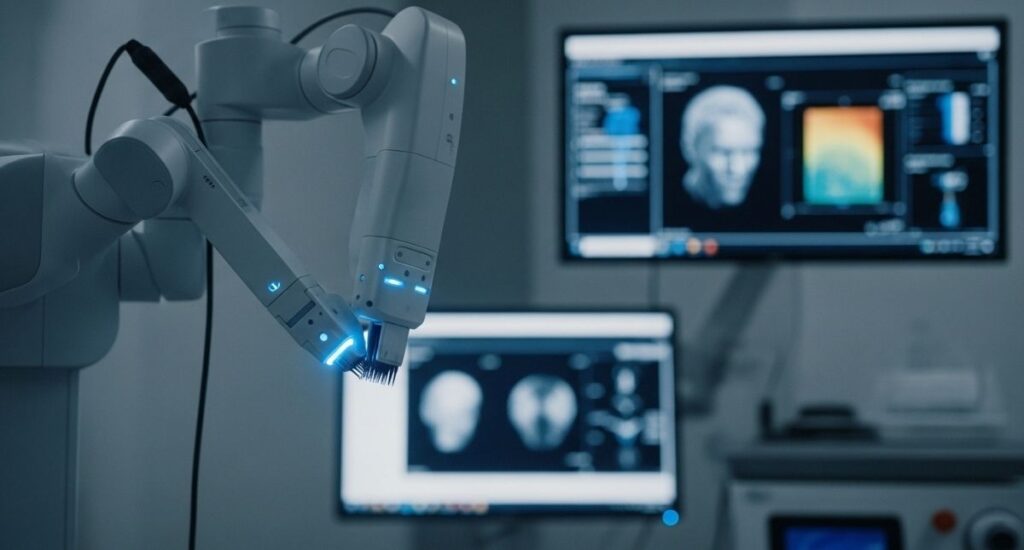
If Istanbul is about volume and manual mastery, Seoul is about high-tech precision and “aesthetic harmony.” Located in the high-end district of Gangnam, Seoul’s clinics treat hair restoration as a component of facial structural engineering.
The Robotic and AI Integration
Seoul is the leader in robotic-assisted hair restoration. Using AI algorithms, surgeons can map the donor area to ensure zero visible thinning while selecting only the most robust multi-follicular units for transplantation. This maximizes the biological density with the least amount of donor “trauma.”
Exosome and Growth Factor Protocols
South Korea’s bio-tech sector has pioneered the use of Exosomes derived from mesenchymal stem cells. These are injected into the recipient area during the procedure to accelerate healing and stimulate the vascularization of new grafts. This “bio-hacking” of the recovery process is what attracts the elite traveler to Seoul—the desire for a result that is biologically indistinguishable from natural growth.
4. The Logistical Architecture: Managing the Restoration Journey
A successful medical journey abroad is a logistical feat that requires synchronizing clinical timelines with global travel systems. For a patient undergoing a 10-hour surgical procedure, friction in the travel process is not just an inconvenience—it is a clinical risk.
Strategic Planning and Coordination
The complexity of international medical travel requires a macro-view of the journey. The professional patient begins by securing comprehensive flight and accommodation arrangements that allow for a “buffer zone” of at least 48 hours before the surgery. This allows the body to recalibrate from jet lag and ensures that blood pressure and cortisol levels are stabilized before entering the theater.
The Critical “First Mile” and Recovery Transfers
The most vulnerable period for a hair restoration patient is the moment they leave the clinic with a bandaged scalp and a fragile donor area. Navigating public transport or negotiate with local taxis in a foreign city is a significant risk to the grafts. To maintain the integrity of the procedure, it is essential to arrange private, professional ground transfers. A pre-arranged chauffeur provides a sanitized, climate-controlled environment, ensuring the patient is transported from the hospital to their hotel without physical exertion or exposure to external contaminants.
5. Risk Management: Continuity of Care and Ethics
The shadow side of medical tourism is the lack of follow-up care. The “Biology of Density” requires a 12-month commitment to monitoring.
- The “Ghost Surgeon” Trap: Professional patients must ensure that the lead surgeon, not a technician, performs the critical incisions and the hairline design.
- Continuity Protocols: Top clinics now provide digital monitoring via high-definition telemedicine. Before leaving Istanbul or Seoul, the patient should have a localized follow-up plan with a dermatologist in their home country.
- Legal Protections: Ensure that the clinic provides a “Guarantee Certificate” for graft survival, a common standard in elite Istanbul institutions.
6. Conclusion: Density as a Global Asset
In 2026, hair is no longer just a biological feature; it is a visible indicator of health, vitality, and successful self-management. The decision to navigate the advanced protocols of Istanbul or Seoul is a strategic investment in one’s personal brand.
Whether choosing the manual mastery of the Turkish DHI pen or the bio-tech innovations of a Korean lab, the success of the journey hinges on the synergy between the surgeon’s skill and the logistical precision of the travel plan. By managing the initial flight logistics and securing bespoke airport and hospital transfers, the medical traveler ensures that the focus remains where it belongs: on the biology of restoration and the pursuit of perfection.
Next Step: To begin your restoration journey, start by comparing the global flight schedules and specialized medical accommodations in Istanbul and Seoul. Once your procedure is confirmed, prioritize your post-operative safety by booking your private executive transfers to ensure a frictionless recovery.