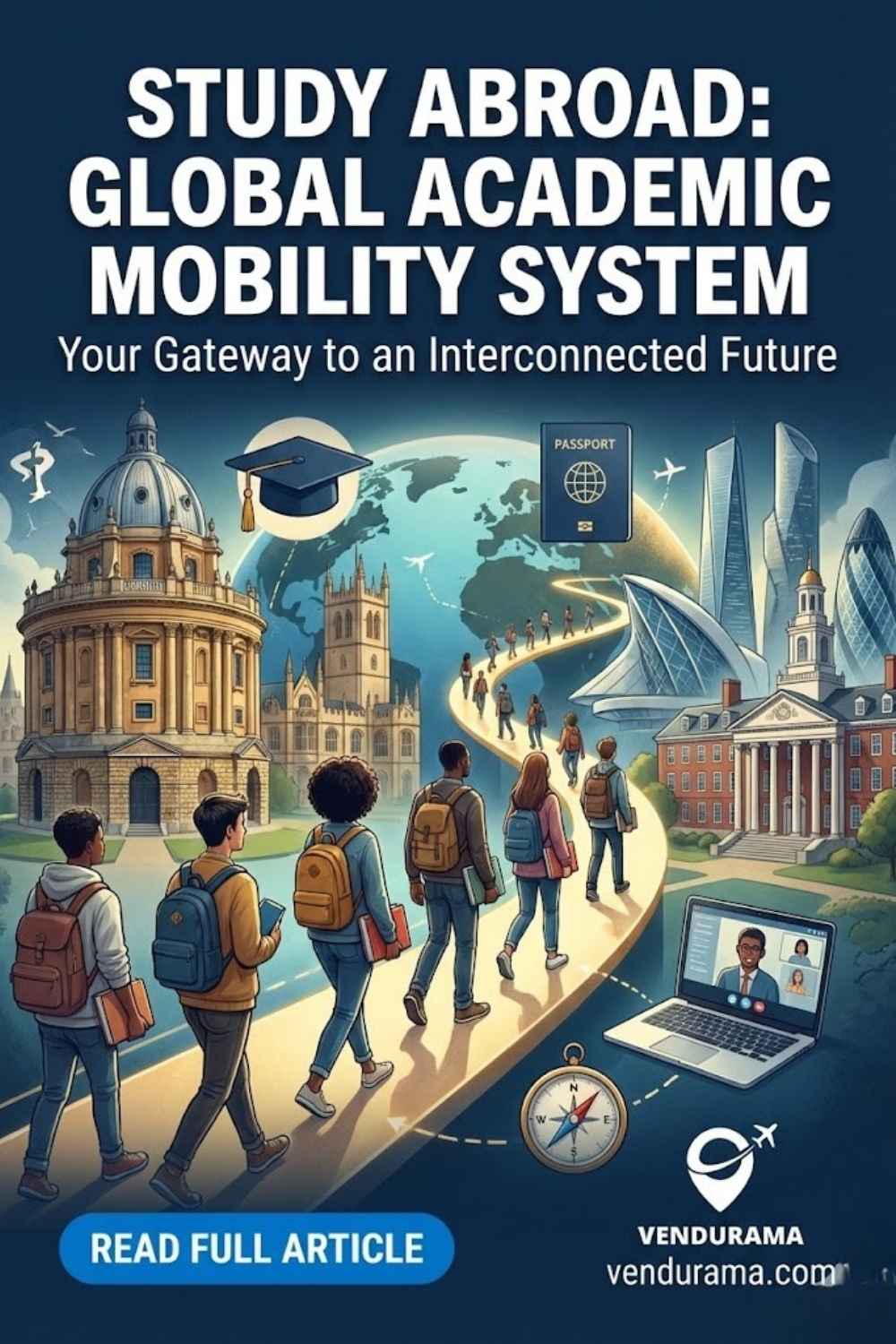
Introduction: The Transnational Pathway to an Interconnected Future
In an era defined by global interconnection, the pursuit of higher education across borders has evolved from an elite privilege into a fundamental rite of passage for millions. Study abroad represents a sophisticated global system—an intricate convergence of academic ambition, personal transformation, and strategic mobility. It is a defining pathway that simultaneously cultivates individual potential and addresses macro-level needs for global citizenship, skilled talent, and cross-cultural fluency. Far more than an academic semester, it constitutes a complex life-transition system where students navigate not only new curricula but also unfamiliar legal, social, and cultural landscapes. This journey reshapes cognitive frameworks, enhances professional trajectories, and forges a resilient, globally-minded identity. As projections indicate that the population of internationally mobile students will approach nine million by 2030, understanding this system is crucial. This article examines study abroad as a multi-dimensional ecosystem encompassing educational policy, economic exchange, human development, and global logistics, analyzing its historical roots, operational mechanics, profound impacts, and future trajectory.
Defining Study Abroad: Purposeful Academic Mobility
Study abroad is defined as a temporary, purpose-driven educational sojourn where a student enrolls in an academic program in a country other than their own, with the primary intent of earning credit toward a degree or a formal qualification. Its distinct nature separates it from other forms of international movement:
- Tourism: Leisure travel is recreational and transient, focused on consumption of experience rather than formal academic engagement and credentialing.
- Migration: Involves a permanent or long-term change of residence, often driven by economic, political, or familial factors, without the structured, temporary academic objective.
- Domestic Education: Pursuing a full degree in one’s home country lacks the intentional cross-cultural immersion and systemic adaptation required in a foreign academic and living environment.
The core of study abroad lies in its structured integration of learning, living, and adapting within a host community for a defined period, creating a powerful catalyst for growth.
Historical Overview: From Scholarly Pilgrimages to a Mass Global Industry

The roots of academic mobility stretch back to the medieval universities of Europe, where scholars traveled freely between Bologna, Paris, and Oxford in a Latin-speaking republic of letters. The modern conception, however, took shape in the post-World War II era, driven by a desire to foster international understanding. Landmark programs like the Fulbright Program (1946) and the development of direct student exchange agreements institutionalized the movement. The late 20th century saw commercialization and diversification, with the rise of third-party providers and short-term faculty-led programs. The dawn of the 21st century, accelerated by globalization and digital connectivity, transformed study abroad into a mass phenomenon and a significant export industry for host nations. Despite disruptions like the COVID-19 pandemic, mobility has demonstrated resilience, continuing to grow and adapt, entering what analysts call a “more fragmented, policy-sensitive phase”.
Types and Structures of Study Abroad Programs
The contemporary landscape offers models to suit diverse academic goals, financial constraints, and risk tolerances.
- Full Degree Programs: Students complete an entire undergraduate, master’s, or doctoral program at a foreign institution. This represents the deepest form of immersion and is often driven by the superior reputation of specific universities or programs in certain fields.
- Student Exchange Programs: Typically based on bilateral agreements between institutions, allowing students to pay home tuition while studying abroad for a semester or year. These emphasize reciprocity and cultural exchange.
- Short-Term and Faculty-Led Programs: Often run during summer or winter breaks, these programs, usually 2-8 weeks long, are tied to a specific course theme and led by a home-institution professor. They lower barriers to entry for first-time travelers or those with rigid major requirements.
- Language Immersion Programs: Intensive study focused on rapid language acquisition, often with a homestay component to maximize linguistic and cultural practice.
- Pathway and Foundation Programs: Designed to prepare international students for degree study, often by bringing them to the required academic and language standard. Relatedly, secondary-level programs like the Diploma Dual® allow high school students to concurrently earn credentials from their home country and a foreign system, such as an American High School Diploma.
- Global Internships and Research Abroad: Focused on professional skill development or academic research within an international context, blending work experience with cultural learning.
Global Destinations and Shifting Educational Ecosystems
The geography of study abroad is dynamic. Traditionally dominated by English-speaking “Big Four” destinations (the United States, United Kingdom, Australia, and Canada), the map is rapidly decentralizing.
- The Traditional Hubs: These countries boast high-density international student communities, extensive support networks, and globally recognized brands. However, factors like high cost, restrictive visa policies, and political climates are impacting their growth rates and market share.
- The Rising Challengers: Destinations in Europe (e.g., the Netherlands, Germany), Asia (e.g., Japan, Malaysia), and the Middle East (e.g., United Arab Emirates, Türkiye) are gaining significant ground. Their strategies include offering English-taught programs, lower tuition fees, generous post-study work rights, and active national recruitment strategies. For instance, Ireland actively attracts high-caliber postgraduates through prestigious scholarships like the Government of Ireland International Education Scholarship.
- Regional Education Hubs: Countries like Singapore and Qatar position themselves as gateways to their regions, attracting students with modern facilities, strategic partnerships with Western universities, and unique geographic appeal.
The Admissions and Pre-Departure Labyrinth
Gaining entry into a study abroad program is a multi-stage process demanding meticulous organization.
- Academic Eligibility: Requirements always include a minimum Grade Point Average (GPA), demonstrated through official transcripts. For exchanges or third-party programs, students must also be in good academic and disciplinary standing and receive formal approval from their home institution.
- Application Components: A complete application typically involves an official application form, academic references, a statement of purpose, and proof of language proficiency (TOEFL, IELTS, etc.). Programs like the USG Goes Global initiative streamline this by allowing students to register for study abroad courses directly through their home institution’s system.
- Financial Proof: Most visa applications require evidence of sufficient funds to cover tuition and living expenses for the first year.
- Deadlines and Strategy: Adherence to deadlines is critical, as spaces in popular programs are often allocated on a first-come, first-served basis. A successful application demonstrates not just academic merit but clear alignment between the program and the student’s longer-term goals.
The logistical planning phase intensifies after admission, involving critical steps like securing international flights that align precisely with program start dates and mandatory orientation schedules. Students must often navigate comprehensive global travel platforms to compare routes and arrival times, ensuring they land with ample time to manage jet lag before academic commitments begin.
Legal Status: Visa Systems and Residence Permits
A student visa is the legal cornerstone of the study abroad experience, a document that converts an aspiration into a lawful residence status.
- Visa Types: Most countries offer a specific “Student Visa” (F-1 in the USA, Tier 4 in the UK). Some European nations issue a temporary residence permit for study purposes.
- Application Process: This can be arduous, involving an in-person appointment at a consulate or visa application center, biometric data collection, and sometimes an interview. The required documentation is exhaustive, typically including the visa application form, letter of acceptance, financial evidence, health insurance proof, and a valid passport.
- Conditions of Stay: Student visas are conditional. They mandate full-time enrollment, limit hours of paid work (often to 20 hours per week during term time), and require students to maintain a specific address and notify authorities of any changes. Understanding and adhering to these conditions is paramount to maintaining legal status.
The Cultural Learning Curve: Language and Transition Phases
Cultural adjustment is a non-linear, psychological process that is a universal, if challenging, component of the experience. Experts commonly frame it in stages:
- The Honeymoon Stage: Initial euphoria and fascination with the novelty of the host culture.
- The Frustration or Negotiation Stage: As the novelty fades, differences in language, customs, and daily systems become irritants. Feelings of anxiety, homesickness, and disorientation—collectively termed “culture shock”—peak.
- The Adjustment and Adaptation Stage: Through continued effort and social integration, the environment becomes more predictable and manageable. The student develops coping strategies and a more nuanced understanding.
- The Mastery or Biculturalism Stage: The student feels comfortable and competent operating in the new culture, able to appreciate and critique both the host and home cultures.
Proactive preparation, such as learning basic language skills and researching the host country’s history and social norms, can mitigate the shock and enrich the entire experience. Crucially, the transition does not end upon return. Reverse culture shock or re-entry is a well-documented phenomenon where returning students find their home culture feels foreign; they must reconcile their changed self with an unchanged environment.
Cognitive and Academic Benefits: Beyond the Transcript
The academic value of study abroad extends far beyond credit transfer. It fosters critical comparative thinking, as students directly experience different pedagogical approaches—perhaps more discussion-based seminars in one country versus lecture-heavy formats in another. This exposure enhances cognitive flexibility and problem-solving skills. Students learn to synthesize information from diverse cultural contexts, a skill highly valuable in research and complex analysis. Furthermore, navigating a foreign academic system—understanding its expectations, grading schemes, and library resources—builds intellectual resilience and self-reliance.
Career Capital and Global Employability
In the global labor market, an international study experience is a significant differentiator. It signals key soft skills employers prize: adaptability, cross-cultural communication, independence, and the ability to navigate ambiguity. For students, it provides tangible career advantages:
- Network Expansion: Building a professional network that spans countries.
- Language Skills: Gaining or improving proficiency in a second language.
- Specialized Knowledge: Accessing academic programs or research facilities not available at home.
- Post-Study Work Pathways: Many countries, seeking to retain talent, offer post-study work visas. For example, policies that allow international graduates to work for a period after graduation are a key factor in destination attractiveness. This provides direct entry into the international job market.
The Logistics of Relocation and Settlement
The practical transition to life abroad is a monumental exercise in project management.
- Finances and Funding: Comprehensive financial planning is essential. Costs include tuition, program fees (which often exclude airfare), accommodation, food, insurance, and personal travel. Students should actively seek scholarships, grants, and work-study opportunities. Institutions like Arizona State University, for example, award over $1 million in study abroad scholarships annually.
- Housing: Options range from university dormitories (offering easy socialization) to private apartments (offering independence) or homestays (offering deep cultural immersion). Research and securing housing early is critical.
- Health, Safety, and Insurance: Comprehensive international health insurance is mandatory. Students must register with their home country’s embassy, understand local emergency protocols, and stay informed about safety advisories.
- Arrival and Initial Settlement: The first week is a logistical whirlwind. Beyond clearing immigration and customs, tasks include setting up a local bank account and mobile phone plan, learning public transportation, and purchasing essential household items. To reduce initial stress, many students or programs arrange secure private airport transfers in advance, ensuring a smooth transition from the aircraft to their new temporary home without the hassle of navigating an unfamiliar transit system upon arrival.
Ethical Dimensions and Systemic Challenges
The expansion of study abroad raises important ethical questions about equity, impact, and sustainability.
- Accessibility and Equity: The high cost of programs creates a significant barrier, often making study abroad an option predominantly for students from higher socioeconomic backgrounds. This risks reinforcing global inequalities rather than mitigating them.
- Overtourism and Community Impact: Influxes of students can strain local housing markets and change the character of neighborhoods. Ethical engagement requires students to be conscious consumers and respectful guests, aiming to contribute positively to their host community.
- Brain Drain vs. Brain Circulation: The tendency for talented students from developing countries to remain in their host nations after graduation exacerbates “brain drain.” The ideal is a “brain circulation” model, where skills and knowledge are shared across borders for mutual benefit.
- Sustainability: The carbon footprint of international air travel is at odds with the sustainability goals of many universities. This has spurred growth in virtual exchange programs and local “global” experiences as lower-impact alternatives.
The Digital Transformation and Future of Mobility
Technology is fundamentally reshaping the landscape.
- Virtual Exchange and Hybrid Programs: Digital platforms enable collaborative online international learning (COIL), where students in different countries complete shared projects without physical travel. Hybrid models combine online preparation with a shorter in-country experience.
- Artificial Intelligence in Recruitment and Support: AI is used for personalized student recruitment, chatbots for 24/7 pre-departure queries, and algorithms to match students with ideal programs.
- The Future Landscape: Analysts forecast a more competitive, diversified, and digitally integrated sector. The “Talent Race Rebound” scenario predicts intensified competition for students through streamlined visas and expanded work rights. The “Hybrid Multiversity” scenario foresees technology and economic pressures elevating digital and hybrid delivery to prominence. The future student may experience a blended portfolio of physical mobility, virtual collaboration, and global project-based learning.
Conclusion: An Indispensable System for an Interconnected World
Study abroad has matured from a marginal academic activity into a core global system—a powerful engine for human development, international understanding, and talent mobility. It is a complex journey that challenges students academically, emotionally, and logistically, forging in the process more capable, compassionate, and globally competent individuals. While the system faces legitimate challenges regarding cost, accessibility, and sustainability, its value to individuals and societies remains profound. As we advance into a future where global challenges demand collaborative solutions, the experiences, skills, and perspectives cultivated through studying abroad will be more indispensable than ever. It is not merely an educational option; it is a critical investment in a more connected and cooperative global future.