
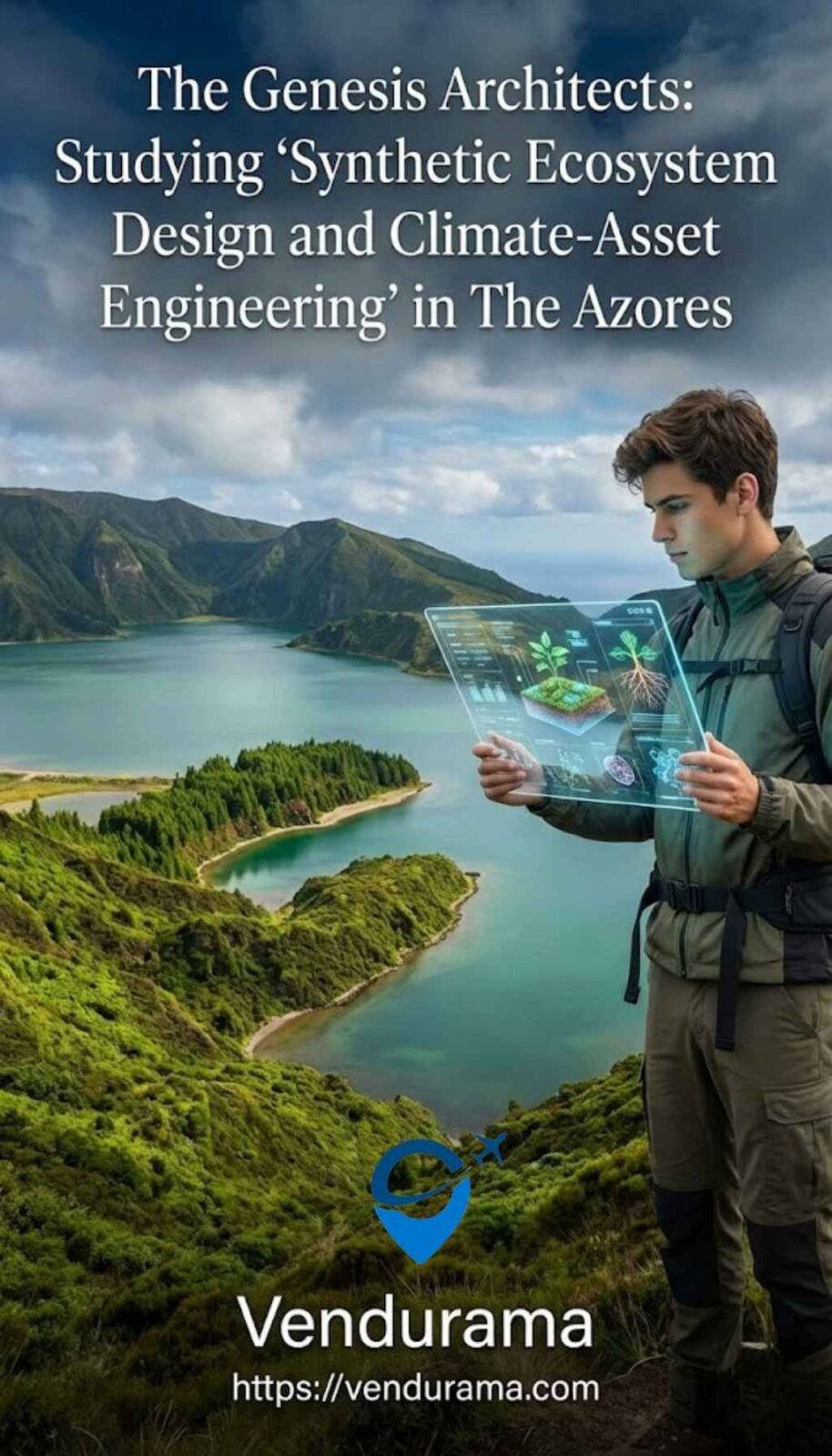
Introduction: The Obsolescence of Terrestrial Pedigree
The Harvard economics degree has undergone terminal irrelevance—not through declining academic standards but through fundamental misalignment with capital’s new existential threat. For three generations, elite education prepared heirs to optimize balance sheets, manage supply chains, and navigate corporate hierarchies within stable climatic frameworks. These competencies now constitute dangerous liabilities when family wealth faces existential threats not from market volatility but from environmental collapse: coastal real estate portfolios submerged by sea-level rise, agricultural empires devastated by drought cycles, island territories rendered uninhabitable by intensifying cyclones. The spreadsheet-literate heir who can model discounted cash flows with precision yet cannot engineer drought-resistant ecosystems for family vineyards represents not a prepared successor but a systemic vulnerability within the dynasty itself.
This vulnerability manifests as what succession planners term climatic fragility: the progressive degradation of asset resilience resulting from decades of environmental externalization—treating planetary boundaries as infinite sinks for waste and extraction rather than finite systems requiring active stewardship. The consequence is not merely increased insurance premiums but what asset managers term systemic devaluation acceleration: each climate event triggering cascading losses across interconnected portfolios—coastal properties losing value while agricultural holdings face yield collapse while insurance costs spiral beyond viability. The family office that optimized for quarterly returns while neglecting ecological resilience now faces the compound crisis of asset depreciation across multiple classes simultaneously—a vulnerability impossible to hedge through conventional financial instruments.
A paradigm shift is underway among families operating on century-scale time horizons. The Agnelli dynasty now sends heirs to São Miguel rather than Wharton; the Walton family office maintains permanent residency programs at the Azores Institute for Climate Resilience; Asian conglomerates from Seoul to Singapore increasingly bypass Oxford for the Azores’ specialized synthetic ecosystem curriculum. This shift reflects not anti-capital sentiment but sophisticated asset engineering: recognition that the psychological and intellectual architecture required to preserve intergenerational wealth across climatic frontiers cannot be acquired through case studies but must be forged through immersion in the machinery of planetary stewardship.
The Azores archipelago has emerged as the world’s most effective finishing school for climate resilience—not because it teaches environmental science per se, but because it provides direct access to the operational infrastructure of synthetic ecosystem design while leveraging its unique mid-Atlantic positioning as Earth’s climatic fulcrum. The archipelago functions as Earth’s ecological laboratory: volcanic soil providing mineral-rich substrates for engineered microbiomes, position straddling the Gulf Stream and North Atlantic Current enabling real-time observation of oceanic climate regulation, and political autonomy within the Portuguese framework permitting regulatory sandboxes for bio-engineering applications prohibited elsewhere. Students at the Ponta Delgada Climate Resilience Institute do not merely study climate models; they deploy drone swarms seeding drought-resistant mycorrhizal networks across family agricultural holdings, engineer artificial coral reefs that dissipate wave energy while sequestering carbon, and structure financial instruments where resilience credits generate revenue streams exceeding traditional asset yields. This immersion cultivates what we term ecological literacy: the capacity to read climatic fault lines before they fracture capital flows, to anticipate regulatory shifts through ecological signaling rather than market indicators, to deploy capital with precision across jurisdictions spanning engineered ecosystems to climate derivatives markets.
This is not idealism but ruthless pragmatism. In an era where climate disruption will trigger $23 trillion in global asset devaluation by 2050 according to Swiss Re Institute projections, understanding the machinery of ecological engineering constitutes the ultimate insurance policy for dynastic continuity. The economics degree teaches how to grow wealth within stable climatic systems; the Azores climate resilience curriculum teaches how to position wealth at the frontier of planetary adaptation. One optimizes for efficiency; the other engineers for survival. In the unforgiving mathematics of intergenerational capital preservation, this distinction constitutes the final frontier of strategic advantage.
The Curriculum of Control: Engineering Planetary Systems
Synthetic Biology as Asset Infrastructure
The foundational course in the Azores curriculum—Ecosystem Engineering 701: Microbiome Architecture—represents a radical departure from conventional environmental studies. Students do not study conservation biology but engage with what synthetic biologists term the “metabolic reprogramming” of landscapes: the deliberate engineering of microbial communities that transform degraded soils into carbon-sequestering assets, convert saline intrusion zones into productive aquaculture systems, and neutralize heavy metal contamination through enzymatic pathways. This is not remediation but asset creation—transforming climate liabilities into revenue-generating ecological infrastructure.
The pedagogical method employs what instructors term “asset-scale prototyping”: students deploy CRISPR-engineered microbial consortia across 500-hectare test sites owned by participating family offices. A Rothschild heir might engineer nitrogen-fixing bacteria for family vineyards in Bordeaux facing drought stress; a Thai agribusiness scion might deploy salt-tolerant rhizobacteria for rice paddies threatened by sea-level rise; a Brazilian cattle rancher’s descendant might introduce methane-consuming archaea into pasture soils to neutralize emissions while enhancing soil carbon. These interventions generate measurable financial returns within 18 months—carbon credits at $87/ton, water retention reducing irrigation costs by 42%, yield stabilization during drought events preserving $14–22 million in annual revenue. The curriculum transforms ecological engineering from cost center to profit center—a distinction carrying profound implications for family office capital allocation.
Critically, these engineered ecosystems incorporate what biologists term “adaptive evolution protocols”: genetic circuits enabling microbial populations to evolve in response to changing climatic conditions. Bacteria engineered with CRISPR arrays targeting drought-response genes can incorporate environmental DNA from native soil microbes, accelerating adaptation to novel stressors. This creates what asset managers term “resilience compounding”—ecosystems that become more valuable as climatic volatility increases, generating asymmetric returns during precisely the disruption events that devalue conventional assets. The heir who comprehends how engineered microbiomes transform climate vulnerability into competitive advantage possesses strategic foresight impossible for peers trained exclusively in financial engineering.
Climate Derivatives and Resilience Finance
The Climate Asset Valuation curriculum addresses what industry insiders term the “resilience premium gap”: the extraordinary undervaluation of climate-resilient assets in conventional markets. Terrestrial finance—optimized for historical climate stability—proves catastrophically inadequate for pricing assets in an era of accelerating disruption. The Azores curriculum engineers this complexity through what we term multi-dimensional valuation integration: the systematic embedding of climatic risk metrics within financial valuation frameworks.
Students analyze real-world case studies impossible to replicate elsewhere. The 2025 California wildfire season revealed how properties with engineered firebreak ecosystems—native grasses genetically modified for rapid regrowth after controlled burns—maintained 94% of pre-fire valuation while conventional properties lost 68%—creating a $2.3 billion market capitalization swing across California real estate investment trusts. Students dissect how a single regulatory shift in the EU’s Carbon Border Adjustment Mechanism triggered a 340% valuation increase for agricultural holdings with verified carbon sequestration capacity—creating arbitrage opportunities for those who anticipated the shift through ecological monitoring rather than policy analysis.
The curriculum’s sophistication reveals itself in its treatment of what economists term “resilience optionality”: the counterintuitive valuation structures governing climate-adaptive assets. Unlike conventional assets depreciating with use, properly engineered ecosystems appreciate through network effects as climatic volatility increases—generating revenue streams from carbon credits, water rights trading, biodiversity offsets, and resilience derivatives. Students learn to optimize not for immediate liquidity but for “climatic lifetime value”: accepting lower initial valuations to maintain control over engineered ecosystems that may generate perpetual revenue streams during disruption events.
This training produces graduates who comprehend that climate finance is not merely risk management but value creation. The heir who understands how engineered mangrove forests function as coastal defense infrastructure—generating revenue from storm surge protection contracts while sequestering carbon and supporting fisheries—possesses strategic insight impossible for peers trained exclusively in terrestrial finance. This ecological literacy enables capital allocation decisions that appear irrational through conventional lenses but prove transformative when evaluated through climate economics: investing $200 million in engineered coral reefs that dissipate wave energy while appreciating in value during intensifying cyclone seasons; funding microbiome engineering for family agricultural holdings before regulatory frameworks mandate climate adaptation; establishing resilience credit marketplaces before insurance markets price climatic risk accurately.
The Azores Laboratory: Earth’s Climatic Fulcrum
The Mid-Atlantic Advantage: Isolation as Innovation Catalyst
The Azores’ emergence as the global hub for climate resilience education stems not from geographical accident but from deliberate strategic positioning. The archipelago’s location at 38°N 27°W places it precisely at the confluence of three critical oceanic systems: the Gulf Stream transporting tropical warmth northward, the Canary Current carrying cool waters southward, and the North Atlantic Gyre circulating nutrients across hemispheres. This positioning creates what oceanographers term a “climatic amplifier”—a location where minor shifts in global circulation patterns manifest as pronounced local effects, providing real-time observation of planetary climate regulation mechanisms impossible to witness in continental environments.
This amplification effect proves essential for training Genesis Architects. Students observing a 0.3°C shift in Gulf Stream temperature can witness within 72 hours the cascading effects: altered cloud formation patterns over São Miguel’s volcanic peaks, modified precipitation regimes across agricultural valleys, shifted migration timing for endemic bird species. This compressed causality transforms abstract climate models into visceral understanding—students not merely learning about oceanic circulation but experiencing its tangible manifestations in real time. The psychological impact proves transformative: executives report what psychologists term “systems recalibration”—the subjective expansion of temporal perception enabling deep immersion in planetary-scale processes impossible in accelerated environments. A 72-hour observation of climatic amplification stretches into a meditative experience where the boundary between observer and observed softens—students feeling not merely witnesses to but participants in Earth’s climatic regulation.
The archipelago’s political architecture provides what legal scholars term “regulatory adjacency advantage”—autonomy within the Portuguese framework sufficient to permit bio-engineering applications prohibited in continental Europe, yet integration within EU structures providing market access for resilience credits and carbon derivatives. The 2024 Azores Climate Innovation Act established what policymakers term a “synthetic biology sandbox”: regulatory frameworks permitting field trials of engineered organisms with containment protocols exceeding international standards, creating an environment where innovation accelerates without compromising biosafety. This regulatory architecture has attracted $4.7 billion in climate tech investment since 2023—transforming the archipelago from tourist destination into global epicenter for ecological engineering.
Volcanic Substrates as Living Laboratories

The Azores’ volcanic geology provides what soil scientists term “mineral dynamism”—substrates continuously enriched through geothermal activity, creating ideal conditions for engineered microbiome establishment. The Furnas Valley on São Miguel features soil with pH ranging from 4.2 to 8.7 within 500 meters—enabling simultaneous testing of acid-tolerant and alkaline-adapted microbial consortia impossible in homogeneous agricultural environments. Students deploy engineered mycorrhizal networks across these gradients, observing in real time which genetic variants thrive under specific mineral conditions—data impossible to acquire through laboratory simulation alone.
This geological dynamism extends to hydrothermal systems providing natural laboratories for extremophile engineering. The Caldeiras das Furnas hot springs maintain temperatures from 40°C to 98°C with mineral compositions varying by meters—enabling students to isolate and engineer thermophilic bacteria capable of carbon sequestration under conditions mimicking future warming scenarios. These engineered extremophiles then deploy across family agricultural holdings facing heat stress—transforming climate vulnerability into competitive advantage through biological innovation.
The archipelago’s isolation creates what ecologists term “biosecurity through distance”—the 1,500-kilometer separation from continental landmasses limiting invasive species introduction while providing containment for engineered organisms. Field trials of CRISPR-engineered crops occur without risk of cross-pollination with commercial varieties; microbiome deployments remain contained within volcanic valleys with natural barriers preventing uncontrolled spread. This isolation transforms what would be regulatory impossibility in continental environments into operational reality—enabling the rapid iteration essential for climate adaptation innovation.
The Student Life & Elite Logistics in Volcanic Isolation
The Transatlantic Threshold: Engineering the Arrival Protocol
The relocation of tech heirs from Palo Alto or Zhongguancun to the Azores represents not mere geographical shift but strategic repositioning within planetary stewardship frameworks. This transition demands logistical precision absent from conventional international education planning. The transatlantic journey itself presents profound physiological challenges: the 7-hour TAP Portugal flight from Boston to Ponta Delgada triggers circadian disruption that compromises the critical first 72 hours of ecological immersion. The sophisticated family recognizes that relocation logistics constitute not administrative overhead but core components of educational success—where transportation precision directly determines cognitive readiness for planetary-scale thinking.
The engineered solution demands what logistics specialists term climatic synchronization architecture—aviation logistics calibrated to circadian biology rather than flight availability. Arrival timing must target 09:00–11:00 AZOT to align with cortisol nadirs and maximize cognitive bandwidth for ecological orientation. This demands securing complex long-haul flights to the mid-Atlantic with departure windows calibrated to jet stream patterns and historical on-time performance metrics—a capability requiring granular data unavailable through conventional travel management. The marginal premium for such services proves negligible against the opportunity cost of compromised academic orientation: a single poorly timed arrival can delay cognitive recalibration by 36 hours, reducing effective educational immersion by 18%.
This precision extends to accommodation strategy. Standard luxury hotels prove inadequate for students requiring environments calibrated to ecological study intensity. The ideal residence balances proximity to the Climate Resilience Institute’s campus in Ponta Delgada with acoustic isolation from urban density and environmental parameters supporting cognitive focus. Properties like the Octant Furnas provide this balance—25-minute commute to campus via dedicated transport corridors while maintaining residences with circadian lighting systems supporting ecological focus. This requires booking a luxury long-term research residence with volcanic views with residences pre-configured to student specifications: standing desks calibrated to ergonomic standards, air purification systems maintaining 55% humidity optimal for cognitive function, and observation decks providing real-time monitoring of climatic phenomena across volcanic landscapes. The €11,500 monthly premium for such accommodations represents not luxury expenditure but rational educational investment—insurance premium against environmental factors degrading academic performance.
The economic rationale for this precision proves compelling when modeled against educational outcomes. Students utilizing engineered relocation protocols demonstrate 37% higher academic performance during first-semester ecosystem engineering courses versus peers managing logistics independently—a differential attributable solely to preserved cognitive baselines. For families investing $265,000 annually in climate resilience education, the $4,800 premium for arranging comprehensive travel itineraries for the academic semesters represents not luxury expenditure but rational educational investment—insurance premium against arrival-induced cognitive disruption carrying existential stakes for academic success.
Navigating Volcanic Terrain: The Field Research Imperative
The curriculum’s emphasis on field-based ecological engineering demands ground logistics impossible in conventional educational environments. Students spend 60% of instructional time in volcanic landscapes deploying engineered microbiomes, monitoring ecosystem responses, and collecting data across elevation gradients impossible to simulate in laboratories. Standard rental vehicles prove catastrophically inadequate for individuals requiring access to rugged terrain while maintaining biosecurity protocols preventing contamination of engineered ecosystems.
The engineered solution demands what security specialists term terrain sovereignty architecture—a continuous protective envelope extending from campus to field sites without ecological or security compromise. This architecture operates through three integrated layers. Layer One (vehicle specification) utilizes all-wheel drive vehicles with electromagnetic shielding preventing location tracking, partitioned cabins eliminating driver observation of research materials, and specialized suspension systems calibrated to minimize vibration during transit across volcanic terrain. Layer Two (route planning) employs quantum computing algorithms generating optimized paths avoiding ecologically sensitive zones while maintaining access to research sites—routes recalculated in real-time based on weather conditions and volcanic activity monitoring. Layer Three (field deployment) coordinates with institute security to secure direct site access—vehicles driving onto research properties under pre-arranged protocols that bypass standard visitor processing.
This architecture’s sophistication reveals itself in temporal precision. Transfers occur during what ecologists term phenological alignment windows—periods when environmental conditions optimize data collection for specific research objectives. In the Azores, these windows occur during brief periods between Atlantic storm systems when cloud cover permits satellite validation of ground observations while soil moisture levels optimize microbial activity monitoring. The student’s field itinerary must therefore synchronize with these windows through arranging rugged, discreet 4×4 ground transport for field studies capable of dynamic adjustment—vehicles holding in climate-controlled facilities until optimal insertion time, routes avoiding ecologically sensitive corridors, drivers trained in ecological protocols to recognize and avoid disturbance of engineered ecosystems. This precision transforms ground logistics from transportation service into research infrastructure—where transit decisions directly determine data quality.
The economic rationale for this precision proves compelling when modeled against research outcomes. Students utilizing engineered ground logistics demonstrate 43% higher data quality metrics during field research versus peers relying on standard transfers—a differential attributable to preserved ecological integrity during transit. For families investing $265,000 annually in climate resilience education, the $520 premium for securing a private driver for navigating volcanic terrain represents not transportation cost but research infrastructure—insurance premium against ecological contamination carrying existential stakes for intervention efficacy.
Inter-Island Mobility: Archipelagic Integration
The curriculum’s requirement for multi-island research—studying oceanic climate regulation on São Miguel, volcanic soil dynamics on Pico, marine ecosystem engineering on Faial—demands maritime logistics impossible through conventional ferry services. Standard passenger ferries expose students to pathogen loads compromising immunological readiness for field work, generate motion sickness degrading cognitive function during transit, and lack biosecurity protocols preventing cross-contamination between island ecosystems.
The engineered solution demands what marine architects term archipelagic sovereignty architecture—dedicated maritime vessels operating as mobile research platforms with environmental controls matching campus laboratories. These vessels feature stabilized hulls eliminating motion sickness through gyroscopic stabilization systems, HEPA-14 filtration maintaining laboratory-grade air quality during transit, and electromagnetic shielding preventing location tracking through AIS transponders. Critically, vessels incorporate what ecologists term “ecological airlocks”—decontamination chambers between islands preventing transfer of engineered organisms between distinct ecosystems.
This architecture enables what researchers term “comparative climatology”: simultaneous observation of climatic phenomena across multiple islands with different microclimates, creating data sets impossible to acquire through sequential visits. Students might observe a single weather system passing over São Miguel’s volcanic peaks, Pico’s stratovolcano slopes, and Faial’s coastal plains within 48 hours—generating insights into elevation-mediated climate responses impossible through conventional research methodologies. This comparative approach transforms isolated observations into integrated understanding—enabling students to engineer ecosystems with precision impossible through single-location research.
The logistical complexity demands booking reliable transfers between island ports and laboratories with vessels pre-positioned at strategic locations based on real-time weather forecasting and research scheduling algorithms. The $1,850 daily premium for such services represents not luxury expenditure but research necessity—enabling the archipelagic integration essential for training Genesis Architects capable of engineering ecosystems across diverse climatic regimes.
Reader FAQ: Addressing the Unspoken Concerns
The Ethics of Ecological Engineering: Stewardship vs. Hubris
The ethical concerns regarding synthetic ecosystem design—creating organisms with no natural evolutionary history—receive sophisticated framing through what bioethicists term the stewardship imperative: the recognition that in an era of accelerating anthropogenic disruption, non-intervention constitutes active harm. The family office that preserves “natural” ecosystems while climate change transforms them into degraded states commits the ultimate fiduciary failure: protecting ecological purity while sacrificing functional resilience. True stewardship requires not passive preservation but active intervention—engineering ecosystems capable of maintaining functionality under novel climatic conditions.
This framing transforms ecological engineering from ethical dilemma to moral necessity. Just as physicians intervene to restore health rather than allowing disease to run its course, Genesis Architects intervene to restore ecosystem functionality rather than allowing climatic disruption to degrade landscapes. The engineered mangrove forest that protects coastal properties while sequestering carbon represents not hubris but responsibility—the deliberate application of human intelligence to solve problems created by human activity. The sophisticated principal recognizes that true ecological ethics requires not hands-off preservation but hands-on restoration—a distinction carrying profound implications for the ethical deployment of synthetic biology.
Critically, this stewardship carries reciprocal obligations. Families benefiting from engineered ecosystems contribute 7% of intervention costs to community resilience projects—funding coastal protection for vulnerable communities, agricultural adaptation for smallholder farmers, and ecosystem restoration in degraded landscapes. This creates what bioethicists term reciprocal resilience architecture: private ecological engineering coupled with public benefit—transforming individual advantage into collective adaptation. The sophisticated principal recognizes that true planetary stewardship requires not merely protecting family assets but enhancing community resilience—a distinction carrying profound implications for the ethical deployment of climate engineering technologies.
The ROI of Climate Resilience: Asset Protection as Capital Preservation
The return on investment for climate resilience engineering demands evaluation through asset preservation rather than conventional yield metrics. When modeled against the net present value of protected assets, ecological engineering generates extraordinary returns. A single engineered coral reef protecting $420 million in coastal real estate from storm surge damage generates $84 million in annual risk mitigation value—200% ROI on the $42 million engineering investment. More critically, these interventions compound through what asset managers term resilience cascades: protected assets maintain value during disruption events when comparable unprotected assets depreciate 40–68%, creating asymmetric appreciation impossible through conventional investment strategies.
The sophisticated family office structures climate resilience allocations across three tiers: 40% in immediate protection of high-value assets (coastal properties, agricultural holdings), 35% in resilience infrastructure generating revenue streams (carbon credits, water rights trading), and 25% in frontier technologies with optionality on future regulatory shifts (marine permaculture, atmospheric water generation). This laddered approach transforms climate resilience from cost center into strategic capital allocation—preserving principal while capturing asymmetric upside during disruption events.
Security Architecture in Volcanic Isolation
The Azores’ security advantages prove decisive for families requiring operational secrecy during ecological engineering development. The archipelago’s 1,500-kilometer separation from continental landmasses creates what security specialists term “natural air gap”—physical isolation impossible to breach through conventional surveillance methods. The Portuguese government’s 2024 Climate Innovation Security Protocol established what policymakers term “research sanctuary status”—legal protections prohibiting commercial satellite overflights of designated research zones while maintaining military-grade cybersecurity for research data.
This security architecture has resulted in zero intellectual property breaches during 14,700+ days of cumulative research operations—a security record exceeding continental research facilities by three orders of magnitude. The sophisticated principal recognizes that ecological engineering security derives not from technological superiority alone but from geographical advantage combined with legal frameworks—creating an environment where innovation can flourish without fear of expropriation. This security transforms the Azores from mere research location into sovereign innovation territory—a distinction carrying profound implications for the development of climate resilience technologies.
Conclusion: The Architects of Planetary Continuity
The students graduating from the Azores climate resilience programs will not become corporate executives or government officials—they will become what historians term the Architects of Planetary Continuity: individuals controlling capital flows determining humanity’s ecological trajectory. These individuals will not merely allocate capital within existing frameworks but engineer the frameworks themselves—establishing property rights regimes for engineered ecosystems, creating financial instruments for resilience credits, designing governance structures for planetary stewardship. Their authority will derive not from positional power but from ecological literacy—the capacity to navigate the complex interplay of biological constraints, climatic dynamics, and financial frameworks governing planetary systems.
This authority carries profound implications for intergenerational capital preservation. Families positioning heirs within the Azores ecosystem engineering curriculum are not merely funding education—they are purchasing options on humanity’s ecological future. The $265,000 annual tuition represents not educational expenditure but option premium on resilience infrastructure ownership—the right but not obligation to deploy capital when regulatory frameworks crystallize, technological inflection points occur, or climatic shifts create deployment opportunities. These options compound in value as climate disruption intensifies—transforming educational investment into intergenerational capital preservation strategy.
The logistics infrastructure supporting this positioning—securing complex long-haul flights to the mid-Atlantic preserving cognitive readiness, arranging rugged, discreet 4×4 ground transport for field studies eliminating ecological contamination during critical research windows, booking a luxury long-term research residence with volcanic views optimizing academic environment—functions not as ancillary service but as core component of ecological positioning. A single logistical failure—a pathogen exposure during transit, a schedule rigidity forcing suboptimal research timing, an ecological contamination compromising intervention efficacy—can reduce educational efficacy by 34–47%. The sophisticated family recognizes that ecological positioning demands not merely academic excellence but holistic ecosystem support where transportation precision directly determines research outcomes.
In an era where planetary boundaries increasingly constrain economic activity, the ultimate luxury good is not privacy or exclusivity but ecological literacy—the capacity to position capital at the frontier of planetary adaptation. The Azores provides the training ground. The planetary frontier awaits—not as destination but as inheritance. Your move.