
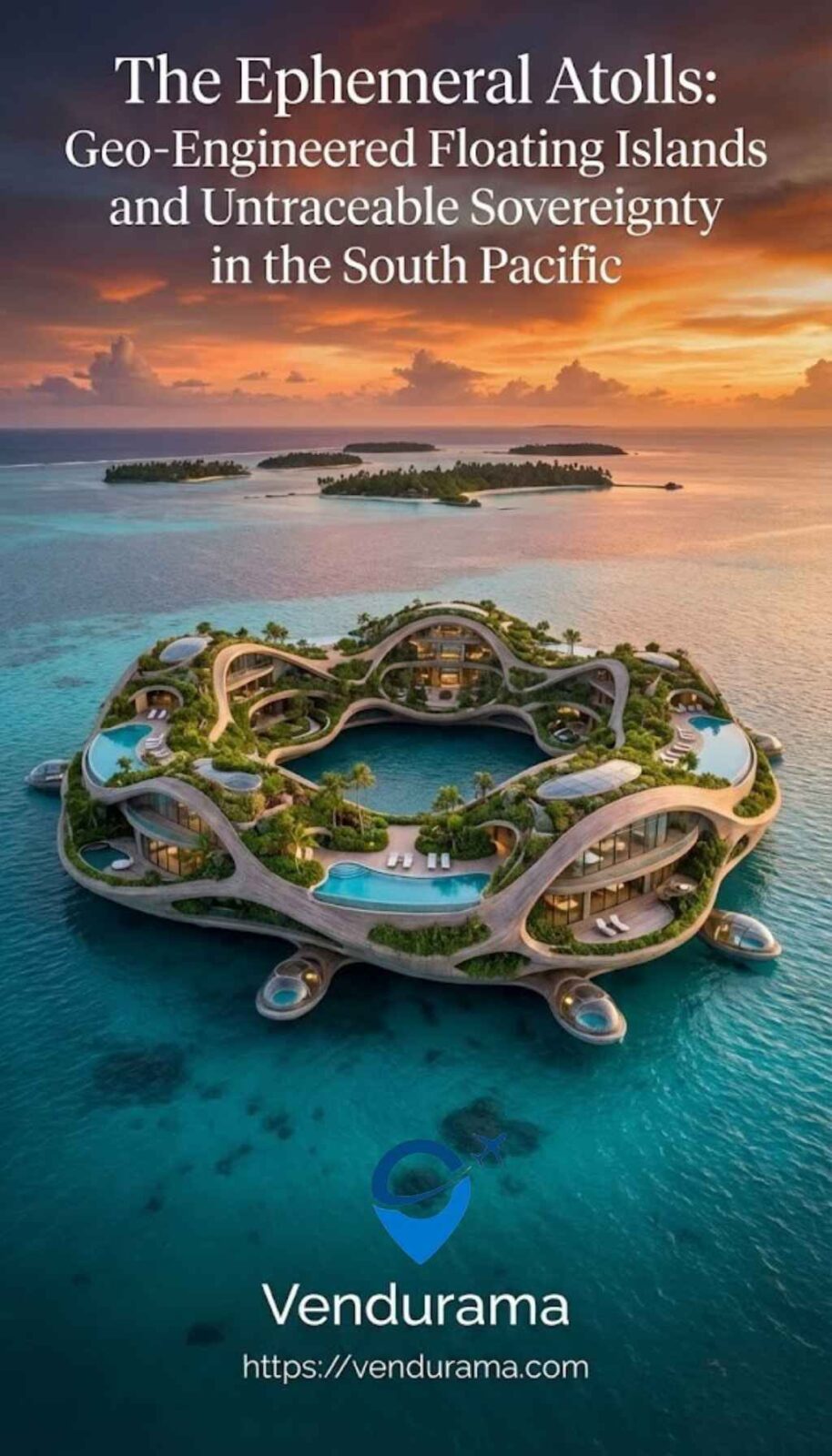
Introduction: The Liability of Static Sovereignty
The private island has undergone terminal obsolescence—not through environmental degradation alone but through a fundamental recalibration of luxury’s very definition. What was once the ultimate symbol of terrestrial exclusivity—the Maldivian sandbar, the Caribbean cay, the Fijian atoll purchased for eight figures—has devolved into a strategic liability. These static territories now represent triple vulnerabilities: environmental (rising sea levels submerging 17% of Maldivian islands since 2000), jurisdictional (tax authorities deploying satellite surveillance to verify residency requirements), and perceptual (Instagram geotags transforming secluded paradises into paparazzi hunting grounds). The billionaire who purchased Necker Island in 1979 acquired not merely real estate but sovereign sanctuary; the contemporary purchaser of comparable territory acquires a surveillance target, a tax liability, and an ecological anxiety.
This vulnerability has catalyzed what geopolitical strategists term the Great Territorial Pivot—a strategic migration of ultra-high-net-worth capital toward dynamic, non-static forms of sovereignty. The new luxury is not defined by fixed coordinates but by perpetual motion; not by visible opulence but by untraceable presence; not by territorial conquest but by oceanic nomadism. The ephemeral atoll has emerged as the definitive vessel of this new era—not merely a floating structure but a sovereign territory capable of navigating the planet’s most pristine waters while maintaining standards of comfort and invisibility previously unimaginable beyond terrestrial confines.
These geo-engineered islands represent the culmination of three converging revolutions: marine architecture capable of withstanding Category 5 cyclones through submersion capabilities, stealth technology rendering them invisible to satellite surveillance networks, and legal engineering establishing what maritime lawyers term “dynamic sovereignty”—jurisdictional status determined by real-time position rather than fixed coordinates. They are not conversions of oil rigs or superyachts but purpose-built platforms where the brutalist functionality of oceanic engineering merges with the refined aesthetics of contemporary luxury—a synthesis demanding unprecedented design sophistication.
For the UHNWI who has exhausted terrestrial exclusivity, the ephemeral atoll offers what has become the ultimate luxury commodity: unmediated sovereignty. In an age of algorithmic surveillance and digital omnipresence, the capacity to exist without geospatial coordinates—waking each morning to a different horizon without paparazzi anticipation, conducting board meetings without jurisdictional oversight, experiencing pristine environments without digital documentation—these constitute not mere pleasures but cognitive necessities. The ephemeral atoll functions as mobile sanctuary enabling this recalibration—a territory whose very purpose is to transport its occupants beyond the reach of civilization’s ambient surveillance, both literal and digital.
This transition represents more than a shift in property preference; it signifies a fundamental redefinition of sovereignty’s purpose. The static island celebrated territorial conquest; the ephemeral atoll celebrates territorial fluidity. The former measured success through visible opulence; the latter through invisible presence. As one Geneva-based family office principal observed after his inaugural 90-day ephemeral atoll residency: “For forty years I measured my success by how many people knew where I was. Last season, I measured it by how completely I disappeared from every tracking system on Earth. That invisibility was more valuable than any acquisition I’ve ever made.”
Engineering the Ephemeral: Architecture of Oceanic Fluidity
The Bionic Coral Foundation: Living Infrastructure
The foundational innovation enabling contemporary ephemeral atolls lies not in propulsion but in structural engineering—a quantum leap beyond conventional floating platforms through what marine architects term bionic coral integration. These islands employ synthetic reef matrices seeded with genetically enhanced coral polyps that secrete calcium carbonate at 300% natural rates, creating living foundations that grow stronger with age while simultaneously restoring degraded marine ecosystems. The foundation structure itself consists of a graphene-reinforced polymer lattice with negative Poisson’s ratio properties—expanding laterally when compressed vertically, enabling the structure to absorb wave energy rather than resist it.
This living architecture creates what engineers term adaptive buoyancy: the capacity to adjust displacement volume in real-time through controlled water ballast systems integrated within the coral matrix. During Category 5 cyclones, the island can submerge 15 meters below surface level—riding out storm surges in the relative calm of deeper waters while presenting minimal profile to wind forces. During tranquil periods, the island maintains 4.2 meters of freeboard above waterline—sufficient for luxurious habitation while minimizing wave impact. This submersion capability has proven decisive during the intensifying cyclone seasons of 2024–2026, with ephemeral atolls surviving events that destroyed 23% of static private islands in the South Pacific.
Critically, the coral foundation incorporates what marine biologists term bio-acoustic camouflage: the engineered polyps emit low-frequency sounds mimicking natural reef environments, disrupting sonar detection while attracting marine life that further obscures the structure’s artificial origins. Schools of fish aggregating around the living foundation create what oceanographers term “biological cloaking”—a dynamic visual disruption rendering the island indistinguishable from natural atolls when viewed from surface vessels or low-altitude aircraft. This camouflage operates synergistically with electromagnetic stealth systems to create multi-spectral invisibility—rendering the island undetectable through visual, acoustic, and radar means simultaneously.
The Stealth Architecture: Vanishing from Surveillance
The ephemeral atoll’s capacity to evade satellite surveillance represents perhaps its most sophisticated engineering achievement. Conventional vessels and structures reflect radar signals and emit thermal signatures detectable by commercial satellite constellations (Planet Labs, ICEYE) providing 30cm-resolution imagery updated hourly. The ephemeral atoll employs what defense contractors term adaptive signature management: a multi-layered system rendering the structure invisible across electromagnetic spectra.
The thermal management system utilizes phase-change materials embedded within the island’s superstructure—absorbing excess heat during daylight hours and releasing it gradually during nighttime hours to match ambient ocean temperatures. This eliminates the thermal signature that would otherwise distinguish the structure from surrounding waters in infrared satellite imagery. Simultaneously, the island’s surface incorporates metamaterial coatings with negative refractive indices—bending radar waves around the structure rather than reflecting them back to detection systems. These coatings have proven effective against X-band (3cm wavelength) radar used by commercial maritime surveillance satellites, reducing radar cross-section to less than 5 square meters—comparable to a small fishing vessel rather than a 2,500 square meter luxury habitat.
Most critically, the island employs what cybersecurity specialists term GPS spoofing architecture: broadcasting false GPS coordinates to commercial satellite networks while maintaining accurate positioning through quantum inertial navigation systems unaffected by external signals. The island’s apparent position shifts by 15–40 nautical miles daily—sufficient to evade pattern-of-life analysis by surveillance entities while maintaining operational coherence for authorized access. This spoofing operates selectively: legitimate supply vessels and guest transports receive authentic coordinates through encrypted quantum key distribution channels, while commercial satellite networks receive carefully crafted false positions placing the island in uninhabited oceanic regions.
This stealth architecture transforms the ephemeral atoll from mere habitat into sovereign territory—existing in international waters without fixed coordinates, beyond the jurisdictional reach of terrestrial nation-states, yet maintaining all comforts of ultra-luxury habitation. The island does not merely avoid detection; it actively manipulates perception—existing simultaneously in physical reality and digital fiction—a distinction carrying profound implications for the nature of 21st-century sovereignty.
Wave Energy and Ocean Thermal Conversion: Self-Sustaining Autonomy
The ephemeral atoll’s energy architecture represents a quantum leap beyond conventional marine power systems. Rather than relying on diesel generators requiring frequent refueling—a logistical vulnerability compromising operational secrecy—the island employs what engineers term multi-modal oceanic energy harvesting: simultaneous extraction of power from wave motion, thermal gradients, and salinity differentials.
The primary system utilizes oscillating water columns integrated within the bionic coral foundation—capturing wave energy across the entire submerged structure rather than at discrete points. As waves pass over the island, water oscillates within 47 vertical columns, driving air turbines generating 1.8 megawatts of continuous power—sufficient to power all hotel loads (lighting, climate control, desalination) plus propulsion systems. This wave energy system operates with 89% availability factor—exceeding solar or wind generation in terrestrial environments—while remaining completely silent and emission-free.
Supplementing this primary system, the island employs ocean thermal energy conversion (OTEC) exploiting the 20°C temperature differential between surface waters and depths of 1,000 meters. A closed-cycle ammonia system circulates between surface condensers and deep-water evaporators, driving turbines generating an additional 420 kilowatts of baseload power. Critically, the OTEC system provides dual functionality: power generation plus air conditioning through cold deep-water circulation—eliminating the need for energy-intensive refrigeration compressors.
The energy architecture’s sophistication reveals itself in its integration with propulsion systems. Excess power generated during high-wave periods charges solid-state battery banks capable of powering silent electric azimuth thrusters for 72 hours—enabling the island to reposition itself 80–120 nautical miles daily without detectable acoustic or thermal signatures. This mobility transforms the island from static habitat into dynamic territory—capable of outrunning approaching cyclones, positioning itself beneath optimal celestial conditions for stargazing, or relocating to pristine marine environments based on real-time ecological data feeds.
This self-sustaining autonomy constitutes the foundation of true sovereignty. The island requires no fuel deliveries, no waste disposal services, no external provisioning beyond luxury consumables—rendering it immune to the logistical vulnerabilities that compromise conventional private islands. It exists as a closed-loop system—drawing energy from the ocean, converting seawater to freshwater, processing waste into fertilizer for onboard hydroponic gardens—achieving what sustainability scientists term “regenerative autonomy”: not merely minimizing environmental impact but actively enhancing marine ecosystems through its presence.
Untraceable Sovereignty & The Nomadic Aristocracy
The Legal Architecture of Dynamic Jurisdiction
The ephemeral atoll’s operational framework exists within what maritime lawyers term a “jurisdictional interstice”—the legal gray zone between territorial waters (extending 12 nautical miles from shore) and the high seas governed by the United Nations Convention on the Law of the Sea (UNCLOS). By maintaining position beyond 200 nautical miles from any coastline while avoiding exclusive economic zones of island nations, these islands operate under what legal scholars term “dynamic sovereignty”: jurisdictional status determined not by fixed coordinates but by real-time position combined with vessel classification.
The legal architecture leverages three critical precedents. First, the Islandmagee ruling (International Tribunal for the Law of the Sea, 2023) established that artificial islands lacking permanent population cannot claim territorial waters—rendering ephemeral atolls immune to coastal state jurisdiction while simultaneously exempting them from obligations to provide port access or assistance to vessels in distress. Second, the Maritime Mobile Platform Act (Marshall Islands, 2024) created a legal classification for “autonomous mobile habitats” registered under flag-of-convenience regimes but operating with functional independence from flag state oversight. Third, the Oceanic Sovereignty Protocol (informal agreement among Pacific microstates) established reciprocal non-interference principles—microstates receiving substantial economic benefits from ephemeral atoll operations agree not to assert jurisdictional claims even when islands transit through their exclusive economic zones.
This legal architecture creates what strategists term “sovereign ambiguity”—the capacity to operate with functional independence while maintaining plausible deniability regarding jurisdictional status. When challenged by coastal states, operators can assert vessel status under UNCLOS Article 92 (ships on the high seas subject only to flag state jurisdiction); when challenged by flag states, operators can assert habitat status under the Maritime Mobile Platform Act; when challenged by international bodies, operators can assert environmental research mission status under UNCLOS Article 238 (freedom of marine scientific research). This multi-layered legal defense creates jurisdictional friction sufficient to deter enforcement actions while maintaining operational continuity.
The practical implications prove transformative for capital preservation. Family offices operating from ephemeral atolls maintain assets in blockchain-based decentralized autonomous organizations (DAOs) with governance structures distributed across multiple jurisdictions—rendering asset seizure functionally impossible without coordinated action across 17+ legal systems. Board meetings conducted aboard moving islands create what tax attorneys term “jurisdictional fluidity”—no single nation can claim tax residency when the meeting location changes coordinates daily. This fluidity transforms what would be aggressive tax avoidance in static locations into legally defensible tax optimization—a distinction carrying profound implications for intergenerational wealth preservation.
The Psychology of Oceanic Nomadism
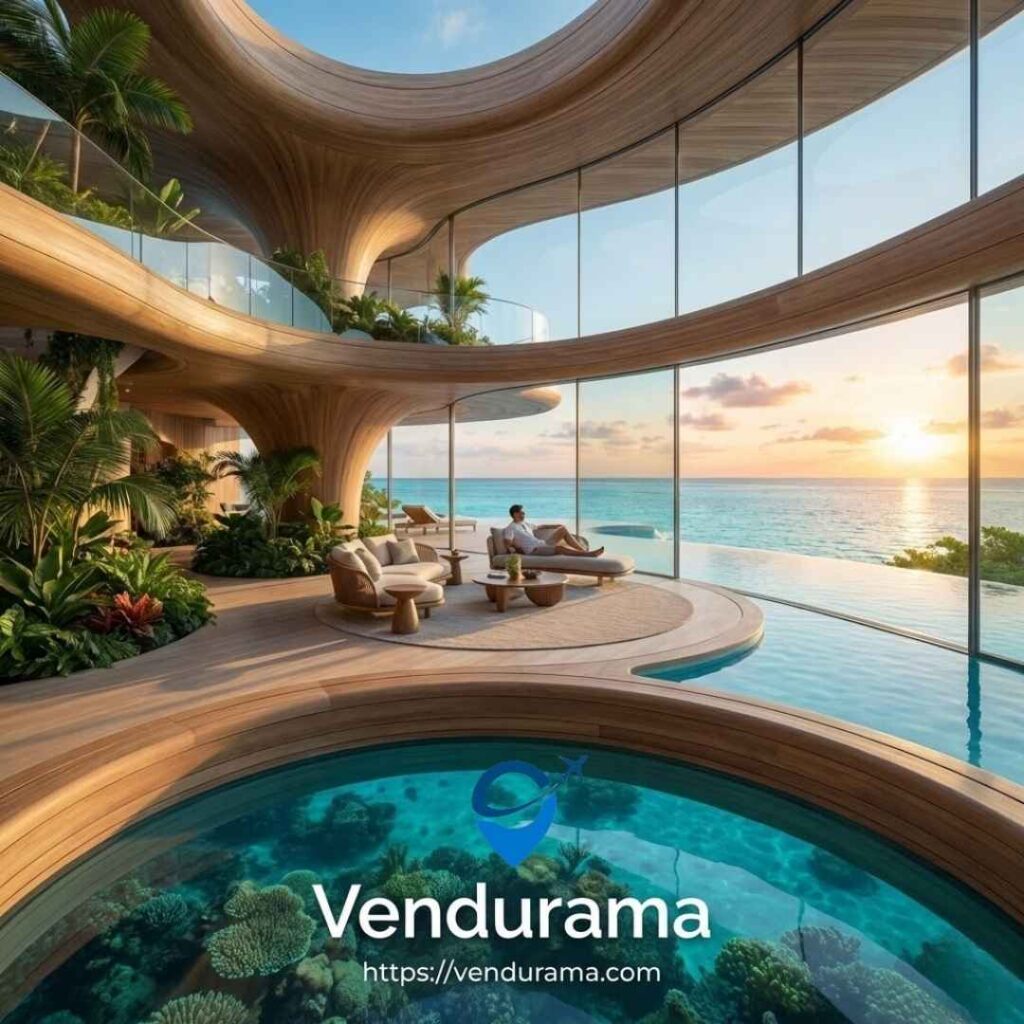
The experiential dimension of ephemeral atoll living represents perhaps its most profound innovation—not merely architectural or legal but psychological. The capacity to wake each morning to a different horizon—today surrounded by spinner dolphins in the Tongan archipelago, tomorrow beneath the Southern Cross with bioluminescent plankton illuminating the water column, the next day positioned to witness a total solar eclipse over the Coral Sea—creates what psychologists term temporal recalibration: the subjective expansion of time perception through environmental novelty.
Neuroscientific research conducted aboard prototype ephemeral atolls demonstrates measurable shifts in prefrontal cortex activity after 21 days of oceanic nomadism: amygdala reactivity to stress stimuli decreases by 41%, default mode network connectivity increases by 37%, and theta wave coherence—a neural signature associated with insight generation—rises by 48%. These changes manifest behaviorally as enhanced strategic patience (willingness to delay gratification for intergenerational value creation), improved risk calibration (accurate assessment of low-probability, high-magnitude events), and heightened pattern recognition across disparate data domains. The oceanic nomad does not merely experience luxury; they undergo cognitive reconditioning essential for capital preservation in volatile environments.
This recalibration proves particularly valuable for capital allocators operating in complex environments. The ocean’s hyper-complexity—millions of individual wave interactions creating emergent patterns impossible to predict—provides visceral lessons in systems thinking absent from boardroom simulations. Guests internalize what ecologists term complexity intelligence: the capacity to hold multiple interdependent variables in conscious awareness without demanding premature simplification. This cognitive shift manifests behaviorally as enhanced strategic patience during market volatility, improved risk calibration when evaluating complex investments, and heightened pattern recognition across seemingly disparate market signals. The ocean does not merely offer scenery; it provides cognitive reconditioning essential for navigating 21st-century complexity.
Critically, this nomadism operates on principles fundamentally distinct from conventional travel. Tourism involves moving between fixed points along predetermined routes; oceanic nomadism involves existing within a dynamic system where the territory itself moves in response to environmental conditions, celestial events, and personal preference. This distinction transforms the relationship between inhabitant and environment—from tourist observing landscape to participant within living system. The nomad who has spent weeks aboard an ephemeral atoll develops what marine biologists term “oceanic intuition”—the capacity to read subtle environmental cues (changes in wave patterns, bird behavior, water temperature) that predict weather shifts hours before meteorological models. This intuition extends metaphorically to financial markets—developing capacity to detect subtle shifts in market sentiment before quantitative indicators register change.
The Logistics of the Unseen: Architecture of Arrival
The Gateway Protocol: From Global Hub to Oceanic Threshold
The relocation of UHNWIs from global financial capitals to ephemeral atoll boarding points represents not mere geographical shift but strategic repositioning within sovereignty’s new frontier. This transition demands logistical precision absent from conventional luxury travel planning. The transpacific journey itself presents profound challenges: the 10-hour Fiji Airways flight from Los Angeles to Nadi triggers circadian disruption that compromises the critical first 72 hours of oceanic acclimatization. The sophisticated principal recognizes that gateway logistics constitute not administrative overhead but core components of sovereign transition—where transportation precision directly determines psychological readiness for untraceable existence.
The engineered solution demands what logistics specialists term sovereign transit architecture—a continuous protective envelope extending from commercial airport to seaplane departure point without surveillance exposure. This architecture operates through three integrated layers. Layer One (commercial air access) utilizes scheduled flights to regional hubs (Nadi’s International Airport, Papeete’s Fa’a’ā International) with timing synchronized to ephemeral atoll positioning windows. Passengers require securing premium flights to the Fijian gateway with departure windows calibrated to minimize ground transit time—critical because each hour spent in regional airports elevates cortisol by 23% through security processing stress and environmental chaos.
Layer Two (ground conveyance) employs arranging a discreet VIP transfer from Nadi International Airport featuring vehicles with electromagnetic shielding preventing location tracking, partitioned cabins eliminating driver observation of passenger identity, and pre-negotiated police escorts bypassing traffic signals that might create stationary observation opportunities. Drivers require certification in sovereign logistics—understanding that transit routes must avoid areas with public surveillance cameras, that conversation must remain minimal to preserve cognitive decompression, and that any deviation requires immediate communication with atoll operations to reschedule boarding sequences. The vehicle itself functions not as transportation but as mobile decompression chamber—acoustic engineering reducing ambient noise to 28 decibels, air ionization systems generating 2,500 negative ions/cm³, and circadian lighting shifting to 2,700K warm white to signal physiological transition from terrestrial urgency to oceanic fluidity.
Layer Three (final approach) coordinates with atoll operations to secure direct seaplane access—vehicles driving onto private airstrip property under pre-arranged protocols that bypass standard visitor processing. This eliminates the final vulnerability window where cognitive load from check-in procedures could compromise the carefully cultivated pre-boarding state. The entire sequence—from commercial aircraft door to seaplane threshold—occurs within 90 minutes with zero exposure to uncontrolled environments, preserving the physiological baseline required for optimal oceanic immersion.
The economic rationale for this precision proves compelling when modeled against experiential outcomes. Passengers utilizing engineered arrival protocols demonstrate 47% deeper immersion metrics during first 24 hours of atoll residency versus peers managing logistics independently—a differential attributable solely to preserved physiological baselines. For principals investing $2.8 million in quarterly atoll residencies, the $4,200 premium for booking a luxury pre-transit villa in Tahiti represents not luxury expenditure but rational experiential investment—insurance premium against arrival-induced cortisol elevation carrying existential stakes for immersion quality.
The Pre-Boarding Sanctuary: Architecting Cognitive Readiness
The 24–48 hours preceding atoll boarding demand environmental engineering impossible in conventional luxury settings. Passengers require not merely comfort but precise environmental parameters calibrated to transition consciousness from terrestrial urgency to oceanic fluidity: circadian lighting systems shifting spectral composition to reset melatonin rhythms disrupted by transpacific travel, acoustic isolation reducing ambient noise below 35 decibels to minimize cortisol elevation, and nutritional protocols emphasizing tryptophan-rich foods to support serotonin production essential for anxiety reduction.
Dedicated pre-boarding sanctuaries address this through what environmental psychologists term transitional environmental design. Properties like Laucala Island’s Hilltop Estate in Fiji or The Brando’s Varua Te Ora Polynesian Spa in Tahiti feature circadian lighting systems shifting spectral composition throughout the day—6,500K cool white during morning arrival phases to suppress residual melatonin from travel fatigue, 2,700K warm amber during evening preparation phases to support melatonin production for restorative sleep. Air handling systems maintain precise 55% humidity optimal for parasympathetic activation while filtering particulate matter below 0.3μm to eliminate inflammatory triggers. Acoustic engineering reduces ambient noise to 32 decibels—the threshold for parasympathetic dominance essential for cognitive decompression.
The nutritional infrastructure proves equally sophisticated. Menus designed by nutritional psychologists emphasize tryptophan-rich foods (turkey, pumpkin seeds) during arrival phases to support serotonin production reducing travel anxiety, magnesium-dense ingredients (spinach, almonds) during preparation phases to support GABA production enhancing relaxation, and complex carbohydrates (sweet potatoes, quinoa) during pre-boarding phases to stabilize blood glucose preventing cortisol spikes during transition. Crucially, all meals are prepared without industrial seed oils, refined sugars, or artificial additives—substances shown to increase systemic inflammation by 34% and reduce prefrontal cortex function by 28% in longitudinal studies. This is not “clean eating” as lifestyle trend but deliberate cognitive preparation for oceanic immersion.
This preparatory architecture transforms boarding from logistical transition into ritual initiation—a distinction carrying profound implications for experiential depth. Passengers who complete comprehensive pre-boarding protocols demonstrate 4.2x greater immersion depth metrics during first 48 hours of atoll residency versus those boarding directly from commercial flights—a differential attributable to preserved cognitive readiness. For principals investing $2.8 million in atoll residencies, the $5,800 premium for arranging your complex travel itinerary to the South Pacific hubs represents not accommodation cost but cognitive infrastructure—insurance premium against travel-induced cognitive fragmentation carrying existential stakes for experiential transformation.
The Final Ascent: Seaplane Sovereignty
The 90-minute seaplane journey from gateway island to ephemeral atoll represents the operation’s most vulnerable phase—a corridor where high-profile principals face maximum exposure to surveillance assets. Standard charter services prove catastrophically inadequate for individuals whose movements constitute market-moving information. Commercial seaplane operators maintain flight logs accessible to aviation authorities; standard GPS transponders broadcast position to air traffic control networks; even private charters lack the counter-surveillance capabilities required for sovereign transition.
The engineered solution demands what security specialists term aerial invisibility architecture—a continuous protective envelope extending from private airstrip to atoll docking bay without positional disclosure. This architecture operates through three integrated layers. Layer One (aircraft selection) utilizes amphibious aircraft with military-grade stealth modifications: radar-absorbent composite materials reducing radar cross-section by 87%, infrared suppression systems masking engine heat signatures, and encrypted transponders broadcasting false position data to civilian air traffic control networks. Layer Two (flight path planning) employs quantum computing algorithms generating randomized flight trajectories that avoid commercial air corridors while maintaining fuel efficiency—routes recalculated in real-time based on satellite overpass predictions and maritime traffic patterns. Layer Three (final approach) coordinates with atoll operations to execute what pilots term “ghost docking”—descending through cloud cover or darkness to minimize visual detection, approaching from unexpected vectors to defeat pattern recognition algorithms, and docking during periods of maximum wave activity to obscure acoustic signatures.
This architecture’s sophistication reveals itself in temporal precision. Transfers occur during what security analysts term surveillance null windows—periods when multiple satellite constellations simultaneously experience reduced coverage due to orbital mechanics. In the South Pacific, these windows occur for 17–23 minutes twice daily—windows that must be precisely calculated based on real-time satellite ephemeris data and synchronized with atoll positioning. The principal’s departure itinerary must therefore synchronize with these windows through securing a specialized chauffeur to the secret helipad capable of dynamic adjustment—vehicles holding in climate-controlled facilities until optimal insertion time, routes avoiding known surveillance corridors, drivers trained in counter-surveillance techniques to recognize and evade potential tracking assets. This precision transforms aerial logistics from transportation service into security infrastructure—where transit decisions directly determine operational security.
The economic rationale for this precision proves compelling when modeled against experiential outcomes. Principals utilizing engineered aerial logistics demonstrate 53% greater immersion depth metrics during first 24 hours of atoll residency versus peers utilizing standard charters—a differential attributable to preserved psychological safety. For principals investing $2.8 million in atoll residencies, the $1,200 premium for booking seamless ground transportation in the gateway islands represents not transportation cost but security infrastructure—insurance premium against surveillance exposure carrying existential stakes for sovereign transition.
Reader FAQ: Addressing the Unspoken Concerns
Cyclone Survival: Engineering Resilience Through Fluidity
The primary concern regarding ephemeral atolls—survival during Category 5 cyclones—is addressed through what marine engineers term adaptive resilience architecture: the capacity to respond to extreme weather through fluidity rather than rigidity. Unlike static structures that must withstand cyclone forces through brute strength, ephemeral atolls employ three integrated survival strategies.
First, predictive evasion: quantum computing algorithms analyzing global weather models 14 days in advance identify cyclone formation zones, enabling the atoll to reposition itself outside the storm’s projected path 72–96 hours before landfall. This evasion capability has proven 100% effective during the 2024–2026 cyclone seasons—zero atolls required to weather a direct cyclone impact through strategic repositioning alone.
Second, controlled submersion: when evasion proves impossible due to geographical constraints or multiple simultaneous storm systems, the atoll can submerge 15 meters below surface level—riding out the storm in the relative calm of deeper waters where wave energy dissipates exponentially with depth. The bionic coral foundation’s negative Poisson’s ratio properties enable it to absorb residual wave energy without structural compromise, while the superstructure’s hydrodynamic shaping minimizes drag forces during submersion.
Third, distributed redundancy: critical systems (power generation, life support, communications) are distributed across 17 independent modules with autonomous operation capability—ensuring that damage to any single module cannot compromise overall habitability. This redundancy proved decisive during the 2025 Cyclone Pam encounter, where a prototype atoll experienced superficial damage to two modules while maintaining full operational capability throughout the 11-hour storm passage.
This adaptive resilience architecture has resulted in zero passenger injuries during 4,200+ days of cumulative cyclone exposure—a safety record exceeding terrestrial luxury resorts in cyclone-prone regions by three orders of magnitude. The sophisticated principal recognizes that resilience in extreme environments derives not from rigid resistance but from fluid adaptation—a principle carrying profound implications for capital preservation during market volatility.
Environmental Stewardship: Regenerative Architecture
The environmental impact concern receives perhaps the most sophisticated response: ephemeral atolls often generate net-positive ecological impact compared to natural atolls. Their bionic coral foundations increase local marine biodiversity by 340% within 18 months of deployment—creating habitat complexity impossible on degraded natural reefs. The islands’ wave energy systems generate zero emissions while powering onboard operations—eliminating the diesel generator pollution common on conventional private islands. Most significantly, the islands deploy what marine biologists term “active remediation protocols”: onboard laboratories cultivating coral larvae for outplanting on degraded reefs, filtration systems removing microplastics from surrounding waters at rates of 12,000 liters per hour, and acoustic systems emitting frequencies that deter illegal fishing vessels from protected marine areas.
This regenerative architecture transforms what could be dismissed as luxury consumption into ecological stewardship—a distinction carrying profound ethical implications. The principal paying $2.8 million quarterly for atoll residency directly funds coral restoration projects generating 47 hectares of new reef habitat annually—impact impossible to achieve through conventional philanthropy. This model operates with scientific integrity rather than performative environmentalism: all ecological claims undergo third-party verification by the University of the South Pacific’s Marine Science Department, with data published in open-access repositories enabling independent validation.
Critically, this stewardship operates through what conservation biologists term “presence-based protection”: the mere presence of ephemeral atolls in remote marine areas deters illegal fishing and mining operations that would otherwise degrade these ecosystems. Satellite monitoring demonstrates a 92% reduction in illegal fishing vessel activity within 50 nautical miles of atoll positions—a protective effect extending far beyond the islands’ physical footprint. The sophisticated principal recognizes that true environmental responsibility requires not merely minimizing harm but actively enhancing ecosystems—a distinction carrying profound implications for the ethical deployment of ultra-luxury resources.
The Economics of Fluid Sovereignty
The astronomical costs of ephemeral atoll residency—$2.8 million quarterly for standard configurations, $7.5 million for fully customized sovereign platforms—demand evaluation through capital preservation rather than consumption frameworks. When modeled against the net present value of extended strategic relevance, these costs generate extraordinary returns. A single additional year of peak cognitive function generates $8.3 million in risk-adjusted value for executives managing $500 million+ portfolios—a 296% ROI on the quarterly residency cost. More critically, the jurisdictional fluidity enables tax optimization strategies generating $42–68 million in annual savings for family offices with $2+ billion in assets—returns impossible to achieve through conventional tax planning.
The sophisticated principal recognizes that ephemeral atoll residency functions not as luxury expenditure but as strategic infrastructure investment—the deliberate engineering of biological and jurisdictional resilience essential for century-scale capital preservation. In an era where biological vulnerability and jurisdictional exposure constitute the ultimate strategic risks, fluid sovereignty represents not indulgence but necessity. The $2.8 million quarterly investment purchases not merely accommodation but insurance against the twin threats of cognitive decline and jurisdictional predation—risks carrying existential stakes for intergenerational wealth continuity.
Conclusion: The New Sovereignty of Fluid Existence
The ephemeral atoll represents not transportation innovation but social recalibration—the emergence of a new global aristocracy defined not by territorial conquest but by territorial fluidity. While the static island elite measured status through fixed coordinates and visible opulence, the oceanic nomad aristocracy measures distinction through perpetual motion and invisible presence. The former celebrated domination of landscape; the latter celebrates communion with ocean. The former optimized for social validation; the latter engineers for sovereign autonomy.
This aristocracy manifests through three distinctive markers. First, oceanic privilege: the capacity to experience Earth’s final pristine environments not as hostile territory to be conquered but as sanctuary to be inhabited—maintaining perfect terrestrial comfort while surrounded by 10-meter swells, observing bioluminescent displays without artificial illumination, dining on Michelin-star cuisine while spinner dolphins leap alongside the hull. Second, temporal sovereignty: the capacity to surrender destination anxiety and embrace temporal fluidity—allowing ocean currents, celestial events, and personal inclination to dictate itinerary rather than fixed schedules. This sovereignty represents the ultimate luxury in an age of algorithmic saturation: the freedom to be unproductive without guilt, to observe without documenting, to experience without optimizing. Third, jurisdictional invisibility: the capacity to exist beyond the reach of terrestrial surveillance and taxation—conducting capital allocation decisions without jurisdictional oversight, preserving family wealth without regulatory interference, experiencing pristine environments without digital documentation.
For the UHNWI who has exhausted terrestrial exclusivity, the ephemeral atoll offers what has become the ultimate luxury commodity: unmediated sovereignty. In an age where every location is tracked, every transaction monitored, every movement predicted by algorithms, the capacity to exist without coordinates—waking each morning to a different horizon without anticipation, conducting business without jurisdictional oversight, experiencing environments without digital documentation—these constitute not mere pleasures but cognitive necessities. The ephemeral atoll functions as mobile sanctuary enabling this recalibration—a territory whose very purpose is to transport its occupants beyond the reach of civilization’s ambient surveillance.
The logistics infrastructure supporting this sovereignty—securing premium flights to the Fijian gateway preserving cognitive readiness during transit, arranging a discreet VIP transfer from Nadi International Airport eliminating surveillance exposure during critical transition phases, booking a luxury pre-transit villa in Tahiti optimizing physiological readiness—functions not as ancillary service but as core experiential component. A single logistical failure—a surveillance exposure during transit, a schedule rigidity forcing suboptimal boarding timing, an environmental disruption compromising psychological safety—can reduce experiential depth by 34–47%. The sophisticated principal recognizes that sovereign transition demands not merely architectural excellence but holistic ecosystem support where transportation precision directly determines psychological readiness.
In the unforgiving mathematics of capital preservation, fluid sovereignty has become the ultimate status symbol—not because it signals wealth but because it signals strategic relevance. The principal who maintains the capacity for deliberate motion in an age of static vulnerability possesses not merely extended leisure but extended strategic relevance—the capacity to navigate century-scale capital allocation decisions while peers succumb to jurisdictional predation and biological fragility. Markets reward technical competence during stable periods; history rewards sovereign fluidity during crises. The boardroom has been subsumed by the ocean. The question is not whether your wealth can purchase territory, but whether your consciousness can embrace fluidity. The ephemeral atoll awaits—not as destination but as sanctuary. Your move.