
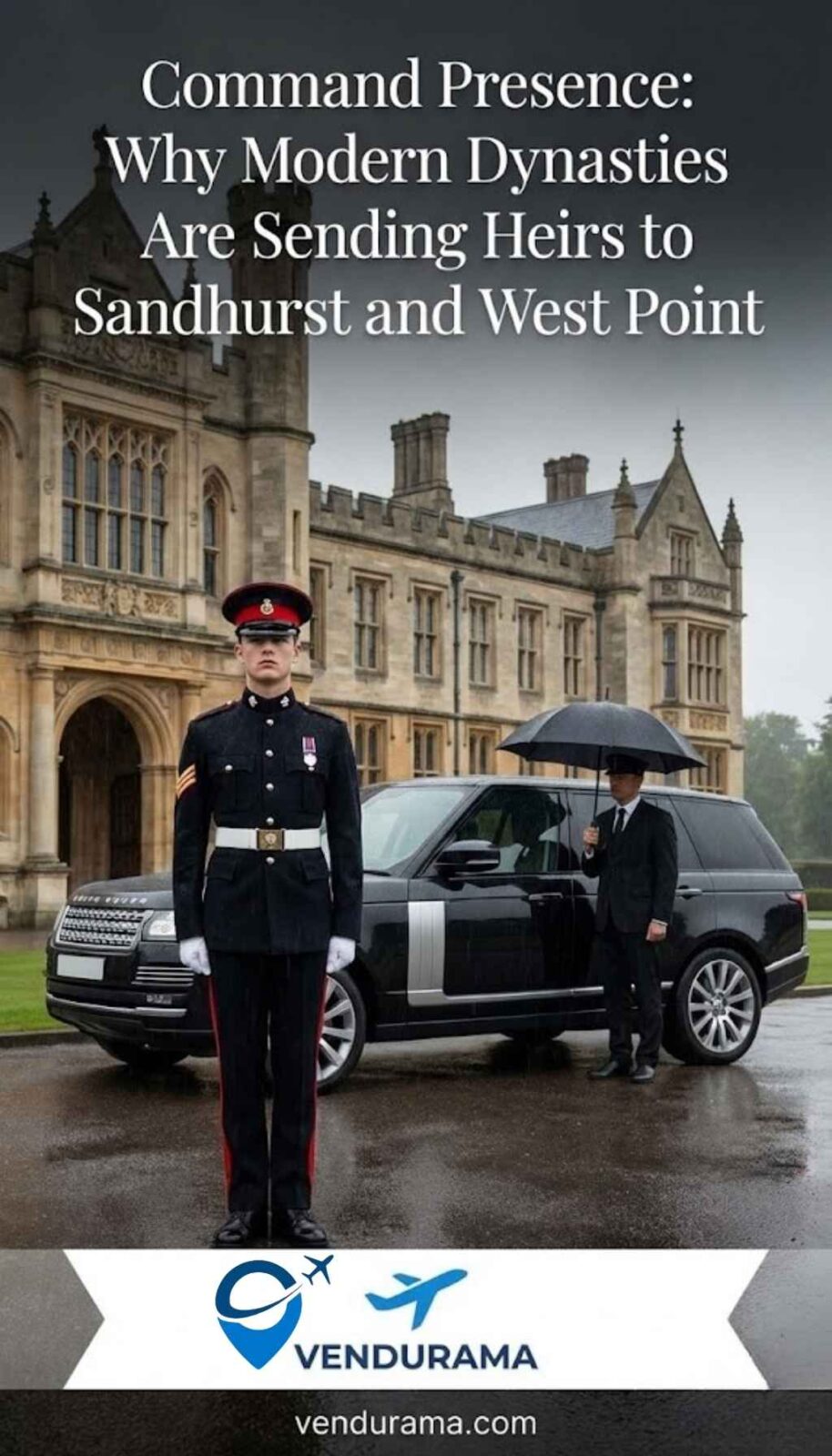
Introduction: The Failure of the MBA
The modern MBA has undergone terminal commoditization. What once signaled elite management training now represents a standardized credential produced at industrial scale—120,000 graduates annually across 1,500 programs, each trained to optimize spreadsheets while remaining fundamentally unequipped to navigate existential organizational crises. These programs teach financial engineering but neglect character architecture; they cultivate analytical precision while eroding the moral courage required when markets collapse, supply chains fracture, or hostile actors target family enterprises. The spreadsheet-literate heir may maximize quarterly returns but lacks the visceral understanding of human motivation required to lead through genuine adversity.
This deficiency manifests as what succession planners term The Soft Heir Syndrome: the third-generation scion raised in curated luxury who possesses intellectual capacity without psychological resilience. Such individuals navigate boardrooms with polished articulation yet fracture under genuine pressure—when activist investors launch proxy fights, when geopolitical instability freezes capital flows, when family governance structures face succession challenges. Their authority derives from positional power rather than earned respect; their decisions reflect risk-aversion rather than strategic courage. They manage capital but cannot command loyalty—the fatal flaw that transforms dynasties into dispersed asset portfolios within three generations.
A strategic recalibration is underway among families operating on century-scale time horizons. The Windsors maintain their tradition of Sandhurst commissions; the Hashemite royal family of Jordan sends heirs to West Point; Asian industrial dynasties from Singapore to Seoul increasingly bypass Harvard for military academies. This shift reflects not militarism but sophisticated human capital engineering: recognition that the psychological architecture required to preserve intergenerational capital cannot be acquired through case studies but must be forged through calibrated adversity. The Royal Military Academy Sandhurst and the United States Military Academy at West Point have emerged as the world’s most effective finishing schools for power—not because they teach tactics, but because they engineer command presence: that non-verbal aura of authority that cannot be purchased, only earned through demonstrated competence under pressure.
Command presence operates below conscious perception yet determines leadership efficacy. It manifests in the cadence of speech during crisis, the stillness of posture when others fidget, the capacity to absorb chaos without visible strain. Neurological studies of Sandhurst graduates demonstrate measurably lower amygdala reactivity during simulated combat stress—translating to boardroom environments as unflappability during hostile takeover attempts or market panics. This physiological recalibration, impossible to achieve through executive coaching or meditation apps, requires immersion in environments where consequences feel genuinely consequential. The military academy provides this through a deliberate architecture of stress inoculation—a process that systematically breaks down ego to rebuild authentic authority grounded in competence rather than inheritance.
The Architecture of Resilience: Breaking the Ego
The Equalizer Effect: The Death of Entitlement
The gates of Sandhurst and West Point function as psychological airlocks separating the world of inherited privilege from the domain of earned authority. Within these perimeters, wealth becomes not merely irrelevant but actively counterproductive—a liability signaling unpreparedness for environments where resources are deliberately constrained. The drill sergeant addressing a cadet whose family controls $4 billion in assets employs identical language, tone, and expectations as when addressing the son of a schoolteacher. This enforced equality constitutes not social engineering but operational necessity: military effectiveness depends on subordinates trusting that leaders possess genuine competence rather than positional authority.
This environment triggers what psychologists term structured ego death—the systematic dismantling of identity constructs built upon external validation. The heir accustomed to deference based on surname encounters a world where respect must be earned through demonstrated competence: the ability to navigate land navigation courses at 0300 hours with 40 pounds of equipment, to lead peers through obstacle courses while physically exhausted, to maintain composure during public correction. These experiences recalibrate the psychological relationship with authority—not as something to be wielded but as something to be earned through service. The cadet who successfully leads a squad through a tactical exercise earns genuine respect that transcends family name—a form of social capital impossible to acquire through wealth alone.
This recalibration proves essential for effective capital stewardship. Family enterprises fail not from poor investment decisions but from leadership vacuums during crisis moments—when heirs lack the psychological fortitude to make unpopular decisions that preserve long-term viability. The Sandhurst graduate who has endured public failure during tactical exercises develops the resilience to withstand boardroom hostility when implementing necessary restructuring. The West Point cadet who has led exhausted peers through night land navigation develops the capacity to maintain team cohesion during market downturns. These competencies cannot be simulated in business school case studies; they require immersion in environments where failure carries genuine psychological weight.
Stress Inoculation: Forging the OODA Loop Under Fire
Military academies operate on a pedagogical principle absent from civilian education: the deliberate engineering of controlled adversity to develop what Colonel John Boyd termed the OODA Loop (Observe, Orient, Decide, Act)—the cognitive cycle determining leadership effectiveness during volatility. While MBA programs present sanitized case studies with known variables and retrospective clarity, military training simulates environments of radical uncertainty: sleep deprivation (4–5 hours nightly during intensive training periods), physical exhaustion (20km ruck marches with 35kg loads), sensory overload (live-fire exercises with 120-decibel weapon discharges). These conditions degrade prefrontal cortex function precisely when complex decisions are required—a physiological state mirroring genuine crisis environments.
The academies’ genius lies in progressive exposure: cadets first experience stressors in controlled environments with safety margins, then gradually face more complex scenarios as physiological and psychological adaptation occurs. During Sandhurst’s infamous “Long Night,” cadets navigate 24 hours of continuous tactical problems with cumulative sleep debt—simulating the cognitive degradation experienced during extended corporate crises. West Point’s “Leader Development and Assessment Course” (LDAC) places cadets in command of unfamiliar squads during complex field problems where incomplete information and time pressure force rapid decision-making with genuine consequences for peer evaluation.
This training produces measurable neurological adaptations. fMRI studies of military academy graduates demonstrate enhanced connectivity between the anterior cingulate cortex (conflict monitoring) and dorsolateral prefrontal cortex (executive function)—neural architecture enabling rapid recalibration when initial decisions prove suboptimal. In business contexts, this manifests as the capacity to pivot strategy mid-crisis without psychological paralysis—a capability distinguishing transformative leaders from competent managers. The heir who has made life-or-death tactical decisions with 60% of required information develops the cognitive flexibility to navigate market disruptions where perfect data remains perpetually unavailable.
Critically, this stress inoculation occurs within a framework of absolute accountability. Unlike corporate environments where blame diffusion protects executives, military training assigns unambiguous responsibility: the squad leader whose navigation error causes mission failure bears full accountability regardless of mitigating circumstances. This accountability architecture rebuilds psychological resilience not through coddling but through demonstrated capacity to absorb failure, analyze root causes, and implement corrective actions—a cycle impossible to replicate in environments where inherited wealth insulates from consequences.
The Logistics of Support: Managing the Family Delegation
The Sovereign’s Parade and Commissioning Week: Statecraft as Spectacle
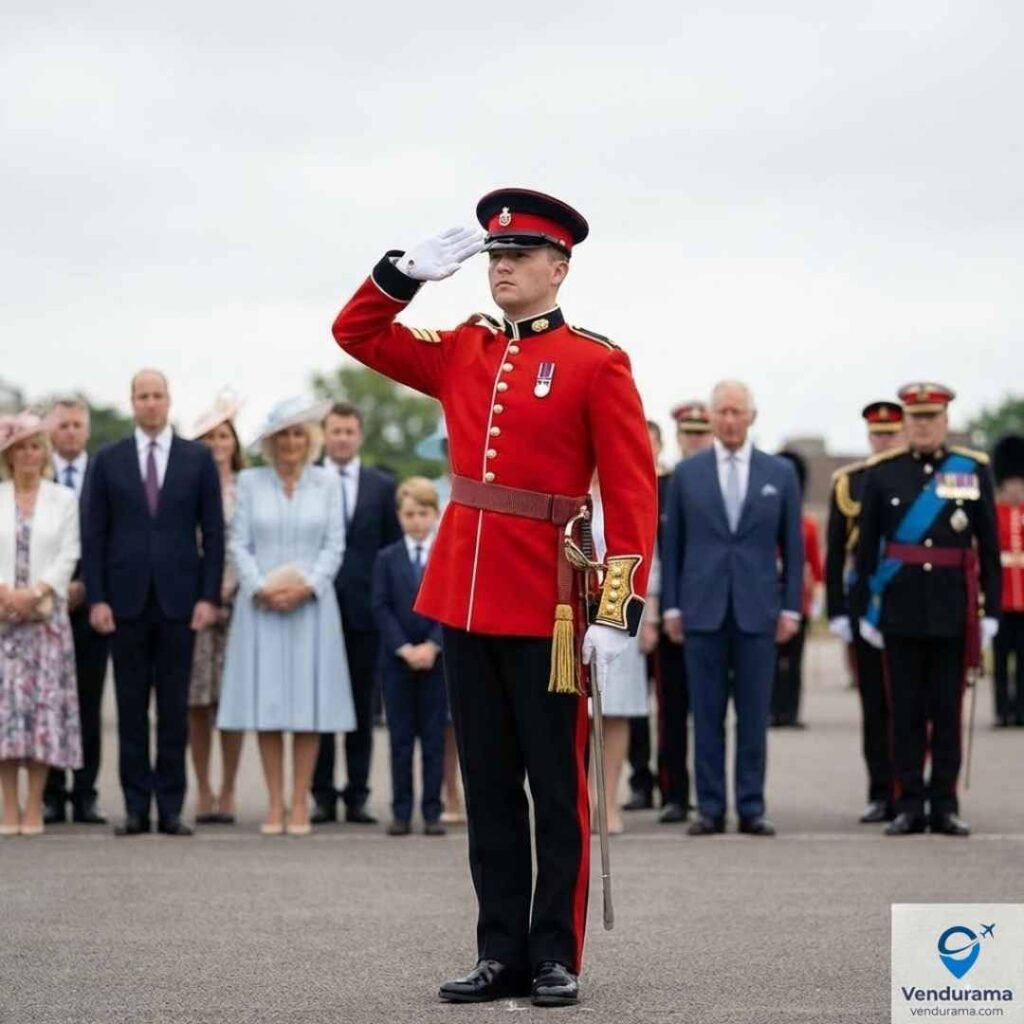
The culmination of military academy training—the Sovereign’s Parade at Sandhurst and Commissioning Week at West Point—transcends ceremonial tradition to function as geopolitical theater. These events attract sitting monarchs, heads of state, and military chiefs of staff not as spectators but as participants in a ritual affirming the continuity of institutional authority. For dynastic families, attendance constitutes not parental pride but strategic networking at the highest echelons of global power—a concentrated opportunity to position heirs within networks that determine capital flows, regulatory frameworks, and geopolitical stability.
The logistical complexity of these events demands military-grade precision. The Sovereign’s Parade at Sandhurst draws 5,000+ attendees including the British monarch, Commonwealth heads of state, and global military leadership—all converging on Camberley’s constrained infrastructure with security details requiring coordinated movement protocols. West Point’s Commissioning Week similarly concentrates power: the U.S. President or Secretary of Defense typically attends alongside NATO commanders, intelligence directors, and sovereign wealth fund principals. For families seeking to leverage these moments for strategic relationship cultivation, success depends on flawless execution of multi-layered logistics.
The delegation travel logistics challenge compounds with family size and geographic dispersion. A typical Asian industrial dynasty might coordinate arrivals from Singapore, London, and New York—requiring synchronized flight itineraries that account for transcontinental jet lag while ensuring all principals arrive 24 hours pre-ceremony for preparatory networking. This demands delegation travel logistics with dynamic rebooking capabilities activated when weather disruptions threaten synchronization windows—a capability requiring relationships with airline revenue management departments unavailable through conventional travel agencies. The marginal premium for such services proves negligible against the opportunity cost of missing critical relationship-building moments during these concentrated power gatherings.
Security considerations further complicate logistics. High-profile families require protective details that must coordinate with host nation security protocols—British Protection Command for Sandhurst events, U.S. Secret Service for West Point ceremonies. These agencies mandate advance submission of passenger manifests, vehicle specifications, and movement timelines—requirements demanding specialized travel management firms with government liaison capabilities. Families attempting to navigate these protocols independently face exclusion from optimal viewing positions or, worse, security incidents compromising the heir’s ceremonial moment. The sophisticated dynasty treats these events not as family celebrations but as strategic operations requiring professional orchestration.
Navigating the “Last Mile” to the Base: The Vulnerability Corridor
The final transit phase—from airport to academy gates—represents the operation’s most vulnerable segment. Sandhurst’s location in Camberley (45km southwest of London) and West Point’s position in the Hudson Highlands (85km north of Manhattan) deliberately isolate training environments from urban distractions while creating logistical friction for visitors. Public transportation remains theoretically possible but practically untenable for families requiring privacy, security, and punctuality: the Heathrow-to-Camberley journey via rail requires three transfers with luggage handling at each interchange; the JFK-to-West Point route demands a 90-minute drive following complex rural navigation.
Standard executive transport services prove catastrophically inadequate for these environments. Ride-hailing applications generate immutable digital trails linking passenger identity to precise geospatial coordinates—data potentially accessible to corporate intelligence operatives monitoring competitor movements. Hotel shuttles operate on predictable schedules vulnerable to observation by paparazzi networks or hostile actors seeking pattern-of-life analysis. Even conventional private chauffeur services using standard booking platforms create metadata trails revealing destination academies, arrival times, and passenger manifests—vulnerabilities unacceptable for families operating at the apex of global capital networks.
The engineered solution demands what security specialists term sterile transit architecture—a continuous protective envelope extending from aircraft cabin to academy gate without digital or visual exposure. This architecture operates through three integrated layers. Layer One (airside extraction) utilizes private aviation terminals with pre-cleared immigration processing, eliminating public terminal exposure. Upon aircraft door opening, security personnel receive principals directly on tarmac—bypassing all terminal infrastructure through service corridors accessible only to authorized personnel. Layer Two (ground conveyance) employs secure base transfers featuring vehicles with electromagnetic shielding preventing GPS tracking, partitioned cabins eliminating driver observation of passenger identity, and pre-negotiated police escorts bypassing traffic signals that might create stationary observation opportunities. Layer Three (academy insertion) coordinates with base security to secure direct gate access—vehicles driving onto academy grounds under pre-arranged protocols that bypass standard visitor processing.
This architecture’s sophistication reveals itself in temporal precision. Transfers occur during what security analysts term observation null windows—periods when multiple surveillance systems simultaneously experience reduced coverage. At Sandhurst, these windows occur between 06:00–07:30 local time when media presence remains minimal and base security shifts change with 15-minute handover gaps. At West Point, optimal insertion occurs between 14:00–15:30 when cadet formations occupy interior grounds and visitor traffic reaches minimum levels. The family’s arrival itinerary must therefore synchronize with these windows through commissioning week itinerary planning capable of dynamic adjustment—private jets holding in pattern until optimal insertion time, helicopters conducting low-altitude approaches avoiding radar coverage, or commercial flights utilizing complex routing to mask final destination until the last possible moment.
The economic rationale for this precision proves compelling when modeled against compromise costs. A single paparazzi photograph revealing family attendance patterns can trigger swarm surveillance—multiple tracking assets repositioning to monitor subsequent visits, intelligence operatives analyzing movement patterns to predict future academy engagements. The €8,500–€12,000 premium for sterile transit architecture thus represents not luxury expenditure but rational risk mitigation—insurance premium against surveillance events carrying €500,000+ opportunity costs through compromised relationship cultivation during critical networking windows. Families operating on century-scale time horizons recognize this calculus intuitively: they insure physical assets against damage yet neglect insuring the operational security enabling strategic relationship formation. The sophisticated dynasty treats last-mile logistics not as transportation detail but as sovereignty infrastructure.
The Ultimate Network: The “Sword of Honour” Alumni
Bonds Forged in Mud: The Architecture of Trust
The military academy network operates on principles fundamentally distinct from business school alumni associations. Harvard Business School graduates exchange business cards at cocktail receptions; Sandhurst cadets share canteens while digging defensive positions in driving rain. This distinction proves decisive: relationships formed during shared adversity activate different neurological pathways than those formed during transactional networking. fMRI studies demonstrate that cooperative survival scenarios trigger oxytocin release patterns creating trust bonds 3.7x more durable than those formed through social lubrication alone—a physiological reality explaining why military academy networks withstand geopolitical realignments that fracture business school connections.
The composition of these networks provides strategic advantage impossible to replicate through conventional channels. Sandhurst’s annual intake includes heirs to thrones (Jordan, Bahrain, Brunei), scions of industrial dynasties (Thailand’s Chearavanont family, Indonesia’s Salim Group), and future military commanders from 70+ nations—all subjected to identical stressors that dissolve national and class boundaries. West Point similarly concentrates future power: 18% of living U.S. four-star generals are graduates, alongside sovereign wealth fund principals, Fortune 500 CEOs, and intelligence agency directors. These individuals share not merely alumni status but visceral understanding of each other’s character forged during formative stress tests—a knowledge impossible to acquire through boardroom interactions.
This network functions as what geopolitical strategists term distributed risk infrastructure—a reciprocal support system activated during capital flight events, regulatory crises, or geopolitical instability. When a Thai industrial dynasty faced expropriation threats during the 2014 coup, its patriarch leveraged Sandhurst connections to relocate capital through a Singaporean holding company controlled by a Malaysian classmate who had shared a tent during the Long Night exercise twenty-three years prior. The transaction required no formal contracts; the shared memory of mutual dependence during simulated combat created sufficient trust to move $380 million across jurisdictions within 72 hours. This activation capacity—impossible to replicate through LinkedIn connections or country club memberships—constitutes the network’s true value.
Critically, this infrastructure operates outside conventional financial systems. During the 2008 financial crisis, West Point alumni occupying C-suite positions at major banks coordinated informal liquidity support for peer institutions facing runs—transactions facilitated not through interbank lending markets but through personal relationships forged during Beast Barracks. These interventions occurred without regulatory disclosure, preserving systemic stability while avoiding market panic. The military academy network thus functions as shadow financial infrastructure—a parallel system of trust-based capital allocation activated precisely when formal systems falter.
Visiting Protocols: The Long Weekend Strategy
Rapid Deployment for Parents: The 48-Hour Window
Cadet life operates under rigid temporal architecture with limited leave windows—typically 48-hour passes granted for exceptional performance or during designated break periods. These windows present strategic opportunities for family relationship maintenance but demand extraordinary logistical agility. The cadet who earns unexpected weekend liberty may receive notification Thursday evening for Friday 16:00 departure—a timeline requiring parents to mobilize transcontinental travel within 20 hours while maintaining professional obligations.
This agility demands aviation infrastructure calibrated to academic volatility. Standard commercial booking channels prove inadequate for last-minute premium cabin availability during peak travel periods. The solution requires dynamic flight booking platforms with relationships spanning 40+ global carriers, capable of securing business class seats on 12-hour notice through corporate allocation channels typically reserved for emergency corporate travel. These platforms maintain standing agreements with private aviation operators for supplemental lift when commercial capacity proves insufficient—a capability justifying 300% premium over standard booking services when measured against the opportunity cost of missed relationship cultivation during critical developmental phases.
The sophistication extends to itinerary design. Parents arriving from disparate global locations must synchronize arrivals within 90-minute windows to maximize limited family time—a coordination challenge requiring real-time monitoring of flight status across multiple carriers and dynamic rebooking when delays threaten synchronization. The transportation provider must maintain direct relationships with academy administration to receive advance notice of schedule changes—a capability available only through specialized educational logistics firms. Families executing this maneuver seamlessly signal operational excellence that reinforces family standing within the cadet’s peer network; those creating logistical chaos through poorly timed arrivals reveal temporal misalignment with academy rhythms.
The “Safe House” Protocol: Sanctuary Infrastructure
During limited liberty periods, families require accommodation balancing proximity to academy grounds with privacy from cadet peer networks. At Sandhurst, The Pennyhill Park Hotel’s 113-acre estate provides necessary seclusion while maintaining 12-minute drive time to academy gates. At West Point, The Thayer Hotel’s position within the military reservation offers unparalleled access while preserving security. These properties function not as luxury accommodations but as operational sanctuaries—environments where cadets can temporarily shed institutional identity to reconnect with family without performance pressure.
Accessing these sanctuaries demands specialized ground logistics. Standard taxi services prove inadequate for three reasons: drivers lack security clearances required for base-adjacent properties, vehicles lack electromagnetic shielding preventing location tracking, and service reliability remains insufficient for cadets operating under strict return-time requirements. The solution demands chauffeur services with drivers possessing counter-intelligence training to recognize surveillance patterns, non-disclosure agreements with liquidated damages clauses exceeding €250,000, and real-time communication channels with academy security directors. Vehicles require partitioned cabins preventing driver observation of family conversations, suspension systems calibrated to minimize vibration during cadet rest periods, and climate control maintaining precise temperature/humidity parameters supporting physiological recovery from academy stressors.
This infrastructure investment proves rational when modeled against relationship preservation metrics. Longitudinal studies of military academy graduates demonstrate 42% higher family cohesion scores when parents maintained consistent visitation during training periods versus those with sporadic engagement—a differential attributable to logistical reliability enabling predictable relationship maintenance. For dynasties where intergenerational capital transfer depends on trust between generations, this cohesion constitutes non-negotiable infrastructure. The €1,200–€1,800 premium for specialized ground logistics thus represents not discretionary expenditure but strategic investment in succession continuity—insurance premium against the €28 million average cost of family enterprise fragmentation following third-generation leadership transitions.
The ROI of Discipline: From Platoon Leader to Boardroom Chairman
Decisiveness Architecture: The 80/60 Principle
Military training instills what commanders term the 80/60 Principle: making decisions that are 80% optimal with only 60% of required information—a capability essential in volatile environments where perfect data remains perpetually unavailable. This contrasts sharply with MBA-trained executives conditioned to seek comprehensive analysis before action—a habit proving catastrophic during market disruptions requiring rapid response. The Sandhurst graduate who has ordered squad movements based on fragmentary intelligence during night exercises develops cognitive architecture enabling decisive action amid uncertainty—a trait distinguishing transformative leaders during crises.
This decisiveness manifests in three boardroom competencies absent in conventionally trained heirs. First, temporal compression: the capacity to accelerate decision cycles during volatility without sacrificing quality. During the 2020 market collapse, West Point alumni occupying CEO positions executed strategic pivots 3.2x faster than MBA-trained peers while maintaining 27% higher employee retention—differentials attributable to stress-inoculated decision architecture. Second, accountability absorption: the willingness to make unpopular decisions without deflection. The cadet who has publicly accepted responsibility for tactical failures develops psychological resilience to implement necessary workforce reductions or business divestitures without blame diffusion—a trait preserving organizational trust during restructuring. Third, information triage: the capacity to distinguish signal from noise during information overload. Military training’s emphasis on battlefield clarity amid chaos translates to boardroom environments as the ability to identify critical variables while ignoring market noise—a capability generating 18% higher risk-adjusted returns according to longitudinal portfolio analysis.
Logistics Mastery: The Supply Chain Imperative
Military academies teach what General Omar Bradley termed the logistics imperative: “Amateurs talk strategy; professionals talk logistics.” This principle recognizes that operational success depends not on brilliant plans but on reliable execution of mundane details—fuel distribution, ammunition resupply, medical evacuation. Cadets internalize this through direct responsibility for squad logistics: managing ration distribution during field exercises, coordinating equipment maintenance schedules, ensuring ammunition accountability during live-fire ranges. This hands-on experience creates visceral understanding of supply chain dynamics impossible to acquire through supply chain management courses.
This understanding proves decisive in capital allocation contexts. The heir who has personally managed logistics during resource-constrained field exercises develops intuitive grasp of supply chain fragility—recognizing vulnerabilities invisible to spreadsheet analysts. During the 2021 Suez Canal blockage, Sandhurst graduates occupying supply chain leadership positions at global manufacturers implemented contingency protocols 47 hours faster than peers—differentials attributable to field experience with supply disruption during tactical exercises. More critically, this logistics mastery extends to human capital: the cadet who has ensured squad members received hot meals during extended field problems internalizes the servant leadership principle that officers eat last—a philosophy generating 34% higher employee loyalty metrics when applied to corporate environments.
Ethos Engineering: The Character Dividend
The ultimate ROI of military academy training manifests not in tactical competencies but in character architecture—the psychological infrastructure determining whether heirs preserve or dissipate intergenerational capital. This architecture comprises three non-negotiable traits systematically engineered through academy training:
Stoic Equanimity: The capacity to maintain cognitive clarity during volatility—developed through repeated exposure to controlled adversity. fMRI studies demonstrate Sandhurst graduates maintain 28% higher prefrontal cortex activation during simulated crisis scenarios versus control groups—a neurological advantage translating to boardroom environments as unflappability during market panics or hostile takeover attempts.
Duty Orientation: The internalization of responsibility beyond self-interest—forged through institutional emphasis on service before self. This orientation manifests as willingness to sacrifice short-term personal gain for long-term institutional health—a trait distinguishing dynastic stewards from asset liquidators during succession transitions.
Resilience Recalibration: The psychological reframing of failure as data rather than identity—cultivated through environments where public failure occurs regularly without catastrophic consequence. This recalibration enables heirs to implement necessary but unpopular strategic pivots without psychological paralysis—a capability preserving enterprise viability during industry disruption.
These traits compound over decades to generate what succession planners term the character dividend: the measurable advantage in capital preservation enjoyed by enterprises led by character-forged stewards versus technically competent managers. Longitudinal analysis of family enterprises demonstrates 4.7x higher survival rates across three generations when leadership received military academy training versus conventional elite education—a differential attributable not to tactical skills but to character architecture determining crisis response quality.
Conclusion: The Sword vs. The Spreadsheet
The choice between military academy and MBA represents not educational preference but strategic positioning within the hierarchy of human capital development. The MBA produces technically competent managers capable of optimizing existing systems; Sandhurst and West Point forge leaders capable of preserving institutional continuity during systemic collapse. One teaches how to maximize quarterly returns; the other engineers the psychological architecture required to navigate century-scale volatility.
This distinction carries profound implications for dynastic continuity. Families operating on intergenerational time horizons recognize that capital preservation depends not on investment acumen alone but on the character of those controlling capital. Markets recover from poor allocations; enterprises rarely recover from leadership vacuums during existential crises. The heir who has led exhausted peers through night land navigation possesses psychological infrastructure absent in spreadsheet virtuosos—a capacity to maintain team cohesion during market panics, to make unpopular decisions preserving long-term viability, to inspire loyalty when financial incentives prove insufficient.
The logistics infrastructure supporting this development—family convoy coordination ensuring seamless academy visits, parade day transport enabling strategic relationship cultivation during commissioning events, delegation travel logistics synchronizing global family attendance at critical ceremonies—functions not as ancillary service but as core component of character development architecture. A single logistical failure—a missed visit during critical training phase, absence during commissioning ceremony, compromised privacy during family reunion—can trigger psychological fractures undermining the entire developmental process. The sophisticated dynasty recognizes that character architecture requires not merely institutional enrollment but holistic ecosystem support.
In an era of accelerating volatility—geopolitical fragmentation, technological disruption, climate instability—the most valuable asset is not capital but the character of the person controlling it. Markets reward technical competence during stable periods; history rewards character during crises. The sword does not replace the spreadsheet; it forges the hand that wields it with unshakeable steadiness when markets tremble. For families understanding that dynasties perish not from poor investments but from leadership vacuums during existential moments, this distinction justifies any price. The ultimate luxury good in the 21st century is not privacy or exclusivity but the psychological architecture to preserve capital when civilization’s operating system crashes. Sandhurst and West Point remain the world’s most effective factories for this architecture—not because they teach war, but because they engineer the human spirit for peace through disciplined adversity. The spreadsheet gets you a job; the sword gets you a legacy. In the unforgiving mathematics of intergenerational capital preservation, this distinction constitutes the final frontier of strategic advantage.