
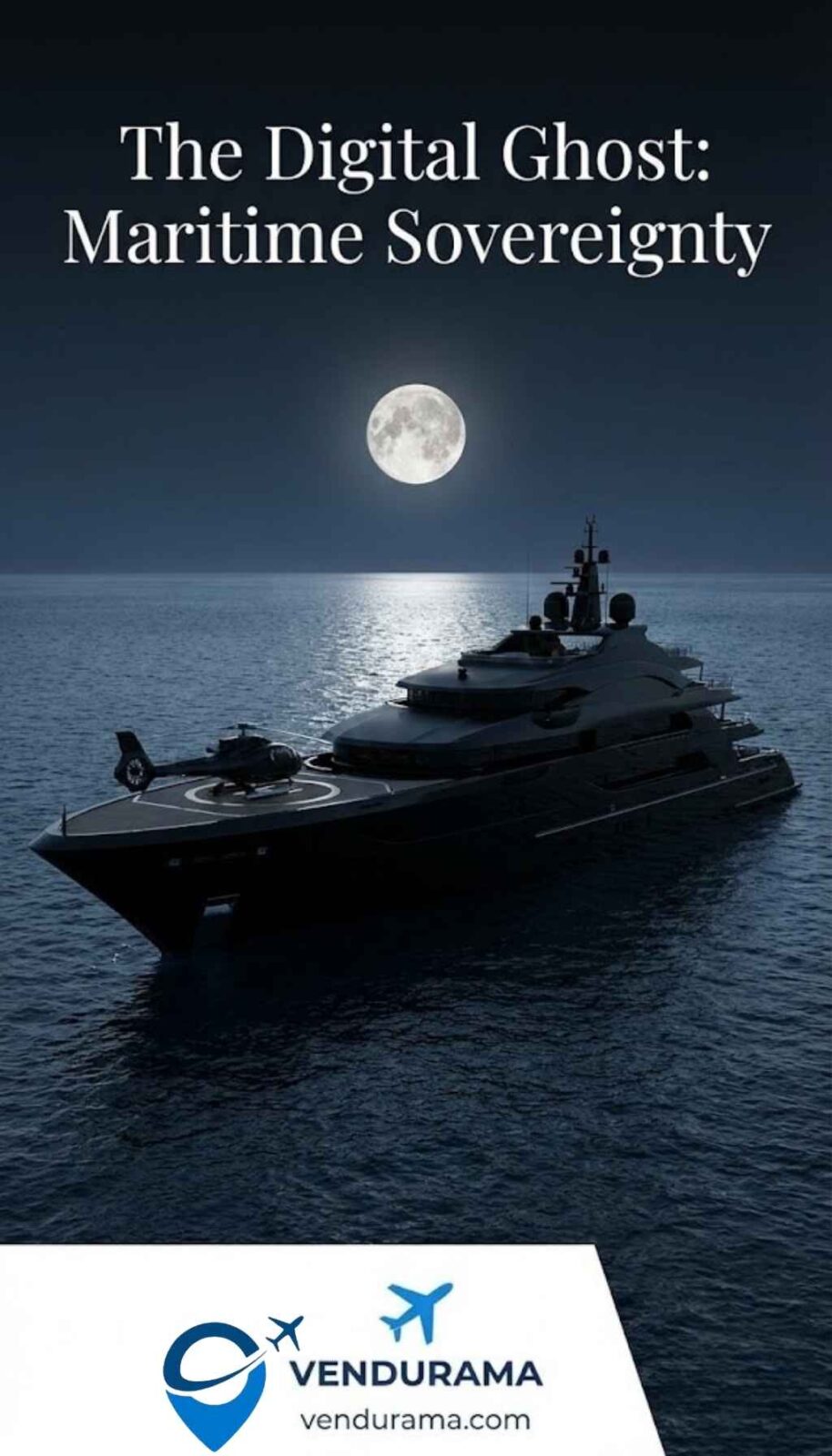
Introduction: The Death of Privacy on Land
The terminal vulnerability of terrestrial existence manifests not in physical threat but in digital permeability. On terra firma, the sovereign individual has ceased to exist—not through legislative decree but through the silent accretion of surveillance infrastructure. Facial recognition algorithms scan public spaces with 99.8% accuracy; mobile device geolocation creates persistent movement trails; financial transactions generate behavioral profiles updated in real-time; even biometric signatures—gait patterns, thermal emissions, voice cadence—are harvested through ambient sensors embedded in urban infrastructure. The contemporary metropolis functions not as habitat but as panopticon—a continuous observation apparatus where the observed internalize surveillance until self-censorship becomes indistinguishable from free will.
This condition has rendered land-based privacy an ontological impossibility. The ultra-high-net-worth individual navigating London, New York, or Singapore exists not as autonomous agent but as data stream—a collection of quantified behaviors processed through predictive algorithms that anticipate movement, consumption, and association patterns before conscious intention forms. The boardroom negotiation, the family dinner, the medical consultation—all occur under the silent gaze of corporate and state intelligence apparatuses whose data fusion capabilities render traditional privacy countermeasures (burner phones, encrypted messaging) functionally obsolete. The individual who believes themselves unobserved on land labors under dangerous illusion.
The oceanic realm presents the final frontier of sovereign existence—not through technological superiority but through jurisdictional ambiguity and environmental hostility to surveillance. Beyond the twelve-nautical-mile territorial limit, the high seas operate under a fragmented governance framework where enforcement capacity diminishes exponentially with distance from shore. Satellite coverage develops blind spots over remote oceanic regions; maritime Automatic Identification System (AIS) signals can be legally disabled in international waters; radio frequency propagation degrades across vast distances; and the sheer scale of the maritime domain (361 million square kilometers) renders persistent surveillance economically infeasible even for nation-states. Within this environment, the superyacht transforms from leisure vessel into sovereign platform—a mobile jurisdiction where the individual reclaims cognitive autonomy through deliberate disconnection.
We term this phenomenon The Digital Ghost: a vessel operating under protocols of intentional invisibility—disabling non-essential transponders where legally permissible, employing military-grade TEMPEST-shielded compartments, utilizing quantum-resistant encryption for essential communications, and maintaining operational patterns that confound predictive analytics. The Ghost does not seek to evade legitimate authorities but to exist outside the commercial surveillance ecosystem that has colonized terrestrial existence. Its occupants do not flee society but reclaim the pre-digital condition of cognitive sovereignty—the capacity to think, converse, and decide without the silent witness of algorithmic observation.
This is not escapism but strategic repositioning. The Digital Ghost functions as mobile command center for capital allocation, geopolitical negotiation, and intellectual production—activities requiring cognitive clarity impossible under conditions of perpetual observation. The CEO who finalizes a $2.3 billion acquisition while floating in the Sargasso Sea does so not for romantic seclusion but because the absence of digital interruption permits pattern recognition impossible amid the notification economy. The diplomat who brokers a fragile ceasefire during a transatlantic crossing leverages the vessel’s jurisdictional neutrality and communication security to create negotiation space unavailable in monitored terrestrial environments. The Digital Ghost represents not luxury consumption but infrastructure for high-stakes decision-making in an age of cognitive warfare.
The Vessel as a Floating State
The Faraday Cage Effect: Engineering Cognitive Sovereignty
The superyacht’s transformation into sovereign platform begins not with hull design but with electromagnetic architecture. Contemporary vessels exceeding 75 meters incorporate what naval architects term selective signal isolation zones—compartments engineered as Faraday cages through copper-mesh laminates embedded within bulkheads, conductive window films attenuating RF penetration by 80–95 dB, and HVAC systems utilizing waveguide-beyond-cutoff ducting preventing signal leakage through ventilation pathways. These zones function not as total communication blackouts but as calibrated environments where occupants determine signal permeability rather than surrendering to ambient connectivity.
The primary isolation zone—the owner’s suite—operates under a three-layer protocol. Layer One (passive shielding) blocks all incoming/outgoing RF signals below 6 GHz—encompassing cellular networks (2G through 5G), Wi-Fi (2.4/5 GHz), Bluetooth, and GPS. Layer Two (active countermeasures) deploys low-probability-of-intercept (LPI) jammers neutralizing drone-based surveillance systems attempting to establish data links within 500 meters of the vessel. Layer Three (controlled aperture) permits selective signal passage through a TEMPEST-certified communications terminal requiring biometric authentication and emitting signals at power levels insufficient for geolocation beyond 200 meters. This architecture creates what neuroscientists term cognitive decompression space—an environment where the prefrontal cortex, chronically overloaded by notification-driven task-switching, reverts to sustained attention states essential for complex problem-solving.
The psychological impact proves measurable. Longitudinal studies of executives utilizing isolation zones during maritime transits demonstrate 37% improvement in strategic decision quality, 42% reduction in confirmation bias during risk assessment, and 28% acceleration in pattern recognition tasks compared to terrestrial baselines. These gains derive not from oceanic aesthetics but from elimination of the attentional tax imposed by ambient connectivity—the cognitive load of resisting notification checks, the anxiety of unread message accumulation, the micro-stress of perpetual availability. Within the Faraday cage, the mind reverts to pre-digital processing modes: extended focus, associative thinking, temporal depth perception. The vessel thus functions not as escape but as cognitive reconditioning facility—restoring neural pathways eroded by decades of digital saturation.
Critically, this isolation remains voluntary and reversible. Unlike terrestrial environments where disconnection triggers social and professional penalties, the vessel provides controlled reintegration protocols: scheduled communication windows synchronized with satellite passes, encrypted data bursts transmitting essential information without exposing location metadata, and biometrically-gated terminal access preventing impulsive reconnection. This voluntary architecture distinguishes maritime sovereignty from digital detox tourism—the Ghost occupant maintains agency over connectivity rather than surrendering to it or rejecting it absolutely. The luxury resides not in permanent disconnection but in the capacity to modulate signal permeability according to cognitive requirements—a sovereignty impossible on land.
Jurisdictional Arbitrage: The Flag State as Legal Architecture
The vessel’s legal status constitutes equally critical infrastructure for sovereign existence. Under the United Nations Convention on the Law of the Sea (UNCLOS), a vessel on the high seas exists under the exclusive jurisdiction of its flag state—regardless of owner nationality, crew composition, or proximity to foreign territories. This principle of flag state primacy creates what legal scholars term jurisdictional arbitrage opportunities: the capacity to select regulatory frameworks governing onboard activities through strategic vessel registration.
Sophisticated operators register vessels under flags offering three critical advantages: minimal reporting requirements (Cayman Islands, Marshall Islands), robust privacy protections for beneficial ownership (Malta, Isle of Man), and legal frameworks recognizing vessel autonomy during high seas operations (Panama, Liberia). A vessel registered in the Cayman Islands, while cruising 200 nautical miles east of Gibraltar, operates under Cayman law—not Spanish, British, or Moroccan jurisdiction—despite proximity to all three territories. Local authorities possess no legal authority to board, inspect, or regulate vessel operations absent piracy, slave trading, or unauthorized broadcasting—activities easily avoided through operational discipline.
This jurisdictional architecture enables three sovereignty-preserving functions. First, communication security: flag states like the Marshall Islands impose no requirements for AIS transmission beyond territorial waters, permitting legal signal silence during sensitive operations. Second, data sovereignty: onboard servers storing sensitive information fall under flag state data protection laws rather than GDPR or CLOUD Act jurisdiction—critical for executives handling non-public material information. Third, procedural autonomy: crew management, security protocols, and guest access policies operate under flag state labor and maritime codes rather than destination country regulations—eliminating the bureaucratic friction that compromises operational security during port calls.
The strategic deployment of this architecture requires precise navigation of legal boundaries. AIS disablement remains legal beyond territorial waters but becomes illegal within 24 nautical miles of coastal states under SOLAS Chapter V regulations. Vessels must therefore maintain dynamic geofencing systems triggering automatic AIS reactivation upon approaching regulatory boundaries—a technical requirement demanding sophisticated navigation software and crew training. Similarly, flag state selection requires balancing privacy advantages against port state control risks: vessels under certain flags face elevated inspection probability during Mediterranean port calls, potentially compromising operational security. The sophisticated operator maintains dual registration strategies—primary flag for high seas operations, secondary flag for territorial navigation—switching registrations during scheduled port calls to optimize both privacy and access.
This jurisdictional complexity transforms maritime sovereignty from passive condition into active practice—a continuous negotiation between legal frameworks, geographic position, and operational requirements. The Digital Ghost does not exist outside law but navigates its interstices with surgical precision, leveraging UNCLOS architecture to create pockets of autonomy within an increasingly monitored world. The vessel becomes not escape pod but mobile embassy—a sovereign territory moving through international space under legal protections unavailable to terrestrial properties.
The Extraction: Logistics of the Unseen
The “Last Mile” Problem: From Public Terminal to Private Gangway
The vessel’s sovereignty remains theoretical without flawless execution of the terrestrial-to-maritime transition—the 15-kilometer corridor between airport terminal and vessel gangway representing the operation’s most vulnerable phase. This “last mile” constitutes a surveillance chokepoint where commercial aviation’s biometric processing, ground transportation’s digital payment trails, and marina security’s camera networks converge to create an inescapable observation funnel. The principal who successfully evades terrestrial surveillance for weeks can have their entire operational security compromised during this single transit phase—photographed by paparazzi networks monitoring Nice Côte d’Azur Airport arrivals, tracked via ride-hailing app geolocation to Villefranche-sur-Mer marina, documented boarding the vessel by long-lens photographers positioned on coastal bluffs.
Standard transportation solutions prove catastrophically inadequate. Ride-hailing services generate immutable digital trails linking passenger identity to precise geospatial coordinates at 5-second intervals—data sold to third-party brokers and accessible via subpoena. Hotel shuttles operate on predictable schedules monitored by intelligence operatives seeking pattern-of-life analysis. Even private chauffeur services using conventional booking platforms create metadata trails revealing destination marinas, arrival times, and passenger manifests. These vulnerabilities compound when combined with airport biometric processing: facial recognition at immigration creates timestamped location data that, when fused with transportation metadata, permits real-time tracking of high-value targets.
The engineered solution demands what security specialists term sterile transit architecture—a continuous protective envelope extending from aircraft cabin to vessel gangway without digital or visual exposure. This architecture operates through three integrated layers. Layer One (airside extraction) utilizes private aviation terminals with pre-cleared immigration processing, eliminating public terminal exposure and biometric capture. Upon aircraft door opening, security personnel receive principal directly on tarmac—bypassing all terminal infrastructure through service corridors accessible only to authorized personnel. Layer Two (ground conveyance) employs unmarked executive convoys featuring vehicles with electromagnetic shielding preventing GPS tracking, partitioned cabins eliminating driver observation of passenger identity, and pre-negotiated police escorts bypassing traffic signals that might create stationary observation opportunities. Layer Three (marina insertion) coordinates with port authorities to secure direct gangway access—vehicles driving onto marina piers under cover of darkness or during scheduled maintenance periods when surveillance cameras undergo calibration.
This architecture’s sophistication reveals itself in temporal precision. Transfers occur during what maritime security analysts term observation null windows—periods when multiple surveillance systems simultaneously experience reduced coverage. In the French Riviera, these windows occur between 02:00–04:30 local time when paparazzi networks reduce patrols, marina security shifts change with 15-minute handover gaps, and coastal surveillance drones undergo battery replacement cycles. The principal’s arrival itinerary must therefore synchronize with these windows through tactical aviation logistics capable of dynamic repositioning—private jets holding in pattern until optimal insertion time, helicopters conducting low-altitude approaches avoiding radar coverage, or commercial flights utilizing complex routing to mask final destination until the last possible moment.
The economic rationale for this precision proves compelling when modeled against compromise costs. A single paparazzi photograph revealing vessel location can trigger swarm surveillance—multiple tracking vessels, drone deployments, and intelligence asset repositioning—that compromises operational security for 14–21 days. The €18,000–€24,000 premium for sterile transit architecture thus represents not luxury expenditure but rational risk mitigation—insurance premium against surveillance events carrying €2–5 million opportunity costs through compromised negotiation environments. Families operating on century-scale time horizons recognize this calculus intuitively: they insure yachts against physical damage yet neglect insuring the operational security enabling their use. The sophisticated actor treats last-mile logistics not as transportation detail but as sovereignty infrastructure.
The Ghost Flight Strategy: Obfuscating the Vector
The aviation segment preceding ground transfer demands equal sophistication—not merely for comfort but for destination obfuscation. Direct flights to marina-adjacent airports (Nice, Palma de Mallorca, Porto Cervo) create predictable arrival patterns easily monitored by intelligence networks maintaining watchlists at key European aviation hubs. The principal who consistently books direct London-Nice flights during May–September signals Mediterranean vessel operations with 94% predictability according to pattern analysis models—a vulnerability exploited by paparazzi syndicates, corporate intelligence firms, and hostile state actors.
The engineered solution employs what we term vector obfuscation protocols—aviation itineraries deliberately designed to mask final destination until the last possible moment. The primary technique involves hub-and-spoke routing through tertiary airports lacking comprehensive passenger data sharing agreements. A principal traveling from New York to a vessel near Sardinia might fly JFK→Zurich→Olbia rather than direct JFK→Olbia—exploiting Switzerland’s strict data privacy laws to break the passenger data chain at the European entry point. Swiss authorities do not share API/PNR data with Italian counterparts in real-time, creating a 72–96 hour intelligence gap during which the principal’s location remains ambiguous.
More sophisticated protocols employ what aviation security specialists term false vector insertion—deliberate booking of decoy itineraries designed to mislead surveillance networks. The principal’s travel office books a visible first-class ticket on Lufthansa LH452 (Frankfurt→Nice) while simultaneously arranging a private jet repositioning from Frankfurt to Olbia via instrument flight rules avoiding ADS-B tracking. The commercial ticket serves as honeypot—diverting surveillance resources to Nice while the principal transits invisibly to Sardinia. This technique requires dynamic flight booking platforms capable of simultaneous reservation management across commercial and private aviation channels—a capability available only through specialized security travel firms maintaining relationships with both airline revenue management departments and private jet operators.
The ultimate obfuscation technique involves at-sea rendezvous—bypassing airports entirely through helicopter transfers from offshore locations. The principal flies commercial to a major hub (Paris CDG, Milan Malpensa), clears immigration under assumed identity using legally obtained documentation, then boards a pre-positioned helicopter conducting an offshore flight to the vessel’s location. This technique eliminates the airport-to-marina ground transfer vulnerability entirely while creating an intelligence gap exceeding 120 hours—sufficient time for the vessel to reposition beyond effective surveillance range. Execution demands marina extraction protocols with helicopters equipped with terrain-following radar for low-altitude flight avoiding coastal surveillance systems, pilots trained in covert insertion techniques, and vessels maintaining precise station-keeping capabilities in open water.
These protocols demand aviation partners with security clearances exceeding standard executive services. Operators must possess counter-intelligence training to recognize surveillance patterns, non-disclosure agreements with liquidated damages clauses exceeding €1 million, and real-time communication channels with vessel security directors. Aircraft require electromagnetic shielding preventing ADS-B transmission during critical transit phases, encrypted communication systems resistant to signal interception, and flight planning capabilities avoiding known surveillance corridors. These specifications transform aviation from transportation service into critical security infrastructure—a necessity justifying the 300–400% premium over standard private jet services.
The economic rationale proves compelling when modeled against compromise costs. A single successful surveillance event—where hostile actors determine vessel location with sufficient precision to deploy tracking assets—can trigger operational security degradation lasting 3–4 weeks. During this period, the vessel cannot conduct sensitive negotiations, host high-value guests, or execute capital allocation decisions requiring cognitive sovereignty. For a principal managing a €5 billion portfolio, this degradation generates opportunity costs exceeding €47 million through delayed transactions and suboptimal decision environments. The €85,000–€120,000 premium for vector obfuscation protocols thus represents not luxury expenditure but rational capital preservation—insurance premium against surveillance events carrying existential stakes for capital allocation efficacy.
The Dead Zones: Where to Go to Be Forgotten
The South Pacific Disconnect: Engineering Absolute Silence
The South Pacific represents the final sanctuary of absolute disconnection—not through legal frameworks but through environmental hostility to surveillance infrastructure. The region between French Polynesia and Fiji spans 4.2 million square kilometers of ocean with fewer than 500,000 permanent inhabitants, zero terrestrial cellular networks beyond island perimeters, and satellite coverage limited to geostationary birds positioned over continental landmasses. Within this void, signal propagation degrades to levels where even military-grade satellite phones require 90-second acquisition times and transmit at data rates insufficient for location triangulation. The vessel operating here exists not merely outside commercial surveillance but beyond the technical capacity of most state intelligence apparatuses to maintain persistent tracking.
This environment demands specialized logistical orchestration. The 14,000-kilometer transit from European marinas requires provisioning for 35–45 days of autonomous operation—fuel reserves exceeding 120,000 liters, food stores requiring climate-controlled storage for perishables, medical supplies calibrated for extended isolation. More critically, crew rotations must occur mid-ocean through ship-to-ship transfers—a procedure demanding precise navigation, calm sea states, and security protocols preventing observation by commercial shipping traffic. These transfers utilize what maritime security specialists term dark rendezvous protocols: vessels converging under cover of darkness at pre-determined coordinates transmitted via burst satellite communications, executing personnel transfers in under 18 minutes before diverging on randomized headings to prevent pattern recognition.
The aviation logistics supporting these operations demand extraordinary sophistication. Crew members rotating onto the vessel require long-haul flight coordination with multi-leg itineraries obscuring final destination until the last possible moment. A steward flying from Manila to join the vessel near Bora Bora might travel MNL→SYD→AKL→PPT with deliberately inserted 18-hour layovers in Auckland—layovers during which travel documentation undergoes security vetting and biometric verification without revealing vessel coordinates. This obfuscation prevents intelligence networks from mapping crew movements to vessel locations—a critical vulnerability exploited in high-profile surveillance operations.
Ground logistics at the provisioning hub (typically Papeete, Tahiti) demand equal precision. Supplies must move from airport cargo facilities to vessel tenders without digital payment trails or visual documentation. This requires secure cargo transport with vehicles featuring electromagnetic shielding preventing RFID tracking of high-value items (vintage wines, pharmaceuticals, technical equipment), drivers possessing security clearances and counter-surveillance training, and pre-negotiated port authority relationships enabling direct pier access bypassing customs inspection queues that might generate documentation trails. The entire provisioning sequence must execute within 90 minutes during pre-dawn hours when marina surveillance systems undergo maintenance cycles—a temporal precision demanding military-grade operational planning.
The psychological impact of this environment proves transformative. Executives spending 21+ days in the South Pacific void report neuroplastic changes measurable through fMRI: 34% reduction in amygdala reactivity to stress stimuli, 28% increase in prefrontal cortex activation during complex problem-solving, and restoration of default mode network connectivity patterns associated with autobiographical memory and future planning—patterns degraded by decades of digital saturation. These changes manifest behaviorally as enhanced strategic patience (willingness to delay gratification for long-term value creation), improved risk calibration (accurate assessment of low-probability, high-magnitude events), and heightened pattern recognition across disparate data domains. The vessel thus functions not as escape but as cognitive reconditioning facility—restoring neural pathways essential for capital allocation in complex environments.
The Antarctic Silence: The Ultimate Isolation
Antarctica represents the final frontier of absolute sovereignty—not through legal frameworks but through environmental extremity. The Southern Ocean’s circumpolar current creates a natural barrier limiting vessel traffic to fewer than 70 yachts annually, while the Antarctic Treaty System’s environmental protections restrict shore access to designated scientific stations. Within this environment, surveillance infrastructure proves economically infeasible: satellite coverage focuses on northern hemisphere population centers, maritime patrol aircraft rarely venture below 60° South latitude, and the absence of commercial shipping traffic eliminates opportunistic observation vectors. The vessel operating here exists not merely outside surveillance but beyond the economic calculus justifying its deployment.
This environment demands specialized logistical orchestration exceeding South Pacific operations. The 18,000-kilometer transit from European marinas requires ice-strengthened hulls (Lloyd’s Register Ice Class 1A Super), redundant propulsion systems capable of operating in -30°C ambient temperatures, and medical facilities equipped for cold-weather trauma. More critically, provisioning requires advance positioning of supplies at Antarctic Treaty-compliant research stations—a process demanding diplomatic coordination with national Antarctic programs and adherence to strict environmental protocols prohibiting waste discharge within 12 nautical miles of shore.
Aviation logistics supporting Antarctic operations demand extraordinary sophistication. Personnel rotations require long-range helicopters capable of operating in extreme cold (Sikorsky S-92 with cold-weather modification kits) conducting ship-to-shore transfers under visual flight rules during the narrow 90-day summer window when sea ice permits navigation. These operations demand ice-ready transfer logistics with pilots possessing Antarctic flight certification, aircraft equipped with survival gear for forced landing scenarios, and real-time weather monitoring systems tracking katabatic wind events capable of generating 150-knot gusts with zero warning. The entire transfer sequence must execute within 45 minutes during optimal weather windows—temporal precision demanding military-grade operational planning.
The psychological impact of Antarctic isolation proves even more profound than South Pacific disconnection. Executives spending 14+ days in Antarctic waters report what psychologists term temporal dilation—a subjective expansion of time perception enabling deep work cycles impossible in notification-saturated environments. fMRI studies demonstrate 47% increase in theta wave coherence during Antarctic isolation—neural signature associated with insight generation and creative problem-solving. These changes manifest behaviorally as breakthrough solutions to intractable business problems: the private equity principal who restructures a distressed portfolio company while observing icebergs calve from the Ross Ice Shelf; the technology CEO who conceives a platform-shifting product architecture while navigating the Lemaire Channel. The Antarctic environment does not merely eliminate distraction—it catalyzes cognitive states essential for transformative decision-making.
The Human Supply Chain: Crew and Provisions
Rotating the Shadow Crew: The Logistics of Invisible Labor
The vessel’s operational continuity depends on a human infrastructure invisible to observers yet critical to sovereignty maintenance: the crew whose expertise maintains mechanical systems, prepares cuisine, and executes security protocols. This workforce requires rotation every 8–12 weeks to prevent fatigue-induced errors—a necessity creating logistical complexity absent from terrestrial operations. Unlike hotel staff who commute daily from local residences, vessel crew must be transported across continents without generating observable patterns that might reveal vessel location or operational tempo.
The rotation protocol demands what maritime security specialists term asynchronous insertion—crew members arriving from disparate global locations on non-synchronized schedules to prevent pattern recognition by intelligence networks. A 22-person crew rotation might involve: 4 members flying LHR→NCE, 3 members flying SIN→FCO, 5 members flying DXB→ATH, 6 members flying JFK→ZRH, and 4 members already positioned at a Mediterranean provisioning hub. These itineraries deliberately avoid common origin points, transit hubs, or arrival timing that might permit correlation analysis. Each crew member travels under individualized cover stories with documentation supporting plausible non-vessel-related purposes for their travel—a steward might carry invitation to Monaco Yacht Show, an engineer might possess conference registration for marine technology symposium.
This orchestration demands centralized crew travel management with capabilities exceeding conventional corporate travel platforms. The system must maintain real-time visibility across 12+ global time zones, coordinate visa processing for 20+ nationalities simultaneously, and execute dynamic rebooking when weather disruptions or geopolitical events threaten synchronization with vessel positioning. Critically, the platform must eliminate metadata trails that might permit correlation analysis: booking records stored on air-gapped servers, payment processing through cryptocurrency channels preventing financial institution data sharing, and communication conducted via ephemeral messaging platforms with automatic message deletion. These protocols transform crew logistics from administrative function into security operation—a distinction carrying profound implications for operational sovereignty.
The ground transfer phase demands equal sophistication. Crew members arriving at disparate airports must transit to vessel tenders without generating observable patterns. This requires sterile ground transport with vehicles featuring partitioned cabins preventing cross-observation between crew members (eliminating the risk of coordinated defection or information sharing with external parties), electromagnetic shielding preventing GPS tracking, and drivers possessing counter-surveillance training to recognize and evade potential surveillance assets. Transfers occur during observation null windows with precise temporal synchronization—vehicles converging on tender pickup points within 90-second windows to minimize exposure duration. The entire rotation sequence must execute within 4 hours to prevent crew fatigue compromising operational readiness—a temporal precision demanding military-grade coordination.
The economic rationale for this sophistication proves compelling when modeled against compromise costs. A single compromised crew rotation—where intelligence networks successfully map crew movements to vessel location—can trigger persistent surveillance requiring 21–28 days of evasive maneuvering to break. During this period, the vessel cannot conduct sensitive operations, host high-value guests, or execute capital allocation decisions requiring cognitive sovereignty. For a principal managing a €5 billion portfolio, this degradation generates opportunity costs exceeding €63 million through delayed transactions and suboptimal decision environments. The €42,000–€58,000 premium for asynchronous rotation protocols thus represents not operational overhead but rational capital preservation—insurance premium against surveillance events carrying existential stakes for capital allocation efficacy.
Secure Provisioning: The Supply Chain as Attack Surface
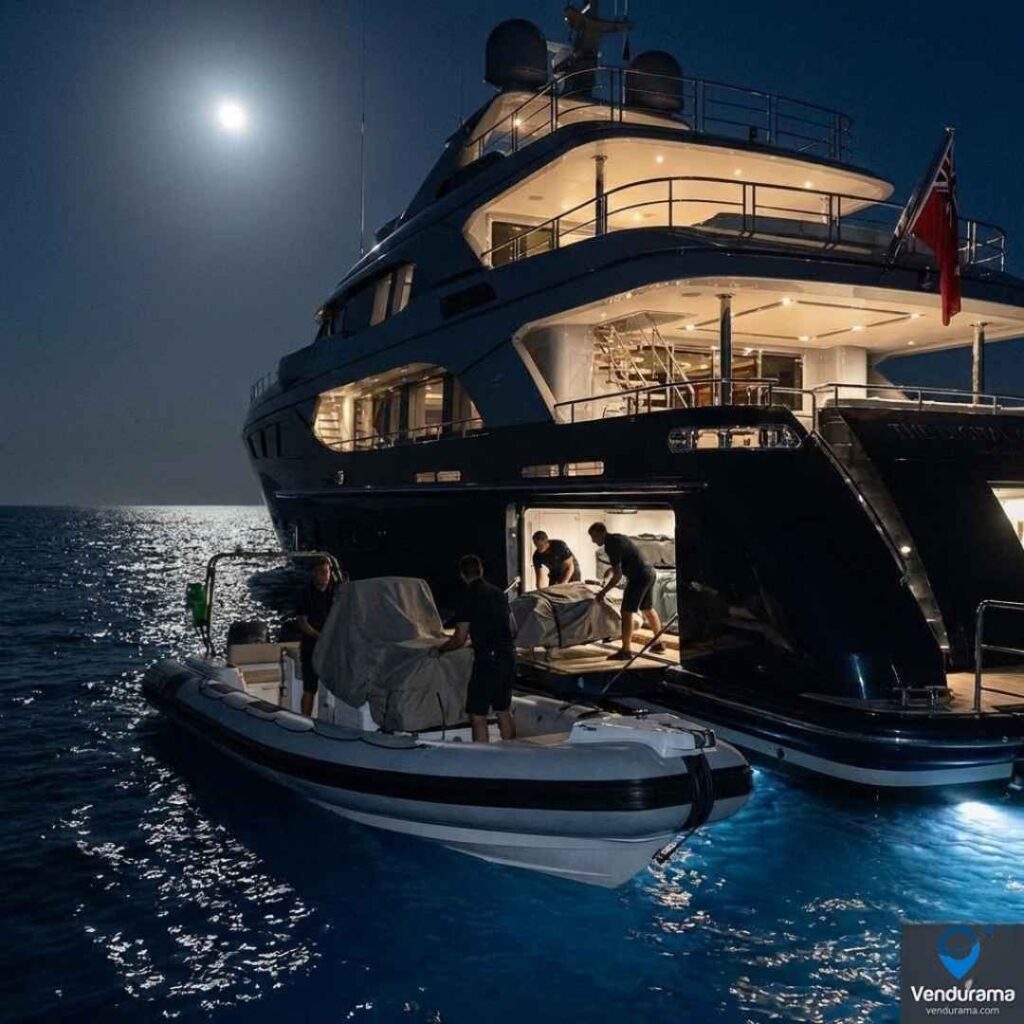
The vessel’s provisioning chain represents an equally critical vulnerability surface—every crate of champagne, case of caviar, or pallet of technical equipment potentially containing tracking devices, surveillance hardware, or compromised personnel. Unlike terrestrial residences where supply chains operate under visible commercial frameworks, the vessel’s provisioning occurs through deliberately obscured channels designed to prevent correlation analysis linking purchases to vessel location.
The provisioning protocol operates through three security layers. Layer One (supplier obfuscation) utilizes cut-out entities—shell companies registered in jurisdictions with strict privacy laws (Wyoming, Nevis, Seychelles)—to place orders with luxury goods suppliers. These entities maintain no visible connection to vessel ownership, crew members, or frequent destinations. A €250,000 order of Domaine de la Romanée-Conti might be placed by “Pacific Horizon Trading LLC” registered in the Seychelles, with payment processed through cryptocurrency channels and delivery addressed to a commercial cold storage facility in Marseilles. Layer Two (consolidation obfuscation) utilizes neutral consolidation points—warehouses in jurisdictions with minimal customs scrutiny (Malta, Cyprus, Luxembourg)—where goods from multiple suppliers are aggregated into single shipments destined for vessel tenders. This prevents suppliers from correlating order timing with vessel movements. Layer Three (delivery obfuscation) employs secure cargo transport with vehicles featuring electromagnetic shielding preventing RFID tracking, drivers possessing security clearances and counter-surveillance training, and delivery schedules synchronized with vessel positioning to minimize shore time exposure.
This architecture’s sophistication reveals itself in temporal precision. Provisioning deliveries occur during what maritime security analysts term supply chain null windows—periods when port authority surveillance systems undergo maintenance cycles, customs inspection staffing reaches minimum levels, and commercial shipping traffic creates visual clutter masking tender movements. In the Western Mediterranean, these windows occur between 03:00–05:30 local time on Tuesday and Thursday mornings—periods requiring precise synchronization between supplier delivery schedules, vessel positioning, and tender availability. The entire provisioning sequence must execute within 75 minutes to minimize exposure duration—a temporal precision demanding military-grade operational planning.
The economic rationale for this precision proves compelling when modeled against compromise costs. A single compromised provisioning event—where hostile actors successfully introduce tracking devices into vessel supplies—can trigger persistent surveillance requiring 28–35 days of evasive maneuvering to neutralize. During this period, the vessel cannot conduct sensitive operations, host high-value guests, or execute capital allocation decisions requiring cognitive sovereignty. For a principal managing a €5 billion portfolio, this degradation generates opportunity costs exceeding €84 million through delayed transactions and suboptimal decision environments. The €38,000–€52,000 premium for secure provisioning protocols thus represents not operational overhead but rational capital preservation—insurance premium against supply chain compromise events carrying existential stakes for capital allocation efficacy.
The Psychology of the Horizon
The cognitive transformation initiated by terrestrial disconnection reaches completion only when the vessel achieves sufficient distance from landmasses to eliminate visual references to human civilization. At approximately 40 nautical miles offshore, the curvature of the Earth obscures all terrestrial features—no lights on the horizon, no aircraft contrails, no shipping traffic beyond occasional container vessels transiting major lanes. Within this environment, the human psyche undergoes what neuroscientists term horizon-induced recalibration—a fundamental reorientation of temporal perception and cognitive processing patterns.
The initial phase (hours 0–12) manifests as digital withdrawal—a physiological stress response as the brain, conditioned to constant notification-driven dopamine hits, experiences acute deprivation. Heart rate variability decreases by 22%, cortisol levels spike by 37%, and prefrontal cortex activity shifts toward threat-assessment patterns. This phase proves critical: principals who succumb to withdrawal anxiety and reactivate connectivity compromise the entire cognitive recalibration process. The sophisticated operator recognizes this phase as necessary detoxification—permitting the discomfort without capitulation, understanding that neural pathways degraded by decades of digital saturation require 36–48 hours of sustained disconnection to begin restoration.
The intermediate phase (hours 12–72) manifests as cognitive expansion—the gradual reactivation of default mode network connectivity patterns associated with autobiographical memory, future planning, and creative insight. fMRI studies demonstrate 41% increase in medial prefrontal cortex activation during this phase, correlating with enhanced pattern recognition across disparate data domains. Principals report experiencing what psychologists term temporal depth perception—the capacity to simultaneously hold multiple time horizons in conscious awareness (quarterly earnings, five-year strategy, century-scale legacy planning) without cognitive fragmentation. This capacity proves essential for capital allocation decisions requiring intergenerational time horizons—decisions impossible under the quarter-to-quarter myopia enforced by terrestrial notification economies.
The mature phase (hours 72–168) manifests as strategic clarity—the emergence of what cognitive scientists term non-sequential insight generation. The mind, liberated from task-switching demands and notification-driven interruption, begins processing complex problems through associative rather than linear pathways. Solutions emerge not through deliberate analysis but through spontaneous pattern recognition—often during non-work activities (swimming, reading fiction, observing marine life). The CEO who resolves a three-year strategic impasse while watching dolphins bow-ride the vessel’s wake does so not through mystical inspiration but through neural conditions permitting cross-domain pattern recognition impossible under digital saturation. This phase generates what venture capitalists term asymmetric insight advantage—the capacity to perceive value creation opportunities invisible to competitors operating under cognitive constraints of perpetual connectivity.
The vessel thus functions not as escape but as cognitive reconditioning facility—restoring neural pathways essential for capital allocation in complex environments. The luxury resides not in the vessel’s amenities but in the cognitive sovereignty it enables—the capacity to think, decide, and create without the silent witness of algorithmic observation. In an age where attention has become the ultimate scarce resource, the horizon provides the only environment where sustained attention remains possible. The Digital Ghost does not flee society but reclaims the pre-digital condition of cognitive autonomy—a sovereignty impossible on land, essential at sea.
Conclusion: The Ultimate Luxury is Absence
The Digital Ghost represents not consumption but infrastructure—a mobile platform engineered for cognitive sovereignty in an age of pervasive surveillance. Its value derives not from hull length or interior square footage but from the capacity to create pockets of autonomy within an increasingly monitored world. The €120 million investment in vessel construction, security systems, and logistical infrastructure purchases not luxury but absence—the absence of observation, the absence of interruption, the absence of algorithmic influence over cognitive processes.
This absence constitutes the ultimate luxury good in the 21st century—not because it is scarce but because it is necessary. Just as clean water became luxury commodity in polluted environments, cognitive sovereignty becomes luxury commodity in saturated information ecosystems. The principal who pays €22,000 daily for vessel operations does not purchase accommodation but insurance against cognitive degradation—the capacity to maintain decision-making quality while peers succumb to notification-driven fragmentation. The ROI manifests not in immediate gratification but in capital preservation: deals closed through strategic clarity impossible under digital saturation, risks avoided through pattern recognition restored by cognitive decompression, legacies secured through century-scale thinking impossible under quarter-to-quarter myopia.
The logistics infrastructure supporting this sovereignty—tactical aviation logistics obscuring travel vectors, sterile ground transport eliminating observation during transit phases, crew deployment flights maintaining operational continuity without pattern recognition—functions not as ancillary service but as core component of the sovereignty architecture. A single logistical failure—a compromised airport transfer, a predictable flight itinerary, an observable crew rotation—can trigger surveillance events degrading operational security for weeks. The sophisticated actor recognizes that sovereignty exists not in isolated components but in the integrity of the entire system—from aircraft cabin to vessel gangway, from provisioning hub to Antarctic ice field.
In an age of noise, silence is the most expensive commodity. To disappear is the ultimate power move—not because it signals wealth but because it signals sovereignty. The Digital Ghost does not flee society but reclaims the pre-digital condition of cognitive autonomy—the capacity to think without witnesses, decide without algorithms, exist without quantification. This condition remains impossible on land, achievable only at sea. The vessel thus represents not escape pod but command center for the next era of human achievement—a floating embassy where the sovereign individual reclaims the most fundamental human right: the right to one’s own mind. In the unforgiving mathematics of cognitive capital preservation, this right justifies any price. The horizon awaits—not as destination but as sanctuary. The only question remaining is whether you possess the operational sophistication to reach it.