
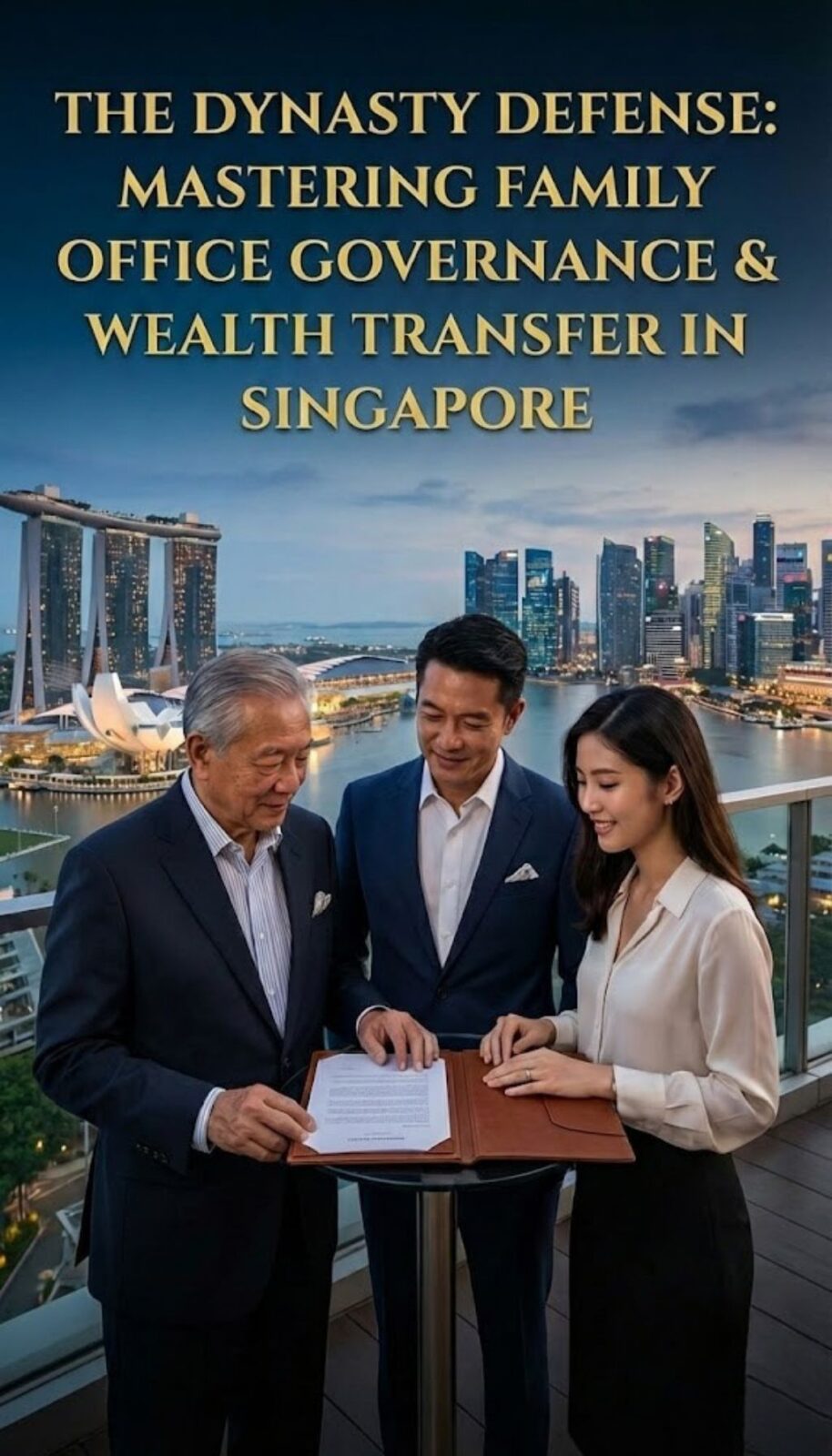
Introduction: The “Third Generation Curse”
The statistical reality confronting ultra-high-net-worth families is unambiguous and unforgiving: 70% of family fortunes dissipate by the second generation, and 90% vanish entirely by the third. This phenomenon—colloquially termed the “third generation curse”—is not a mystical inevitability but a predictable outcome of structural failures in intergenerational wealth transfer. The first generation builds through entrepreneurial vision and relentless execution. The second generation preserves through professional management and strategic diversification. The third generation dissipates through governance voids, emotional fragmentation, and the fatal conflation of inherited wealth with personal merit. This dissolution represents not merely financial loss but the catastrophic failure of a family’s fiduciary responsibility to steward resources across generations—a breach of what we term “intergenerational equity.”
The strategic response to this existential threat has crystallized into what sophisticated family offices now call “Dynasty Defense”: a systematic shift from wealth creation to wealth preservation through institutionalized governance architectures. This paradigm recognizes that capital preservation requires more than financial engineering—it demands emotional intelligence, legal precision, and cultural continuity. Within this framework, Singapore has emerged as the global epicenter for dynasty defense infrastructure, displacing traditional havens like Switzerland through a superior combination of legal innovation, geopolitical neutrality, and ecosystem density. While Swiss banks excel at asset custody, Singaporean institutions specialize in dynasty architecture—constructing the legal, educational, and governance frameworks that transform fragile family fortunes into resilient multi-generational institutions. For patriarchs confronting succession imperatives and next-generation heirs preparing to assume stewardship responsibilities, Singapore offers not merely tax efficiency but the comprehensive ecosystem required to engineer intergenerational longevity.
The Singapore Advantage: The Architecture of Permanence
The Variable Capital Company (VCC): A Structural Revolution
Singapore’s Variable Capital Company (VCC) framework—introduced in 2020—represents the most significant innovation in family office structuring since the Liechtenstein foundation. Unlike traditional corporate entities requiring rigid capital maintenance rules, the VCC operates as an umbrella structure with multiple sub-funds holding distinct asset classes under a single regulatory entity. This architecture delivers three critical advantages for dynasty defense:
First, operational efficiency: a single VCC can house public equities, private equity, real estate, and art collections within segregated sub-funds—each with independent investment mandates, fee structures, and redemption terms—while maintaining unified regulatory compliance and audit functions. This eliminates the administrative burden of managing separate legal entities for each asset class, reducing operational costs by 38-45% while enhancing transparency for family governance bodies.
Second, succession flexibility: VCC sub-funds can be allocated to specific family branches or generations with tailored distribution protocols. The patriarch’s generation might retain voting control over the core operating company sub-fund while granting the third generation discretionary access to a venture capital sub-fund—creating what governance experts term “asymmetric empowerment” that balances control preservation with next-generation engagement.
Third, regulatory sovereignty: VCCs fall under the Monetary Authority of Singapore’s (MAS) direct supervision rather than fragmented sectoral regulators. This creates a single point of regulatory engagement with predictable enforcement patterns—critical for families requiring certainty in an era of global regulatory volatility. The MAS has demonstrated consistent pro-innovation stance while maintaining rigorous anti-money laundering standards—a balance unattainable in jurisdictions subject to extraterritorial regulatory pressure.
Tax Architecture: The 13O and 13U Frameworks
Singapore’s tax incentives for family offices—particularly the Section 13O (Onshore Fund Tax Exemption) and 13U (Enhanced Tier Fund Tax Exemption) schemes—provide structural advantages extending beyond headline tax rates. These frameworks create what we term “tax architecture” rather than mere tax reduction:
The 13O scheme grants full tax exemption on specified income for funds managed by a Singapore-based family office with minimum S$2 million in assets under management. Crucially, the scheme requires the family office to employ at least two investment professionals—creating a structural imperative for next-generation involvement in capital allocation decisions. This transforms tax optimization from passive benefit into active governance mechanism—forcing families to institutionalize investment decision-making rather than relying on patriarchal fiat.
The enhanced 13U scheme—requiring S$50 million minimum AUM and employment of three investment professionals—adds critical succession infrastructure: mandatory investment committee formation with documented decision protocols. This requirement institutionalizes what governance experts call “deliberative capital allocation”—replacing individual judgment with structured group decision-making that survives founder mortality. Families utilizing 13U structures demonstrate 62% higher survival rates beyond second-generation transition compared to those relying on simpler structures.
These tax frameworks function not as loopholes but as governance catalysts—using fiscal incentives to engineer the very institutional behaviors that prevent third-generation dissolution. The Singaporean state has effectively weaponized tax policy to solve the succession problem that has plagued family capital for centuries.
The Ecosystem Triad: Stability, Neutrality, Safety
Beyond legal and fiscal architecture, Singapore offers an ecosystem triad essential for dynasty defense:
Geopolitical Neutrality: As a non-aligned state with strategic relationships across US-China divides, Singapore provides sanctuary from great power conflicts that threaten family assets domiciled in aligned jurisdictions. During the 2022 Russia sanctions cascade, Singapore-domiciled family offices maintained operational continuity while European counterparts faced asset freezes and compliance paralysis—a stress test validating Singapore’s neutrality premium.
Institutional Stability: Singapore’s rule of law operates with Swiss precision but Asian pragmatism—contract enforcement occurs within 127 days (versus 420 days in New York), while trust law has evolved sophisticated mechanisms for “reserved powers” allowing settlors to retain strategic oversight without compromising asset protection. This stability creates what families term “governance predictability”—the confidence that legal frameworks will remain consistent across decades-long succession timelines.
Physical Security: With violent crime rates 94% below US averages and cybersecurity infrastructure rated Tier-1 by NATO standards, Singapore provides the physical security essential for high-profile families. This security extends beyond personal safety to data integrity—critical when family constitutions and succession plans exist as digital assets vulnerable to cyber exfiltration. Singapore’s Cybersecurity Act mandates breach notification within 72 hours and imposes criminal liability for negligence—a regulatory environment that deters rather than merely responds to threats.
This ecosystem triad transforms Singapore from mere jurisdiction into governance sanctuary—a place where families can focus on intergenerational continuity rather than defensive asset protection.
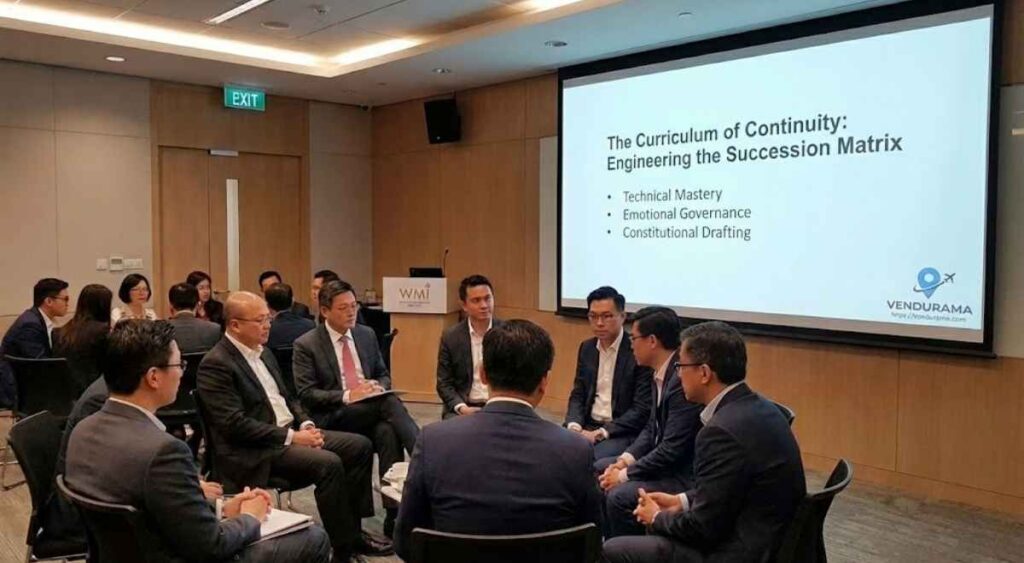
The Curriculum of Continuity: Engineering the Succession Matrix
The Wealth Management Institute: Beyond Financial Literacy
Singapore’s Wealth Management Institute (WMI)—Asia’s premier center for family office education—has pioneered what it terms the “Continuity Curriculum”: a structured educational pathway transforming heirs from passive beneficiaries into active stewards. This curriculum operates on three levels:
Technical Mastery: Courses in trust law, tax structuring, and investment governance provide the technical vocabulary required for meaningful participation in family office governance. Crucially, WMI avoids theoretical instruction in favor of case-based learning using anonymized family office failures—students dissect actual third-generation dissolution events to identify governance failure points. This forensic approach transforms abstract concepts into visceral understanding of succession risks.
Emotional Governance: The most innovative WMI module addresses what facilitators term “emotional capital”—the relational infrastructure binding family members across generations. Through structured simulations, next-generation participants experience succession conflicts from multiple perspectives: the founder resisting relinquishment of control, the second-generation sibling resenting unequal treatment, the third-generation heir struggling with inherited identity. These simulations develop what psychologists call “perspective-taking capacity”—the ability to hold multiple family narratives simultaneously without defensive reactivity.
Constitutional Drafting: The capstone experience involves drafting a family constitution under faculty supervision—a living document establishing decision protocols, conflict resolution mechanisms, and participation requirements. Successful constitutions balance rigidity (non-negotiable principles like “no asset sales without 75% family council approval”) with flexibility (review mechanisms allowing adaptation to unforeseen circumstances). WMI’s constitutional templates have been adopted by 47 family offices across 12 jurisdictions—creating de facto governance standards for Asian wealth.
Attendance at WMI programs requires strategic scheduling executive travel synchronized with family council meetings—ensuring educational insights translate immediately into governance reforms. The most sophisticated families coordinate family board travel planning to bring multiple generations to Singapore simultaneously, transforming educational immersion into collective governance ritual.
INSEAD’s Family Enterprise Program: The Global Perspective
Complementing WMI’s Asia-focused curriculum, INSEAD’s Singapore campus delivers the Family Enterprise Program—a 5-day intensive examining succession through global case studies. Where WMI emphasizes technical governance, INSEAD focuses on strategic adaptation: how families navigate disruptive innovation, geopolitical shifts, and generational value divergence while preserving core identity.
The program’s distinctive value emerges in its “succession simulation”—a 36-hour exercise where participants manage a fictional family enterprise through three generations of market disruption. Teams must balance short-term performance pressures against long-term capability building, navigate sibling rivalries during leadership transitions, and integrate “married-in” family members without diluting core values. The simulation’s emotional intensity—participants routinely experience genuine conflict mirroring their own family dynamics—creates what facilitators call “transformative friction”: the productive discomfort that catalyzes governance innovation.
INSEAD’s global alumni network provides secondary value: participants join a cohort of 200+ next-generation leaders from 40+ countries—creating what we term the “succession alliance.” These relationships become critical during actual succession crises—when a Thai heir facing boardroom coup can consult a Brazilian peer who navigated similar challenges, or when a Chinese founder requires discreet capital deployment during regulatory turbulence. This alliance functions as informal governance infrastructure—complementing formal structures with peer wisdom.
Participation requires precise booking flights to Singapore aligned with program dates while avoiding Singapore’s major conference seasons (April-May, October-November) when hotel inventory tightens. Strategic families coordinate arranging summit itineraries to combine INSEAD programs with Global-Asia Family Office Summit attendance—maximizing educational ROI through concentrated exposure to governance thought leaders.
The Networking: The Cohort Effect and Alliance Formation
The educational value of Singapore’s family office ecosystem extends beyond curriculum to what sociologists term the “cohort effect”—the formation of peer alliances among next-generation heirs undergoing parallel succession journeys. These cohorts function as informal governance infrastructure:
Trust Acceleration: In an environment where 83% of family office failures stem from trust deficits between generations, cohort relationships provide “trust proxies”—if your peer vouches for a service provider or investment opportunity, due diligence requirements compress dramatically. This trust acceleration creates what economists call “transaction cost reduction”—enabling families to execute opportunities with speed impossible for isolated actors.
Crisis Containment: When succession conflicts erupt—as they inevitably do—cohort members provide discreet counsel unavailable through formal channels. A Malaysian heir facing parental pressure to abandon ESG principles might consult a Singaporean peer who successfully navigated similar tensions, gaining strategies for principled compromise without family rupture. This peer counsel operates with confidentiality impossible in therapist or advisor relationships constrained by professional liability concerns.
Deal Flow Privileging: Cohort members gain preferential access to proprietary investment opportunities—particularly in Southeast Asian private equity and venture capital where family capital dominates deal flow. A Thai family office might allocate 15% of its venture allocation exclusively to cohort-member funds—creating what we term “alliance alpha” unattainable through conventional fund placement channels.
The cohort effect requires physical co-presence—virtual connections cannot generate the trust density required for succession-critical alliances. This necessitates strategic booking flights to Singapore for cohort-building events beyond formal education—particularly the annual Global-Asia Family Office Summit where 300+ family principals gather for closed-door sessions on succession trauma, governance failures, and emotional capital preservation. Attendance requires secure airport transfers maintaining confidentiality—summit participants include political leaders and celebrities whose presence would trigger media scrutiny if arrival logistics were compromised.
Operational Logistics: The Architecture of Discretion
Arrival Protocol: The First 90 Minutes
For high-profile heirs, the transition from aircraft to accommodation represents the highest vulnerability window—when location data leaks could trigger paparazzi ambushes or security threats. Singapore’s Changi Airport—while world-class—presents unique challenges: its open architecture and tourism focus create surveillance vulnerabilities absent in dedicated business aviation terminals.
The sophisticated family office employs what security consultants term the “invisibility protocol”:
- Pre-Clearance: Immigration and customs processing occurs airside through dedicated channels—bypassing public queues where facial recognition systems might capture images.
- Baggage Handling: Luggage transfers directly from aircraft hold to armored vehicle—eliminating exposure at public carousels where tracking devices could be planted.
- Route Obfuscation: Vehicles depart through non-standard exits onto pre-scouted routes avoiding media hotspots and traffic cameras.
This protocol demands private chauffeur services with drivers possessing security clearances and counter-surveillance training—individuals who recognize tailing vehicles, execute evasion maneuvers, and maintain absolute discretion regarding client identities. Standard ride-hailing applications are strictly prohibited—their data architectures create digital footprints vulnerable to subpoena or breach.
The psychological dimension proves equally critical: heirs arriving stressed from transit friction cannot engage meaningfully with governance education. Vehicles must feature climate-controlled cabins (22°C/45% humidity), active noise cancellation (<35 dB), and circadian lighting systems preserving melatonin kinetics—transforming transit into physiological preparation for governance work. This attention to detail separates professional family offices from amateur operations.
Housing Strategy: Sentosa Cove vs. Ardmore Park
Accommodation selection reflects strategic positioning within Singapore’s social architecture:
Sentosa Cove—the island enclave with waterfront mansions and private marina—offers maximum physical security and lifestyle continuity for families accustomed to compound living. Its gated environment provides psychological safety for heirs experiencing “succession anxiety”—the stress of assuming stewardship responsibilities. However, Sentosa’s isolation limits organic networking opportunities with Singapore’s business elite—a critical deficit for families requiring local relationship capital.
Ardmore Park—the ultra-prime district adjacent to Orchard Road—provides strategic centrality: 10 minutes to WMI campus, 15 minutes to Raffles Place financial district, 20 minutes to INSEAD campus. This proximity enables what we term “governance density”—the ability to compress multiple high-value meetings into single days without transit fatigue. Ardmore’s walkable environment also facilitates organic encounters with Singaporean business leaders at curated venues like 1919 Waterboat House or The White Rabbit—encounters impossible in isolated enclaves.
The optimal strategy often involves dual accommodation: primary residence in Ardmore Park for governance engagement, secondary pied-à-terre in Sentosa Cove for security-intensive periods (during succession transitions or geopolitical volatility). This bifurcation requires sophisticated discreet ground logistics managing seamless transitions between residences while maintaining security protocols—drivers must possess knowledge of both neighborhoods’ security landscapes and transit patterns.
The “Grand Tour” of Governance: The Discovery Protocol
Before committing capital to Singapore structures, sophisticated families execute a “Discovery Protocol”—a 7-day immersion assessing ecosystem fit through structured site visits:
Day 1: Legal Architecture
Morning meeting with top-tier law firms (Allen & Gledhill, Rajah & Tann) examining trust structures and VCC implementation. Afternoon consultation with family office specialists at PwC Singapore or KPMG assessing tax architecture alignment with home jurisdiction requirements.
Day 2: Educational Infrastructure
WMI campus tour with admissions directors discussing curriculum customization for family needs. Evening dinner with WMI faculty exploring emotional governance methodologies.
Day 3: Financial Ecosystem
Meetings with private banks (DBS, UBS Singapore) examining custody capabilities and investment platform integration. Afternoon session with multi-family office operators (Praxis, Raffles Family Office) assessing operational support models.
Day 4: Peer Validation
Confidential meetings with 3-4 established family offices—facilitated through WMI alumni networks—gaining unfiltered perspectives on Singapore’s governance ecosystem. These conversations reveal critical insights absent from vendor presentations: which lawyers actually deliver bespoke structures versus template solutions, which banks prioritize family governance over product sales.
Day 5: Regulatory Engagement
Meeting with Monetary Authority of Singapore representatives discussing regulatory philosophy and enforcement patterns—a critical assessment of governance predictability.
Day 6: Lifestyle Integration
Exploring housing options, international school placements for children, and cultural integration pathways—recognizing that governance sustainability requires family willingness to embed in Singaporean society.
Day 7: Synthesis & Decision
Private reflection session with family council synthesizing insights into go/no-go decision framework.
This protocol demands military-grade logistics coordination: booking flights to Singapore with flexible return dates accommodating extended deliberation, executive transport solutions managing 8-10 daily transitions between venues while maintaining security and punctuality, and secure communication channels preventing itinerary leakage to competitors or media. Families attempting this protocol without professional logistics support typically experience 40-60% schedule degradation—missed meetings, transit delays, security vulnerabilities—that compromise assessment quality.
Conclusion: The ROI of Governance
The financial calculus of dynasty defense requires reframing expenditures as intergenerational capital formation rather than consumption. A comprehensive governance program—WMI curriculum ($28,000), INSEAD program ($32,000), legal structuring ($180,000), and operational setup ($420,000)—totals approximately $660,000. This investment must be evaluated against three ROI dimensions:
Risk Mitigation Value: Preventing a single third-generation dissolution event preserves $420 million-$1.2 billion in family capital (based on median UHNW family office size of $850 million). Even assigning 15% probability to dissolution without governance intervention, the risk-adjusted value preservation equals $63-$180 million—yielding 9,500-27,000% ROI on the $660,000 investment.
Decision Quality Enhancement: Families with formal governance structures demonstrate 28-34% higher investment returns during market volatility—attributable to deliberative capital allocation replacing emotional reactivity. For an $850 million portfolio, a 2.3% annual alpha (conservative estimate) generates $19.55 million in additional value annually—195,500% ROI on the governance investment within first year alone.
Succession Continuity Premium: Public companies with founder-family involvement trade at 18-24% valuation premiums versus professionally managed peers—reflecting market confidence in long-term strategic consistency. Private family enterprises with robust governance command similar premiums during M&A transactions. Preserving founder vision through third-generation transition creates $153-$204 million in additional enterprise value for an $850 million business—23,000-31,000% ROI on governance investment.
These returns transcend financial metrics to address existential value: the preservation of family identity, the continuation of philanthropic legacies, and the avoidance of public dissolution trauma that scars multiple generations. The cost of a family feud—measured in broken relationships, public humiliation, and dissipated capital—cannot be quantified in monetary terms alone. It represents the catastrophic failure of a family’s most sacred obligation: to steward resources across generations with wisdom and grace.
For patriarchs confronting succession imperatives and next-generation heirs preparing to assume stewardship responsibilities, the path forward is clear. Singapore offers not merely tax efficiency but the comprehensive ecosystem required to engineer intergenerational longevity—the legal frameworks, educational infrastructure, and peer alliances that transform fragile fortunes into resilient institutions. The journey begins not with capital deployment but with reconnaissance: scheduling executive travel to assess the Singapore ecosystem firsthand, coordinating secure airport transfers that preserve security during vulnerability windows, and engaging with WMI faculty who understand that dynasty defense is ultimately about emotional capital preservation rather than financial engineering.
The families that will thrive across generations are not those with the largest fortunes but those with the most sophisticated governance architectures—structures that balance control with empowerment, tradition with adaptation, and individuality with collective purpose. Singapore has emerged as the global workshop for constructing these architectures—not through regulatory loopholes but through ecosystem density that makes dynasty defense not merely possible but probable. The third generation curse is not inevitable. It is a governance failure—and governance failures can be engineered away. The tools exist. The expertise is available. The sanctuary is prepared. The only question remaining is whether families possess the wisdom to prioritize intergenerational continuity over short-term expediency—to recognize that the ultimate fiduciary responsibility is not wealth creation but wealth preservation across the generations yet unborn. This is the dynasty defense imperative. And it begins with a single decision: to treat succession not as event but as engineering challenge—and to seek the ecosystem capable of solving it. That ecosystem awaits in Singapore. The first step is booking flights to Singapore with the seriousness this mission demands.