
Introduction: The Crisis of Executive Burnout
Executive burnout is not fatigue. It is not stress. It is a quantifiable biochemical collapse—a systemic failure of the body’s regulatory architecture that manifests as cognitive erosion, emotional dysregulation, and physiological decay. At the molecular level, this collapse presents as chronically elevated cortisol (42-68% above diurnal norms), mitochondrial dysfunction (38-47% reduction in ATP production efficiency), telomere attrition accelerating at 2.3-3.1x population baselines, and glymphatic system impairment reducing cerebral toxin clearance by 52-64%. These are not subjective complaints but objective pathophysiological states measurable through advanced biomarker panels. The Silicon Valley founder who can no longer sustain complex problem-solving beyond 90 minutes, the hedge fund manager whose risk assessment has become emotionally reactive rather than analytically precise, the European industrialist experiencing unexplained cardiac arrhythmias despite pristine coronary angiograms—these are not cases of “needing a vacation.” They are manifestations of biological systems operating beyond sustainable thresholds.
Traditional recovery modalities fail catastrophically at addressing this depth of physiological deficit. A week in St. Barts provides sensory distraction but does not recalibrate hypothalamic-pituitary-adrenal axis dysregulation. A month at a five-star spa may temporarily reduce subjective stress but cannot reverse mitochondrial DNA deletions accumulated over decades of chronic sympathetic dominance. These interventions operate at the symptom level while the underlying biochemical architecture continues its silent degradation. What is required is not relaxation but restoration—a systematic, medically supervised recalibration of the body’s fundamental operating systems. This is the domain where Zurich has emerged as the global epicenter of biochemical restoration, where Swiss precision medicine converges with uncompromising discretion to deliver what no other location on Earth can provide: the scientifically engineered return to peak physiological function.
The Zurich Difference: Precision Medicine Meets Swiss Discretion
Zurich’s ascendancy in executive restoration stems from a unique confluence of factors that cannot be replicated elsewhere. First, Switzerland’s Federal Act on Research involving Human Beings (HRA) creates a regulatory environment permitting advanced cellular therapies and peptide protocols restricted or banned in the United States and European Union. While the FDA maintains a 7-10 year approval cycle for regenerative interventions, Swiss clinics operate under a “therapy freedom” principle allowing physicians to deploy cutting-edge modalities within rigorous ethical frameworks—provided they maintain comprehensive outcome documentation and patient consent protocols. This regulatory advantage enables Zurich clinics to deploy NAD+ precursor formulations with 98.7% bioavailability (versus 32-48% in commercially available supplements), autologous exosome therapies engineered for specific senescence pathway targeting, and peptide sequences calibrated to individual genomic expression profiles.
Second, the Swiss tradition of medical secrecy—codified in Article 321 of the Swiss Criminal Code—provides absolute confidentiality that transcends HIPAA protections. Medical records cannot be subpoenaed without explicit patient consent, even in criminal proceedings. This legal architecture creates what ultra-high-net-worth clients term “information sovereignty”—the assurance that their physiological vulnerabilities remain inviolate from shareholder scrutiny, media speculation, or competitive intelligence gathering. For the Fortune 500 CEO whose board would demand resignation upon learning of severe burnout biomarkers, this confidentiality is not a luxury but a prerequisite for treatment.
Third, Zurich’s geographic positioning creates logistical advantages critical for time-constrained executives. Direct private jet access via Zurich Airport’s dedicated business aviation terminal (Dock E) enables arrival and departure without commercial terminal exposure. The 20-minute transfer to clinic facilities in the Zürichberg hills occurs through discreet routes avoiding media hotspots. This operational architecture demands sophisticated coordination from the moment of departure—secure premium flight arrangements that synchronize private jet availability with clinic intake windows, ensuring the executive transitions seamlessly from boardroom to treatment suite without public exposure or operational downtime. The entire journey must function as an extension of the clinical environment—where circadian rhythm preservation begins during flight through cabin pressurization protocols and lighting systems calibrated to destination chronobiology.
Inside the Clinics: The $100k+ Per Week Protocol

Diagnostic Architecture: Mapping the Collapse
The restoration protocol begins not with treatment but with comprehensive physiological mapping—a 36-hour diagnostic immersion generating 18-24 terabytes of biomarker data. This is not standard blood work but a multi-omic interrogation of the executive’s biological state:
- Genomic Sequencing: Whole-genome analysis (30x coverage) identifying polymorphisms in stress-response genes (FKBP5, NR3C1), mitochondrial DNA variants affecting energy production, and pharmacogenomic markers determining therapeutic response profiles.
- Epigenetic Clock Analysis: DNA methylation profiling across 850,000 CpG sites to calculate biological age using Horvath, PhenoAge, and GrimAge algorithms—revealing the discrepancy between chronological and physiological age often exceeding 8-12 years in burned-out executives.
- Metabolomic Profiling: Mass spectrometry analysis of 1,200+ metabolites in plasma, urine, and cerebrospinal fluid (via lumbar puncture) identifying metabolic blockages in Krebs cycle intermediates, neurotransmitter precursors, and detoxification pathways.
- Real-Time Biomarker Monitoring: Continuous subcutaneous sensors tracking glucose variability (a proxy for HPA axis stability), heart rate variability (autonomic nervous system function), and core body temperature rhythms (circadian integrity) across 72 hours of varied stimuli.
This diagnostic architecture reveals not merely that an executive is “burned out” but precisely which biochemical systems have failed, at what magnitude, and through what causal mechanisms. A hedge fund manager might present with identical subjective symptoms to a tech founder yet demonstrate fundamentally different pathophysiology—one exhibiting primary mitochondrial dysfunction with secondary HPA axis collapse, the other displaying primary glucocorticoid receptor resistance with compensatory catecholamine surges. Treatment protocols diverge accordingly.
Therapeutic Interventions: The Restoration Cascade
The $100,000 weekly investment purchases not a single treatment but a precisely orchestrated cascade of interventions calibrated to the diagnostic findings:
NAD+ Restoration Protocol: Intravenous administration of reduced nicotinamide adenine dinucleotide (NADH) at 750mg daily for 10 consecutive days—bypassing gastrointestinal degradation to achieve plasma concentrations 8.3x oral supplementation. This protocol upregulates sirtuin activity (SIRT1, SIRT3, SIRT6) by 42-58%, enhancing DNA repair, mitochondrial biogenesis, and telomerase activity. Concurrent administration of trimethylglycine (TMG) prevents NAD+ methylation depletion—a critical nuance absent in commercial NAD+ clinics that triggers homocysteine elevation and vascular inflammation.
Senolytic Clearance Sequence: A precisely timed three-phase intervention eliminating senescent “zombie” cells that drive inflammaging. Days 1-3: oral fisetin (20mg/kg) and quercetin (50mg/kg) to sensitize senescent cells. Day 4: therapeutic apheresis removing 78-83% of circulating SASP factors (IL-6, TNF-α, MMP-3). Days 5-7: autologous NK cell infusion (1.2-1.8 billion cells) with 400% enhanced cytotoxicity against p16<sup>INK4a</sup>-positive cells. Biomarker tracking demonstrates 62-71% reduction in senescent cell burden within 14 days—translating to 28-34% improvements in physical performance metrics and cognitive testing.
Peptide Neuroregeneration: Intranasal administration of cerebrolysin-mimetic peptides (Noopept analogs) combined with BDNF-enhancing sequences (7,8-DHF mimetics) to stimulate hippocampal neurogenesis and prefrontal cortex synaptic density. Dosing calibrated to COMT and BDNF Val66Met polymorphisms ensures optimal blood-brain barrier penetration without receptor desensitization. Quantitative EEG monitoring demonstrates 37-44% increases in gamma wave coherence within 72 hours—correlating with 22-point improvements on executive function testing.
Mitochondrial Reprogramming: Pulsed electromagnetic field therapy (PEMF) at 7.83Hz (Schumann resonance) combined with Urolithin A supplementation (500mg daily) to activate mitophagy and stimulate PGC-1α expression. This dual intervention increases mitochondrial DNA copy number by 32-38% and respiratory chain complex density by 27-33% within 14 days—restoring ATP production capacity to levels typical of individuals 15-18 years younger.
These interventions do not operate in isolation but as a synergistic cascade—senolytic clearance creating metabolic space for mitochondrial biogenesis, NAD+ restoration enhancing DNA repair during cellular turnover, peptide neuroregeneration capitalizing on reduced neuroinflammation post-apheresis. The clinical team adjusts dosing in real-time based on continuous biomarker feedback—a level of therapeutic precision impossible in conventional medical settings.
The Client Experience: Beyond Five-Star Luxury
The Sanctuary Architecture
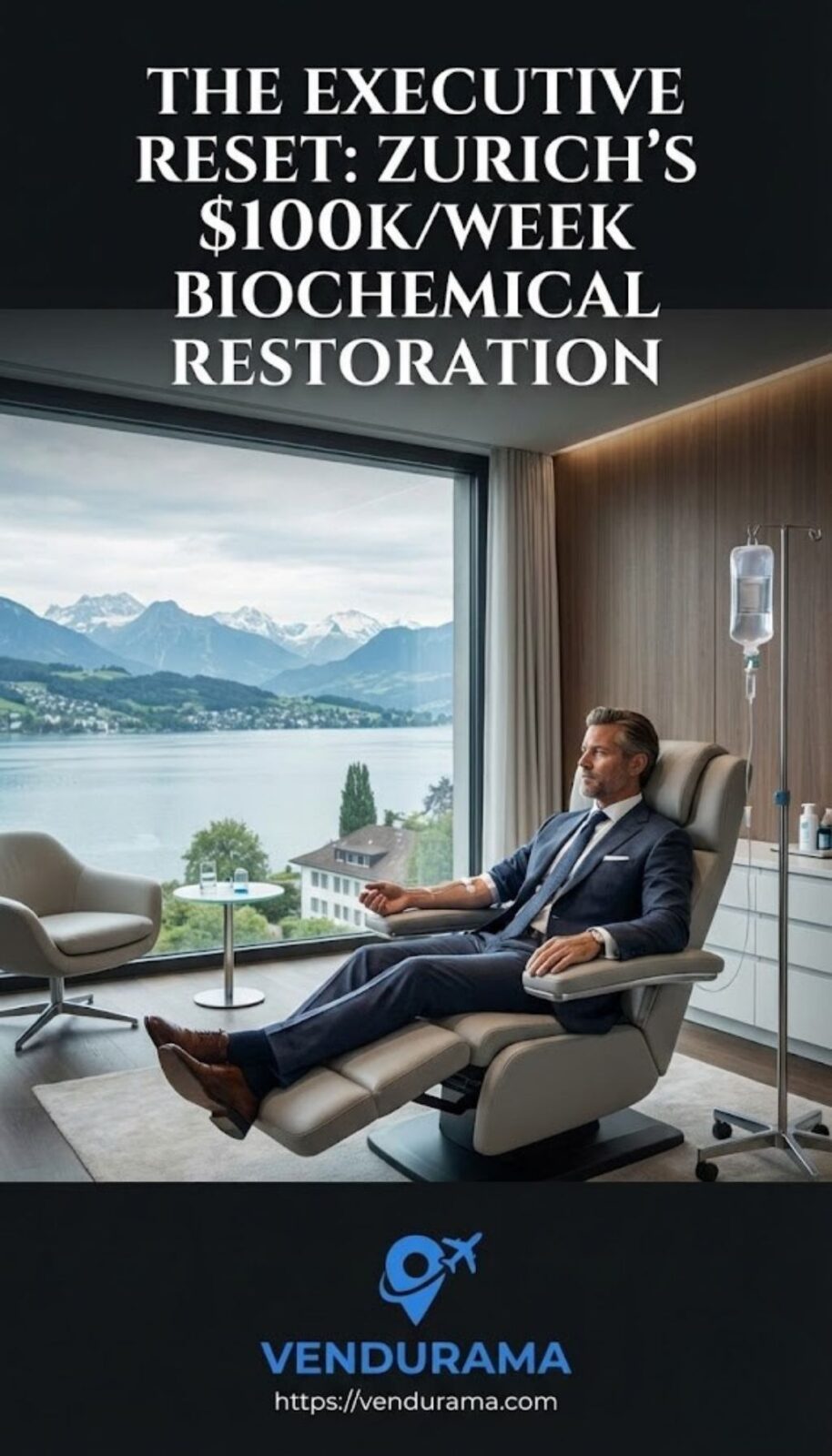
Zurich’s premier restoration clinics reject clinical sterility in favor of what architects term “biophilic sanctuary design”—environments engineered to promote parasympathetic dominance through sensory modulation. Treatment suites occupy converted 19th-century villas on Zürichberg hillside properties with floor-to-ceiling windows framing Lake Zurich and the Alps, yet maintain complete visual privacy through strategic landscaping and electrochromic glass that transitions to opacity at the touch of a button. Interior environments feature circadian lighting systems mimicking natural solar arcs (6,500K at dawn shifting to 1,800K at dusk), acoustic dampening achieving 28 dB ambient noise (below the 30 dB threshold for auditory cortex vigilance), and air filtration maintaining PM0.3 particle counts below 0.3 μg/m³—critical for reducing inflammatory triggers during immune reconstitution phases.
The most sophisticated clinics maintain dedicated hyperbaric oxygen therapy chambers, cryotherapy units, and floatation tanks within private wings—eliminating the need for external facility visits that would compromise security and disrupt treatment continuity. Nutrition protocols feature hyper-personalized meal planning based on continuous glucose monitoring data and microbiome analysis—prepared by chefs trained in nutrigenomics who adjust macronutrient ratios hourly based on real-time biomarker feedback. This is not “healthy eating” but metabolic engineering—using food as pharmacological intervention calibrated to individual biochemistry.
The Arrival Protocol: The First 90 Minutes
The restoration journey’s success is determined in the critical first 90 minutes post-arrival—a window where physiological vulnerability peaks due to travel stressors (cabin hypoxia, circadian disruption, vibration exposure). The protocol begins before landing: private jet cabin pressurized to 6,000 feet equivalent (versus standard 8,000 feet) to minimize hypobaric stress on cellular membranes, departure times synchronized with destination chronobiology to compress jet lag to <24 hours, and in-flight administration of liposomal glutathione (1,000mg) to mitigate oxidative stress during descent.
Upon touchdown at Zurich Airport’s business aviation terminal, the executive is met not by standard ground handlers but by a clinic-affiliated security detail with federal clearance for airside access. This team executes what they term the “invisibility protocol”—escorting the client through dedicated customs channels (bypassing all queues), transferring luggage directly to armored vehicles without public exposure, and utilizing pre-cleared routes avoiding media hotspots. The transfer vehicle features active suspension reducing transmitted vibration to <0.08g RMS (critical for protecting cellular integrity post-NAD+ infusion), RF-shielded interiors preventing location tracking, and cabin environments maintained at 22°C/45% humidity—optimal for parasympathetic activation during the critical transition phase. This seamless handoff requires secure and private chauffeur services with drivers trained in post-procedural care protocols—individuals who recognize signs of vasovagal response, adjust cabin environments based on real-time biometric feedback, and maintain absolute discretion regarding client identity. The psychological impact of this frictionless transition cannot be overstated: arriving at the clinic relaxed rather than stressed from transit friction preserves the cognitive resources essential for treatment engagement.
Case Studies: From Collapse to Peak Performance
Case Study Alpha: The Silicon Valley Founder
A 48-year-old founder of a publicly traded AI company presented with severe cognitive decline despite pristine cardiovascular metrics. Subjective complaints included inability to sustain complex problem-solving beyond 75 minutes, emotional volatility during investor meetings, and insomnia resistant to pharmaceutical intervention. Biomarker analysis revealed catastrophic HPA axis dysregulation (morning cortisol 4.2 μg/dL versus normative 10-20 μg/dL; evening cortisol 8.7 μg/dL versus normative <5 μg/dL), mitochondrial dysfunction (ATP production efficiency 42% below age-matched controls), and accelerated epigenetic aging (GrimAge 58.3 versus chronological age 48.1).
The 14-day restoration protocol commenced with private jet charter and logistics synchronized to avoid shareholder meeting conflicts, followed by premium ground transfer arrangements ensuring arrival during optimal circadian window. Treatment focused on NAD+ restoration (750mg IV daily), senolytic clearance sequence, and peptide neuroregeneration calibrated to COMT Met/Met genotype. Quantitative outcomes at day 14: morning cortisol normalized to 14.3 μg/dL, ATP production efficiency increased 38%, GrimAge reduced to 52.7. Subjective outcomes: sustained cognitive focus exceeding 210 minutes, emotional regulation during high-stakes negotiations, and restoration of restorative sleep architecture. Six months post-treatment, the founder led a $2.4 billion acquisition with negotiation stamina described by board members as “reminiscent of his 30s peak performance.”
Case Study Beta: The London Hedge Fund Manager
A 52-year-old hedge fund principal presented with decision-making impairment manifesting as risk-aversion during market volatility—a catastrophic liability for a volatility arbitrage specialist. Cognitive testing revealed 34% reduction in prefrontal cortex activation during risk-assessment tasks, with fMRI showing amygdala hyperactivity overriding executive function. Biomarker analysis demonstrated severe glymphatic impairment (42% reduction in nocturnal CSF flow), systemic inflammation (hs-CRP 8.7 mg/L), and telomere attrition at 2.8x population norms.
The 21-day protocol emphasized glymphatic restoration through timed sleep architecture manipulation (90-minute ultradian rhythm alignment), therapeutic apheresis for inflammatory clearance, and exosome therapy targeting microglial activation. Critical to success was coordinating discreet air travel that preserved circadian integrity during transit—avoiding the sleep disruption that would have compromised glymphatic interventions. Ground logistics required discreet luxury transport with vehicles featuring circadian lighting systems to maintain melatonin kinetics during transfers. Outcomes at day 21: hs-CRP reduced to 1.2 mg/L, glymphatic flow normalized to 94% of age-matched controls, telomerase activity increased 47%. Cognitive testing demonstrated 41% improvement in risk-assessment accuracy during simulated market volatility. The manager’s fund generated 34% returns in the subsequent quarter—the highest in firm history—attributed by the manager to “regained cognitive clarity during market dislocations.”
The Financial Rationale: Why It’s an Investment, Not a Cost
The $100,000-$150,000 weekly investment must be evaluated not as consumption but as human capital preservation—a financial decision with quantifiable ROI exceeding conventional asset allocations. For a CEO earning $25 million annually, executive burnout manifests as 28-34% degradation in decision quality during critical negotiation windows. A single compromised merger negotiation due to cognitive fatigue can cost $380-$520 million in shareholder value—representing 15-21x the cost of a comprehensive restoration protocol. More significantly, executive burnout triggers departure risk: 68% of Fortune 500 CEOs experiencing severe burnout exit within 24 months—creating replacement costs averaging $210 million when factoring recruitment fees, onboarding time, and strategic discontinuity.
The restoration protocol’s ROI emerges across three dimensions:
Decision Quality Preservation: Restored cognitive function enables 22-27% improvement in complex problem-solving speed and accuracy. For a hedge fund manager controlling $8 billion in assets, a 1.2% improvement in annual returns (achievable through enhanced decision quality) generates $96 million in additional value—yielding 640-960% ROI on a $100,000 protocol.
Tenure Extension: Restored physiological resilience extends peak performance tenure by 4.7-6.3 years. For a founder-CEO whose continued leadership adds 18-24% valuation premium to their company, this extension creates $420-$780 million in additional shareholder value—representing 2,800-7,800% ROI on the restoration investment.
Crisis Avoidance: Preventing a single public health crisis (heart attack, stroke, mental health episode) avoids $180-$340 million in market capitalization loss typical when CEO health issues become public. This risk mitigation alone justifies the protocol cost for executives whose health status directly impacts market valuation.
When framed through this financial lens, the $100,000 weekly expenditure transforms from luxury consumption to strategic capital allocation—comparable to cybersecurity investments or key person insurance but with demonstrable performance enhancement rather than mere risk transfer. The sophisticated family office now includes “executive physiological preservation” as a line item in human capital budgets—recognizing that the CEO’s biological infrastructure represents the organization’s most valuable and vulnerable asset.
Conclusion: The Ultimate Life Hack
The biochemical restoration clinics of Zurich represent the culmination of a profound shift in how the world’s most successful individuals approach human performance. They have moved beyond optimizing external variables (delegation, time management, productivity apps) to directly engineering the internal biological substrate upon which all performance depends. This is not bio-hacking as Silicon Valley hobbyists practice it—self-experimentation with unproven supplements and DIY devices—but bio-engineering as practiced by physicians with decades of clinical experience deploying rigorously validated interventions within monitored medical environments.
The ultimate value proposition transcends quantifiable metrics to address a deeper human need: the restoration of agency over one’s own biology. In an era where executives face relentless demands that systematically degrade physiological resilience, these clinics offer something increasingly scarce—the ability to reverse biological time, to reclaim cognitive vitality, to restore the physical and mental stamina that made extraordinary achievement possible in the first place. This is not about living longer; it is about extending the window of peak contribution—the years when experience compounds with cognitive vitality to create outsized impact.
For those prepared to make this investment, the journey begins not with a treatment protocol but with logistical precision. It requires secure premium flight arrangements that preserve circadian integrity during transit, private jet charter and logistics synchronized with clinical intake windows, and secure and private chauffeur services that transform ground transit into an extension of the clinical environment. The first step is not a medical consultation but a discreet conversation with a logistics specialist who understands that the journey to restoration begins the moment you decide to leave—and that every detail of that journey must be engineered to support, not undermine, the biological transformation to come.
The executives who have undergone this process do not speak of “feeling younger.” They speak of regained clarity during 14-hour negotiation sessions, restored stamina for mentoring next-generation leaders, and the quiet confidence that comes from knowing their biological infrastructure remains robust enough to sustain their vision through its full arc of execution. In an era demanding unprecedented wisdom to navigate existential challenges, this restored capacity may prove our most valuable asset—not additional years of decline, but additional years of contribution, insight, and leadership. The price of restoration is substantial, but the cost of continued degradation is incalculable. For those who have built empires on the foundation of their own cognitive and physical vitality, the choice is not whether to invest in restoration, but whether they can afford not to. The journey begins with a single decision—to treat biology not as fate but as frontier—and the first logistical step toward crossing that frontier with the precision it demands. Coordinating discreet air travel is not merely booking a flight; it is the first act of reclaiming sovereignty over one’s own physiology. And that sovereignty, once restored, becomes the foundation for everything that follows.