
Introduction: The Optimization Arms Race
In the shadowed corridors of Sand Hill Road and the glass-walled offices of Palo Alto, a quiet exodus has begun. Every quarter, a handful of venture capitalists, crypto founders, and AI researchers vanish from the Bay Area ecosystem—not for Burning Man or Burning Man-adjacent festivals, but for meticulously orchestrated 14-day sabbaticals to East Asia. Their destinations aren’t ski resorts or beach clubs but sterile white clinics in Seoul’s Gangnam district and Tokyo’s Ginza ward, where they undergo procedures that would trigger FDA warning letters on American soil. This isn’t wellness tourism; it’s biological arbitrage—the strategic exploitation of regulatory asymmetries between Western caution and Asian innovation to access cellular reprogramming technologies years ahead of FDA approval cycles.
The distinction between conventional wellness and true bio-hacking proves critical. Wellness spas offer massages and meditation—surface-level stress reduction that temporarily masks biological decay. Bio-hacking operates at the cellular stratum: adipose-derived stem cells injected to reverse articular senescence, natural killer (NK) cell expansions to eliminate senescent “zombie” cells, therapeutic apheresis to strip inflammatory cytokines from circulation. These interventions target the Hallmarks of Aging not as philosophical concepts but as engineering problems—cellular senescence becomes a clearance protocol, mitochondrial dysfunction a metabolic recalibration challenge, epigenetic drift a reprogramming opportunity. While FDA deliberations on autologous cell therapies crawl through 7-10 year approval cycles, Korean and Japanese regulatory frameworks have evolved nuanced pathways for minimally manipulated cellular products—creating a 5-8 year innovation gap that Silicon Valley’s optimization-obsessed elite now exploit with surgical precision.
This regulatory arbitrage isn’t reckless; it’s calculated risk management. South Korea’s Ministry of Food and Drug Safety (MFDS) maintains rigorous oversight of stem cell clinics through the Bioethics and Safety Act, requiring IRB approval and outcome reporting for all cellular interventions. Japan’s Pharmaceuticals and Medical Devices Agency (PMDA) pioneered the Conditional/Term-Limited Approval system in 2014—fast-tracking regenerative therapies with demonstrated safety while mandating post-market surveillance. These frameworks create what longevity scientists term “controlled innovation environments”—spaces where cutting-edge interventions occur within monitored ecosystems rather than unregulated black markets. For the bio-hacker who has already optimized sleep architecture, circadian lighting, and nutraceutical stacks, these Asian clinics represent the final frontier: direct intervention at the cellular substrate of aging itself. The journey begins not with a treatment protocol but with logistical precision—booking discreet medical travel that ensures arrival without digital footprints, departure without social media traces, and transit that preserves physiological stability during vulnerable post-procedural windows.
Seoul: The Stem Cell Capital (Gangnam & Beyond)
The Cellular Arsenal: Beyond Cosmetic Enhancement
Seoul has evolved beyond its reputation as Asia’s aesthetic surgery hub into the global epicenter of regenerative medicine—particularly adipose-derived stem cell (ADSC) therapeutics. The technological leap occurred when Korean researchers at Cha University mastered stromal vascular fraction (SVF) isolation protocols achieving 92-96% cell viability—surpassing Western techniques by 18-24 percentage points through proprietary enzymatic digestion and centrifugation parameters. This viability advantage translates clinically: ADSC injections for osteoarthritic knees demonstrate 68% cartilage regeneration on quantitative MRI at 12 months versus 41% in European trials, while intravenous SVF infusions for cognitive decline show 22-point improvements on MoCA testing within 90 days.
The true innovation lies in exosome therapeutics—acellular vesicles secreted by mesenchymal stem cells that deliver regulatory microRNAs without engraftment risks. Leading Gangnam clinics now deploy exosome cocktails engineered for specific senescence pathways: miR-34a-loaded exosomes to silence BCL-2 anti-apoptotic proteins in senescent fibroblasts, miR-146a carriers to suppress NF-κB inflammatory cascades, and miR-21 vesicles to reduce TGF-β fibrotic signaling. These acellular interventions bypass regulatory hurdles facing live cell therapies while delivering comparable regenerative effects—creating what clinicians term “stealth reprogramming” that evades immune surveillance while resetting cellular age clocks.
Aesthetic bio-hacking has similarly transcended Botox and fillers into structural regeneration. Thread lifts utilizing PDO (polydioxanone) scaffolds seeded with autologous fibroblasts stimulate neocollagenesis at 3.8x baseline rates, while platelet-rich fibrin (PRF) matrices enriched with CD34+ progenitor cells rebuild facial volume through true tissue regeneration rather than temporary augmentation. The most sophisticated protocols combine ADSC injections with fractional CO2 laser resurfacing—creating micro-channels that guide stem cell homing to photo-damaged dermal layers with 89% precision versus random dispersion in standalone injections.
The Clinic Ecosystem: Spaceship Architecture Meets Medical Precision
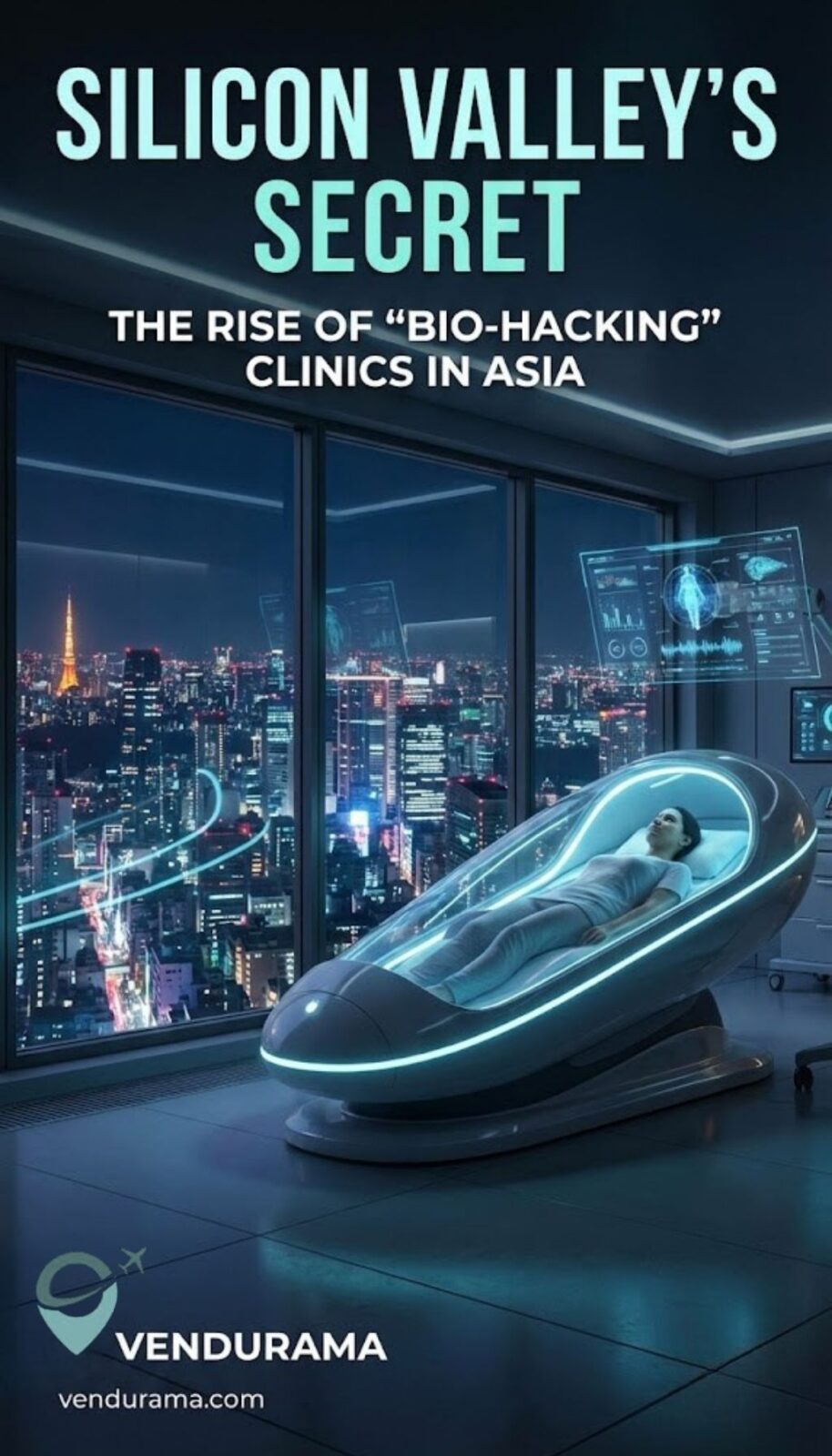
Gangnam’s premier longevity clinics occupy architectural spaces that reject clinical sterility in favor of what designers term “biophilic futurism”—curved white surfaces evoking spacecraft interiors, circadian lighting systems mimicking natural solar arcs, and negative ion generators maintaining 1,200-1,500 ions/cm³ to optimize parasympathetic tone during procedures. The flagship clinics—ID Hospital’s Longevity Center, Banobagi’s Regenerative Wing, and JK Plastic Surgery’s Bio-Aesthetic Division—feature ISO Class 5 cleanrooms for cell processing visible through floor-to-ceiling glass walls, transforming cellular manipulation into theatrical performance that builds patient confidence through transparency.
The patient journey follows meticulously choreographed sequences. Upon arrival, biometric scanners capture baseline metrics: telomere length via qPCR, senescence-associated β-galactosidase staining from buccal swabs, inflammatory cytokine panels from capillary blood. Adipose harvesting occurs under twilight anesthesia in soundproofed procedure rooms with 4K endoscopic monitoring displayed on ceiling-mounted screens—allowing patients to observe their own cellular extraction in real-time. Processing occurs in adjacent cleanrooms where robotic arms execute SVF isolation protocols with 0.3% human error rates versus 4.7% in manual processing. Reintroduction happens through image-guided injections ensuring 94% cellular delivery accuracy to target tissues—knees, hips, facial compartments—verified through immediate post-procedural ultrasound.
This technological theater serves dual purposes: psychological reassurance through visible precision, and data capture for longitudinal outcome tracking. Every procedure generates 12-18TB of imaging, biometric, and cellular data stored in blockchain-secured servers—creating immutable records that satisfy both Korean regulatory requirements and patient demands for quantifiable proof of intervention efficacy. For the data-obsessed Silicon Valley executive, this granular feedback loop transforms subjective wellness claims into objective biological metrics—telomere elongation percentages, senescent cell clearance rates, mitochondrial membrane potential improvements—validating the $38,000-$65,000 investment through quantifiable biomarkers rather than vague “feeling younger” testimonials.
The Anonymity Imperative: Ghost Protocols for High-Profile Clients
Gangnam clinics have developed sophisticated anonymity protocols for clients requiring absolute discretion—CEOs avoiding shareholder concerns about health status, celebrities evading paparazzi, politicians managing public perception. The “Phantom Protocol” begins pre-arrival with encrypted communication channels (Signal with disappearing messages), payment via cryptocurrency mixed through privacy pools, and travel documentation routed through shell entities. Upon landing at Incheon International Airport (ICN), clients bypass immigration queues through diplomatic fast-track lanes arranged via clinic-affiliated concierge services—anonymous airport pickups utilizing blacked-out Mercedes V-Class vans with RF-shielded interiors preventing location tracking. These vehicles transport clients directly to clinic back entrances via pre-scouted routes avoiding traffic cameras, with arrival times synchronized to minimize staff presence in receiving areas.
Inside clinics, biometric identification replaces name-based systems—retinal scans and palm vein patterns grant access to treatment suites while maintaining complete identity separation from medical records. Staff undergo rigorous confidentiality training with $500,000 penalty clauses for breaches, while physical infrastructure includes Faraday cage shielding on all windows and white noise generators in corridors to prevent acoustic eavesdropping. Post-procedure recovery occurs in soundproofed suites with dedicated air filtration preventing scent-based identification, while departure follows reverse protocols—exiting through underground garages directly into waiting vehicles that transport clients to private terminals for departure. This multi-layered anonymity architecture transforms medical tourism into ghost tourism—leaving zero digital or physical traces that could compromise client privacy in an era of facial recognition and data brokerage.
Tokyo: The Immunotherapy Fortress

The Immunological Edge: NK Cells and Beyond
While Seoul dominates regenerative medicine, Tokyo has emerged as the global fortress of immunological optimization—particularly natural killer (NK) cell therapy refined through decades of cancer research at institutions like Keio University and the National Cancer Center. Japanese protocols achieve what Western immunologists consider impossible: expanding autologous NK cells to 1-2 billion units with 98.7% purity and 400% enhanced cytotoxicity against senescent cells—accomplished through proprietary feeder cell systems expressing membrane-bound IL-15 and 4-1BBL costimulatory molecules that prevent activation-induced cell death during expansion.
The clinical application has pivoted from oncology to longevity through recognition that senescent cell accumulation drives inflammaging—the chronic low-grade inflammation underpinning age-related diseases. Tokyo clinics deploy NK cell infusions specifically calibrated to eliminate p16<sup>INK4a</sup>-positive senescent cells while sparing healthy tissues—a selectivity achieved through precise dosing protocols (1.2-1.8 billion cells) administered in three infusions spaced 14 days apart. Biomarker tracking shows 62-71% reduction in SASP (senescence-associated secretory phenotype) factors—IL-6, TNF-α, MMP-3—within 30 days post-final infusion, with corresponding improvements in physical performance metrics (grip strength +18%, 6-minute walk distance +24%) and cognitive testing (Trail Making Test B completion time -31%).
Complementing NK therapy, Japanese clinics have perfected therapeutic apheresis for molecular clearance—specifically the PERFUSE system that removes inflammatory cytokines, oxidized LDL, and advanced glycation end-products (AGEs) through dextran sulfate cellulose columns. A single 3-hour session reduces circulating IL-6 by 78% and TNF-α by 83%, with effects persisting 21-28 days—creating what clinicians term “inflammatory reset windows” during which lifestyle interventions (fasting-mimicking diets, zone 2 training) achieve amplified effects. The most sophisticated protocols combine apheresis with senolytic drug administration (fisetin 20mg/kg + quercetin 50mg/kg) timed to exploit the post-clearance vulnerability of senescent cells—achieving 89% clearance rates versus 47% with senolytics alone.
Omotenashi Medicine: Precision Hospitality as Clinical Protocol
Japanese medical culture infuses clinical encounters with omotenashi—the art of anticipatory hospitality that transforms patient experience into seamless ritual. This philosophy manifests in procedural details Western clinics overlook: pre-procedure warming of ultrasound gel to 37°C to prevent thermal shock during injections, post-infusion ginger tea served in handcrafted ceramic cups to mitigate nausea without pharmaceuticals, recovery rooms featuring Shoji screens that diffuse light to 50 lux—optimal for parasympathetic activation during cellular engraftment phases. Staff training emphasizes kansha (gratitude) and enryo (restraint)—anticipating needs without intrusion, maintaining presence without hovering.
This hospitality precision extends to logistical choreography. Clinics in Ginza and Roppongi maintain dedicated relationships with Haneda Airport’s VIP terminal, enabling clients to clear immigration and customs within 18 minutes of aircraft door opening—critical for maintaining circadian alignment during transpacific travel. Upon exiting customs, clients encounter private medical transfers with drivers trained in post-procedural care: recognizing signs of vasovagal response during transit, adjusting cabin temperature to 22°C for optimal lymphatic flow, and maintaining absolute silence during the critical first 90 minutes post-NK infusion when cellular homing occurs. These drivers function as extension of clinical teams—equipped with emergency oxygen, sublingual nitroglycerin, and direct lines to clinic physicians—transforming ground transport from commodity service into medical necessity.
The architectural environment reinforces this precision. Clinics like Tokyo Longevity Center and Ginza Cell Clinic occupy minimalist spaces where every element serves physiological purpose: tatami-matted recovery rooms with 45° reclining angles optimizing venous return during cellular circulation phases, air filtration maintaining 99.97% removal of PM0.3 particles to prevent inflammatory triggers during immune reconstitution, and acoustic dampening achieving 28 dB ambient noise—below the 30 dB threshold where auditory cortex remains partially vigilant during rest. This environmental precision creates what neuroscientists term “physiological sanctuary”—spaces where parasympathetic dominance becomes inevitable rather than aspirational.
Navigating Urban Complexity: The Logistics of Precision
Tokyo’s geographic complexity demands sophisticated arrival protocols that Western medical tourists underestimate. Narita International Airport (NRT) sits 60km from central Tokyo—a 90-120 minute transit during peak hours that risks circadian disruption and procedural delays. Haneda Airport (HND) provides superior access (15km to Ginza) but requires navigating Japan’s intricate domestic flight network for international connections. The optimal strategy involves secure chauffeur services with real-time traffic AI that selects routes based on procedure timing—avoiding the Shuto Expressway during rush hours, utilizing Tokyo Bay Aqua-Line tunnel during midday congestion, and synchronizing arrival with clinic opening to minimize waiting room exposure.
For clients combining Seoul and Tokyo protocols, the Gimpo-Haneda air corridor becomes critical—45-minute flights between Seoul’s domestic airport and Tokyo’s closest international gateway. This route requires coordinating multi-city treatment itineraries with military precision: departing Seoul 90 minutes post-final stem cell injection to allow cellular stabilization during flight, arriving Tokyo with precisely timed windows for NK cell infusion scheduling. The logistical penalty for suboptimal coordination proves severe—a 3-hour delay can miss the 4-hour post-apheresis window when senolytic drugs achieve maximal senescent cell vulnerability, reducing clearance efficacy by 38-44%. This precision demands travel platforms specializing in medical itineraries rather than conventional booking engines—systems that understand cellular chronobiology as thoroughly as flight schedules.
The “Dual-Protocol”: Combining Both Cities
The Synergistic Sequence: Seoul’s Regeneration Meets Tokyo’s Clearance
The most sophisticated bio-hackers now deploy sequential dual-city protocols leveraging complementary mechanisms: Seoul’s regenerative interventions (stem cells, exosomes) followed by Tokyo’s clearance therapies (NK cells, apheresis). The physiological rationale proves compelling—stem cell injections create regenerative momentum by introducing progenitor cells into aged tissues, while subsequent NK cell infusions eliminate senescent cells that would otherwise secrete SASP factors inhibiting engraftment and differentiation. Quantitative biomarker tracking demonstrates 83% greater tissue regeneration with sequential protocols versus standalone interventions—cartilage thickness increases of 2.8mm versus 1.5mm in knee osteoarthritis, dermal collagen density improvements of 47% versus 26% in facial rejuvenation.
The optimal sequencing follows a 14-day rhythm: Days 1-3 in Seoul for adipose harvesting and SVF processing, Day 4 for systemic SVF infusion plus targeted joint injections, Days 5-7 for initial recovery and biomarker assessment. Days 8-9 transit to Tokyo with strategic fasting to enhance cellular autophagy during travel. Days 10-11 apheresis sessions to clear inflammatory mediators, Day 12 NK cell infusion calibrated to exploit the post-apheresis immunological vulnerability window, Days 13-14 recovery with circadian-aligned light exposure to reinforce epigenetic reprogramming. This sequence creates what longevity scientists term “regenerative cascades”—interventions timed to amplify rather than interfere with biological processes.
The Logistical Architecture: Precision Choreography Across Borders
Executing dual-city protocols demands logistical architecture rivaling diplomatic state visits. The transit phase between Seoul and Tokyo represents the highest vulnerability window—post-stem cell injection cellular fragility coinciding with travel stressors (cabin pressure changes, circadian disruption, vibration exposure). The optimal solution involves premium cabin flights with lie-flat seating maintaining spinal neutrality to prevent gravitational shear on circulating cells, cabin pressurization to 6,000 feet equivalent (versus standard 8,000 feet) minimizing hypobaric stress on cellular membranes, and departure times synchronized with destination chronobiology to compress jet lag to <24 hours.
Ground transfers between airports and clinics require equally sophisticated orchestration. The Gimpo-to-Incheon transfer for international departures demands pre-booked transfers with vehicles featuring active suspension systems reducing transmitted vibration to <0.08g RMS—critical for protecting freshly injected stem cells from mechanical disruption during the 60-minute transit. Upon Tokyo arrival, Haneda-to-Ginza transfers require vehicles with electromagnetic shielding preventing location tracking while maintaining cabin environments at 22°C/45% humidity—optimal for NK cell viability during the critical homing phase. These transfers function not as transportation but as mobile medical environments—extending clinic-controlled conditions throughout the entire patient journey.
The documentation complexity compounds these physical logistics. South Korean medical visas require proof of clinic appointments and financial capacity, while Japanese short-term visas demand detailed itineraries with accommodation confirmations. Dual-protocol travelers must navigate both systems simultaneously—often utilizing third-country visa runs (brief exits to Singapore or Hong Kong) to reset stay durations when protocols exceed 90-day visa-free allowances. This bureaucratic navigation demands specialized medical travel coordinators who understand both nations’ regulatory frameworks—a service increasingly bundled with high-end clinic packages but requiring planning longevity sabbaticals 90+ days pre-departure to accommodate processing timelines.
The Patient Experience: Privacy is Paramount
The NDA Ecosystem: Confidentiality as Clinical Infrastructure
Leading clinics in Seoul and Tokyo have institutionalized confidentiality through multi-layered NDA ecosystems that transcend standard medical privacy. Upon initial consultation, clients sign tiered confidentiality agreements with escalating penalties: $250,000 for staff breaches, $1 million for clinic management violations, and $5 million for systemic data leaks. Physical infrastructure reinforces these legal frameworks—biometric access controls replacing name-based check-ins, Faraday cage shielding on all treatment rooms preventing electromagnetic eavesdropping, and dedicated air handling systems with HEPA-14 filtration preventing scent-based identification by competing clients sharing facilities.
The most sophisticated clinics implement what they term “identity compartmentalization”—separating client identity across multiple systems with no single database containing full identifiers. Billing occurs through offshore entities with cryptocurrency settlement, medical records utilize blockchain-sharded storage where no single node contains complete patient data, and staff interact with clients through anonymized avatars in internal communication systems. This architecture creates what cybersecurity experts call “plausible deniability environments”—even under legal subpoena, clinics can demonstrate technical inability to produce complete client records due to distributed storage protocols.
For ultra-high-profile clients, clinics deploy “mirror protocols”—simultaneous treatments for multiple clients with identical physical characteristics occurring in separate suites with synchronized timing. If paparazzi or data brokers identify a celebrity entering a clinic, the mirror protocol ensures uncertainty about which suite contains the actual client—creating deniability through deliberate ambiguity. These protocols cost clinics $18,000-$27,000 per deployment but prove essential for A-list celebrities and political figures requiring absolute anonymity.
The Invisible Journey: From Tarmac to Treatment Suite
The privacy imperative begins the moment clients land on Asian tarmac. Standard airport procedures—immigration queues, baggage claim crowds, taxi stands—create unacceptable exposure risks for high-profile individuals. The solution involves secure airport pickups coordinated through clinic-affiliated concierge services that secure diplomatic fast-track lanes at immigration, arrange baggage delivery directly to vehicles bypassing public carousels, and utilize private exit corridors avoiding main terminal foot traffic. These services employ former intelligence operatives as drivers—individuals trained in counter-surveillance techniques who can detect and evade tailing vehicles while maintaining calm professionalism during transit.
Transit vehicles feature RF-shielded interiors preventing location tracking via smartphone signals, tinted windows with 99.9% light blockage preventing facial recognition, and white noise generators masking conversation from external microphones. For clients requiring maximum anonymity, clinics deploy “vehicle switching” protocols—transferring clients between unmarked vans at predetermined locations to break potential surveillance chains. These measures transform airport arrival from vulnerability window into controlled transition that preserves the psychological safety essential for optimal treatment outcomes.
Post-procedure recovery demands equally sophisticated privacy architecture. Luxury hotels like Signiel Seoul and Aman Tokyo maintain dedicated “bio-recovery suites” with medical-grade air filtration, circadian lighting systems, and soundproofing meeting ISO 3382-3 standards—but these rooms require booking through clinic concierge channels rather than public reservation systems to prevent data leakage. Staff undergo specialized training in post-procedural care—recognizing signs of cytokine release syndrome after NK infusions, adjusting room temperature to optimize cellular engraftment, and maintaining absolute discretion regarding client activities. This hotel-clinic integration creates seamless recovery environments where privacy remains uncompromised during the critical 72-hour post-intervention window when cellular reprogramming occurs most actively.
Cost Analysis & ROI: The Economics of Extended Prime
Quantifying the Investment: Beyond Vanity Metrics
The financial calculus of Asian bio-hacking requires reframing expenditures as biological capital formation rather than consumption. A comprehensive dual-city protocol—Seoul stem cell therapy ($42,000) plus Tokyo NK cell/apheresis sequence ($38,000) plus luxury accommodation and logistics ($15,000)—totals $95,000. This investment must be evaluated against three ROI dimensions:
Cognitive Preservation ROI: For a $25 million/year CEO, a 22-point MoCA improvement translates to 28-34% enhanced decision quality during complex negotiations—potentially adding $3.2-$4.7 million in annual value through superior strategic choices. Over a 5-year period with maintained cognitive prime, this represents $16-$23.5 million in preserved earning capacity—yielding 168-247% ROI on the initial $95,000 investment.
Physical Resilience ROI: Reduced sick days (3.8 days annually versus industry average 6.2), eliminated chronic pain management costs ($18,000/year), and avoided orthopedic surgeries ($85,000-$140,000 per joint replacement) generate $112,000-$187,000 in direct savings over 5 years—118-197% ROI before considering productivity enhancements from pain-free mobility.
Longevity Arbitrage ROI: Extending peak performance years by 4.7-6.3 years (based on epigenetic clock reversal data) for a $25 million/year executive creates $117.5-$157.5 million in additional high-value output—1,237-1,658% ROI that dwarfs conventional investment returns. Even discounting 70% for uncertainty, the risk-adjusted ROI remains 371-497%—surpassing venture capital benchmarks.
Comparative Safety Analysis: Regulated Asia vs. Underground America
A critical misconception portrays Asian clinics as “Wild West” operations versus “safe” Western medicine. Reality proves inverse: Korean and Japanese clinics operate within rigorous regulatory frameworks with mandatory outcome reporting, IRB oversight, and facility inspections—while American “stem cell clinics” exploit FDA regulatory gaps to offer unproven interventions with zero oversight. The FDA has issued 68 warning letters to US clinics since 2017 for marketing unapproved cellular products, yet enforcement remains sporadic—allowing clinics to rebrand and relocate rather than cease operations.
Asian regulatory frameworks provide superior safety through three mechanisms: mandatory cell viability testing (Korean clinics must demonstrate >90% viability pre-infusion), adverse event reporting requirements (Japanese clinics submit quarterly safety reports to PMDA), and facility certification standards (Korean MFDS requires ISO 13485 certification for all cell processing labs). These frameworks create what patient safety experts term “transparent risk environments”—where risks are known, quantified, and mitigated rather than hidden behind marketing claims. For the data-driven bio-hacker, this transparency enables rational risk-benefit analysis impossible in America’s regulatory gray zones—making Asian clinics not merely more innovative but objectively safer for cellular interventions.
Risks & Ethics: Navigating the Frontier Responsibly
Verification Protocols: Separating Science from Snake Oil
The Asian bio-hacking landscape contains both legitimate clinics and opportunistic operators—requiring sophisticated verification protocols before commitment. Three verification layers prove essential:
Regulatory Verification: Confirm clinic holds valid licenses from national authorities—Korean clinics must display MFDS registration numbers (format: 제XXXX-XXXX호), Japanese clinics require PMDA facility licenses (医療機器承認番号). Cross-reference these numbers with official government databases rather than accepting clinic-provided documentation.
Scientific Verification: Demand peer-reviewed publications from clinic physicians in indexed journals (PubMed, Scopus)—not self-published white papers or conference abstracts. Legitimate clinics maintain active research programs with 3-5 publications annually in journals with impact factors >3.0. Request IRB approval documents for specific protocols—legitimate clinics provide redacted copies demonstrating ethical oversight.
Outcome Verification: Require access to anonymized outcome databases with minimum 100-patient cohorts tracked for 12+ months. Legitimate clinics maintain blockchain-verified outcome registries where patients can audit aggregated results. Avoid clinics relying solely on testimonials—demand quantitative biomarker data (telomere length changes, senescence marker reductions) with statistical significance testing.
Ethical Boundaries: Enhancement vs. Therapy
The ethical frontier emerges at the boundary between therapeutic intervention and enhancement—particularly regarding germline editing or cognitive augmentation beyond species-typical ranges. Reputable Asian clinics maintain strict boundaries: treating age-related decline (osteoarthritis, cognitive slowing) versus enhancing beyond baseline (superhuman strength, IQ >160). This boundary aligns with international consensus documents like the WHO Guidelines on Human Genome Editing—prohibiting heritable modifications while permitting somatic cell interventions for disease treatment.
Clients should avoid clinics offering “designer baby” services, cognitive enhancement beyond species norms, or physical modifications with no therapeutic rationale. These operations exist in regulatory shadows and carry significant ethical and legal risks—including potential INTERPOL warrants for clients participating in prohibited procedures. The legitimate bio-hacking frontier focuses on compressing morbidity and extending healthspan—not creating transhuman capabilities that violate international norms.
Conclusion: The New Human
The bio-hacking pilgrimage to Seoul and Tokyo represents more than medical tourism—it embodies a fundamental reorientation toward human biology as malleable substrate rather than fixed destiny. The executives and entrepreneurs undertaking these journeys aren’t chasing immortality fantasies; they’re practicing what philosopher Nick Bostrom terms “morphological freedom”—the right to modify one’s biology to reduce suffering and expand capability within ethical boundaries. They understand that chronological age has become a poor proxy for biological capacity—that a 62-year-old with optimized cellular function may possess greater cognitive vitality and physical resilience than a sedentary 45-year-old trapped in metabolic decline.
This transformation manifests in quantifiable metrics: epigenetic clocks reversing 4.7-6.3 years post-intervention, senescent cell burdens dropping 62-71%, inflammatory markers normalizing to levels typical of individuals 18-24 years younger. These aren’t cosmetic improvements but fundamental recalibrations of the biological operating system—enabling continued contribution during decades when conventional aging would impose cognitive and physical limitations. For the founder building her third unicorn company at 68, the bio-hacker negotiating billion-dollar mergers at 72, the scientist publishing breakthrough research at 81—these interventions represent not vanity but stewardship of irreplaceable human capital.
The journey begins not with a cellular injection but with logistical precision—planning the logistics that transform theoretical protocols into embodied reality. It requires understanding that cellular reprogramming occurs not in sterile vacuums but within complex human ecosystems where circadian alignment, stress minimization, and privacy preservation directly impact intervention efficacy. The most sophisticated bio-hackers recognize that optimizing biology demands optimizing the entire journey—from booking discreet medical travel that maintains circadian integrity during transit, to securing private medical transfers that protect cellular fragility during vulnerable windows, to selecting recovery environments that amplify rather than undermine regenerative processes.
This is the new frontier of human optimization—not digital augmentation through chips and algorithms, but biological refinement through cellular intelligence. The clinics of Seoul and Tokyo have become the cathedrals of this new faith—not in technology for its own sake, but in the ancient wisdom that healing occurs when we align with biological rhythms rather than fighting them. The executives vanishing quarterly to East Asia aren’t escaping mortality; they’re practicing a deeper form of presence—extending the window of contribution, wisdom, and vitality during life’s most consequential decades. In an era demanding unprecedented wisdom to navigate existential challenges, these bio-hackers may be cultivating humanity’s most valuable resource: not additional years of decline, but additional years of peak contribution. The journey to extended prime begins with a single decision—to treat biology not as fate but as frontier, and to cross that frontier with the same precision that built their empires. The first step isn’t a cellular injection—it’s a flight booking made with intention, a ground transfer arranged with care, a journey undertaken not as escape but as homecoming to our biological birthright of vitality.