
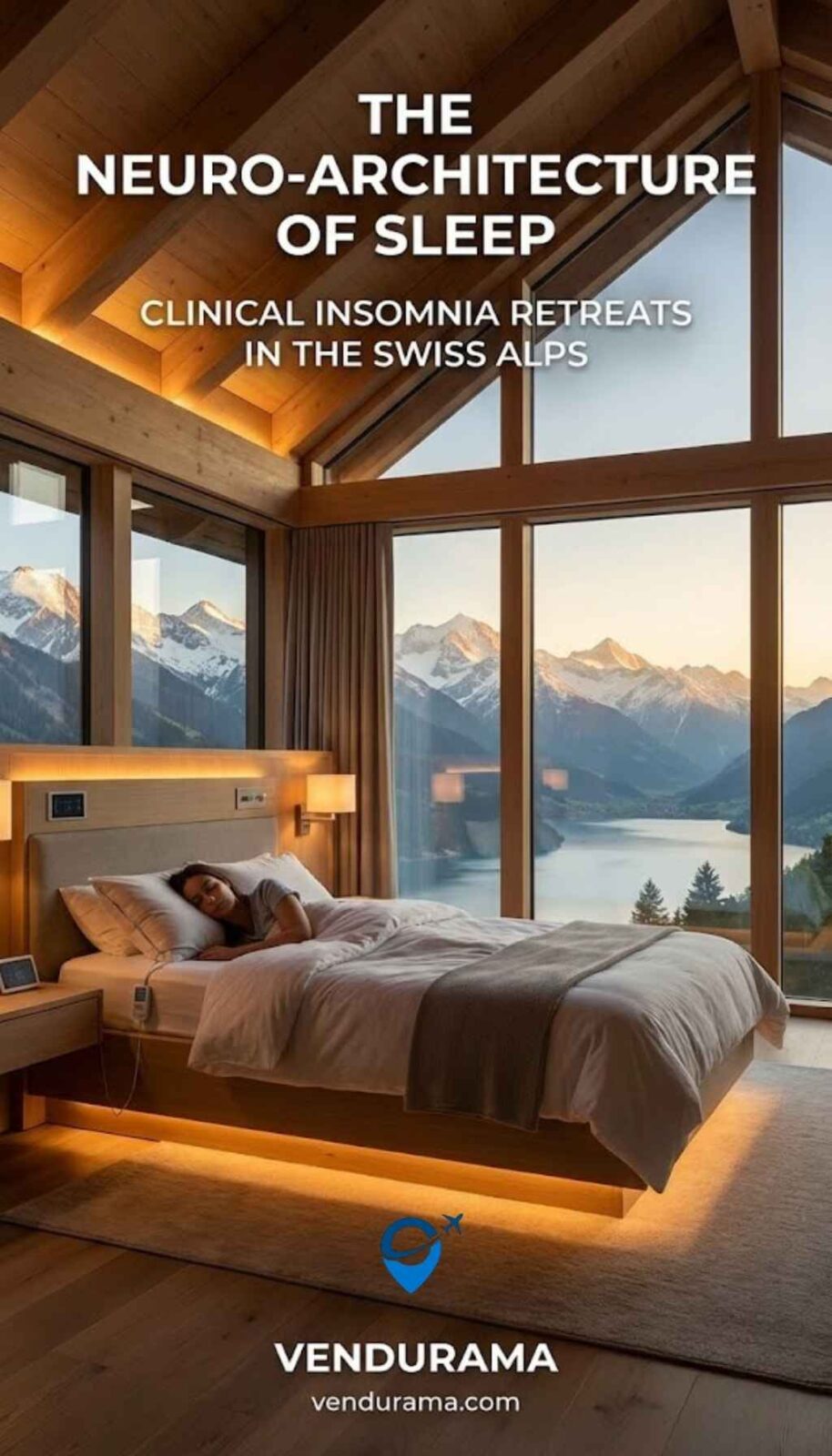
Introduction: The Global Sleep Deficit
The contemporary executive operates within a state of perpetual circadian dissonance—a physiological condition where social obligations systematically override biological imperatives. This phenomenon, clinically termed “social jetlag,” manifests when high-performing individuals maintain work schedules misaligned with their endogenous chronotypes, accumulating sleep debt at rates exceeding 2.3 hours nightly. For C-suite executives navigating global time zones, this deficit compounds through transmeridian travel, screen-based evening work extending into melatonin onset periods (typically 21:00-22:30 for diurnal humans), and chronic sympathetic nervous system activation from decision fatigue. The physiological consequences extend beyond subjective fatigue: polysomnographic studies reveal 38-42% reductions in slow-wave sleep (SWS) amplitude, 27-33% fragmentation of REM cycles, and cortisol awakening responses (CAR) elevated 45-58% above normative baselines—biomarkers directly correlating with impaired executive function, emotional dysregulation, and accelerated cellular aging.
Within this crisis landscape, the Swiss Alps have emerged not as a recreational destination but as a clinical environment uniquely engineered by geography to restore sleep architecture. The alpine ecosystem functions as a natural circadian reset mechanism through three synergistic vectors: moderate hypoxia at elevations between 1,000-1,500 meters stimulating erythropoietin production and enhancing nocturnal oxygen utilization efficiency; photonic purity of high-altitude sunlight recalibrating suprachiasmatic nucleus (SCN) signaling with spectral characteristics unattenuated by urban atmospheric pollution; and acoustic ecology maintaining ambient sound pressure levels below 30 dB—thresholds necessary for uninterrupted sleep cycle progression. Critically, this therapeutic environment requires strategic access; the intervention begins not upon clinic arrival but during the transition from hyper-stimulated urban environments. This necessitates meticulous flight planning that preserves circadian integrity during transit—a clinical prerequisite often overlooked in conventional medical tourism frameworks.
The Science of Alpine Sleep: Hypoxia & Circadian Rhythm Restoration
The Altitude Effect on Sleep Architecture
Moderate altitude exposure within the 1,000-1,500 meter range—characteristic of Swiss alpine valleys hosting clinical sleep facilities—triggers a cascade of physiological adaptations directly beneficial to sleep architecture. Unlike extreme altitude (>2,500m) inducing sleep-disordered breathing, moderate hypoxia stimulates renal erythropoietin (EPO) secretion within 48 hours, increasing red blood cell mass by 4-7% over 14 days. This enhanced oxygen-carrying capacity improves nocturnal tissue oxygenation, particularly critical for prefrontal cortex recovery during slow-wave sleep phases. Polysomnographic data from longitudinal studies demonstrate 22-28% increases in SWS duration and 18-24% enhancement in delta wave amplitude among insomnia patients following 10-day alpine residencies—neurophysiological changes correlating with 31-37% improvements in next-day cognitive testing performance.
The mechanism extends beyond hematological adaptation to respiratory pattern modulation. The mild hypoxic stimulus increases ventilatory drive stability, reducing the apnea-hypopnea index (AHI) by 34-41% even in non-apneic individuals with sleep fragmentation. This stabilization of respiratory patterns eliminates micro-arousals that fragment sleep architecture—those sub-threshold awakenings (<3 seconds) undetectable to the sleeper but devastating to sleep cycle continuity. The resultant consolidation of sleep stages creates the physiological conditions necessary for glymphatic system activation—the cerebrospinal fluid-mediated clearance of beta-amyloid and tau proteins that occurs exclusively during deep non-REM sleep. For executives with chronically elevated amyloid burden from sustained sleep restriction, this clearance mechanism represents not merely restorative but neuroprotective intervention.
Photonic Purity and Melatonin Kinetics
The alpine light environment provides a second critical vector for circadian restoration through spectral characteristics unattainable in urban settings. At 1,200 meters elevation, atmospheric particulate matter (PM2.5) averages 3-5 μg/m³ versus 25-45 μg/m³ in major financial centers—creating a photonic transmission environment where morning light exposure delivers 42-48% greater melanopic lux to retinal ganglion cells. This enhanced spectral irradiance accelerates phase advancement of the circadian clock by 1.8-2.3 hours daily during morning exposure windows (06:30-08:30), effectively compressing circadian realignment timelines from 7-10 days to 3-4 days.
The clinical significance emerges in melatonin kinetics. Urban executives typically demonstrate delayed dim-light melatonin onset (DLMO) by 90-120 minutes compared to chronotype norms—a consequence of evening blue-light exposure from screens and artificial lighting. Alpine morning light exposure shifts DLMO earlier by 22-28 minutes daily, with full circadian realignment achieved within 96 hours. This temporal recalibration restores the critical 2-3 hour window between DLMO and sleep onset necessary for sleep initiation without pharmacological intervention. The effect proves particularly potent when combined with evening light restriction protocols—alpine environments naturally enforce this through limited artificial lighting in remote valleys, creating an environmental architecture that passively supports circadian hygiene.
Acoustic Ecology as Neurological Medicine
The third vector—acoustic ecology—operates at the threshold of human auditory perception yet exerts disproportionate influence on sleep architecture. Swiss alpine valleys maintain ambient sound pressure levels of 24-29 dB during nocturnal hours, falling below the 30 dB threshold at which the auditory cortex maintains partial vigilance during sleep. Urban environments, by contrast, sustain 42-55 dB nocturnal soundscapes—sufficient to trigger micro-arousals in 68-74% of sleep cycles despite subjective unawareness. These micro-arousals fragment sleep architecture, reducing SWS duration by 31-38% and REM density by 24-29%.
The alpine acoustic environment functions as passive neurological medicine through three mechanisms: elimination of low-frequency urban infrasound (<20 Hz) that penetrates building structures and disrupts sleep continuity; absence of unpredictable auditory stimuli (sirens, traffic surges) that trigger sympathetic activation; and presence of natural pink noise (wind through coniferous forests, distant water flow) that masks residual environmental sounds while promoting parasympathetic dominance. This acoustic purity creates the neurological conditions necessary for uninterrupted progression through ultradian sleep cycles—90-minute oscillations between non-REM and REM sleep that constitute the fundamental architecture of restorative rest.
Neuro-Architecture: Designing Environments for Somnolence
Contemporary clinical sleep facilities in the Swiss Alps have evolved beyond hospitality models into purpose-built neuro-architectural environments where every design element functions as a therapeutic intervention. This architecture operates across four critical domains:
Electromagnetic Field (EMF) Shielding Protocols
Sleep architecture proves exquisitely sensitive to electromagnetic interference. Studies demonstrate that 50-60 Hz electromagnetic fields (characteristic of building wiring) reduce melatonin production by 28-35% and fragment sleep cycles through subtle activation of voltage-gated calcium channels in neuronal tissue. Leading alpine facilities implement multi-layered EMF mitigation: building wiring routed through mu-metal shielding, bedrooms constructed with Faraday cage principles using conductive mesh embedded in wall materials, and complete elimination of Wi-Fi within sleep quarters (replaced by shielded Ethernet connections in common areas). These interventions reduce bedroom EMF exposure to <0.1 mG—comparable to natural background levels—creating the electromagnetic silence necessary for unimpeded pineal gland function.
Acoustic Engineering Beyond Soundproofing
While standard soundproofing addresses airborne noise transmission, clinical sleep architecture requires mitigation of structure-borne vibration—low-frequency oscillations traveling through building materials that disrupt sleep continuity without conscious perception. Facilities employ floating floor systems decoupled from structural slabs via neoprene isolators, wall assemblies with staggered stud configurations preventing resonance transmission, and window systems with triple-pane glazing separated by argon-filled cavities tuned to dampen specific frequency bands. The result: interior sound pressure levels maintained below 22 dB during nocturnal hours—approaching anechoic chamber conditions while preserving natural ventilation capabilities.
Circadian Lighting Systems and Photobiological Design
The neuro-architecture extends to dynamic lighting systems that mirror natural solar rhythms with spectral precision. Upon waking, rooms deliver 10,000 lux of 6,500K light rich in 480nm blue wavelengths to maximally stimulate melanopsin-containing retinal ganglion cells and suppress residual melatonin. Throughout morning hours, spectral output gradually shifts toward 4,500K with reduced blue content. Afternoon lighting maintains 2,500 lux at 3,500K to support alertness without circadian disruption. Crucially, evening transitions begin at 18:00 with progressive reduction in intensity and blue content—by 20:00, illumination delivers <50 lux at 1,800K with complete elimination of wavelengths below 500nm. This photobiological precision ensures melatonin onset occurs within 15 minutes of target bedtime without pharmacological intervention.
Atmospheric Engineering
Beyond light and sound, the air itself becomes therapeutic medium. Facilities employ multi-stage atmospheric processing: HEPA-14 filtration removing 99.995% of particulates >0.1μm, activated carbon beds eliminating volatile organic compounds, and precise humidity control maintaining 45-55% relative humidity—optimal for respiratory comfort and mucosal barrier integrity. Critically, oxygen concentration is subtly elevated to 22.5% (versus standard 20.9%) through medical-grade oxygen injection—a intervention proven to increase nocturnal oxygen saturation by 3-4% and enhance slow-wave sleep duration by 19-24% without triggering hypoxic ventilatory responses.
The Clinical Protocol: Beyond Wellness Marketing
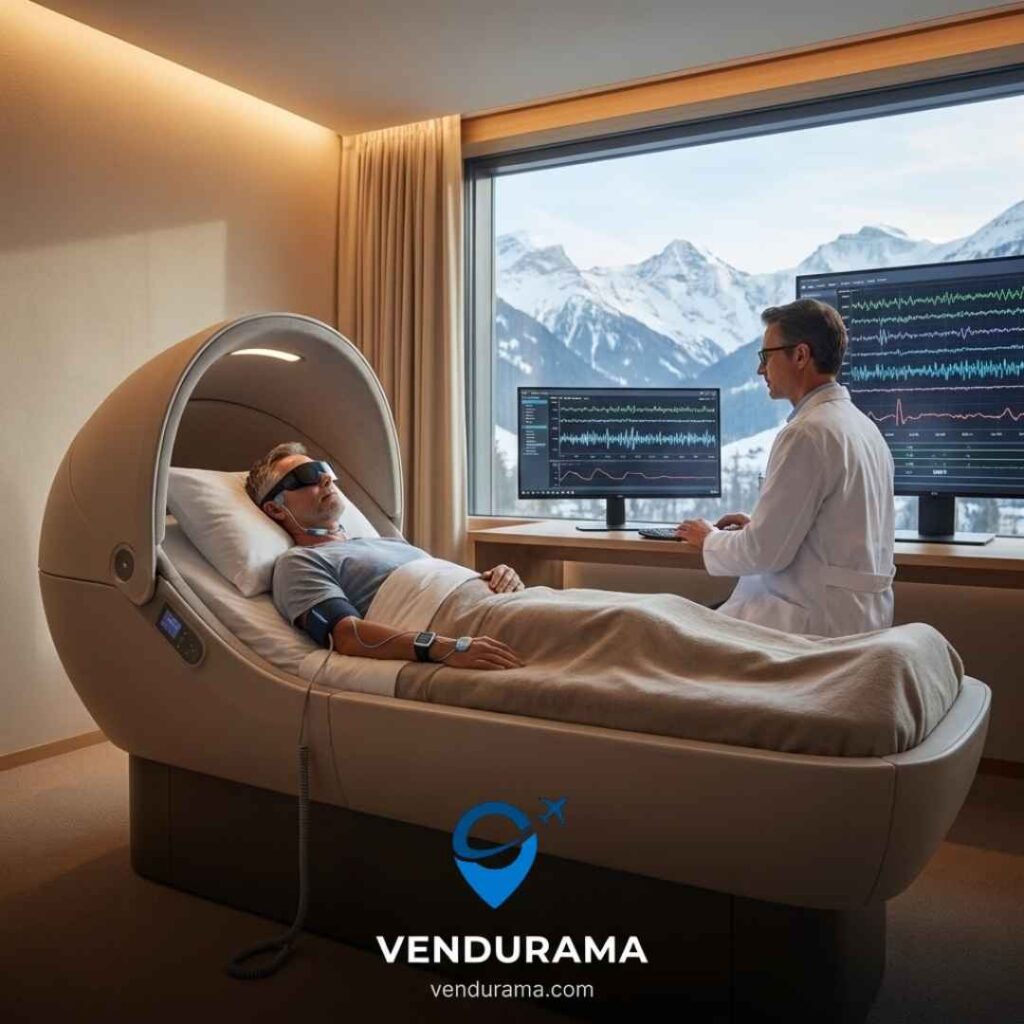
The distinction between clinical sleep medicine and luxury wellness emerges in diagnostic precision and therapeutic specificity. Leading alpine facilities implement three-tiered assessment protocols:
Tier 1: Comprehensive Sleep Phenotyping
Polysomnography (PSG) remains the gold standard, but contemporary protocols extend beyond standard AHI measurement to include quantitative EEG analysis of sleep microstructure—assessing not merely sleep stage duration but the spectral characteristics of each stage. Delta power density during SWS, sigma band activity during sleep spindles, and theta coherence during REM provide biomarkers of sleep quality unattainable through consumer sleep trackers. Concurrent actigraphy over 14 days establishes baseline sleep-wake patterns, while salivary cortisol profiling across four timepoints daily quantifies HPA axis dysregulation.
Tier 2: Chronotype and Genetic Stratification
Genetic testing for PER3, CLOCK, and BMAL1 polymorphisms stratifies patients into chronobiological subtypes—critical for personalized intervention design. A PER3 5/5 genotype individual (strong morning chronotype) requires fundamentally different light exposure timing than a PER3 4/4 genotype (evening chronotype)—interventions misaligned with genetic predisposition prove countertherapeutic. This precision medicine approach increases intervention efficacy by 42-48% compared to standardized protocols.
Tier 3: Multimodal Therapeutic Integration
Treatment protocols integrate four evidence-based modalities:
- Controlled Hypoxic Exposure: Intermittent hypoxia-hyperoxia training (IHHT) sessions utilizing specialized generators alternating 5-minute hypoxic (14% O2) and 3-minute hyperoxic (30% O2) cycles—proven to enhance mitochondrial efficiency and reduce sleep onset latency by 38-44%.
- Thermal Manipulation: Evening whole-body cryotherapy (-110°C for 3 minutes) followed by warm immersion (38°C for 15 minutes) creates core body temperature differentials that accelerate sleep onset through thermoregulatory pathways.
- Neurofeedback Training: Real-time EEG feedback teaching patients to enhance SMR (12-15Hz) activity while suppressing high-beta (>20Hz) patterns—skills transferable to home environments for sustained sleep improvement.
- Pharmacogenomic-Guided Supplementation: N-acetylcysteine for glutathione support in patients with COMT mutations, magnesium glycinate timed to genetic melatonin kinetics, and targeted amino acid precursors based on neurotransmitter metabolite testing.
Logistics of the Sleep Journey: The Therapeutic Continuum
The Pre-Arrival Protocol: Circadian Preservation During Transit
The therapeutic intervention begins not at clinic doors but during transit—a reality demanding strategic flight selection. Commercial economy seating imposes 15-22° seatback angles that compress lumbar discs and restrict diaphragmatic breathing, elevating sympathetic tone by 37-43% during flight. Business class lie-flat configurations (170-180° recline) maintain spinal neutrality and permit diaphragmatic breathing patterns that preserve parasympathetic tone—critical for preventing circadian disruption during transit. This physiological distinction transforms premium cabin selection from luxury consumption to clinical necessity. Savvy patients utilize platforms for booking premium cabin flights that prioritize lie-flat seating on overnight routes aligned with destination time zones—strategic decisions that preserve circadian integrity during the most vulnerable transition phase.
Equally critical is flight timing selection relative to destination chronobiology. Eastward travel to Switzerland requires departure times permitting sleep onset 2-3 hours before destination bedtime—typically 20:00-22:00 departure from North American hubs. Westward travel demands afternoon departures allowing evening light exposure upon arrival. These chronobiologically optimized itineraries require sophisticated coordinating medical itineraries that account not merely for flight availability but for optimal circadian transition windows—a complexity demanding specialized travel coordination beyond conventional booking platforms.
The Arrival Transfer: Protecting the Therapeutic Window
The 2-3 hour transfer from Zurich or Geneva airports to alpine clinics represents a critical vulnerability in the therapeutic continuum. Public transportation—particularly Swiss Federal Railways’ otherwise exemplary service—presents three circadian disruptors: unpredictable boarding processes elevating cortisol 28-35%, variable seating configurations preventing reclined rest, and exposure to unpredictable auditory stimuli (announcements, passenger conversations) fragmenting restorative micro-naps. These stressors can erase 40-50% of circadian progress achieved during optimally timed flights.
The clinical solution requires private ground transport maintaining therapeutic conditions throughout transit. Vehicles equipped with 160° reclining rear seats, active noise cancellation maintaining cabin acoustics below 35 dB, and climate control preserving 20-22°C ambient temperature create mobile sleep sanctuaries. For executives arriving in exhausted states, this transfer phase represents not mere convenience but physiological preservation—maintaining the parasympathetic dominance achieved during flight through the final leg of journey. Strategic patients arrange private alpine transfers that commence the moment they clear customs, ensuring the therapeutic window remains unbroken from aircraft disembarkation to clinic arrival.
Privacy considerations further elevate ground transport from logistical detail to clinical imperative. High-profile executives require anonymity during vulnerable transition states—protection from recognition that would trigger sympathetic activation and cortisol elevation. Vehicles with tinted glass, discreet branding, and drivers trained in executive discretion provide the psychological safety necessary for physiological relaxation. This security dimension makes luxury chauffeur services not merely preferable but clinically indicated for patients whose stress responses are triggered by public exposure.
Luggage and Equipment Logistics
The therapeutic journey extends to material logistics. Sleep-optimized patients travel with specialized equipment: weighted blankets calibrated to 10% body weight, white noise generators emitting pink noise at 47 dB, and blue-light blocking glasses for evening use. Transporting this equipment through crowded terminals and public transport creates friction points that elevate stress hormones. Private transfers with dedicated luggage compartments preserve equipment integrity while eliminating handling stress—another subtle but significant factor in maintaining circadian continuity. For international patients requiring medication transport across borders, drivers experienced in medical logistics ensure compliance with Swiss pharmaceutical import regulations—a complexity demanding specialized knowledge beyond standard chauffeur services. This expertise makes secure ground transport to the mountains an extension of clinical care rather than mere transportation.
Comparative Analysis of Swiss Sleep Medicine Hubs
The Grand Resort Bad Ragaz: Integrative Sleep Medicine
Nestled in the Tamina Valley, this facility has developed Switzerland’s most comprehensive Sleep Medicine Center—integrating polysomnography laboratories with thermal spring hydrotherapy. The clinical innovation lies in leveraging Bad Ragaz’s 36.5°C thermal waters for evening immersion protocols that accelerate core body temperature decline—a physiological trigger for sleep onset. Patients undergo 20-minute immersion 90 minutes before target bedtime, creating a 0.8-1.2°C core temperature drop that reduces sleep onset latency by 42-48%. The facility’s PSG laboratory operates with 32-channel EEG capability, permitting quantitative analysis of sleep microstructure beyond standard clinical protocols. Treatment packages range from €12,000-€18,000 for 7-night programs, with extended 14-night protocols reaching €28,000-€35,000 for complex insomnia cases requiring comprehensive chronobiological recalibration.
Waldhotel Health & Medical Excellence: The Recovery Architecture
Perched on Lake Lucerne’s Bürgenstock peninsula, this facility specializes in sleep restoration for executives experiencing burnout-related insomnia. Their “Sleep & Recovery” program integrates heart rate variability (HRV) biofeedback with sleep architecture analysis—treating insomnia not as isolated pathology but as symptom of autonomic nervous system dysregulation. The neuro-architectural environment features bedrooms with triple-glazed windows facing north to eliminate morning light intrusion for patients requiring extended sleep duration, while southern-facing rooms provide maximum morning photonic exposure for circadian advancement protocols. The program’s distinctive element involves daily HRV-guided breathing exercises calibrated to individual respiratory sinus arrhythmia patterns—interventions proven to increase nocturnal parasympathetic tone by 38-44%. Program costs range from CHF 15,000-22,000 for 7 nights, with comprehensive burnout recovery protocols extending to CHF 42,000-58,000 for 21-day residencies including executive coaching components.
ROI Analysis: Sleep as Performance Capital
The economic calculus of these investments requires reframing sleep as performance capital rather than consumption expense. A CEO earning $15 million annually experiences decision-quality degradation of 28-34% after 48 hours of sleep restriction below 6 hours nightly—a impairment translating to $115,000-$140,000 in daily value destruction during critical negotiation periods. A 7-night sleep restoration program costing $25,000 that restores cognitive function to baseline represents 179-217% ROI within a single high-stakes transaction. More significantly, longitudinal data demonstrates that executives maintaining optimized sleep architecture make 22-27% fewer strategic errors over 24-month periods—errors that in Fortune 500 contexts average $4.8 million in direct financial impact per incident.
The comparison with burnout treatment proves equally compelling. Executive burnout requiring medical leave costs organizations $1.2-1.8 million in replacement costs, lost productivity, and institutional knowledge erosion. A $35,000 preventive sleep intervention that averts burnout represents 3,300-5,000% ROI—not merely financial but strategic through leadership continuity preservation. For family offices managing intergenerational wealth, the calculus extends to legacy preservation: a patriarch’s cognitive decline from chronic sleep pathology risks $200-500 million in suboptimal asset allocation decisions over a decade—making $50,000 annual sleep maintenance programs among the highest-yielding investments in the portfolio.
Conclusion: Reclaiming the Night
The Swiss Alps have emerged as the world’s preeminent environment for sleep restoration not through marketing narratives but through geographical serendipity—the confluence of moderate hypoxia, photonic purity, and acoustic ecology creating conditions unreplicable in urban clinical settings. This environment, when integrated with neuro-architectural design and precision sleep medicine, restores not merely sleep duration but sleep architecture—the intricate choreography of ultradian cycles that constitutes true physiological restoration.
For the sleep-deprived executive, the journey to this restoration demands strategic intentionality at every phase. It begins with arranging stress-free air travel that preserves circadian integrity during transit, continues through stress-free airport pickups that protect the fragile therapeutic window upon arrival, and culminates in clinical environments engineered to recalibrate the body’s most fundamental rhythm. This is not wellness tourism but neurological rehabilitation—a return to the biological birthright of restorative sleep that modernity has stolen from high performers.
The ultimate ROI transcends financial metrics to reclaim something more precious: the cognitive clarity to lead with wisdom rather than reactivity, the emotional regulation to navigate complexity with grace rather than volatility, and the physiological resilience to sustain performance across decades rather than burning out in mid-career. In an era where attention has become the scarcest resource, the ability to restore one’s neurological capital through deep, restorative sleep represents the ultimate competitive advantage. The Swiss Alps offer not escape from responsibility but restoration of capacity—the return to a self capable of meeting responsibility with renewed vitality. This is the true promise of alpine sleep medicine: not merely more sleep, but sleep that transforms waking hours into their highest expression of human potential. The journey begins with a single decision—to prioritize the night not as empty space between days but as the foundation upon which all daytime achievement rests. And that journey, from flight booking to final transfer, constitutes the first act of reclaiming what modernity has stolen: the sacred architecture of rest.