
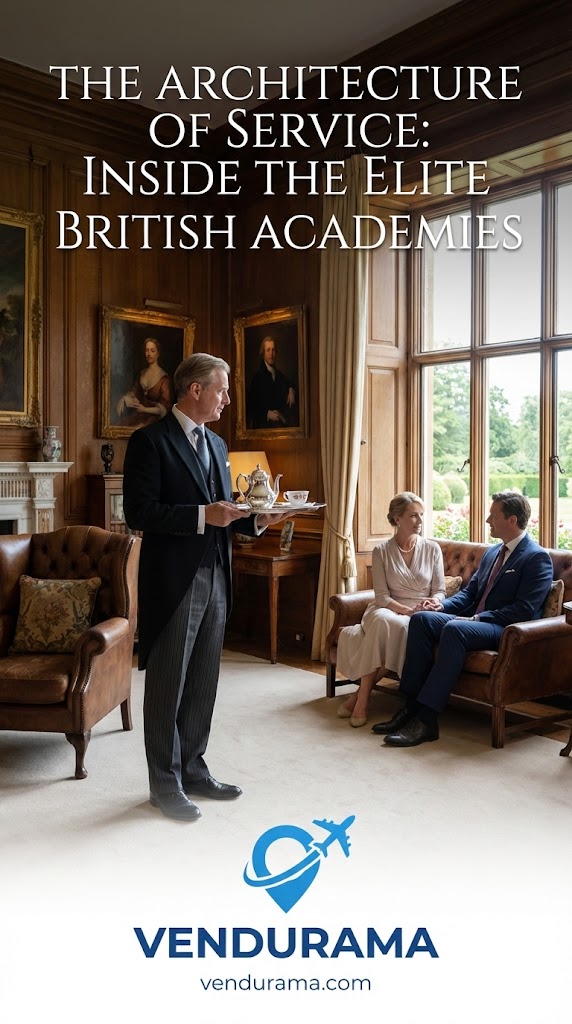
Introduction: The Inversion of Servitude
In the popular imagination, the concept of “service” is often entangled with the antiquated notions of “servitude”—a hierarchical relic of the Edwardian era characterized by silence, invisibility, and rigid class stratification. However, in the hyper-complex landscape of the 2026 global economy, this definition has undergone a radical inversion. Service, at its highest echelon, is no longer about subservience; it is about Sovereignty. It is the strategic management of the ultra-high-net-worth individual’s (UHNWI) most non-renewable resource: their time.
We are witnessing the professionalization of the domestic sphere. The modern “Butler” has evolved into the “Estate Manager” or “Chief of Staff”—a hybrid executive role that requires the diplomatic acumen of an ambassador, the logistical precision of a military operations officer, and the financial literacy of a portfolio manager. These individuals are not merely polishing silver; they are managing assets worth hundreds of millions of dollars, from superyachts in Monaco to vineyards in Tuscany and penthouses in Manhattan.
This transformation originates in a specific geography: The United Kingdom. Despite the globalization of wealth, Britain remains the undisputed Harvard of the service industry. The elite academies of London, Oxfordshire, and the Home Counties are the crucibles where former military officers, hospitality professionals, and ambitious career-changers are forged into the “Invisible CEOs” of the private world. This comprehensive treatise explores the curriculum of these institutions, the psychology of anticipatory service, and the complex logistics required to enter this lucrative, secretive profession.
Part I: The British Hegemony – Why the UK Remains the Gold Standard
To understand the industry, one must analyze the “Brand Equity” of British Service. In a world of fleeting trends, the British tradition of household management represents a centuries-old algorithm of protocol that signals stability and legitimacy to the global elite.
The “Downton Effect” vs. Modern Reality
While television dramas romanticize the upstairs-downstairs dynamic, the modern academies—such as The British Butler Institute, The International Butler Academy (though Dutch-based, heavily British-influenced), and The Guild of Professional English Butlers—have stripped away the nostalgia to focus on operational efficiency. The British accent and mannerisms are still “export products,” highly improved by emerging markets in Asia and the Middle East, but the core competency is “Crisis Management.”
The Military Connection
A significant percentage of elite estate managers are recruited from the British Armed Forces (Royal Marines, Guards Regiments). The academies capitalize on this. They translate military discipline into domestic precision. The skill set required to organize a royal parade is surprisingly similar to organizing a three-week destination wedding for a billionaire: both require supply chain mastery, personnel management, and absolute calm under pressure.
Part II: The Curriculum of Invisibility – Engineering the Perfect Environment
The curriculum at elite academies is a study in “The Architecture of Service.” It is designed to create an environment where the Principal’s life flows without friction.
1. The Science of Valeting and Wardrobe Management
This goes beyond ironing. Students learn the chemistry of fabric care (how to treat vicuña wool vs. raw silk), the architecture of a bespoke suit (Savile Row protocols), and the logistics of “Wardrobe Migration.” When a Principal travels from London to the Caribbean, their wardrobe must arrive before them, unpacked, steamed, and arranged exactly as it was at home. This requires a level of inventory management that rivals high-end retail logistics.
2. The Sommelier and Gastronomic Protocol
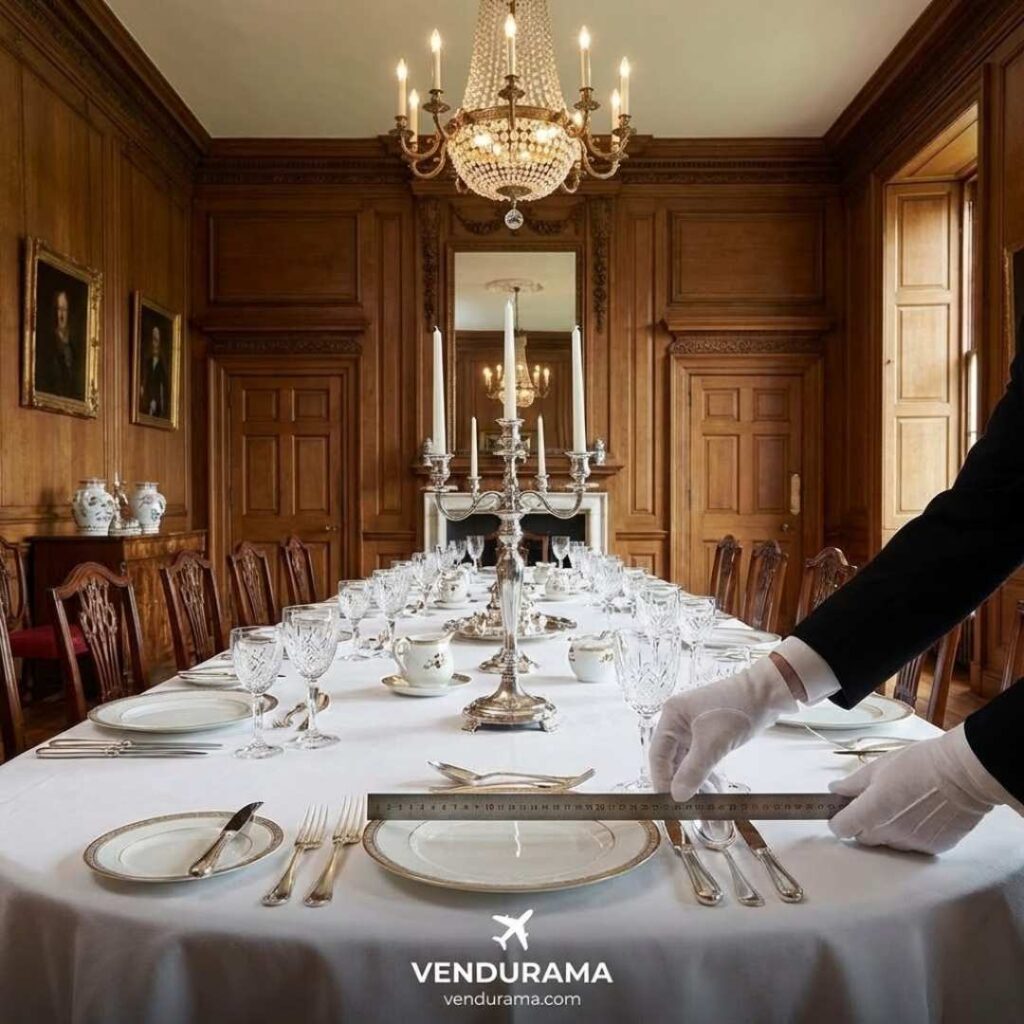
An Estate Manager must be able to curate a wine cellar worth millions. The training involves understanding vintage valuation, storage thermodynamics, and the art of decanting. Furthermore, they must master “Tablescape Engineering”—the mathematical precision of setting a table for a State Banquet, where the distance between the fork and the plate is measured in millimeters.
3. Cybersecurity and Physical Security
In 2026, the greatest threat to a UHNWI is often digital. Modern academies have integrated cybersecurity modules. Managers are trained to secure home networks, manage non-disclosure agreements (NDAs) for staff, and screen vendors. They act as the “Gatekeepers,” balancing the openness of a home with the security of a fortress.
Part III: The Estate as a Corporation – Managing the “Household P&L”
The modern estate is a small-to-medium enterprise (SME). A single property in Bel-Air or Kensington may have an annual operating budget exceeding $5 million.
Vendor Management and Procurement
The Estate Manager acts as the procurement officer. Whether sourcing organic produce from local farms or negotiating contracts with private aviation brokers, they must understand value. They are responsible for vetting contractors, from landscape architects to art conservators, ensuring that the “Principal’s Premium” (the tendency of vendors to overcharge the wealthy) is mitigated through shrewd negotiation.
Human Resources and Staffing
Managing a team of 15 to 50 staff members (housekeepers, chefs, nannies, security, chauffeurs) requires advanced HR skills. Academies teach the legalities of employment contracts, conflict resolution in high-stress environments, and the art of “roster management” to ensure 24/7 coverage without violating labor laws.
Part IV: The Logistics of the Student – Investing in the Career Pivot
Entering this profession is an investment. Tuition for an 8-week intensive residential course can range from £12,000 to £18,000. However, the return on investment (ROI) is staggering, with starting salaries for qualified Estate Managers often exceeding £100,000 tax-free in certain jurisdictions.
Navigating the Educational Journey
For international students aspiring to enter these British academies, the logistical preparation is the first test of their suitability for the role. Securing a spot involves rigorous interviews and background checks. Once accepted, the student must manage their own deployment to the UK. Successful candidates demonstrate their aptitude by utilizing comprehensive travel planning platforms to coordinate their multi-leg flights and accommodation in London or the countryside. The ability to source the most efficient flight routes and manage one’s own itinerary is a microcosm of the job itself. If you cannot manage your own logistics, you cannot manage a Principal’s.
The “First Impression” Logistics
Arriving at the academy is akin to arriving at a new job. Presentation is paramount. Students are expected to arrive in immaculate attire, often carrying formal wear required for the course. Navigating the chaotic transit from Heathrow or Gatwick to a remote estate in Oxfordshire with delicate luggage is a risk. Aspiring managers often mitigate this by booking professional private transfer services. This ensures they arrive at the academy gates composed, refreshed, and punctual—demonstrating the very standard of “seamless arrival” they will later provide to their employers.
Part V: The Psychology of the Principal – Anticipatory Service
The “Hard Skills” (valeting, service) are teachable. The “Soft Skills” are where the true value lies. This is the psychology of the job.
The Art of Anticipation
The holy grail of service is “Anticipatory Intelligence.” It is the ability to know what the Principal wants before they know it themselves. If the Principal asks for a coffee, you are late. The coffee should appear because you tracked their sleep cycle and know they woke up 10 minutes ago. Academies use role-playing scenarios to train students in reading micro-expressions and body language.
Discretion and The “Non-Person” Paradox
A Butler must be present yet invisible. They are privy to the most intimate details of a family’s life—financial struggles, infidelities, health issues—yet must remain a “vault.” The psychological toll of living in a “Golden Cage,” where one is surrounded by luxury but owns none of it, is a core component of the training. Emotional resilience and the ability to maintain professional boundaries are critical.
Part VI: The Global Placement – From Graduation to the Superyacht
Upon graduation, the “Alumni Network” becomes the primary engine of career velocity. The top academies function as recruitment agencies.
The “Season” and Global Migration
Graduates often follow the “Global Season.” They might manage a chalet in Gstaad or Courchevel during the winter, move to a villa in Cote d’Azur or a yacht in the Mediterranean for the summer, and spend the shoulder seasons in London or New York. This nomadic lifestyle requires a mastery of global logistics. The Estate Manager is responsible for moving the entire household—staff, pets, art, and wardrobe—between these properties. They become experts in customs regulations, coordinating complex international flight itineraries for large entourages, and ensuring that the “lifestyle bubble” remains unbroken regardless of the geography.
The Middle East and Asia Frontier
While Europe and the US remain traditional hubs, the highest demand is currently emanating from the Middle East (Dubai, Riyadh) and Asia (Singapore, Hong Kong). UHNWIs in these regions are actively seeking British-trained managers to run vast palace complexes. These roles often come with tax-free salaries, separate villas for staff, and significant autonomy, but require a high degree of cultural adaptability and diplomatic sensitivity.
Conclusion: The Curator of Lifestyle
In the final analysis, the Estate Manager is not a servant; they are a Curator of Lifestyle. In an age where time is the ultimate luxury, they are the ones who manufacture time. They remove the friction of existence, allowing the Principal to focus on their business, their art, or their leisure.
The elite British academies are the guardians of this craft. They have successfully transitioned the profession from the rigid hierarchies of the 19th century to the dynamic, corporate-style management of the 21st. For those with the discipline to master the “Architecture of Service,” the career offers a unique vantage point on the world—a front-row seat to history, access to the most exclusive environments on Earth, and the satisfaction of mastering the complex, invisible art of making life perfect.
The path is open. The white gloves are merely the symbol; the mind is the tool. Are you ready to serve?