
Introduction: The Silence of the Void
In the relentless noise of 2026, silence has become the rarest and most expensive commodity on Earth. Our modern existence is a symphony of digital pings, urban friction, and the psychological weight of hyper-connectivity. For the global elite, the ultimate luxury is no longer found in the gilded halls of metropolitan grand hotels, but in the profound “nothingness” of the world’s geographical fringes.
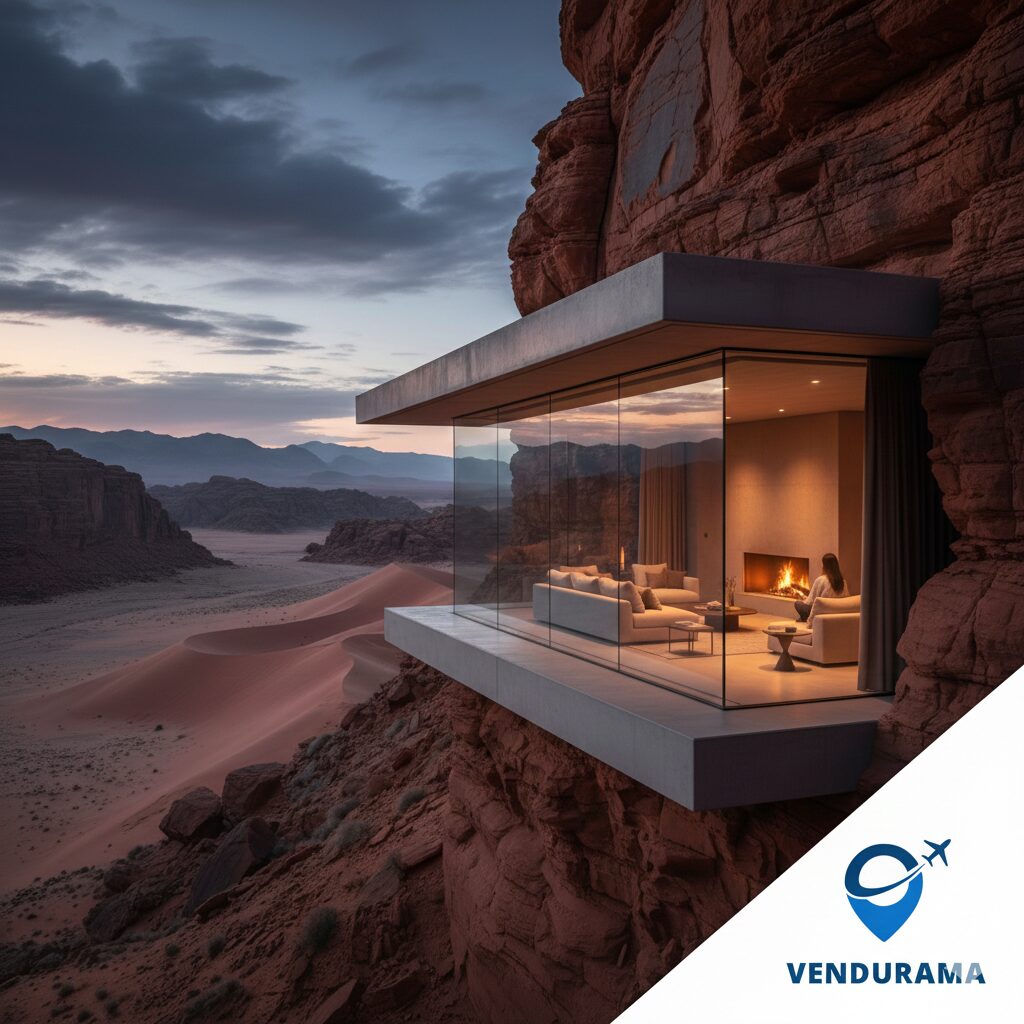
This is the era of The Architecture of Isolation. It is a movement that seeks to reconcile the human need for shelter with the raw, indifferent beauty of the wilderness. These are not merely hotels; they are “Sanctuaries of the Void”—architectural interventions designed to disappear into their surroundings, allowing the inhabitant to dissolve into the landscape. From the subterranean suites of the Utah desert to the glass-walled observatories of the Arctic Circle, these sanctuaries offer more than a holiday; they offer a “Deep Reset” of the human psyche.
To understand the power of these places, we must analyze the intersection of environmental psychology, avant-garde architecture, and the complex logistics required to sustain luxury in the middle of nowhere. This is an exploration of how we travel to get lost, and how the geography of isolation is being redesigned for the ultimate restoration of the self.
Part I: The Psychology of Seclusion – Why We Seek the Edge
To choose a remote sanctuary is to acknowledge a biological imperative for retreat. The human brain, evolved in natural landscapes, is under constant siege in urban environments. The “Geography of Calm” we discussed previously finds its physical manifestation in the architecture of isolation.
1. The Cortisol of Connectivity
The “Always-On” culture keeps our sympathetic nervous system in a state of mild but persistent arousal. Constant visual and auditory stimuli prevent the brain from entering the “Default Mode Network”—the state responsible for creativity, self-reflection, and deep processing. Isolation architecture acts as a Faraday cage for the soul, physically distancing the traveler from the sources of stress.
2. The Concept of “Prospect and Refuge”
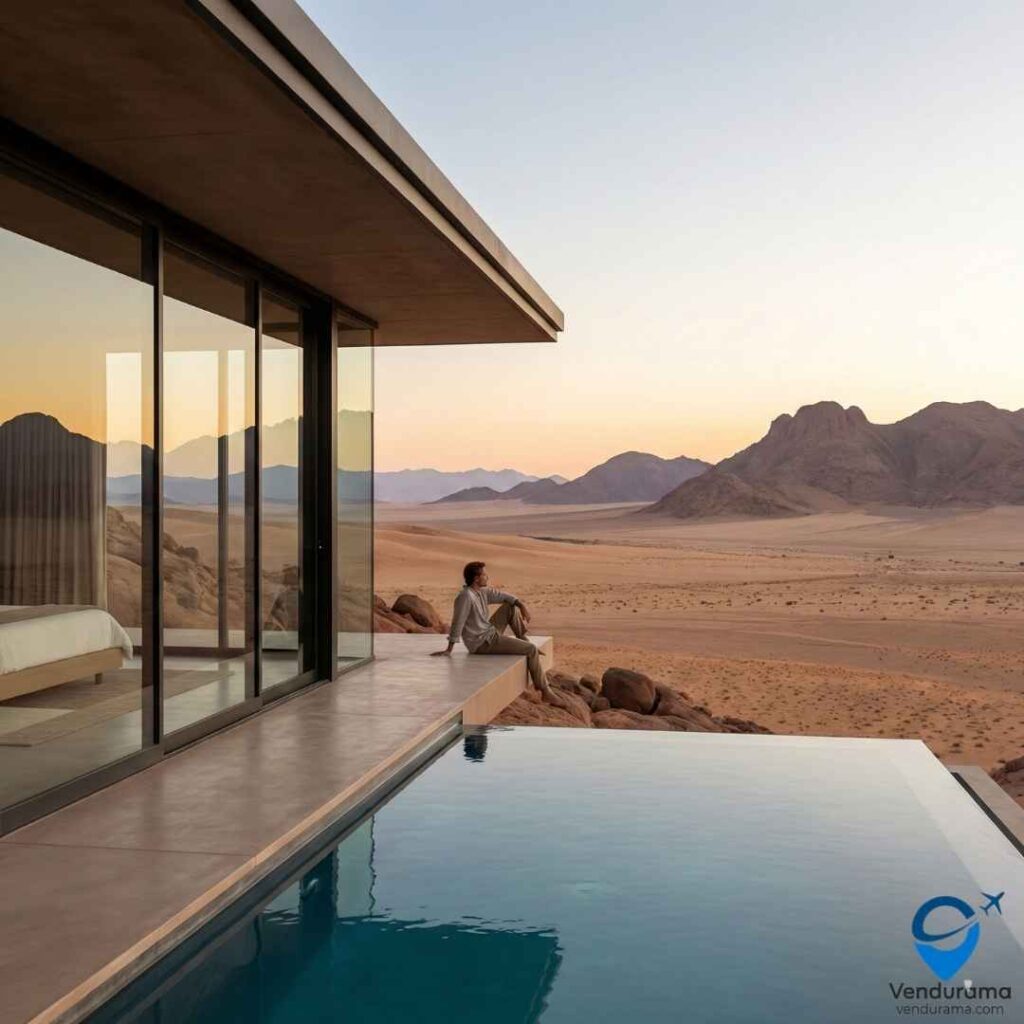
Architectural theory suggests that humans feel most at peace in environments that provide “Prospect” (a wide, clear view of the horizon) and “Refuge” (a safe, enclosed space to retreat to). Remote sanctuaries excel at this duality: floor-to-ceiling glass looking out over a desolate tundra or desert, while the interior remains a warm, tactile cocoon of stone and wood.
Part II: The Design Language of the Wilderness
Building in remote environments requires more than just aesthetics; it requires an engineering dialogue with the elements. The architecture of isolation often falls into three distinct philosophies:
1. Subterranean Minimalism (The Desert Protocol)
In regions like AlUla in Saudi Arabia or the canyons of the American Southwest, the goal is to “build within.” Architects utilize the thermal mass of the Earth to regulate temperature, creating structures that are carved into the rock or buried beneath the sand. These spaces feel ancestral, connecting the traveler to a geologic sense of time.
2. The Lightweight Observatory (The Polar and Coastal Protocol)
In fragile ecosystems like the Arctic or the remote coastlines of Patagonia, the architecture is designed to “touch the Earth lightly.” These are often modular, prefabricated structures raised on stilts to minimize ecological impact. They prioritize the visual connection to the horizon, using advanced glass technology to frame the landscape like a living painting.
3. Biophilic Integration (The Jungle Protocol)
In the high-density green of the Amazon or the Balinese highlands, the architecture is porous. Walls are replaced by screens; boundaries between interior and exterior are blurred. The sound of rain and the scent of damp earth become the primary decorative elements.
Part III: Case Studies in Radical Isolation
To truly understand the “Ultimate Reset,” we must audit the specific regions that have mastered the art of luxury seclusion.
1. The High Altitude Silence: The Himalayas and Andes
At 4,000 meters, the air is thin, the light is blinding, and the human ego feels insignificant. Sanctuaries here are often built using local stone and traditional techniques, updated with modern thermal engineering. The isolation is both physical and biological, forcing a slower pace of movement and thought.
2. The Maritime Void: Private Islands and Remote Atolls
True isolation in a maritime context is found in the “Outer Islands”—places where the nearest inhabited land is hundreds of miles away. The architecture here focuses on the rhythm of the tides and the infinity of the blue horizon. It is a sensory detox based on the color blue and the sound of waves.
3. The Arid Majesty: Namibia and the Atacama
The desert is the ultimate landscape of the void. There is no visual clutter, only the shifting shapes of dunes and the absolute darkness of the night sky. Architecture in these regions focuses on “Frame and Shadow,” creating dramatic contrasts between the heat of the day and the chill of the night.
Part IV: The Logistics of the Unreachable – Engineering the Arrival
The paradox of the most remote luxury sanctuaries is that their very “unreachability” is their greatest selling point—and their greatest logistical hurdle. Maintaining a five-star experience in a location without roads, power grids, or local supply chains is a feat of modern engineering.
1. The “Invisible” Infrastructure
How does a sanctuary in the middle of a desert provide fresh produce and clean water?
- Resource Autonomy: Advanced desalination, atmospheric water generators, and vast solar arrays are the lifeblood of these sites.
- Supply Chain Precision: Every ingredient, from the vintage wine to the organic linen, often arrives via specialized air or sea routes, timed with military precision.
2. The Flight Path to Serenity
For the traveler, the journey to isolation must be handled with extreme strategic care. A “Deep Reset” can be easily derailed by the friction of poorly planned transit. You cannot reach the edge of the world through a series of stressful, low-quality connections.
Strategic isolation requires accessing the most direct and exclusive flight paths to remote regional hubs. Whether you are flying into a remote airstrip in the Kalahari or a small regional airport in the Norwegian fjords, your route must be optimized to minimize cognitive load. Utilizing highly-curated global travel search engines is essential for mapping out these complex, multi-leg journeys. These platforms allow the modern traveler to audit the quality of the carriers and the efficiency of the layovers, ensuring the “Isolation Protocol” begins the moment you leave your home. Secure your strategic travel arrangements through platforms that understand the value of time and the necessity of precision.
3. The “First Mile” of Seclusion
The final leg of the journey—the transition from the regional airport to the remote sanctuary—is the most critical for the traveler’s state of mind. Navigating an unfamiliar, remote terrain with heavy luggage is a direct threat to the “Reset.”
To maintain the integrity of the isolation experience, the arrival must be frictionless. This is where vetted, professional private transfers become a strategic requirement. Whether it is a luxury 4×4 capable of navigating desert tracks or a private executive van waiting at a coastal pier, pre-arranging your ground transportation ensures that the logistical weight of the world is lifted the moment you land. A professional driver, trained in the nuances of luxury service, handles the complexities of the local terrain while you begin your transition into silence. Securing your private transfer in advance is the final logistical gatekeeper between you and your ultimate sanctuary.
Part V: The Technology of Tranquility – Sustainably Lost
In 2026, isolation architecture is synonymous with “Smart Sustainability.” To be truly remote is to be responsible for one’s own footprint.
- Off-Grid Elegance: High-end sanctuaries now utilize AI-driven energy management systems that adjust lighting and climate based on real-time occupancy and external weather patterns, ensuring maximum comfort with zero waste.
- Waste-to-Resource: Advanced circular systems process all organic and inorganic waste on-site, turning the sanctuary into a closed-loop ecosystem. This “Clean Conscience” is an essential part of the luxury experience; you cannot truly relax in a landscape you are helping to destroy.
Part VI: The ROI of the Reset – A Long-Term Audit
What is the return on investment for a $3,000-a-night stay in a remote cave or a glass pod?
1. Cognitive Defragmentation
A week of “Deep Isolation” acts as a defragmentation for the brain. By removing all external distractions, the brain’s processing power is redirected inward. Travelers often report profound breakthroughs in business strategy, personal relationships, or creative blocks during these retreats.
2. Biological Recalibration
Studies show that being in “Fractal-Rich” natural environments for more than 72 hours leads to a measurable drop in systemic inflammation and a significant boost in natural killer (NK) cells, which are crucial for the immune system.
3. The Power of Perspective
From the perspective of a remote sanctuary, the problems of the city look small. The architectural framing of the wilderness forces a re-evaluation of priorities. You return not just rested, but “Reframed.”
Conclusion: The Architecture of Your Future
The “Architecture of Isolation” is not about hiding from the world; it is about finding the perspective required to lead it. As the world becomes more crowded and more connected, the ability to selectively disconnect will become the ultimate marker of status and the ultimate tool for health.
Choosing to visit these remote sanctuaries is a strategic decision to prioritize your own biological and psychological sovereignty. By mastering the complex logistics of the journey and ensuring a frictionless executive arrival, you can ensure that your time in the wilderness is dedicated entirely to the “Ultimate Reset.”
The void is not empty; it is full of the clarity you’ve been searching for. The only question is: are you ready to reach the edge?
Next Step: Are you ready to map your route to the world’s most remote sanctuaries? Compare the most direct and premium flight paths to begin your journey into silence. And for a truly seamless transition into the wilderness, ensure your private professional transfer is waiting for you upon arrival.