
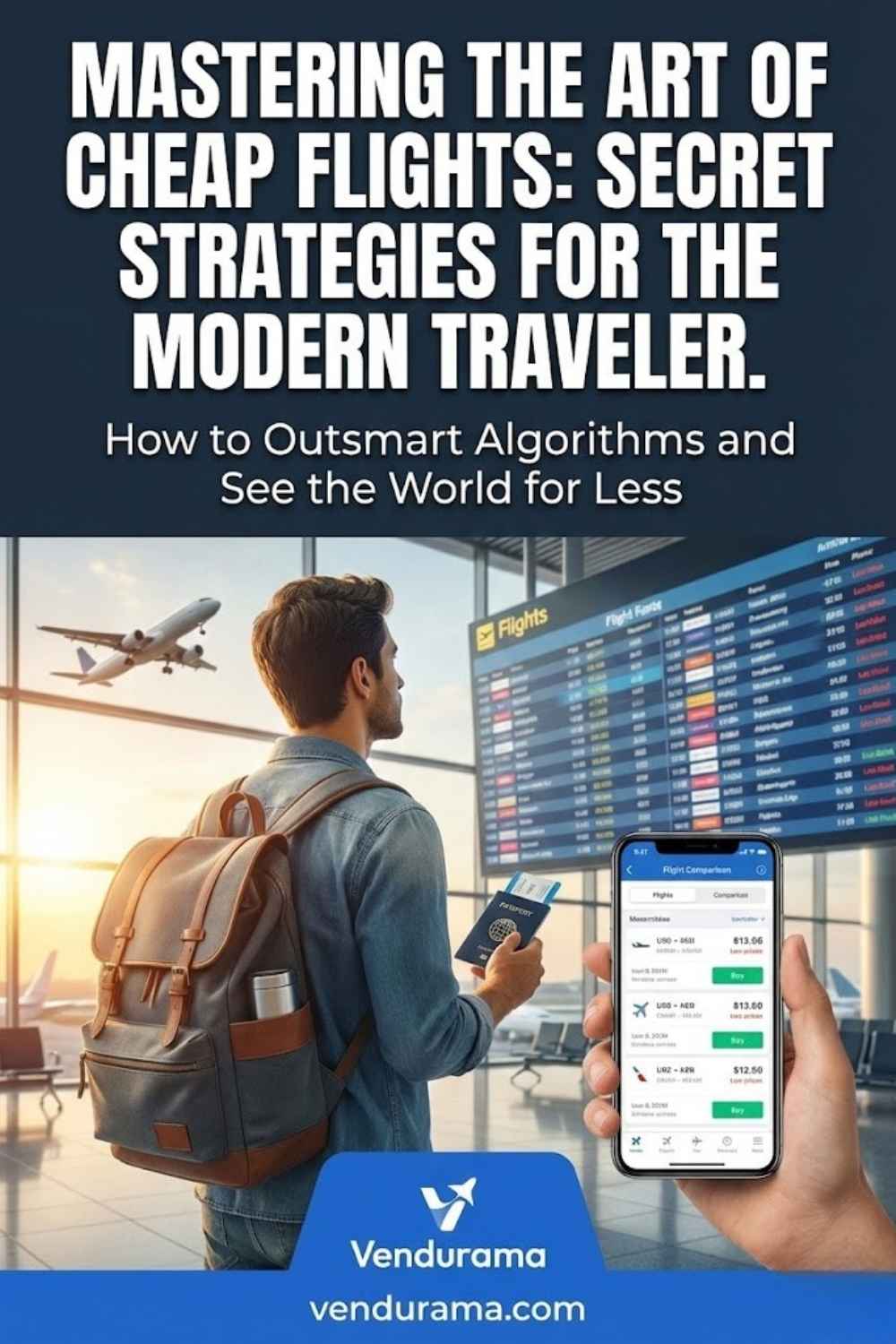
Introduction: The Economics of Freedom and the Sky
In the grand tapestry of modern history, few innovations have democratized human experience as profoundly as commercial aviation. The ability to traverse continents in hours, to wake up in Paris and sleep in Tokyo, is a hallmark of our era. However, this freedom comes with a gatekeeper: the price of the ticket. For the uninitiated, airfare pricing appears to be a chaotic, opaque system where prices fluctuate wildly without rhyme or reason. For the strategic traveler, however, it is a game of logic, algorithms, and timing—a puzzle that, when solved, unlocks the world at a fraction of the standard cost.
“Cheap flights” are not merely about saving money; they are about lifestyle design. Mastering the art of securing low fares transforms travel from a rare luxury into a sustainable, frequent habit. It allows for the reallocation of resources from the transit itself to the experience at the destination—better food, richer cultural immersion, and longer stays. This comprehensive analysis deconstructs the mechanisms of airline pricing, explores the psychology of booking, and provides a blueprint for navigating the complex ecosystem of global aviation. We will move beyond the basic advice of “book early” to explore advanced concepts like dynamic pricing algorithms, geo-arbitrage, error fares, and the strategic use of flight aggregators.
The Architecture of Airfare: How Airlines Price Tickets
To defeat the system, one must first understand how it works. Airlines do not sell seats; they manage yield. Yield management is the economic science of selling the right seat to the right customer at the right time for the maximum possible price.
1. Dynamic Pricing Algorithms
Gone are the days of fixed price lists. Today, airlines use sophisticated Artificial Intelligence (AI) and machine learning models to adjust fares in real-time. These algorithms analyze historical data, competitor pricing, remaining capacity, and even search volume to determine the price of a seat at any given second.
- The Booking Curve: Typically, flights are cheapest when they are first released (about 11 months out), rise slowly, dip slightly during “sales” windows, and then skyrocket in the last 21 days before departure (targeting business travelers who are price-insensitive).
- Load Factor: Airlines aim to fly planes as full as possible. If a flight is selling slower than the historical average for that route, the algorithm automatically lowers the price to stimulate demand. Conversely, if seats are selling fast, the price jumps.
2. Fare Classes (Booking Buckets)
On a single flight, there may be 100 people in Economy class paying 100 different prices. This is due to “Fare Classes,” often designated by letters (Y, B, M, H, Q, K, L, etc.).
- Deep Discount Economy: These are the cheapest seats, usually non-refundable and with zero flexibility. Once this “bucket” of seats is sold out, the system moves to the next, slightly more expensive bucket.
- Full Fare Economy (Y Class): These are fully refundable tickets bought last minute, often costing as much as Business Class. Understanding that cheap seats are a finite resource on every plane explains why waiting rarely pays off.
The Temporal Strategy: When to Book and When to Fly
Timing is the single most critical variable in the equation of cheap travel.
The “Goldilocks Window”
Data analysis of millions of bookings suggests there is a “perfect” time to book.
- Domestic Flights: The sweet spot is typically 1 to 3 months before departure.
- International Long-Haul: The ideal window is 2 to 6 months in advance. Booking too early (10 months out) can be expensive because airlines haven’t started “managing” the yield yet and set a conservative high price. Booking too late (less than 3 weeks) is disastrous due to the business traveler premium.
The Myth of the “Tuesday Midnight”
For years, a persistent myth claimed that booking on Tuesday at midnight yielded the best prices. In the age of algorithmic pricing, this is largely obsolete. While mid-week days (Tuesday and Wednesday) are often cheaper to fly, the day you buy the ticket matters less than the number of days before departure.
Seasonality and the Shoulder Season
The law of supply and demand dictates that flying when everyone else flies (Summer, Christmas, Easter) will always be expensive. The strategic traveler targets the Shoulder Season—the period between peak and off-peak (e.g., April/May or September/October for Europe). During these windows, the weather is often pleasant, crowds are thinner, and airfare can be 30% to 50% cheaper than peak season.
The Digital Toolkit: Aggregators and Search Engines
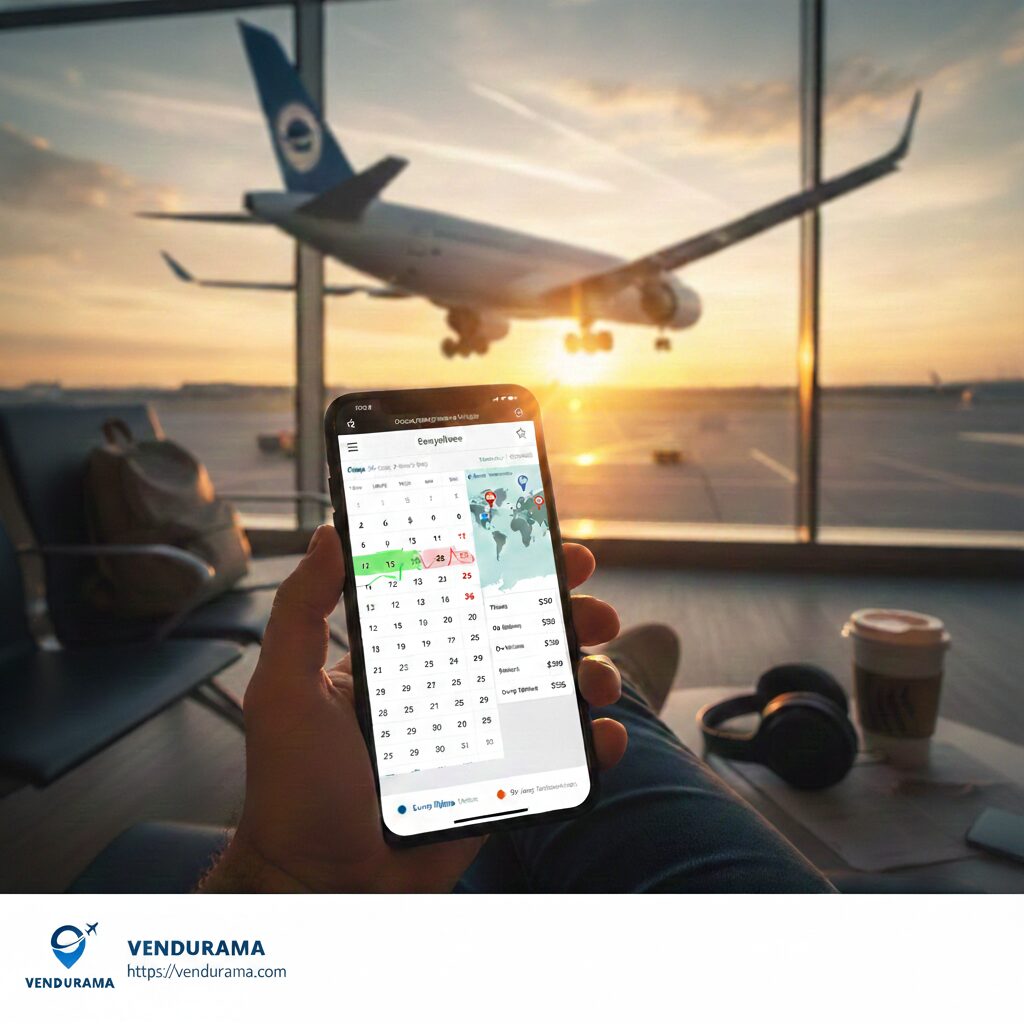
The modern traveler does not visit an airline’s website directly to start their search. They use technology to scan the entire market at once.
The Power of Meta-Search Engines
Direct booking limits your vision to one carrier. Meta-search engines scrape data from hundreds of airlines, Online Travel Agencies (OTAs), and consolidators to present a global view of pricing. This is essential for finding interline tickets (where you fly out with one airline and return with another).
- Visualization: The best tools allow you to see prices across a calendar view or a map view. This visual data helps identify that flying on a Thursday instead of a Friday might save $200.
- Complex Routing: For multi-leg journeys or “Round the World” trips, manual searching is inefficient. Savvy explorers rely on comprehensive flight data aggregators to process millions of route combinations instantly, revealing the most cost-effective connections that a human agent might miss.
Incognito Mode and Cookies
There is an ongoing debate about whether airlines track your cookies to raise prices if they see you searching for the same route repeatedly. While airlines deny this, many travelers swear by the practice of searching in Incognito/Private Mode or using a VPN (Virtual Private Network) to mask their location. This prevents the website from using your search history against you (“dynamic pricing based on interest”).
The Art of Flexibility: Destination and Date
If your destination and dates are fixed (e.g., “I must go to London on July 15th”), you are a “price taker.” You have no leverage. The key to ultra-cheap travel is to be a “price maker” by maintaining flexibility.
The “Everywhere” Search
Instead of asking “How much is a flight to Paris?”, ask “Where can I fly for $300?”. Many search engines allow you to enter your home airport and select “Everywhere” or “Anywhere” as the destination. This reverses the search logic, letting the price dictate the adventure. This is how travelers end up discovering hidden gems like Tirana, Albania, or Da Nang, Vietnam, simply because the algorithm flagged a price drop.
Date Flexibility
If you can shift your trip by a few days, the savings can be substantial. Flying on a Tuesday, Wednesday, or Saturday is statistically cheaper than flying on a Friday or Sunday. The “weekend getaway” demand spikes prices on Friday evenings and Sunday nights.
Advanced Strategies: Geo-Arbitrage and Currency Logic
Global aviation pricing is not uniform across currencies. This leads to opportunities for Geo-Arbitrage.
Point of Sale (POS) Spoofing
Sometimes, a ticket is cheaper if bought from the “Point of Sale” of a different country. For example, a domestic flight within Peru might be cheaper if bought on the Peruvian version of the airline’s website (in Spanish, paying in Soles) than on the US version (in English, paying in Dollars).
- How to do it: Use a VPN to set your IP address to the target country and use a credit card with no foreign transaction fees.
Currency Fluctuations
When a country’s currency crashes, flights originating from that country often become significantly cheaper in hard currency (USD/EUR) terms before airlines adjust their pricing. Monitoring global economic trends can occasionally reveal these windows of opportunity.
The Low-Cost Carrier (LCC) Revolution
The rise of Low-Cost Carriers (like Ryanair, AirAsia, Southwest, Wizz Air) fundamentally changed the industry by “unbundling” the fare.
Understanding the “Naked” Fare
LCCs sell you the seat—and nothing else. Baggage, seat selection, food, and even printing the boarding pass often incur extra fees.
- The Trap: A $20 flight can easily become a $150 flight if you are not careful with add-ons.
- The Strategy: To truly benefit from LCCs, one must travel light (carry-on only), accept random seating, and bring their own snacks.
- Secondary Airports: LCCs often fly to secondary airports (e.g., Beauvais instead of Charles de Gaulle in Paris). These airports are further from the city center, meaning you must factor in the cost and time of the transfer into the total ticket price.
Hacking the Route: Skiplagging and Open-Jaws
For the advanced traveler, the itinerary itself is a canvas for creative cost-saving.
Hidden City Ticketing (Skiplagging)
This is a controversial but effective strategy. It relies on the pricing anomaly where a flight from A to C (with a layover in B) is cheaper than a direct flight from A to B.
- The Move: You book the flight from A to C, but you get off the plane at the layover city (B) and skip the final leg.
- The Rules: You must travel with carry-on luggage only (checked bags will go to city C). You cannot do this on round-trip tickets (skipping a leg cancels the return journey). Airlines dislike this practice, so it should be used sparingly and discreetly.
Open-Jaw Tickets
An “Open-Jaw” is when you fly into one city and out of another (e.g., Fly into London, take a train to Paris, fly out of Paris). This saves the time and money of backtracking to your original arrival city. It allows you to see more regions without paying for a redundant return leg.
Mistake Fares: The Holy Grail of Travel
Occasionally, human error or currency conversion glitches cause airlines to sell tickets for a fraction of their value (e.g., a $10,000 First Class seat for $500). These are called Mistake Fares or Error Fares.
- How to find them: These fares disappear in hours or minutes. They are tracked by specialized websites and newsletters.
- The Golden Rule: If you book a mistake fare, do not book your hotels immediately. Wait a few days to see if the airline honors the ticket or cancels it (most airlines now honor them to avoid bad PR, but not always).
The Total Cost of Travel: Beyond the Airfare
Novice travelers focus solely on the sticker price of the flight. Expert travelers calculate the Total Cost of Mobility.
The Hidden Cost of Arrival
Saving $30 on a flight that lands at 2:00 AM might cost you $100 in taxi fares because public transport is closed. Similarly, landing in a chaotic new city without a plan can lead to falling victim to “tourist tax” scams by local drivers. To secure the budget and ensure safety, experienced planners often incorporate reliable private airport transfer services into their itinerary. This locks in a fixed price for the “last mile” journey, avoiding the volatility of surge pricing on ride-sharing apps or predatory unmetered taxis at the arrivals curb.
Baggage Economics
On long-haul international flights, baggage policies vary wildly. One airline might offer a slightly higher fare that includes 2 checked bags, while a “cheaper” competitor charges $100 per bag. Always calculate the “final price” at the checkout screen, not the initial search result.
Loyalty Programs and Travel Hacking
While this guide focuses on cash prices, no discussion of cheap travel is complete without mentioning Points and Miles.
- Airline Alliances: The three major alliances (Star Alliance, OneWorld, SkyTeam) allow you to earn miles on one airline and redeem them on another.
- Credit Card Churning: In countries like the USA, signing up for credit cards to get “Welcome Bonuses” is the fastest way to earn free flights.
- Buying Miles: Sometimes, airlines sell miles at a discount. If the cost of buying the miles needed for a Business Class ticket is lower than the cash price of the ticket, it is a smart arbitrage move.
Conclusion: The World is Waiting
Mastering the art of cheap flights is a skill that pays dividends for a lifetime. It requires a shift in mindset: from passive consumer to active strategist. It involves understanding that the price of a ticket is not a fixed reality, but a fluid number determined by algorithms that can be predicted and leveraged.
By utilizing the right digital tools, understanding seasonality, remaining flexible, and looking at the total cost of the journey, the barriers to global exploration crumble. The world is vast, and for those who know how to navigate the invisible currents of the aviation industry, it is remarkably accessible. Travel is the only thing you buy that makes you richer, and buying it for less means you can afford to become richer, faster. The gate is open; the strategy is yours to deploy.