
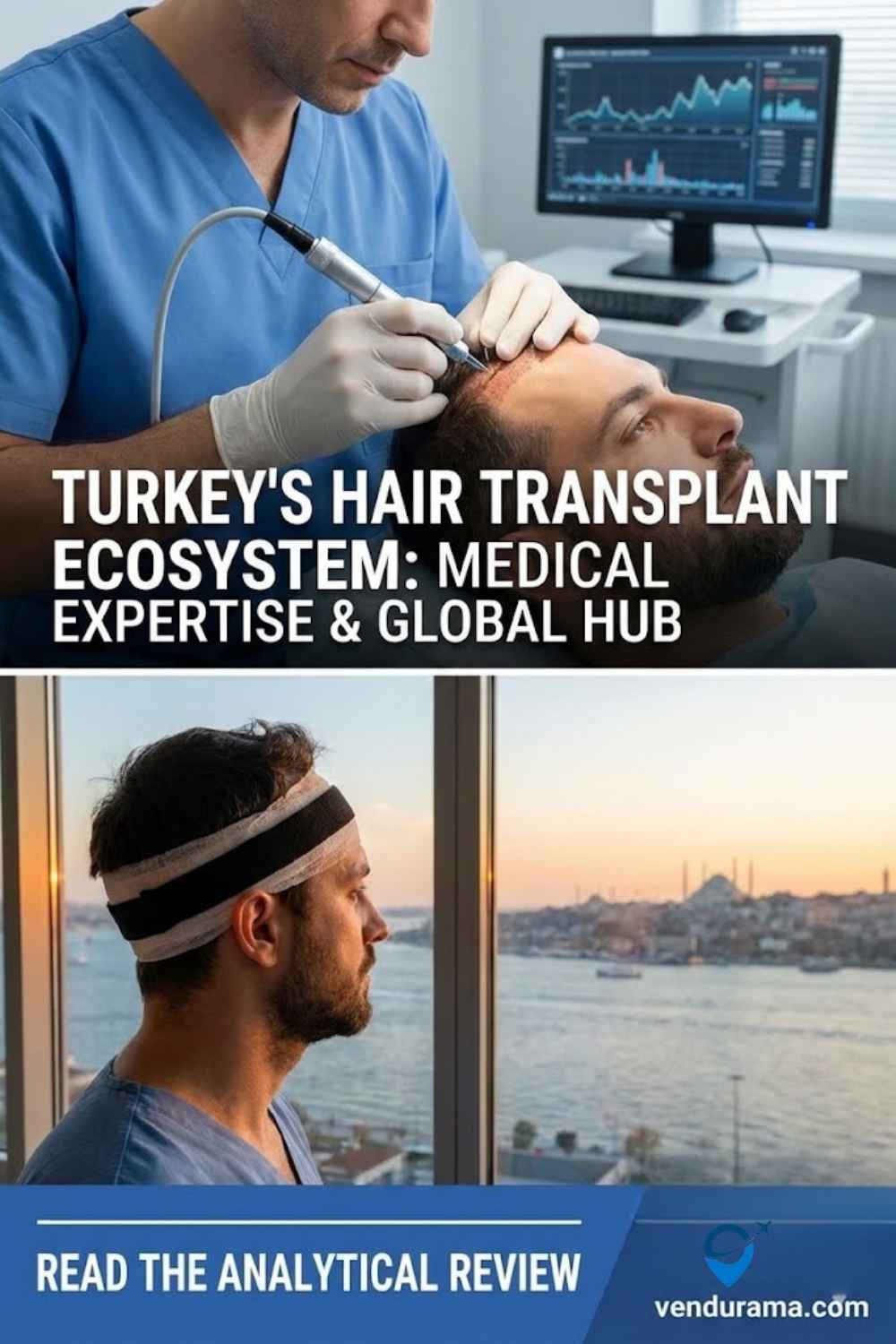
Introduction: The Global Epicenter of Follicular Restoration
In the departure lounges of Istanbul Airport, a distinct and ubiquitous demographic has become a defining feature of the modern travel landscape: men of diverse nationalities, wearing black headbands and protective bandages, carrying neck pillows. They are the patrons of a multi-billion-dollar industry that has transformed Turkey into the undisputed global capital of hair transplantation. This phenomenon is not merely a trend in cosmetic surgery; it is a sophisticated convergence of medical specialization, economic strategy, and health tourism infrastructure.
Hair loss, or androgenetic alopecia, affects approximately 50% of men by age 50 and a significant percentage of women, creating a massive global demand for restorative solutions. Turkey has successfully capitalized on this demand by creating an ecosystem that combines high-volume experience with advanced technology and cost-efficiency. This article provides a comprehensive, high-authority analysis of the Turkish hair transplant sector. It explores the medical science behind the procedures (FUE, DHI, Sapphire), the economics of the industry, the patient journey from diagnosis to full recovery, and the critical logistical frameworks that enable thousands of patients to undergo surgery daily. It serves as a definitive guide for understanding the mechanisms of this medical tourism phenomenon.
The Medical Necessity: Understanding Androgenetic Alopecia
To understand the industry, one must first understand the pathology. Hair loss is primarily driven by genetics and the sensitivity of hair follicles to Dihydrotestosterone (DHT), a derivative of testosterone.
- The Mechanism: In susceptible individuals, DHT binds to receptors in the hair follicles, causing them to miniaturize over time. The growth phase (anagen) shortens, and the hair becomes thinner until it ceases to grow entirely.
- The Donor Dominance Theory: The foundation of hair transplantation lies in the concept of “Donor Dominance.” Hair follicles in the occipital region (back of the head) and parietal regions (sides) are typically resistant to DHT. When these follicles are transplanted to balding areas, they retain their genetic resistance and continue to grow for a lifetime.
Turkey’s medical infrastructure has specialized in maximizing the utility of this finite donor supply, developing protocols to harvest grafts efficiently without depleting the donor area or causing visible scarring.
The Evolution of Techniques: From Plugs to Precision
The Turkish sector has been instrumental in the rapid adoption and refinement of minimally invasive techniques, moving away from the older FUT (Follicular Unit Transplantation) or “strip” method.
1. Follicular Unit Extraction (FUE)
This is the gold standard globally and the backbone of the Turkish industry. Individual follicular units (containing 1-4 hairs) are extracted directly from the donor area using a microscopic punch (0.6mm–0.9mm).
- Advantage: No linear scar, faster recovery, and the ability to harvest body hair if scalp hair is insufficient.
- Micromotors: Turkish clinics pioneered the use of motorized punches to speed up extraction, allowing for “Mega-Sessions” where 4,000+ grafts can be transplanted in a single day.
2. Sapphire FUE
An evolution of the standard FUE, this technique uses blades made from synthetic sapphire (Al2O3) rather than steel to open channels in the recipient area.
- Clinical Benefit: Sapphire blades are sharper and create smaller, V-shaped incisions. This reduces tissue trauma, minimizes bleeding, and allows for denser packing of grafts (up to 60-70 grafts per cm²), creating a more natural result.
3. Direct Hair Implantation (DHI)
This technique utilizes a “Choi Implanter Pen,” a specialized tool that allows the surgeon to extract and implant the follicle simultaneously or without pre-creating channels.
- Precision: It offers total control over the angle, depth, and direction of the hair.
- Recovery: Since no separate canal incisions are made, bleeding is negligible, and recovery is faster. It is often preferred for increasing density in thinning areas without shaving the entire head.
The Economic Architecture: Why Turkey?
The dominance of Turkey is not accidental; it is a result of macroeconomic factors and strategic government policy.
- Cost Arbitrage: The primary driver is the cost differential. A 3,000-graft FUE procedure that might cost $15,000–$25,000 in the USA or UK typically costs between $2,000 and $4,000 in Turkey. This price often includes accommodation and transport.
- High Volume and Experience: Turkish surgeons perform more transplants than their counterparts anywhere else. This “high volume” leads to a steep learning curve and mastery of diverse hair types (Afro, Asian, Caucasian).
- Government Incentives: The Turkish Ministry of Health and Ministry of Economy actively support health tourism through tax breaks, subsidies for marketing, and strict accreditation requirements (JCI) to maintain quality standards.
The Pre-Operative Phase: Diagnosis and Logistics
The journey begins long before the patient sets foot in Istanbul. It starts with a digital consultation and complex logistical planning.
Digital Triage and Assessment
Patients typically submit high-resolution photos via encrypted platforms. Medical teams analyze the Norwood Scale (degree of baldness) and the density of the donor area. A treatment plan is drafted, estimating the number of grafts needed.
International Mobility and Flight Coordination
Once the medical assessment is approved, the logistical machinery engages. Hair transplant tourism is time-sensitive. Patients must coordinate their arrival to allow for a pre-operative blood test and consultation at least 24 hours before surgery. The return flight is equally critical; it must be scheduled after the initial post-op wash and check-up (usually 48-72 hours post-surgery).
Due to the unpredictable nature of surgical schedules and the potential need for an extra day of recovery if swelling occurs, experienced medical tourists often utilize advanced flight management platforms to secure flexible tickets. These tools allow patients to compare routes and adjust return dates with minimal penalties, ensuring the flight home does not compromise the delicate early stages of graft survival.
The Arrival and Ecosystem Integration
Upon landing in Turkey (usually at Istanbul Airport – IST or Sabiha Gökçen – SAW), the patient enters a highly integrated service ecosystem.
The “All-Inclusive” Medical Package
Unlike Western medical models where patients pay for surgery and manage their own logistics, Turkish clinics operate on a package model. This typically includes:
- VIP Airport transfers.
- 2-3 nights in a 4 or 5-star hotel (often located near the clinic).
- Translators (Arabic, English, Spanish, French).
- Pre-operative blood work (HIV, Hepatitis, Hemogram).
- Medications and post-op care kits.
Ground Logistics and Sterile Transport
The period immediately following the surgery is the most critical phase for graft survival. The newly implanted follicles are not yet anchored in the dermis and can be dislodged by minor bumps or friction. Therefore, relying on public transportation, subways, or standard taxis is clinically contraindicated due to hygiene risks and physical jostling. To mitigate this risk, leading clinics and health facilitators mandate the use of specialized private transfer services. These dedicated vehicles ensure a controlled, sanitized environment and a smooth ride from the hospital to the hotel, protecting the patient’s head from accidental trauma during the vulnerable “Golden Hours” post-surgery.
The Surgical Procedure: A Step-by-Step Analysis
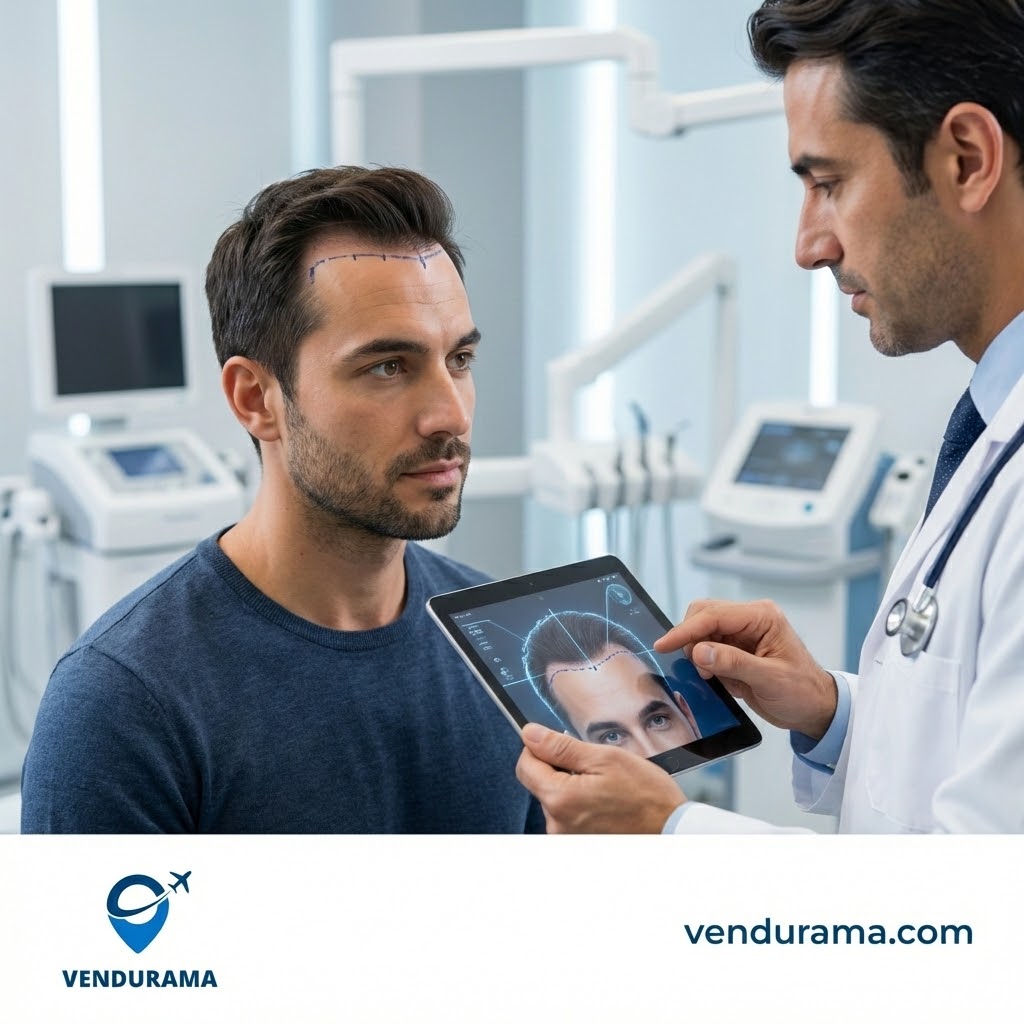
A standard hair transplant session in Turkey is an endurance event, often lasting 6 to 8 hours. It is performed under local anesthesia.
Phase 1: Preparation and Anesthesia
The patient’s hair is shaved (unless it is a “No-Shave DHI” case). The hairline is drawn with a laser level to ensure symmetry and aesthetic framing of the face. Local anesthesia is administered to the donor area. To reduce the pain of injections, many clinics now use Needle-Free Injection Systems (Jet Injectors) that use high pressure to deliver the anesthetic through the skin.
Phase 2: Extraction (The Harvesting)
This is the most labor-intensive phase. Using a micromotor, the surgeon or senior technician isolates individual follicular units. They are extracted with forceps and placed in a chilled preservation solution (often Hypothermosol or saline) to prevent dehydration and metabolic death of the cells. The grafts are counted and sorted by the number of hairs (singles, doubles, triples).
Phase 3: Channel Opening (The Artistry)
This is the defining moment for the surgeon. Using sapphire blades, the physician makes thousands of tiny incisions in the recipient area.
- Angle: Incisions must mimic the natural exit angle of original hair (usually 40-45 degrees).
- Direction: They must follow the natural “cowlick” or swirl patterns.
- Density: They must be spaced to ensure maximum coverage without compromising blood supply to the scalp (necrosis risk).
Phase 4: Implantation
Technicians place the harvested grafts into the opened channels using micro-forceps. Single-hair grafts are placed in the hairline for a soft look, while multi-hair grafts are placed behind to create density and volume.
Post-Operative Care: The Road to Restoration
The surgery is only 50% of the process; the recovery determines the final success.
The First 72 Hours
- Bandaging: A bandage is applied only to the donor area. The recipient area remains open.
- Sleeping: Patients must sleep at a 45-degree angle to reduce edema (swelling) and prevent the grafts from touching the pillow.
- The First Wash: This is performed at the clinic 24-48 hours post-op to remove blood clots and teach the patient how to wash their hair gently.
The “Ugly Duckling” Phase
- Days 1-10: Scabs form over the grafts. They must be removed gently by the 10th day.
- Weeks 3-8 (Shock Loss): This is a psychologically challenging phase. The transplanted hair falls out due to the trauma of relocation. The follicle remains alive under the skin, but the hair shaft is shed. Patients often look worse than before surgery.
The Growth Phase
- Month 3-4: New, fine hair begins to emerge.
- Month 6: significant aesthetic improvement (50% growth).
- Month 12-18: Full density and maturity of the hair.
Clinical Standards and the “Black Market” Issue
While Turkey offers world-class care, the rapid expansion of the industry has led to a “black market” of unauthorized clinics.
The Technician vs. Doctor Debate
In a JCI-accredited hospital, a doctor oversees the procedure and performs the critical steps (incision). However, in budget clinics, the entire procedure might be performed by technicians with no medical license.
- Risks: Over-harvesting (leading to a “moth-eaten” look in the donor area), necrosis, infection, and unnatural hairlines.
- Due Diligence: Patients are urged to verify the credentials of the surgeon (ISHRS membership) and ensure the procedure takes place in a registered hospital, not a standalone apartment or office.
Complementary Therapies: Boosting Results
To enhance graft survival, Turkish clinics often integrate adjunctive therapies:
- PRP (Platelet-Rich Plasma): The patient’s blood is spun to isolate growth factors, which are injected into the scalp during surgery to accelerate healing.
- Mesotherapy: Injection of vitamins and minerals.
- Laser Therapy (LLLT): Low-level laser light to stimulate blood flow.
The Psychological Impact: Beyond Vanity
The demand for hair transplants is deeply rooted in psychology. Hair is a primary marker of youth, vitality, and masculinity. Premature balding can lead to:
- Loss of Confidence: Social withdrawal and anxiety.
- Professional Impact: Perceived loss of competitive edge in the workplace.
- Identity Crisis: A mismatch between one’s internal age and external appearance. Successful restoration often leads to a profound “psychological rebirth,” improving social interactions and self-esteem.
Conclusion: A Global Medical Paradigm
Turkey’s hair transplant industry is a testament to the power of specialization. By combining medical expertise, technological adoption, and a comprehensive service model, it has democratized access to a procedure once reserved for the wealthy. It is a complex ecosystem where logistics meet artistry, and where a medical procedure becomes a journey of personal reinvention.
For the prospective patient, the key lies in education: understanding the difference between price and value, verifying medical credentials, and planning the logistical journey with precision. As the sector evolves towards robotics and stem cell cloning, Turkey remains the laboratory and the operating theatre of the world, restoring not just hair, but the confidence of millions.