
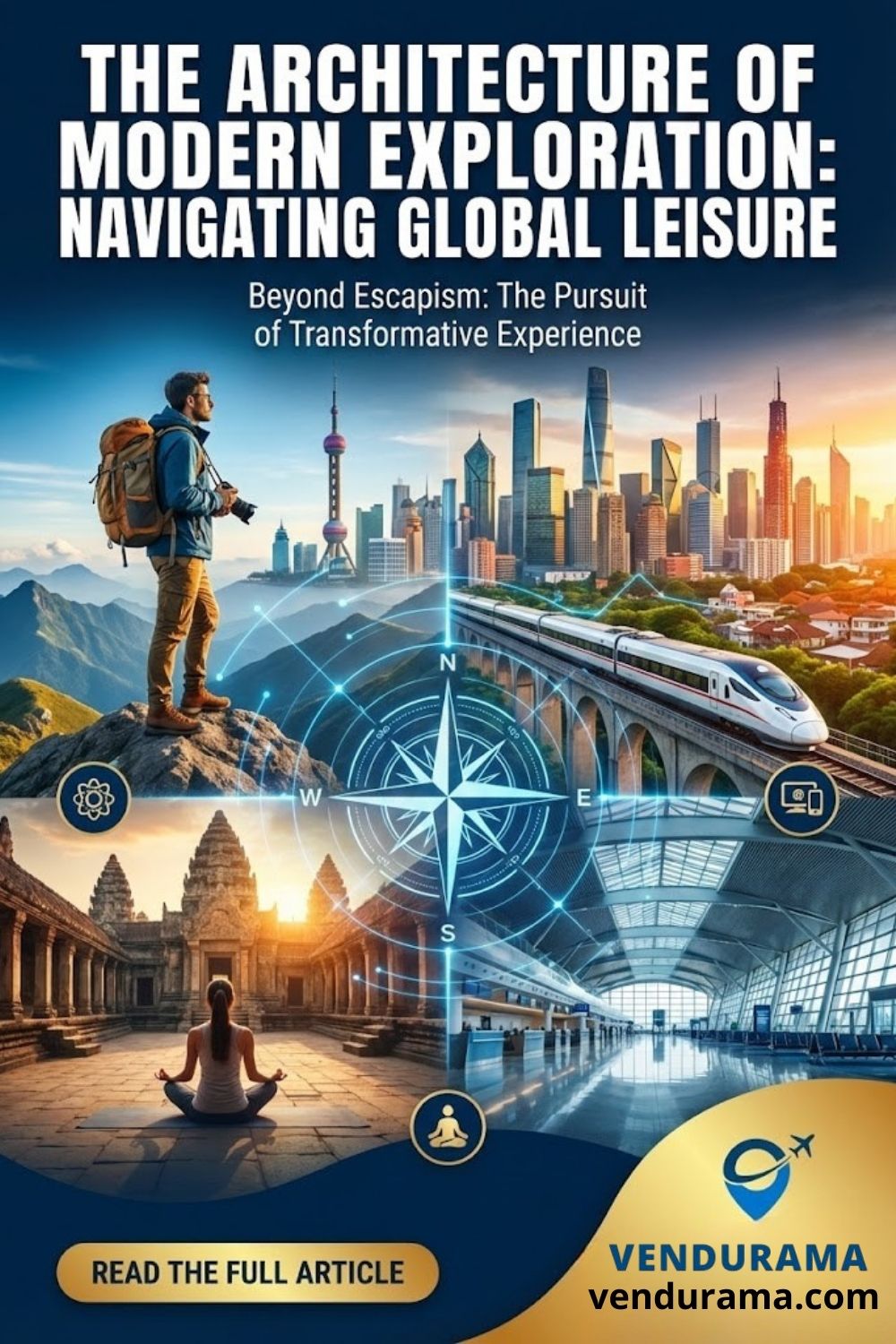
Introduction: Beyond Escapism—The Pursuit of Transformative Experience
In the contemporary landscape of human activity, leisure travel has evolved from a simple act of recreational escapism into a sophisticated mechanism for personal growth and cultural immersion. It is no longer merely about “seeing” new places; it is about “being” in new contexts. Today’s global explorer views the journey as a canvas for self-expression, a remedy for the cognitive fatigue of the digital age, and a vital bridge to understanding the complexities of an interconnected world. This paradigm shift has transformed the travel industry into a dynamic ecosystem of experiences, where the value lies not in the distance traveled, but in the depth of the encounter. As we navigate the 21st century, leisure travel stands as a testament to human curiosity, serving as a powerful architect of modern lifestyle, psychological resilience, and global citizenship. This comprehensive analysis explores the structural elements of modern exploration, from the psychology of wanderlust to the logistical intricacies that make global mobility possible.
The Anatomy of Non-Essential Mobility: Defining the Quest for Leisure
To understand the impact of modern travel, one must first delineate its boundaries. Leisure travel is the voluntary movement of individuals outside their habitual environment for purposes other than remuneration or necessity. It is the deliberate allocation of discretionary resources—time and capital—towards the acquisition of experience.
Distinct from business mobility, which is transactional and schedule-bound, or migration, which is often driven by survival or long-term settlement, leisure travel is an exercise in autonomy. It is the freedom to choose a destination based on desire rather than duty. Whether it is a short-term city break or a month-long sabbatical, the defining characteristic is the traveler’s intent: to disrupt the routine, to seek novelty, and to engage with the world on their own terms.
A Timeline of Wanderlust: From Aristocratic Grand Tours to Digital Nomadism
The lineage of modern tourism is rich and varied. While ancient civilizations traveled for trade and pilgrimage, the blueprint for leisure travel was drafted in the 17th century with the Grand Tour. Young European aristocrats traversed the continent to absorb art and culture, viewing travel as the finishing school of the elite.
The industrial age democratized this privilege. Railways and steamships shrank distances, and the visionaries of the 19th century packaged these journeys for the rising middle class. However, the true revolution arrived with the Jet Age, which dissolved geographic barriers and birthed mass tourism. Today, we stand at the precipice of a new era: the age of the Digital Nomad and “Bleisure” (blending business and leisure), where technology allows the journey to coexist with professional life, fundamentally altering how we define “home” and “away.”
The Spectrum of Discovery: Categorizing Contemporary Journeys
Modern leisure travel is not a monolith; it is a spectrum of motivations and modalities.
- Immersion and Culture: The pursuit of deep understanding. Travelers in this category prioritize heritage sites, museums, and local gastronomy, seeking to decode the DNA of a destination.
- Restoration and Wellness: Focused on physical and mental recalibration. From yoga retreats in Bali to thermal spas in Iceland, the goal is to heal the stresses of modern living.
- The Adrenaline Economy: Adventure tourism that commodifies risk and physical exertion. Trekking, diving, and climbing cater to the human need for challenge and “flow” states.
- Eco-Conscious Exploration: A growing segment dedicated to minimizing footprint and maximizing positive impact. It involves visiting protected areas and supporting conservation efforts.
- Urban Anthropology: The exploration of global mega-cities. It is the consumption of the metropolis—its architecture, nightlife, and subcultures.
The Cognitive Landscape: How Travel Rewires the Brain and Spirit
The benefits of leaving home extend far beyond the photo album. Neuroscientific research suggests that exposure to novel environments promotes neuroplasticity—the brain’s ability to form new connections.
- Cognitive Flexibility: Navigating foreign transit systems or communicating across language barriers forces the brain to solve problems in new ways, enhancing creativity and adaptability.
- Emotional Resilience: The “discomfort” of travel builds tolerance for ambiguity. Learning to manage the unexpected on the road translates to greater resilience in daily life.
- Perspective Shifting: Stepping out of one’s cultural bubble challenges biases and fosters empathy. It provides a mirror through which travelers can critically examine their own lives and societies.
Strategic Voyage Design: The Science of Itinerary Engineering

A successful journey is rarely accidental; it is the result of meticulous architectural planning. The modern traveler acts as a project manager, balancing the desire for spontaneity with the necessity of logistics.
This process begins with inspiration sourcing via social platforms and ends with granular scheduling. It involves a complex calculus of climate, budget, and timing. To navigate the labyrinth of international routes and carrier options, savvy planners utilize advanced flight aggregation tools that synthesize data from thousands of airlines. These technologies allow users to visualize connections, optimize layovers, and secure the most efficient pathways across the globe, serving as the digital foundation of the itinerary.
The Logistics of Long-Haul Connectivity
The physical act of moving across continents is a marvel of modern engineering and coordination. The global aviation network functions as the vascular system of the leisure economy.
- The Long-Haul Experience: Modern wide-body aircraft have transformed endurance into an experience, with advancements in cabin pressure and humidity reducing the physiological toll of travel.
- Network Alliances: The integration of airlines into global alliances allows for seamless ticketing, where a single booking can carry a traveler from a regional airport in Europe to a remote island in the Pacific.
- The Hub Model: Mega-airports in the Middle East and Asia serve as global crossroads, turning layovers into shopping and dining experiences, effectively becoming destinations in themselves.
The First Mile: Mastering Arrival Logistics and Destination Entry
The moment of arrival is the critical threshold of any trip. It is the transition from the regulated environment of the aircraft to the chaotic reality of a new country.
Navigating immigration, baggage claim, and customs is merely the first step. The “last mile”—the journey from the airport to the accommodation—is often the most stressful component due to language barriers and unfamiliar currency. To mitigate this friction, experienced travelers often arrange pre-booked private transfers prior to departure. This strategic move ensures a driver is waiting at the arrivals hall, providing a secure, scam-free, and seamless connection to the final destination, allowing the relaxation phase of the trip to begin immediately.
Sanctuaries of Sleep: The Evolution of Global Hospitality
Where we sleep defines how we experience a place. The accommodation sector has diversified to meet every psychological need of the traveler.
- The Standardized Luxury: Global hotel brands offer a promise of consistency and safety, a “home away from home” for those who value predictability.
- The Boutique Narrative: Independent hotels that tell a story through design and hyper-local service, integrating the traveler into the neighborhood’s fabric.
- The Residential Shift: The explosion of vacation rentals has decentralized tourism, moving travelers out of hotel zones and into residential communities, offering a taste of local domestic life.
Borders and Bureaucracy: Navigating the Geopolitics of Entry
Leisure travel is governed by the invisible lines of geopolitics. The passport is a document of privilege, and the visa is the key to the gate.
- Visa Liberalization: Many nations are moving towards e-Visas and visa-on-arrival schemes to attract tourism revenue, reducing the bureaucratic hurdle.
- Digital Borders: The future lies in biometric entry systems and digital travel authorizations (like ETIAS or ESTA), which screen travelers before they even board the plane.
- The Responsibility of compliance: Understanding entry requirements—from passport validity rules to return ticket mandates—is the traveler’s primary legal responsibility.
Risk and Resilience: The Safety Protocols of International Movement
To travel is to manage risk. A robust safety strategy is essential for the modern explorer.
- Health Security: Beyond vaccinations, this involves understanding the local healthcare landscape and carrying comprehensive medical insurance that covers evacuation.
- Situational Awareness: Being cognizant of local laws, cultural taboos, and safety advisories.
- Digital Safety: Protecting data while using public Wi-Fi networks and ensuring access to emergency funds via digital banking.
The Ethical Traveler: Sustainability in an Age of Mass Mobility
As the world shrinks, the footprint of tourism grows. The modern traveler bears an ethical burden to tread lightly.
- Combatting Overtourism: Choosing to visit secondary cities or traveling during the “shoulder season” helps disperse the economic benefits and reduces the strain on iconic sites.
- Carbon Consciousness: Opting for direct flights, using trains where possible, and supporting carbon offset initiatives.
- Economic Leakage: Ensuring that spending stays in the local economy by patronizing locally-owned businesses rather than international chains.
The Horizon of Travel: AI, Hyper-Personalization, and the Next Frontier
The future of leisure travel is being written in code. Artificial Intelligence is poised to become the ultimate travel concierge.
- Hyper-Personalization: Algorithms will soon predict our travel desires before we articulate them, curating trips based on our past behaviors and preferences.
- Augmented Reality (AR): Enhancing the on-ground experience by overlaying historical context onto physical ruins via smart glasses.
- Seamlessness: The friction of travel—check-ins, payments, identity checks—will increasingly become invisible, integrated into biometric and blockchain systems.
Conclusion: The Art of the Journey
In the final analysis, leisure travel is an art form. It is the composition of time, space, and experience into a memory that endures. As we move forward in this new era of global mobility, the focus shifts from simply “going” to “growing.” The architecture of modern exploration is not just about the planes that fly us or the hotels that house us; it is about the openness with which we greet the world. By navigating the globe with intention, preparation, and respect, we do not just visit new places—we allow those places to visit us, leaving an indelible mark on our identity and our understanding of the human condition.