
Introduction: The Journey as a Pillar of Modern Life
Leisure travel has transcended its origins as a rare privilege of the elite to become a foundational pillar of modern life, a multi-trillion-dollar global industry, and a profound cultural practice. For billions, the pursuit of travel is no longer a mere escape but a core component of personal well-being, identity formation, and cultural literacy. This evolution reflects a fundamental shift in human aspiration: from valuing material possessions to seeking transformative experiences. The modern traveler is not just a tourist but a participant in a global exchange, a curator of personal narrative, and a consumer of place-based meaning. The industry built around this desire has grown into a complex ecosystem encompassing logistics, hospitality, technology, and destination management, fundamentally shaping economies, landscapes, and social interactions worldwide. This article explores leisure travel as a global lifestyle phenomenon, a cultural practice, and a dynamic experiential economy, examining its historical roots, psychological underpinnings, systemic structures, and future trajectories.
Defining Leisure Travel: Beyond Essential Mobility
At its core, leisure travel refers to voluntary, non-essential journeys undertaken primarily for pleasure, relaxation, personal enrichment, or social connection. It is defined by its purpose: the experience of the journey and destination itself is the primary goal. This distinguishes it categorically from other forms of human mobility:
- Business Travel: Motivated by professional obligation, with itinerary and expenses dictated by work objectives.
- Migration: A permanent or long-term relocation driven by economic, political, or social necessity.
- Essential Mobility: Daily commuting or travel for healthcare, education, or family care, which are necessities of routine life.
Leisure travel is characterized by discretionary time and income, autonomy in choice, and the pursuit of hedonic (pleasure-seeking) or eudaimonic (meaning-seeking) rewards. It is the exercise of freedom in geographic and experiential space.
A Historical Overview: From Roman Otium to Mass Mobility

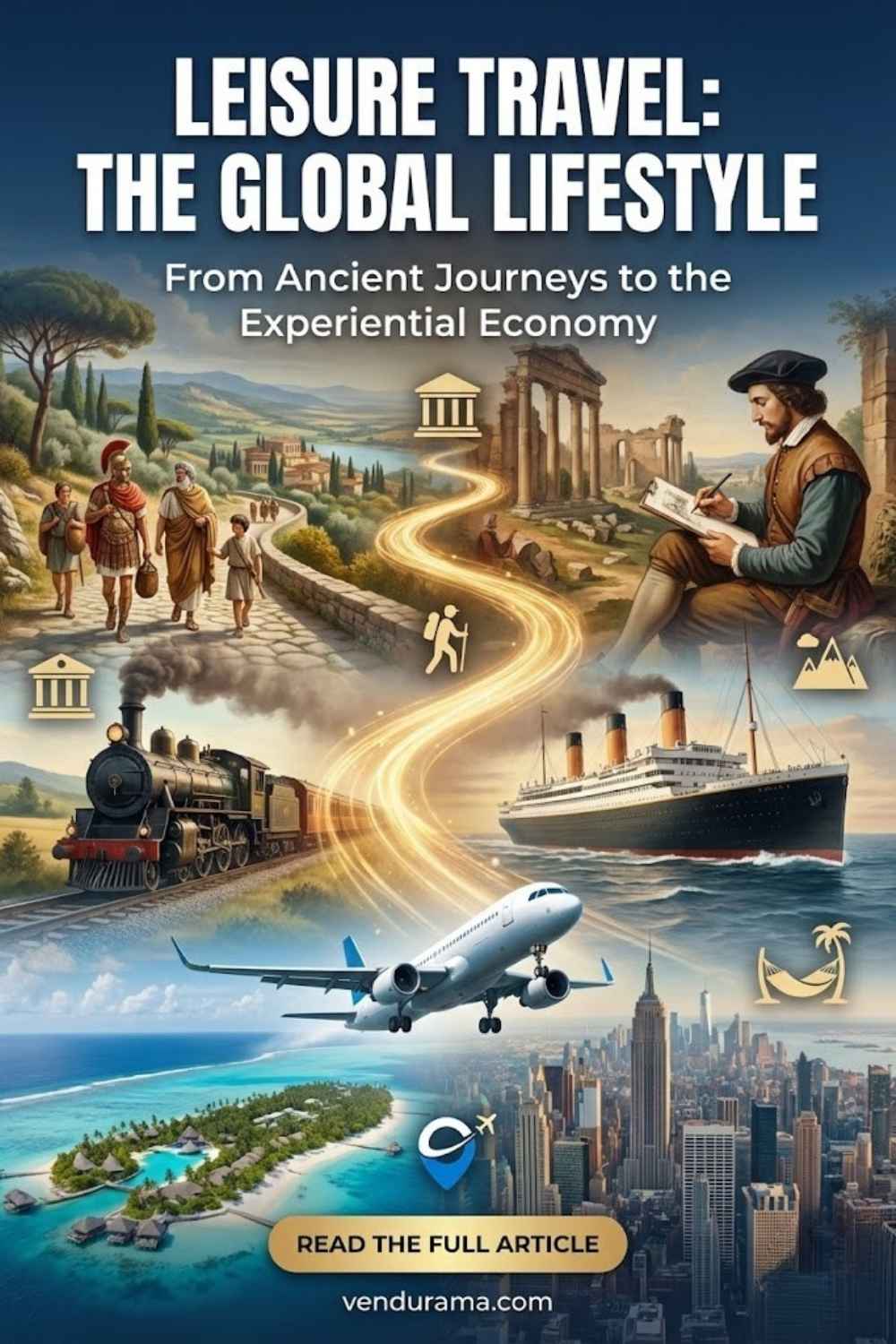
The human desire to travel for curiosity and pleasure is ancient. The first recognizable leisure travelers emerged over 2,000 years ago in Ancient Rome. During periods of peace and prosperity, wealthy Romans utilized their extensive road network to summer at coastal resorts like the Bay of Naples, establishing patterns of seasonal migration for recreation.
The collapse of Rome stifled leisure mobility for centuries, with travel largely confined to trade, pilgrimage, or warfare. The Renaissance rekindled intellectual curiosity about the world, but travel remained perilous and exclusive. The 17th and 18th centuries saw the institutionalization of leisure travel with the Grand Tour, a cultural rite of passage for young European aristocrats who traveled to classical sites to acquire education, polish, and social capital.
The true democratization of travel began with the Industrial Revolution. The invention of the steam locomotive and the founding of the first travel agency by Thomas Cook in 1841 made organized, affordable journeys possible for the burgeoning middle class. The concept of the “vacation”—literally vacating one’s home—was born. The 20th century’s great accelerator was aviation. From the first commercial flights to the jet age and the rise of wide-body aircraft like the Boeing 747, air travel shrank the globe, making distant continents accessible for holidaymakers. The post-war era gave rise to the package tour, bundling flight, hotel, and transfers, which fueled mass tourism to Mediterranean resorts and beyond.
Today, leisure travel is a ubiquitous feature of global culture, though its benefits remain unevenly distributed due to economic, political, and visa barriers.
Major Forms of Leisure Travel
The modern landscape of leisure travel is highly segmented, catering to diverse motivations and identities.
- Cultural Tourism: Travel focused on engaging with the history, art, heritage, and living culture of a destination. This includes visiting museums, archaeological sites, attending festivals, and culinary exploration. Destinations like Greece, Uzbekistan, and Peru are quintessential cultural hubs.
- Beach & Resort Tourism: Centered on sun, sea, and sand, this form prioritizes relaxation and amenities. It is the backbone of mass tourism in regions like the Caribbean, the Mediterranean, and Southeast Asia.
- Adventure Travel: Involves physical activity, challenge, and engagement with nature. It includes trekking, mountaineering, diving, and wildlife safaris, often in remote locations like the Himalayas or the Amazon.
- Luxury Travel: Defined by high-end services, exclusivity, privacy, and exceptional comfort. It transcends accommodation to include private guides, chartered transport, and bespoke experiences.
- Family Travel: Focused on creating shared memories and activities suitable for multiple generations, balancing education, recreation, and logistical ease.
- Eco-Tourism & Sustainable Travel: Travel that minimizes environmental impact, supports conservation, and benefits local communities. It emphasizes responsible interaction with natural and cultural environments.
- Slow Travel: A philosophy that rejects hectic itineraries in favor of immersion in a single location, deeper cultural connection, and more sustainable modes of transport like rail.
- Urban Exploration (City Breaks): Short trips focused on experiencing the architecture, cuisine, nightlife, and contemporary culture of global cities.
The Psychological and Emotional Benefits of Leisure Travel
Research increasingly validates the significant positive impact of leisure travel on mental and emotional well-being. It functions as a powerful psychological recovery mechanism, offering a structured break from occupational and routine stresses.
- Stress Reduction and Recovery: Travel facilitates psychological detachment from work demands, allowing cognitive and emotional resources to replenish. The change of environment interrupts chronic stress cycles.
- Enhanced Well-Being: Studies show a positive correlation between frequency of leisure travel and overall psychological well-being, including improved mood, increased vitality, and greater life satisfaction. The novel and awe-inspiring experiences encountered during travel can broaden perspective and build lasting personal resources like resilience.
- Social Connection: Travel often strengthens bonds with companions or creates new social connections with locals and other travelers, enhancing feelings of social support.
- Personal Growth: Navigating unfamiliar situations fosters adaptability, problem-solving, and self-confidence. Exposure to different ways of life challenges assumptions and encourages cognitive flexibility.
Travel as Identity Formation and Lifestyle Design
In late modern society, where traditional identity anchors have weakened, travel has become a key platform for self-identity construction. Tourism consumption is actively mobilized to answer the question, “What sort of person am I?”.
- The Travel Biography: Individuals craft a “travel biography” where destinations and experiences become chapters in a narrative of self. Choosing to backpack through Southeast Asia, undertake a pilgrimage trail, or safari in Africa are acts of identity signaling.
- Lifestyle Design: The digital nomad movement exemplifies the integration of travel into lifestyle design. Here, geographic mobility is not an interlude but the central tenet of a life built around freedom, remote work, and continuous exploration.
- Cultural Capital: Travel accrues cultural capital. Knowledge of distant places, languages, and customs becomes a form of social currency, differentiating the “cosmopolitan” individual.
Global Leisure Destinations and Regional Travel Cultures
Leisure travel flows create and reinforce distinct geographic patterns. Regional travel cultures also shape how populations engage with tourism.
- Destination Hierarchies: A hierarchy exists from global mega-destinations (Paris, Tokyo, New York) to emerging regions. Factors like accessibility, marketing, political stability, and natural/cultural endowments determine a place’s position.
- Regional Styles: European travel culture often emphasizes short-haul city breaks and package beach holidays. North Americans are associated with road trips and national park visits. Asian outbound tourism has grown explosively, with a strong focus on shopping, culinary tours, and multi-generational travel.
- The “Pleasure Periphery”: This term describes how mass tourism consistently expands into new, often economically marginalized regions—first the Mediterranean, then Southeast Asia, now parts of Africa and South America—in search of the exotic and affordable.
Travel Planning Methodologies and Itinerary Engineering
The process of planning has evolved from guidebook reliance to a complex digital activity. Modern itinerary engineering balances inspiration, logistics, optimization, and personalization.
- The Research Phase: Travelers consult a plethora of sources: review platforms (Tripadvisor), travel blogs, social media (Instagram, TikTok), and destination management organization (DMO) websites.
- The Engineering Phase: This involves logistical optimization: sequencing destinations, booking inter-city transport, aligning opening hours, and managing budgets. Tools range from simple spreadsheets to sophisticated AI-powered planners. Research into automated itinerary systems seeks to minimize planning friction by generating optimized schedules based on user preferences and constraints.
- The Booking Phase: This is where digital integration becomes essential. To navigate this complexity, modern travelers increasingly utilize comprehensive travel data aggregators that synthesize vast amounts of logistical data, allowing users to compare international routes and select arrival times that best suit their engineered itinerary. The complexity of coordinating international flights, accommodation, and local tours makes such centralized platforms a central tool for the modern traveler.
International Transportation Systems and Mobility Flows
The leisure travel economy is utterly dependent on global transportation networks that move people efficiently and (increasingly) sustainably.
- Aviation: The backbone of long-haul leisure travel. The network of hub-and-spoke airports, low-cost carriers, and alliance partnerships structures global mobility. Seasonality creates massive flows from colder to warmer climates.
- Rail: Especially dominant in Europe and parts of Asia, rail travel offers a scenic, city-center-to-city-center option that aligns with slow travel and sustainable tourism values.
- Maritime: Cruising represents a unique “floating resort” model, while ferries connect islands and coastal regions.
- Road: Car travel offers ultimate flexibility for regional exploration, embodied by the classic road trip. Rental car networks are critical infrastructure at destinations.
Tourist travel now constitutes a major share of total travel in many societies, contributing significantly to transport demand and related challenges like congestion and emissions in destination areas.
Airport Arrival Experience and Destination Access Logistics
The arrival experience is a critical, often overlooked, component of the travel journey. First impressions of a destination are formed at the airport.
- The Arrivals Process: A great arrival experience is defined by speed, clarity, and ease. Key pain points include immigration queues, baggage wait times, and confusing signage. Airports now actively manage passenger flow using real-time data to predict and alleviate bottlenecks.
- Destination Access: Upon exiting the terminal, travelers face the “last mile” challenge. Options include public transit, ride-hailing apps, and car rentals. To ensure a seamless connection, seasoned travelers often secure reliable private ground transfers prior to arrival. This bridges the gap between the airport arrival hall and the final destination, providing a regulated and stress-free alternative to on-the-spot negotiation. Efficient landside access is crucial for positive destination perception.
Accommodation Ecosystems and Destination-Based Lodging Strategies
The accommodation sector has been transformed from a standardized hotel industry into a diverse ecosystem.
- The Spectrum of Lodging: Options now range from luxury hotels and resorts to boutique B&Bs, hostels, vacation rentals (Airbnb, Vrbo), homestays, and even transformative options like eco-lodges or heritage ryokans.
- Platformization: Digital platforms have disrupted the sector, empowering individual property owners and creating new markets. Airbnb’s expansion from accommodation into “Experiences” highlights a shift towards platform-mediated, immersive tourism services.
- Strategic Choice: Travelers select lodging based on a matrix of location, cost, desired experience (authentic vs. serviced), and group size. The choice of accommodation fundamentally shapes the nature of the destination experience.
Entry Regulations, Visas, and Travel Documentation
The right to travel for leisure is not universal but governed by a complex web of geopolitical regulations.
- Passports and Visas: A passport is the fundamental travel document. Visa requirements—pre-arrival permission to enter a country—vary widely based on bilateral relations and risk assessments. Processes can be simple, onerous, or non-existent.
- Visa Waiver Programs: Programs like the U.S. Visa Waiver Program (VWP) facilitate tourism by allowing citizens of participating countries to enter for short stays without a visa, provided they have modern, biometric e-passports.
- Digital Authorizations: Systems like the U.S. ESTA or the upcoming EU ETIAS represent a hybrid model, requiring online pre-authorization for visa-free travel.
- Impact on Flow: These regulations directly shape tourism flows, favoring travelers from wealthy, politically stable nations and creating significant barriers for others.
Health, Safety, Insurance, and Traveler Protection
Managing risk is an inherent part of crossing borders.
- Health Considerations: This includes pre-travel vaccinations, understanding local health risks, and accessing medical care abroad. The COVID-19 pandemic starkly revealed how global health crises can paralyze leisure travel.
- Safety and Security: Travelers must navigate issues ranging from petty crime and traffic accidents to political instability and natural disasters. Reliable information and situational awareness are key.
- Travel Insurance: A critical financial and medical safety net, insurance typically covers trip cancellation/interruption, medical emergencies, evacuation, and lost baggage. It is a non-negotiable component of responsible travel planning.
Sustainable Tourism, Overtourism Management, and Ethical Travel
The environmental and social externalities of mass tourism have precipitated a crisis of sustainability.
- Overtourism: The phenomenon where excessive visitor numbers degrade the resident experience, damage ecosystems, and inflate local costs. Iconic cities like Venice, Barcelona, and Kyoto grapple with this daily.
- Sustainable Tourism: The response seeks to minimize negative impacts and maximize benefits for host communities. Strategies include:
- Demand Management: Ticketing systems, visitor caps, and differential pricing.
- Dispersal: Promoting lesser-known regions to divert flows.
- Community-Based Tourism: Ensuring revenue benefits local people directly.
- Regenerative Travel: Aiming to leave a place better than found.
- Ethical Travel: A consumer-driven ethos that considers animal welfare, respect for cultural norms, and the carbon footprint of travel choices.
The Impact of Technology, AI, and Digital Platforms on Leisure Travel
Technology is the central nervous system of modern travel, reshaping every touchpoint.
- Planning and Booking: AI-powered recommendation engines suggest destinations and activities. Metasearch engines compare prices. Blockchain promises streamlined identity management and secure bookings.
- During the Trip: Mobile apps provide navigation, translation, and instant reviews. Contactless payments and digital room keys enhance convenience. Real-time translation earbuds break down language barriers.
- The Platform Economy: Companies like Airbnb, Booking.com, and Trip.com act as dominant intermediaries, controlling access to inventory and shaping consumer behavior. They have democratized access while raising concerns about market concentration and data privacy.
Future Trends in Global Leisure Mobility
The future of leisure travel will be shaped by converging macro-trends.
- Hyper-Personalization: AI will curate truly individualized trips based on deep learning of preferences, past behavior, and even real-time mood.
- The Experience Economy Ascendant: Demand will continue shifting from seeing sights to doing and becoming—learning, volunteering, creating.
- Sustainable Mobility: Growth in electric vehicle rentals, sustainable aviation fuel (SAF), and high-speed rail as a low-carbon alternative to short-haul flights.
- Bleisure and Workation: The blurring of work and leisure, with extended “workations” becoming a standard employee benefit.
- Space and Deep-Sea Tourism: The ultimate frontiers for ultra-high-net-worth individuals, signaling a new era of extreme leisure mobility.
- Resilience and Adaptability: The industry will build greater resilience to pandemics, climate shocks, and geopolitical instability, with flexible booking becoming the norm.
Conclusion: The Enduring Journey
Leisure travel, in its myriad forms, remains one of humanity’s most powerful engines of cultural exchange, economic development, and personal transformation. It is a mirror reflecting our aspirations for freedom, novelty, and connection. As the industry evolves, the central challenge will be to balance the undeniable human urge to explore with the imperative to protect the planet and its communities. The future of travel lies not in moving more people, but in moving people more meaningfully, thoughtfully, and sustainably. From the Roman roads to the digital cloud, the journey—as a practice, an industry, and a metaphor for life itself—continues to define who we are and who we aspire to become.