
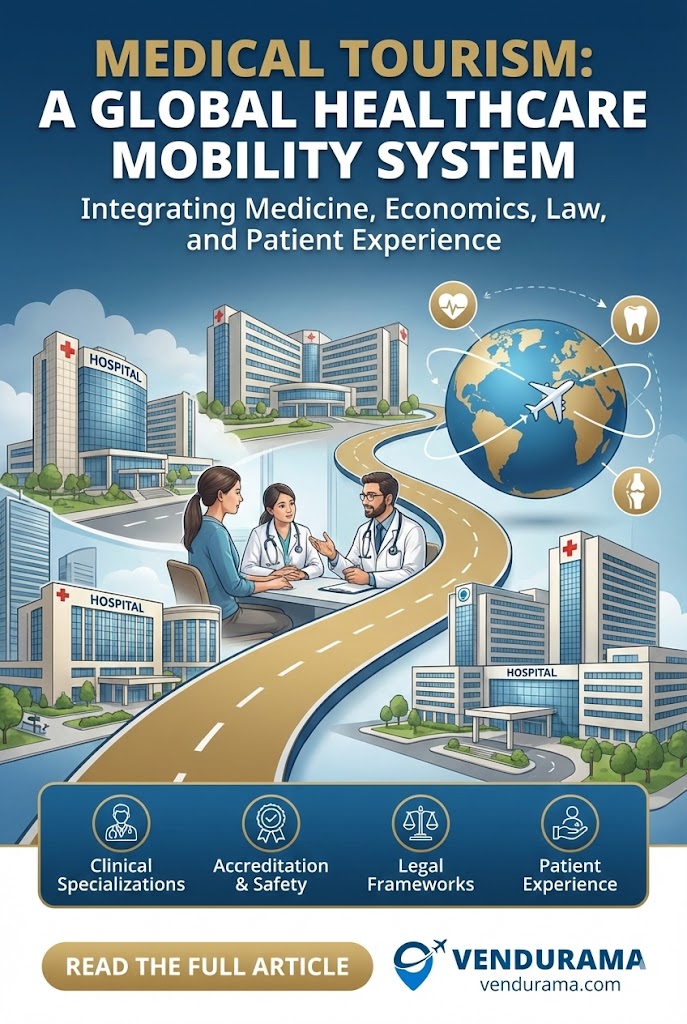
Introduction: Cross-Border Healthcare and the Reshaping of Global Health Systems
Medical tourism represents a significant and growing facet of globalization, wherein patients intentionally cross international borders to access medical care. This movement, driven by a confluence of economic, logistical, and clinical factors, is systematically reshaping national health systems, global patient behavior, and the very concept of healthcare delivery. It transforms patients into informed healthcare consumers who make calculated decisions in a global marketplace, weighing factors of cost, quality, access, and convenience beyond their domestic borders. For destination countries, it has evolved into a strategic economic sector, generating substantial revenue, driving investment in high-end medical infrastructure, and fostering medical specialization. Conversely, for countries of origin, it presents complex challenges, including potential strains on domestic systems, questions of equity, and the need for transnational regulatory frameworks. This article provides a comprehensive, evidence-based analysis of medical tourism as an integrated system, examining its clinical dimensions, economic drivers, legal complexities, and the critical importance of patient experience and safety within a globalized healthcare ecosystem.
Defining Medical Tourism: Distinctions and Delineations
Medical tourism is formally defined as the organized travel of an individual across a jurisdictional border for the primary purpose of accessing elective or planned medical treatment. This definition hinges on intentionality and planning, distinguishing it from other forms of health-related mobility.
- Distinction from Wellness Travel: Wellness travel or retreats focus on prevention, lifestyle enhancement, and non-invasive therapies such as spa treatments, yoga, or meditation. Medical tourism is explicitly treatment-oriented, involving surgical intervention, complex diagnostics, or other physician-led clinical procedures to address a specific health condition.
- Distinction from Emergency Care: Medical tourism excludes unplanned care sought during travel, such as treatment for an accidental injury or sudden illness while abroad. It is characterized by pre-meditated decision-making, research, and scheduled care.
- Distinction from Domestic Treatment: The core differentiator is the crossing of an international border to access care not available, accessible, or affordable in the patient’s home country. This introduces layers of complexity involving travel logistics, cross-cultural communication, and international legal jurisdictions.
Historical Evolution: From Ancient Sanctuaries to Modern Hospital Networks
The movement of patients to distant centers of healing is an ancient practice, though its scale, scope, and drivers have transformed dramatically.
- Ancient and Classical Periods: In antiquity, seekers traveled to sanctuaries associated with deities of healing, such as the Asclepieia in ancient Greece (e.g., Epidaurus) or the temple complexes of ancient Egypt. These journeys blended spiritual pilgrimage with therapeutic hope, offering treatments ranging from dream incubation to hydrotherapy.
- 18th to 20th Centuries: The European “spa town” era (e.g., Bath, Baden-Baden, Karlovy Vary) saw elites traveling to take curative waters for chronic ailments. The post-World War II period marked the beginning of modern patterns, with patients traveling from less-developed to more-developed nations for advanced technologies unavailable at home.
- Late 20th Century to Present: The contemporary model emerged in the late 20th century, fueled by globalization, rising healthcare costs in developed nations (notably the US), and the proactive state-led development of medical tourism sectors in countries like Thailand, India, and Singapore. The advent of the internet empowered patient research, while international hospital accreditation (e.g., Joint Commission International) provided a recognizable seal of quality, facilitating trust and mobility on an unprecedented scale.
A Taxonomy of Care: Major Clinical Categories in Medical Tourism
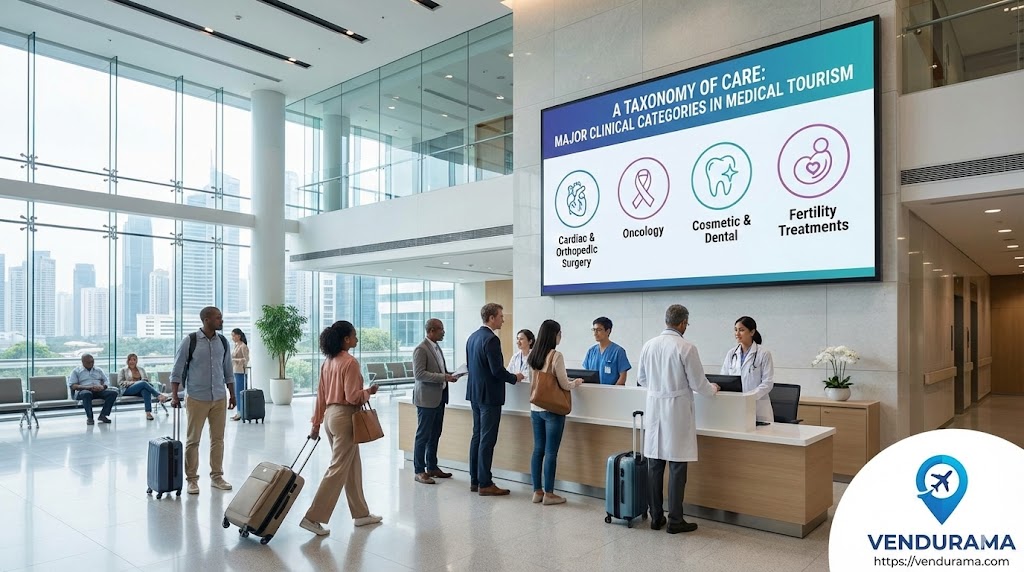
The scope of treatments sought internationally is broad, encompassing both life-saving interventions and quality-of-life enhancements.
- Cardiac and Orthopedic Surgery: These represent high-acuity, high-cost procedures where savings can be substantial. Cardiac surgeries (bypass, valve replacement) and orthopedic procedures (joint replacements, spinal surgeries) are cornerstones of many destination hospitals’ portfolios, attracting patients with significant cost differentials and often shorter wait times.
- Oncology: Patients may seek advanced radiation therapy, proton beam therapy, or novel immunotherapy and clinical trials not yet available or approved in their home country. This category involves highly complex coordination and emphasizes continuity of care.
- Cosmetic and Dental Surgery: Driven by discretionary spending and significant price disparities, these procedures (e.g., cosmetic surgery, dental implants, full-mouth reconstructions) are major market segments. They often combine treatment with a discreet recovery period away from home.
- Fertility Treatments: Cross-border reproductive care is motivated by legal restrictions (e.g., donor anonymity laws, access to IVF for single individuals or same-sex couples), cost, or availability of specific technologies like pre-implantation genetic diagnosis.
- Rehabilitation: Specialized post-operative or post-stroke rehabilitation in dedicated centers, particularly for complex cases requiring intensive, multidisciplinary therapy, is a growing niche.
Global Destinations and Clinical Specializations
The global medical tourism landscape is stratified, with regions competing on distinct value propositions.
| Destination Region/Country | Key Clinical Specializations & Value Propositions | Primary Source Markets |
| Thailand | Cosmetic surgery, gender confirmation surgery, orthopedic procedures, cardiology. Renowned for high-quality private hospitals and a hospitality-focused “patient experience.” | ASEAN, Australia, Middle East, Europe, US |
| India | Cardiac surgery, orthopedics, oncology, minimally invasive surgery. Offers among the world’s most significant cost savings (often 60-90% lower than US prices) and a large pool of English-speaking, Western-trained specialists. | Africa, Middle East, CIS countries, South Asia |
| Singapore | Oncology, complex cardiac and neurological surgery, organ transplantation. Positions itself as a premium destination for high-acuity, technologically advanced care with impeccable safety records, competing directly with Western top-tier hospitals. | Southeast Asia, China, Middle East, Global HNWIs |
| Turkey | Hair transplantation, cosmetic surgery (incl. bariatric), ophthalmology, dental care. Aggressive marketing, all-inclusive packages, and strategic location between Europe and Asia. | Europe, Middle East, North Africa |
| South Korea | Advanced cosmetic and plastic surgery, cancer treatment, preventive health check-ups. Leverages cutting-edge technology and a cultural emphasis on aesthetic medicine. | China, Southeast Asia, US |
| Germany | Complex orthopedic and spinal surgery, oncology, neurodegenerative disease treatment. Attracts patients seeking the highest standard of technological and clinical precision within the EU regulatory framework. | Eastern Europe, Middle East, Russia |
Pillars of Safety: Accreditation, Clinical Governance, and Quality
Given the inherent risks of undergoing surgery abroad, international quality benchmarks are paramount for patient safety and informed choice.
- Hospital Accreditation Systems: Joint Commission International (JCI) accreditation from the United States is the most widely recognized global gold standard, assessing over 1,300 standards in areas like patient safety, infection control, and facility management. Other significant accreditations include the Australian Council on Healthcare Standards International (ACHSI), the United Kingdom’s Care Quality Commission (CQC) for international services, and the Türkiye Healthcare Accreditation Institute (TÜSE). These accreditations provide an objective, third-party validation of a facility’s commitment to operational and clinical standards.
- Physician Credentials and Clinical Governance: Patients must verify individual surgeon qualifications. Key indicators include: membership in international professional societies (e.g., American College of Surgeons), fellowship training in recognized centers (often in the US, UK, or EU), a transparent track record of procedure volumes and outcomes, and affiliation with an accredited hospital that enforces robust clinical governance structures—including morbidity and mortality reviews, peer review, and strict credentialing committees.
- Safety Protocols: Internationally accredited hospitals adhere to rigorous surgical safety checklists (e.g., WHO Surgical Safety Checklist), antibiotic stewardship programs, and hospital-acquired infection (HAI) surveillance with rates benchmarked against international databases.
The Economics of Mobility: Cost Structures, Arbitrage, and Pricing
The economic engine of medical tourism is medical arbitrage—the exploitation of significant price differentials for comparable medical services across borders.
- Cost Drivers and Structures: Pricing differentials arise from variances in labor costs (physician and nurse salaries), malpractice insurance premiums, administrative overhead, pharmaceutical and device procurement costs, and state subsidies or market structures. A typical package price includes surgeon fees, anesthesia, hospital stay, basic medications, and sometimes accommodation. It rarely includes diagnostics, unforeseen complications, or extended rehabilitation.
- Pricing Transparency and Comparison: Reputable providers offer transparent, all-inclusive quotes. Patients must conduct detailed like-for-like comparisons, ensuring quotes cover identical procedures, hospital room categories, and post-operative care durations. Hidden costs can arise from required pre-operative tests, specific implant choices, or unplanned consultations.
- Economic Impact: For destinations, medical tourism generates foreign direct investment in healthcare infrastructure, creates high-skilled employment, and stimulates ancillary industries (hospitality, real estate, transportation). It can, however, contribute to internal brain drain, where specialists gravitate toward lucrative international patient services, potentially straining the domestic public health system.
The Patient Pathway: From Screening to Follow-Up
A successful medical tourism journey depends on meticulous management of a complex, phased pathway.
- Pre-Operative Evaluation and Case Screening: The process begins with a comprehensive remote medical review. Patients submit detailed medical records, imaging, and test results for evaluation by the destination specialist and often an internal medical board. This determines clinical eligibility, estimates risk, and provides a formal treatment plan and cost quotation. Ethical providers will decline cases deemed too high-risk for medical travel.
- Travel Planning and Logistics: Coordination extends beyond medical care. This includes securing medical visas (where required) and planning flights with consideration for pre- and post-operative comfort. Many patients and their companions utilize comprehensive travel coordination platforms to manage flights and lodging near treatment facilities efficiently. Critical logistical planning also requires a strategy for the “final mile”; arranging specialized private airport transfers is highly recommended for post-surgical patients to ensure vehicles are suitable for limited mobility and that drivers are briefed on the patient’s condition for a safe, stress-free transit to recovery accommodation.
- Post-Operative Follow-Up and Continuity of Care: A critical and often underestimated phase. A clear continuity of care plan must be established before departure. This includes a detailed discharge summary in the patient’s native language, a supply of necessary medications, a schedule for suture or staple removal, and a plan for long-distance follow-up via telemedicine with the treating surgeon. Formal agreements with the patient’s local physician for monitoring and managing any complications are essential to close the safety loop.
The Legal and Regulatory Framework
Cross-border care operates in a complex legal interoperability zone, where differing national regulations create both opportunities and significant risks.
- Medical Visas and Immigration: Many countries offer specific medical visas (e.g., India’s “Medical Visa,” UAE’s medical tourist visa), requiring proof of treatment appointment and financial means. Immigration officers may scrutinize the validity of the medical claim, particularly for procedures that could be construed as disguising other immigration motives.
- Malpractice Liability and Patient Rights: Legal recourse in cases of negligence is profoundly complex. Jurisdictional issues arise: can a patient sue in their home country or only in the destination country? Legal standards of care differ, and pursuing malpractice claims abroad is typically costly, linguistically challenging, and subject to unfamiliar legal processes. Pre-treatment contracts often specify jurisdiction and may limit liability. Patients have limited leverage compared to within domestic systems.
- Health Insurance and Cross-Border Coverage: Traditional domestic health insurance rarely covers elective treatment abroad. Some employers and insurers in the US and Europe are beginning to offer “medical tourism” riders or have networks of approved international hospitals for specific procedures to control costs. Specialized international medical travel insurance products can cover treatment complications, medical evacuation, and trip cancellation, but they do not typically cover the primary elective procedure cost itself.
Ethical Challenges, Equity, and Sustainability
The growth of medical tourism raises profound ethical questions that policymakers and the industry must confront.
- Equity and Domestic Health Systems: The development of premium, internationally-focused private hospitals can exacerbate domestic health inequities. It may draw financial resources, equipment, and the most skilled professionals away from the public system, creating a “two-tier” system where world-class care is available to foreigners and the wealthy local elite, while the general public faces under-resourced facilities. This is a central critique in several destination countries.
- Transplant Tourism and Exploitation: The most severe ethical breaches occur in unregulated organ transplantation, where donors from vulnerable populations are exploited. While many reputable destinations strictly adhere to WHO Guiding Principles and domestic legal frameworks, the risk of unethical organ trafficking remains in certain regions and underscores the need for stringent international oversight.
- Sustainability and Medical Waste: The environmental footprint of medical travel—primarily from long-haul air travel—and the generation of medical waste are sustainability concerns that the industry has been slow to address, focusing instead on clinical and service quality.
The Future: Digital Health, Telemedicine, and Integrated Networks
The future of cross-border healthcare will be shaped by digital integration and evolving models of care delivery.
- Telemedicine and Digital Triage: Telemedicine platforms are becoming integral to the medical tourism pathway, facilitating initial consultations, pre-operative assessments, and, most importantly, post-discharge virtual follow-up. This enhances safety and continuity of care, potentially reducing the required in-country recovery period.
- Clinical Networks and Franchising: Leading hospital brands (e.g., Johns Hopkins Medicine International, Mayo Clinic Care Network) are establishing international clinical affiliations, franchising their management expertise and clinical protocols without directly providing care. This exports brand standards and facilitates patient referrals within trusted networks.
- Data Interoperability and AI: A future challenge and opportunity lie in secure international health data exchange. Seamless sharing of electronic medical records (EMRs) between originating and destination providers would significantly enhance safety. Artificial intelligence may eventually aid in international patient risk stratification and outcome prediction across different healthcare systems.
Conclusion
Medical tourism is a multifaceted and enduring phenomenon that sits at the intersection of global economics, healthcare policy, and individual patient agency. It is driven by powerful, persistent forces: cost differentials, access disparities, and the universal desire for timely, high-quality care. For patients, it offers potential solutions but demands vigilant research, an understanding of complex risks, and meticulous planning. For destination countries, it represents a lucrative economic strategy that must be balanced against ethical obligations to domestic health equity. For the global community, it highlights the urgent need for transnational cooperation in healthcare regulation, quality oversight, and the development of ethical frameworks. As digital health technologies advance, the model will evolve from discrete “tourism” episodes toward more integrated, digitally-facilitated global care networks. Navigating this future will require a continued commitment to prioritizing patient safety, clinical excellence, and ethical practice above commercial gain in this dynamic and borderless healthcare marketplace.