
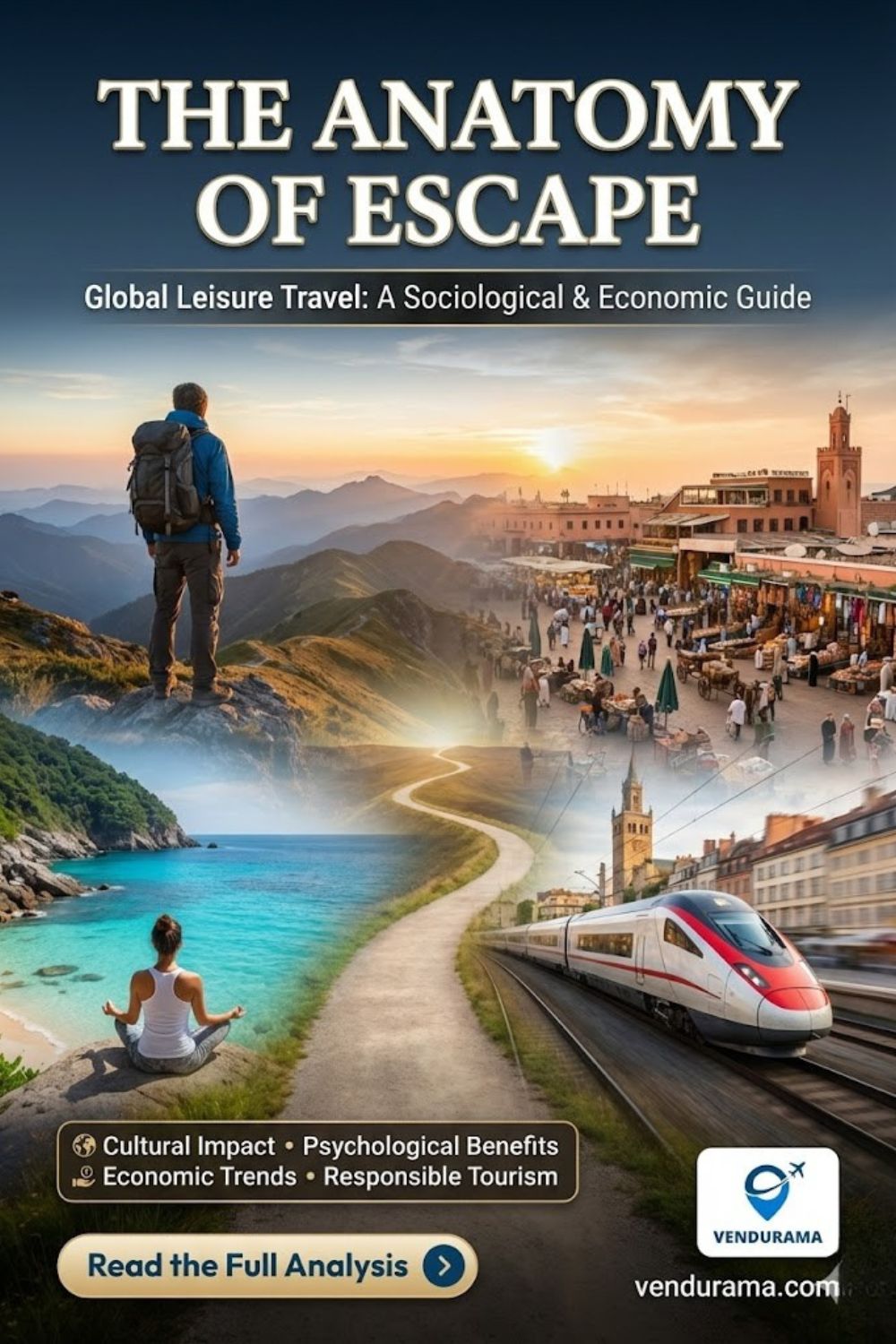
Introduction: The Evolution of Human Movement and the Pursuit of Liminality
The narrative of human civilization is fundamentally a narrative of movement. For millennia, human displacement was driven exclusively by the exigencies of survival: the search for caloric resources, the flight from conflict, or the nomadic pursuit of seasonal habitability. However, the concept of traveling not for survival, migration, or commerce, but for the distinct purpose of pleasure, restoration, and curiosity, is a relatively modern phenomenon in the grand timeline of history. Leisure travel, once the exclusive domain of the aristocracy—manifested in the Grand Tours of the 17th and 18th centuries—has democratized into a global socio-economic force. Today, it represents a multi-trillion-dollar industry and, more importantly, a fundamental component of modern lifestyle architecture.
In the contemporary landscape, leisure travel functions as a vital counterbalance to the rigors of an accelerated, urbanized, and digitized existence. It is no longer merely a luxury; sociologists and psychologists argue that it has become a mechanism for mental recalibration. The act of displacing oneself from the familiar to the unfamiliar allows for a cognitive shift, often referred to as “liminality”—a transitional state where the traveler is free from the obligations and identities of their daily life. This comprehensive analysis explores the multifaceted world of leisure travel, examining its typologies, psychological underpinnings, logistical frameworks, and its profound impact on global cultural exchange.
Part I: Defining the Leisure Travel Paradigm
Conceptual Framework
To understand the sociology of tourism, one must distinguish leisure travel from other forms of mobility. Unlike business travel, which is driven by external economic obligations and corporate schedules, or essential travel precipitated by family emergencies or migration, leisure travel is an autotelic activity—it is done for its own sake. It encompasses a spectrum of human desires: the need for rest (recreation), the desire for knowledge (exploration), and the pursuit of connection (socialization).
The Distinction of Intent
The distinction, however, is becoming increasingly porous. The rise of digital nomadism and “bleisure” (the blending of business and leisure) suggests a shift in how work and play are integrated. Yet, the core tenant of pure leisure travel remains: the sovereignty of time. It is a period where the individual reclaims agency over their schedule, dedicating their resources to the consumption of experiences rather than goods. It is a voluntary engagement with the world, defined by the anticipation of pleasure and the memory of the experience.
Part II: The Historical Trajectory of Recreational Mobility
To understand modern leisure, one must look to the past. The history of recreational travel is a mirror of technological advancement and class structure.
Ancient and Classical Roots
The Romans were perhaps the first to develop a culture of leisure travel. During the height of the Empire, wealthy citizens traveled to their villas in Campania or to thermal spas like Baiae to escape the heat and politics of Rome. This era established the infrastructure of travel: roads, waystations, and mapped routes.
The Grand Tour
In the 17th and 18th centuries, the “Grand Tour” emerged as an educational rite of passage for young European male aristocrats. The journey, often lasting years, traversed France and Italy, exposing the traveler to the roots of Western civilization, classical art, and foreign languages. This cemented the association between travel and cultural capital.
The Democratization of Travel
The 19th century was a watershed moment. The Industrial Revolution created a new middle class with disposable income, while the steam engine collapsed distances. In 1841, Thomas Cook organized the first package tour, a rail excursion in England, birthing the modern tourism industry.
The Jet Age and Mass Tourism
The post-World War II era, with the advent of the jet engine and the paid holiday, birthed mass tourism. Suddenly, the Mediterranean, the Caribbean, and the Alps were accessible to the working class. Today, we stand at the precipice of a new era defined by experiential and sustainable travel, where the value lies not in the distance traveled, but in the depth of the engagement with the destination.
Part III: Typologies of Leisure and Recreational Travel
The monolith of “tourism” fractures into numerous sub-disciplines, each catering to specific psychological drives and demographic preferences.
1. Resort and Coastal Tourism: The Pursuit of Restoration
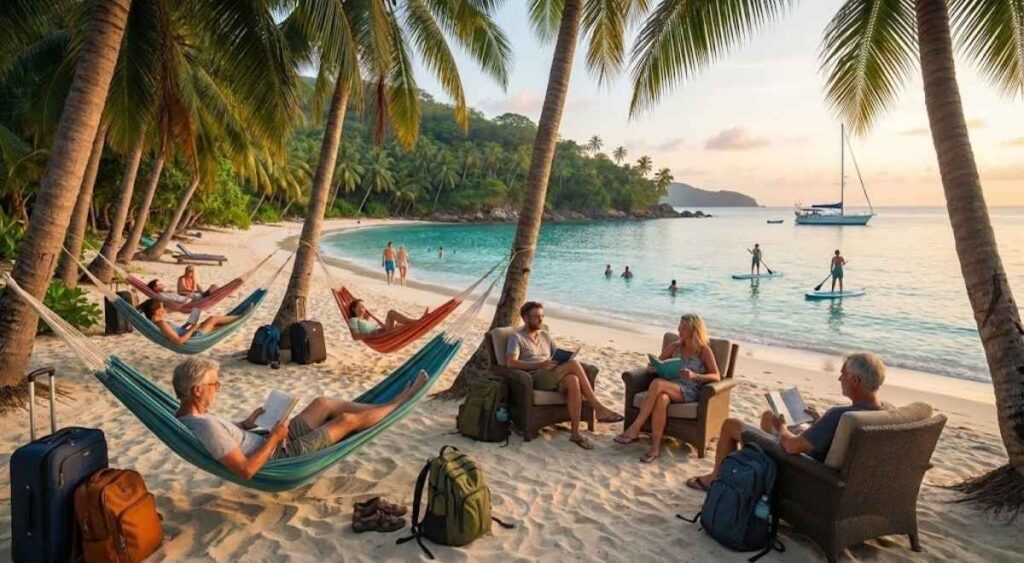
Perhaps the most enduring form of leisure travel is the sun-and-sea model. Psychologically, this is rooted in the “blue mind” theory, which posits that proximity to water induces a meditative state. Coastal tourism ranges from the hyper-developed skylines of Miami and the Gold Coast to the secluded atolls of the Maldives and French Polynesia. The modern resort is a self-contained ecosystem designed to minimize friction, often shielding the guest from the logistical complexities of the host country.
2. Cultural and Heritage Tourism: The Search for Authenticity
If resort tourism is about relaxation, cultural tourism is about education and identity. This sector is driven by the desire to encounter the “other.” Travelers visit the pyramids of Giza, the temples of Kyoto, or the museums of Paris to connect with the human narrative. This typology often grapples with the concept of “staged authenticity,” where travelers seek experiences that feel genuine and untouched by commercialism.
3. Nature and Eco-Tourism: Reconnection with the Biosphere
As urbanization intensifies, the allure of the wilderness grows. Nature-based leisure travel includes everything from passive observation (scenic rail journeys through the Swiss Alps) to active engagement (trekking in Patagonia). Eco-tourism represents a normative shift; it is not just about visiting nature, but visiting it responsibly, ensuring that the economic benefits of tourism support conservation efforts.
4. Wellness and Spiritual Tourism
This segment focuses on the optimization of the self. It includes yoga retreats in Bali, Ayurvedic treatments in Kerala, and thermal spa visits in Iceland. Wellness tourism differs from medical tourism in that it is preventative and holistic rather than curative. It seeks to align the body and mind, often incorporating elements of local spirituality and traditional medicine.
5. Slow Travel and Experiential Living
A reaction against the “bucket list” mentality, slow travel emphasizes connection over accumulation. It involves staying in one location for an extended period, renting local apartments, shopping in neighborhood markets, and adopting the tempo of the residents. This modality fosters a deeper understanding of local culture and reduces the carbon footprint associated with constant movement.
Part IV: The Psychology of the Leisure Experience
Why do we travel? The answers lie deep within human psychology and cognitive science.
Novelty and Neuroplasticity
The human brain is wired to pay attention to novelty. Exposure to new environments stimulates the brain, forcing it to navigate foreign maps, decipher new languages, and process unfamiliar social cues. This cognitive stimulation promotes neuroplasticity, the brain’s ability to form new neural connections. Travel serves as an antidote to the stagnation of routine, keeping the mind agile.
Anonymity and Identity Reinvention
Travel offers a temporary suspension of social expectations. In a new place, nobody knows the traveler’s profession, social standing, or past. This anonymity allows for experimentation with identity—a shy person might become bold; a rigid person might become spontaneous. This “vacation self” can lead to lasting behavioral changes upon return.
The “Peak Experience”
Psychologist Abraham Maslow described peak experiences as moments of highest happiness and fulfillment. Standing before the Grand Canyon or witnessing the Northern Lights often induces a sense of awe—an emotion that makes us feel small yet connected to a greater whole. This reduction in self-focus is linked to lower levels of inflammation and stress, contributing to long-term well-being.
Part V: Socio-Economic Impacts on Host Communities
Tourism is a double-edged sword for the destinations that receive it. It brings capital, but it also brings disruption.
Economic Dependency and Development
For many nations, particularly Small Island Developing States (SIDS), tourism is the primary engine of GDP. It creates jobs, drives infrastructure development (airports, roads, utilities), and provides foreign currency reserves. However, over-reliance on tourism can make an economy vulnerable to external shocks, such as pandemics or geopolitical instability.
Acculturation and Commodification
The arrival of tourists inevitably changes the local culture. On one hand, tourism can revive dying crafts and traditions by providing a market for them. On the other hand, it can lead to the “commodification of culture,” where sacred rituals or traditional dances are shortened and simplified to suit the attention spans of visitors. This “Disneyfication” can erode the cultural integrity of the host community.
Overtourism and Gentrification
In popular cities like Venice, Barcelona, and Kyoto, the sheer volume of visitors has led to “overtourism.” This phenomenon strains local infrastructure, increases waste, and drives up the cost of living, often forcing local residents out of historic centers. The challenge for the future is to manage visitor flows in a way that preserves the quality of life for residents while maintaining the economic benefits of tourism.
Part VI: Global Geographies of Leisure
The map of global leisure is defined by regional specializations and distinct attractions.
Europe: The Historian’s Playground
Europe remains the world’s most visited region. Its density of nation-states allows for high cultural variance within short distances. The Mediterranean (Italy, Spain, Greece) dominates summer leisure, focusing on heritage and coastal relaxation. Northern Europe offers design-centric and nature-focused experiences.
Asia: Tradition Meets Futurism
Asia offers the most dramatic contrasts. East Asia (Japan, South Korea) provides high-tech urban environments alongside deeply preserved traditions. Southeast Asia (Thailand, Vietnam, Bali) is the global center for affordable luxury, backpacking culture, and tropical beaches.
The Americas: The Great Outdoors
North America’s primary leisure asset is its National Park system—vast tracts of protected wilderness that facilitate camping, hiking, and road-tripping. Latin America blends colonial history with indigenous culture and biodiversity, from the Amazon rainforest to the Andean peaks.
Africa and the Middle East
Africa is synonymous with the safari—a unique form of leisure focused on wildlife observation. The Middle East has rapidly developed as a luxury hub, with Dubai and Doha offering futuristic architectural experiences, while Jordan and Egypt anchor the region’s deep historical tourism.
Part VII: Strategic Planning and Itinerary Development
The success of a leisure trip is often determined long before departure. The planning phase is a complex logistical exercise involving the calibration of budget, time, and desire.
Information Aggregation and Research
In the pre-digital era, travel planning was the domain of specialized agents who held a monopoly on information. Today, the landscape is democratized but also fragmented. The challenge has shifted from finding information to filtering it. Travelers must now navigate a deluge of reviews, blogs, and social media influencers. Scholarly research indicates that the most successful itineraries are those that balance structure with flexibility. To construct a viable itinerary, travelers increasingly rely on comprehensive travel data aggregators, which allow individuals to synthesize vast amounts of pricing and scheduling data into a coherent travel plan, ensuring that logistical elements align with their budgetary and temporal constraints.
The Art of Pacing
A common error in leisure travel is “over-scheduling”—the attempt to maximize value by filling every hour with activity. This often leads to “travel burnout.” Experienced travelers employ the concept of “temporal spacing,” leaving blocks of time unallocated to allow for serendipity. The integration of rest days, particularly after long-haul flights, is crucial for physiological adjustment to new time zones.
Part VIII: Transportation and Global Mobility Systems
Movement is the medium of travel. The choice of transportation dictates the pace and perspective of the journey.
Aviation: The Global Connector
Commercial aviation remains the backbone of international leisure travel. It has collapsed time and distance, making the world accessible. However, the experience of flying is often viewed as a “non-place”—a transient space of waiting. Strategies to mitigate the stress of aviation include careful seat selection, hydration, and the strategic use of stopovers to break up ultra-long-haul journeys.
Rail and Road: The Scenic Route
Unlike flying, where the landscape is abstract, rail and road travel immerse the traveler in geography. The resurgence of night trains in Europe and the popularity of road trips in North America speak to a desire to see the “in-between” spaces. The journey becomes part of the destination.
Last-Mile Logistics
While major transport hubs connect cities, the “last mile”—the journey from the airport or station to the final accommodation—is often the most friction-heavy segment of a trip. Navigating foreign public transit systems with luggage or negotiating with local taxi drivers can be a source of significant anxiety. To streamline this transition, many seasoned travelers secure pre-arranged transfer solutions. Services that specialize in reliable private ground mobility offer a regulated alternative to on-the-spot negotiation, providing a seamless connectivity layer that bridges the gap between mass transit infrastructure and private residence.
Part IX: Accommodation Landscapes
The choice of where to sleep frames the travel experience. The global hospitality industry has segmented to an extraordinary degree.
Standardized Hospitality vs. Boutique Experiences
Global hotel chains offer predictability. For many leisure travelers, the assurance of a specific mattress quality, Wi-Fi speed, and hygiene standard is worth the potential lack of local character. Conversely, the boutique hotel movement emphasizes integration with the local environment, offering a unique design aesthetic and personalized service.
The Sharing Economy
Platforms that allow individuals to rent out their homes have revolutionized leisure travel. This model appeals to families needing kitchens and laundry facilities, and to travelers seeking a residential feel. However, it implies a higher degree of independence and self-catering than traditional hotels.
Experiential Lodging
This category includes ice hotels, treehouses, underwater suites, and nomadic yurts. Here, the accommodation is the primary attraction. The intent is not just shelter, but a narrative experience that connects the traveler intimately with the environment.
Part X: Regulatory, Health, and Financial Considerations
The freedom to travel is underpinned by a complex web of bureaucracy and economics.
The Geopolitics of Entry
Visas are the gatekeepers of leisure. The strength of one’s passport determines the ease of movement. While many regions operate visa-waiver programs (like the Schengen Zone), others require rigorous application processes. Electronic Travel Authorizations (eVisas) are becoming the standard, streamlining security checks. Travelers must be vigilant about passport validity rules, as many nations require six months of remaining validity for entry.
Health and Safety Protocols
Post-pandemic, health considerations have moved to the forefront. Understanding vaccination requirements (e.g., Yellow Fever for parts of Africa) is mandatory. Furthermore, the role of travel insurance has shifted from an optional add-on to a critical necessity. Comprehensive policies now cover not just medical evacuation but also trip cancellations due to geopolitical instability or pandemics.
Budgeting and Financial Fluidity
Leisure travel requires disposable income, but the cost varies wildly. “Geo-arbitrage” is the practice of earning money in a strong currency and spending it in a destination with a lower cost of living. Budgeting strategies include shoulder-season travel (visiting just before or after peak season) to secure lower rates and fewer crowds, and monitoring exchange rates to time large purchases.
Part XI: The Ethics of Leisure: Sustainability and Responsibility
As the footprint of global tourism expands, so does the moral imperative to travel responsibly.
Environmental Stewardship
The environmental cost of aviation and resort construction is significant. The industry is moving slowly toward Sustainable Aviation Fuels (SAF) and carbon offsetting. However, consumer behavior is also shifting. “Slow travel”—staying in one place longer rather than hopping between multiple destinations—significantly reduces the carbon impact per day of leisure.
Cultural Respect
Ethical travel requires cultural humility. This means adhering to local dress codes, learning basic phrases in the local language, and asking permission before photographing residents. It also involves avoiding attractions that exploit animals or vulnerable populations. The ethical traveler views themselves as a guest, not a consumer of a destination.
Conclusion: The Future of Leisure Travel
As we look toward the mid-21st century, leisure travel is poised for further transformation. Technology will play a dual role. Virtual Reality (VR) and Augmented Reality (AR) may offer “digital travel” experiences for those unable to move physically, potentially reducing pressure on fragile sites. However, the craving for tactile, sensory, real-world experiences will likely intensify in reaction to an increasingly virtual life.
Demographically, the rise of the Asian middle class will shift the center of gravity of global tourism flows. We will likely see a continued fragmentation of the market, with hyper-personalized, niche experiences replacing mass-market packages. Ultimately, leisure travel will remain a vital expression of human freedom. It is the manifestation of our innate curiosity and our need for restoration. By navigating the globe with intention, respect, and preparation, travelers do not just consume destinations; they engage in a dialogue with the world, enriching both themselves and the places they visit. In an often divided world, the leisure traveler remains an ambassador of connectivity, proving that despite our differences, the shared joy of discovery is a universal language.