
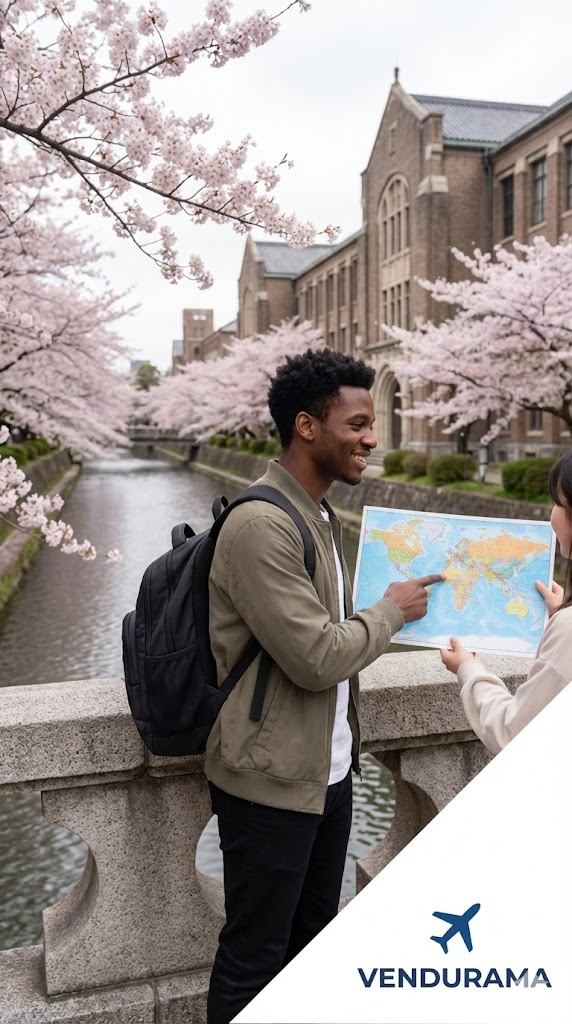
Introduction: The Geopolitical and Intellectual Imperative of International Education
In an era defined by hyper-connectivity, complex global challenges, and an increasingly integrated world economy, the role of higher education has transcended national borders. “Study Abroad”—the act of pursuing educational opportunities outside one’s country of origin—has evolved from a niche activity for the elite into a significant global phenomenon with profound implications for academic institutions, national economies, and individual development. It is no longer merely a desirable addition to a curriculum vitae; for many, it has become an essential component of a 21st-century education.
The imperative for international education stems from the realization that contemporary problems—be they climate change, pandemics, economic instability, or political polarization—do not respect geopolitical boundaries. Addressing these issues requires a workforce and citizenry equipped with cross-cultural competency, linguistic agility, and the ability to navigate diverse intellectual frameworks. The traditional, domestically focused classroom, while foundational, often struggles to replicate the immersive complexity of navigating a foreign environment.
International student mobility serves as a powerful conduit for knowledge transfer, cultural diplomacy, and the fostering of global networks. It challenges ethnocentric worldviews by placing students in environments where their cultural assumptions are not the default. This displacement, while often challenging, is the catalyst for significant cognitive and personal growth. As higher education institutions vie for global relevance, the integration of international dimensions into teaching, research, and service functions has become a critical strategic priority. This article provides an in-depth examination of the multifaceted world of study abroad, exploring its typologies, benefits, logistical requirements, and future trajectory.
Defining the Transnational Scholar: Dimensions of Study Abroad
At its core, “study abroad” refers to any educational activity that occurs in a country other than the student’s home nation, resulting in progress toward an academic degree or credential. However, a purely functional definition fails to capture the multidimensional nature of the experience. To fully understand the phenomenon, it must be viewed through academic, cultural, and personal lenses.
The Academic Dimension involves more than simply importing home-curriculum coursework into a foreign setting. It entails exposure to distinct pedagogical philosophies, assessment methods, and intellectual traditions. A student of political science studying in Paris engages with different theoretical frameworks than one in Washington D.C.; a robotics engineering student in Tokyo encounters different technological emphases than one in Munich. This exposure forces students to recognize that knowledge itself is often culturally situated, broadening their epistemological horizons.
The Cultural Dimension is perhaps the most visibly transformative aspect. It involves the process of acculturation—navigating daily life, social norms, linguistic nuances, and systemic structures of a host society. Unlike tourism, which offers a curated and transient glimpse of a culture, studying abroad requires sustained engagement. It demands that students move beyond the “tourist gaze” to understand the deeper logic that governs the host society, from communication styles to social hierarchies.
The Personal Dimension centers on the development of psychological resilience and autonomy. Removing the safety net of familiar support structures forces students to develop self-reliance, adaptability, and problem-solving skills in ambiguous situations. The process of overcoming the inevitable challenges of living abroad—from navigating a complex bureaucracy in a second language to managing finances in a foreign currency—builds a profound sense of self-efficacy that persists long after the program concludes.
From the Grand Tour to Erasmus: A Historical Trajectory of Student Mobility
The concept of scholars traveling in pursuit of knowledge is as old as organized academia itself. In the medieval period, the universities of Bologna, Paris, and Oxford attracted wandering scholars (clerici vagantes) from across Europe, united by the lingua franca of Latin. These early institutions were inherently international, with nations (“nationes”) formed by students from similar geographic regions to provide mutual support.
The early modern period saw the rise of the “Grand Tour,” where young aristocrats, primarily from Britain, traveled through continental Europe—particularly France and Italy—as a finishing rite of passage. While not strictly academic, it established the idea that exposure to foreign cultures, arts, and antiquities was essential for a rounded education and elite status.
The massive expansion of international education as we know it today is largely a post-World War II phenomenon. Out of the devastation of the war grew a conviction that educational exchange could foster peace and mutual understanding. The Fulbright Program, established in the United States in 1946, exemplified this diplomatic approach. Similarly, the European project saw student mobility as a means to forge a common European identity, culminating in the highly successful Erasmus program (now Erasmus+) in 1987, which has facilitated the movement of millions of students within Europe.
In the 21st century, the landscape has shifted again toward the “massification” of higher education and the rise of Asia as both a source and destination for international students. The market has become globally competitive, with institutions actively recruiting international talent to bolster research outputs, diversify campuses, and generate revenue.
Morphologies of Mobility: Program Typologies in Global Education
The term “study abroad” encompasses a diverse array of program structures, varying significantly in duration, academic focus, and level of immersion. Understanding these typologies is crucial for prospective students to align their choices with their academic and personal goals.
Full Degree Mobility
This involves students matriculating into a foreign university to complete an entire degree program—Bachelor’s, Master’s, or Ph.D. This is the deepest form of immersion, requiring a multi-year commitment and full integration into the host institution’s academic and social systems. It is increasingly popular at the postgraduate level, particularly in fields like STEM and business.
Reciprocal Exchange Programs
Often regarded as the traditional model of study abroad, exchange programs are based on formal agreements between partner universities. A student pays tuition to their home institution but studies for a semester or an academic year at the partner university. Credits earned abroad are transferred back to the home degree. These programs often offer a high degree of immersion as exchange students study alongside local students.
Short-Term and Faculty-Led Programs
These programs have seen explosive growth in recent decades due to their accessibility and lower cost burden. Ranging from one week to eight weeks, they often take place during summer or winter breaks. Faculty-led programs involve a group of students from the home university traveling together with a professor, focusing on a specific theme or discipline. While less immersive, they provide structured international exposure for students who cannot commit to longer durations.
Language Immersion Institutes
Dedicated exclusively to rapid linguistic acquisition, these programs place students in intensive language instruction environments, often coupled with homestays to ensure absolute immersion. The primary goal is fluency, with academic credit sometimes being secondary.
Pathway and Foundation Programs
Designed specifically for international students whose academic qualifications or language proficiency do not yet meet direct entry requirements for foreign universities. These programs, often lasting one year, provide intensive language training and academic preparation, guaranteeing progression to a degree program upon successful completion.
The Global Atlas of Learning: Major Study Destinations
While the flow of international students is increasingly multi-directional, certain regions remain dominant hubs, each offering distinct academic strengths and cultural experiences.
North America: The Research Giants
The United States continues to host the largest number of international students globally, drawn by the sheer diversity of its higher education system, the prestige of its Ivy League and top-tier research universities, and the perceived value of a U.S. degree in the global labor market. Canada has emerged as a major competitor, offering high-quality education at a comparatively lower cost than the U.S., coupled with more generous post-study work and immigration pathways for graduates.
Europe: The Cradle of Western Academia
Europe offers an unparalleled density of historic universities and diverse cultures in close proximity. The United Kingdom remains a powerhouse, famed for its intensive, shorter-duration degree structures (e.g., one-year Master’s degrees). Continental Europe is increasingly attractive due to the proliferation of English-taught programs, particularly in the Netherlands, Germany, and Scandinavia. Germany, notably, has abolished tuition fees for most international students at public universities, making it a highly attractive destination.
Asia: The Rising Economic Powerhouses
The center of gravity in international education is shifting toward Asia. China has invested heavily in its elite universities, aiming to attract global talent and reverse previous brain drain. Japan and South Korea offer world-class technological and engineering education blended with unique cultural experiences, supported by government initiatives to increase international student numbers. Singapore and Hong Kong serve as highly ranked, English-speaking educational hubs bridging East and West.
Oceania: Lifestyle and Innovation
Australia and New Zealand have built robust international education sectors that are significant contributors to their national economies. They attract students with high-ranking universities, particularly in research areas related to the environment, marine sciences, and Asian studies, combined with a high quality of life and welcoming multicultural environments.
The Cognitive and Academic Dividend
The academic benefits of studying abroad extend beyond the acquisition of subject-specific knowledge. Engaging with a different educational system forces students to develop cognitive flexibility. They learn that there are multiple ways to structure knowledge, approach problems, and debate ideas.
Students exposed to diverse pedagogical styles—for example, moving from a large lecture format to a small, discussion-based tutorial system—must adapt their learning strategies. This enhances metacognition—thinking about how one thinks. Furthermore, access to specialized resources, archives, laboratories, or unique field sites unavailable at the home institution can significantly enrich a student’s research and academic trajectory. Studies often show that students who study abroad demonstrate higher rates of degree completion and improved grade point averages upon return, attributed to renewed academic focus and maturity.
Career Velocity and Employability in a Globalized Market
In an increasingly interconnected labor market, employers highly value the skills cultivated through international experience. However, it is not the mere act of travel that impresses employers, but the demonstrated skills gained from it.
Studying abroad is widely recognized as an incubator for “soft skills” that are difficult to teach in a traditional classroom. These include adaptability, cross-cultural communication, resilience, ambiguity tolerance, and complex problem-solving. A graduate who has successfully navigated life in a foreign culture demonstrates to a prospective employer that they can handle unfamiliar situations and work effectively with diverse teams.
Furthermore, studying abroad allows students to build international professional networks through internships, professors, and peers. These networks can be invaluable for securing future employment across borders. Many students also use their time abroad to learn a second language to a professional standard, a tangible asset in international business, diplomacy, and NGO work.
Intercultural Competence and the Mechanics of Adaptation
Intercultural competence—the ability to communicate effectively and appropriately with people of other cultures—is a core learning outcome of study abroad. It involves moving beyond a superficial appreciation of “food, flags, and festivals” to a deeper understanding of cultural values, beliefs, and communication styles.
This development is rarely linear. Students often experience the “U-Curve” of cultural adjustment. The initial stage is the “Honeymoon,” characterized by excitement and fascination. This is often followed by “Culture Shock” or the “Crisis” stage, where differences become frustrating, and feelings of isolation or homesickness may peak. As students learn to navigate the new environment, they enter the “Recovery” stage, leading finally to “Adjustment” or mastery.
Successfully navigating this cycle requires moving from an ethnocentric mindset (judging another culture solely by the values and standards of one’s own culture) to an ethnorelative mindset (understanding a culture within its own context). This shift is profound and constitutes one of the most enduring personal changes resulting from international education.
Linguistic Acquisition and Cognitive Development
For students studying in a country where their native language is not the primary tongue, the linguistic benefits are significant. While classroom language learning is valuable, it cannot replicate the demands of full immersion.
Living in the target language environment forces the brain to process linguistic input constantly. Students must negotiate daily tasks—shopping, banking, socializing, attending lectures—in the target language. This leads to rapid improvements in listening comprehension, idiomatic usage, and fluency that are rarely achieved in a domestic setting.
Beyond practical communication skills, becoming bilingual or multilingual has documented cognitive benefits. It is linked to improved executive function, better attention control, and enhanced ability to switch between tasks. The cognitive effort required to function in a second language sharpens the mind in ways that benefit overall academic performance.
The Logistics of Living: Housing, Integration, and Student Life
The success of a study abroad experience depends heavily on the practical aspects of daily life outside the classroom. Secure and supportive housing is fundamental to student well-being.
Accommodation options vary widely. University dormitories or residence halls offer high levels of convenience and social integration with other students but may offer less immersion in the local culture. Private rentals or shared apartments provide more independence and a “local” living experience but require dealing with landlords, leases, and utility bills in a foreign system. Homestays—living with a local family—offer the highest degree of cultural and linguistic immersion but require significant adaptation to family norms and less personal autonomy.
When transitioning to a new country, securing initial temporary accommodation prior to finalizing long-term housing is a common logistical step, often requiring students to utilize platforms that aggregate global lodging options to align arrival dates with university orientation schedules.
Integration into campus life is another critical factor. International students often face the challenge of breaking out of the “international bubble”—socializing exclusively with other expatriate students. Active participation in university clubs, sports teams, and local community volunteering are effective strategies for forging meaningful connections with host-country nationals.
The Economics of International Education: Financial Planning and Scholarships
The cost of studying abroad is a major consideration and often the primary barrier for students. The total cost of attendance includes tuition fees, which vary drastically globally, and the cost of living (housing, food, transport, insurance).
While the United States, Australia, and the UK have high tuition fees for international students, many continental European countries offer very low or zero tuition fees at public universities, though the cost of living in major European cities can be high. Thorough financial planning is essential.
Scholarships and grants are vital funding mechanisms. These range from large-scale government programs like the Fulbright or Chevening awards to university-specific merit scholarships and smaller grants from private foundations. Students must also research regulations regarding part-time work. Most student visas allow for a limited number of work hours per week during the term, which can help supplement living expenses, though it is rarely enough to cover tuition.
The Bureaucratic Gateway: Visas, Permits, and Legal Compliance
Navigating immigration regulations is one of the most complex and critical aspects of studying abroad. A student visa is a legal document granting temporary permission to reside in a country for educational purposes.
The application process is often rigorous, requiring proof of university admission, demonstration of sufficient financial funds to cover the duration of study, health checks, and sometimes background security checks. Regulations change frequently, and students must rely on official government sources or university international offices for guidance.
Maintaining legal status is paramount. This usually involves remaining enrolled full-time, making satisfactory academic progress, and adhering to any restrictions on employment. Many countries now offer post-study work visas, allowing graduates to remain in the country for a period (usually 1–3 years) to seek employment, providing a valuable pathway to gaining international work experience or even eventual permanent residency.
Duty of Care: Health Insurance, Safety, and Student Support Services
Institutions hosting international students have a significant “duty of care.” Ensuring the health and safety of students is a priority. Comprehensive health insurance is almost always mandatory for international students. In some countries, students must enroll in a national health plan, while in others, they must purchase private insurance that meets specific government criteria. This insurance must cover medical treatment, hospitalization, and, crucially, medical evacuation and repatriation in case of severe illness or emergency.
Beyond the challenge of healthcare, the logistics of the initial arrival—navigating a foreign airport with months’ worth of luggage—can be overwhelming for a first-time international student. To mitigate safety risks and anxiety upon landing, experienced educational advisors often recommend arranging reliable private airport transfers in advance. This ensures a secure, direct journey to the student residence or dormitory, eliminating the confusion of negotiating local transport systems or currency exchange immediately after a tiring long-haul flight.
Mental health support is increasingly recognized as a critical component of student services. The stresses of acculturation, academic pressure in a new system, and isolation can exacerbate mental health issues. Leading universities provide dedicated counseling services that are culturally sensitive and accessible to international students.
Ethical Dimensions and Inclusive Internationalization
As international education expands, ethical considerations have come to the forefront. One major concern is “brain drain”—the migration of highly educated individuals from developing to developed nations, potentially hindering the development of the source countries. Conversely, the concept of “brain circulation” suggests that these individuals often return home with new skills and networks or contribute from abroad through diaspora networks.
Another significant ethical challenge is inclusivity. Study abroad has historically been accessible primarily to students from privileged socioeconomic backgrounds. There is a concerted push within the field to broaden access for underrepresented groups, including first-generation college students, students from minority backgrounds, and students with disabilities. This involves targeted scholarships, the development of more affordable program models, and ensuring adequate support infrastructure is in place for diverse student needs.
Conclusion: The Future Horizon of Global Student Mobility
Study abroad has established itself as a powerful engine for individual transformation and global interconnectedness. Despite disruptions such as global pandemics or geopolitical tensions which periodically impact mobility, the underlying demand for international education remains robust.
The future of study abroad will likely be characterized by greater hybridization. Digital technologies are enabling “Virtual Exchange” or Collaborative Online International Learning (COIL) models, connecting classrooms across the globe without physical travel. While these initiatives increase accessibility and offer valuable intercultural touchpoints, they are generally viewed as complements to, rather than replacements for, physical immersion.
The enduring value of study abroad lies in the irreplaceable nature of lived experience. The embodied act of navigating a foreign culture, the intellectual challenge of engaging with different academic traditions, and the personal growth forged through displacement remain potent forces in shaping globally competent citizens ready to address the challenges of the coming decades. As the world continues to grapple with the complexities of interdependence, the transnational scholar will remain a vital figure on the global stage.