
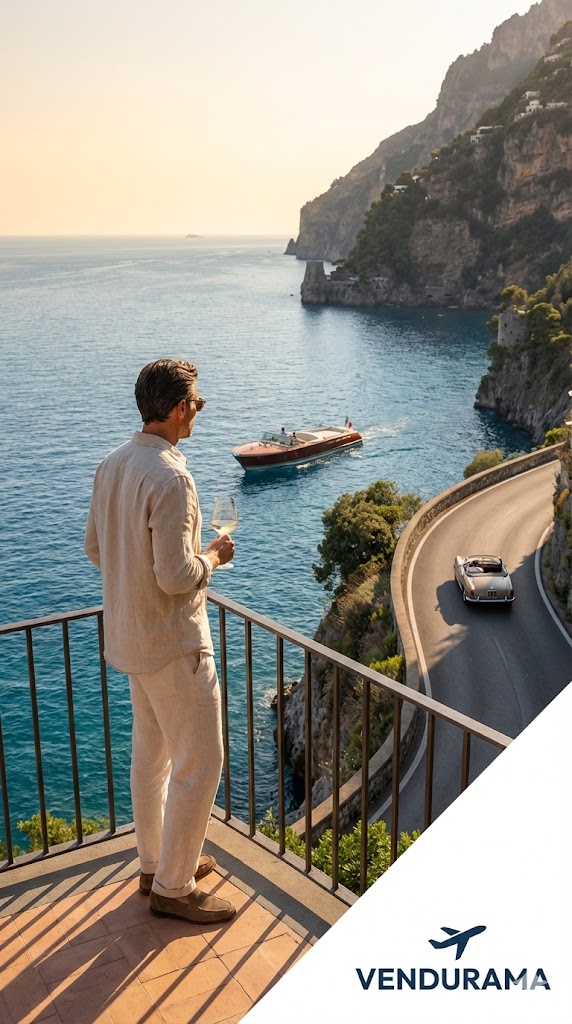
I. Introduction: The Philosophy of Displacement
In the grand tapestry of human existence, the act of voluntarily leaving one’s home to traverse the globe is a relatively recent privilege, yet it speaks to an ancient, primal impulse. We are a migratory species, not merely for survival, but for meaning. The concept of “leisure travel” extends far beyond the simplistic definition of a vacation or a break from labor. It is a deliberate, orchestrated displacement of the self—a sophisticated psychological and cultural exercise that allows the individual to step out of the chronology of routine and into the “kairos” of the moment.
To travel for leisure is to engage in a dialogue with the world. It is the suspension of the familiar to make room for the novel. In the twenty-first century, as our lives become increasingly tethered to digital interfaces and static environments, the physical act of movement has transformed into a radical act of reclamation. It is an assertion of curiosity over comfort, and experience over accumulation. Whether navigating the silence of a Norwegian fjord, negotiating the sensory deluge of a Marrakech souk, or finding stillness in a Kyoto temple, the leisure traveler is engaged in the active construction of a broader, more empathetic worldview.
This comprehensive exploration seeks to dissect leisure travel not as a commercial industry, but as a lifestyle discipline. We will examine the psychological dividends of the journey, the logistical architecture that supports global mobility, the evolution of recreational tourism, and the ethical responsibilities of the modern wanderer.
II. Defining Leisure: From “Schole” to Mass Mobility
To understand the trajectory of modern tourism, one must first define “leisure.” The ancient Greeks used the word schole—the root of “school”—to define leisure. For them, it was not idleness, but the active cultivation of the mind and spirit, made possible by freedom from the necessity of labor. Leisure was the time used to become human.
The Evolution of the Grand Tour
The genesis of leisure travel as a cultural rite of passage can be traced to the Grand Tour of the 17th and 18th centuries. Young European aristocrats were dispatched across the continent to absorb the art, history, and languages of their neighbors. It was an educational imperative, a finishing school on wheels. However, it was the 19th-century innovation of the railway and the vision of Thomas Cook that democratized this privilege, inventing the “package tour” and making the Alps and the Nile accessible to the middle class.
The Jet Age and the Democratization of Distance
The mid-20th century introduced the jet engine, collapsing the geography of the world. Suddenly, the “Three S’s”—Sun, Sea, and Sand—became commodities available to the working class of the industrialized world. Leisure travel shifted from an elite educational pursuit to a mass recreational necessity. Today, we stand at the precipice of a fourth era: the age of “Experiential and Regenerative Travel,” where the focus has shifted from seeing to being, and from consuming to conserving.
III. Typologies of the Modern Wanderer
Leisure travel is no longer a monolith. It has fractured into specialized niches, each catering to specific psychological needs and lifestyle aspirations.
1. Cultural and Heritage Tourism
This is the pursuit of the past to understand the present. It is the “Grand Tour” reimagined. Travelers in this category are driven by narrative. They seek the UNESCO World Heritage sites, the museums of London, the ruins of Machu Picchu, and the art galleries of Paris. It is an intellectual form of leisure, where the itinerary is a syllabus.
2. Wellness and Restorative Travel
In an era of chronic burnout, travel has become medicine. This sector has evolved far beyond the hotel spa. It encompasses silence retreats in India, forest bathing (Shinrin-yoku) in Japan, and thermal hydrotherapy in Iceland. The objective is not stimulation, but recalibration.
3. Adventure and Kinetic Leisure
For the adrenaline-oriented, leisure is found in exertion. This includes alpinism, deep-sea diving, and long-distance cycling. Psychologically, this is “Type II Fun”—experiences that may be physically grueling in the moment but yield profound retrospective satisfaction and a sense of resilience.
4. The Digital Nomad and “Bleisure”
The dissolution of the traditional office has birthed a hybrid model. “Bleisure” (business + leisure) sees professionals extending work trips for exploration. Simultaneously, the Digital Nomad utilizes the world as a mobile office. For this demographic, connectivity and infrastructure are paramount. They require tools that allow them to systematically compare long-term accommodation and flight connectivity across multiple continents, ensuring that their logistical backbone supports both their productivity and their wanderlust.
IV. The Psychological and Physiological Dividend
Why do we leave the safety of the known? The benefits of leisure travel are empirically supported by neuroscience and psychology.
Neuroplasticity and Novelty
The brain craves novelty. When we navigate a foreign city, decipher a subway map in a strange language, or taste a new flavor profile, we are engaging in intense cognitive lifting. This stimulation promotes neuroplasticity—the brain’s ability to form new neural connections. Travel literally keeps the mind young.
The Dilution of Ego
Travel induces “awe,” an emotion that psychologists have linked to a diminished sense of self and an increased sense of connection to the collective. Standing before the Grand Canyon or the Himalayas forces a recalibration of scale. Our personal anxieties shrink in proportion to the vastness of the landscape.
The “U-Curve” of Cultural Adjustment
While leisure travel is pleasurable, it also builds resilience. The classic “U-Curve” of cross-cultural adjustment—starting with the honeymoon phase, dipping into culture shock, and rising into mastery—teaches the traveler to be adaptable. It forces the individual to become comfortable with ambiguity, a skill that translates directly to professional and personal success at home.
V. Global Geographies: A Comparative Analysis
The experience of leisure travel is fundamentally shaped by the destination. Each continent offers a distinct “flavor” of leisure.
Europe: The Palimpsest of History
Europe remains the masterclass in density. Nowhere else can a traveler experience such linguistic, culinary, and architectural diversity within such short distances. The leisure infrastructure is mature, prioritizing rail connectivity and preservation. It is the home of “Slow Travel”—the art of renting a villa in Tuscany or Provence and living locally for a month.
Asia: The Sensory Spectrum
Asia offers the most profound contrast to the Western traveler. From the neon futurism of Tokyo to the spiritual silence of Bhutan, it challenges Western concepts of space, time, and individualism. It is a region of high-context cultures, where the leisure experience is often defined by hospitality and communal dining.
The Americas: The Drama of Scale
The Americas are defined by their geography. In North America, leisure is often synonymous with the “Road Trip” and the National Park system—a celebration of wilderness and automotive freedom. Latin America offers a fusion of indigenous heritage and colonial history, wrapped in biodiversity that attracts eco-tourists and adventure seekers.
Africa: The Elemental Connection
Africa strips the leisure experience back to its elemental roots. Safari tourism in East and Southern Africa is not just about wildlife; it is about witnessing the primal rhythms of life and death. It offers a profound sense of perspective that is difficult to replicate in the industrialized world.
VI. The Architecture of Logistics: Planning the Journey
While the philosophy of travel is romantic, the execution is deeply pragmatic. A successful leisure trip is a structure built on a foundation of rigorous planning. The spontaneity of the experience is often made possible by the solidity of the preparation.
The Research Phase
The modern traveler is an investigator. The era of the generalist travel agent has largely ceded to the era of the autonomous planner. This phase involves deep dives into climate patterns, political stability, and health requirements. It involves curating a “Must-Visit” list and then ruthlessly editing it to ensure the itinerary allows for breathing room.
The Booking Matrix
Once the destination is chosen, the traveler enters the booking phase. This is an exercise in arbitrage—balancing cost, convenience, and comfort. It requires a macro view of the entire journey. Sophisticated travelers utilize comprehensive aggregators to analyze flight routes and secure accommodation that aligns with their specific budgetary and aesthetic requirements, ensuring that the “hardware” of the trip—the bed and the seat—supports the “software” of the experience.
Financial Planning and Budgeting
Leisure travel requires a shift in financial mindset from “spending” to “investing.” A robust travel budget includes three categories:
- Fixed Costs: Flights, accommodation, insurance.
- Variable Costs: Food, local transport, entry fees.
- The Contingency Fund: A buffer of 15-20% for the unexpected. Smart budgeting is not about seeking the cheapest option, but the highest value. It often employs a “High-Low” strategy—saving on transit to splurge on a once-in-a-lifetime meal, or choosing a budget airline to afford a luxury hotel.
VII. Mobility and Motion: Transportation Systems
The journey is not just the destination; it is the movement itself. How one moves through a country dictates how one sees it.
The Macro-Transit: Aviation
Air travel remains the primary artery of global tourism. However, the leisure traveler views the flight not just as a tube of transport but as the transitional zone. The choice of airline, layover city, and arrival time plays a crucial role in managing jet lag and maximizing the first day of the trip.
The Micro-Transit: The First Mile
The most friction-heavy moment of any trip is the “First Mile”—the transition from the sterile, international zone of the airport to the chaotic reality of a foreign city. This is the point of maximum vulnerability: the traveler is tired, disoriented, and laden with luggage. To mitigate this stress, experienced travelers often prioritize arranging private airport transfers in advance, ensuring that a driver is waiting to navigate the unfamiliar logistics of the arrival, transforming a moment of potential anxiety into a seamless entry.
The Internal Transit: Rail and Road
Once established in the destination, the mode of transport shifts. In Europe and Japan, the train is part of the cultural experience—punctual, scenic, and social. In the Americas or Australia, the rental car offers autonomy. In Southeast Asia, the Tuk-Tuk or scooter offers immersion. The choice of transport should align with the goal of the trip: autonomy vs. relaxation.
VIII. Accommodation: Sanctuary and Shelter
Where we sleep shapes how we dream, and consequently, how we experience a destination. The homogenization of global hotel chains has led to a counter-movement towards unique, narrative-driven accommodation.
The Rise of the Boutique and the Home
Travelers increasingly seek “sense of place.” A boutique hotel in a converted colonial mansion in Cartagena or a Ryokan in Kyoto offers a connection to history that a glass tower cannot. Homestays and apartment rentals allow the traveler to “play house” in a foreign culture, shopping at local markets and navigating neighborhood dynamics.
Strategic Location
The adage “Location, Location, Location” holds true. The leisure traveler must decide between the convenience of the city center (walking distance to sites, higher noise, higher cost) and the authenticity of the suburbs (commute required, local feel, lower cost). Platforms that allow users to compare hotel amenities and map locations are essential in making this strategic decision, allowing the traveler to visualize their daily movements before booking.
IX. Specialized Travel: Families, Groups, and Soloists
The demographics of the traveling party fundamentally alter the logistics and the nature of the leisure experience.
Family Leisure Travel
Traveling with children is an investment in their education. It teaches flexibility and curiosity. However, it requires a “slow travel” approach. Itineraries must be decompressed. Logistics become the primary concern. Moving a family unit with strollers and multiple suitcases through public transport systems can be overwhelming. In these scenarios, the reliance on pre-booked vehicle services for inter-city transfers or airport runs is often a safety necessity rather than a luxury, ensuring the group stays together and the friction of movement is minimized.
Couples and Romantic Travel
This is travel as relationship maintenance. It requires compromise and a balance of shared activities and independent downtime. The focus is often on privacy and dining experiences.
The Solo Traveler
Solo leisure travel is the ultimate act of self-indulgence and self-reliance. It offers total freedom of schedule. However, it requires higher vigilance regarding safety and loneliness. The solo traveler must be more proactive in social engagement, often utilizing hostels or group tours as touchpoints.
X. Administrative Architecture: Visas, Health, and Insurance
The unglamorous backbone of leisure travel is administration. In a post-pandemic world, borders have become “thicker.”
The Visa Ecosystem
The global visa regime is a complex matrix of geopolitics. While some passports offer high mobility, others require arduous application processes. The rise of the E-Visa has simplified this, but the traveler must be diligent. Overstaying a visa can lead to bans and fines.
Health Security
Health regulations have moved to the forefront. Vaccination certificates are now as important as passports in many regions. Furthermore, the prudent traveler carries a “medical kit” and understands the healthcare infrastructure of their destination.
The Necessity of Insurance
Travel insurance is not an option; it is a necessity. It covers not just lost luggage, but medical evacuation, trip cancellation, and liability. It is the safety net that allows the traveler to take risks.
XI. Sustainable and Ethical Tourism
As the volume of global travelers increases, so does the impact. We have entered the era of the “Conscious Traveler.”
Overtourism and Dispersion
Popular destinations like Venice, Barcelona, and Kyoto are suffering from “overtourism”—a saturation that degrades the quality of life for locals and the quality of experience for visitors. The ethical traveler practices “dispersion,” seeking out second-tier cities and off-season travel to distribute the economic benefits and reduce the strain on infrastructure.
The Economic Footprint
The goal of ethical leisure travel is to ensure the money spent stays in the local economy. This means choosing locally owned hotels over multinational chains, eating in local restaurants, and hiring local guides. It is a shift from “extraction” to “exchange.”
Cultural Respect
Leisure travel requires a “cultural humility.” It is the understanding that we are guests. This involves dressing appropriately, learning basic phrases of the local language, and asking permission before photographing people. It is the recognition that the destination is not a theme park, but a living, breathing society.
XII. Future Horizons: The Next Decade of Leisure
As we look to the future, leisure travel is being reshaped by technology and changing values.
The “Phigital” Experience
The line between the physical and the digital is blurring. Augmented Reality (AR) will overlay history onto ruins. Artificial Intelligence will act as a hyper-personalized concierge. However, a counter-trend of “Digital Detox” tourism will rise, where silence and disconnection become the ultimate luxury.
Regenerative Travel
Sustainability will evolve into regeneration. It will not be enough to leave no trace; the goal will be to leave a place better than it was found—planting coral, funding schools, or restoring trails.
Hyper-Personalization
The era of the cookie-cutter itinerary is dead. The future is bespoke. Travelers will demand experiences tailored to their specific genetic makeup, circadian rhythms, and intellectual interests.
XIII. Conclusion: The Return
The final leg of any journey is the return. It is often met with a “post-travel blues,” a sense of deflation as the technicolor world of the road fades into the monochrome of routine. Yet, this reintegration is the most critical part of the cycle.
The true souvenir of leisure travel is not the artifact in the suitcase, but the altered self. We return with a widened aperture. We see our own culture not as the default, but as one of many options. We bring back the patience learned in a waiting room in Lima, the flavor profile discovered in a street stall in Penang, and the silence absorbed in a cathedral in Cologne.
Leisure travel, ultimately, is an act of optimism. It is a vote of confidence in the world and in our own capacity to navigate it. In a world that often demands we build walls, the leisure traveler remains committed to building bridges, proving that to be lost is often the only way to be truly found. The map is open. The invitation is standing. The art of living awaits.