
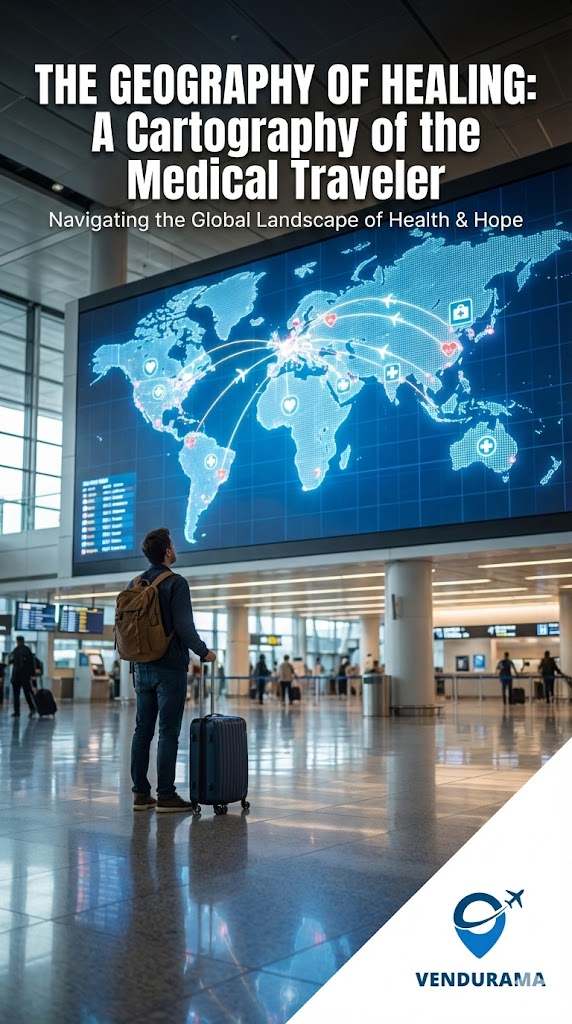
I. The Crossing
The waiting room in Bangalore does not smell like a hospital in Ohio. It smells of jasmine and antiseptic, a strange olfactory collision that mirrors the disorientation buzzing in Robert’s head. He is sixty-two years old, a retired structural engineer from Cleveland with a bad hip and a depleted savings account. In the United States, the quote for his hip resurfacing surgery had hovered around $45,000—a number that threatened to consume the nest egg he and his wife had carefully built over four decades. Here, in this glass-walled atrium five thousand miles from home, the procedure, including the surgeon’s fee, the implant, the hospital stay, and physical therapy, is costing him $8,500.
But the savings are abstract now. The reality is the humidity pressing against the windows, the cacophony of a city that speaks a dozen languages he doesn’t understand, and the profound, primal vulnerability of submitting one’s body to the knife in a foreign land. Robert is a pioneer in the quiet, desperate migration of the twenty-first century: the movement of bodies across borders not for leisure, nor for labor, but for repair.
As a nurse calls his name, mispronouncing it gently, Robert stands up. He is part of a phenomenon that has inverted the traditional maps of the world. For centuries, the global south traveled to the global north for expertise. Now, the current flows in reverse. The patients are American, British, Canadian; the healers are Indian, Thai, Turkish, Mexican. This is Medical Tourism—a sterilized term for a deeply human, often terrifying, and increasingly necessary quest for survival and well-being in a globalized economy.
II. Anatomy of a Phenomenon: Defining Medical Tourism
To define medical tourism merely as “traveling for cheaper healthcare” is to strip it of its complexity. It is, at its core, an act of arbitrage. It is the capitalization on global disparities in economic structures, labor costs, and regulatory environments. From an economist’s perspective, it is the ultimate realization of free-market principles applied to biology: if a heart valve replacement is a commodity, the market will drive the consumer to the most efficient producer.
However, from a sociological perspective, medical tourism is a symptom of systemic failure. It thrives in the vacuum left by crumbling public health infrastructure in the UK and Canada, and the predatory pricing models of the American healthcare system. It is a safety valve for the world’s broken health policies.
Academically, the sector is often divided into three categories:
- Inbound Medical Tourism: Patients traveling from developing nations to developed ones for superior technology (the traditional model).
- Outbound Medical Tourism: Patients from developed nations traveling to developing ones for lower costs or faster access (the dominant modern model).
- Intrabound Medical Tourism: Domestic travel for care, such as a patient from rural China traveling to Shanghai.
For the modern patient, the definition is simpler: it is the realization that geography is no longer destiny when it comes to health.
III. The Ancient Roots of Cross-Border Care
We often speak of medical tourism as a byproduct of the jet age, but the instinct to travel for healing is as old as civilization itself. The history of medicine is a history of movement.
In antiquity, the sanctuary of Asklepios at Epidaurus in Greece was the Mayo Clinic of the Mediterranean. Pilgrims traveled for weeks across hostile terrain, seeking cures in the temple’s “abaton,” where snake-entwined priests practiced a mix of ritual and rudimentary surgery. The Romans, with their obsession for hydrotherapy, built spa towns like Bath in England (Aquae Sulis) and St. Moritz in Switzerland, creating an infrastructure of health travel that merged leisure with therapy.
The 18th and 19th centuries saw the rise of the European sanatorium. The tubercular elite of Victorian England flocked to the Swiss Alps, believing the thin, cold air to be curative. This was the “Grand Tour” of the invalid.
What makes the modern iteration distinct is the invasive nature of the procedures. We are no longer traveling just to “take the waters”; we are traveling to have our chests cracked open, our joints replaced, and our appearances reconstructed. The shift occurred in the late 1990s, driven by the Asian financial crisis. Countries like Thailand, sitting on world-class hospitals built for a booming expat economy that had suddenly collapsed, decided to pivot. They began marketing their empty beds to the world. The rest is history.
IV. The Global Atlas of Treatment: Centers of Excellence
The medical tourism map is not uniform. It is a constellation of specialized hubs, each carving out a niche based on expertise, regulation, and cost.
Asia: The Heavyweights
- Thailand: The grandmother of modern medical tourism. Bangkok leads the world in gender affirmation surgery and cosmetic procedures, but also boasts JCI-accredited hospitals capable of complex cardiac care. It seamlessly blends hospital efficiency with hospitality culture.
- India: The destination for high-acuity surgery. Chennai and Mumbai are global centers for cardiac surgery and orthopedics. The volume of surgery performed here creates surgeons with unparalleled experience—a cardiac surgeon in India may perform ten times the number of procedures annually as their counterpart in London.
- South Korea: The plastic surgery capital of the world. Seoul’s Gangnam district is a dense grid of clinics specializing in facial contouring and dermatology, driven by a cultural obsession with aesthetic perfection.
- Singapore: The luxury option. Singapore does not compete on price, but on quality. It targets the ultra-wealthy seeking complex oncology or organ transplants in an environment that rivals the best American hospitals.
Europe: The Precision Corridor
- Turkey: Geographically and medically bridging East and West. Istanbul has become the global hub for hair transplantation—a “Silicon Valley of Hair”—and cosmetic dentistry. Its rise is fueled by government subsidies and a massive tourism infrastructure.
- Germany: The destination for those seeking “Made in Germany” precision. It attracts patients from the Middle East and Russia for neurosurgery, oncology, and rehabilitation.
- Hungary & Poland: The dental clinics of Europe. Patients from the UK and Scandinavia flock here for implants and veneers at a fraction of domestic prices, taking advantage of the EU’s open borders.
The Americas: Proximity and Specialization
- Mexico: The dentist to North America. Border towns like Los Algodones (“Molar City”) exist almost entirely to serve American seniors needing dental work. Further south, Guadalajara and Mexico City offer high-quality bariatric surgery.
- Costa Rica: A pioneer in dental and cosmetic tourism, marketing itself on the “recovery in paradise” model.
V. The Motivations: Why We Leave
The decision to become a medical tourist is rarely impulsive. It is calculated, driven by a “Push and Pull” dynamic.
The Economic Push: For an uninsured American, a triple bypass surgery costing $120,000 is a bankruptcy sentence. In India, the same procedure, performed by a surgeon trained at the Cleveland Clinic, might cost $8,000. This 90% savings is the primary engine of the industry.
The Access Push: For a Canadian or Briton, the issue is not cost (which is zero at the point of service) but time. Waiting 18 months for a hip replacement while living in chronic pain is untenable. The medical tourist buys time.
The Technological Pull: Sometimes, the treatment simply isn’t available at home. This includes experimental stem cell therapies offered in Panama or China, or advanced robotic surgeries approved in Europe before the FDA clears them in the US.
The Anonymity Pull: For cosmetic procedures, there is value in disappearance. One flies away, recovers in the privacy of a hotel room far from prying eyes, and returns “refreshed.”
VI. The Architecture of Logistics: The Patient Journey
Navigating a medical journey abroad is a logistical feat comparable to planning a small military operation. It requires synchronizing medical, legal, and travel timelines.
Phase 1: Research and Due Diligence
The internet is both a tool and a trap. The prospective patient must wade through glossy marketing to find accreditation. The gold standard is the JCI (Joint Commission International) seal, which certifies that a foreign hospital meets rigorous global safety standards. Patients often utilize medical facilitators—specialized agencies that act as intermediaries between patient and hospital.
Phase 2: The Consultation and Booking
Once a provider is selected, digital records are exchanged. X-rays, MRIs, and medical histories are sent via encrypted servers. A video consultation with the surgeon usually follows. Once the surgery date is confirmed, the travel logistics begin. This is where the complexity spikes. Patients must align surgical schedules with flight availability, often using comprehensive platforms to compare flight routes and secure flexible tickets that allow for changes if recovery takes longer than expected.
Phase 3: Documentation and Legality
Entering a country for surgery is not the same as entering for tourism. Many nations, including India and Thailand, require specific Medical Visas. These require an invitation letter from the hospital. Traveling on a tourist visa for medical treatment can be illegal and may void insurance policies or complicate legal recourse if things go wrong.
Phase 4: Arrival and The “First Mile”
Touching down in a foreign capital after a long-haul flight is physically taxing, especially for a patient already in pain. The journey from the arrivals hall to the hotel or hospital is the first critical hurdle. Navigating public transit with luggage and a medical condition is ill-advised. Consequently, most medical travelers arrange a private airport transfer in advance to ensure a driver is waiting at the gate, eliminating the stress of negotiation and navigation in an unfamiliar city.
Phase 5: Treatment and Recovery
The hospital stay is the eye of the storm. Upon discharge, the patient enters the “recovery phase.” This is not a vacation. It involves wound care, follow-up appointments, and rest. The choice of accommodation is critical here; it must be hygienic, accessible, and close to the hospital. Many patients choose to book extended-stay hotels or serviced apartments near the medical facility to minimize travel time for check-ups.
Phase 6: The Return
Flying post-surgery carries risks, primarily Deep Vein Thrombosis (DVT). Patients often need a “Fit to Fly” certificate from the surgeon. The return trip requires careful planning—extra legroom, wheelchair assistance, and sometimes a medical escort.
VII. The Financial Calculus: Risk and Reward
The savings in medical tourism are real, but they are often overstated by marketing brochures that ignore hidden costs. A robust financial plan must include:
- The Procedure Cost: Usually a fixed package.
- Travel Costs: Flights for the patient and a companion.
- Accommodation: Pre-op and post-op stays (often 2-3 weeks).
- Complication Contingency: If infection occurs, the patient may need to stay weeks longer. Who pays for the ICU?
- Exchange Rate Fluctuations: A sudden shift in currency value can alter the budget.
Insurance: Traditional domestic health insurance (like Medicare or the NHS) almost never covers care abroad. Specialized “Medical Travel Insurance” is essential. It covers complications, trip cancellations, and, crucially, medical evacuation.
VIII. The Shadow Side: Ethics, Safety, and Law
The glossy narrative of medical tourism hides a darker underbelly.
The Continuity of Care Gap: The most dangerous moment in medical tourism is the flight home. Once the patient leaves the country, the surgeon’s responsibility largely ends. Domestic doctors are often reluctant to treat complications from “botched” foreign surgeries due to liability concerns and a lack of surgical records.
The Superbug Threat: Hospitals in some medical tourism hubs have higher rates of multi-drug-resistant bacteria (like NDM-1). A patient traveling for a hip replacement may return with an infection that is untreatable by standard antibiotics, introducing these pathogens into their home community.
Legal Limbo: Malpractice laws are local. If a surgeon in Mumbai or Tijuana commits an error, the patient generally cannot sue them in a US or UK court. They are subject to local laws, where compensation caps may be negligible and the legal process glacial.
Ethical Drain: There is a profound ethical question regarding the “Brain Drain.” When a developing nation focuses its medical resources on treating wealthy foreigners, it often pulls talent away from the public sector, leaving the local population with reduced access to care.
IX. The Psychology of the Medical Traveler
Beyond the biology, there is the psychology. Traveling for surgery is an intensely lonely experience. The patient is separated from their support network, their bed, their food, and their language during a moment of maximum vulnerability.
The Culture Shock of Pain: Pain reduces our tolerance for ambiguity. In a hospital, cultural differences in nursing care or pain management can feel like negligence. In some cultures, nurses are expected to do everything; in others, the family is expected to feed and bathe the patient. An unprepared western patient in an Asian hospital may feel neglected if family care is the norm.
Because of this isolation, the role of the companion is vital. Traveling alone for major surgery is dangerous. A companion acts as an advocate, a logistical manager, and an emotional anchor. When families plan these trips, they often use travel platforms to coordinate itineraries for multiple travelers, ensuring the caregiver is present throughout the entire process.
X. Future Horizons: The Digital and The Hybrid
The future of medical tourism is likely to be less about travel and more about integration.
Telemedicine Pre-screening: Before a patient ever buys a ticket, AI-driven diagnostic tools and high-definition telemedicine will allow foreign surgeons to assess candidates with near-perfect accuracy, reducing the rate of patients being turned away upon arrival.
Global Hospital Networks: Major hospital chains (like the Mayo Clinic or Cleveland Clinic) are opening satellites abroad (e.g., Cleveland Clinic Abu Dhabi). This creates a “brand assurance” where patients can get American-standard care without flying to America.
Reverse Innovation: We are seeing techniques developed in resource-constrained environments (like high-volume, low-cost eye surgery in India) being exported back to the West to lower costs.
XI. Conclusion: The Universal Pursuit
In the final analysis, medical tourism is a testament to the primal human drive for survival. It strips away the geopolitical boundaries we have drawn on the map and reveals a simpler truth: the body knows no borders. A failing heart in London is the same as a failing heart in Lagos. The desire to walk without pain, to see without blur, to live without the shadow of illness—this is the most universal of all languages.
Robert, the engineer from Cleveland, eventually returns home. His hip sets off the metal detector at customs, a permanent souvenir of his journey. He walks with a slight limp that will fade in time. He tells his neighbors he went to India for the Taj Mahal, but in the quiet of his own home, he knows the truth. He went to the ends of the earth to reclaim his own body. He is a traveler who mapped the geography of his own healing, proving that in the twenty-first century, hope is a destination that can be found on a map, provided one has the courage to travel to it.
As the world becomes smaller, the distance between sickness and health is no longer measured in miles, but in information, access, and the will to move. We are all, in some sense, medical tourists—navigating the complex, foreign territory of our own mortality, looking for a guide, a cure, and a way home.