
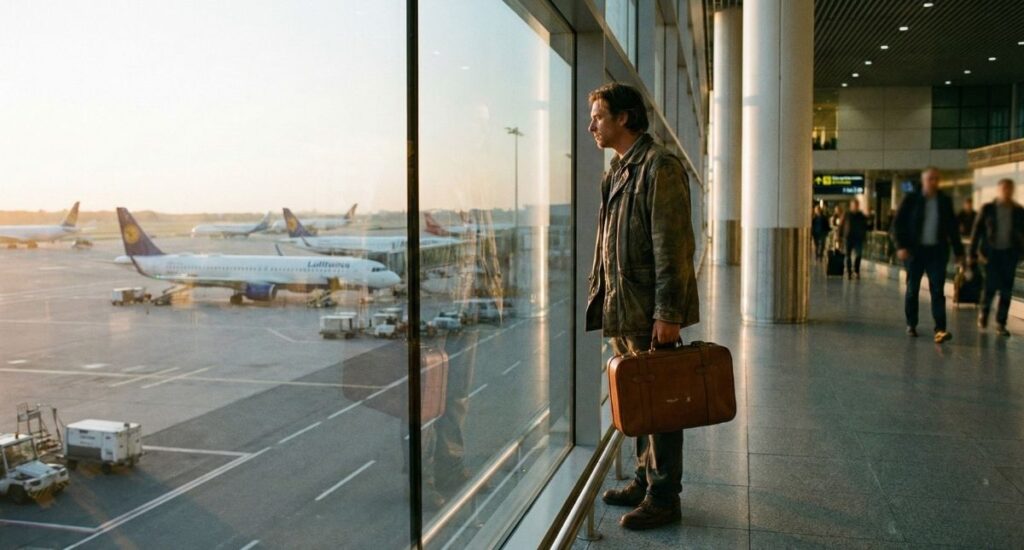
I. The Architecture of Departure
There is a precise moment when the tether snaps. It usually happens not when the plane lifts off, nor when the passport is stamped, but in the quiet interim of the early morning—the suspended silence before the taxi arrives or the first step onto a train platform. The familiar weight of routine, of identity defined by profession and obligation, suddenly lifts. In its place settles a strange, weightless anticipation. The air itself seems to change molecular structure, charged with the promise of the unknown.
This is the threshold of leisure travel. It is not merely a vacation, a word that implies a temporary vacancy from “real life.” Rather, leisure travel in the twenty-first century has evolved into a deliberate practice, a sophisticated art form of living that views the world not as a consumable product but as a vast, interactive library of human experience. It is a conscious decision to displace oneself, to trade the comfort of competence for the vulnerability of the learner, and to engage with the planet on terms of curiosity rather than conquest.
For the modern individual, caught in the relentless velocity of the information age, this act of departure is perhaps the last remaining sanctuary of deep attention. To travel for leisure is to reclaim time. It is to step out of the chronological tyranny of schedules and deadlines and into the “kairos” of the moment—time measured not in minutes, but in depth of feeling. Whether standing before the wind-scoured silence of the Atacama Desert or navigating the sensory deluge of a Mumbai street market, the leisure traveler is engaged in a profound act of self-reconstruction, piecing together a broader understanding of existence through the mosaic of the world.
II. Defining the indefinable: The Philosophy of Leisure
To understand leisure travel, one must first strip away the industrial-era definition of leisure as simply “time off work.” The ancient Greeks held a more robust view. Aristotle spoke of schole—the root of the word “school”—not as idleness, but as the active cultivation of the mind and spirit, made possible by freedom from necessity.
In this light, modern leisure travel is the practical application of schole. It is distinguished sharply from business travel, which is linear, transactional, and insulated. The business traveler moves through the world in a friction-free bubble of lounges and meeting rooms, seeking to minimize the impact of geography on productivity. The leisure traveler, conversely, seeks friction. They seek the texture of a place—the confusing transit map, the struggle to order a meal in a foreign tongue, the unexpected detour that leads to a hidden courtyard.
Academically, sociologists view leisure tourism as a “liminal” state—a threshold experience where social hierarchies and norms are temporarily suspended. In this space, a CEO may find themselves taking instructions from a twenty-year-old surf instructor; a professor may become the silent student of a non-literate artisan. This inversion of status is central to the psychological refresh that travel provides. It forces humility and rekindles the childlike neuroplasticity required to navigate a world where one does not know the rules.
Therefore, we define leisure travel not by the destination or the cost, but by the intent. It is the intentional pursuit of displacement for the sake of enrichment, characterized by an openness to serendipity and a willingness to be changed by the environment.
III. From The Grand Tour to The Gig Economy: A Historical Trajectory
The lineage of the modern traveler is long and complex, tracing a path from elite privilege to mass democratization, and finally, to personalized curation.
The Aristocratic Rite
The DNA of Western leisure travel was forged in the 17th and 18th centuries with the Grand Tour. Young British aristocrats were dispatched across the Channel to France and Italy, ostensibly to study classical art, architecture, and diplomacy. It was a finishing school on wheels, a rite of passage that equated mobility with sophistication. The infrastructure was rudimentary, the dangers real, but the philosophy was established: to know the world, one must see it.
The Steam and the Package
The 19th century brought the democratization of movement. The railway collapsed distances, and the steamship opened oceans. It was Thomas Cook, a visionary and temperance advocate, who realized that the middle class possessed the curiosity of the aristocracy but lacked the logistical means. By organizing the first package tours, Cook invented the infrastructure of tourism. Suddenly, the Alps and the Nile were accessible not just to lords, but to clerks and teachers. Travel became a commodity, buyable and consumable.
The Jet Age and Mass Tourism
Post-World War II, the jet engine and the rise of labor unions securing paid holidays created the explosion of mass tourism. This era was defined by the search for the “Three S’s”—Sun, Sea, and Sand. The rise of the all-inclusive resort insulated the traveler from the destination, creating “environmental bubbles” where the weather was tropical but the food and language were reassuringly domestic. While economically potent, this era often stripped travel of its transformative power, reducing it to mere recreation.
The Digital Renaissance
We are now living in the fourth great age of travel. The internet has dismantled the gatekeepers. Today’s traveler is their own travel agent, navigator, and critic. The fragmentation of the industry has led to hyper-personalization. We have moved from “sightseeing” to “experiencing.” The rise of the sharing economy (homestays, peer-to-peer experiences) has allowed travelers to pierce the tourist veil and enter private domestic spheres. Furthermore, the dissolution of the office has given rise to the Digital Nomad, a demographic that views travel not as a break from life, but as the setting for life itself.
IV. The Global Canvas: Regions of the Imagination
While the globe is interconnected, distinct regions offer distinct emotional and intellectual palettes for the leisure traveler.
Europe: The Palimpsest of History
Europe remains the masterclass in density. Nowhere else can a traveler move from the Roman ruins of Split to the imperial grandeur of Vienna and the avant-garde grit of Berlin in a single day. For the leisure traveler, Europe is an exercise in time travel. It is the home of “Slow Travel”—the art of renting a villa in Tuscany or a cottage in the Cotswolds and living locally. The infrastructure supports spontaneity; the rail networks allow for a fluidity of movement that encourages multi-country itineraries.
Asia: The Sensory Symphony
Asia offers the profound thrill of contrast. It is the neon futurism of Tokyo sitting beside the Shinto silence of a forest shrine. It is the chaotic, life-affirming energy of Bangkok’s street markets and the rarefied air of a Bhutanese monastery. For the Western traveler, Asia often represents the greatest challenge to cultural assumptions. The collectivist ethos, the spiritual integration of daily life, and the sheer density of population force a recalibration of personal space and social interaction.
The Americas: The Drama of Scale
From the glacial silence of Patagonia to the red-rock cathedrals of Utah, the Americas define travel through the lens of nature. The leisure traveler here is often a pilgrim of the sublime. The national park systems of North America offer accessible wilderness, while Latin America offers a vibrant fusion of indigenous and colonial histories, wrapped in biodiversity that defies cataloging. It is a region for the road trip, the trek, and the surrender to vastness.
Africa: The Elemental Connection
Africa strips the traveler of pretense. Whether witnessing the Great Migration on the Serengeti or standing at the Door of No Return in Ghana, the continent demands a visceral emotional response. It is not a monolith, but a tapestry of fifty-four nations. The luxury safari industry has pioneered the concept of conservation tourism, where leisure travel directly funds the preservation of ecosystems, creating a model where the visitor is an active participant in the survival of the destination.
V. Typologies of the Modern Wanderer
The “why” of travel dictates the “how.” Contemporary leisure travel has splintered into specialized typologies, each serving a different human need.
The Wellness Seeker
In an age of chronic burnout, travel as medicine has surged. This is not merely about spas; it is about holistic recalibration. It is the yoga retreat in Bali, the silent Vipassana meditation in India, or the forest bathing (Shinrin-yoku) in Japan. The destination is secondary to the internal state.
The Cultural Immerser
This traveler seeks to dissolve the barrier between “visitor” and “local.” They avoid the top-ten lists. They learn the language, however haltingly. They frequent neighborhood grocers rather than hotel restaurants. Their goal is empathy—to understand the logic of a different way of life.
The Adventure Purist
For this demographic, leisure is found in exertion. It is Type II fun—miserable in the moment, euphoric in retrospect. High-altitude mountaineering, long-distance cycling, or arctic kayaking. The landscape is an adversary to be respected, and the reward is the realization of physical and mental resilience.
The Digital Nomad and “Bleisure”
The lines are blurring. The “Bleisure” traveler extends a business trip for three days of exploration. The Digital Nomad carries their office in a backpack, choosing destinations based on Wi-Fi speeds and community vibes. For this growing cohort, logistical precision is paramount. They require tools that allow them to assess long-term viability, from visa regulations to housing costs. Using comprehensive platforms to analyze flight connectivity and accommodation options is no longer optional but a critical part of their workflow, ensuring they can seamlessly transition between productivity and exploration.
VI. The Invisible Souvenirs: Psychological and Cognitive Benefits
Why do we leave the comfort of home? The rewards of leisure travel are often invisible, settling in the mind long after the tan fades.
Cognitive Flexibility: Navigating a foreign environment is a cognitive workout. The brain must interpret new signs, decode social cues, and calculate currency conversions constantly. This state of “productive disorientation” stimulates neuroplasticity. We become sharper, more adaptable.
The dilation of Time: Routine collapses time; novelty expands it. A week spent in a new city feels longer than a month spent at a desk because the brain is processing a higher density of new data. Travel literally extends our perception of life’s duration.
Reduction of prejudice: Mark Twain famously wrote, “Travel is fatal to prejudice, bigotry, and narrow-mindedness.” While not automatic, exposure to the “other” humanizes geopolitical abstractions. Sharing a meal with a stranger dissolves the binary of “us versus them.”
VII. The Architecture of Logistics: Planning the Journey
While the philosophy of travel is romantic, the execution is deeply pragmatic. A successful leisure trip is a structure built on pillars of logistics, finance, and administration.
The Financial Blueprint
Budgeting for leisure travel requires a shift from “cost” to “value.” It is not about finding the cheapest option, but the one that yields the highest return on experience. The astute traveler practices “high-low” spending: saving on transit to splurge on a once-in-a-lifetime meal, or choosing a budget airline to afford a better hotel.
The Timing and the Season
The concept of the “shoulder season”—the weeks between peak and off-peak—is the leisure traveler’s secret weapon. The weather is often mild, the crowds thin, and the prices rational. Understanding the rhythms of a destination is crucial. Visiting Venice in November offers a melancholic beauty impossible to find in the crushed heat of July.
The Documentation Ecosystem
In a post-pandemic world, the bureaucracy of borders has hardened. Visas, health declarations, and vaccination certificates are the new gatekeepers. The modern traveler must be an administrator. Keeping digital and physical copies of passports, insurance policies, and emergency contacts is standard practice.
Strategic Booking
The booking phase is where the abstract dream solidifies into a concrete plan. It requires a macro and micro view. On the macro level, one must align the itinerary with reality—avoiding the common mistake of over-scheduling. On the micro level, it involves securing the logistical spine of the trip. Utilizing robust aggregators to compare flight routes and hotel availability allows the traveler to visualize the journey’s skeleton, ensuring that the connections are logical and the layovers manageable.
VIII. The First Mile: Navigating Arrival and Transportation
There is a specific, acute stress associated with the first hour of arrival in a foreign country. You are tired, dehydrated, and disoriented. The signs are unintelligible, the currency is unfamiliar, and the local taxi touts are aggressive. This “first mile” is often the most friction-heavy part of the entire journey.
The Psychology of Arrival
The transition from the sterile, international zone of “Airside” to the chaotic reality of “Landside” can be jarring. This is where the illusion of the brochure meets the grit of reality. Experienced travelers know that mitigating stress during this window is an investment in the rest of the trip. If the arrival goes smoothly, the mind opens. If it is a battle, the traveler retreats into a defensive posture.
Private Transport as Strategy
For many, particularly those traveling with family, elderly companions, or significant luggage, the unpredictability of public transit or ride-hailing apps upon landing is a risk too far. Security and reliability become paramount. In these scenarios, arranging private airport transfers in advance acts as a psychological anchor. Knowing that a driver is waiting with a name sign eliminates the cognitive load of negotiation and navigation, providing a safe, sealed corridor from the airport to the sanctuary of the hotel.
Internal Mobility
Once settled, the philosophy of movement shifts. Leisure travel encourages the use of local systems—the metro, the tuk-tuk, the ferry. These are not just ways to move; they are venues of observation. However, for inter-city movements or complex rural transfers where language barriers are high, booking reliable transport remains a safety priority.
IX. Sanctuary and Shelter: The Accommodation Landscape
Where we sleep shapes how we wake up, and consequently, how we see the place. The homogenization of the global hotel chain offers consistency, but often at the cost of a sense of place.
The Rise of the Boutique and the Home
The shift towards boutique hotels and homestays reflects a desire for narrative. Travelers want to stay in a converted silk factory in Lyon, a Ryokan in Kyoto, or a houseboat in Kerala. These structures tell stories. They connect the sleeper to the history of the soil.
Strategic Selection
Choosing accommodation is an exercise in triangulation: location, amenity, and vibe. Is it better to be in the noisy, vibrant city center, or the quiet, leafy suburb? Does the listing offer the connectivity required for a digital nomad, or the silence needed for a retreat? Travelers now utilize detailed platforms to verify accommodation amenities and reviews, peeling back the marketing gloss to understand the reality of the room—the water pressure, the street noise, the comfort of the mattress.
X. Shadows in Paradise: Challenges and Ethical Dilemmas
To romanticize leisure travel without acknowledging its shadows is dishonest. The industry is a major contributor to global carbon emissions. “Overtourism” has turned living cities like Venice and Barcelona into theme parks, pushing locals out and eroding the very culture visitors come to see.
The Ethics of Consumption
The leisure traveler is a consumer of places. This creates a power dynamic. Are we observing, or are we intruding? Are we supporting the local economy, or funding foreign-owned conglomerates? The ethical traveler must grapple with these questions. They seek to minimize their footprint, respect local dress codes, and ensure their spending stays within the community.
The Risk of Disappointment
Social media has created the “Instagram vs. Reality” crisis. Travelers arrive at a landmark expecting a solitary, spiritual communion, only to find a queue of thousands. Managing expectations is a crucial skill. The ability to find beauty in the imperfect, the rainy day, or the closed museum is what separates the tourist from the traveler.
Safety and Vulnerability
The world is generally kinder than the news suggests, but danger exists. Scams, theft, and political instability are variables. The traveler must be vigilant but not paranoid. For solo travelers, particularly women, safety logistics are elevated. This often means prioritizing secure transportation, such as booking trusted private car services for late-night arrivals or movements in unfamiliar neighborhoods, ensuring that the vulnerability of being alone is mitigated by reliable logistics.
XI. The Future Horizon: Where Leisure Travel Goes Next
As we look toward the next decade, leisure travel is being reshaped by powerful forces.
The Phigital Revolution
The blend of physical and digital (“phigital”) is accelerating. Augmented Reality (AR) will overlay history onto ruins—point your phone at the Colosseum, and see it fully restored with gladiators. However, the counter-trend will be “Analog Travel”—zones where devices are banned, and the luxury is disconnection.
Regenerative Travel
Sustainability is moving from “doing no harm” to “doing good.” Regenerative travel aims to leave a place better than it was found—planting coral, funding schools, or restoring trails. The leisure traveler becomes a temporary steward of the destination.
Hyper-Personalization
Artificial Intelligence will act as the ultimate concierge. It will not just book flights; it will design itineraries based on your biometrics, your past preferences, and your current mood. Yet, the human desire for the “human touch” will remain. We will use technology to handle the drudgery, freeing us to engage with the humanity of the destination. For example, using AI-driven tools to optimize complex travel routes will become standard, allowing travelers to squeeze more value and less stress out of their journeys.
XII. The Return: The Art of Coming Home
The final leg of leisure travel is the return. It is often met with a “post-travel blues,” a sense of deflation as the color of the world seems to desaturate back into the gray of routine. But this transition is the most critical part of the cycle.
The true souvenir is not the rug or the spice jar; it is the altered self. The leisure traveler returns with a widened aperture. They see their own culture not as the “default,” but as just one of many ways to be human. They bring back the patience learned in a waiting room in Lima, the flavor profile discovered in a stall in Penang, the silence absorbed in a fjord in Norway.
Leisure travel, ultimately, is an act of love—love for the world, and love for one’s own potential to grow. It teaches us that we are small, that the world is vast, and that we are all, in the end, just walking each other home. It is a pursuit that does not end when the suitcase is unpacked; it continues in the stories we tell, the curiosity we keep alive, and the quiet planning for the next time we stand at the threshold, ready to depart.
In a world that often demands we build walls, leisure travel remains the most joyful, stubborn, and necessary act of building bridges. It reminds us that to be lost is often the only way to be truly found. The map is open. The invitation is standing. The art of living awaits.