
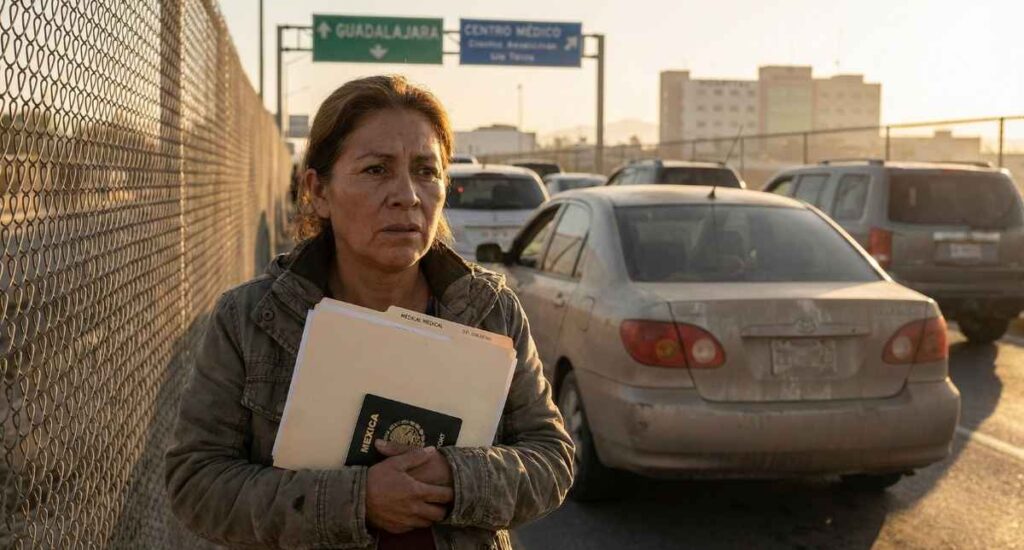
The Border Crossing
Maria’s hands gripped the steering wheel as the desert landscape blurred past. In the passenger seat, a folder held her medical records, a printout of a hospital map in Guadalajara, and a single round-trip plane ticket—a physical anchor to her life in Texas. The crushing pain in her knee, a constant companion for three years, had finally outweighed the fear. The surgeon at home had quoted a figure that might as well have been the national debt. Her insurance called it “elective.” For Maria, a teacher and a mother, it was the line between living and enduring.
As she approached the border crossing, her pulse quickened. This was not a vacation. It was a pilgrimage for care, a journey undertaken by millions who find themselves at the intersection of medical need and economic reality. In that moment, Maria embodied the quiet, determined heart of modern medical tourism: not an affluent seeker of luxury, but an ordinary person navigating a global landscape of health, cost, and hope. Her story is not an anomaly; it is a defining narrative of 21st-century healthcare, where borders are crossed not just for culture or commerce, but for the fundamental human pursuit of healing.
Redefining the Journey: More Than a Medical Vacation
Medical tourism is often shrouded in glossy brochures depicting patients reclining on beaches after surgery. This cliché obscures a far more profound and systemic phenomenon. At its core, it is the movement of a patient across international borders to access medical care, driven not by wanderlust, but by necessity and calculation.
It is a tangible response to deep-seated global healthcare inequalities. For some, it is an escape from prohibitive costs. A cardiac bypass costing over $100,000 in the United States can be performed for under $10,000 in a world-class Indian hospital. For others, like many in the UK or Canada, it is a flight from paralyzing wait times—a 25-week wait for a knee replacement at home versus a scheduled procedure in Thailand within a month. For those seeking cutting-edge cancer therapies or fertility treatments unavailable or restricted in their home country, it is a path to advanced technology and specialized expertise.
This migration reframes the patient from a passive recipient within a local system to an active global healthcare consumer, navigating a world where quality and affordability are no longer geographically bound. It is a complex choice, born of vulnerability and empowerment in equal measure.
The Global Map of Healing: Destinations and Their Specialties
The geography of medical tourism is a mirror reflecting disparities and competencies. Nations have cultivated niche reputations, attracting patients with specific blends of quality, cost, and care.
- Asia-Pacific: The Established Powerhouses. This region commands nearly half of the global market, a dominance built on a formidable combination of scale, skill, and value. Thailand is a pioneer, famed for its cosmetic surgery, dental work, and patient-centric hospitality in internationally accredited hospitals. India is the destination for high-acuity, complex medicine—cardiac surgery, orthopedics, and oncology—offering some of the world’s most dramatic cost savings without compromising on quality, supported by a vast network of internationally trained, English-speaking physicians. Singapore and South Korea compete at the premium end, emphasizing technological supremacy, pioneering cancer treatments, and meticulous precision in cosmetic and reconstructive surgery.
- The Americas: Proximity and Value. For North American patients, geography dictates logic. Mexico is the overwhelming choice for dental work, bariatric surgery, and cosmetic procedures, where savings of 60-70% are common even after accounting for travel. Costa Rica has carved a similar niche with a strong reputation for dental and cosmetic care in a stable, accessible environment. Further south, Brazil remains a global leader in cosmetic and plastic surgery, drawing patients for its artistic and technical mastery.
- Europe and the Middle East: Specialized Niches. Turkey has explosively grown into a global hub for hair transplants, cosmetic surgery, and dental tourism, leveraging its position between Europe and Asia. In the United Arab Emirates, destinations like Dubai and Abu Dhabi are cultivating a luxury medical ecosystem, focusing on wellness, advanced oncology, and orthopedics, often tied to five-star recovery experiences. Germany remains synonymous with cutting-edge technological diagnostics and treatment for complex conditions, attracting patients for whom cost is a secondary concern to perceived peak capability.
When planning these complex medical journeys, patients increasingly rely on comprehensive travel platforms that help navigate intricate travel logistics to not just find flights and accommodations, but to master the complex coordination of aligning medical appointments with travel schedules across different time zones and healthcare systems.
The Procedures That Prompt the Passage
The range of treatments sought abroad is vast, but several categories dominate the flow of global patients:
- Cosmetic and Dental Surgery: Often the most visible facet, including procedures like rhinoplasty, liposuction, breast augmentation, and comprehensive dental reconstructions. Driven by high elective procedure costs at home and packaged “all-inclusive” deals abroad.
- Orthopedics and Cardiac Care: Joint replacements (hips and knees), spinal surgeries, and cardiac procedures like angioplasty or bypass. Motivated by extreme cost differentials and long domestic wait times for these life-improving, though often deemed non-urgent, operations.
- Oncology and Fertility Treatments: The search for hope and access. Patients pursue advanced radiation therapy, proton therapy, or novel immunotherapies available overseas. Fertility patients travel for IVF treatments, donor gametes, or procedures that are legally restricted or prohibitively expensive in their home countries.
- Bariatric Surgery: A significant category, particularly from the United States, where high costs and variable insurance coverage push patients to seek affordable surgical solutions for obesity abroad.
The Patient’s Odyssey: A Step-by-Step Journey
Embarking on this path is a monumental project in logistics, trust, and personal resilience.
- The Catalyst and Research: The journey begins with a local diagnosis and a prohibitive quote, a dreaded waitlist, or a denied treatment option. Research is exhaustive and anxiety-ridden, conducted online through hospital websites, facilitator agencies, and, crucially, testimonials from former medical tourists. The digital age has been the industry’s greatest accelerator, for better and worse, as information is abundant but quality varies wildly.
- Selection and Documentation: Choosing a facility is the paramount decision. The gold standard is accreditation from bodies like the Joint Commission International (JCI), which signals adherence to international patient safety and quality protocols. Patients must then engage in a detailed medical correspondence, sending records, imaging, and histories for remote review and receiving a formal treatment plan and cost quote.
- The Voyage Out: This phase involves securing a medical visa, booking long-stay accommodation, and planning travel with post-operative limitations in mind. Patients often travel with a companion, turning a medical procedure into a shared logistical mission. Coordinating international flights that accommodate reduced mobility post-surgery is a critical early step, one where platforms can help visualize options and align travel dates with hospital schedules. Comprehensive travel insurance, specifically covering medical evacuation, becomes a non-negotiable document.
- In-Country Treatment and Recovery: Upon arrival, the patient transitions from traveler to patient. Pre-operative consultations confirm the plan. The surgery or treatment itself occurs in a familiar clinical environment, though the language and customs may not be. The immediate post-operative period is often spent in a hospital or recovery hotel. This is where the “tourism” aspect cautiously emerges—but swimming, sunbathing, and strenuous touring are strongly discouraged, as they can seriously impede healing and increase complication risks.
- The Return and The Long Road: The most vulnerable phase may begin upon discharge. Flying too soon after abdominal or orthopedic surgery significantly increases the risk of blood clots. A “fit-to-fly” certificate from the treating surgeon is essential. Upon returning home, the challenge of continuity of care becomes stark. Many local doctors are reluctant to manage post-operative complications from procedures they did not perform, citing liability and unfamiliarity with foreign implants or techniques. Securing follow-up care before departure is as critical as the surgery itself.
Navigating the Labyrinth: Visas, Finances, and Hidden Costs
The legal and financial architecture of medical tourism is complex.
- Medical Visas: Most destination countries offer specific medical visas, requiring proof of hospital admission and financial means. Processing times can vary, though nations like Singapore now promote 48-hour approvals to attract patients.
- The True Cost Calculus: The advertised price of a procedure is merely the anchor. The total cost includes round-trip airfare (often for patient and companion), extended accommodation (which may need to be booked for several weeks to allow for recovery before the return flight), local transportation, meals, and unforeseen expenses. While still offering massive savings, the all-in sum requires careful budgeting.
- The Legal Vacuum: Perhaps the greatest risk is the legal gray zone. Patients have limited to no recourse for malpractice in a foreign country’s legal system. Understanding that one is essentially forfeiting the legal protections of their home country is a sobering part of the informed consent process.
When planning these complex healing journeys, patients must coordinate medical appointments with travel logistics across time zones and healthcare systems, where comprehensive travel platforms become essential tools for aligning treatment schedules with flight availability and securing accommodation options that support recovery needs.
The Shadow Side: Risks, Ethics, and Profound Challenges
For all its benefits, medical tourism operates in a landscape fraught with significant peril.
- Medical Risks: These include higher infection rates from drug-resistant bacteria in some regions, the consequences of flying post-surgery, and the potential for substandard anesthesia or implant materials in unaccredited facilities. The CDC has documented outbreaks of fungal meningitis and antibiotic-resistant infections linked to medical tourism.
- The Follow-Up Abyss: The rupture in continuity of care is the industry’s Achilles’ heel. Complications like infections or blood clots can manifest days or weeks after returning home, leaving patients scrambling for care with incomplete medical records.
- Ethical Quagmires: The industry brushes against deep ethical concerns. “Transplant tourism” can fuel the exploitation of vulnerable organ donors in unregulated markets. The rise of unproven stem cell “therapies” offered to desperate patients represents the dangerous frontier of medical exploitation.
When planning these complex medical journeys across international boundaries, patients must coordinate not just medical appointments but comprehensive travel logistics that account for recovery periods and potential complications, where integrated platforms can help manage the relationship between treatment schedules and flexible travel options to ensure safety and continuity of care.
The Inner Journey: Psychological and Cultural Crossings
Beyond the physical, the journey is psychologically transformative. Patients report feeling a profound vulnerability, far from their support networks, entrusting their bodies to strangers in an unfamiliar place. Language barriers can reduce an educated adult to a state of childlike dependence. Yet, there is also a powerful narrative of self-efficacy and resilience. Successfully navigating this immense challenge fosters a unique sense of strength and global citizenship.
The experience forces a confrontation with different cultural attitudes toward illness, pain, and the doctor-patient relationship. In some cultures, the approach may be more paternalistic; in others, more transactional. Navigating these nuances is an unspoken part of the treatment.
The Future Patient: Technology and Transformation
The industry is on the cusp of a new era, shaped by technology:
- AI and Telemedicine: Artificial intelligence is beginning to assist in matching patients with optimal destinations and surgeons based on their specific profiles. More importantly, telemedicine is becoming the bridge across the continuity-of-care chasm, enabling seamless pre-op consultations and vital post-op follow-ups with the overseas surgical team from the patient’s living room.
- Global Standards and Networks: We will likely see the rise of truly integrated global hospital networks, where records transfer seamlessly and care pathways are coordinated across borders. Insurance coverage for overseas treatment is also slowly expanding, moving medical tourism from a cash-based, outlier choice to a covered benefit for some.
- Hybrid Models: The future may lie in “blended” care: traveling for a complex surgery where the cost arbitrage is greatest, but conducting all pre- and post-operative care via telemedicine with local providers who are part of a global partnership.
Conclusion: The Universal Pursuit of Health
Maria’s story ended at the border. The surgery was successful. The pain that defined her years was gone. Her recovery was careful, and her follow-up was managed through a combination of determined local advocacy and telemedicine check-ins with her surgeon abroad. She did not vacation on a beach. She healed in a quiet apartment, then returned home.
Her journey, and that of millions like her, underscores a fundamental truth: the desire for health, for a life free of debilitating pain, for the chance to be a present parent or an active individual, is a universal force. It is a force powerful enough to move people across oceans and borders. Medical tourism is not merely an industry; it is a testament to human agency in the face of fractured systems. It reveals both the staggering inequalities in global health and the remarkable ways in which ordinary people navigate them.
It is a choice made with both eyes open to the risks, a calculated gamble for a better quality of life. In crossing borders for care, patients do more than seek treatment; they silently vote on the value and accessibility of health in their own countries, and they participate in the slow, complicated weaving of a more globalized, albeit imperfect, system of healing. The journey is arduous, the path is fraught, but the destination—restored health—remains the most compelling voyage any human can undertake. For those embarking on this profound journey, the logistical planning—from securing the initial medical visa appointment to booking a comfortable, extended-stay accommodation for recovery—is where the tangible process of hope begins.