
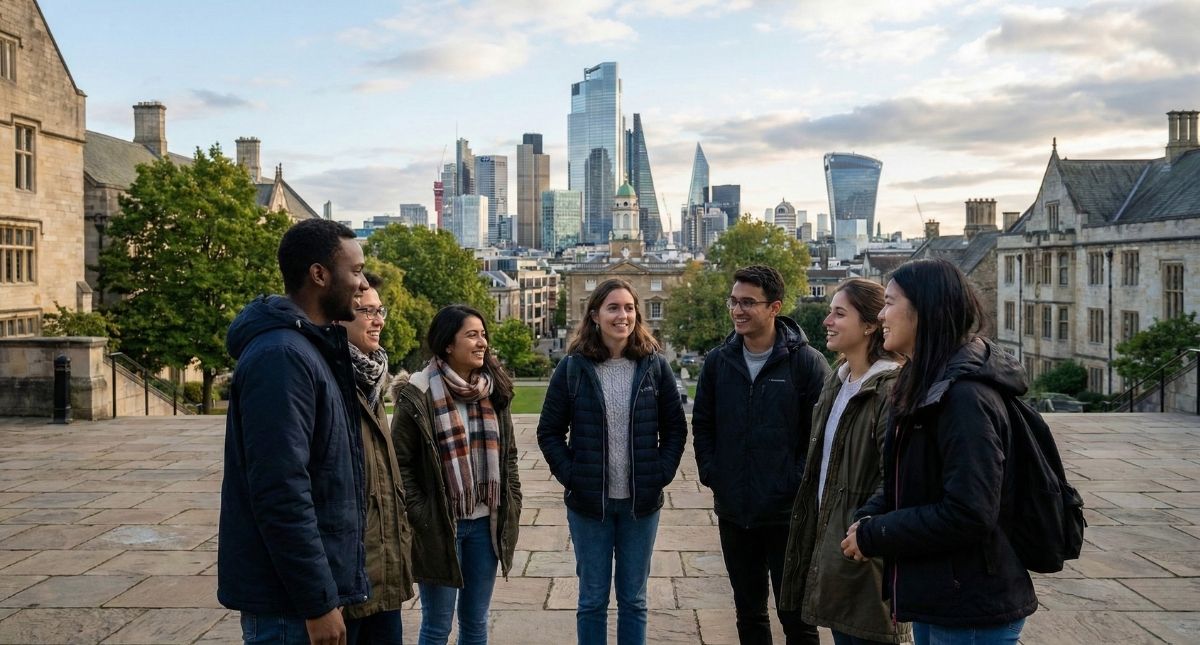
In an increasingly interconnected world, education is no longer confined by national borders. The concept of the “classroom” has expanded to encompass the globe, offering students the opportunity to traverse continents, navigate new cultures, and engage with diverse academic traditions. Studying abroad has evolved from a niche privilege into a vital component of modern higher education, widely recognized as a catalyst for personal growth, academic enrichment, and professional development.
This comprehensive guide explores the multifaceted world of international education. It delves into the profound implications of living and learning in a foreign country, the practicalities of navigating visa regulations and travel logistics, and the lifelong benefits of becoming a global citizen. Whether one is considering a summer language course in Tokyo, a semester exchange in Paris, or a full degree program in Melbourne, understanding the landscape of study abroad is the first step toward a transformative journey.
?What Does Studying Abroad Mean
At its core, studying abroad is the act of pursuing educational opportunities in a country other than one’s own. However, this definition barely scratches the surface of what the experience truly entails. It is a holistic undertaking that combines academic rigor with intense cultural immersion and personal challenge.
The Academic Dimension
Academically, studying abroad presents an opportunity to step outside the comfort zone of one’s home institution. It allows students to experience different pedagogical styles, from the lecture-heavy traditions of some European universities to the tutorial-based systems of Oxford and Cambridge, or the interactive, student-centered approaches found in parts of Scandinavia. It opens doors to specialized fields of study that may not be available domestically—such as studying marine biology on the Great Barrier Reef, art history in Florence, or international business in Shanghai. It challenges students to adapt to new assessment methods, grading scales, and classroom dynamics, fostering intellectual flexibility.
The Cultural Dimension
Culturally, it is an exercise in empathy and understanding. Living abroad removes the filter of tourism. Students do not merely visit a destination; they inhabit it. They navigate local public transport, shop in neighborhood markets, and observe the nuances of social interaction. This immersion forces a re-evaluation of one’s own cultural norms and biases. It creates “intercultural competence,” the ability to communicate and function effectively across cultural differences—a skill highly prized in the modern workforce.
The Personal Dimension
On a personal level, studying abroad is often a coming-of-age experience. For many young adults, it is the first time they are truly independent, separated from their established support networks of family and friends. Navigating the complexities of a new bureaucracy, managing a budget in a foreign currency, and handling daily logistics require resilience and problem-solving skills. It is a journey of self-discovery where students learn as much about themselves as they do about their host country.
Types of Study Abroad Programs
The landscape of international education is diverse, offering a variety of program structures to suit different academic goals, timelines, and budgets.
1. University Exchange Programs
These are reciprocal agreements between a student’s home university and a partner institution abroad.
- Structure: Students pay tuition to their home university but attend classes at the partner university.
- Duration: Typically one semester or one academic year.
- Credits: Credits usually transfer back seamlessly, provided the courses are pre-approved.
- Atmosphere: This offers a high level of immersion, as exchange students often take classes alongside local students.
2. Direct Enrollment
In this model, a student applies directly to a foreign university as a visiting student (or “study abroad student”) rather than going through a home university exchange.
- Structure: Tuition is paid directly to the host institution.
- Flexibility: This opens up a wider range of destinations, as students are not limited to their home university’s specific partners.
- Independence: It requires more independent planning regarding housing and visas.
3. Third-Party Provider Programs
These are programs organized by independent educational organizations (such as CIEE, IES, or AIFS) that act as intermediaries.
- Structure: The provider creates a package that often includes tuition, housing, excursions, insurance, and on-site support.
- Support: These programs offer a high level of support, making them ideal for students who have never traveled abroad.
- Academics: Courses are often designed specifically for international students and may be taught at a study center rather than the local university.
4. Full Degree Programs
Increasingly, students are choosing to complete their entire undergraduate or graduate degree abroad.
- Duration: 3–4 years for a bachelor’s, 1–2 years for a master’s.
- Cost: In many countries (like Germany or France), tuition for public universities is significantly lower than in the US or UK, even for international students.
- Commitment: This requires a high level of commitment to living in the host country for several years.
5. Short-Term and Faculty-Led Programs
These are often intensive courses led by a professor from the student’s home university, lasting anywhere from two to eight weeks during summer or winter breaks.
- Focus: Usually centered around a specific theme or subject (e.g., “History of WWII in Europe”).
- Accessibility: Ideal for students who cannot commit to a full semester due to academic or financial constraints.
Popular Study Abroad Destinations Around the World
While students travel to every corner of the globe, certain regions remain perennial favorites due to their academic reputation, safety, and cultural appeal.
Europe: The Traditional Hub
Europe remains the most popular destination for study abroad, offering a density of history, culture, and high-ranking universities.
- United Kingdom: Famous for its prestigious institutions and short master’s programs. London is a global capital of business and arts.
- France & Italy: Top destinations for art, fashion, history, and culinary arts. Language barriers can be navigated as many programs are now offered in English.
- Germany: Known for engineering, business, and tuition-free education at public universities.
- Spain: A favorite for language learners and those seeking a vibrant, social culture.
North America: Academic Giants
- United States: Hosts the largest number of international students globally, drawn by the Ivy League, liberal arts colleges, and massive research universities.
- Canada: attractive for its welcoming immigration policies, safety, and high quality of life.
Asia-Pacific: The Rising Stars
- Australia & New Zealand: popular for the unique biodiversity, outdoor lifestyle, and English-language instruction.
- Japan & South Korea: Experiencing a surge in popularity due to cultural exports (anime, K-pop), advanced technology, and safe, modern cities.
- China & Singapore: Key hubs for international business, finance, and Mandarin language studies.
Key Benefits of Studying Abroad
The decision to study abroad is an investment that pays dividends long after the student returns home.
1. Career Advancement and Employability
In a globalized economy, employers value candidates who demonstrate international experience. It signals adaptability, independence, and the ability to work with diverse teams. Studies have shown that students who study abroad are more likely to find employment within 12 months of graduation compared to their peers.
2. Language Acquisition
There is no better way to learn a language than immersion. Being forced to navigate daily life in a foreign tongue—ordering food, asking for directions, reading signs—accelerates proficiency far beyond what can be achieved in a classroom.
3. Expanded Worldview
Living in a different political and social system challenges a student’s assumptions. It provides a comparative perspective on global issues such as climate change, healthcare, and human rights. This expanded worldview fosters global citizenship—a sense of belonging to a broader community of humanity.
4. Network Building
International students build a global network of friends, professors, and professional contacts. These connections can lead to international job opportunities, research collaborations, and lifelong friendships that span continents.
Study Abroad Requirements and Travel Conditions
Successfully embarking on a study abroad journey requires meticulous attention to bureaucratic and logistical details.
Academic Prerequisites
Universities will require transcripts to ensure the student meets the GPA requirements. For non-native speakers, proof of language proficiency (such as TOEFL or IELTS for English, DELF for French, JLPT for Japanese) is almost always mandatory.
Visa and Immigration
This is often the most complex part of the process.
- Student Visas: Most countries require a specific student visa for programs lasting longer than 90 days.
- Documentation: This typically involves providing a letter of acceptance, proof of financial means (showing you can support yourself), and a clean criminal record.
- Timing: Visa processing can take months. It is crucial to start this process immediately upon acceptance.
Financial Planning and Travel Logistics
Understanding the total cost of ownership is vital. Beyond tuition, students must budget for:
- Accommodation: Rent varies wildly from potential free student dorms in some countries to expensive private apartments in cities like London or Tokyo.
- Daily Living: Food, transport, textbooks, and social activities.
- Travel Arrangements: International flights are a significant upfront cost. Students should monitor prices early and consider flexibility with dates to secure better deals. Efficient planning of flight bookings and transfers can save significant portions of a budget that can be better spent on cultural experiences.
- Insurance: Comprehensive health insurance is mandatory for almost all student visas.
Planning and Preparing for Life as an International Student
Preparation is the bridge between a dream and reality. A well-structured timeline reduces stress and ensures nothing is overlooked.
12–18 Months Before Departure
- Research: Begin researching programs and destinations. Attend study abroad fairs at your university.
- Academics: Meet with academic advisors to determine which courses will transfer and how studying abroad fits into your graduation timeline.
6–9 Months Before Departure
- Application: Submit applications to programs.
- Finances: Apply for scholarships and grants. Many organizations offer specific funding for study abroad (e.g., Gilman Scholarship, Erasmus+).
- Passport: Ensure your passport is valid for at least six months beyond your planned return date.
3–4 Months Before Departure
- Visa: Apply for the student visa as soon as the acceptance letter arrives.
- Housing: Secure accommodation. This might be a university dormitory, a homestay with a local family, or a private apartment. Finding the right hotel or temporary accommodation for the first few days upon arrival is also a wise backup plan if long-term housing isn’t immediately available for check-in.
- Health: Get necessary vaccinations and prescriptions.
1 Month Before Departure
- Banking: Notify your bank of travel plans to prevent cards from being blocked. Research local banking options in the host country.
- Communication: Figure out a phone plan. Will you get a local SIM card or an international plan?
- Packing: Pack strategically. Research the climate and cultural dress codes.
Practical Tips for International Students
Once the plane lands, the real adventure begins. Here is how to thrive in the new environment.
Managing Culture Shock
Culture shock is real and usually happens in stages: the “Honeymoon” phase where everything is exciting, followed by the “Frustration” phase where differences become annoying.
- Tip: Be patient with yourself. Establish a routine. Stay connected with home, but not so connected that you fail to engage with your new surroundings.
Balancing Academics and Exploration
It is tempting to treat study abroad as an extended vacation, but academic performance matters.
- Tip: Treat weekdays like workdays. Dedicate time to study so that weekends are free for travel and exploration.
Safety and Well-being
Safety protocols vary by country.
- Tip: Save emergency numbers (local police, ambulance, embassy) immediately. Use the buddy system when going out at night. Trust your instincts.
Budgeting on the Go
Currency fluctuations and unfamiliar costs can drain a bank account quickly.
- Tip: Cook at home rather than eating out every meal. Take advantage of student discounts for museums and transport. When planning weekend getaways or mid-semester breaks, looking for train tickets and travel deals in advance can make exploring neighboring countries or cities much more affordable.
Conclusion
Studying abroad is more than just an academic semester; it is a life-altering trajectory. It disrupts the routine, challenges the intellect, and broadens the soul. By stepping into a foreign classroom, students do not just learn about the world—they learn how to live in it.
The challenges of paperwork, language barriers, and homesickness are temporary, but the skills gained—resilience, intercultural fluency, and global perspective—are permanent assets. In a world that often emphasizes differences, international education builds bridges. It reminds us that knowledge is a universal pursuit and that, ultimately, we are all students of the same vast, complex, and beautiful world.