
Introduction: The Macroeconomics of the 2026 Tropical Vacation
The year 2026 marks a definitive structural break in the global tourism economy, characterized by a severe decoupling between middle-class wage growth and the cost of premium leisure experiences in Western jurisdictions. For the ordinary, financially literate family, the traditional aspirational vacation—once defined by the beaches of Hawaii, the atolls of the Maldives, or the resorts of the Caribbean—has transformed from a manageable decadal expenditure into a prohibitive luxury asset class. Inflationary pressures within the United States and Western Europe have driven the cost of domestic and near-shore tropical travel to levels that defy standard household budgeting models. A standard ten-day family vacation to Maui or the Bahamas now commands a total cost of attendance exceeding $15,000 to $25,000 when airfare, accommodation, dining, and activities are aggregated. This price point places the experience out of reach for the median income household, effectively segregating premium leisure access along wealth lines that were previously more permeable.
This economic dislocation has forced a strategic recalibration among the global middle class. Rather than accepting a reduction in quality or abandoning the concept of the tropical vacation entirely, sophisticated consumers are engaging in geographic arbitrage. This strategy involves leveraging the purchasing power of strong Western or Middle Eastern currencies against emerging Asian markets where the cost basis for luxury hospitality remains disconnected from Western inflation. The “Equator Arbitrage” is not merely about finding cheaper alternatives; it is about identifying jurisdictions where the ratio of experiential value to financial cost is mathematically superior. In 2026, Vietnam and Sri Lanka have emerged as the optimal nodes for this strategy. Both nations offer tropical latitudes, extensive coastlines, and high-end infrastructure at a cost basis that is 70-80% lower than their Western counterparts.
The macroeconomic drivers of this arbitrage are rooted in labor costs, real estate valuation, and government tourism policy. In Hawaii, the cost of a hotel room is driven by high local wages, stringent land-use regulations, and a consolidated hospitality market that allows for price setting. In Da Nang or Colombo, the same level of physical accommodation is priced according to local purchasing power, yet built and maintained to international standards to attract foreign capital. For the family that views travel as an investment in human capital—providing children with cultural exposure and restorative rest—this arbitrage represents a fiduciary duty. To pay the Western premium is to accept a negative return on investment. By redirecting capital to these high-value markets, families can extend the duration of their travel, increase the quality of their accommodation, and preserve household savings for other critical financial goals.
For families seeking actionable itineraries, verified apartment zones, and exact cost breakdowns to execute this strategy, Vendurama has compiled a comprehensive logistical blueprint. Readers looking to bypass the preliminary research phase can secure the Vendurama Ultimate Travel Guide for just $7, which provides detailed neighborhood maps and vetted vendor lists at Ultimate Travel Planning Guide2026.
The Psychological Shift: Redefining Family Luxury
Escaping the Resort Trap: Why Space and Authenticity Are the New Status Symbols
The traditional model of Western tropical tourism relies on the “resort trap,” a psychological construct where status is signaled by brand recognition rather than experiential depth. In this model, families pay a premium for the logo on the towel and the wristband on the wrist, often accepting cramped accommodations and standardized experiences in exchange for the perceived safety of a known entity. In 2026, this signaling mechanism has become noisy and economically inefficient. The crowded pools and buffet lines of mass-market resorts in the Caribbean detract from the restorative purpose of the vacation, creating a high-stress environment that fails to deliver the intended psychological dividend.
The sophisticated middle-class family is increasingly rejecting this model in favor of space and authenticity. The new status symbol is not the name of the hotel, but the square footage of the living area and the exclusivity of the experience. In Vietnam and Sri Lanka, the capital required to rent a private three-bedroom villa with a pool or a high-rise panoramic apartment is equivalent to the cost of a single standard hotel room in the United States. This shift from “room” to “home” has profound psychological implications. It allows for the maintenance of family routines, such as shared meals and private relaxation, which are often disrupted in hotel environments. The ability to prepare meals in a private kitchen also allows for dietary control and significant cost savings, further enhancing the economic efficiency of the trip.
Furthermore, authenticity has become a scarce commodity in over-commercialized Western destinations. In places like Waikiki or Punta Cana, the local culture is often packaged and sold as a commodity, creating a barrier to genuine engagement. In contrast, destinations like Hoi An or Galle offer living cultures where the family can interact with local communities, cuisine, and history without the filter of a tourist enclave. This cultural immersion provides a higher educational return for children, fostering global citizenship and adaptability. The psychological benefit of feeling like a temporary resident rather than a transient tourist contributes to a deeper sense of relaxation and fulfillment. The “Equator Arbitrage” is thus a holistic strategy that optimizes for financial efficiency, psychological wellbeing, and educational value simultaneously.
Vietnam’s Central Coast: Five-Star Infrastructure on a Middle-Class Budget
The Accommodation Arbitrage: Luxury Apartments and Culinary Excellence
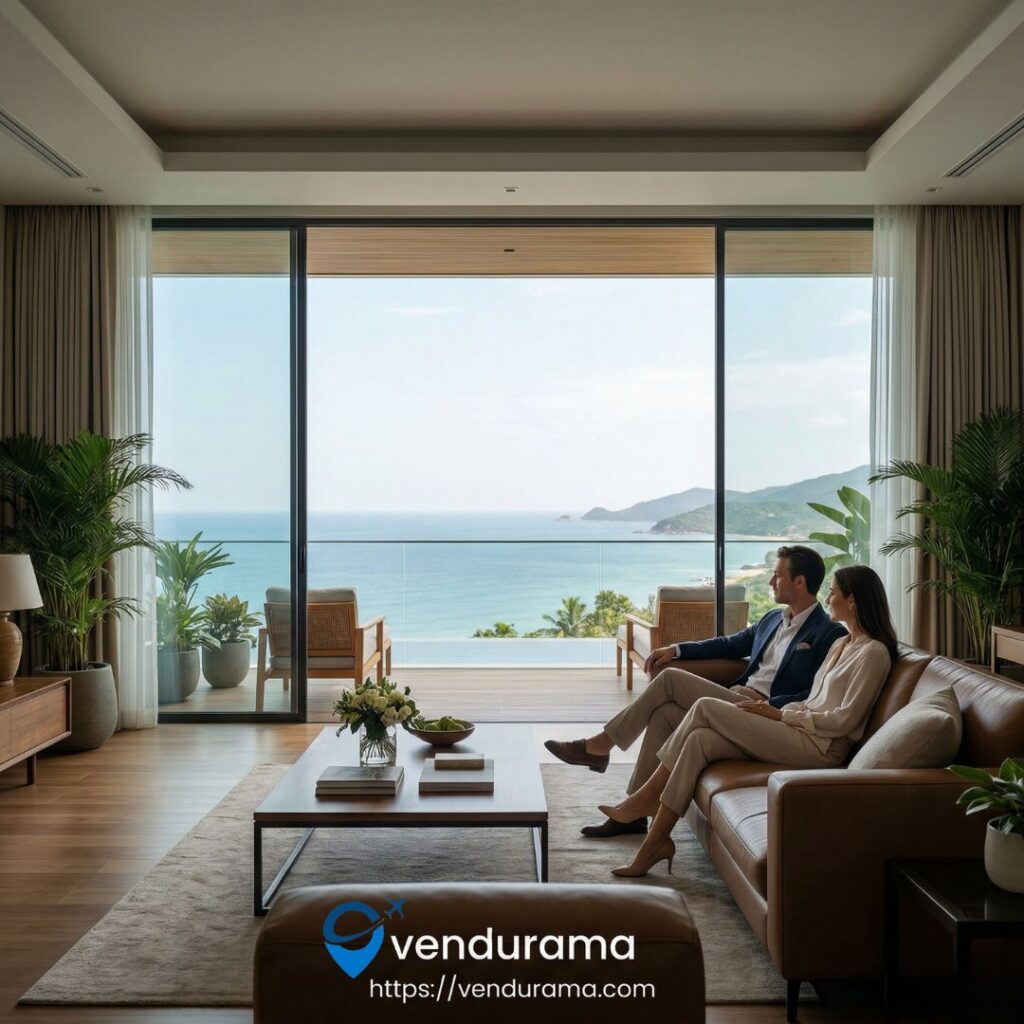
Vietnam’s central coast, specifically the corridor between Da Nang and Hoi An, represents the most mature and infrastructure-rich node for the Equator Arbitrage in 2026. The region has benefited from decades of sustained investment in tourism infrastructure, resulting in an international airport, a modern highway system, and a dense concentration of high-end hospitality assets. For the middle-class family, the primary economic advantage lies in the accommodation arbitrage. The real estate market in Da Nang is characterized by a surplus of high-rise condominiums and luxury apartments that were developed during the construction boom of the 2020s. In 2026, many of these units are available for short-term rental at prices that reflect local market conditions rather than international tourism demand.
A family can secure a fully furnished, two-to-three-bedroom apartment with ocean views, a swimming pool, and gym access for between $30 and $60 per night. In comparison, a similar property in Honolulu or Miami would command $400 to $800 per night. This 85-90% discount is not a reflection of lower quality; many of these buildings are managed by international property firms and maintain Western standards of cleanliness and security. When families secure a panoramic ocean-view apartment in Da Nang, they immediately cut their accommodation expenditure by 80%, freeing up capital for experiences and dining. The availability of full kitchens in these apartments allows families to utilize Vietnam’s exceptional fresh produce markets, reducing food costs while improving nutritional quality.
Safety and Infrastructure
Safety is a primary concern for families traveling to emerging markets, and Vietnam scores highly on this metric. Violent crime against tourists is rare, and the central coast is heavily policed during peak seasons. The infrastructure is robust; high-speed internet is ubiquitous, allowing for remote work if necessary, and ride-hailing apps provide transparent pricing for local transport. The medical infrastructure in Da Nang is adequate for routine issues, with international clinics available for more serious concerns. For families arriving at Da Nang International Airport, the transition to the city is smooth. However, to protect the family from arrival exhaustion and local taxi scams, it is an absolute necessity to arrange a pre-booked, air-conditioned airport transfer directly to your villa. This ensures a fixed price and a vetted driver, eliminating the stress of negotiation upon landing.
Culinary Economics
The culinary scene in Central Vietnam is a significant value driver. The region is renowned for its cuisine, which is distinct from the north and south. Street food and local restaurants offer world-class quality at prices that are incomprehensible in the West. A family of four can enjoy a seafood feast on the beach for $40, whereas a similar meal in a Western coastal city would exceed $200. This price differential allows families to dine out frequently without budget anxiety, enhancing the cultural experience. The combination of low accommodation costs and low food costs creates a compounding economic effect, making a two-week vacation in Vietnam cheaper than a one-week vacation in Hawaii.
Table 1: Cost Comparison – 10 Days for a Family of Four (Peak Season 2026)
| Expense Category | Hawaii (Maui/Oahu) | Vietnam (Da Nang/Hoi An) | Savings % |
|---|---|---|---|
| Accommodation (10 Nights) | $5,000 (Resort/Hotel) | $500 (Luxury Apartment) | 90% |
| Dining (30 Meals) | $3,000 ($100/meal avg) | $900 ($30/meal avg) | 70% |
| Local Transport | $600 (Rental Car/Uber) | $200 (Grab/Taxi) | 66% |
| Activities/Beach | $1,500 (Tours/Entry) | $400 (Tours/Entry) | 73% |
| Total Estimated Cost | $10,100 | $2,000 | 80% |
The data illustrates the magnitude of the arbitrage. The quality of the sun, sea, and sand is identical; the only variable is the price tag attached to the jurisdiction. Smart travelers optimize flight routes to Southeast Asia months in advance to lock in the lowest operational costs, further widening the savings gap.
Sri Lanka: The Ultimate Natural and Cultural Immersion
Maximizing the Currency Dividend in the Indian Ocean
Sri Lanka offers a different value proposition than Vietnam, centered on natural diversity and colonial heritage rather than urban infrastructure. Following its economic stabilization in the mid-2020s, Sri Lanka has re-emerged as a premier destination for the analytical traveler. The country’s currency, the Sri Lankan Rupee (LKR), offers a profound currency dividend for holders of USD, EUR, or GBP. This exchange rate advantage permeates every aspect of the travel experience, from luxury villas to private transport. In 2026, Sri Lanka represents the highest yield on travel investment for families seeking a blend of beach, culture, and nature.
The Villa Economy
The accommodation model in Sri Lanka is dominated by the private villa. Unlike the high-rise apartments of Vietnam, Sri Lanka offers standalone properties with private pools, gardens, and staff. In coastal areas like Mirissa, Unawatuna, or Tangalle, a high-end four-bedroom villa can be rented for $100 to $200 per night. This price often includes the services of a housekeeper and sometimes a private chef. In the Caribbean or Mediterranean, a comparable property would cost $1,500 to $3,000 per night. When families book a private heritage villa in Galle, they are accessing a level of exclusivity that is typically reserved for the ultra-wealthy in other regions. The space allows for complete privacy and relaxation, essential for a restorative family vacation.
Cultural and Natural Assets
Sri Lanka’s geographic compactness is a logistical advantage. Within a four-hour drive, a family can transition from a tropical beach to a misty mountain tea plantation at 2,000 meters elevation. This diversity allows for a multi-faceted itinerary without the need for domestic flights. Cultural sites such as the ancient city of Sigiriya and the temple caves of Dambulla provide educational value that rivals the historical sites of Europe. Wildlife experiences, such as leopard safaris in Yala National Park or elephant gatherings in Minneriya, are accessible and affordable. A private safari jeep with a guide costs approximately $80, compared to $500+ for similar experiences in Africa.
Logistical Considerations
While the value is high, the infrastructure in Sri Lanka is less developed than in Vietnam. Roads can be congested, and public transport is structurally unsuitable for families navigating with heavy luggage. Therefore, private transport is a logistical necessity. The risk of taxi scams at Bandaranaike International Airport is non-negligible, making the arrival phase the most vulnerable point of the journey. To ensure a stress-free start to your tropical vacation, arranging vetted, air-conditioned transport that removes all environmental stressors during travel is a non-negotiable element of your itinerary. The journey from the airport to the southern coast typically takes two to three hours; securing a reliable, pre-booked driver guarantees both safety and comfort during this extended transit, allowing the family to transition immediately into relaxation mode.
Table 2: Experience Value Comparison – Sri Lanka vs. Caribbean
| Experience | Caribbean (St. Lucia/Barbados) | Sri Lanka (South Coast) | Cost Differential |
|---|---|---|---|
| Private Villa (Per Night) | $1,500+ | $150 | 10x Cheaper |
| Private Chef (Per Day) | $300+ | $40 | 7.5x Cheaper |
| Safari/Nature Tour | $500+ | $80 | 6x Cheaper |
| Driver/Guide (Per Day) | $250+ | $50 | 5x Cheaper |
The table highlights that Sri Lanka allows for the employment of private staff and guides, transforming the vacation from a self-service experience to a fully managed one. This service layer reduces the cognitive load on parents, allowing them to focus on family interaction rather than logistics.
Mitigating the Friction of Asian Travel: Logistical Safety as a Financial Imperative
Risk Management in Long-Haul Family Transit
The economic arbitrage of Asian travel is undeniable, but it introduces logistical friction that does not exist in domestic travel. Long-haul flights, time zone changes, and unfamiliar environments create travel fatigue, which can undermine the restorative purpose of the vacation. For the middle-class family, time is a scarce resource. A vacation ruined by lost luggage, missed connections, or unsafe transport represents a total loss of invested capital. Therefore, logistical safety must be treated as a financial imperative. The small cost of premium logistics is an insurance policy against the large cost of a disrupted trip.
Flight Strategy and Booking
Airfare is the largest fixed cost in the Equator Arbitrage model. While accommodation and dining are cheap, flights to Asia from the West are significant. However, the total trip cost remains lower due to the savings on the ground. Smart travelers optimize flight routes to Southeast Asia months in advance to lock in the lowest operational costs. Flexibility with dates is a powerful lever; shifting travel by 48 hours can reduce airfare by 30%. Families should also consider nearby airports. For Vietnam, flying into Da Nang is ideal, but connections via Singapore or Bangkok are often cheaper. For Sri Lanka, Colombo is the primary entry point. When families secure flexible flight tickets for the family, they protect themselves against schedule changes that are common in long-haul aviation.
Accommodation Vetting
The fragmented nature of the accommodation market in Asia requires due diligence. Unlike Western hotel chains, private apartments and villas vary in quality. A “five-star” rating on a local platform may not align with Western expectations. Families must prioritize properties with recent reviews from international guests. Key verification points include water pressure, air conditioning reliability, and Wi-Fi speed. When families secure a panoramic ocean-view apartment in Da Nang, they should verify the location relative to attractions to minimize daily transport costs. A cheaper apartment that requires $50 of daily taxis is more expensive than a central one. Furthermore, communicating with hosts prior to booking regarding family needs (cribs, washing machines) can prevent costly misunderstandings upon arrival.
The Critical First Transfer
The moment of arrival at the destination airport is the highest risk point for scams and stress. Drivers at airports in developing nations often target fresh arrivals with inflated rates. The fatigue of a 15-hour flight makes families vulnerable to poor decision-making. To protect the family from arrival exhaustion and local taxi scams, it is an absolute necessity to arrange a pre-booked, air-conditioned airport transfer directly to your villa. This service locks in the price, ensures the vehicle is suitable for the family size, and provides a vetted driver who speaks English. This small upfront investment protects the entire trip’s budget from immediate leakage.
Navigating International Transit and Apartment Screening
The complexity of coordinating flights, transfers, and accommodation in emerging markets requires a centralized plan. Navigating international transit, avoiding tourist traps, and vetting Asian apartment rentals requires a strict blueprint, which is fully mapped out in the Vendurama Ultimate Travel Guide. For a nominal investment of $7, families gain access to vetted checklists, neighborhood safety maps, and transit protocols that eliminate the trial-and-error phase of planning. This guide serves as an insurance policy against logistical failures that could cost hundreds of dollars in remediation. In an environment where information asymmetry exists between the local provider and the foreign visitor, having a verified roadmap is a strategic advantage. You can access this resource at Ultimate Travel Planning Guide2026.
Currency and Payment Infrastructure
Cash is still king in many parts of Vietnam and Sri Lanka. While cards are accepted in hotels and larger restaurants, markets, taxis, and small guesthouses often require local currency. Exchange rates at airports are typically unfavorable. The optimal strategy is to withdraw local currency from ATMs in the city center using a debit card with low foreign transaction fees. Informing the bank of travel plans is essential to prevent frozen accounts. In Sri Lanka, USD cash is sometimes accepted for larger transactions like tours, but LKR is preferred for daily spending. Families should carry a mix of cash and cards to ensure liquidity. The psychological comfort of having cash on hand in regions with less developed digital payment infrastructure cannot be underestimated. When booking a reliable rental car for mountain roads, families should ensure the vehicle has adequate power for steep gradients, particularly in Sri Lanka’s hill country.
Reclaiming the Family Vacation Through Geographic Arbitrage
The Financial Dividend of Strategic Travel
The shift toward Vietnam and Sri Lanka is not a retreat from quality; it is an advancement in financial intelligence. In 2026, the definition of a successful family vacation is no longer tied to the prestige of the destination’s postcode but to the ratio of experience to expenditure. The middle-class family that chooses Da Nang over Maui, or Sri Lanka over the Maldives, is making a rational economic decision that maximizes utility. They are rejecting the inflationary tax of the Western tourism industry in favor of regions where their currency retains purchasing power. This strategy allows for longer stays, deeper cultural immersion, and a reduction in the financial stress that plagues modern leisure.
The data presented in this analysis demonstrates that the cost differential is not marginal; it is structural. A family can travel for two weeks in Vietnam for the cost of one week in Hawaii. This arbitrage opportunity is not likely to persist indefinitely. As awareness grows, prices in these regions will inevitably rise. The window for maximum value is open now, but it will not remain open forever. Smart families will recognize this temporal advantage and act accordingly. The logistical hurdles—flights, transfers, accommodation vetting—are manageable with the right preparation and tools. The risk profile is acceptable, provided standard precautions are taken regarding transport and safety.
Ultimately, this strategy is about reclaiming agency. The global tourism industry has spent decades conditioning consumers to believe that value is synonymous with Western brands. The “Equator Arbitrage” debunks this myth. It proves that breathtaking landscapes, rich history, and warm hospitality exist outside the expensive Western bubble. By leveraging these alternatives, families can preserve their savings for other critical financial goals—education, housing, retirement—without sacrificing the developmental benefits of travel for their children. It is a holistic approach to wealth management that includes experiential assets.
To execute this strategy flawlessly, preparation is paramount. The difference between a chaotic trip and a seamless one often lies in the details of logistics and documentation. Framing the Vendurama Ultimate Travel Guide as the final, non-negotiable step to executing this “Equator Arbitrage” flawlessly and saving thousands of dollars is a logical conclusion. For just $7, this resource provides the specific tactical knowledge needed to navigate these regions with confidence. It transforms the abstract concept of “smart travel” into a concrete, actionable plan. In an economy where every dollar counts, this small investment yields a disproportionately high return in stress reduction and cost avoidance. The Equator is waiting, not as a consolation prize, but as the superior choice for the discerning, financially astute family of 2026. Secure your copy now at Ultimate Travel Planning Guide2026.