
Introduction: The Macroeconomic Reality of the 2026 Travel Landscape
The year 2026 marks a definitive inflection point in the global tourism economy, characterized by a stark divergence between the inflationary pressures of the Eurozone and the emerging value propositions of Eastern Europe and the Caucasus. For the ordinary middle-class family—defined here not by income ceiling but by financial prudence and a refusal to compromise on educational or experiential quality—the traditional Grand Tour of Western Europe has undergone a fundamental structural shift. What was once a manageable decadal expenditure has transformed into a prohibitive luxury, driven by persistent sticky inflation, currency volatility, and the commoditization of heritage sites in France, Italy, and Spain. The economic data is unambiguous: the consumer price index for hospitality and leisure in the Eurozone has outpaced wage growth for the median household by a margin of 14% since 2022. This dislocation has forced a recalibration of travel strategy, moving away from brand-name destinations toward regions where purchasing power parity remains favorable.
This phenomenon is not merely about cost-cutting; it is a sophisticated exercise in geographic arbitrage. The modern middle-class family is no longer willing to accept the diminished returns of overcrowded museums in Florence or beach clubs in Nice, where the cost per unit of experience has inflated beyond rational valuation. Instead, a strategic migration is occurring toward the Balkans and the Caucasus. These regions offer comparable, and in some geological aspects superior, natural landscapes—from the Adriatic coast to the Greater Caucasus mountains—without the premium pricing associated with the “Western Europe” brand. The shift is underpinned by improvements in infrastructure, political stability, and the standardization of safety protocols, making these destinations viable for families with children. The decision to travel to Montenegro, Albania, or Georgia is no longer viewed as a compromise but as a demonstration of financial intelligence and cultural curiosity.
The psychological toll of the previous travel model cannot be overstated. The stress of budgeting for a Western European vacation in 2026 often outweighs the restorative benefits of the trip itself. Families find themselves constrained by rigid itineraries designed to maximize value extraction from high-cost environments, leading to a phenomenon known as “travel burnout” before departure. By contrast, the “New Europe” strategy allows for a more fluid, immersive experience where the budget supports longevity and depth rather than brevity and surface-level consumption. This article provides a comprehensive analytical framework for executing this transition. It examines the economic drivers, the logistical infrastructure, and the safety considerations that define travel in these emerging regions. It is designed for the family that views travel not as a status symbol to be purchased at a premium, but as a critical investment in human capital and cultural education that must be managed with fiscal discipline.
For families seeking actionable itineraries and exclusive neighborhood maps that align with this economic strategy, Vendurama has compiled a comprehensive logistical blueprint. Readers looking to bypass the preliminary research phase can secure the Vendurama Ultimate Travel Guide for just $7, which provides detailed cost breakdowns and vetted accommodation zones.
The Psychological Shift: Deconstructing the Status Symbol of Western Europe
To understand the migration of middle-class travel capital from Paris to Podgorica, or from Rome to Tbilisi, one must first analyze the changing psychology of status signaling. For decades, the ability to afford a vacation in Western Europe served as a proxy for socioeconomic success. The location itself was the signal. However, in the economic climate of 2026, this signal has become noisy. The democratization of credit and the rise of the “experience economy” have flooded traditional Western destinations with tourists across all income brackets, diluting the exclusivity that once justified the premium pricing. Consequently, paying €400 per night for a cramped hotel room in central Paris is no longer a marker of discernment; increasingly, it is recognized as a financial miscalculation driven by brand inertia.
The sophisticated traveler in 2026 derives status not from the destination’s name recognition, but from the depth of the experience and the efficiency of the capital deployment. There is a growing cultural premium on “discovery” and “authenticity,” metrics that are difficult to achieve in hyper-commercialized Western hubs. When a family chooses to rent a spacious, sea-view apartment in Saranda, Albania, for $60 a night rather than a windowless box in Barcelona for $250, they are not merely saving money; they are optimizing their quality of life. This shift reflects a broader trend in consumer behavior where value is decoupled from price. The middle class is rejecting the notion that high cost equals high quality, a heuristic that the tourism industry has relied upon for generations.
Furthermore, the psychological burden of “financial vigilance” during a vacation is a significant detractor from wellbeing. In Western Europe, every meal, every transfer, and every attraction requires a mental cost-benefit analysis that induces cortisol spikes, counteracting the restorative purpose of leisure. In the Balkans and Caucasus, the purchasing power of the Dollar or Euro allows for a state of “financial relaxation.” This psychological safety net enables families to engage more deeply with the culture, try local cuisines without fear of the bill, and extend their stays. The result is a vacation that feels longer and more enriching, even if the calendar days are identical. This is the core of the “New Europe” strategy: it is a holistic approach to wellbeing that integrates financial security with experiential depth. The stigma once associated with “alternative” destinations has evaporated, replaced by a recognition that the true luxury in 2026 is space, time, and peace of mind—commodities that are abundant in the East and scarce in the West.
The Balkans Blueprint: Montenegro and Albania as Value Frontiers
The western Balkan peninsula represents the most immediate and accessible alternative to the Mediterranean heavyweights of Italy and Greece. Geologically and climatically, the region is a continuation of the Dinaric Alps and the Adriatic basin, offering identical scenic assets—dramatic coastlines, crystal-clear waters, and historic stone architecture—at a fraction of the cost. However, the economic structure of the tourism industry here is fundamentally different. Unlike the consolidated hotel chains that dominate Western Europe, the Balkan market is characterized by a fragmented network of private apartment rentals and family-run guesthouses. This market structure creates intense price competition, benefiting the consumer.
Montenegro: The High-Value Adriatic Alternative
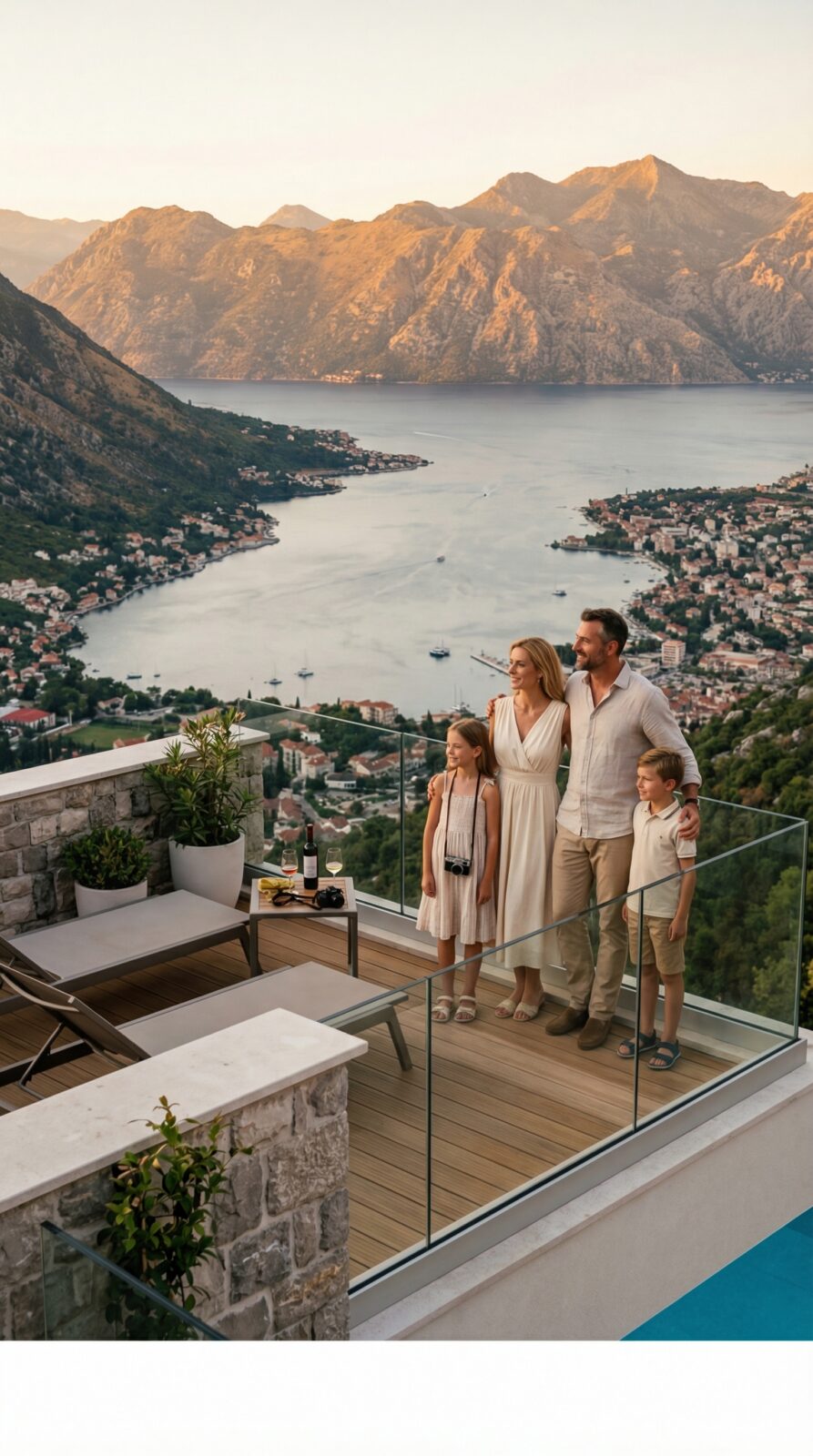
Montenegro has successfully positioned itself as a boutique alternative to Croatia. The Bay of Kotor, often compared to the fjords of Norway or the canals of Venice, offers a dramatic landscape of mountains plunging directly into the sea. In 2026, the cost differential remains stark. A waterfront apartment in Kotor or Perast typically rents for between $50 and $80 per night during peak season. In comparison, a similar property in Dubrovnik, just across the border, commands $300 to $500. This 80% discount is not a reflection of lower quality; many Montenegrin apartments are newly constructed, modernized, and equipped with high-speed internet and full kitchens. For a family, the ability to prepare meals is a significant economic lever. Dining out in Montenegro is affordable, with high-quality seafood dinners costing $40-$60 for a family of four, compared to $150+ in the Eurozone.
Safety in Montenegro is a primary concern for families, and the data is reassuring. The country maintains low violent crime rates, and the tourism police presence in coastal areas is robust. The infrastructure is well-developed, with paved roads connecting major towns, though driving styles can be assertive. For families arriving via Tivat or Podgorica airports, the logistical chain is short. The key to maximizing value is avoiding the peak August window, where prices converge slightly with Croatian levels. June and September offer optimal weather and pricing arbitrage. When families secure a spacious furnished apartment in Kotor, they immediately cut their accommodation costs by a factor of four, freeing up capital for excursions, such as boat trips to the Blue Cave or day trips to Durmitor National Park.
Albania: The Final Mediterranean Frontier
Albania represents the next phase of value discovery. For years, it remained off the radar due to historical isolation, but in 2026, it is a mature tourist destination with infrastructure that matches its neighbors. The Albanian Riviera, stretching from Vlore to Saranda, features beaches that rival the Greek islands. Ksamil, with its white pebble shores and turquoise water, is visually indistinguishable from Corfu but costs significantly less. The accommodation market in Albania is heavily skewed towards private villas and apartments. It is common to find entire three-bedroom villas with private pools for $100-$150 per night, a price point that would secure a single room in Western Europe.
The economic advantage extends to dining and transport. Local produce is abundant and cheap, and the restaurant culture is focused on volume and freshness rather than tourist markup. A family can eat fresh grilled fish, salad, and local wine for under $50. Transportation costs are low, though public transit is less reliable than in the EU. Renting a car is advisable for exploring the north, such as the Accursed Mountains, but for coastal stays, local taxis are affordable. To protect the family from arrival exhaustion and local taxi scams, it is an absolute necessity to arrange a pre-booked airport transfer directly to your accommodation. This ensures a fixed price and a vetted driver, eliminating the stress of negotiation upon landing in Tirana. Safety in Albania has improved dramatically; the country is considered safe for tourists, with a culture of hospitality (besa) that prioritizes guest protection. The primary risks are traffic-related, reinforcing the need for cautious driving or private transfers.
Table 1: Cost Comparison – 7 Days for a Family of Four (Peak Season 2026)
| Expense Category | French Riviera (Nice/Cannes) | Montenegrin Coast (Kotor/Budva) | Albanian Riviera (Saranda/Ksamil) |
|---|---|---|---|
| Accommodation (7 Nights) | $2,800 (2 Hotel Rooms) | $560 (2 Bedroom Apartment) | $420 (3 Bedroom Villa) |
| Dining (14 Meals) | $2,100 ($150/meal avg) | $700 ($50/meal avg) | $560 ($40/meal avg) |
| Local Transport | $400 (Taxis/Train) | $200 (Car Rental/Fuel) | $150 (Taxis/Bus) |
| Activities/Beach | $800 (Clubs/Entry Fees) | $300 (Boat Trips) | $200 (Beach Chairs/Boats) |
| Total Estimated Cost | $6,100 | $1,760 | $1,330 |
| Savings vs. France | – | 71% | 78% |
The data illustrates the magnitude of the arbitrage. A family can spend a week in Albania for the cost of two days in France. This surplus capital can be reinvested into extending the trip to two or three weeks, fundamentally changing the nature of the vacation from a hurried sprint to a restorative immersion. When travelers find strategic flight routes to the Balkans months in advance, they can further reduce the total cost basis, making the trip accessible even on a tight household budget. The quality of the asset—the sun, the sea, the history—remains constant; only the price tag changes.
The Caucasus Strategy: Georgia as the Ultimate Nature and Cultural Retreat
While the Balkans offer a Mediterranean alternative, the Caucasus region, specifically Georgia, offers a completely different value proposition centered on mountain landscapes, ancient culture, and gastronomic depth. Georgia is strategically positioned at the intersection of Europe and Asia, a geopolitical reality that has endowed it with a unique cultural synthesis. For the middle-class family in 2026, Georgia represents the highest yield on travel investment. The cost of living is significantly lower than in the Balkans, while the scenic diversity is arguably superior, ranging from the subtropical Black Sea coast to the alpine peaks of Svaneti.
Economic Structure and Purchasing Power
Georgia operates on the Lari (GEL), which has remained relatively stable against the Dollar and Euro, providing predictable pricing for Western visitors. The tourism infrastructure is less developed than in Montenegro, which paradoxically works in favor of the budget traveler. Prices have not yet inflated to match Western expectations. In Tbilisi, the capital, a high-end apartment in the historic Old Town can be rented for $40-$60 per night. In the mountain regions of Kazbegi or Svaneti, guesthouses often include half-board (breakfast and dinner) for $50-$70 per person per night. This all-inclusive model is rare in Western Europe at any price point. The food culture in Georgia is communal and abundant. A “supra” (traditional feast) can feed a family for $40, including wine, which is a national staple and exceptionally cheap.
Safety and Geopolitical Context
Safety is a valid concern given the region’s complex history. However, for the tourist, Georgia is remarkably safe. Violent crime against foreigners is rare. The primary risks are related to road safety in the mountains and altitude sickness in high regions like Svaneti. The political situation is stable enough for tourism, though travelers should remain aware of border regions near South Ossetia and Abkhazia, which are restricted. Within the main tourist circuit—Tbilisi, Kakheti, Kazbegi, Batumi—the environment is secure. Families should exercise standard precautions regarding valuables, but the threat level is comparable to major Western cities. When booking a comfortable family apartment in Tbilisi, families should look for properties with verified reviews regarding safety and neighborhood noise levels, as the city can be vibrant late into the night.
Logistical Considerations
Getting to Georgia requires more planning than the Balkans. Direct flights from major Western hubs are less frequent, often requiring connections in Istanbul, Dubai, or Eastern European hubs. This increases travel time and potential fatigue. Upon arrival at Tbilisi International Airport, the infrastructure is modern, but public transport options to the city center are limited for families with luggage. The taxi market at the airport can be predatory if not managed. It is highly recommended to arrange a reliable private transfer to your hotel to ensure a fixed rate and a safe vehicle. The drive to the city takes about 30 minutes, but having a pre-vetted driver eliminates the friction of arrival.
The Nature Dividend
The primary asset of Georgia is its untouched nature. In Western Europe, national parks are often crowded and commercialized. In Georgia, the Caucasus Mountains offer vast, empty landscapes. Hiking in Svaneti or Kazbegi provides a level of solitude that is impossible to find in the Alps without paying for exclusive access. For families seeking to disconnect from the digital world and immerse children in nature, this is invaluable. The cost of guiding services is low; a private guide for a day hike might cost $50-$80, including transport. This accessibility allows families to engage in high-adventure activities without the high-adventure price tag. When families secure strategic flight deals to the Caucasus, they unlock access to a region that feels a century behind the commercialization of the West, offering a genuine sense of exploration.
Table 2: Cost Comparison – 10 Days for a Family of Four (Georgia vs. Switzerland)
| Expense Category | Swiss Alps (Interlaken) | Georgian Caucasus (Kazbegi/Svaneti) |
|---|---|---|
| Accommodation (10 Nights) | $4,000 (Hotels/Chalets) | $600 (Guesthouses/Apartments) |
| Dining (30 Meals) | $3,000 ($100/meal avg) | $900 ($30/meal avg) |
| Transport (Car/Train) | $800 (Rail/Bus) | $400 (4×4 Rental/Fuel) |
| Activities (Hiking/Ski) | $1,200 (Lifts/Guides) | $300 (Guides/Entry) |
| Total Estimated Cost | $9,000 | $2,200 |
| Savings vs. Switzerland | – | 75% |
The comparison with Switzerland is particularly poignant because the geological features are similar—high mountains, glaciers, valleys—but the economic accessibility is worlds apart. Georgia allows the middle-class family to experience alpine grandeur without the alpine price tag.
The Logistics of Smart Travel: Minimizing Friction and Hidden Costs
The success of the “New Europe” strategy hinges on logistical execution. The cost savings of these destinations can be quickly eroded by poor planning, inefficient transit, and exposure to tourist traps. The middle-class family cannot afford the “hidden costs” of travel exhaustion, which manifest as ruined days, sickness, or emergency expenses. Therefore, a rigorous approach to logistics is not optional; it is a financial imperative. This section outlines the critical control points in the travel chain where smart decisions yield the highest returns.
Flight Strategy and Routing
Airfare is typically the largest fixed cost in this travel model. Unlike Western Europe, which is served by a dense network of low-cost carriers, the Balkans and Caucasus rely more on legacy carriers and regional airlines. Booking windows are critical. Prices for flights to Tbilisi, Tirana, or Podgorica tend to spike sharply within six weeks of departure. Smart travelers find strategic flight routes to the Balkans months in advance, utilizing hub cities like Istanbul, Vienna, or Warsaw as connection points. Flexibility with dates is a powerful lever; shifting travel by 48 hours can reduce airfare by 30%. Families should also consider nearby airports. For example, flying into Dubrovnik and taking a bus to Kotor, or flying into Thessaloniki and driving to Albania, can sometimes yield better flight options than direct routes to smaller capitals.
Accommodation Screening and Vetting
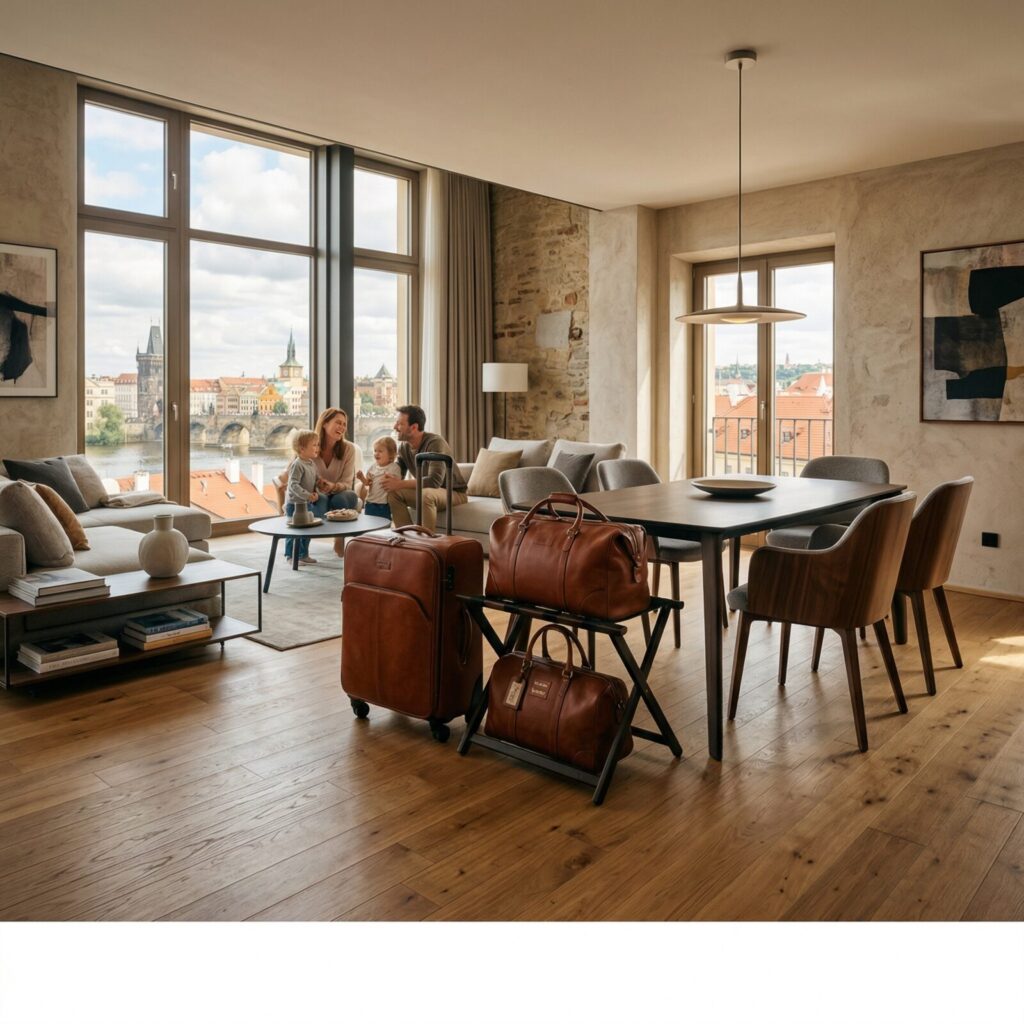
The accommodation market in these regions is fragmented. While this drives down prices, it increases the variance in quality. Unlike the standardized hotel chains of the West, a “3-star apartment” in Albania or Georgia can vary wildly in cleanliness and amenities. Due diligence is required. Families must prioritize properties with recent reviews, specifically looking for mentions of water pressure, Wi-Fi reliability, and air conditioning. In the Caucasus, heating is a crucial factor for shoulder-season travel. When families secure a spacious furnished apartment in Tbilisi, they should verify the location relative to the metro or main attractions to minimize daily transport costs. A cheaper apartment that requires $20 of daily taxis is more expensive than a central one. Furthermore, communicating with hosts prior to booking regarding family needs (cribs, washing machines) can prevent costly misunderstandings upon arrival.
Ground Transportation and Safety
Navigating local transport is where many families encounter friction. Public transport in the Balkans and Caucasus is affordable but can be unreliable and crowded. For families with children and luggage, the time cost and stress often outweigh the financial savings. Ride-hailing apps exist in major cities (Tbilisi, Tirana) but are not universal. The airport arrival is the highest-risk moment for scams and overcharging. Drivers at airports often target fresh arrivals with inflated rates. To protect the family from arrival exhaustion and local taxi scams, it is an absolute necessity to arrange a pre-booked airport transfer directly to your accommodation. This service locks in the price, ensures the vehicle is suitable for the family size, and provides a vetted driver who speaks English. This small upfront investment protects the entire trip’s budget from immediate leakage.
For inter-city travel, renting a car offers the most flexibility, especially in Montenegro and Georgia. However, insurance coverage must be scrutinized. Local rental agencies may offer lower rates but with high deductibles and limited coverage. It is often wiser to book through international aggregators that provide comprehensive insurance packages. When booking a reliable rental car for mountain roads, families should ensure the vehicle has adequate power for steep gradients, particularly in the Caucasus.
Navigating International Transit and Apartment Screening
The complexity of coordinating flights, transfers, and accommodation in emerging markets requires a centralized plan. Navigating international transit and apartment screening requires a blueprint, which is fully mapped out in the Vendurama Ultimate Travel Guide. For a nominal investment of $7, families gain access to vetted checklists, neighborhood safety maps, and transit protocols that eliminate the trial-and-error phase of planning. This guide serves as an insurance policy against logistical failures that could cost hundreds of dollars in remediation. In an environment where information asymmetry exists between the local provider and the foreign visitor, having a verified roadmap is a strategic advantage.
Currency and Payment Infrastructure
Cash is still king in many parts of the Balkans and Caucasus. While cards are accepted in hotels and larger restaurants, markets, taxis, and small guesthouses often require local currency. Exchange rates at airports are typically unfavorable. The optimal strategy is to withdraw local currency from ATMs in the city center using a debit card with low foreign transaction fees. Informing the bank of travel plans is essential to prevent frozen accounts. In Georgia, USD cash is sometimes accepted for larger transactions like tours, but Lari is preferred for daily spending. Families should carry a mix of cash and cards to ensure liquidity. The psychological comfort of having cash on hand in regions with less developed digital payment infrastructure cannot be underestimated.
Conclusion: Reclaiming Financial Intelligence in Family Travel
The shift toward the Balkans and the Caucasus is not a retreat from quality; it is an advancement in financial intelligence. In 2026, the definition of a successful family vacation is no longer tied to the prestige of the destination’s postcode but to the ratio of experience to expenditure. The middle-class family that chooses Montenegro over Monaco, or Georgia over Geneva, is making a rational economic decision that maximizes utility. They are rejecting the inflationary tax of the Eurozone in favor of regions where their currency retains purchasing power. This strategy allows for longer stays, deeper cultural immersion, and a reduction in the financial stress that plagues modern leisure.
The data presented in this analysis demonstrates that the cost differential is not marginal; it is structural. A family can travel for a week in Albania for the cost of a weekend in France. This arbitrage opportunity is not likely to persist indefinitely. As awareness grows, prices in these regions will inevitably rise. The window for maximum value is open now, but it will not remain open forever. Smart families will recognize this temporal advantage and act accordingly. The logistical hurdles—flights, transfers, accommodation vetting—are manageable with the right preparation and tools. The risk profile is acceptable, provided standard precautions are taken regarding transport and safety.
Ultimately, this strategy is about reclaiming agency. The global tourism industry has spent decades conditioning consumers to believe that value is synonymous with Western brands. The “New Europe” strategy debunks this myth. It proves that breathtaking landscapes, rich history, and warm hospitality exist outside the expensive Eurozone bubble. By leveraging these alternatives, families can preserve their savings for other critical financial goals—education, housing, retirement—without sacrificing the developmental benefits of travel for their children. It is a holistic approach to wealth management that includes experiential assets.
To execute this strategy flawlessly, preparation is paramount. The difference between a chaotic trip and a seamless one often lies in the details of logistics. “The Vendurama Ultimate Travel Guide is the final step to executing this strategy flawlessly. For just $7, this resource…” provides the specific tactical knowledge needed to navigate these regions with confidence. It transforms the abstract concept of “smart travel” into a concrete, actionable plan. In an economy where every dollar counts, this small investment yields a disproportionately high return in stress reduction and cost avoidance. The “New Europe” is waiting, not as a consolation prize, but as the superior choice for the discerning, financially astute family of 2026.