
Introduction: The 2026 Mobility Crisis Facing the Global Middle Class
In 2026, millions of adults aged 55-75 face a cruel healthcare paradox that no one should have to endure. You wake each morning to the same familiar agony: knees that lock, hips that grind, joints that scream with every step. Simple pleasures—walking through a park, playing with grandchildren, traveling to see family—have become distant memories replaced by pain medications, assistive devices, and the slow erosion of independence. You did everything right. You worked hard, saved responsibly, contributed to your community. Yet now, when you need medical care most, the system offers you only two unacceptable choices.
Choice one: Wait. In the United Kingdom, the National Health Service currently lists over 7 million people waiting for elective procedures, with joint replacement patients facing average wait times exceeding 24 months. In Canada, provincial health systems report similar delays, with some patients waiting three years or more for hip and knee surgeries. During this waiting purgatory, your condition deteriorates. Muscles atrophy. Pain becomes chronic. Mental health suffers. What begins as a treatable orthopedic condition transforms into a life-altering disability.
Choice two: Pay. In the United States, even with insurance coverage, a single knee replacement procedure can generate out-of-pocket costs exceeding $50,000 when hospital fees, surgeon charges, anesthesia, post-operative care, and rehabilitation are calculated. For middle-class families who have saved for retirement rather than medical emergencies, this represents financial catastrophe. Many patients resort to medical credit cards with predatory interest rates, home equity loans, or simply abandon treatment entirely.
This is not healthcare. This is a system designed to exhaust patients until they either accept permanent disability or financial ruin.
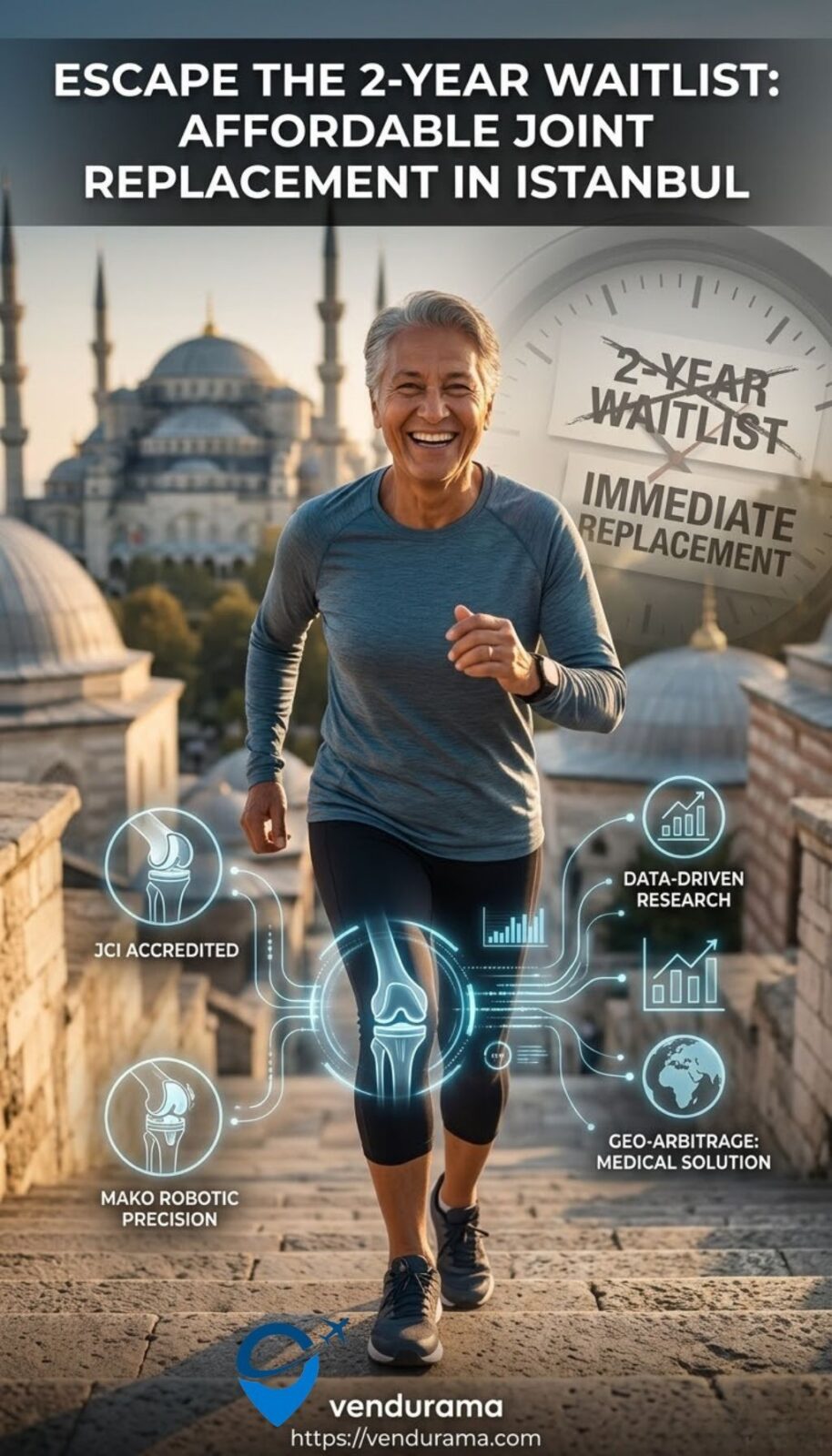
But there is a third option. A path that thousands of informed patients have already discovered. Istanbul, Turkey has emerged as the global epicenter for orthopedic excellence, offering immediate access to world-class joint replacement surgery at approximately 80% lower cost than American private care. JCI-accredited hospitals employ internationally board-certified surgeons using cutting-edge robotic technology that ensures precision and faster recovery. Patients arrive on Monday, undergo surgery on Tuesday, and begin physical therapy within 24 hours—all while preserving their retirement savings.
This article serves as your complete guide to understanding, evaluating, and executing the Istanbul joint replacement solution. We will examine the medical credentials that matter, the financial mathematics that make this decision obvious, the logistical protocols that protect vulnerable patients during travel, and the recovery frameworks that ensure optimal outcomes. For patients who refuse to accept pain as inevitable or bankruptcy as necessary, Istanbul represents the path to reclaimed mobility, restored independence, and renewed quality of life.
The Istanbul Medical Miracle: Why Turkey’s Largest City Dominates Orthopedic Tourism
JCI Accreditation: The Gold Standard of International Healthcare
Joint Commission International (JCI) accreditation represents the most rigorous healthcare quality certification available globally. For patients considering medical travel, JCI accreditation is not optional—it is the minimum threshold for consideration. This certification evaluates healthcare facilities against comprehensive standards covering patient safety, infection control, surgical protocols, staff competency, and facility management across over 1,200 specific criteria.
Istanbul hosts over 25 JCI-accredited hospitals, more than any city outside the United States. These institutions maintain continuous compliance through regular re-evaluation every three years, creating ongoing accountability rather than one-time certification. For joint replacement patients who cannot afford complications, readmissions, or surgical errors, JCI accreditation provides the assurance that Istanbul hospitals operate under identical quality frameworks as leading Western medical centers.
Leading JCI-Accredited Orthopedic Centers in Istanbul:
| Hospital | JCI Accreditation | Specializations | Annual Joint Replacements |
|---|---|---|---|
| Acibadem Maslak | Continuous since 2010 | Hip, Knee, Robotic Surgery | 2,500+ |
| Memorial Şişli | Continuous since 2011 | Knee Replacement, Revision | 2,000+ |
| American Hospital Istanbul | Continuous since 2008 | Hip, Knee, Sports Medicine | 1,800+ |
| Medipol Mega University | Continuous since 2015 | Robotic Joint Replacement | 1,500+ |
| Liv Hospital Vadistanbul | Continuous since 2016 | Knee, Hip, Minimally Invasive | 1,200+ |
Internationally Board-Certified Surgeons
Turkish orthopedic surgeons serving international patients typically complete medical education at Turkish universities followed by specialized residency training at major teaching hospitals. Many pursue additional fellowship training at European or American institutions before returning to practice. It is common to find Istanbul orthopedic surgeons with fellowship credentials from prestigious institutions including the Hospital for Special Surgery (New York), Mayo Clinic, Royal National Orthopaedic Hospital (London), or Charité (Berlin).
Continuous education requirements ensure surgeons maintain current knowledge of evolving techniques and technologies. Turkish orthopedic surgery associations maintain membership in international organizations including the European Hip Society, European Knee Associates, and the American Academy of Orthopaedic Surgeons, facilitating knowledge exchange and standard alignment.
Mako Robotic-Arm Assisted Surgery: Precision That Accelerates Recovery
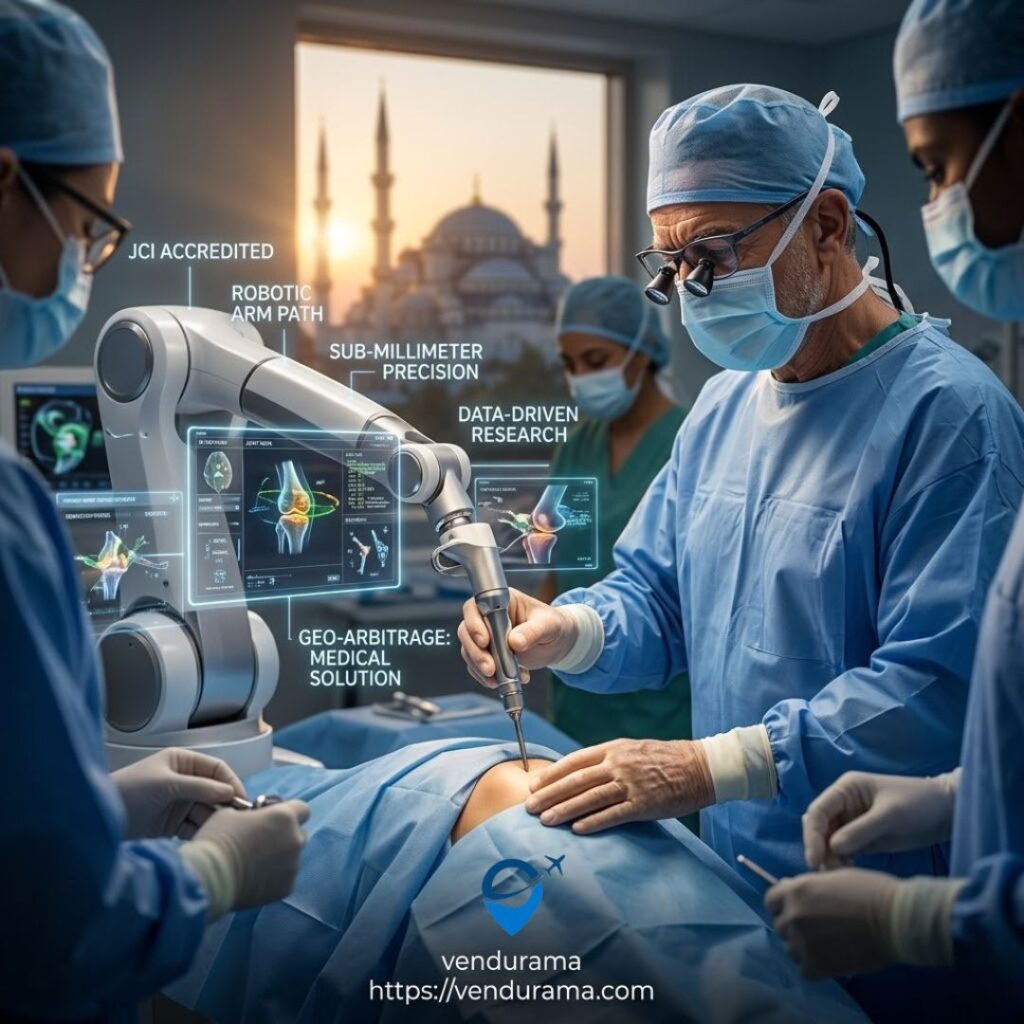
The most significant advancement in joint replacement technology available in Istanbul is Mako Robotic-Arm Assisted Surgery. This system creates a three-dimensional virtual model of your joint from pre-operative CT scans, allowing surgeons to plan the procedure with sub-millimeter precision before entering the operating room.
Benefits of Robotic Joint Replacement:
- Precision Implant Positioning: Robotic guidance ensures implants are positioned optimally for your specific anatomy, reducing wear and extending implant lifespan.
- Tissue Preservation: The system identifies and protects healthy bone and soft tissue, minimizing surgical trauma.
- Faster Recovery: Patients typically experience less post-operative pain and begin physical therapy sooner than conventional surgery.
- Improved Outcomes: Studies demonstrate superior functional outcomes and higher patient satisfaction scores compared to manual techniques.
Istanbul’s leading orthopedic centers have invested heavily in robotic technology, often acquiring systems before many Western hospitals due to Turkey’s strategic positioning in medical tourism. Patients accessing Istanbul care receive cutting-edge technology that may not be available in their home healthcare systems.
Infection Control and Patient Safety Protocols
Surgical site infections represent the most serious complication risk for joint replacement patients. JCI-accredited Istanbul hospitals maintain infection control protocols that exceed many Western facilities:
- Pre-operative Screening: Comprehensive infection screening before surgery identifies and treats potential sources.
- Sterile Technique Verification: Operating rooms maintain positive pressure environments with HEPA filtration.
- Antibiotic Protocols: Standardized pre-operative and post-operative antibiotic administration reduces infection risk.
- Outcome Tracking: Hospitals publish infection rates and complication statistics for transparency.
For middle-class patients who cannot afford revision surgeries or extended hospitalizations, these protocols represent financial protection as much as medical protection. Every prevented infection saves thousands of dollars and months of recovery time.
The Financial Arbitrage: Making Joint Replacement Affordable Again
Complete Cost Breakdown: Western Systems vs. Istanbul
To understand the magnitude of savings available through Istanbul orthopedic care, we must calculate complete costs including surgery, hospitalization, travel, accommodation, and ancillary expenses. The following analysis uses 2026 published figures for total knee replacement procedures.
United States (With Insurance)
| Cost Category | Cost (USD) |
|---|---|
| Hospital Facility Fees | $25,000 |
| Surgeon Fees | $8,000 |
| Anesthesia | $3,000 |
| Implant/Prosthetic | $10,000 |
| Pre-operative Testing | $2,000 |
| Post-operative Rehabilitation | $5,000 |
| Total Billed Amount | $53,000 |
| Insurance Deductible | $3,500 |
| Co-insurance (20%) | $9,900 |
| Total Patient Responsibility | $13,400 |
| Without Insurance (Full Cost) | $53,000 |
United Kingdom (Private Care)
| Cost Category | Cost (USD) |
|---|---|
| Hospital Facility Fees | $10,000 |
| Surgeon Fees | $4,000 |
| Anesthesia | $1,500 |
| Implant/Prosthetic | $5,000 |
| Pre-operative Testing | $800 |
| Post-operative Rehabilitation | $2,000 |
| Total Patient Cost | $23,300 |
| NHS Wait Time | 24+ Months |
Canada (Private Care)
| Cost Category | Cost (USD) |
|---|---|
| Hospital Facility Fees | $12,000 |
| Surgeon Fees | $5,000 |
| Anesthesia | $1,800 |
| Implant/Prosthetic | $6,000 |
| Pre-operative Testing | $1,000 |
| Post-operative Rehabilitation | $2,500 |
| Total Patient Cost | $28,300 |
| Public System Wait Time | 18-36 Months |
Istanbul, Turkey (All-Inclusive Package)
| Cost Category | Cost (USD) |
|---|---|
| Hospital Facility Fees | $3,500 |
| Surgeon Fees | $2,000 |
| Anesthesia | $800 |
| Implant/Prosthetic (Premium) | $2,500 |
| Pre-operative Testing | $400 |
| Hospital Stay (4-5 days) | Included |
| Post-operative Rehabilitation (Initial) | Included |
| Total Medical Package | $9,200 |
| International Flights (Round Trip) | $1,200 |
| Hotel Accommodation (10 nights) | $800 |
| Airport/Hospital Transfers | $200 |
| Total Complete Cost | $11,400 |
Savings Comparison:
| Comparison | Savings (USD) | Percentage |
|---|---|---|
| vs. US Insured | $2,000+ | 15%+ |
| vs. US Uninsured | $41,600 | 78% |
| vs. UK Private | $11,900 | 51% |
| vs. Canada Private | $16,900 | 60% |
| vs. NHS/Canada Wait | 24+ Months Gained | Priceless |
The Hidden Costs of Waiting
The financial comparison above addresses only direct medical costs. The hidden costs of waiting 18-36 months for public system surgery often exceed the savings patients hope to achieve:
Lost Income: Patients unable to work during waiting periods lose wages that can exceed $30,000-50,000 annually. For self-employed individuals or small business owners, this income loss becomes catastrophic.
Medication Expenses: Pain management during waiting periods requires ongoing medication purchases, physical therapy appointments, and assistive devices costing $200-500 monthly.
Caregiver Burden: Family members often reduce work hours or abandon employment entirely to provide care, creating secondary income loss.
Condition Deterioration: Delayed surgery allows joint damage to progress, potentially requiring more complex procedures with longer recovery periods.
Quality of Life: The psychological toll of chronic pain, lost independence, and cancelled life plans cannot be quantified financially but represents the most significant cost of all.
When patients calculate the complete cost of waiting versus the complete cost of Istanbul treatment, the financial arbitrage becomes even more pronounced. Immediate treatment preserves income, reduces medication expenses, eliminates caregiver burden, and restores quality of life years earlier than public system alternatives.
Payment Structures and Financial Protection
Istanbul hospitals serving international patients understand the financial constraints of middle-class families and have developed payment structures that accommodate budget realities:
All-Inclusive Packages: Most hospitals provide comprehensive packages covering surgery, hospitalization, implants, medications, and initial rehabilitation. This eliminates surprise billing that plagues Western healthcare experiences.
Payment Plans: Many institutions offer installment payment options allowing patients to spread costs over 6-12 months without predatory interest rates.
Transparent Pricing: Written cost estimates before treatment begin with clear documentation of inclusions and exclusions. No hidden fees emerge after surgery completion.
Complication Coverage: Reputable hospitals include complication management in their packages for specified periods, protecting patients from unexpected costs if recovery requires additional care.
For middle-class patients who have been told joint replacement is financially impossible, Istanbul’s pricing structure transforms the impossible into the achievable. This is not charity care or quality compromise. This is efficient healthcare delivery that eliminates the administrative bloat and profit extraction that inflates Western medical costs.
The Complete Patient Journey: From Consultation to Recovery
Step 1: Initial Online Consultation (4-6 Weeks Before Travel)
The medical journey begins with remote consultation, eliminating the need for preliminary travel. Most JCI-accredited Istanbul hospitals offer comprehensive telemedicine services that enable accurate treatment planning before patients leave home countries.
Process:
- Submit medical records, imaging studies (X-rays, MRIs), and laboratory results through secure patient portals
- Schedule video consultation with orthopedic surgeon (typically 30-45 minutes)
- Discuss diagnosis, treatment options, surgical approach, and expected outcomes
- Receive detailed treatment plan with itemized cost estimate
Documentation Required:
- Recent X-rays (within 6 months)
- MRI scans if available
- Previous surgical records
- Current medication list
- Medical history summary
This digital consultation produces a definitive treatment plan enabling informed decision-making and accurate budget planning. Multiple hospital consultations allow comparison of approaches and pricing before commitment.
Step 2: Medical Visa and Travel Documentation (3-4 Weeks Before Travel)
Turkey’s medical visa process has been streamlined for international patients. Most nationalities qualify for e-visa applications completed online within minutes. Medical visa categories provide extended stay permissions for treatment and recovery periods.
Required Documentation:
- Valid passport (minimum 6 months validity)
- Hospital invitation letter (provided by Istanbul hospital)
- Treatment confirmation documentation
- Proof of financial means
- Travel insurance documentation
Hospital international patient departments assist with visa documentation, providing invitation letters and treatment confirmations that support visa applications. Some nationalities qualify for visa-free entry for stays under 90 days, simplifying the process further.
Step 3: Pre-Departure Medical Preparation (2 Weeks Before Travel)
Smart patients complete comprehensive medical preparation before departure to optimize surgical outcomes:
Medical Clearance: Obtain clearance from primary care physician confirming fitness for travel and surgery. Address any active infections or uncontrolled conditions before departure.
Medication Management: Review all current medications with surgeon. Some medications (blood thinners, certain supplements) require discontinuation before surgery.
Pre-operative Testing: Complete required blood work, ECG, and other tests locally before travel. Results can be transmitted to Istanbul hospital in advance.
Home Preparation: Arrange home environment for post-operative return. Install grab bars, remove trip hazards, prepare recovery space on main floor if possible.
Step 4: Arrival and Pre-Operative Phase (Days 1-2 in Istanbul)
Patients typically arrive 2-3 days before scheduled surgery to allow for final evaluations and acclimatization. This buffer period is critical for patients recovering from long flights and adjusting to new environments.
Airport Arrival: This is the most vulnerable moment for joint replacement patients. Navigating a busy international airport with compromised mobility creates unnecessary physical strain that can affect pre-operative condition.
Patients must book comfortable flights with essential legroom to minimize joint strain during travel. Direct flights eliminate connection stress and reduce total travel time. When direct flights are unavailable, arrange direct flight routes to minimize joint strain by selecting itineraries with minimal connection time and adequate layover duration for comfortable movement.
Upon landing at Istanbul Airport, patients face a critical decision point. Standing in taxi lines, navigating public transportation, or managing ride-sharing pickups with severe joint pain creates physical stress that undermines pre-operative preparation. This is precisely when professional medical transfer services become essential rather than optional.
Patients absolutely must pre-book a spacious VIP transfer to protect your mobility before departure from home. This service ensures a vetted, professional driver waiting at arrivals with name signage, direct transportation to hotel or hospital without stops, assistance with luggage from aircraft to vehicle, and vehicles equipped for passengers with mobility limitations.
When patients secure a vetted private driver from Istanbul Airport, they protect their physical condition at the most vulnerable point—the arrival transition. The cost of this service ($80-150 USD) represents less than 2% of total medical package cost and less than 0.5% of savings versus US uninsured pricing. This is exceptional risk management for patients who cannot afford physical strain before surgery.
Hospital Pre-Operative Evaluation: Final medical clearance occurs 24-48 hours before surgery. This includes blood work, anesthesia consultation, and surgical site marking. Patients meet their surgical team and confirm all details before procedure day.
Step 5: Surgery Day (Day 3-4 in Istanbul)
Surgical procedures typically last 2-3 hours for primary joint replacements. Patients arrive at the hospital 2-3 hours before scheduled surgery for final preparation.
Anesthesia: Most joint replacements use spinal or epidural anesthesia with sedation, allowing patients to remain comfortable while avoiding general anesthesia risks. Some procedures use general anesthesia based on patient and surgeon preference.
Surgical Procedure: Robotic-assisted procedures follow pre-operative planning with sub-millimeter precision. The surgical team monitors progress throughout, adjusting as needed for optimal outcomes.
Immediate Post-Operative: Patients wake in recovery rooms with pain management protocols already initiated. Most patients begin sitting and standing within 6-12 hours of surgery completion.
Step 6: Hospital Recovery Phase (Days 1-5 Post-Op)
Istanbul hospitals maintain patients for 4-5 days post-operatively, longer than typical Western stays. This extended hospitalization ensures patients achieve mobility milestones before discharge.
Physical Therapy: Daily physical therapy sessions begin within 24 hours of surgery. Therapists guide patients through exercises that restore range of motion and build strength.
Pain Management: Multimodal pain protocols combine medications, ice therapy, and elevation to control discomfort while minimizing opioid use.
Discharge Criteria: Patients must demonstrate safe walking with assistive devices, manage stairs if applicable, and understand home exercise programs before discharge approval.
Step 7: Hotel Recovery Phase (Days 6-12 in Istanbul)
Before international travel home, patients spend 7-10 days in Istanbul hotels recovering under remote medical supervision. This phase is critical for ensuring patients are fit for long-haul travel.
Accommodation Selection: Patients must secure a fully accessible recovery hotel near the hospital to enable easy follow-up appointments if needed. Hotels should feature elevators, accessible bathrooms, and ground floor or low-floor rooms to minimize stair navigation.
When families reserve a comfortable recovery suite, they should prioritize locations within 15-20 minutes of the hospital. This enables easy daily physical therapy sessions or doctor visits without lengthy transportation that strains healing joints.
Follow-Up Appointments: Surgeons typically see patients at 7-day and 14-day marks for wound checks and progress evaluation. Suture removal occurs around day 10-12 if non-dissolving sutures were used.
Continued Physical Therapy: Hotel-based or outpatient physical therapy continues during this period. Many hospitals provide therapists who visit patients at hotels for convenience.
Travel Clearance: Before departure, surgeons provide written clearance confirming fitness for air travel. This documentation should be carried during return flights in case medical questions arise.
Step 8: Return Travel and Home Recovery (Weeks 3-12)
Return travel requires the same logistical care as arrival. Patients must arrange a seamless, step-free transfer to your hospital for the journey from hotel to Istanbul Airport, ensuring no physical strain during departure.
Flight Considerations: Book aisle seats for easier movement. Request wheelchair assistance at airports to minimize walking distances. Stand and walk every 1-2 hours during flights to prevent blood clots.
Home Recovery: Continue physical therapy as prescribed. Most patients achieve significant mobility improvement within 6-12 weeks. Full recovery typically occurs within 6-12 months.
Long-Term Follow-Up: Maintain communication with Istanbul surgical team through telemedicine. Annual X-rays monitor implant condition. Most patients never require revision surgery with modern implants.
Frictionless Medical Logistics: Protecting Vulnerable Patients During Travel
Why Logistics Become Medical Necessity for Joint Replacement Patients
This section addresses a critical insight that most patients and even many healthcare providers overlook: travel logistics directly impact surgical outcomes for joint replacement patients. Your physical condition at time of surgery reflects your physiological state after travel. Arrive exhausted, in pain, and physically strained from difficult travel, and your pre-operative condition is compromised before surgery begins.
Joint replacement patients face unique travel vulnerabilities:
Limited Mobility: Standing for extended periods, walking long distances, and navigating stairs become painful or impossible with severe joint disease.
Blood Clot Risk: Long flights increase deep vein thrombosis (DVT) risk, which compounds with surgical clot risk. Minimizing travel strain reduces this danger.
Pain Management: Travel disrupts medication schedules and pain management routines. Uncontrolled pain before surgery creates stress that affects recovery.
Infection Risk: Exposure to crowded transportation environments before surgery increases infection risk that could postpone or complicate procedures.
For patients investing $9,000-12,000 in joint replacement surgery, arriving in compromised physical condition undermines the entire investment. The surgery remains technically successful, but recovery becomes more difficult and outcomes may be affected.
The Frictionless Arrival Protocol for Joint Patients
Smart patients eliminate travel-induced physical strain through meticulous logistical planning. The objective is simple: arrive in Istanbul as rested and physically preserved as possible, with all transportation uncertainties resolved before departure from home.
Flight Optimization for Joint Patients:
Direct flights eliminate connection stress and reduce total travel time. When patients book comfortable flights with essential legroom, they should prioritize:
- Premium economy or business class seating for additional legroom
- Aisle seats for easier movement during flights
- Flights with departure times allowing adequate rest before surgery
- Airlines with strong on-time performance records to avoid connection stress
When patients arrange direct flight routes to minimize joint strain, they invest in reduced physical fatigue that pays dividends throughout recovery. Joints that arrive rested respond better to surgery. Bodies that arrive calm heal more efficiently.
Airport Transfer Imperative for Mobility Patients:
This is the single most important logistical element for joint replacement patients. Istanbul Airport handles 70+ million passengers annually. Navigation from aircraft to ground transportation involves significant walking, potential language barriers, and uncertainty about pricing and safety for first-time visitors.
Patients must pre-book a spacious VIP transfer to protect your mobility before departure. This service ensures:
- Vehicles with adequate space for leg extension and comfortable positioning
- Drivers trained to assist passengers with mobility limitations
- Wheelchair accessibility if needed
- Direct transportation without stops or negotiation
- Fixed pricing with no surprise charges
- English-speaking drivers capable of answering questions
When patients secure a vetted private driver from Istanbul Airport, they protect their physical condition at the most vulnerable point—the arrival transition. Standing in taxi lines or navigating public transportation with severe knee or hip pain creates physical strain that can affect pre-operative condition. This service eliminates that risk entirely.
Hotel Positioning for Recovery:
Accommodation should be selected for accessibility and proximity to the hospital rather than tourist attractions. Leading orthopedic hospitals are located in central Istanbul districts with numerous hotels offering medical patient amenities.
When families secure a fully accessible recovery hotel near the hospital, they enable:
- Easy return to room between therapy sessions
- Restful environment during recovery period
- Minimal transportation time for follow-up appointments
- Accessible facilities reducing fall risk
When patients arrange a seamless, step-free transfer to your hospital, they should coordinate with the hotel regarding accessibility features. Many hotels accommodate medical travelers with ground floor rooms, grab bars, and shower chairs when notified in advance.
The Pre-Travel Preparation Checklist for Joint Patients
To ensure no logistical element is overlooked, patients should complete the following checklist at least six weeks before departure:
| Timeline | Action |
|---|---|
| 8 weeks before | Book comfortable flights with essential legroom |
| 6 weeks before | Pre-book a spacious VIP transfer to protect your mobility |
| 6 weeks before | Secure a fully accessible recovery hotel near the hospital |
| 4 weeks before | Complete pre-operative medical clearance |
| 4 weeks before | Obtain medical visa |
| 2 weeks before | Arrange home recovery environment |
| 1 week before | Pack medications and medical documents |
| 3 days before | Confirm all transfer and hotel bookings |
This checklist represents the minimum standard for patients who understand that logistical excellence is not optional—it is foundational to surgical success.
The Return on Investment for Logistical Planning
Let us quantify the return on investment for proper logistical planning:
| Investment | Cost (USD) | Value Created |
|---|---|---|
| VIP Airport Transfer (Round Trip) | $300 | Eliminated physical strain, safety assurance |
| Premium Flight Seating | $800 | Reduced joint strain during travel |
| Accessible Hotel (10 nights) | $1,000 | Safe recovery environment, proximity to care |
| Total | $2,100 | Physical protection, peace of mind, optimal recovery conditions |
Compare this $2,100 investment against the $40,000+ saved through Istanbul versus US uninsured pricing. This represents approximately 5% of total savings deployed to protect the entire medical investment. Any financial advisor would characterize this as exceptionally prudent risk management.
When patients pre-book a spacious VIP transfer to protect your mobility, they complete the safety infrastructure that protects their medical investment. The hospital ensures surgical excellence; the transportation infrastructure ensures logistical excellence. Together, they create the conditions for optimal outcomes.
Post-Op Recovery and Vacation: Healing in Istanbul’s Wellness Environment
The Recovery Vacation Advantage
One of the most compelling benefits of Istanbul joint replacement is the opportunity to extend the trip into a recovery-focused vacation. After completing surgery and initial hospitalization, patients spend 7-10 days in Istanbul hotels recovering before international travel home. This period can be transformed from mere waiting into active recovery enhancement.
Why Recovery in Istanbul Benefits Patients:
- Stress Reduction: Removed from home responsibilities, patients focus entirely on healing without work, family, or household demands.
- Climate Benefits: Istanbul’s moderate climate supports comfortable movement and outdoor walking as recovery progresses.
- Cultural Distraction: Gentle sightseeing provides mental stimulation that supports emotional wellbeing during recovery.
- Cost Efficiency: Extending stay in Istanbul costs substantially less than equivalent recovery time in Western hotels or rehabilitation facilities.
Recommended Recovery Accommodations
Patients should reserve a comfortable recovery suite that balances accessibility with comfort. Leading hotels near orthopedic hospitals include:
Five-Star Hospital-Adjacent Hotels:
- Rooms with city views for mental wellbeing
- On-site restaurants eliminating need for外出
- Spa facilities offering gentle massage therapy
- Concierge services arranging medical transportation
Serviced Apartments for Extended Stays:
- Kitchen facilities for dietary control
- Separate living spaces for family companions
- Laundry facilities for extended stays
- More economical for 10+ night stays
When families secure a fully accessible recovery hotel near the hospital, they should verify specific accessibility features: elevator access to all floors, grab bars in bathrooms, walk-in showers, and ground floor or low-floor room availability.
Gentle Activities During Recovery
Patients can enjoy Istanbul’s cultural offerings while respecting recovery limitations:
Week 1-2 (Hospital and Early Hotel Recovery):
- Rest with leg elevation
- Short hallway walks
- Physical therapy sessions
- Video calls with family
Week 2-3 (Improved Mobility):
- Short taxi tours of historic sites
- Bosphorus boat cruises (seated)
- Hotel spa treatments (non-strenuous)
- Gentle restaurant dining experiences
Week 3-4 (Pre-Departure):
- Extended walking as tolerated
- Shopping for souvenirs
- Farewell dinners
- Final medical clearance appointments
The Financial Arbitrage of Recovery Extensions
Extending a medical trip into a recovery vacation generates additional value beyond the surgical procedure itself:
| Expense | US Recovery Facility | Istanbul Recovery Hotel |
|---|---|---|
| 10-Night Accommodation | $3,000 – $6,000 | $800 – $1,500 |
| Daily Meals | $150 – $300/day | $40 – $80/day |
| Transportation | $100 – $200/day | $30 – $60/day |
| Total 10-Night Cost | $4,500 – $9,000 | $1,500 – $2,900 |
Patients who book comfortable flights with essential legroom for extended stays generate additional savings of $3,000-6,000 compared to equivalent US recovery accommodation. This transforms the medical travel decision from pure healthcare expenditure into combined healthcare and wellness investment.
Conclusion: Reclaiming Mobility, Reclaiming Life
In 2026, the definition of smart healthcare decision-making has fundamentally transformed. The conventional assumption—that quality joint replacement requires Western healthcare systems accompanied by Western pricing or Western wait times—has been rendered obsolete by the globalization of medical excellence. Istanbul’s JCI-accredited hospitals represent not a compromise, but a strategic optimization: identical surgical quality, identical implant technology, identically trained surgeons, at 80% lower cost with immediate access.
For middle-class patients who have built their lives on prudent financial management, this optimization matters profoundly. It means accessing life-changing surgery without bankrupting your family. It means walking without pain years earlier than public systems would allow. It means preserving your retirement savings while reclaiming your physical independence.
The Mobility Solution is not merely about cost savings. It is about reclaiming agency over your health trajectory. Western healthcare systems have trained patients to accept pain as inevitable and waiting as normal. Istanbul’s orthopedic centers empower patients to intervene before quality of life deteriorates further, when surgery is most effective and recovery most complete.
The logistical framework supporting this decision is equally important as the surgical care itself. When patients commit to book comfortable flights with essential legroom that minimize travel strain, and when they dedicate themselves to pre-book a spacious VIP transfer to protect your mobility that eliminates arrival stress, they complete the strategic picture. They have optimized both the medical investment and the physical conditions that ensure optimal outcomes.
The patients who embrace this model in 2026 will not merely save money. They will walk without pain while their peers wait on public system lists. They will travel, play with grandchildren, and pursue activities they had abandoned. They will preserve their financial security while reclaiming their physical freedom. They will have understood that in a globalized world, medical excellence is portable, and mobility restoration is accessible to those who research thoroughly and act decisively.
The question is no longer whether Istanbul hospitals can deliver Western-standard joint replacement. The evidence overwhelmingly confirms they can and do, with JCI accreditation verifying quality equivalence. The question is whether you will reclaim your mobility before pain claims another year of your life.
Your health is your foundation. Your mobility is your freedom. Your retirement savings are your security. Istanbul’s orthopedic centers offer the rare opportunity to honor all three priorities simultaneously. The blueprint is complete. The path is clear. The choice is yours.
Your Next Step:
The analytical framework provided in this article eliminates guesswork from hospital selection. However, successful execution requires detailed planning: specific hospital contacts, surgeon credentials verification, appointment scheduling protocols, and pre-travel medical preparation. The patients who act decisively will reclaim their mobility while others continue waiting for coverage that will never come or savings that will never accumulate.
Vendurama is a premium digital publication dedicated to empowering the global middle class with sophisticated, evidence-based healthcare and financial strategies. Our analysis is independently researched and designed to help patients make informed decisions about health optimization and wealth preservation in an increasingly complex world.