
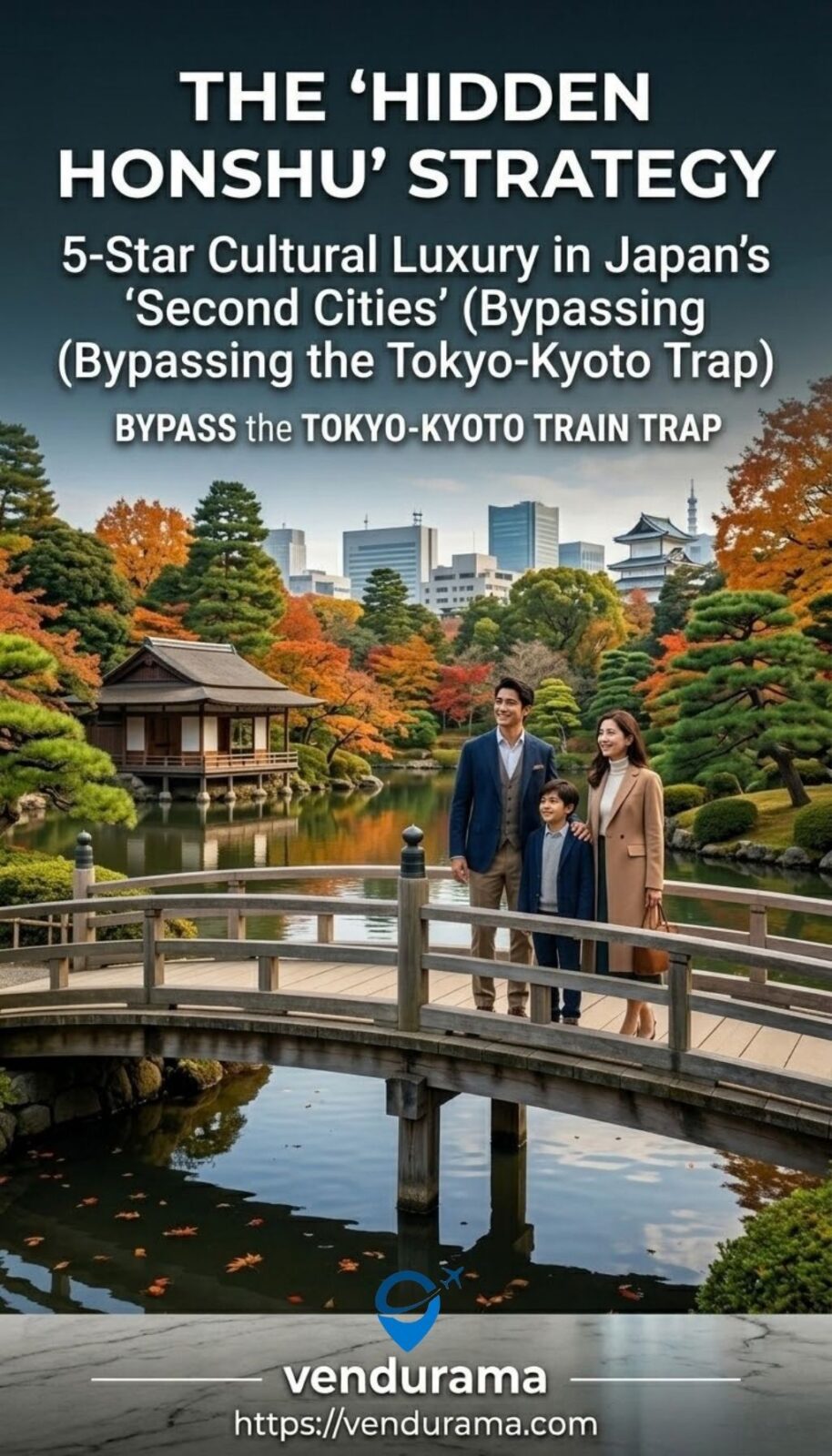
Introduction: The 2026 Japan Travel Paradox
In 2026, Japan presents the global middle class with a peculiar travel paradox. The Japanese Yen has weakened to historic lows against major currencies, theoretically making this once-prohibitive destination more accessible than at any point in the past three decades. A family that would have required $25,000 for a week-long luxury Japanese vacation in 2020 can now access the same experience for approximately $15,000—on paper. Yet simultaneously, Tokyo and Kyoto have become victims of their own popularity, suffocating under an overtourism crisis that has transformed authentic cultural experiences into crowded, commercialized spectacles.
The numbers tell a sobering story. Luxury hotel rates in central Kyoto have tripled since 2019, with premium ryokans now commanding $1,200 to $2,500 per night during peak seasons. Tokyo’s Ginza and Shibuya districts have seen comparable inflation, with five-star accommodations routinely exceeding $800 per night. Beyond accommodation costs, the experience itself has degraded: famous temples require timed entry tickets booked months in advance, traditional tea ceremonies accommodate groups of thirty strangers simultaneously, and iconic bamboo groves resemble crowded thoroughfares rather than contemplative gardens.
For sophisticated travelers seeking authentic cultural immersion rather than checklist tourism, this reality creates an unacceptable compromise. The middle-class family that has saved diligently for a dream Japanese vacation deserves more than shoulder-to-shoulder crowds, inflated prices, and diminished authenticity. They deserve the Japan of imagination: serene gardens, intimate ryokans, private onsens, and culinary experiences that honor centuries of tradition.
This is where the Hidden Honshu Strategy emerges as the definitive solution for 2026. Rather than competing for dwindling availability in Tokyo and Kyoto, smart families target Japan’s elite “Second Cities”—culturally rich, historically significant destinations like Kanazawa, Fukuoka, and Takayama that offer equivalent or superior luxury experiences at approximately 50% of Kyoto’s prices. These cities maintain authentic samurai districts untouched by mass tourism, pristine gardens designed by master landscape architects, Michelin-recognized restaurants without six-month waiting lists, and traditional ryokans where personalized service remains the standard rather than the exception.
The financial arbitrage is substantial. A seven-day luxury itinerary through Kanazawa and Fukuoka delivers identical cultural immersion to a Kyoto-focused trip while generating savings of $8,000 to $12,000 for a family of four. These savings can be reinvested into enhanced experiences: private tea ceremonies, exclusive sake tastings, extended ryokan stays, or future family adventures.
Smart Traveler Shortcut: Families wanting to bypass months of research on Japanese train routes, ryokan etiquette, and Second City itineraries can download our comprehensive digital guide for just $7 to easily execute this strategy. The Ultimate Travel Planning Guide contains exact booking timelines, cultural etiquette briefings, and curated ryokan recommendations that eliminate guesswork from your planning process.
This article provides the complete analytical framework for executing the Hidden Honshu Strategy. We will examine the financial mathematics, explore specific Second City destinations, detail the logistical protocols that ensure frictionless travel, and address common concerns that prevent families from venturing beyond the conventional Tokyo-Kyoto corridor. For travelers who understand that sophistication means leveraging geographic knowledge rather than following tourist herds, Japan’s Second Cities represent the path to authentic luxury without the overtourism tax.
The Financial Mathematics of Smart Luxury
Seven-Day Cost Breakdown: Kyoto vs. Kanazawa Comparison
To understand the magnitude of savings available through the Hidden Honshu Strategy, we must calculate complete seven-day costs including accommodation, dining, experiences, and local transportation. The following analysis uses 2026 published rates and realistic spending estimates for a family of four seeking premium experiences.
Luxury Kyoto Itinerary (7 Days)
| Cost Category | Daily Cost (USD) | 7-Day Total (USD) |
|---|---|---|
| Premium Ryokan/Hotel | $1,400 | $9,800 |
| Dining (Mix of Michelin & Local) | $400 | $2,800 |
| Cultural Experiences (Tea Ceremony, Temple Tours) | $250 | $1,750 |
| Local Transportation (Taxis, Subway, Day Passes) | $120 | $840 |
| Shinkansen from Tokyo (Round Trip) | $600 | $600 |
| Miscellaneous (Souvenirs, Snacks, Incidentals) | $150 | $1,050 |
| Total | $2,920 | $16,840 |
Premium Kanazawa Itinerary (7 Days)
| Cost Category | Daily Cost (USD) | 7-Day Total (USD) |
|---|---|---|
| Premium Ryokan | $650 | $4,550 |
| Dining (Mix of Michelin & Local) | $280 | $1,960 |
| Cultural Experiences (Private Tea Ceremony, Garden Tours) | $180 | $1,260 |
| Local Transportation (Taxis, Private Transfers) | $100 | $700 |
| Shinkansen from Tokyo (Round Trip) | $550 | $550 |
| Miscellaneous (Souvenirs, Snacks, Incidentals) | $120 | $840 |
| Total | $1,880 | $9,860 |
Total Savings: $6,980 (41% Reduction)
Fukuoka Alternative: Even Greater Value
Fukuoka, located on Kyushu Island, offers even more pronounced savings while delivering exceptional culinary and cultural experiences.
Premium Fukuoka Itinerary (7 Days)
| Cost Category | Daily Cost (USD) | 7-Day Total (USD) |
|---|---|---|
| Premium Ryokan/Hotel | $550 | $3,850 |
| Dining (Fukuoka is Japan’s Culinary Capital) | $260 | $1,820 |
| Cultural Experiences (Temple Tours, Hot Springs) | $150 | $1,050 |
| Local Transportation (Taxis, Private Transfers) | $90 | $630 |
| Domestic Flight from Tokyo | $400 | $400 |
| Miscellaneous (Souvenirs, Snacks, Incidentals) | $100 | $700 |
| Total | $1,550 | $8,450 |
Total Savings vs. Kyoto: $8,390 (50% Reduction)
The Reinvestment Opportunity
The $7,000 to $8,500 saved through Second City travel is not merely retained capital—it is deployable capital that enhances the overall travel experience. Smart families reinvest these savings strategically:
Extended Stays: Rather than rushing through multiple cities, families can extend their ryokan experience from three nights to five nights, deepening cultural immersion and reducing packing/unpacking stress.
Exclusive Experiences: Private tea ceremonies with tea masters, exclusive sake brewery tours with tastings, personalized calligraphy lessons, and behind-the-scenes temple access become financially accessible.
Enhanced Comfort: Upgrading from standard rooms to suites, booking private onsen reservations, and securing premium seating on transportation all become viable options.
Future Travel Capital: Savings can be allocated to future family adventures, creating a sustainable travel fund rather than a one-time expenditure.
The Hidden Costs of Kyoto Overtourism
Beyond direct financial costs, Kyoto’s overtourism crisis creates experiential costs that diminish trip value:
Time Wasted in Crowds: Popular attractions require 2-3 hour waits during peak seasons. Time spent queuing is time not spent experiencing Japanese culture.
Compromised Photography: Iconic locations are perpetually crowded, making meaningful photography nearly impossible without arriving at dawn.
Diminished Service Quality: Overwhelmed ryokan staff cannot provide the personalized attention that defines traditional Japanese hospitality.
Advance Booking Requirements: Many experiences require booking 3-6 months in advance, reducing travel flexibility and increasing planning stress.
When families secure optimized premium flights and authentic accommodations in Second Cities rather than Kyoto, they purchase not only financial savings but also time savings, experience quality, and planning flexibility. This is value optimization, not cost cutting.
The Second Cities Unveiled
Kanazawa: “Little Kyoto” Without the Crowds
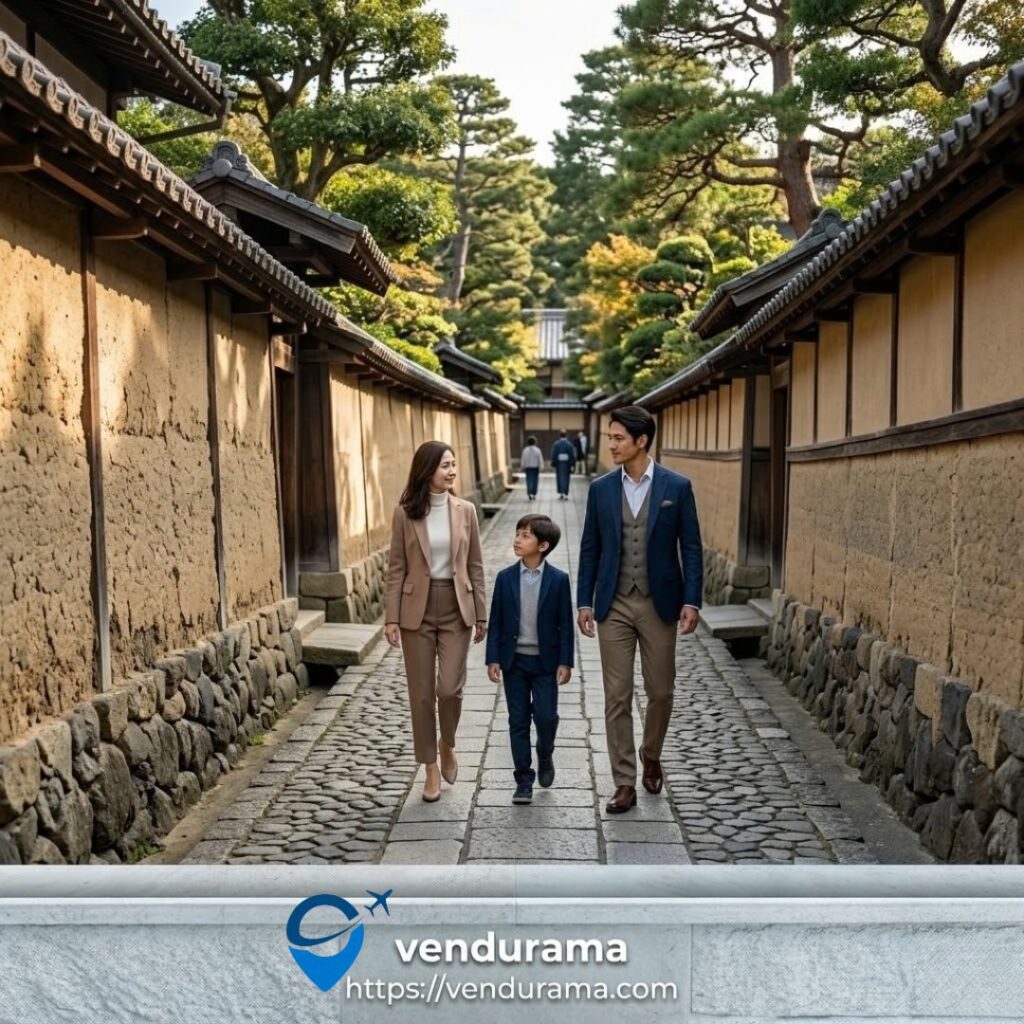
Kanazawa, located on the Sea of Japan coast in Ishikawa Prefecture, represents the archetypal Second City destination. Historically, Kanazawa was Japan’s fourth-largest city during the Edo period, serving as the capital of the powerful Maeda clan. Unlike Kyoto, Kanazawa escaped World War II bombing, preserving its historical architecture, samurai districts, and traditional gardens in remarkable condition.
Kenrokuen Garden: Consistently ranked among Japan’s three most beautiful gardens, Kenrokuen spans 28 acres featuring manicured landscapes, ponds, tea houses, and seasonal displays. In Kyoto’s comparable gardens, visitors navigate crowds of hundreds. In Kenrokuen, families experience contemplative beauty with space for reflection. The garden’s iconic snow-hanging ropes (yukitsuri) during winter months create photographic opportunities unavailable in crowded Kyoto alternatives.
Samurai and Geisha Districts: Kanazawa’s Nagamachi Samurai District preserves original samurai residences with clay walls and stone pathways. Visitors can tour restored homes, try on samurai attire, and participate in tea ceremonies in authentic settings. The Higashi Chaya Geisha District maintains traditional wooden teahouses where geisha performances occur in intimate settings rather than tourist spectacles.
21st Century Museum of Contemporary Art: This architectural masterpiece demonstrates Kanazawa’s commitment to blending historical preservation with contemporary culture. The museum’s circular design and immersive installations provide cultural experiences that complement rather than compete with traditional attractions.
Culinary Excellence: Kanazawa’s proximity to the Sea of Japan provides access to exceptional seafood. Omicho Market offers fresh sushi at prices 40% below Tokyo’s Tsukiji outer market. Multiple Michelin-starred restaurants operate without the booking difficulties of Kyoto equivalents.
Accommodation Quality: Premium ryokans in Kanazawa range from $500 to $900 per night, offering private onsens, kaiseki dinners, and traditional tatami rooms. Service ratios remain favorable, with staff able to provide personalized attention that defines authentic Japanese hospitality.
Fukuoka: Japan’s Undiscovered Culinary Capital
Fukuoka, located on Kyushu Island’s northern shore, offers a distinctly different Second City experience emphasizing culinary excellence, hot spring access, and relaxed urban sophistication.
Hakata Ramen Culture: Fukuoka is the birthplace of tonkotsu ramen, and the city’s ramen culture remains authentic rather than commercialized. Street-side yatai (food stalls) along the Naka River serve bowls for $8-12 that rival Tokyo’s premium ramen shops costing $20-30. Families can experience this culinary tradition without the tourist markup.
Dazaifu Tenmangu Shrine: Located 30 minutes from central Fukuoka, this historic shrine combines spiritual significance with stunning architecture and plum blossom gardens. Unlike Kyoto’s Fushimi Inari, which requires navigating thousands of tourists, Dazaifu offers peaceful contemplation and authentic shrine experiences.
Yanagawa Canal City: Often called “Japan’s Venice,” Yanagawa features traditional boat tours through historic canals, passing under low bridges while boatmen sing traditional songs. This experience costs approximately $25 per person compared to $60-80 for comparable Kyoto boat tours.
Beppu Hot Springs: One hour from Fukuoka by train, Beppu offers Japan’s most concentrated hot spring region. Families can experience multiple onsen types including sand baths, steam rooms, and mineral soaks at facilities ranging from public baths to private ryokan onsens.
Accommodation Value: Fukuoka’s luxury hotel market remains undersupplied relative to demand, creating favorable pricing. Five-star hotels charge $400-700 per night compared to $900-1,500 for equivalent Kyoto properties.
Takayama: Alpine Tradition and Authentic Ryokan Culture
Takayama, nestled in the Japanese Alps of Gifu Prefecture, offers a mountainous alternative to coastal Second Cities. This destination emphasizes traditional ryokan culture, sake brewing, and alpine scenery.
Old Town Preservation: Takayama’s Sanmachi Suji district preserves Edo-period merchant houses now operating as sake breweries, craft shops, and traditional restaurants. The area maintains authentic character without the souvenir-shop saturation of Kyoto’s Gion district.
Ryokan Excellence: Takayama hosts some of Japan’s most highly-rated ryokans, many featuring private outdoor onsens with mountain views. Properties like Hyakurakuso and Arashimakan offer all-inclusive packages (accommodation, dinners, breakfasts, onsen access) for $600-800 per night.
Shirakawa-go Day Trip: The UNESCO World Heritage village of Shirakawa-go, featuring traditional thatched-roof farmhouses, is accessible from Takayama. This excursion provides photographic and cultural experiences comparable to Kyoto’s Arashiyama without the crowds.
Seasonal Appeal: Takayama offers distinct seasonal experiences—cherry blossoms in spring, mountain hiking in summer, fall foliage in autumn, and snow festivals in winter. This versatility enables repeat visits with varied experiences.
Frictionless Logistics: Protecting the Family from the Transit Trap
The 2026 Shinkansen Luggage Reality
Navigating Japan with family luggage has become increasingly regulated and complex in 2026. The Shinkansen (bullet train) system now requires advance reservations for oversized luggage on most routes. Suitcases exceeding 160cm in total dimensions (length + width + height) must be reserved in designated luggage areas, with limited availability per train. Families arriving without reservations face the prospect of shipping luggage separately at additional cost or navigating local transportation with bags that exceed carry-on allowances.
This regulatory environment creates a critical insight for Second City travelers: the accommodation savings generated by choosing Kanazawa or Fukuoka over Kyoto must be partially reinvested into frictionless logistics. Attempting to maximize savings by using public transportation exclusively creates stress, delays, and physical burden that diminish the luxury experience families have paid to access.
The Three Pillars of Frictionless Japan Travel
Pillar One: Optimized Flight Selection
Direct flights to regional airports eliminate connection stress and reduce total travel time. While Tokyo’s Narita and Haneda airports offer the most international flight options, regional airports including Komatsu (for Kanazawa) and Fukuoka International accept select international flights and numerous domestic connections.
Smart families prioritize securing optimized premium flights and authentic accommodations that align with their Second City itinerary rather than defaulting to Tokyo arrival. A direct flight to Fukuoka from major Asian hubs eliminates the need for domestic connections entirely. For travelers requiring Tokyo arrival, booking comfortable initial family hotels near Tokyo Station simplifies Shinkansen connections to Second Cities.
Pillar Two: Pre-Arranged VIP Transfers
Japan’s public transportation system, while efficient, presents significant challenges for families with luggage, children, or limited Japanese language capability. Train stations feature complex layouts, multiple exit points, and subway connections that require navigation with bags in hand. Taxis are available but require Japanese language communication for destination specification.
The solution is pre-arranging a seamless VIP private transfer directly to your Ryokan before arrival. This service ensures:
- English-speaking drivers waiting at arrivals with name signage
- Direct transportation from airport or station to ryokan entrance
- Assistance with luggage from vehicle to room
- Fixed pricing with no surprise charges or negotiation
- Vehicles sized appropriately for family groups and luggage volumes
The cost of this service—typically $80 to $150 USD depending on distance—represents less than 2% of total trip savings generated by Second City selection. For this minimal investment, families purchase certainty, safety, and immediate stress reduction.
Pillar Three: Strategic Hotel Positioning
Initial accommodation should be positioned for logistical convenience rather than maximum savings. Arriving families benefit from hotels near major transportation hubs during their first and last nights, enabling easy airport/station access without complex local navigation.
When families secure stress-free station transportation for your family and luggage, they should coordinate with their ryokan regarding check-in timing. Many premium ryokans accommodate early luggage storage even when rooms are not yet available, enabling families to begin exploration immediately upon arrival.
The Shinkansen Navigation Protocol
For families traveling between Second Cities or connecting from Tokyo, the Shinkansen remains the optimal transportation method. However, successful navigation requires advance preparation:
Reservation Timeline: Book Shinkansen tickets 30 days in advance for peak seasons (cherry blossom, fall foliage, year-end holidays). Off-peak travel allows 7-14 day advance booking.
Luggage Registration: Register oversized luggage during ticket purchase. Each train has limited luggage space, and unregistered bags may require separate shipping.
Seat Selection: Green Car (first class) seating provides additional space for families and luggage. The price premium ($30-50 per person) is justified for journeys exceeding two hours.
Station Navigation: Major stations feature English signage, but pre-booking a seamless VIP private transfer directly to your Ryokan eliminates station navigation entirely for airport arrivals.
The Logistics Investment Return
| Investment | Cost (USD) | Value Created |
|---|---|---|
| Optimized Flight Booking | Included in airfare | Reduced connections, better timing |
| VIP Airport/Station Transfer | $120 | Eliminated navigation stress, luggage assistance |
| Strategic Hotel Positioning | $50 premium | Convenient access, reduced transit time |
| Total | $170 | Peace of mind, time savings, physical comfort |
Compare this $170 investment against the $7,000 to $8,500 saved through Second City selection. This represents approximately 2% of total savings deployed to protect the entire travel investment. Any financial advisor would characterize this as exceptionally prudent risk management.
Logistics Planning Resource: The complexity of Shinkansen luggage rules, station navigation, and ryokan check-in protocols is addressed comprehensively in our digital planning resource. The Ultimate Travel Planning Guide contains printable packing checklists, exact booking timelines, and bullet train navigation hacks to manage these logistics flawlessly.
The Cognitive Load Argument
There is a deeper reason why logistical preparation matters beyond mere convenience. Research in travel psychology consistently demonstrates that vacation satisfaction correlates more strongly with stress minimization than with attraction quantity.
A family that arrives exhausted, confused about transportation, worried about luggage, and uncertain about accommodation begins their Japanese experience with depleted mental resources. A family that arrives rested, knowing their transportation is secured, understanding their accommodation is confirmed, and feeling their planning has created a safety net begins with full cognitive capacity available for cultural immersion.
When parents pre-arrange a seamless VIP private transfer directly to your Ryokan, they are not simply purchasing transportation. They are purchasing their family’s cognitive focus for the first critical days of the Japanese experience. This is an investment in memory creation, not merely a travel expense.
Similarly, when families securing optimized premium flights and authentic accommodations, they are creating the conditions for emotional stability during the transition period. Parents can focus on supporting their children rather than managing travel crises. Children can focus on cultural discovery rather than navigating unfamiliar transit systems.
Addressing the Skeptics: Common Middle-Class Concerns Answered
Is There a Language Barrier in Second Cities?
This concern reflects an assumption that smaller Japanese cities lack English-language support. The reality is more nuanced and generally reassuring for travelers.
Tourism Infrastructure: Second Cities actively court international tourism and have invested accordingly. Kanazawa, Fukuoka, and Takayama all maintain tourist information centers with English-speaking staff. Major attractions provide English signage, audio guides, and printed materials.
Ryokan Staff: Premium ryokans employ staff with functional English capability, particularly in properties accustomed to international guests. Many properties provide English-language materials explaining onsen etiquette, dining protocols, and facility usage.
Technology Assistance: Translation apps have advanced significantly by 2026. Google Translate’s camera function enables real-time menu translation. Voice translation facilitates basic conversations with local vendors and service providers.
Restaurant Navigation: Visual menus with photographs are standard in tourist areas. Pointing and gesturing remain effective communication methods in Japan’s service-oriented culture. Many restaurants in Second Cities now provide QR code menus with English options.
The Reality Check: While Tokyo and Kyoto offer more English speakers overall, Second City tourism infrastructure has evolved specifically to accommodate international visitors. The language barrier is manageable with basic preparation and does not prevent meaningful cultural experiences.
Is It Safe for Families in Smaller Cities?
Japan consistently ranks among the world’s safest countries for travelers, and this safety extends fully to Second Cities.
Crime Statistics: Violent crime against tourists in Japan is exceptionally rare across all regions. Petty theft occurs but at rates far below Western urban centers. Second Cities, with smaller populations and tighter community structures, often report lower crime rates than Tokyo.
Emergency Services: Japan’s emergency response system functions uniformly across all regions. Emergency number 110 connects to police, 119 to fire and medical services. English-speaking operators are available in major cities including Second City destinations.
Healthcare Access: Kanazawa, Fukuoka, and Takayama all maintain hospitals with international patient services. Travel insurance covering medical evacuation provides additional security for families with specific health concerns.
Natural Disaster Preparedness: Japan’s earthquake and typhoon preparedness extends to all regions. Hotels and ryokans provide safety briefings and evacuation information. Emergency alert systems function in English on most smartphones.
Cultural Safety: Japanese culture emphasizes respect for visitors and community harmony. Families with children receive particular warmth and accommodation from local residents and service providers.
How Do We Access Second Cities Without Tokyo?
While many international travelers arrive through Tokyo, direct access to Second Cities is increasingly available.
International Flight Options: Fukuoka International Airport accepts direct flights from Seoul, Shanghai, Taipei, and other Asian hubs. Komatsu Airport (for Kanazawa) accepts select seasonal international flights. Travelers from North America and Europe typically connect through Tokyo or other Asian gateways.
Domestic Connection Efficiency: Japan’s domestic flight network is extensive and efficient. Tokyo to Fukuoka flights take 90 minutes. Tokyo to Komatsu flights take 60 minutes. Advance booking secures fares comparable to Shinkansen tickets with significantly reduced travel time.
Shinkansen Access: Kanazawa connects to Tokyo via the Hokuriku Shinkansen (2.5 hours). Fukuoka connects to Osaka via the Sanyo Shinkansen (2.5 hours). Takayama requires train connections through Nagoya (approximately 4 hours from Tokyo).
Strategic Recommendation: Families should book comfortable initial family hotels in their arrival city for the first night, then proceed to Second Cities the following day. This approach eliminates same-day connection stress and provides buffer time for flight delays.
Are Second City Ryokans Truly Equivalent to Kyoto Properties?
This question addresses the core value proposition of the Hidden Honshu Strategy. The answer requires distinguishing between brand recognition and actual experience quality.
Facility Quality: Premium Second City ryokans invest comparably in facilities, amenities, and maintenance as Kyoto equivalents. Private onsens, kaiseki dining, tatami rooms, and garden views are standard offerings across both markets.
Service Quality: Second City ryokans often exceed Kyoto properties in service quality due to lower guest-to-staff ratios. Kyoto ryokans, operating at capacity, cannot provide the personalized attention that defines traditional omotenashi (Japanese hospitality).
Authenticity: Second City properties maintain traditional practices without the commercialization that affects high-volume Kyoto establishments. Tea ceremonies, cultural demonstrations, and seasonal celebrations occur in intimate settings rather than tourist productions.
Value Proposition: The combination of equivalent quality, superior service, and 50% lower pricing creates exceptional value. Families receive the authentic ryokan experience that Kyoto marketing promises but often cannot deliver at current volumes.
Conclusion: The Paradigm Shift in Sophisticated Japan Travel
In 2026, the definition of sophisticated Japan travel has fundamentally transformed. The conventional wisdom—that authentic Japanese cultural experiences require Tokyo and Kyoto—has been rendered obsolete by the overtourism crisis that has degraded both the experience and the value proposition of these destinations.
The Hidden Honshu Strategy represents more than a cost-saving approach. It represents a fundamental rethinking of what travel value means. The value of a Japanese vacation lies not in the geographic locations checked from a list, but in the authenticity of cultural immersion, the quality of hospitality received, the memories created, and the financial sustainability of the experience.
When a family experiences Kanazawa’s Kenrokuen Garden without crowds, dines at Fukuoka’s authentic ramen stalls without tourist markups, and sleeps in Takayama’s traditional ryokans with personalized service—all while saving $7,000 to $8,500 compared to a Kyoto-focused itinerary—they have not compromised. They have optimized.
Smart families in 2026 understand that their role is not to follow conventional travel paths unquestioningly. Their role is to analyze options rigorously, identify structural advantages, and deploy family resources strategically. Japan’s Second Cities are among the clearest structural advantages available in contemporary travel.
The logistical framework to support this decision is equally important. When families commit to securing optimized premium flights and authentic accommodations that align with their Second City itinerary, and when they dedicate themselves to pre-arranging a seamless VIP private transfer directly to your Ryokan that eliminates arrival stress, they complete the strategic picture. They have optimized both the financial structure and the human experience of the Japanese journey.
The families who embrace this model in 2026 will not merely save money. They will experience Japan as it was meant to be experienced: authentic, serene, culturally rich, and personally transformative. They will have understood that in a world of overtourism, geographic intelligence is not a compromise—it is a competitive advantage.
The question is no longer whether Second Cities can deliver equivalent Japanese cultural experiences. The evidence overwhelmingly confirms they can and do, often exceeding the compromised experiences available in overtouristed destinations. The question is whether you will recognize this opportunity before the Second Cities themselves become victims of their own success.
For analytical, sophistication-seeking families reading this in 2026, the answer should be clear. Japan awaits—not the Japan of tourist crowds and inflated prices, but the Japan of imagination: serene gardens, intimate ryokans, authentic culture, and memories that justify every yen invested.
Your family’s time is precious. Your travel budget is finite. Your cultural experiences should be transformative rather than transactional. Japan’s Second Cities offer the rare opportunity to honor all three priorities simultaneously. The strategy is complete. The path is clear. The choice is yours.
Ready to Execute Your Hidden Honshu Strategy?
The analytical framework provided in this article eliminates the guesswork from Second City selection. However, successful execution requires detailed planning: exact Shinkansen booking procedures, ryokan reservation protocols, cultural etiquette guidelines, and packing specifications for Japanese travel. Our comprehensive digital resource consolidates months of research into an actionable, step-by-step guide that guarantees flawless trip execution. For just $7—a micro-investment against the $7,000+ you will save—you gain the complete blueprint for Japan’s most sophisticated travel strategy. Secure your copy now and transform your Japanese vacation from a conventional tourist experience into an authentic cultural journey: Ultimate Travel Planning Guide
Vendurama is a premium digital publication dedicated to empowering the global middle class with sophisticated, value-driven travel and financial strategies. Our analysis is independently researched and designed to help families make informed decisions about meaningful experiences and wealth preservation in an increasingly complex world.