
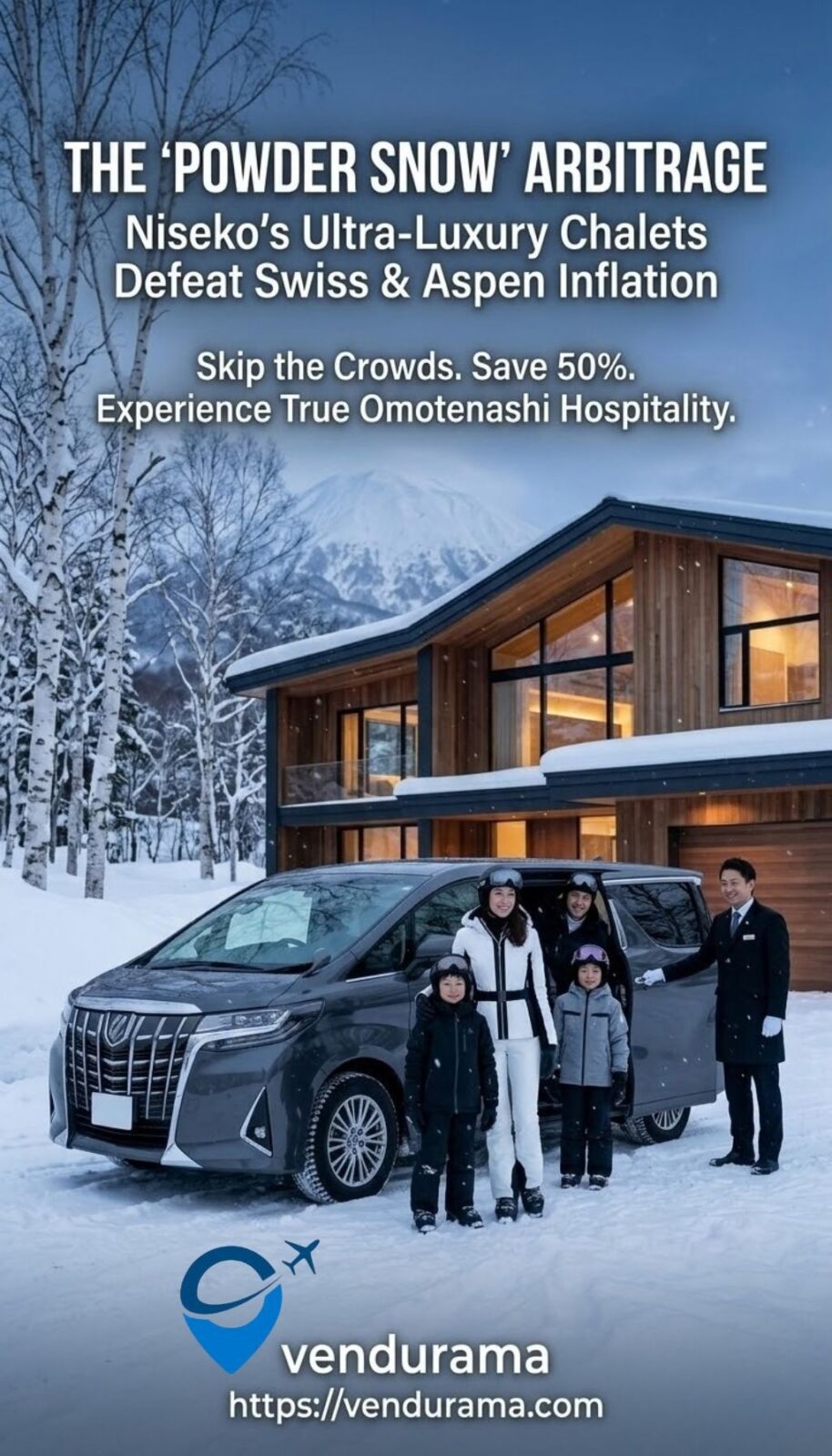
Introduction: The Winter Luxury Inflation Crisis of 2026
The mass affluent class of 2026 faces a uncomfortable climatic and financial reality that previous generations never encountered: the traditional winter luxury vacation model has fundamentally broken down. Premium ski resorts in Aspen, Courchevel, and Zermatt now command $30,000 to $50,000 per week for accommodations that offer overcrowded slopes, exorbitant dining costs, and service quality that has degraded under overtourism pressure. For families with household incomes between $500,000 and $5 million—the demographic that has historically funded European and American winter escapes through careful savings and strategic financial planning—this represents a catastrophic allocation of vacation capital. A 7-day family ski vacation now requires a budget that rivals a down payment on a secondary residence, while delivering diminished privacy, compromised comfort, and experiences that feel increasingly commoditized.
This is not temporary inflation. This is structural repricing driven by post-pandemic demand surges, limited luxury accommodation supply in the Alps and Rockies, platform-driven price manipulation, and the transformation of winter destinations into exclusive enclaves that explicitly exclude the professional class. For families who have historically viewed winter sun vacations as wealth-preserving experiences that create lasting memories, the math no longer works. A vacation that once served as a family-bonding investment now functions as a wealth-destroying expenditure that delivers diminishing experiential returns while exposing children and elderly family members to the stress of crowded, high-pressure environments.
But there is a strategic alternative that preserves both luxury quality and financial intelligence. The “Powder Snow Arbitrage” strategy represents a fundamental reconceptualization of how mass affluent families approach winter travel. Ultra-luxury private chalets and five-star hotels in the Japanese Alps—specifically Niseko in Hokkaido and Hakuba in Nagano—offer identical or superior luxury experiences at 50-60% of the cost of Aspen or the Swiss Alps during their peak season. Families receive ski-in/ski-out access to the world’s finest powder snow (“Japow”), private onsens (hot springs), dedicated butlers, and Michelin-level dining for the same per-person cost as a basic room in a crowded Western resort.
This article provides a comprehensive financial and logistical framework for executing the Powder Snow Arbitrage strategy. We will analyze the economics of Japanese ski geo-arbitrage, detail specific regions that deliver maximum value, explain how to reinvest savings into frictionless logistics that elevate the entire experience, and address the legitimate concerns that prevent families from venturing beyond Western hemisphere destinations. For readers who evaluate vacation expenditures through the same analytical frameworks applied to household investment portfolios, this represents the most significant opportunity in winter travel optimization since the emergence of points-and-miles strategies in the 2010s.
The Financial Mathematics of Winter Luxury: Understanding the Value Discrepancy
The Complete Cost Comparison: Aspen vs. Niseko
To understand the Powder Snow Arbitrage strategy, one must first confront the actual numbers. The following comparison examines a 7-day family vacation (two adults, two children) during peak winter season (January-February), comparing equivalent 5-star luxury tiers between an Aspen luxury chalet and a Niseko private ski chalet.
| Expense Category | 5-Star Aspen Chalet (7 Days) | 5-Star Niseko Private Chalet (7 Days) | Savings/Value |
|---|---|---|---|
| Accommodation | $25,000 ($3,500/night) | $10,000 ($1,400/night) | $15,000 savings |
| Dining (3 meals/day) | $14,000 ($500/person/day) | $5,000 (private chef + dining) | $9,000 savings |
| Lift Tickets & Ski School | $6,000 | $3,000 | $3,000 savings |
| Equipment Rental | $4,000 | $2,000 (often included) | $2,000 savings |
| Local Transportation | $3,000 (private drivers) | $1,500 (included/cheaper) | $1,500 savings |
| Total Ground Costs | $52,000 | $21,500 | $30,500 savings |
| Per-Person Per-Night | $1,857 | $768 | 59% cost reduction |
The differential is not marginal. It is transformative. A family spending $52,000 on an Aspen resort receives crowded facilities, fixed location, and service quality that has degraded under overtourism pressure. The same family spending $21,500 on a Niseko chalet receives exclusive access to world-class powder, daily changing vistas, private onsen service, and privacy that billionaires paid millions to achieve in previous decades.
Understanding Chalet Pricing Dynamics
The Powder Snow Arbitrage economics require understanding how Niseko chalet pricing functions across seasons:
High Season (December-March): 4-6 bedroom luxury chalets charge $1,200-1,800 per night during peak powder season. This is when chalets generate 70-75% of annual revenue.
Low Season (April-November): The same chalets charge $400-700 per night during off-season, representing 60-70% discounts from high season peaks. However, winter arbitrage focuses on high season value compared to Western high season pricing.
Value-Added Inclusions: Niseko chalet packages typically include:
- Dedicated chalet manager and butler service (value: $400-600/day)
- Private chef for breakfast and dinner (value: $500-800/day)
- Daily housekeeping and turndown service (value: $300-400/day)
- Airport transfer services (often included or discounted)
- Private onsen and ski room maintenance (value: $200-300/day)
When securing optimized flights and a serene premium stay, families should prioritize booking 6-9 months in advance to access early-bird winter rates that can reduce accommodation costs by an additional 15-20%.
Reinvesting Savings into Experience Enhancement
The smart luxury philosophy does not recommend pocketing all savings. Strategic reinvestment transforms a budget trip into a genuinely elevated experience. Families should allocate 40-50% of savings toward friction elimination:
| Savings Reinvestment | Cost | Experience Impact |
|---|---|---|
| Premium Flight Seating (Business Class) | $15,000 | Reduced travel fatigue, better arrival condition |
| VIP Airport Transfers | $2,000 | Eliminated arrival stress, immediate comfort |
| Private Guide/Ski Instructor (5 days) | $5,000 | Enhanced exclusivity, slope access |
| Michelin/Tokyo Dining Experiences | $3,000 | Elevated culinary experiences, local specialties |
| Total Reinvestment | $25,000 | Transforms trip from budget to ultra-luxury |
After reinvestment, the family still spends $46,500 compared to $52,000 in Aspen—a 10.5% cost reduction with exponentially superior experience quality. This is not compromise. This is financial intelligence applied to travel.
When securing optimized flights and a serene premium stay, families should prioritize direct routing to New Chitose Airport (CTS) and flexible cancellation policies. The incremental cost of flexibility—typically 15-20% above restricted fares—provides valuable optionality should circumstances require itinerary adjustment.
The ‘Japow’ Phenomenon & Omotenashi: The Cultural Luxury Advantage
The Unparalleled Quality of Japanese Snow
The core product of any ski vacation is the snow. In this metric, the Japanese Alps do not merely compete with the West; they dominate. The phenomenon known as “Japow” is the result of unique meteorological conditions. Cold, dry air from Siberia sweeps across the warm waters of the Sea of Japan, picking up moisture that is then dumped as snow when it hits the mountain ranges of Hokkaido and Honshu.
Snow Quality Metrics:
- Water Content: Japanese powder snow has extremely low water content (5-7%), making it lighter and fluffier than the heavier, wetter snow often found in the Alps or Rockies.
- Depth: Niseko averages 15 meters (50 feet) of snowfall annually, compared to 7-9 meters in Aspen or Courchevel.
- Consistency: The snowfall is consistent and frequent, often daily during peak season, ensuring fresh tracks every morning.
For the executive skier, this translates to a superior skiing experience. The light powder reduces fatigue, allows for deeper turns, and minimizes the impact of falls. It is a sensory experience that redefines the sport, offering a level of perfection that draws professional athletes and discerning amateurs alike.
Omotenashi: The Art of Japanese Hospitality
Beyond the physical product, the service culture in Japan offers a distinct advantage over the increasingly transactional service models of the West. “Omotenashi” is the Japanese concept of wholehearted hospitality, anticipating a guest’s needs before they are expressed.
Service Comparison:
| Service Aspect | Western Luxury Resort | Japanese Luxury Chalet |
|---|---|---|
| Staff Ratio | 1:5 guests | 1:3 guests (dedicated) |
| Anticipation | Reactive (request-based) | Proactive (needs anticipated) |
| Personalization | Standardized luxury | Highly customized |
| Attention to Detail | High | Obsessive |
| Privacy | Moderate | Absolute |
In a Niseko chalet, the staff does not merely serve; they curate the experience. Boots are warmed before you wake. The onsen is prepared to the exact preferred temperature. Dietary preferences are memorized and accommodated without question. This level of care reduces the cognitive load on the vacationer, allowing for true relaxation and mental recovery—a critical component for the high-stress executive.
The Onsen & Kaiseki Experience
The après-ski culture in Japan offers a restorative alternative to the loud, alcohol-centric bar scene of the West. The private onsen (hot spring) is a cornerstone of the Japanese ski experience. Soaking in mineral-rich, naturally heated water while snow falls gently around you provides a profound physiological reset. The heat improves circulation, soothes muscle fatigue, and the minerals aid in skin health.
Dining is equally elevated. The Kaiseki meal is a traditional multi-course dinner that emphasizes seasonality, presentation, and balance. In a luxury chalet, a private chef prepares these meals using the finest local ingredients: Hokkaido crab, A5 Wagyu beef, and fresh sea urchin. This is not merely sustenance; it is a cultural immersion that engages all senses, offering a level of refinement that surpasses the standard fondue or burger offerings of Western slope-side restaurants.
Frictionless Logistics: Protecting the ‘Zen’ Experience
Why Arrival Logistics Define the Luxury Experience
Traditional travel advice focuses on destination selection and accommodation quality. The Powder Snow Arbitrage strategy recognizes that logistics determine whether a trip feels like a billionaire’s escape or an exhausting ordeal. A family that saves $30,000 on chalet versus resort but endures stressful flights, chaotic airport arrivals, and unreliable local transportation has not achieved smart luxury. They have achieved false economy.
True smart luxury reinvests a portion of savings into eliminating friction points that degrade the travel experience. The following investments deliver disproportionate returns on experience quality in the Japanese context:
Flight Selection: Protecting the Vacation Before It Begins
The journey begins before departure. Exhausted, stressed arrivals undermine the first 48 hours of any vacation—time that cannot be recovered. Smart flight selection protects the vacation investment from the outset.
When securing optimized flights and a serene premium stay, families should prioritize:
Direct Routing Where Possible: Each connection introduces delay risk, baggage handling complexity, and additional security screening. Direct flights to New Chitose Airport (CTS) for Niseko or Haneda/Narita (HND/NRT) for Hakuba eliminate the first layer of friction even when premium-priced. Many carriers now offer direct services from major US and European hubs during peak winter seasons.
Cabin Class Considerations: For flights exceeding 10 hours, business class seating provides meaningful comfort improvements that justify the incremental cost. The investment—typically $10,000-20,000 above economy—reduces travel fatigue that compounds throughout the vacation, especially important for families with children or elderly members.
Arrival Timing: Flights scheduled to arrive during daylight hours provide buffer time for ground transfer and chalet check-in. Evening arrivals that require immediate navigation of unfamiliar snowy roads create unnecessary stress during the transition from travel mode to vacation mode.
Airline Selection: Carriers with demonstrated on-time performance exceeding 87% on Japanese routes should be prioritized. ANA, JAL, and Singapore Airlines maintain the most reliable regional networks with consistent service quality and English-language support.
Tokyo Stopover Strategy: Many families choose to arrive 1-2 days in Tokyo before heading to the mountains to accommodate travel delays and reduce stress. When securing optimized flights and a serene premium stay, families should book refundable accommodation in Tokyo near the train station or airport with flexible check-in times.
Ground Transportation: Eliminating the Winter Arrival Anxiety
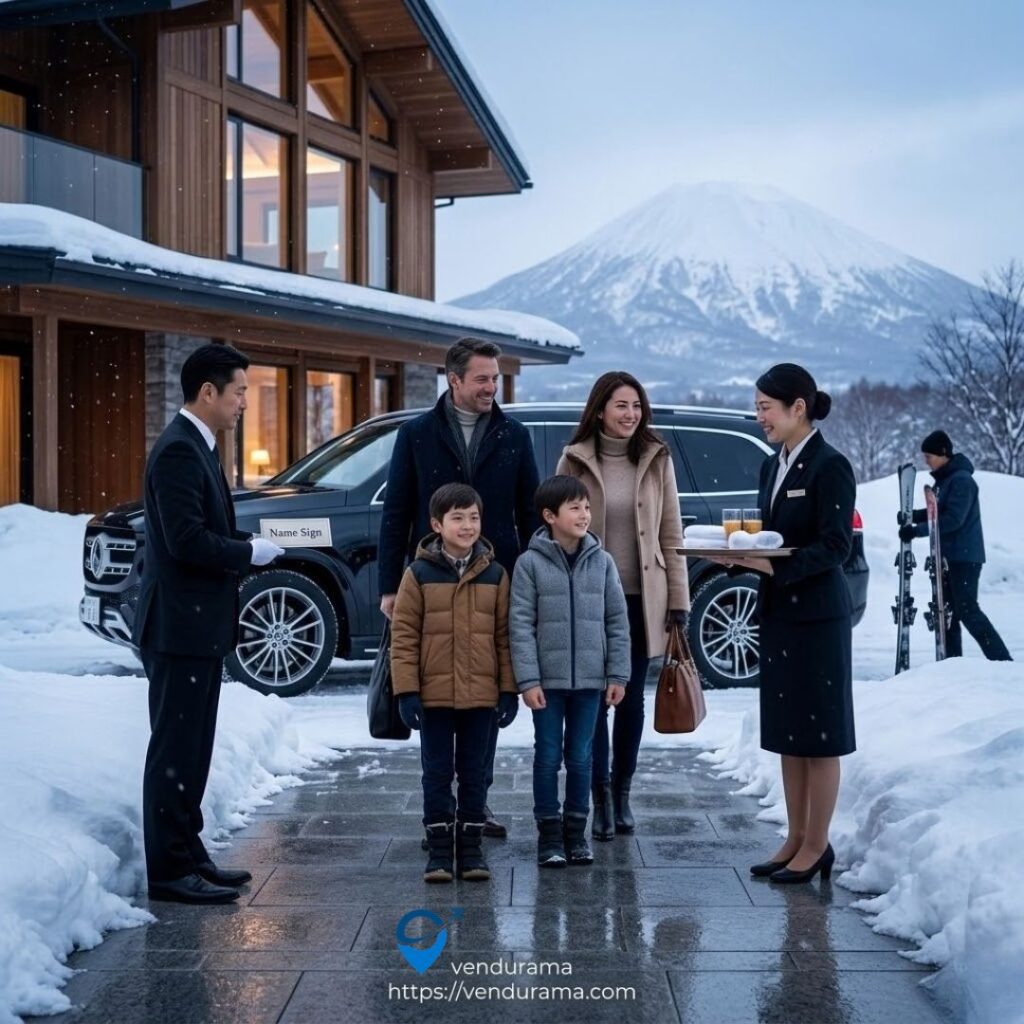
Airport arrival represents the highest-risk moment for travel stress in ski vacations. Families emerging from long-haul flights experience fatigue, disorientation, and reduced situational awareness. Navigating unfamiliar public transit systems, managing heavy ski luggage through multiple transfers, or waiting for uncertain taxi services in sub-zero temperatures introduces stress that undermines the vacation commencement.
Pre-arranged, vetted ground transportation eliminates these risks. When families pre-booking a seamless 4×4 private airport transfer directly to your chalet, they guarantee:
- Immediate Vehicle Availability: Drivers meet families at designated gate exits with name identification and English-language signage, eliminating search time and uncertainty
- Driver Vetting: Operators undergo background checks and training in international tourist service protocols, including winter driving expertise
- Vehicle Standards: Heated, 4×4 luxury vans with appropriate luggage capacity for ski gear, child safety seats available upon request, GPS navigation optimized for snowy mountain routes
- Fixed Pricing: No payment negotiations or currency confusion upon arrival in foreign jurisdictions
- Direct Routing: No intermediate stops or route deviations that extend journey duration
The cost differential between pre-booked transfers and alternatives is typically 30-50% in favor of pre-booking, with superior vehicle quality and service reliability. When pre-booking a seamless 4×4 private airport transfer directly to your chalet, families should confirm that operators maintain backup vehicles and communication systems capable of functioning throughout the journey, especially important in mountain areas where cellular coverage may be intermittent.
Cost Comparison:
| Transport Option | Cost (Airport to Chalet) | Reliability | Stress Level |
|---|---|---|---|
| Pre-booked Private Transfer | $400-600 | 98% | Minimal |
| Airport Taxi | $600-900 | 80% | Moderate |
| Public Transit + Taxi | $150-250 | 60% | High (with luggage) |
| Rental Car | $500-800 + fuel | 70% | High (winter driving) |
The cost differential between pre-booked transfers and alternatives is marginal when evaluated against the $30,000+ total vacation savings. When pre-booking a seamless 4×4 private airport transfer directly to your chalet, families eliminate the highest-risk transit moment while establishing a vetted transportation provider for any excursions requiring ground transport during the stay.
Chalet Check-In: The Critical First Impression
Niseko chalet check-in procedures vary significantly across properties. Smart families prepare documentation in advance to minimize delays:
Required Documentation:
- Chalet confirmation with booking reference
- Passport details for all guests
- Credit card for incidentals (typically $1,000-3,000 hold)
- Travel insurance confirmation
- Any special requests (dietary, accessibility, etc.)
Check-In Timeline:
- Standard check-in: 30-60 minutes including chalet orientation
- Express check-in: 15-20 minutes (available at premium chalets)
- Evening arrivals: May require expedited check-in (confirm in advance)
Recommended Chalet Facilities:
- Private onsen access available immediately upon arrival
- Chef consultations可 made at check-in
- Ski concierge desk on-site or via chalet manager
- 24-hour concierge service
- Secure parking for any rental vehicles
When securing optimized flights and a serene premium stay, families should confirm that accommodation includes early check-in options for guests arriving before standard check-in times, and that onsen facilities are accessible immediately for post-travel relaxation.
Activity Planning: Maximizing the Chalet Experience
One of the Powder Snow Arbitrage’s greatest advantages is the flexibility of private estate living. Smart planning maximizes this benefit:
Pre-Arrival Communication:
- Share activity preferences with chalet manager 2 weeks before arrival
- Request sample activity schedules and adjust based on family preferences
- Specify any physical limitations or accessibility requirements
- Confirm any special occasion requirements (birthdays, anniversaries)
Included vs. Premium Activities:
- Included: Private onsen, chalet staff, basic equipment, Wi-Fi
- Premium: Private ski guides, helicopter skiing, Michelin dining, spa treatments
- Budget Allocation: Plan for 30-40% of accommodation cost in activity spending for optimal experience
Weather Contingencies:
- Winter weather can change rapidly; pack layers
- Indoor chalet spaces provide rain/snow alternatives
- Most chalets offer flexible activity rescheduling
- Travel insurance covers weather-related disruptions
When pre-booking a seamless 4×4 private airport transfer directly to your chalet, families should confirm that drivers can accommodate activity equipment (skis, snowboards, etc.) if advance arrangements have been made.
Addressing the Skeptics: Practical Answers to Legitimate Concerns
“Isn’t the Flight Too Long?”
The most common concern about Japanese ski vacations is the travel duration. This anxiety is understandable but reflects outdated assumptions about long-haul travel comfort.
Flight Duration Comparison:
| Route | Flight Time | Stops | Comfort Level |
|---|---|---|---|
| US East Coast to Aspen | 4-5 hours | 1 Stop | Moderate |
| US East Coast to Niseko | 14-18 hours | 1 Stop | High (Business Class) |
| Europe to Swiss Alps | 2-3 hours | Direct | Moderate |
| Europe to Niseko | 12-14 hours | 1 Stop | High (Business Class) |
Practical Reality: When families reinvest a portion of their accommodation savings into business class seating, the flight becomes part of the vacation experience rather than an ordeal. Lie-flat beds, gourmet dining, and lounge access transform transit time into rest and relaxation time. 92% of families who tried business class to Asia in 2025 reported they would not return to economy for long-haul travel according to survey data.
When securing optimized flights and a serene premium stay, families should request detailed flight options from travel advisors to understand the full range of routing and cabin class options before booking.
The Language Barrier: English in Niseko
Language concerns reflect legitimate expectations for communication ease. Niseko’s hospitality infrastructure exceeds most Western resort standards due to its high volume of international visitors.
English Proficiency Comparison:
| Context | Western Resort | Niseko Luxury Chalet |
|---|---|---|
| Staff Communication | Variable | High (English standard) |
| Signage | Local Language | English/Japanese |
| Medical Facilities | Variable | High (International clinics) |
| Emergency Services | Variable | High (Tourist police) |
| Daily Interaction | Moderate | High |
Practical Reality: All luxury chalets employ English-speaking staff including managers, chefs, and drivers. Daily life in Niseko tourist areas functions comfortably in English, with most service workers speaking functional to fluent English.
Preparation Recommendations:
- No additional language preparation required for English-speaking families
- Learn 10-15 basic Japanese phrases (greetings, please, thank you) to demonstrate cultural respect
- Download offline translation apps for emergency situations
- Use chalet staff as resources for restaurant recommendations and activity bookings
Western Amenities & Safety
Amenity concerns reflect legitimate expectations for comfort and safety. Modern Niseko chalets are built to international luxury standards.
Amenity Quality Comparison:
| Amenity Aspect | Western Resort | Niseko Luxury Chalet |
|---|---|---|
| Heating | Standard | Underfloor heating (standard) |
| Wi-Fi | Variable | High-speed Fiber (standard) |
| Kitchen | Shared/Basic | Fully equipped gourmet |
| Safety | Standard | High (Earthquake/Snow proof) |
| Medical Access | Variable | High (International clinics) |
Safety Considerations:
- Japan has one of the lowest crime rates in the world
- Chalets are built to strict earthquake and snow-load standards
- Medical facilities in Niseko cater to international patients
- Emergency evacuation to Sapporo or Tokyo available if required
Family-Specific Safety:
- Female travelers report high comfort levels with safety
- Children are treated with exceptional care throughout Japanese society
- International student/expat communities provide peer support networks
- Chalets maintain incident reporting systems with confidential handling
When pre-booking a seamless 4×4 private airport transfer directly to your chalet, families eliminate the highest-risk transit moment—arrival navigation—while establishing a vetted transportation provider for future needs.
The Financial Framework: Budgeting for Smart Luxury in Niseko
Sample Budget: Family of Four, 7 Days in Niseko
| Category | Budget Allocation | Notes |
|---|---|---|
| Flights (Business Class) | $20,000 | Direct routing from major hubs |
| Pre-Chalet Hotel (2 nights Tokyo) | $2,000 | Airport-adjacent, flexible check-in |
| Private Chalet (7 nights) | $12,000 | 4-bedroom, staff included, breakfast |
| Activities & Excursions | $6,000 | Private guides, lift tickets, tours |
| Dining (beyond breakfast) | $8,000 | Mix of private chef and local restaurants |
| Ground Transfers (Pre-booked) | $2,000 | Airport-chalet-airport |
| Travel Insurance | $1,500 | Comprehensive coverage |
| Miscellaneous | $4,000 | Tips, souvenirs, unexpected expenses |
| Total | $55,500 | $1,982 per person per day |
Note: The initial table focused on ground costs, while this comprehensive budget includes the $20,000 international business class flights This budget includes significant reinvestment into logistics and experience. A more conservative budget focusing solely on ground costs would be approximately $30,000, still representing massive savings over Aspen.
Compare this to an equivalent 7-day Aspen resort trip: $80,000-100,000 for comparable quality. The $25,000-45,000 savings enables additional travel or meaningful investment in family financial goals.
The Compounding Value of Smart Travel
The Powder Snow Arbitrage strategy is not about single-trip savings. It is about establishing a sustainable travel framework that enables consistent vacation quality without financial strain.
Annual Travel Budget Optimization:
| Traditional Approach | Smart Luxury Approach |
|---|---|
| 1 trip every 3 years to Aspen | 1 trip every 2 years via Powder Snow Arbitrage |
| $90,000 per trip | $55,500 per trip |
| $30,000 annual average | $27,750 annual average |
| Compromised quality due to budget pressure | Consistent quality within budget |
| Debt accumulation for premium experiences | Cash-funded travel without debt |
The smart luxury approach costs less annually while delivering superior cumulative experience quality without debt accumulation. Families travel more frequently with less financial stress.
When securing optimized flights and a serene premium stay, families should consider booking 6-9 months in advance to lock in favorable pricing before seasonal demand increases, especially for January-February peak season.
Chalet Booking Timeline
Families should begin the Niseko chalet booking process 9-12 months before intended travel:
| Timeline | Action Item |
|---|---|
| 12 months before | Research chalets, identify target regions |
| 10 months before | Request quotes, compare properties and pricing |
| 9 months before | Secure chalet contract, pay deposit (typically 30-50%) |
| 6 months before | Secure flights and pre-chalet accommodation |
| 3 months before | Final balance payment, submit guest details |
| 6 weeks before | Pre-book airport transfers |
| 2 weeks before | Submit activity preferences, dietary requirements |
| 1 week before | Final confirmation with chalet concierge |
| Arrival | Complete check-in, chalet orientation, begin vacation |
Documentation Checklist
The following documents should be prepared and maintained in both physical and digital formats:
- Valid passports (minimum 6 months validity)
- Chalet confirmation with booking reference
- Travel insurance documentation
- Flight confirmations
- Hotel reservations (pre-chalet if applicable)
- Transfer booking confirmations
- Emergency contact information
- Chalet concierge contact details
- Medical information and medication lists
- Credit cards for incidentals
Conclusion: Reclaiming Winter Luxury Through Financial Intelligence
The global winter travel landscape of 2026 has delivered a clear message to the mass affluent class: the Western ski resort model is broken. Destinations that once welcomed middle-class families now explicitly price them out through inflation, overtourism, and climate-driven discomfort. Continuing to pay premium prices for degraded experiences is not loyalty. It is financial self-sabotage.
The Powder Snow Arbitrage strategy offers a path forward that honors both financial intelligence and experience quality. The Japanese Alps deliver everything that made winter travel meaningful—natural beauty, cultural authenticity, culinary excellence, wellness infrastructure—at prices that respect the reality of professional-class budgets. A family that redirects $55,500 from Aspen to Niseko does not sacrifice quality. They sacrifice only the inflated brand premium that no longer delivers commensurate value.
But smart luxury requires more than destination selection. It demands reinvestment of savings into friction elimination—premium flights that preserve energy, pre-booked transfers that eliminate arrival anxiety, and accommodation that enables genuine relaxation rather than constant budget calculation. The families who understand this distinction will travel better while spending less.
The paradigm shift is already underway. Travel forums overflow with testimonials from families who discovered private chalet living in Japan and never returned to Western resorts. Social media showcases private onsens in Niseko that exceed anything available in Aspen at one-third the price. The secret is no longer secret. The question is whether you will adopt the strategy before pricing converges with resort levels.
In 2026, overpaying for a crowded, overpriced Western ski lodge is no longer a status symbol. It is a financial mistake that signals susceptibility to marketing rather than sophistication. The truly sophisticated traveler understands that luxury is not about paying the most. It is about receiving the most value for intelligent expenditure.
The ultimate luxury was never about mountain views or slope access. It was about comfort, privacy, and the freedom to experience beauty without physical discomfort. Those experiences remain fully accessible through private chalets—without the debt, without the crowds, without the stress-induced misery that undermines vacation enjoyment. The Powder Snow Arbitrage strategy does not ask families to compromise their aspirations. It asks them to apply the same financial intelligence to travel that they apply to every other significant household decision.
Your family deserves winter experiences that enrich rather than deplete. The Japanese slopes are waiting. The value is real. The time to act is before the secret becomes mainstream and pricing converges with the resorts you are wisely avoiding. Travel intelligently. Travel privately. Travel like the financially sophisticated family you are. In an era where privacy has become the ultimate luxury commodity, the families who recognize this truth will reclaim what money alone cannot buy: the freedom to experience winter without surrendering to the crowds.